There is a white jug on the table in front of me. It has a chip on the handle, and it is the whole of my answer to what to draw in your sketchbook.
I have drawn it 40 times. (Never once on purpose. It is simply what is there when I sit down.)
Tonight it came out better than it did in April. Nothing about the jug has changed.
Which is the dull, reliable answer to the question of what to draw in your sketchbook. Draw the thing you have already looked at a thousand times.
Below are 67 subjects, sorted by the room they are already sitting in. None of them need buying and none of them need arranging.
Take the sketchbook page first. It settles the part that actually stops people, which is choosing.
Download the free sketchbook page →
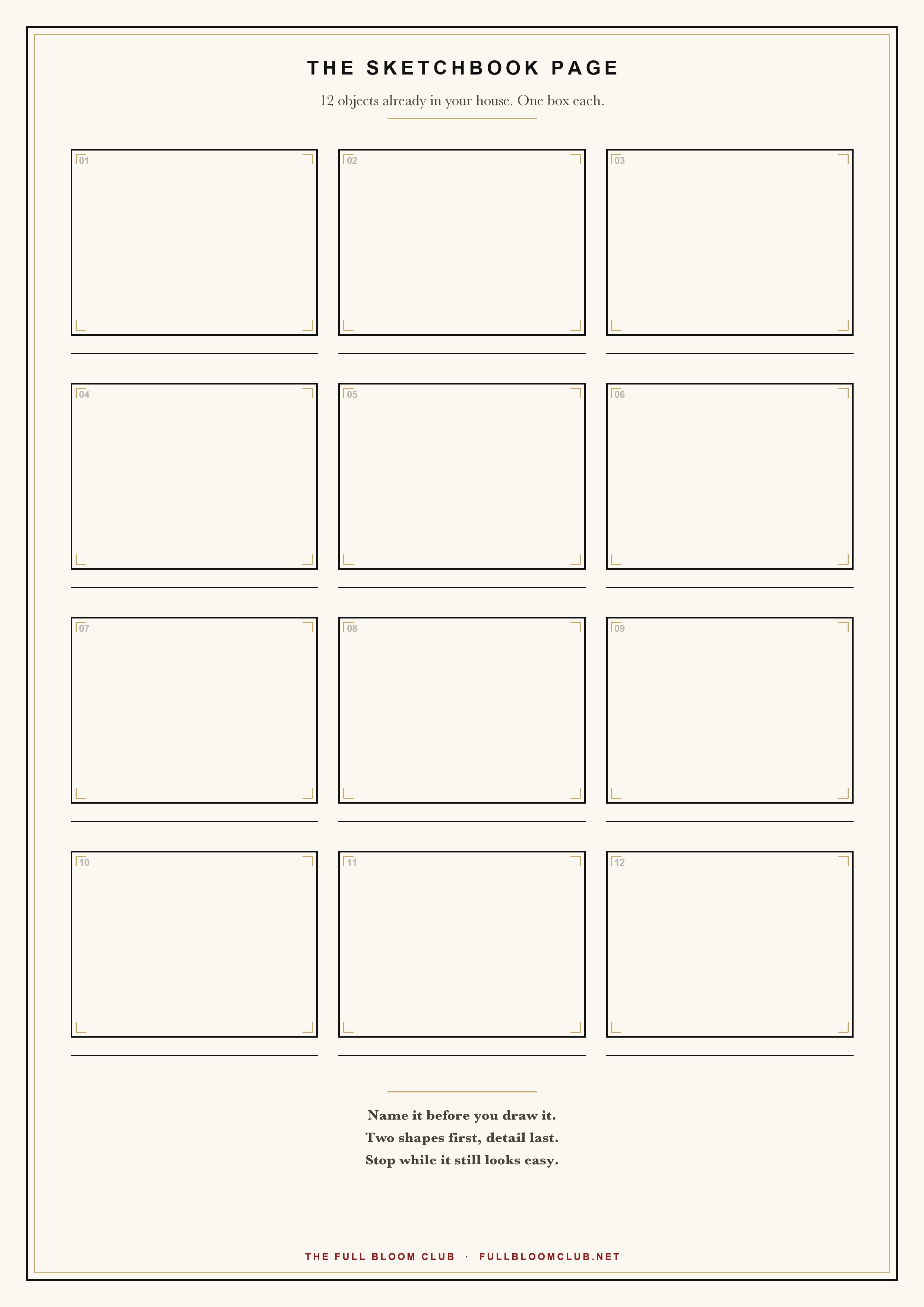
The page is 12 empty boxes with a ruled line under each one. One box a night, and the line is for the name of the object.
Set the print size to 100%, never fit to page. Anything smaller and the boxes stop being worth filling.
Write the name on the line before you draw anything. Naming it first ends the dithering, which is where the evening usually goes.
Then work small. A drawing the size of a matchbox takes 20 minutes. The same jug across a full page takes an evening, and I have abandoned several.
The sheet carries 3 rules along the bottom and they are the whole method. Name it before you draw it. Two shapes first, detail last. Stop while it still looks easy.
That last one is the one I break. (I have improved a great many drawings to bits.)
Some evenings the house has been drawn and you want a subject handed to you instead. Continuous Line Wonder exists for exactly that evening.
The Collection
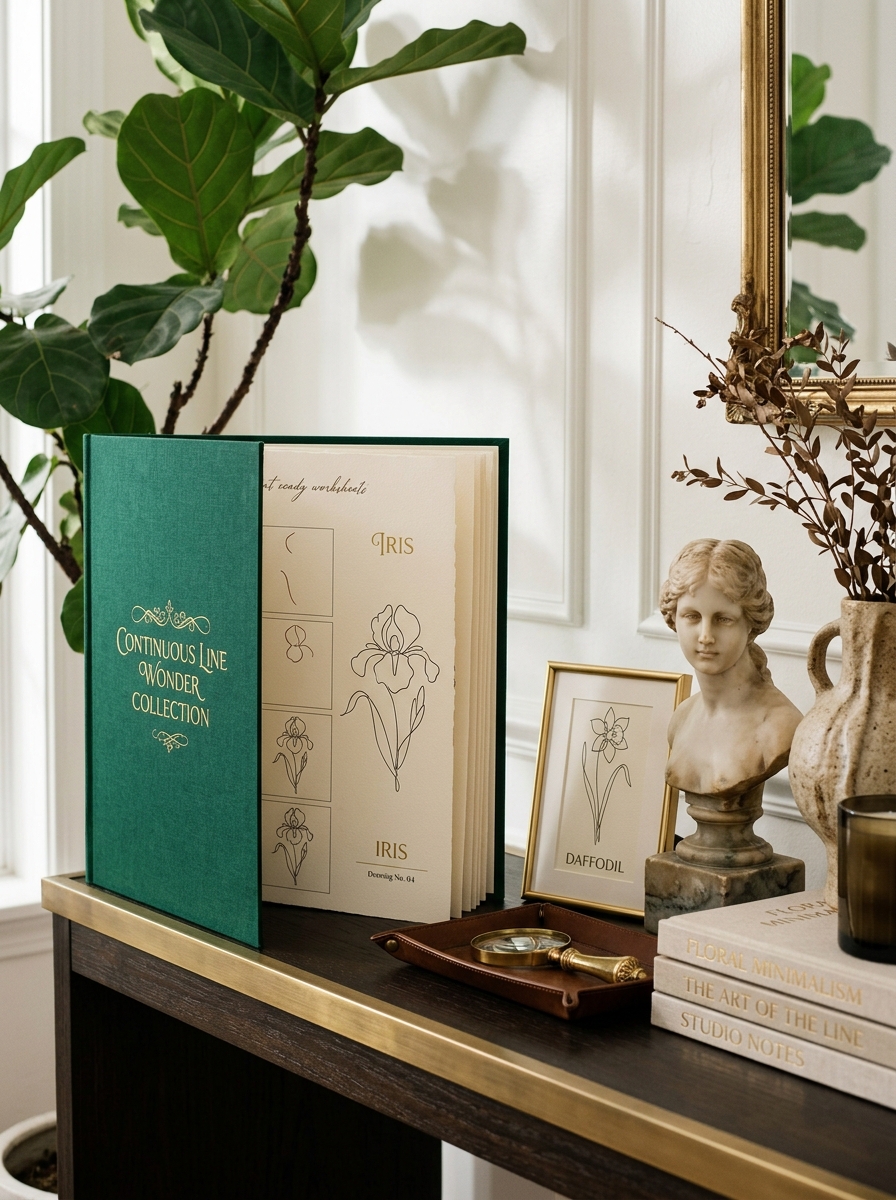
30 flowers, and not one of them asks you to invent anything.
CONTINUOUS LINE WONDER. Petals, stems, and the small pleasure of not stopping. This is the set for the evening the house has run out of objects and you still want to draw. Inside: 30 flower worksheets. The bloom is one continuous line, and the stem and leaves are a second. What you get: something to do with your hands at 9pm, and a drawer of pieces worth framing.
Back to the shelf, though, because the shelf is free. Every group below names a room, then the objects in it, then the thing that ruins each one.
Everybody agreed you needed a subject worth the paper
For most of the history of drawing, the subject came first and it had to earn the page.
You went out to the view. You hired the model. You waited for the flowers, the weather or the invitation.
The object in the kitchen was not a subject. It was what the subject was eaten off.
I inherited that belief without noticing, and it cost me years of blank pages. (The pages were beautiful. That was the problem.)
One painter stopped going out to look for subjects
Giorgio Morandi worked in the same apartment in Bologna, at Via Fondazza, from 1909.
He did not go looking. He painted bottles, bowls, boxes, cups, vases, pitchers and jars, and repeatedly arranged and rearranged them on a tabletop.
The same objects. The same table. The same light coming in at the same window.
A career made almost entirely of things that were already in the room when he got there.
(I have moved house twice in search of better light. He moved a bottle four inches to the left.)
He did not find better objects. He ran out of the idea that he needed them.
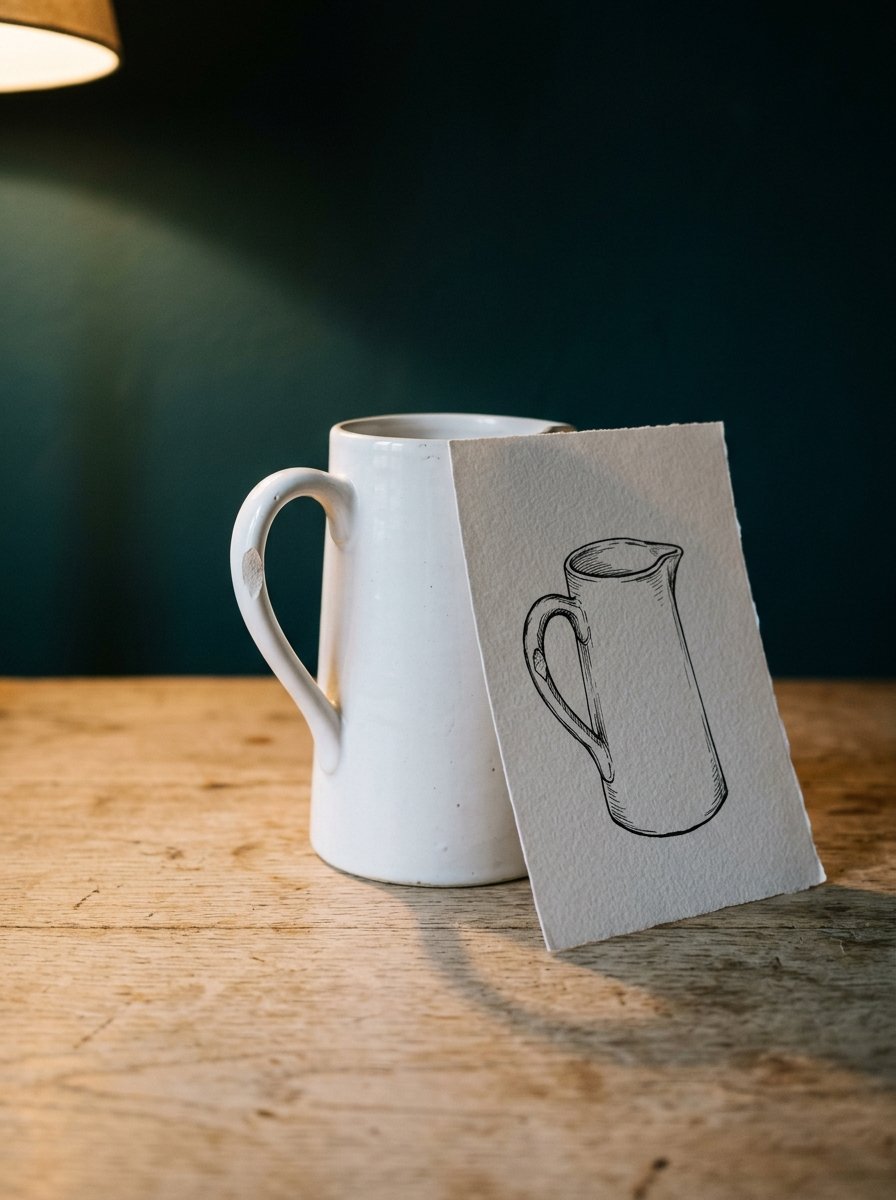
He took the labels off so the objects would stop showing off
This is the part worth stealing, and it is physical rather than philosophical.
Morandi altered his objects before he painted them. He painted their surfaces, and he removed the labels and the reflections, to emphasise shape and volume.
A tin with a label on it is a tin of something. Take the label off and it is a cylinder with a rim.
That is a drawing instruction, not an art theory. Look at the shape, not at what the thing is for.
You can do it without a paintbrush. Turn the jar so the label faces the wall. Take the tea towel off the rail and let it fall.
I turn labels away now without thinking about it. (My kitchen looks faintly like it is hiding something from visitors.)
Why a familiar object answers what to draw in your sketchbook better than an imagined one
Because you are only making one decision instead of two.
An imagined subject makes you decide what it looks like AND where to put the line. The first decision is the exhausting one and it never ends.
A jug you have seen every day has already settled the first question. Its handle is that shape. You are left with the pen.
This is also why the second drawing of an object beats the first, and the fifth beats the second.
You are not getting better at drawing in general. You are getting better at that jug. (The jug and I have an understanding now.)
And the familiar object waits. It does not fly off, close up at dusk, or get bored and check its phone.
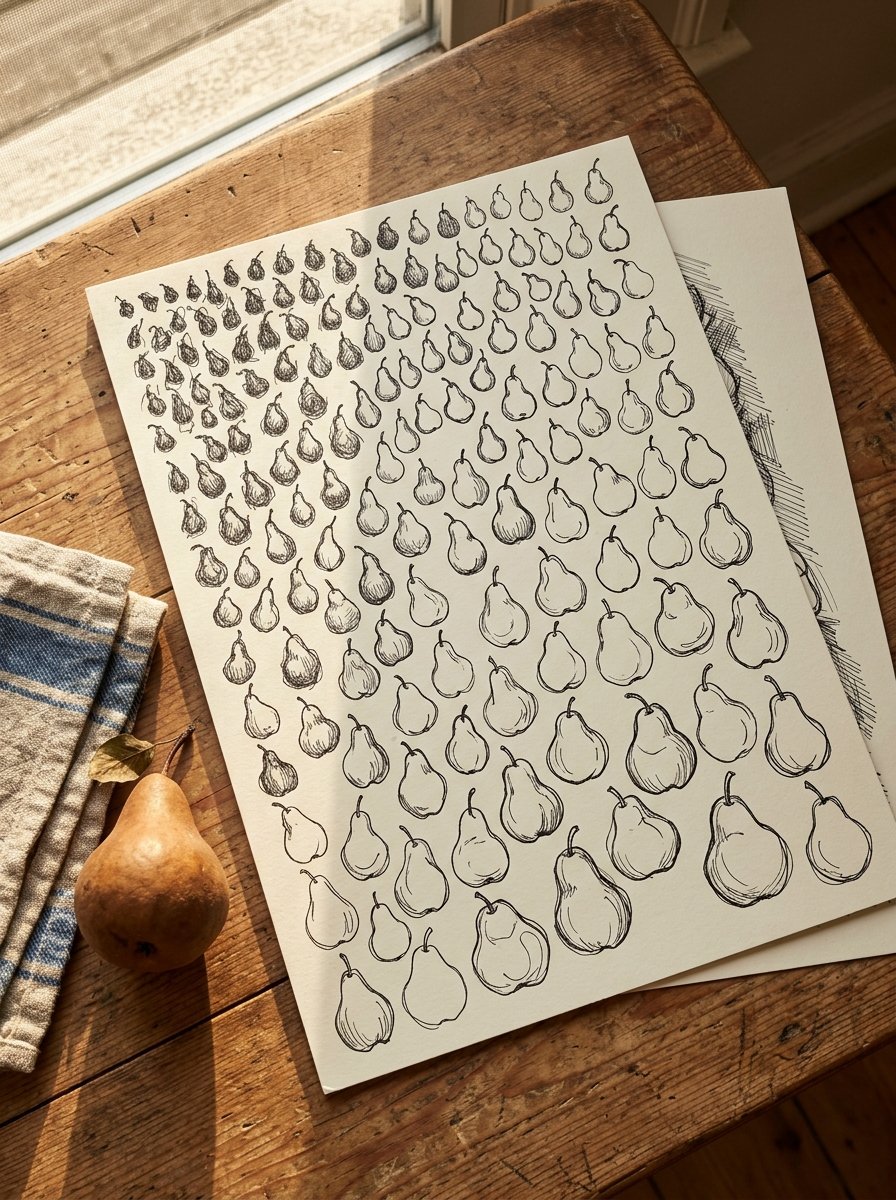
Every object on this list is two shapes and one thing that ruins it
Before the rooms, the method, because it is the same method for all 67.
Find the big shape first. Almost everything in a house is a circle, a rectangle or a triangle wearing something over the top.
Then find the second shape, which is usually the part that sticks out. A handle, a spout, a stem, a lid.
Draw those two. Then stop and look, because that is already the object and most people cannot believe it yet.
The detail goes on last and it goes on thin. Detail added early gets drawn over and wasted.
What ruins it is almost always the same thing: starting at one edge and travelling along it. The far side then has to fit whatever space is left.
So the shapes go down light and whole, and the pen commits afterwards. I do this badly on a scrap first, every time.
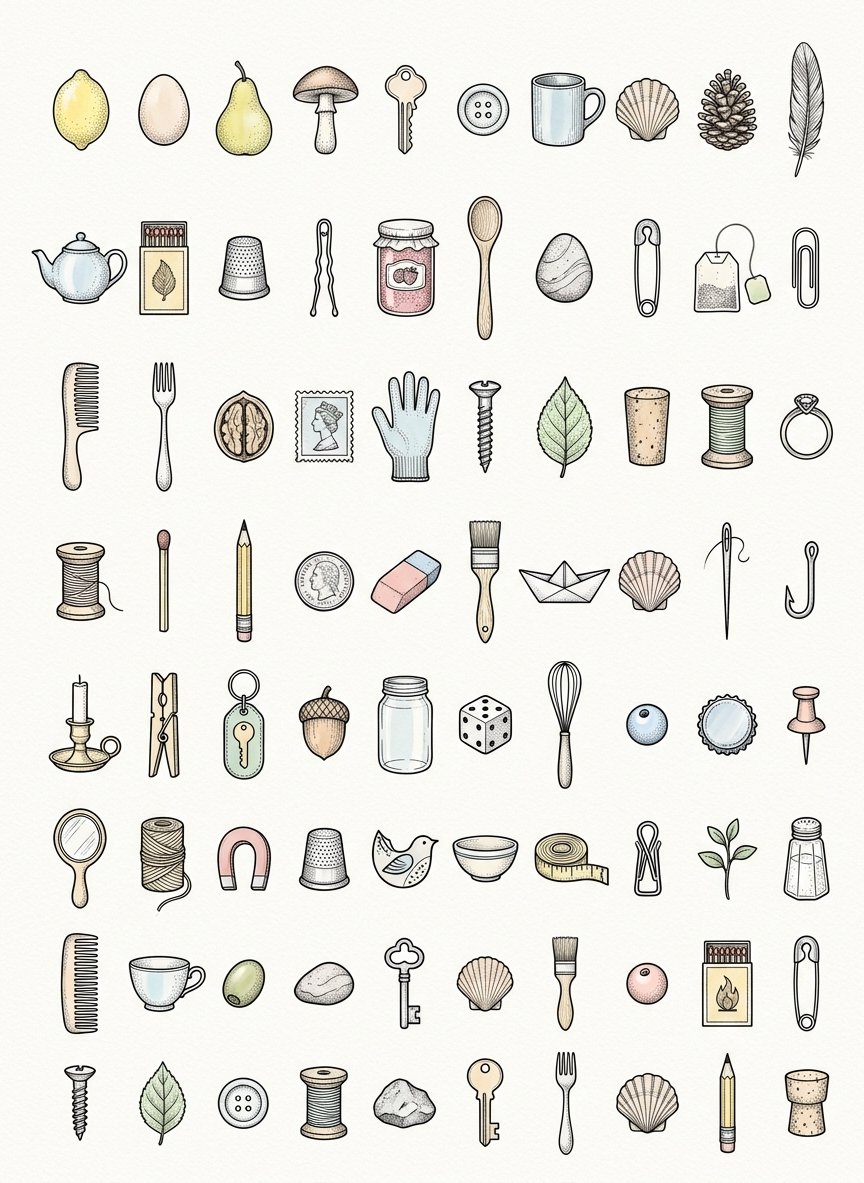
A painter of kitchen things had settled it 200 years earlier
In 1728 the French academy took in a new painter. It inscribed him, a little sniffily, as a painter of animals and fruits.
Jean-Simeon Chardin spent his working life on copper pots, jugs, bread and a cut of meat. Also children, absorbed in small domestic business.
No views. No heroes. The House of Cards, from about 1740, is a boy building a house out of playing cards.
The Goncourt brothers called them objects of no intrinsic interest. Chardin, they wrote, transfigured them by the magic of handling.
Objects of no intrinsic interest. That is the entire kitchen, and it is the best material in the house.
The lesson for tonight is that the interest is not IN the pear. It arrives while you are drawing the pear.
(I have never once found this convincing in advance. It works anyway.)
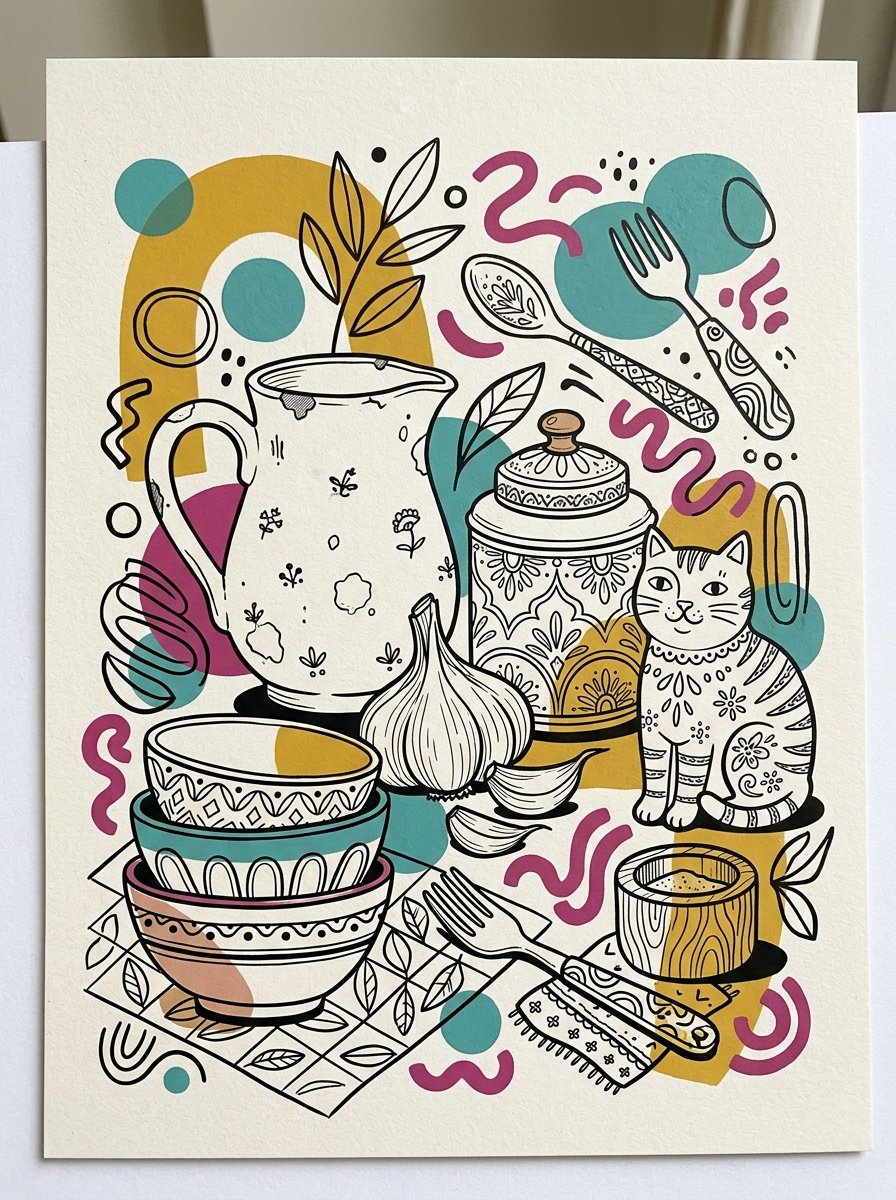
Then somebody worked out that the gaps matter more than the objects
Elizabeth Blackadder painted flowers, cats, ribbons, fans and the small souvenirs she brought home from travelling.
Ordinary things, laid out on the page rather than staged into a pyramid.
In her still lifes and drawings she considered space between objects carefully. The gaps were the composition.
She was also the first woman elected to both the Royal Academy and the Royal Scottish Academy. She became an associate in 1971 and a full member in 1976.
The practical version for your page: the objects are easy, the distance between them is the decision.
Put two objects down and the drawing is suddenly about the space they leave. Move one a thumb-width and the whole page changes.
I test this with a scrap of paper over one object. (It is an unreasonably satisfying thing to do at the kitchen table.)
The 67 subjects: what to draw in your sketchbook without leaving the house
Sorted by room. Each one names the shapes and the thing that goes wrong.
Start on the kitchen table. A lemon is an oval with a nipple at each end, and it goes wrong when the ends are equal. A pear is a small circle sitting on a big one. A garlic bulb is a dome with paper over it, so keep the lines broken. An egg is the purest shape here and the hardest to leave alone.
A mug with a chip is a cylinder plus one handle, and the chip is the only part worth detail. A teapot is a body, a spout and a lid, drawn in that order. A jam jar is a rectangle with shoulders. A wooden spoon is an oval on a stick, and the bowl is always drawn too round.
A folded tea towel is a stack of soft rectangles. A bread knife is one long triangle, teeth last. A colander is a bowl full of holes, and the holes must follow the curve or it flattens. A paper bag is the best of the lot. A crease is just a straight line you are allowed to get wrong.
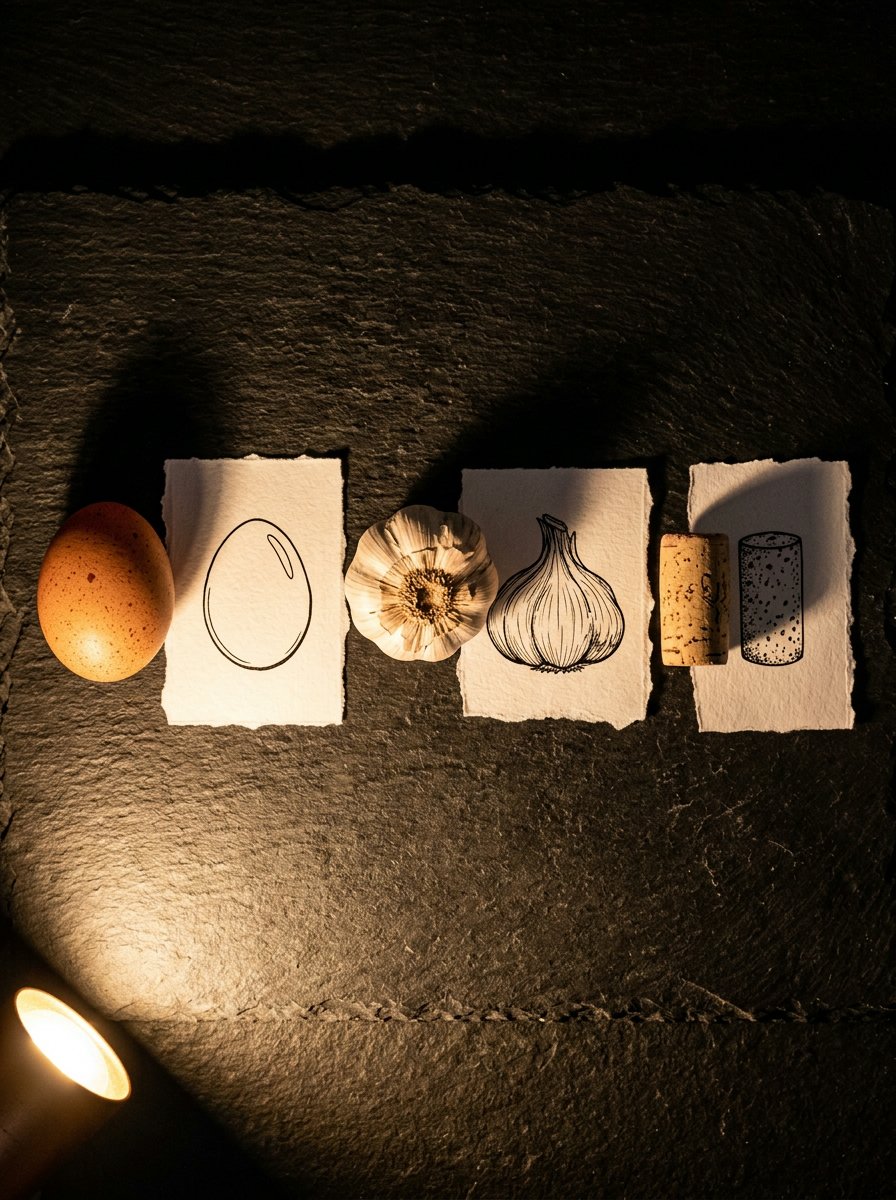
Now the shelf and the cupboard. A tin of tomatoes is a cylinder, label turned away. A salt pot is a small dome on a foot. A jug is a body plus a lip, and the lip decides whether it is a jug at all. A stack of three bowls is one bowl and two ellipses.
A corkscrew is a spiral on a bar, so draw the bar first. A matchbox is a rectangle with a sleeve. A candle stub is a cylinder with a soft top. A rolling pin is a tube with two handles and it goes wrong when the handles line up too neatly.
A pepper mill is stacked shapes, widest at the bottom. A tea caddy is a box with a lid that overhangs. A whisk is a teardrop of loops and you only need about half of them. A jar of dried beans is a shape full of small shapes. Only the beans against the glass edge get drawn clearly.
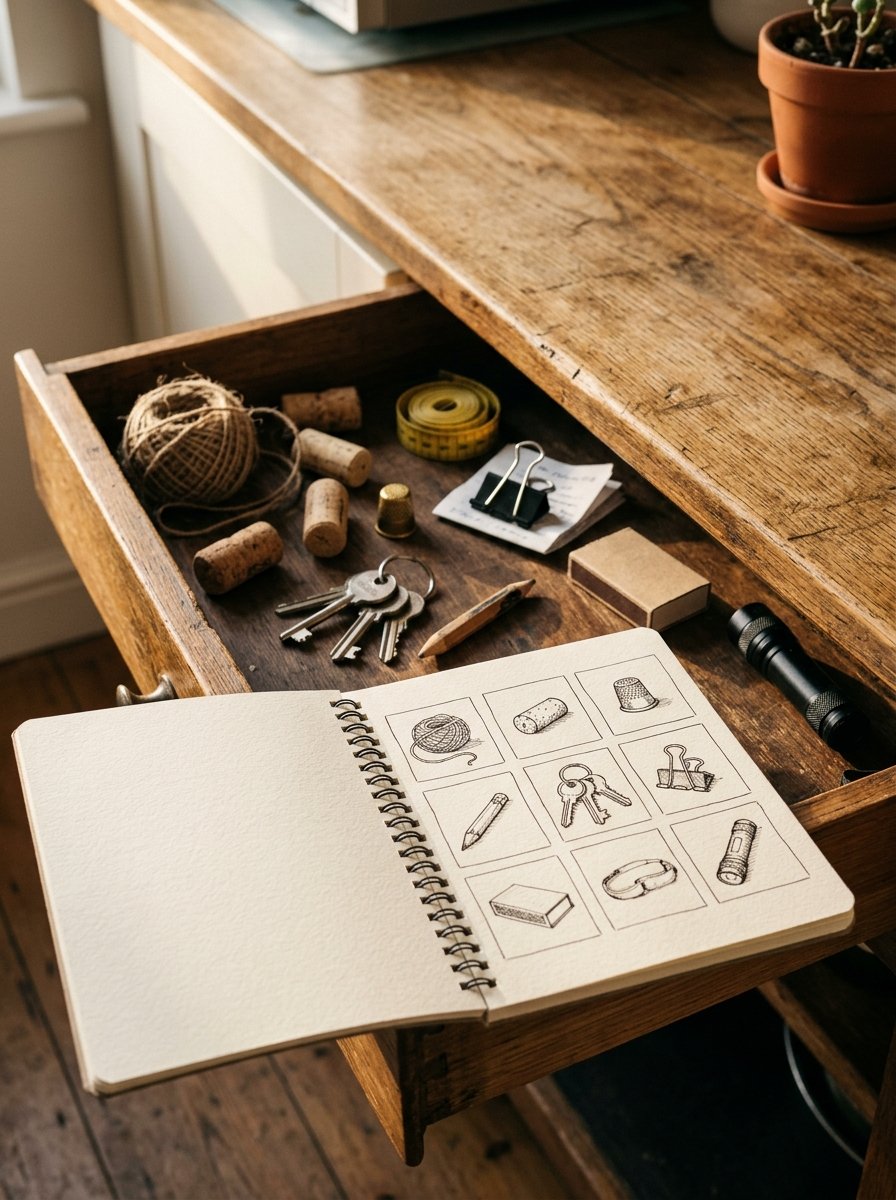
Then the drawer nobody admits to. A ball of string is a circle with a tail. A cork is a short cylinder, speckled. A tape measure is a disc with a tongue hanging out. A thimble is a dome covered in dents, and the dents follow the curve.
A bulldog clip is two triangles and a loop. A safety pin is a long oval with a coil. A button is a circle with four dots, and the dots are never in the middle. A key is a rectangle with teeth, drawn flat on the table.
A torch is a tube with a wide end. A pencil stub is a hexagon that has been sharpened badly. A rubber band ball is one circle and then as many lines as your patience allows.
(See also: the drawer where batteries go to be tested by nobody.)
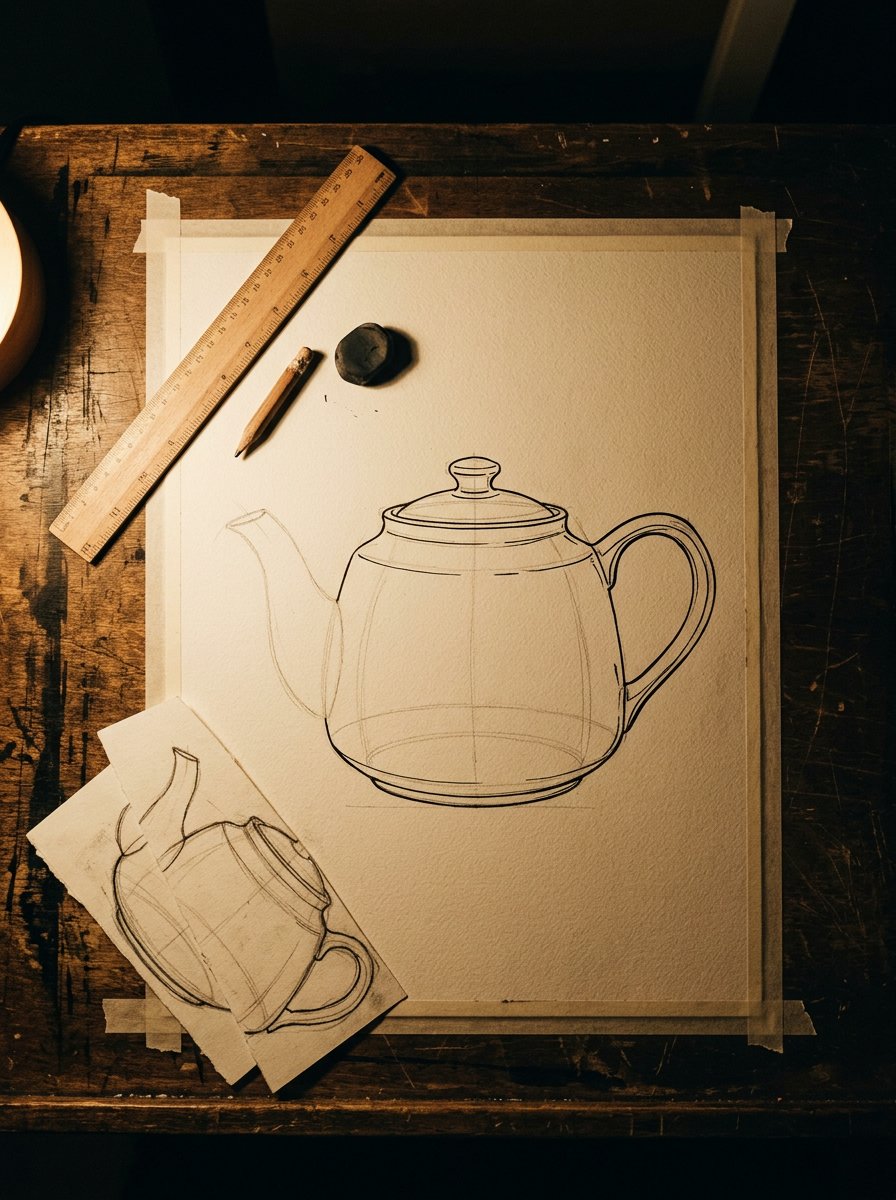
The windowsill next. A geranium leaf is a circle with a scalloped edge and a notch. A spider plant runner is one long curve with small ones hanging off it. A cactus in a pot is two shapes with the easiest texture in the house. A watering can is a body, a handle and a long spout that comes out too short.
A seed packet is a rectangle standing up. A pinecone is an egg made of scales, and you draw about half of them. A shell is a fan of lines from one point. A pebble takes two minutes and teaches shading better than anything else here.
A bulb in a saucer is a teardrop with roots. A fallen petal is the smallest subject here. It is the one I reach for when the day has been long.
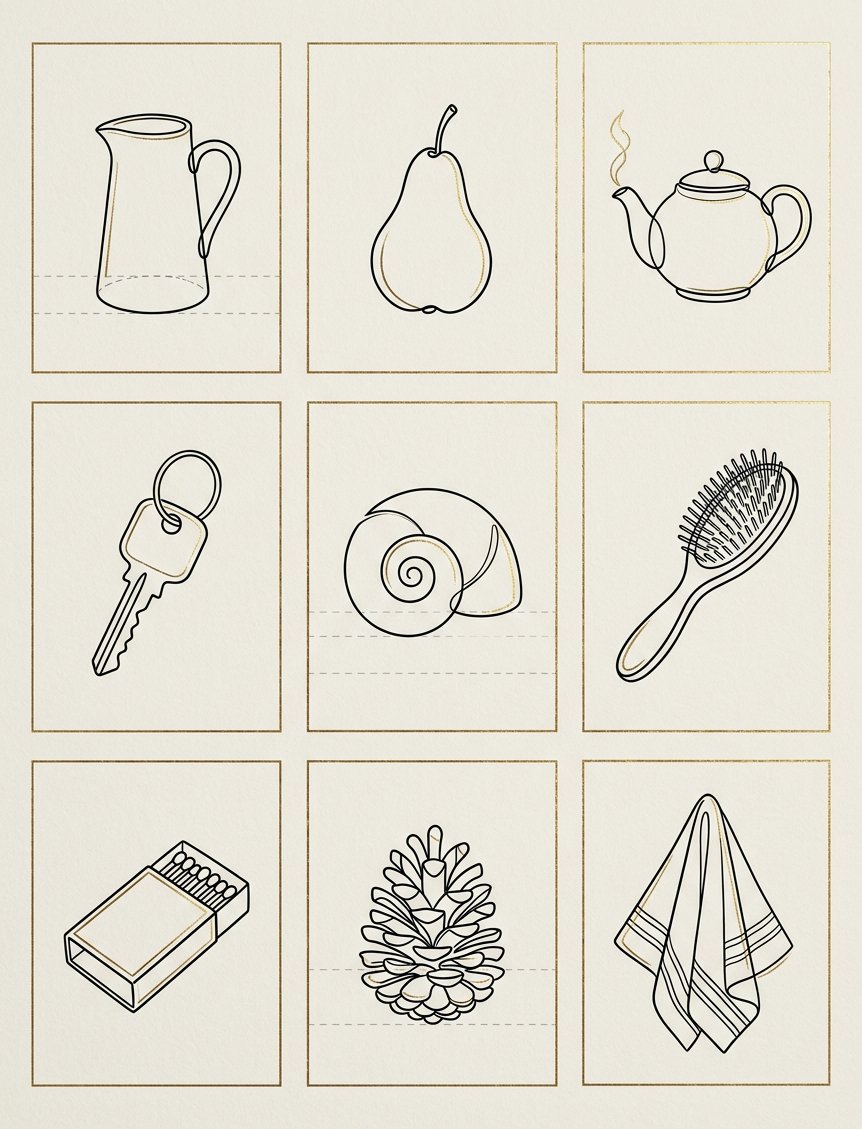
Into the hall. A boot is a wedge with a cuff, and the ankle is where it collapses. A folded umbrella is a long triangle with a hook. A bunch of keys is a cluster hanging from one ring. A bicycle bell is a dome with a lever.
A glove is a bag with fingers, drawn as one shape first. A scarf on a hook is a long V with weight at the bottom. A doorknob is a circle and a shadow. A letterbox flap is a rectangle with a hinge, and it is more interesting half open.
A postcard propped up is a rectangle in perspective. A stamp is a rectangle with a torn edge. A shoehorn is one long curve and nothing else, which makes it the best warm-up on this page.
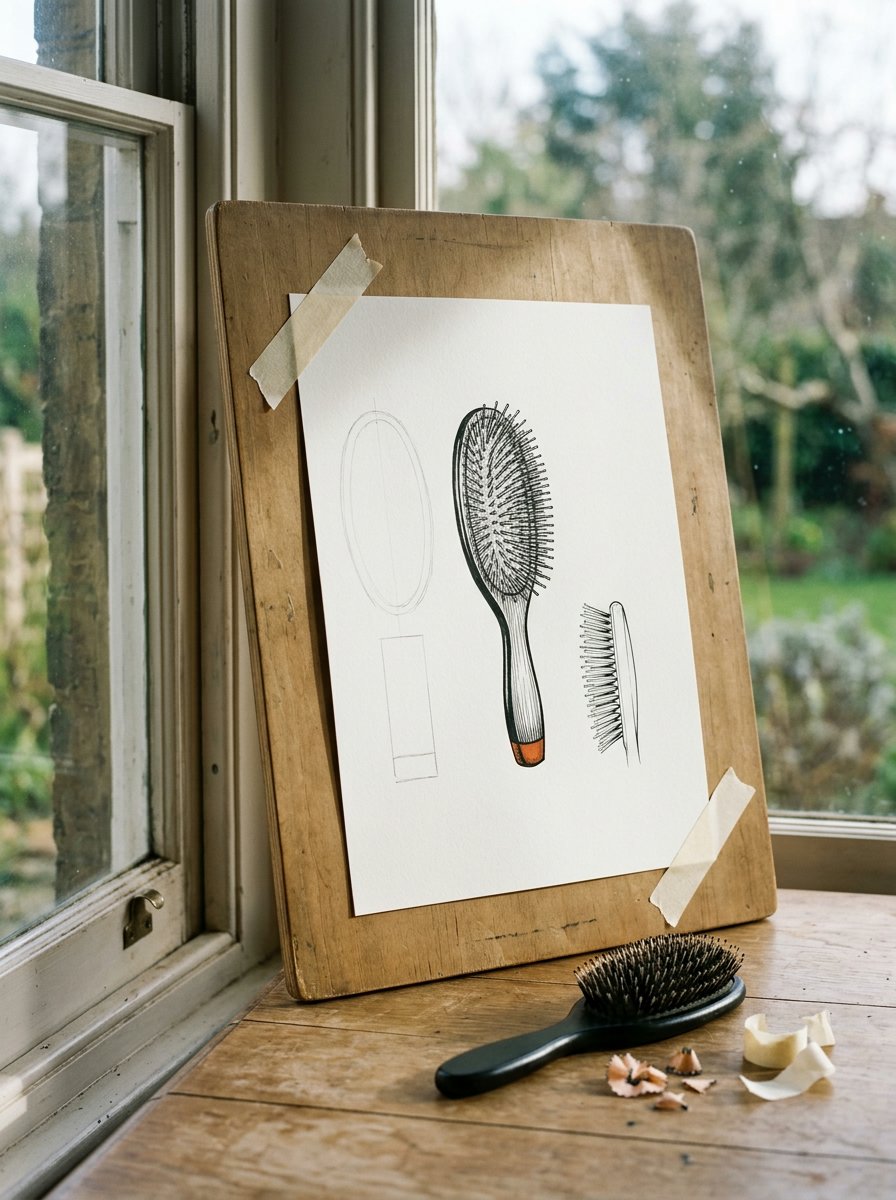
Last, the bathroom shelf and the bedside. A hairbrush is a paddle with bristles, and the bristles go on last and thin. A bar of soap is a rounded rectangle that has been used. A hand mirror is a circle on a handle. A nail brush is a small dome with a flat base.
A comb is a rectangle and a rhythm. A folded flannel is a soft square. An alarm clock is a circle in a box, and the hands are the part that goes wrong. A stack of two books is two rectangles that are not quite aligned.
A reading lamp is a cone on a stalk. A hairpin is two lines and a bend. A paperweight is the 67th and the most forgiving, because nobody knows what shape a paperweight is supposed to be.
If none of those land tonight, the 138 things to draw when nothing is landing goes wider than one house.
Free Starter Pack
Get 10 free pattern templates for the objects you have just drawn.
Sent tonight. Bold fills for the moment an outline is right and the inside is still empty.
Unsubscribe in 1 click, no hard feelings
How the free sketchbook page decides what to draw in your sketchbook first
Print the page and put it where the objects are. Mine lives on the kitchen table, which is why mine has a coffee ring on it.
Fill one box a night, and write the name on the line first. The naming is what stops you standing in the room deciding.
Do the two shapes lightly, look once, then commit. If a box goes wrong, the next box is 40mm away and costs nothing.
When the 12 boxes are full you will have drawn the same room for a fortnight. That is not a small thing, and the change is visible across the page.
I keep my first one. Box 01 is that jug and it leans badly. Box 12 is the same jug, and it does not.
When the house is drawn, you may want a subject that arrives already chosen. That is what Continuous Line Wonder does. 30 flowers, each broken into steps, built from the same two shapes and one line.
30 flowers, each one built the way the objects on this page are
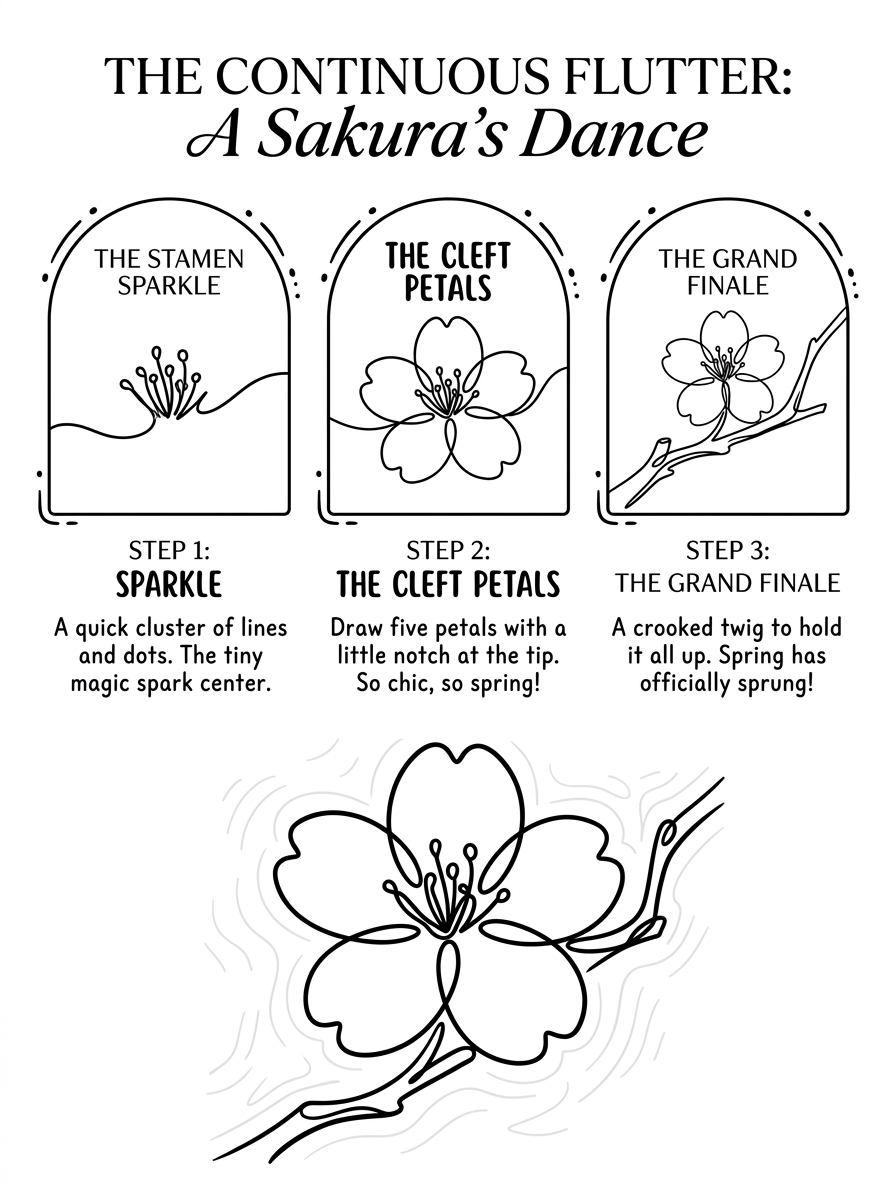
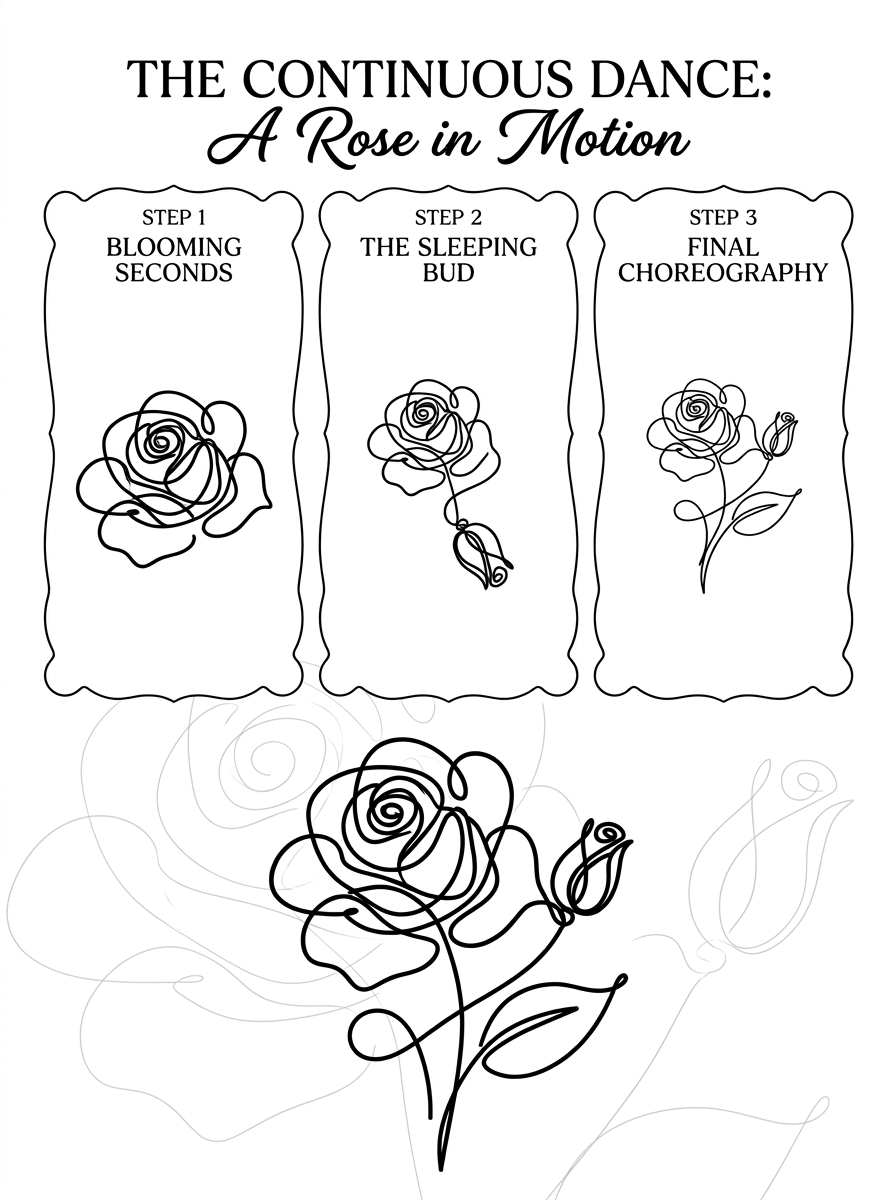
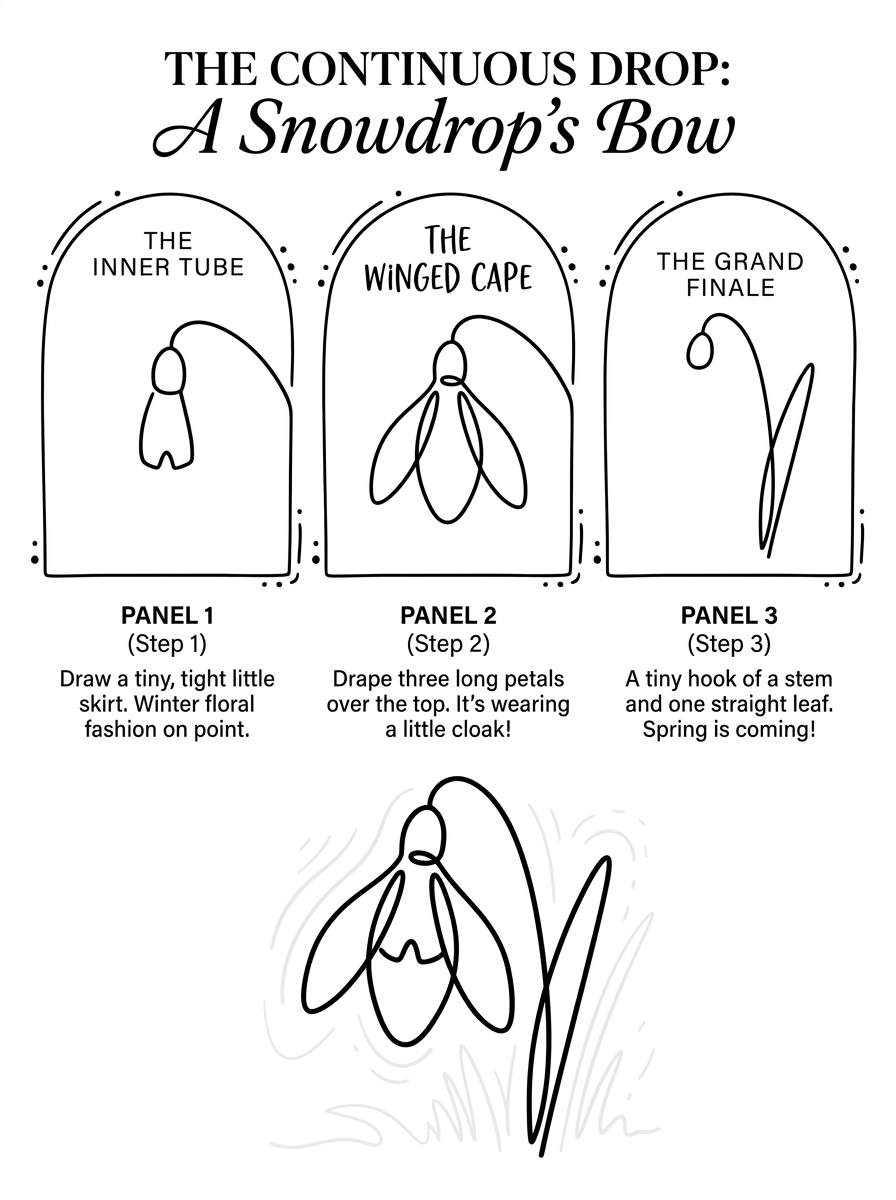
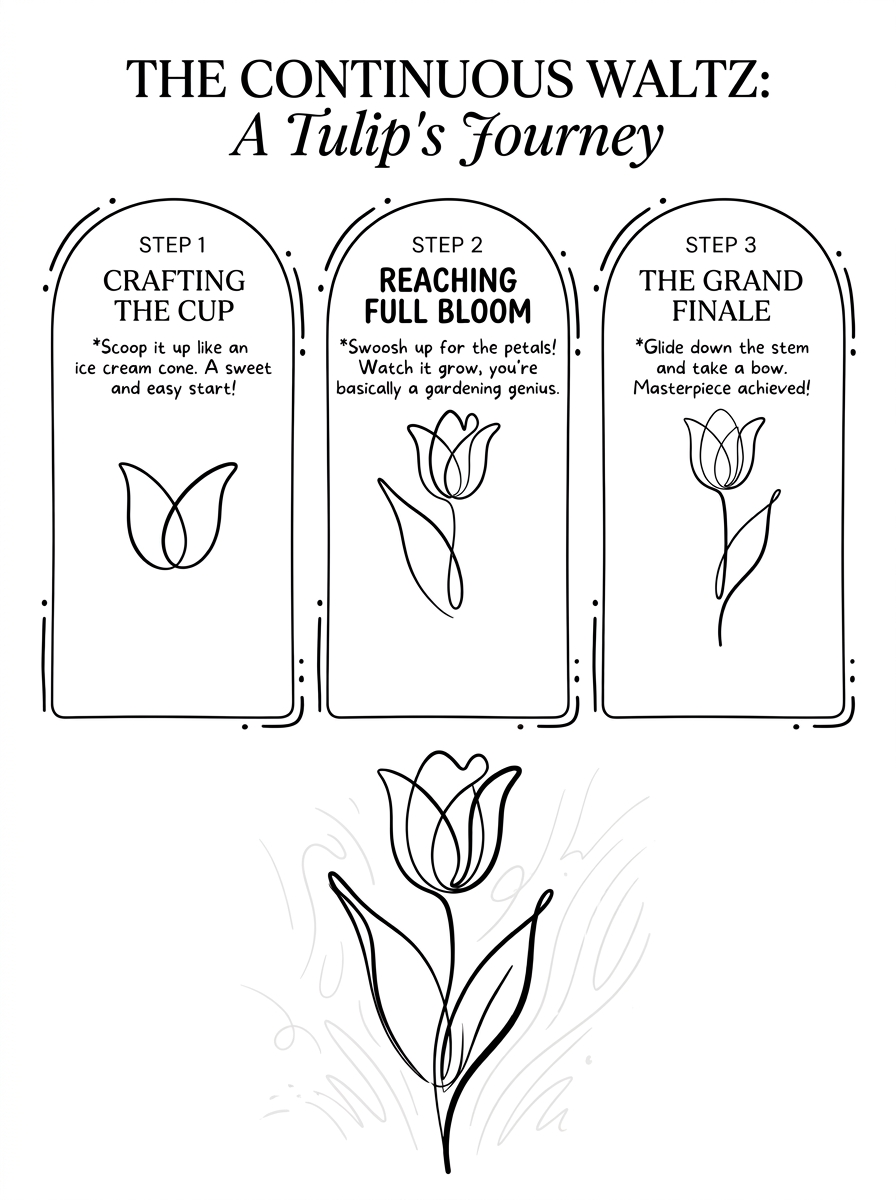
Each worksheet breaks one flower into 3 steps. The bloom goes down as one continuous line, then the stem and leaves follow as a second. Print the faint trace guide on a tired evening, or work freehand beside the real thing. I do both, and the freehand ones are the ones I keep.
Instant download · print as often as you like
The house has been holding still this whole time, waiting to be looked at properly. It does not mind being drawn badly, and it has never once asked what the drawing is for.
“I believe that nothing can be more abstract, more unreal, than what we actually see.”
Giorgio Morandi, 1960
Mirabelle wrote this. No training, strong opinions, many pens. Peer reviewed by a cat who arranged herself among the objects and became the subject.