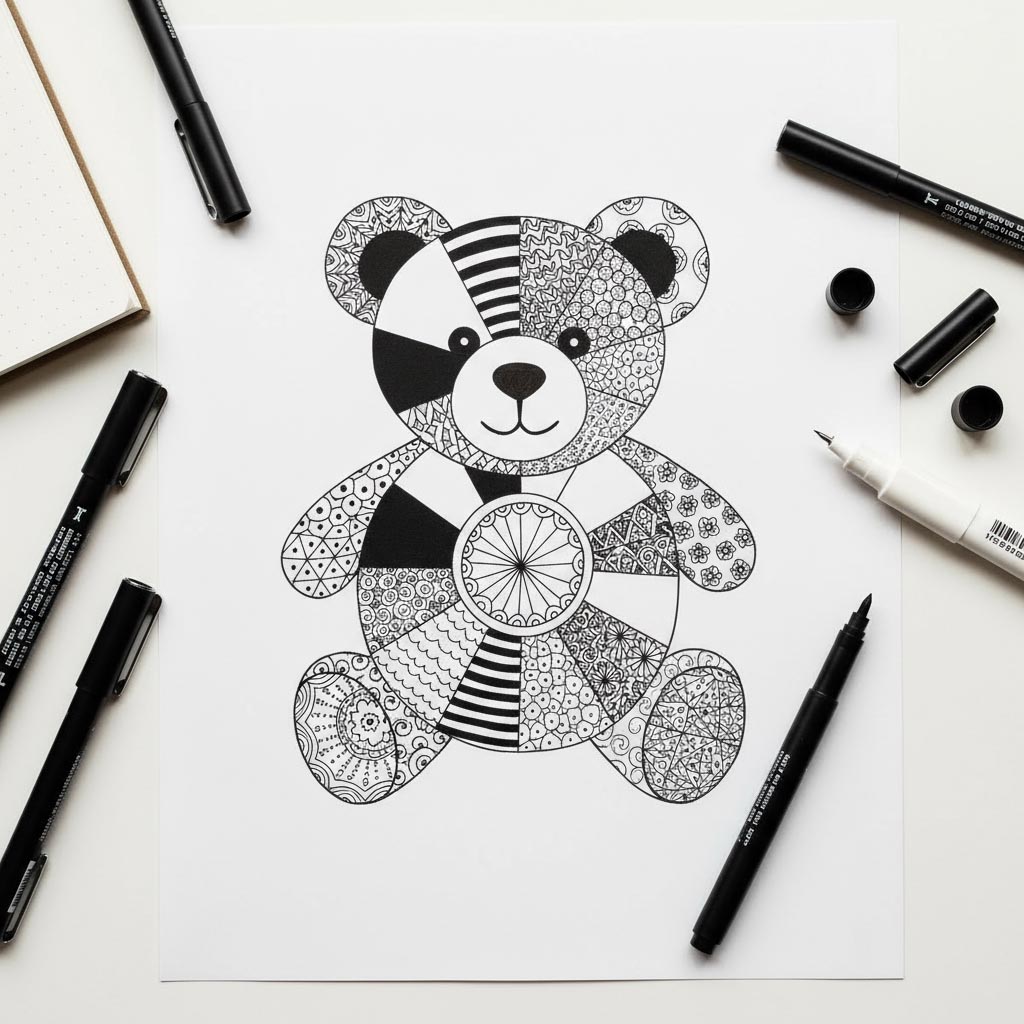
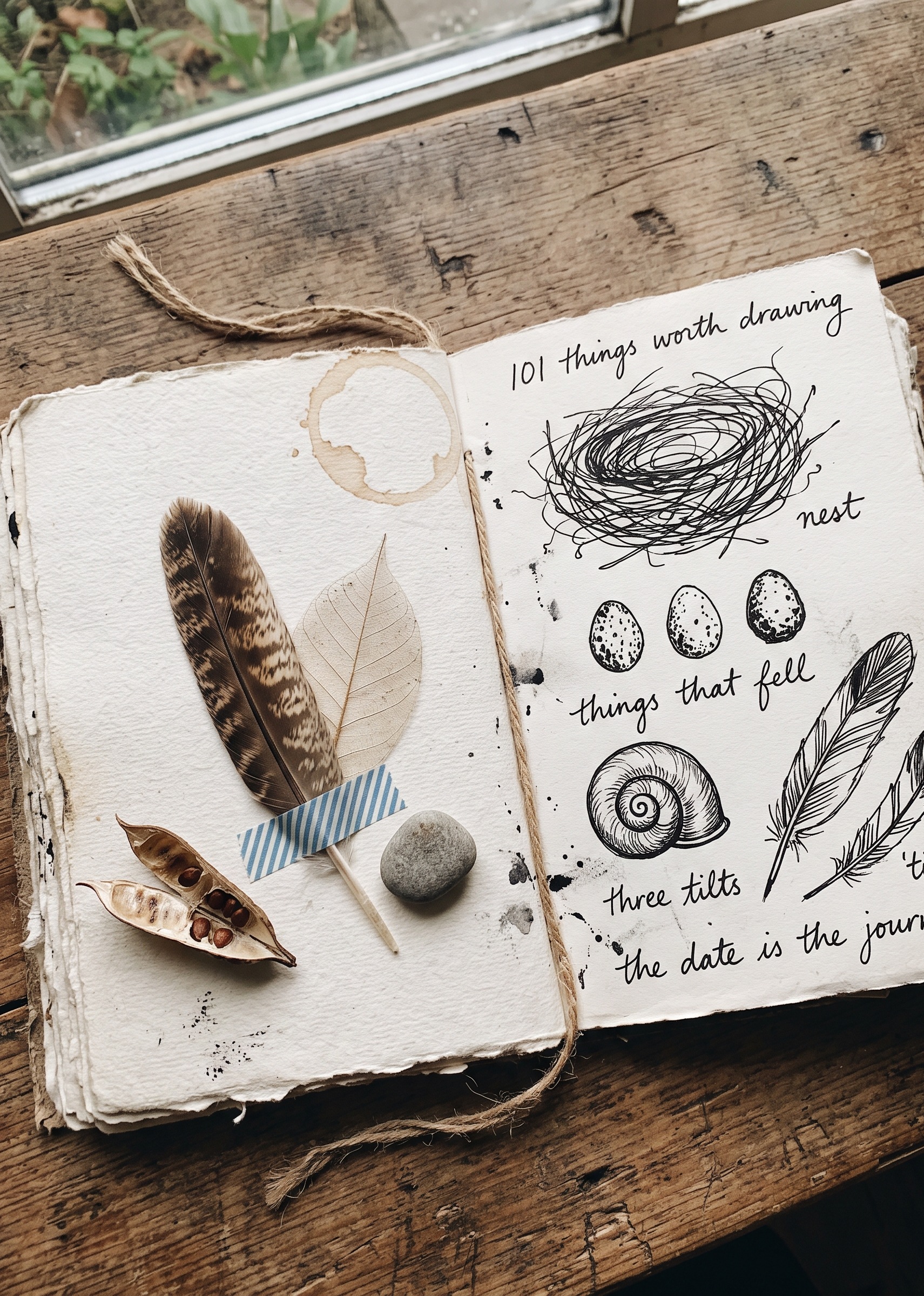
A nature journal is not a sketchbook you have to be good at. It is a shelf for the things you picked up on a walk and could not quite throw away. (See also: the good scissors, the jar of assorted buttons, the drawer where batteries go to be tested by nobody.)
Which means the page does not want a landscape. It wants one leaf, one stone, one feather, drawn at the size it actually is, on a day you can name.
Every guide to starting one will tell you to note the date, the time, the place and the weather. All true, all free, and all of it roughly as useful as being told that a cake needs an oven. Nobody tells you what to put on the page after that. So this is 101 things to put on it.
Nature journaling works because the subjects are small, findable and already lying on the ground outside your door.
What is below, in order:
- 101 numbered subjects — in ten groups, each one with the reason it is worth drawing and the shape it starts from.
- Two free sheets — a feather page and a page of three eggs, both printable, both yours before you have agreed to anything.
- The rule that makes a journal a journal — and it is not the drawing.
- What to do on a day when nothing happened — which is most days, and is the best page in the book.
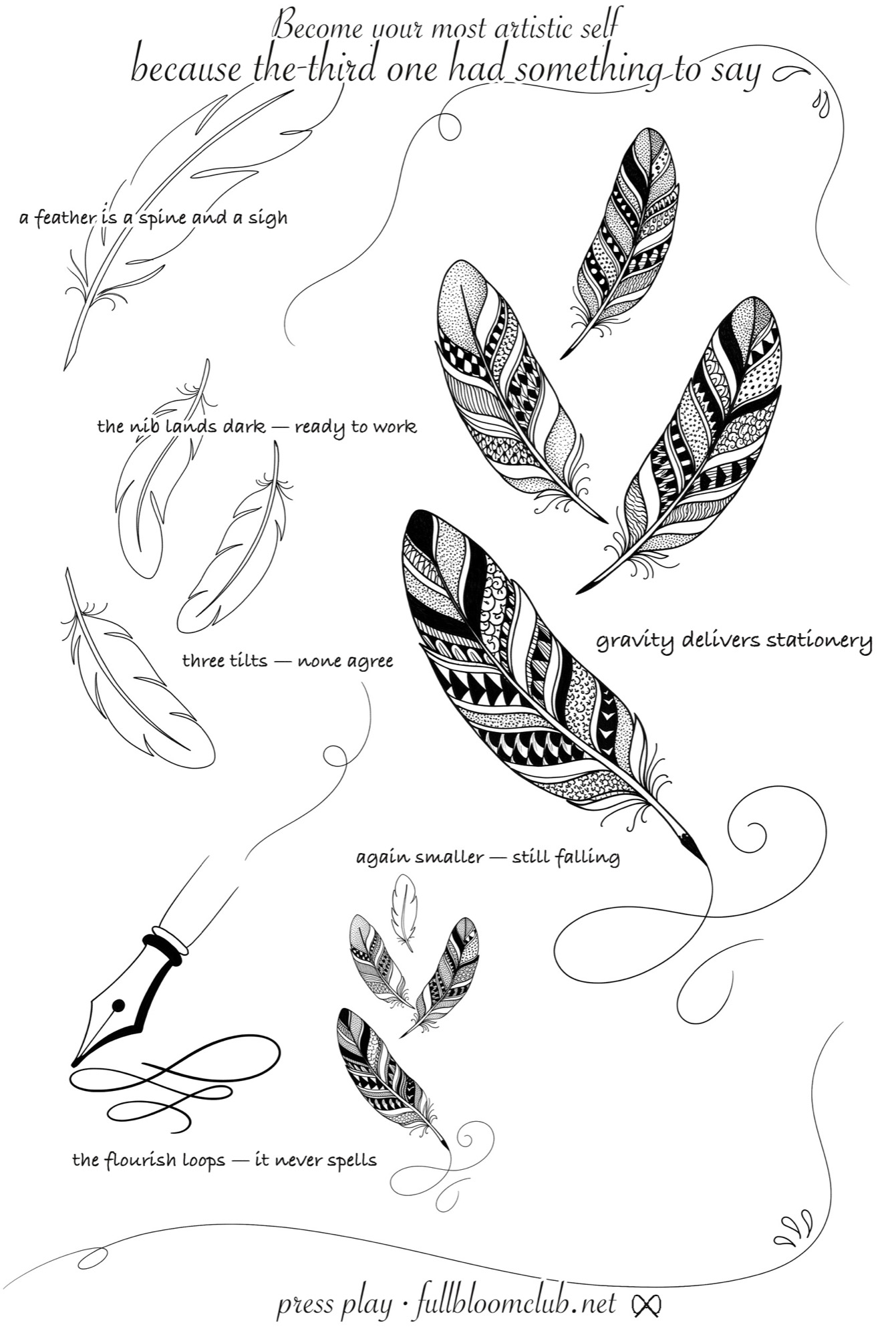
Start with the feather, because a feather is the most forgiving thing in nature: one spine, one soft edge, and no living person has ever held a drawing of one up against the original to check.
Download the free feather page
One page teaches one subject, and one subject teaches the habit. What a single page cannot give you is the thing that makes a journal worth keeping — a hundred of them in the same hand, at the same scale, in a set that reads as one long year rather than a drawer of loose attempts.
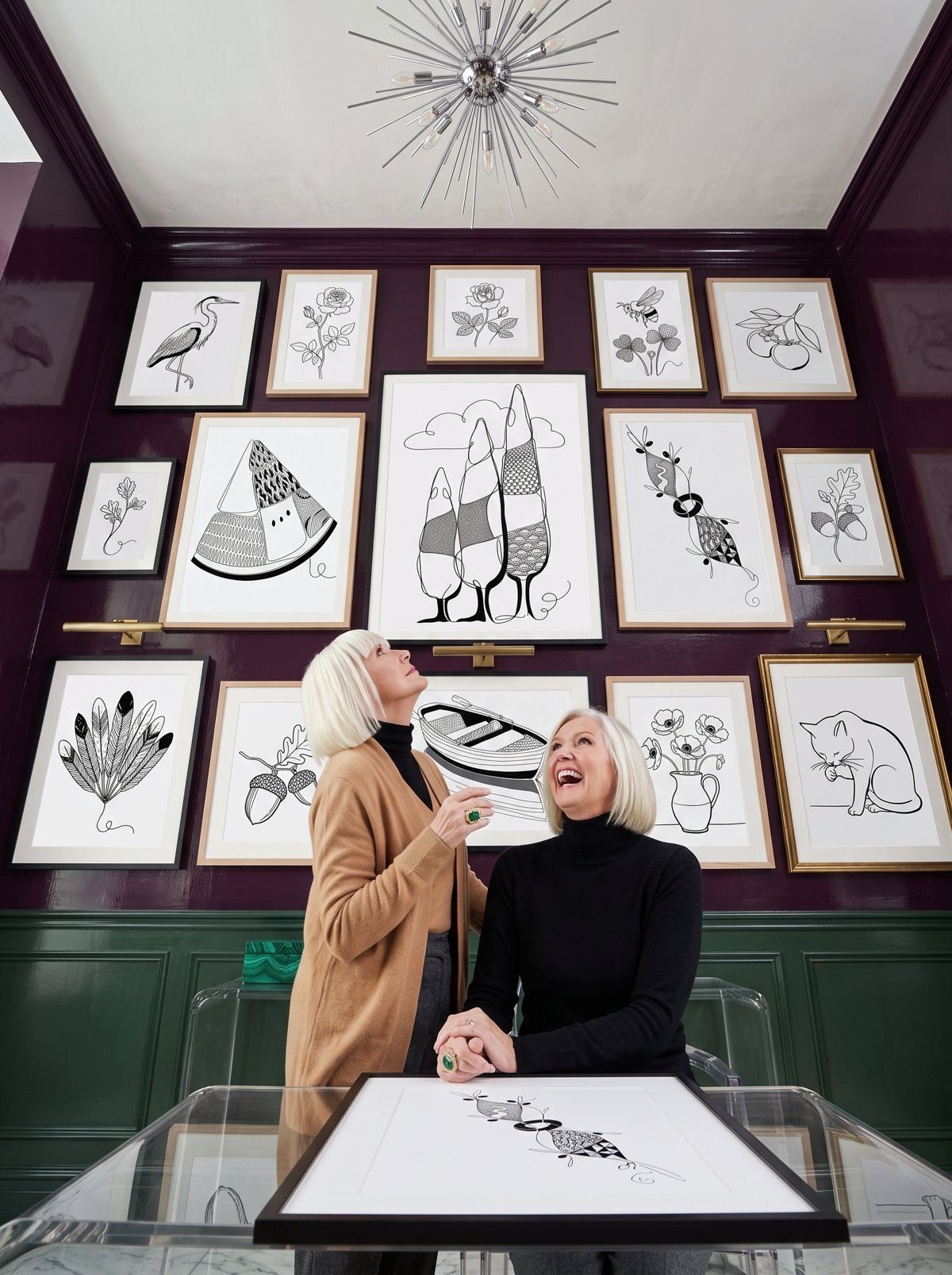
The Collection
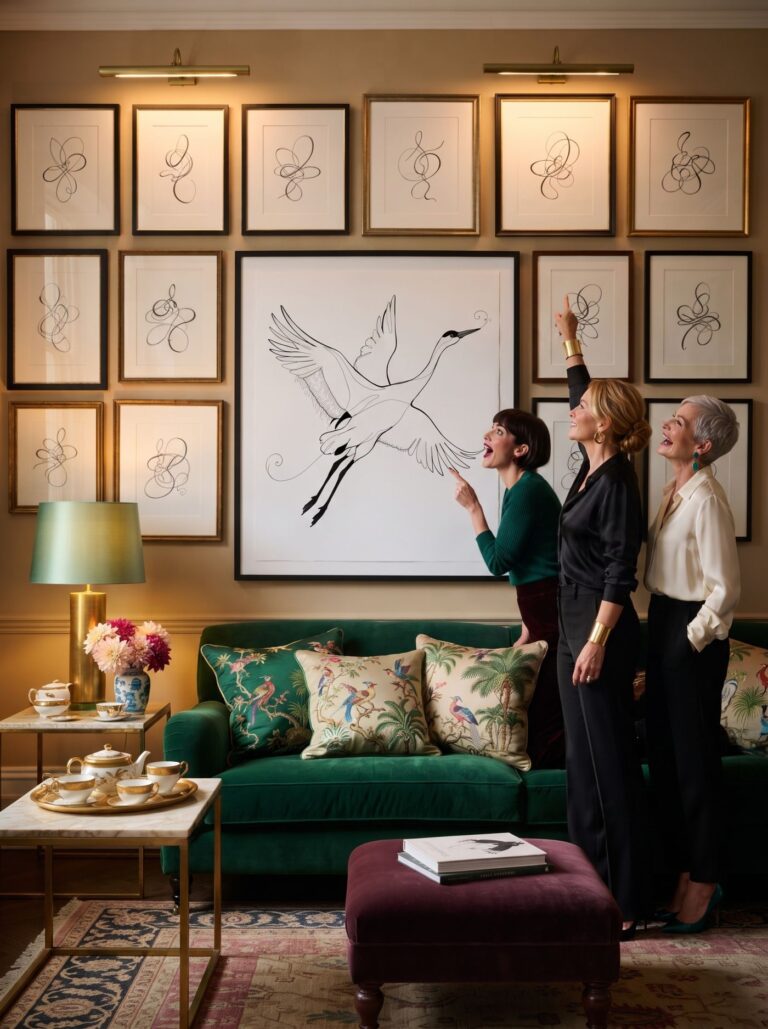
THE 100 COLLECTION — feathers, stones, small weather, and one hundred reasons to keep looking down.
The set for the year you decide to notice things, which is a decision most people make in the spring and abandon by the second week. Every piece comes with a faint trace underneath, so there is never a blank page to be brave about. What you get: one hundred small subjects already chosen for you, and a wall of them at the end that reads as a year.
Back to the ground, which is where almost all of this is lying, waiting, and being stepped over by everybody except you.
The rule that makes it a journal and not a sketchbook
There is a naturalist who has spent decades teaching this and gives the entire curriculum away for nothing. He is very good and he is free, which tells you the bottleneck was never information. The bottleneck is that a person opens a blank page, aims at an entire valley, produces something that looks like weather damage, and quietly closes the book. (I have three of these books. Two of them are beautiful and contain four pages.)
A journal is not a record of what you saw. It is a record of how long you looked at it.
So the rule is size. Draw one thing, small, and write one line about it. A leaf takes four minutes. A landscape takes an afternoon you do not have — and the afternoon, not the talent, is why the book is empty.
The second rule is that a page can hold a question. “Why is this one darker?” is a legitimate entry. You are under no obligation to answer it, then or ever, and there is something quietly luxurious about writing down a question you fully intend to abandon.
A leaf takes four minutes. A landscape takes an afternoon you do not have, and the afternoon is the reason the book is empty.
101 things worth drawing, in ten groups
Numbered so you can work through them, grouped so you can find one that suits the light and the ten minutes you actually have.
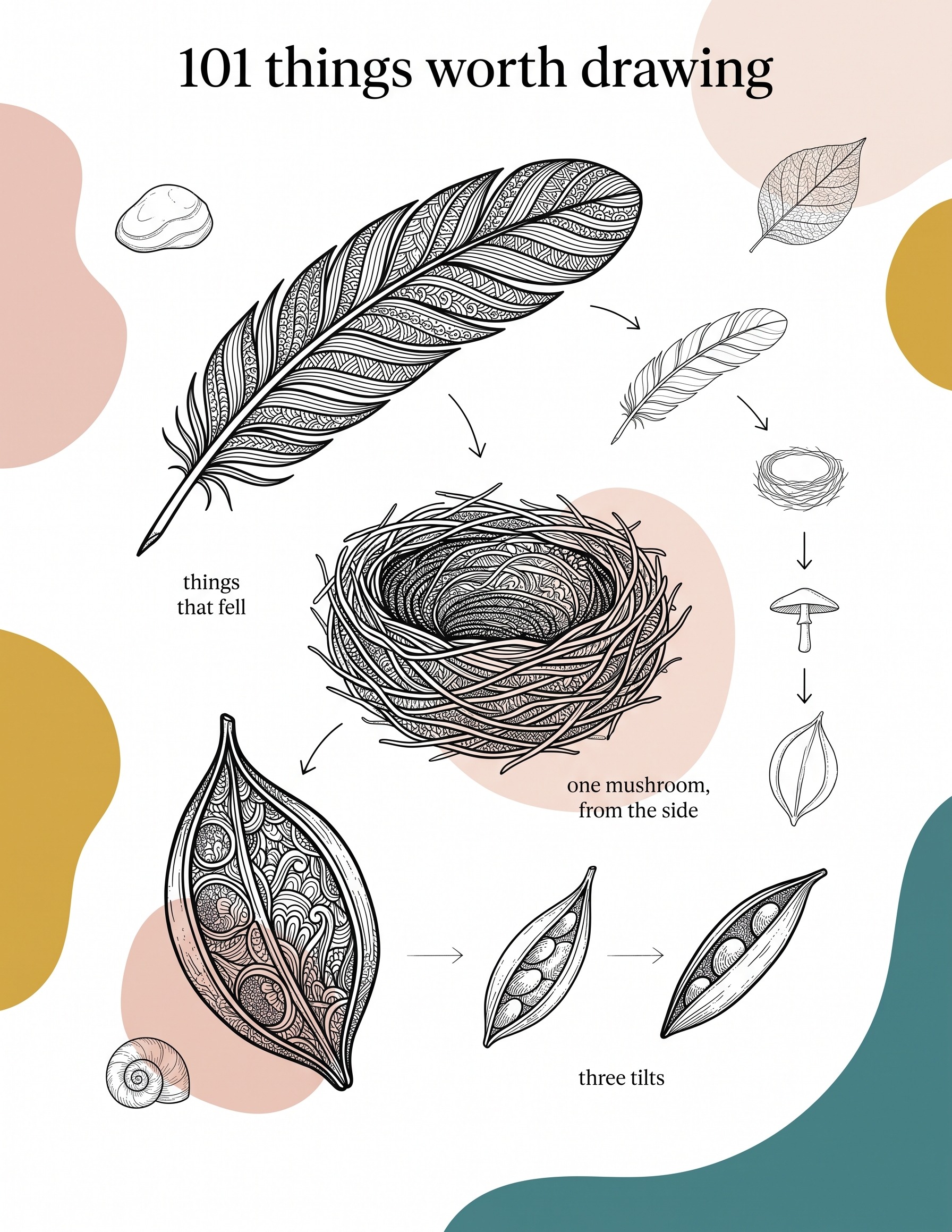
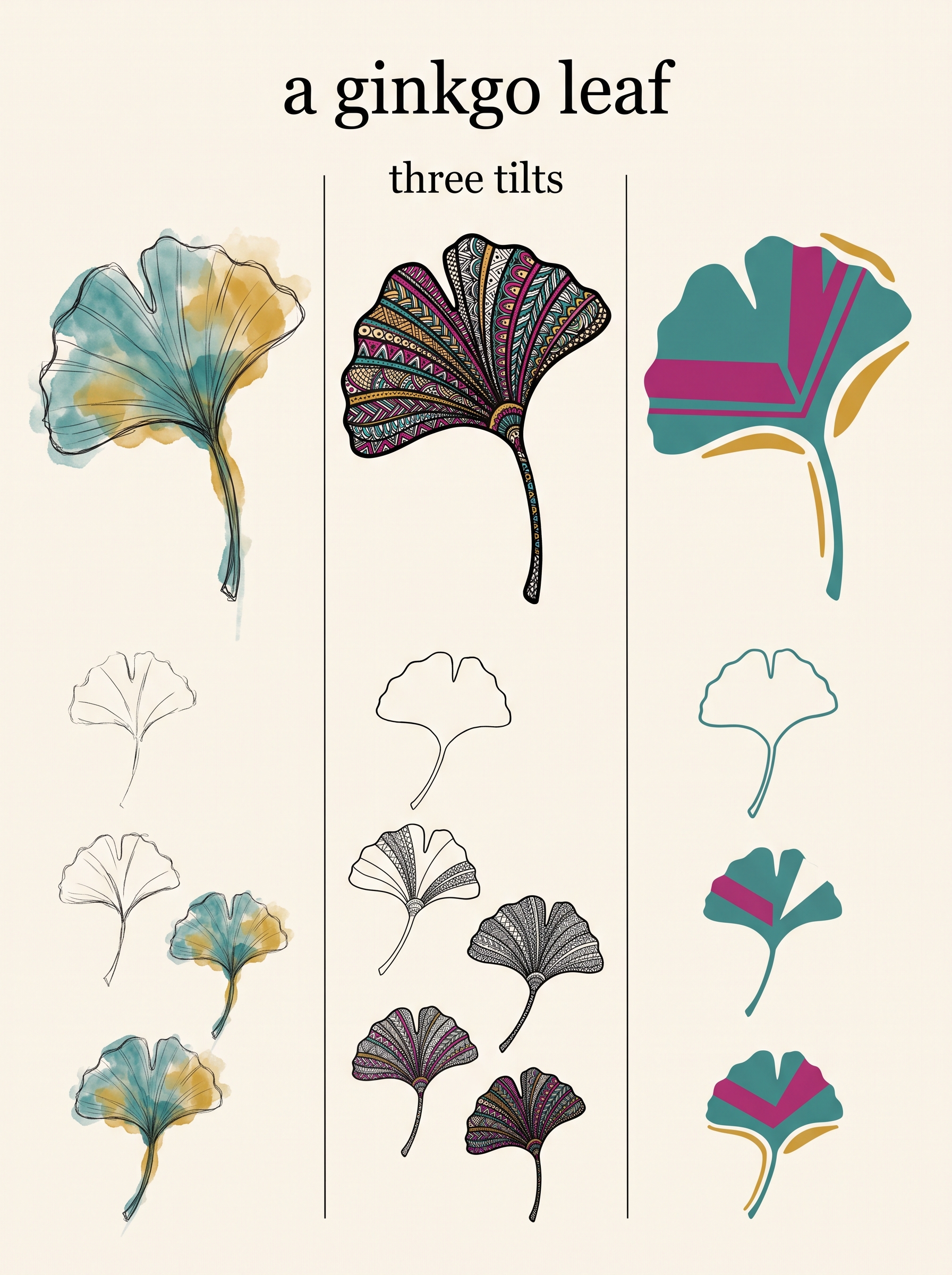
Three of them are broken down above, which is as complicated as any entry on this list ever gets. Everything else is the same move applied to a different object off the ground.
Things that fell
- 1. A feather, at actual size — one spine and one soft edge. The sheet in this collection calls it “a spine and a sigh”, which is the whole instruction.
- 2. The same feather, three tilts — draw it three times at different angles on one page. None of them will agree and that is the record.
- 3. A single sycamore key — one wing, one seed, one curve. Finished in ninety seconds.
- 4. An acorn out of its cup — the cup is the interesting half. Draw them apart.
- 5. A conker, still shining — a circle with one pale scar. The scar is why anyone picks it up.
- 6. A leaf with a hole in it — the hole is the drawing. Something ate that and left you a note.
- 7. A leaf skeleton — only the veins. No outline at all, and it still reads as a leaf.
- 8. A twig with three buds — spacing is the whole subject. Measure it with your eye, badly, then again.
- 9. Pine needles in a bundle — five lines from one point. Repeat the bundle four times and it is a branch.
- 10. A seed pod that has already opened — two halves and the mess between them.
- 11. Blossom on the ground — one petal, then one petal, then a small pile. Do not try for the pile first.
- 12. Whatever is in your coat pocket — there is something in there. There always is.
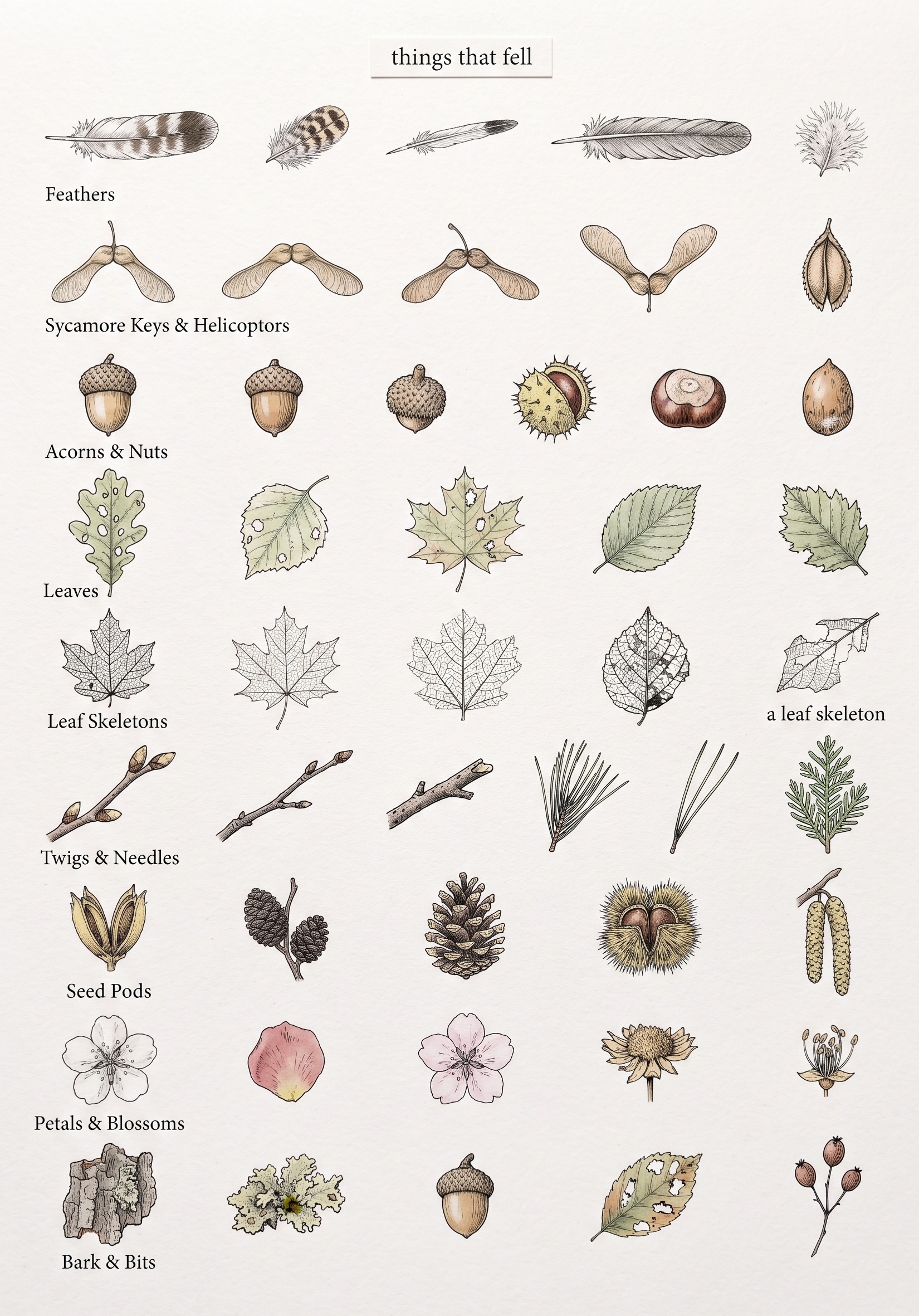
Nothing in that group needs to be carried home, which is the point of it. Every one of them is something you will step over on the way to the shops.
Small architecture
- 13. An empty nest — a bowl of scribble. This is the one place where scribble is accurate.
- 14. A wasp nest, from a safe distance — grey layers like a bad hairdo, drawn in one grey and one darker grey.
- 15. A spider web, after rain — draw the water beads and leave the thread implied.
- 16. A snail shell, spiral only — start in the middle and go outward. It is a mandala that walks.
- 17. A gall on an oak leaf — a small hard sphere on something soft. The contrast is the point.
- 18. A honeycomb fragment — six lines, repeated. Get the angle right once and the rest follows.
- 19. A bird box nobody moved into — a rectangle, a circle, and a long silence.
- 20. A cocoon on a stem — a shape you would draw wrong if you invented it. Draw what is actually there.
- 21. A molehill — a heap. Heaps are harder than they look, which is the exercise.
- 22. A dry stone wall, one square foot — five stones, and the gaps are as important as the stones.
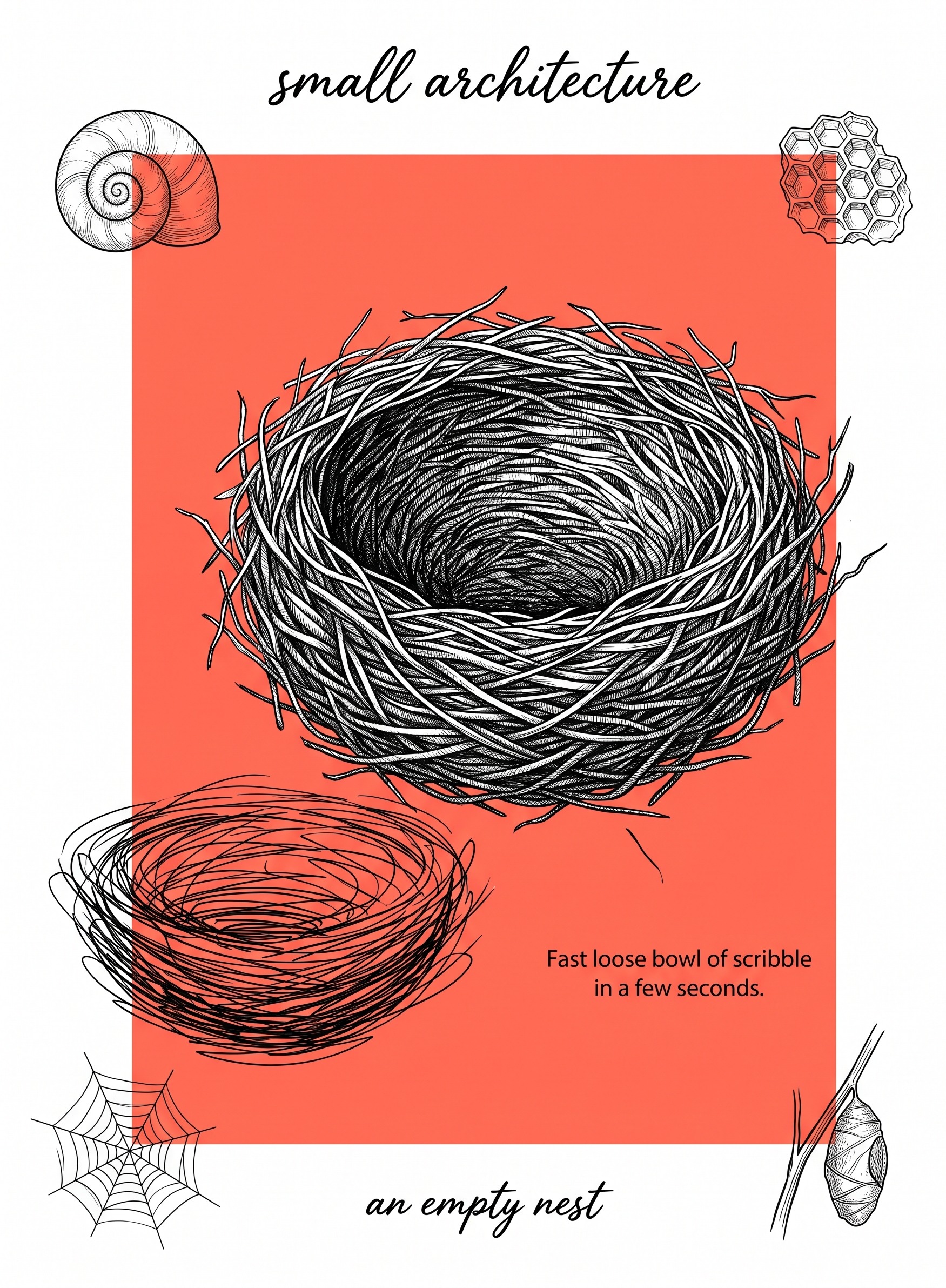
All of these are built by something that has no hands, which is worth a line in the margin on its own.
Stone, shell and bone
- 23. Five stones in a row — this is a sheet in the collection because it teaches weight faster than anything else.
- 24. One stone, wet — the shine is two white gaps you leave alone.
- 25. A pebble with a stripe — the stripe tells you which way the rock was lying for a very long time.
- 26. A shell, outside — ribs and growth lines. Count them roughly, never exactly.
- 27. The same shell, inside — a completely different drawing. Do both on one page.
- 28. A sea urchin test — a dotted dome. Dots do all the work, which is restful.
- 29. A cuttlebone — a flat oval with one soft edge, and almost nothing else.
- 30. Sea glass — three shapes, no detail, and the colour is a memory rather than a fact.
- 31. A bird skull, if you find one — small, light, and mostly eye socket. Draw the socket first.
- 32. A fossil in a paving slab — people walk over these daily. You are the only one looking down.
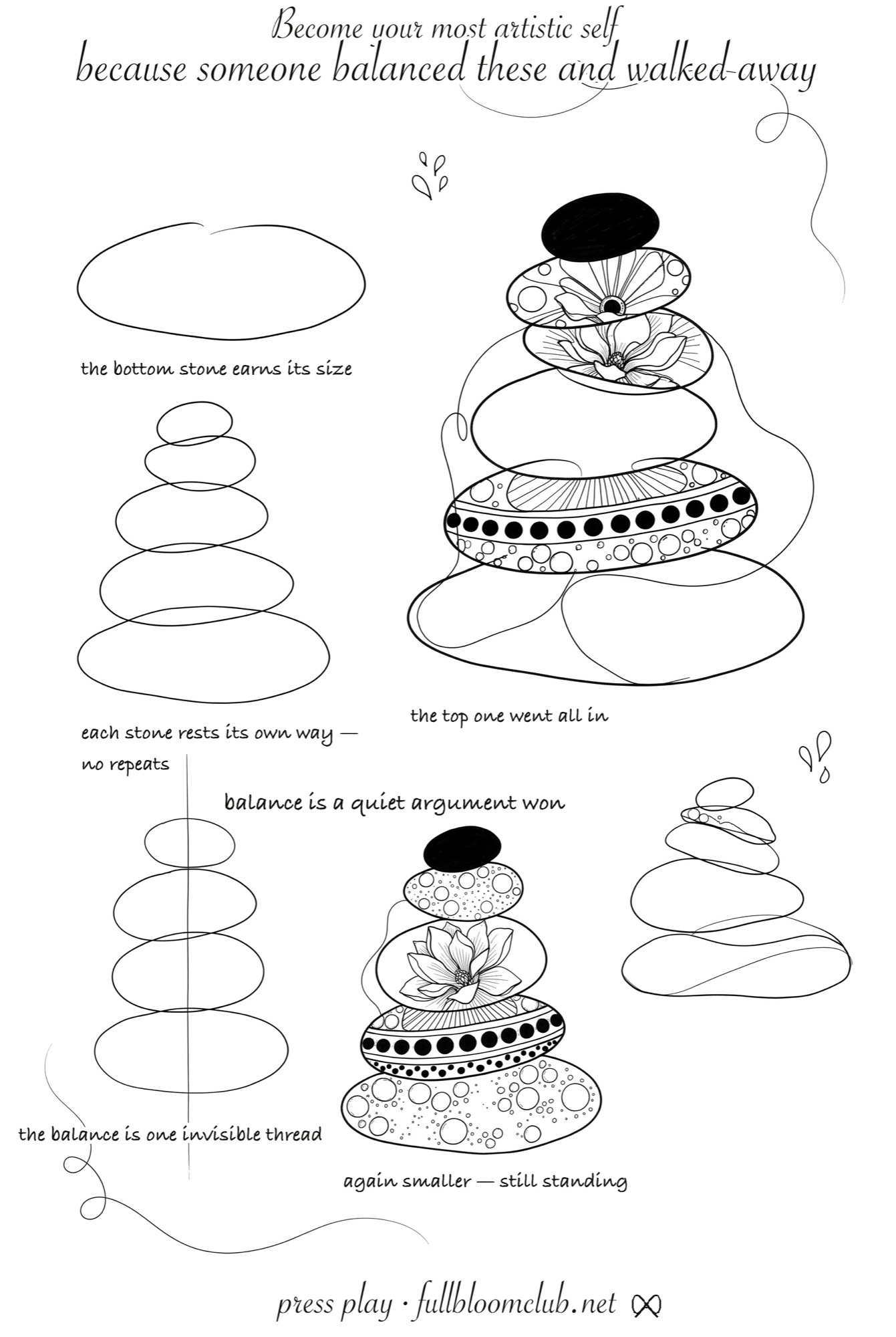
Stones are the training weights of nature journaling. They do not move, they do not wilt, and they will still be exactly the same shape next Tuesday if the first attempt goes badly.
Fungi, moss and lichen
- 33. One mushroom, from the side — a stem and an umbrella. Nothing else is required on the first attempt.
- 34. The same mushroom, underneath — the gills are a fan of lines from one centre. Deeply satisfying to draw.
- 35. Bracket fungus on a trunk — shelves. Draw them as shelves and stop apologising for it.
- 36. A mushroom cross-section — cut it, draw it, then eat something else.
- 37. Moss on a wall — a texture, not a plant. Small circles, close together, uneven.
- 38. Lichen on a gravestone — a map of a country that does not exist.
- 39. A puffball — a sphere with a bad complexion.
- 40. Fairy ring, from above — a circle of small marks. The circle is the fact worth recording.
- 41. A fallen log with things growing on it — the log is the frame, the growth is the subject.
- 42. Mould on a windowsill — yes, really. It is a pattern and it is free.
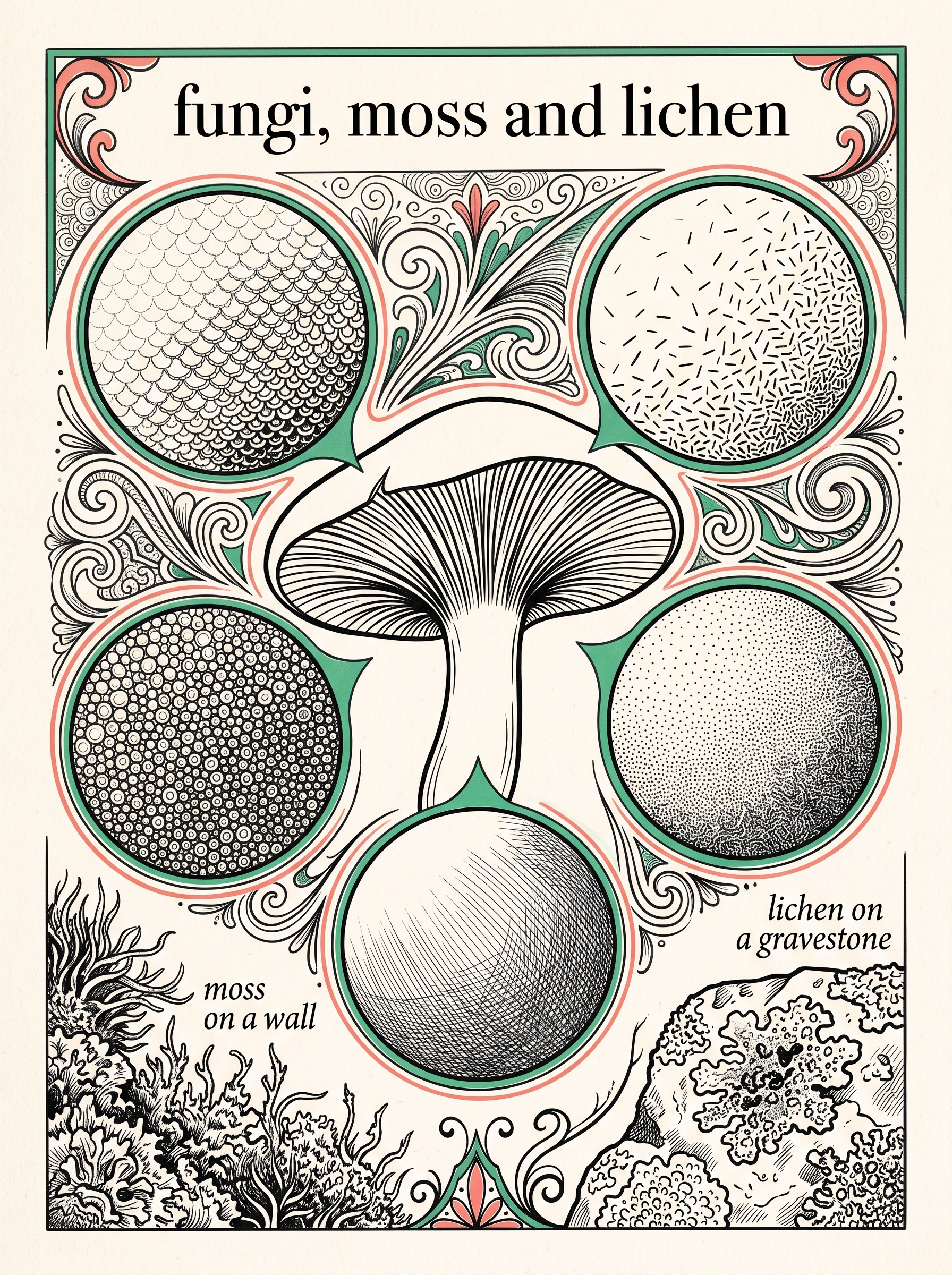
Fungi are the one group where a slightly wrong drawing is still a correct record, because they were never symmetrical to begin with.
The birds, at journal size
- 43. A bird as one solid shape — no feathers. Fill it in and stop.
- 44. The same bird, tilted — almost no bird stands upright. Tilt it and the drawing works.
- 45. A bird from behind — the shape nobody draws, and the easiest one there is.
- 46. Three eggs in a row — a sheet in this collection for a reason — three ovals teach spacing better than thirty.
- 47. A wren, small on the page — draw it the size it actually appeared. The empty paper is the record.
- 48. A heron, standing — one long S and two lines. Resist adding anything.
- 49. A murmuration — hundreds of commas. Do not draw hundreds. Draw forty and imply the rest.
- 50. A duck asleep — a loaf with a beak tucked in.
- 51. A pigeon, honestly observed — much better looking than you remember.
- 52. A bird’s footprint in mud — three toes and a drag mark.
- 53. A single wing, spread — a fan. You already know how to draw a fan.
- 54. The view from the window at the same hour, twice — two pages, one week apart. That is the whole of a nature journal in two drawings.
The eggs page below is the one I hand to anyone who says they cannot draw. Three ovals, slightly different, slightly overlapping — and the moment the spacing is right it stops being three ovals and becomes a nest.
Download the free three eggs page
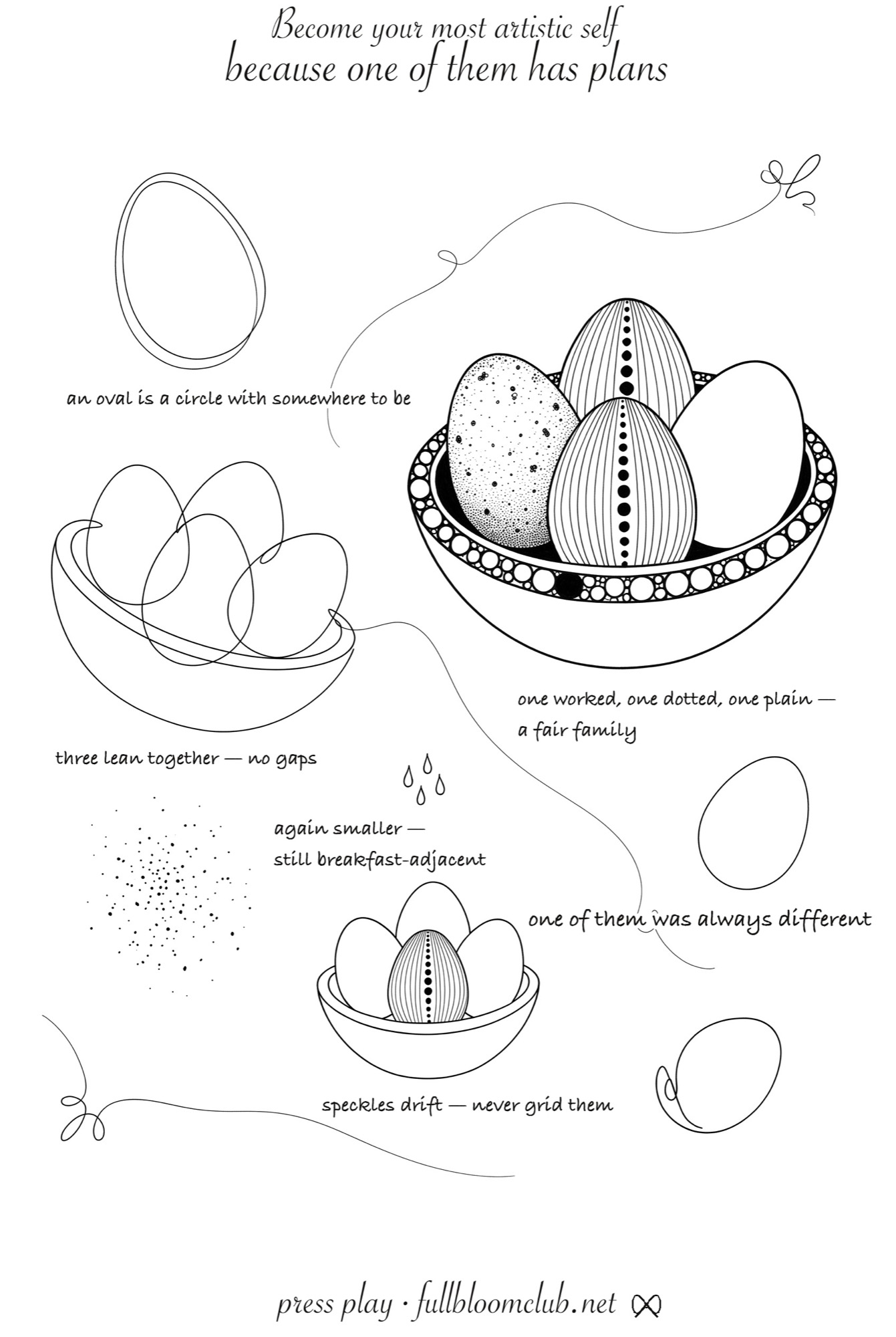
Birds are the group people most want and most avoid, so the trick is to draw them at the size they actually appeared in the window rather than the size you feel they deserve.
Insects and the very small
- 55. A bee, from above — two ovals and a stripe. The wings are two commas.
- 56. A beetle’s back — one shape, mirrored down the middle. A mandala with legs.
- 57. A dragonfly’s wing, alone — a net. Draw the outline, then the net, then stop.
- 58. A ladybird, spots counted — count them. It matters more than accuracy of shape.
- 59. An ant, at ten times life size — three lumps and six lines, and it looks like engineering.
- 60. A caterpillar — segments. Get the segments even and everything else forgives you.
- 61. A moth at the window — wings folded flat, which is a triangle. Butterflies do not do this.
- 62. A woodlouse, curled — a spiral of plates.
- 63. A snail, moving — the foot is longer than the shell. Nobody draws it long enough.
- 64. A worm cast — a small coiled sculpture that took all night.
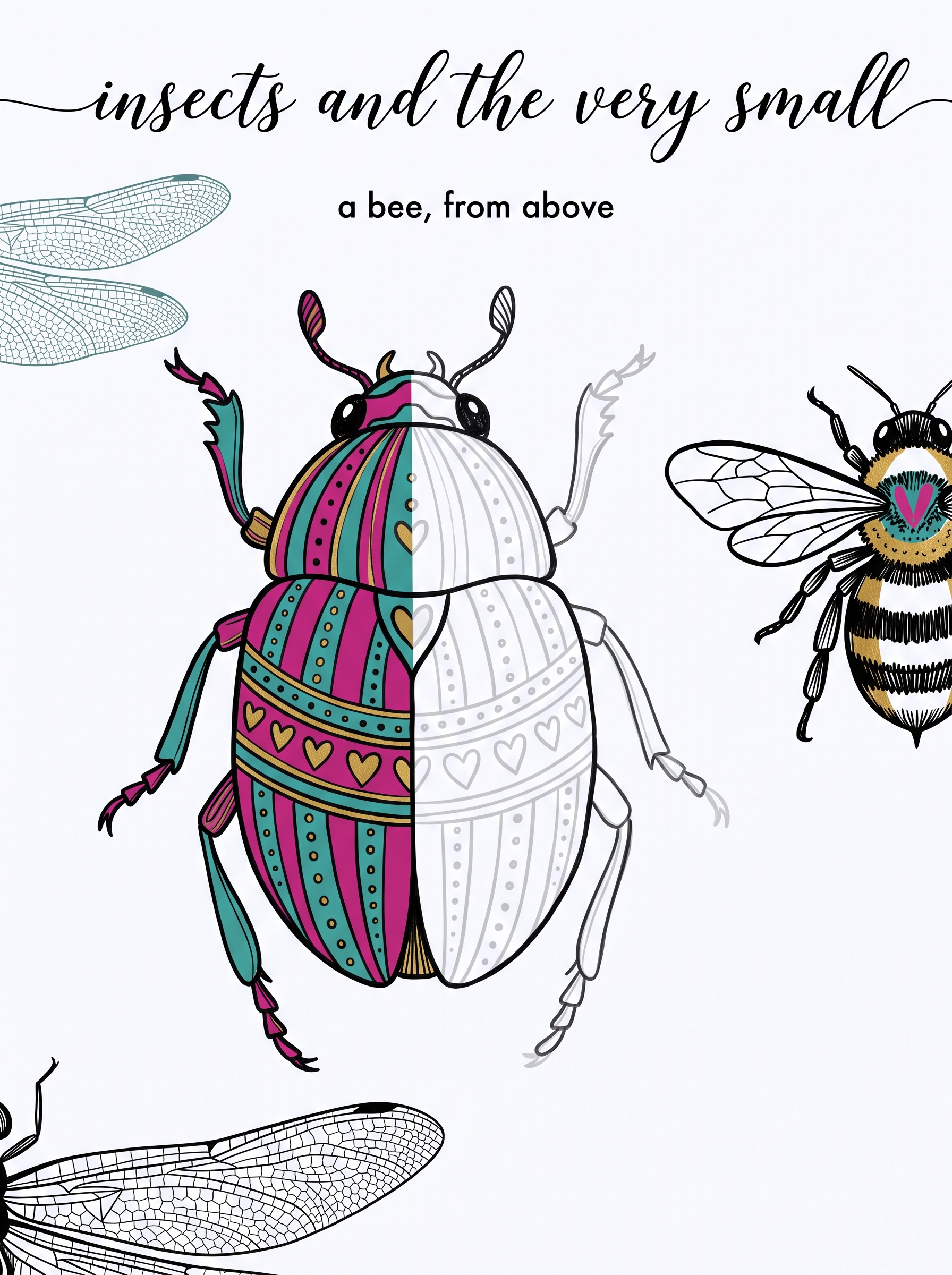
Draw these bigger than life. It is the only group where enlarging is honest, because at true size you cannot see what you are recording anyway.
Water and what it does
- 65. One ripple ring — two circles, not concentric. Never concentric.
- 66. A puddle, with a reflection in it — draw the reflection, not the puddle.
- 67. A raindrop on a leaf — a lens. Draw what is under it slightly larger.
- 68. Frost on a window — branching lines that always split in twos.
- 69. An icicle — a taper with a wet tip.
- 70. A stream over a stone — the water is the shape the stone makes it.
- 71. Sea foam at the edge — lace. Leave the paper white and draw around it.
- 72. A wave, from the side — one curve and one collapse.
- 73. Condensation on a glass, outdoors — dots of two different sizes, and nothing else.
- 74. A frozen puddle, cracked — a stained-glass window that will be gone by noon.
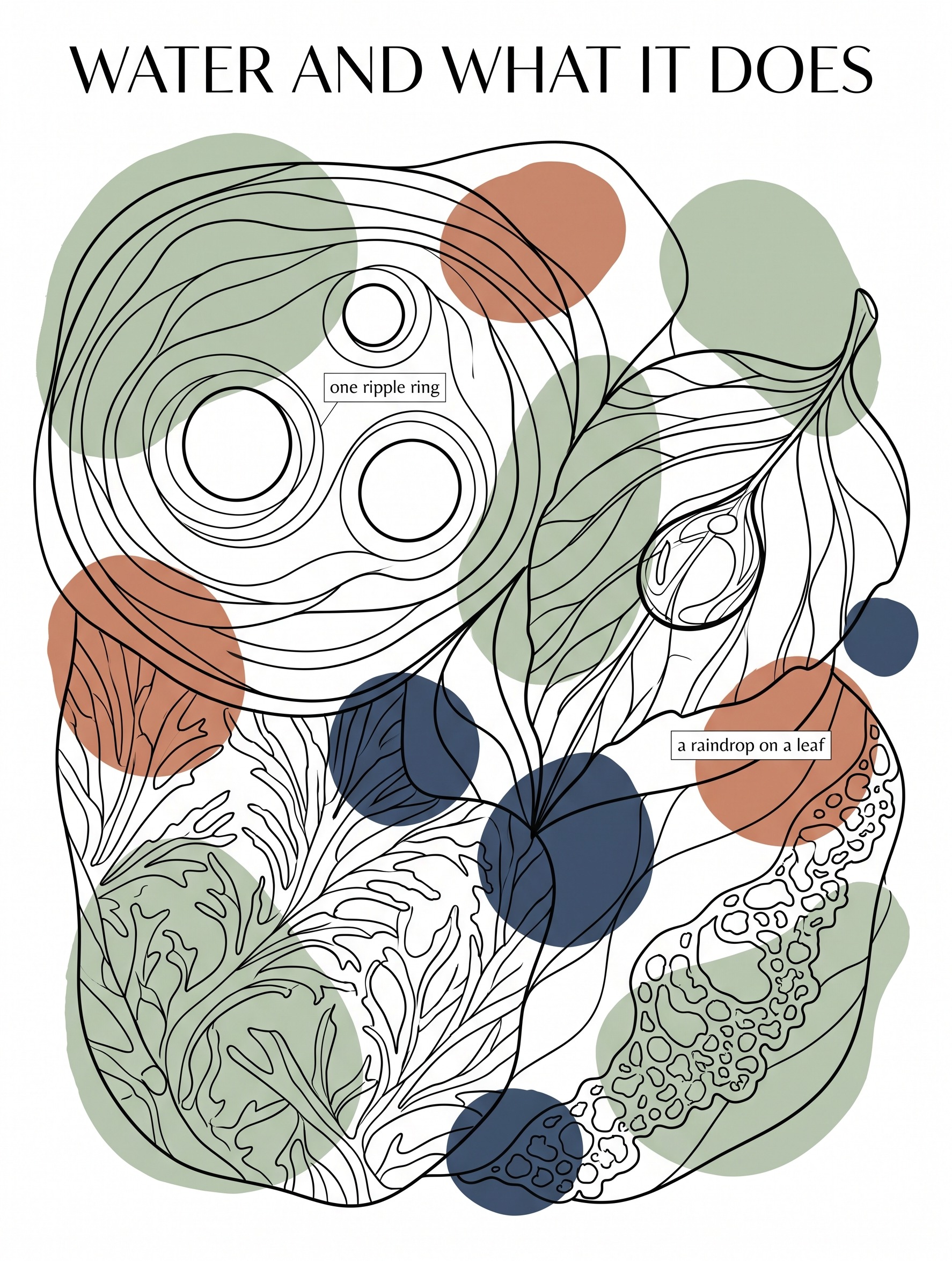
Water is the group that teaches restraint, because almost all of it is drawn by deciding where not to put ink.
Weather and sky
- 75. One cloud, drawn in ten seconds — longer than ten seconds and it will be a different cloud.
- 76. The same sky, three days running — this is the exercise that turns a sketchbook into a journal.
- 77. A moon that is not full — the interesting ones are the other twenty-seven days.
- 78. Rain, as it actually looks — not lines. Lines are a convention. Look properly and record what you see.
- 79. The shape of a shadow at noon — then again at four. Two pages.
- 80. A sunset in three colours only — three. Choose them before you start.
- 81. Bare branches against the sky — draw the sky shapes between the branches instead of the branches.
- 82. A flock, in flight, as one shape — the flock has an outline. Draw that.
- 83. Fog, by what it hides — erase, do not add.
- 84. Wind, by what it moves — a wind-bent tree is a sheet in this collection, and it is the only honest way to draw wind.
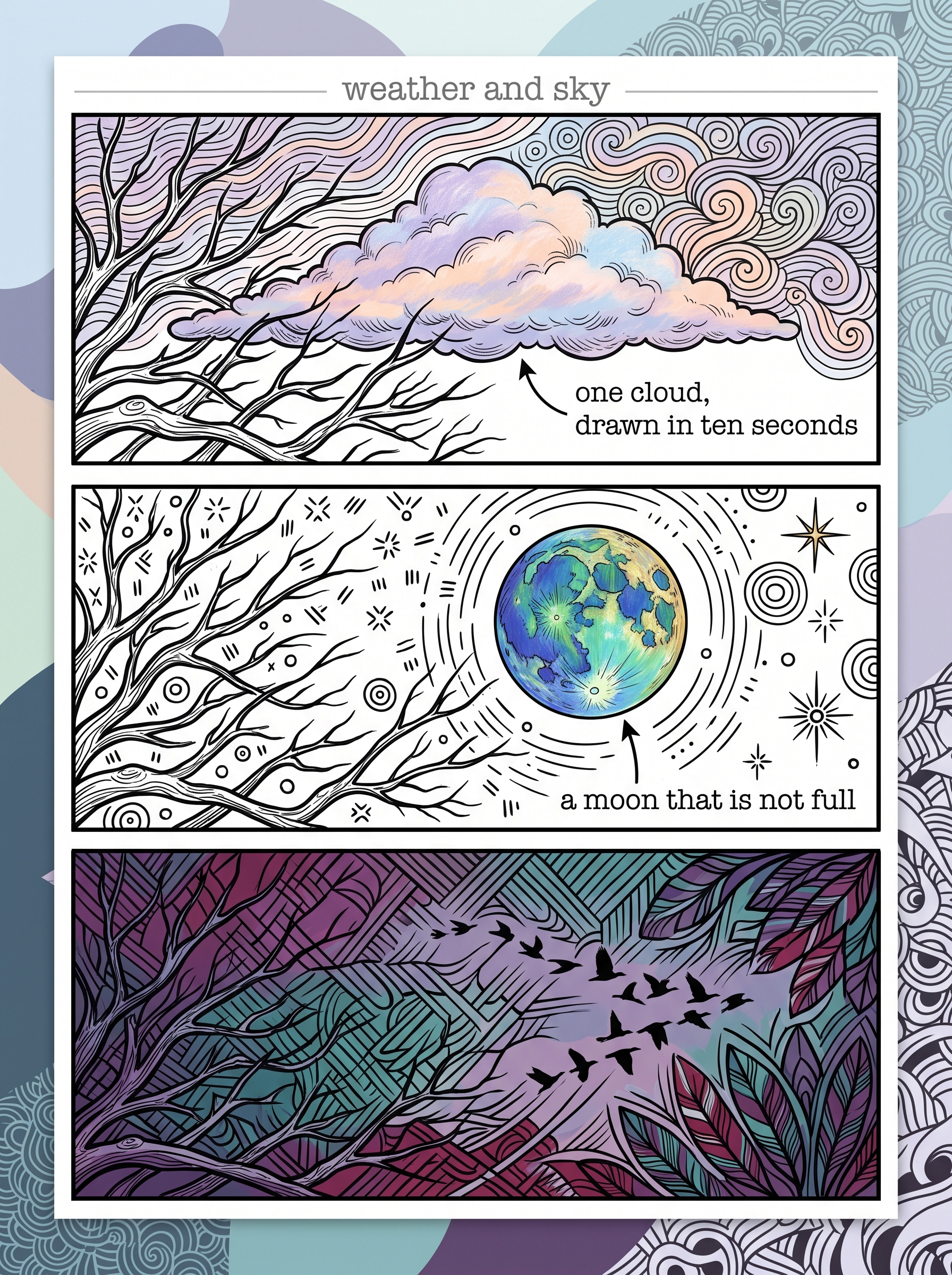
The sky is the only subject on this list that is guaranteed to be available, in some form, on any day you open the book.
The garden’s own furniture
- 85. Three grasses — one of the calmest sheets in the set, and three lines is genuinely the whole thing.
- 86. A ginkgo leaf — a fan with a split. There is nothing else in nature shaped like it.
- 87. A magnolia branch, in bud — fat buds on bare wood.
- 88. A tulip past its best — far more interesting than a fresh one. It has decided to do something.
- 89. Ivy on a fence — the leaf shape repeated at four sizes.
- 90. A dandelion clock, half gone — draw the gaps.
- 91. A rose hip — a small red full stop.
- 92. A watering can, from where you left it — objects belong in a nature journal. They are the evidence of you.
- 93. Your own boots by the door — muddy, and part of the record.
- 94. The gate, drawn badly, on purpose — one page a month should be drawn badly on purpose. It keeps the book usable.
These are the entries that will mean the most in five years, and the least today, which is a reliable sign that they belong in a journal rather than a sketchbook.
The ones that only last a day
- 95. A cut flower, on the morning it opens — and again on the morning it does not.
- 96. A footprint in frost — gone by ten.
- 97. A mushroom that was not there yesterday — and will not be there tomorrow.
- 98. Blossom still on the branch — you get about nine days a year for this.
- 99. A spider web before anyone walks into it — approximately one hour.
- 100. Snow on one specific branch — the drawing is the only version that stays.
- 101. Today, whatever it actually was — the most useful page in any nature journal is the one drawn on a day nothing happened.
Guilt closes more journals than boredom does.
The year I kept a nature journal wrong
I filled a whole book with beautiful pages and not one date. Not a single one. I know the drawings are good because I can see them, and I have no idea what month any of them happened in — spring, possibly, on the grounds that something in it has blossom, which makes the book a portfolio rather than a record and those are not the same object.
The fix is four words in the corner and it takes two seconds. I now write the date before I draw anything, because writing it afterwards is a thing I have proved I will not do.
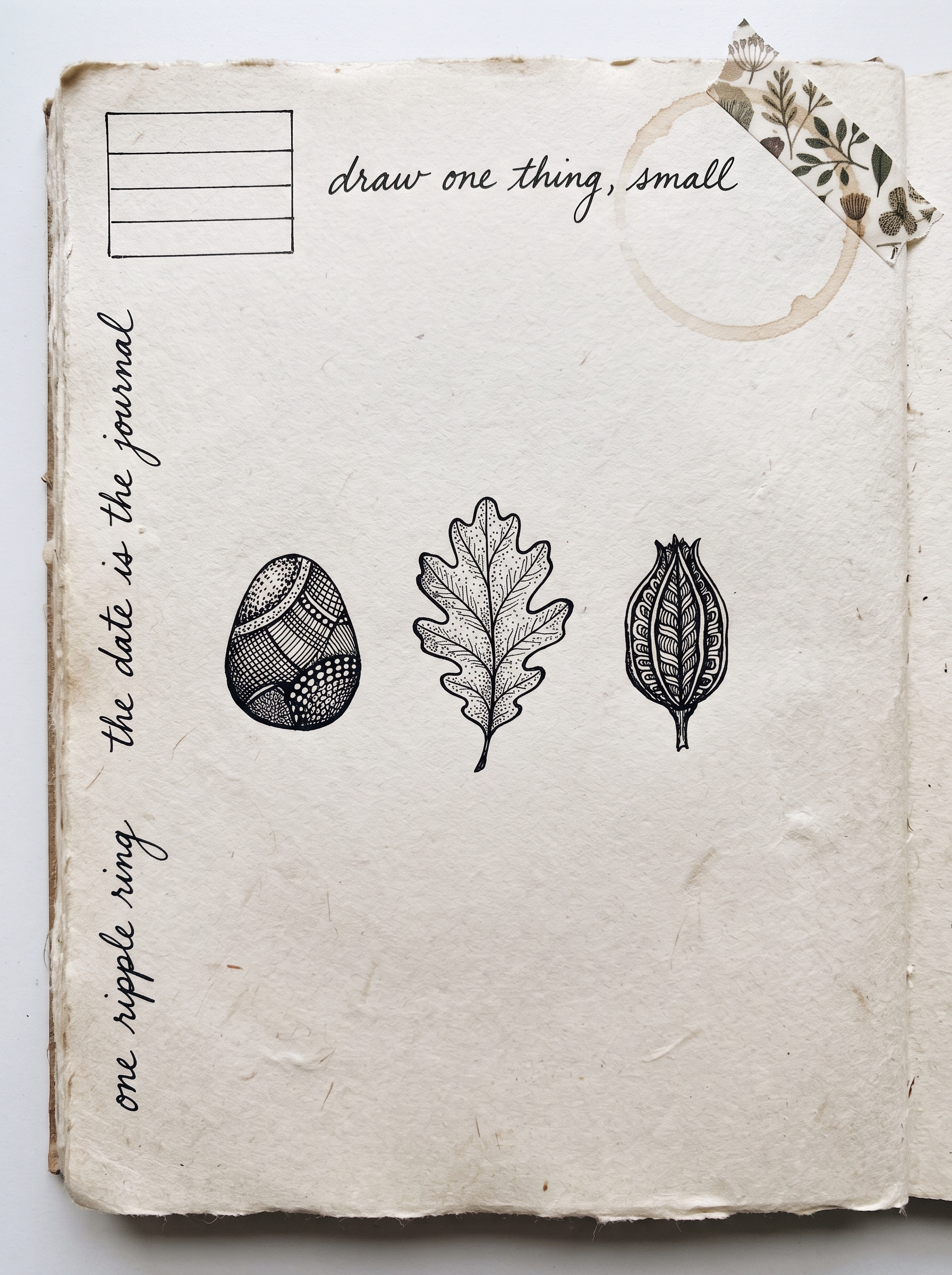
If you take one thing from all 101: the date is the journal. The drawing is just what you did while you were there.
What do I need to start nature journaling?
A pen, a book that closes flat, and a walk. That is the entire list. (Nothing on it needs charging, and nothing on it will ask you to accept cookies.) Nothing on the 101 above needs paint, and nothing needs a bag — the subjects are chosen so that the one you find is already the right size for the page.
How often should I write in a nature journal?
Less often than you are about to promise yourself. (You are, at this moment, quietly planning to do it every day. You are not going to do it every day.) Once a week, one page, for a year is 52 entries and a genuinely useful book. Every day for eleven days is a book you will feel guilty about, and guilt closes more journals than boredom does.
Can I keep a nature journal in a city?
Most of the 101 above were found on pavements, windowsills and the same short stretch of road. Moss, lichen, pigeons, puddles, frost, seed pods and the shape of a shadow at four o’clock are all city subjects, and a nature journal kept in one street for a year is more interesting than one kept in six countries — which is annoying if you have just booked something.
Free Starter Pack
10 pattern templates. What goes inside the outline.
Sent tonight. Scallops, dashes and stippling — the fills that turn a leaf into a page.
Unsubscribe in 1 click, no hard feelings
100 pieces, each with a faint trace underneath it
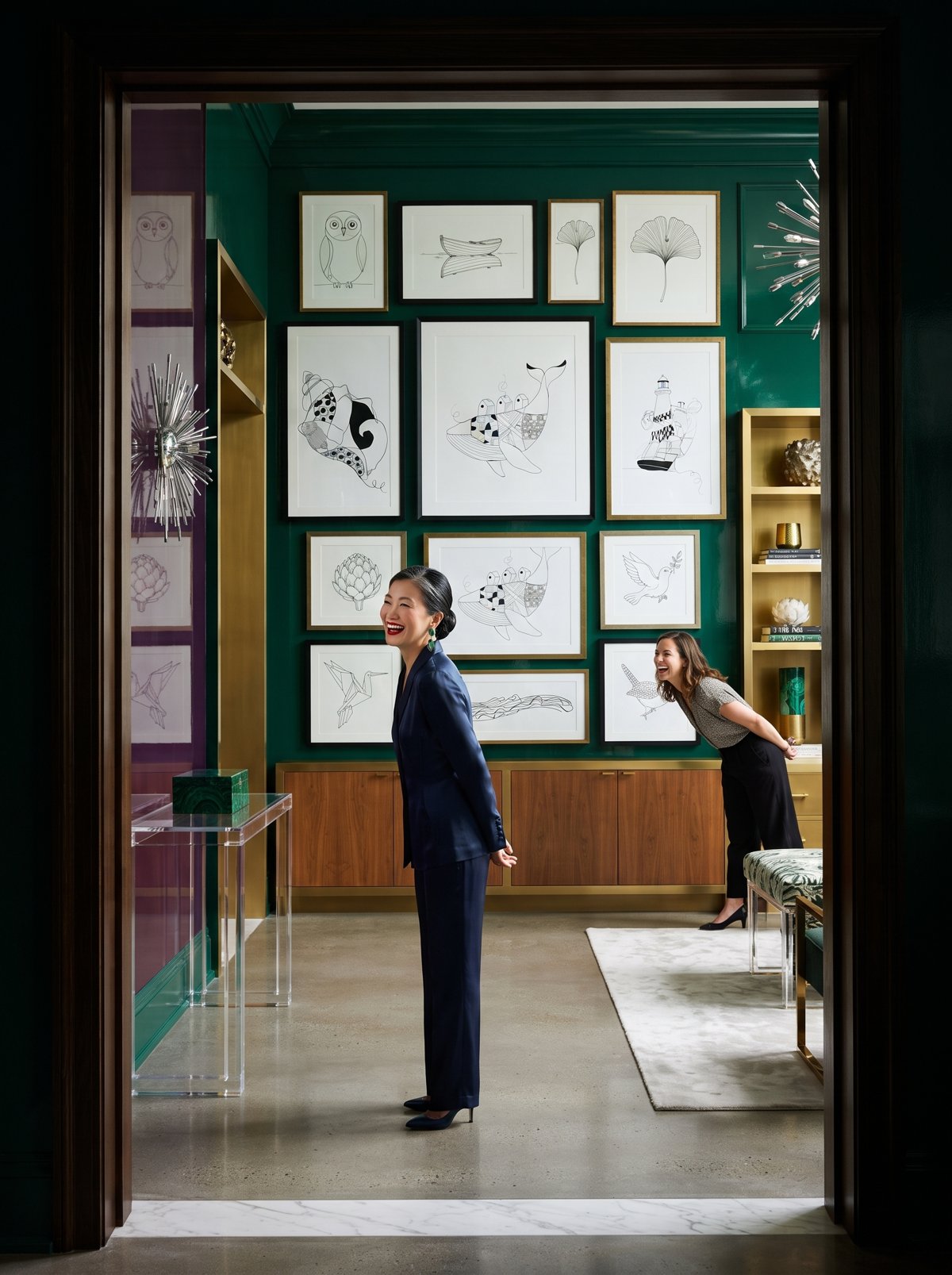

Tonight it is one feather on the back page, at the size it actually is. By the weekend it is a shelf of small things you stopped and looked at — a stone, three eggs, a seed pod that had already opened. Every subject, every faint trace underneath, every five-line start — the whole route from one walk to a year you can turn the pages of.
Instant download · print as often as you like
One hundred and one things, and every single one of them is currently outside.
Mirabelle wrote this. No training, strong opinions, many pens. Peer reviewed by a cat who has eaten two of the specimens.