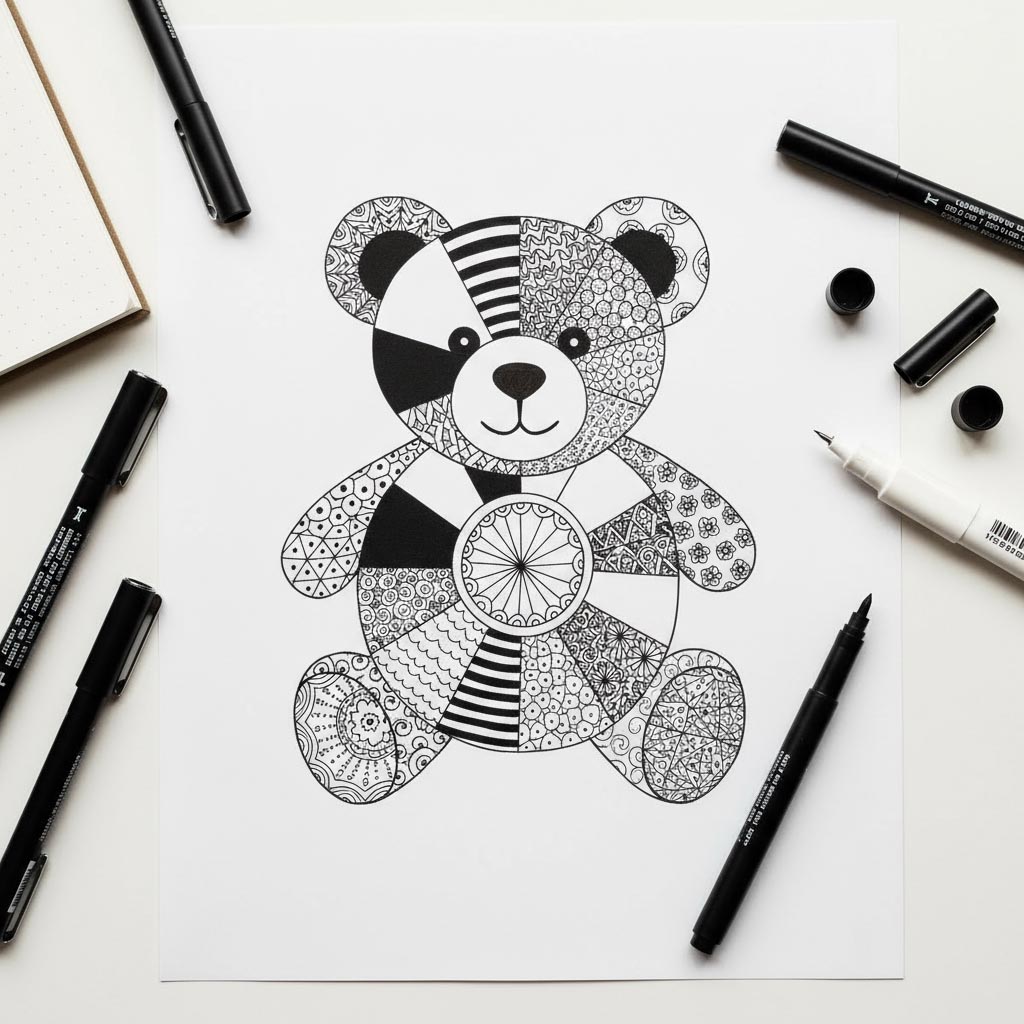
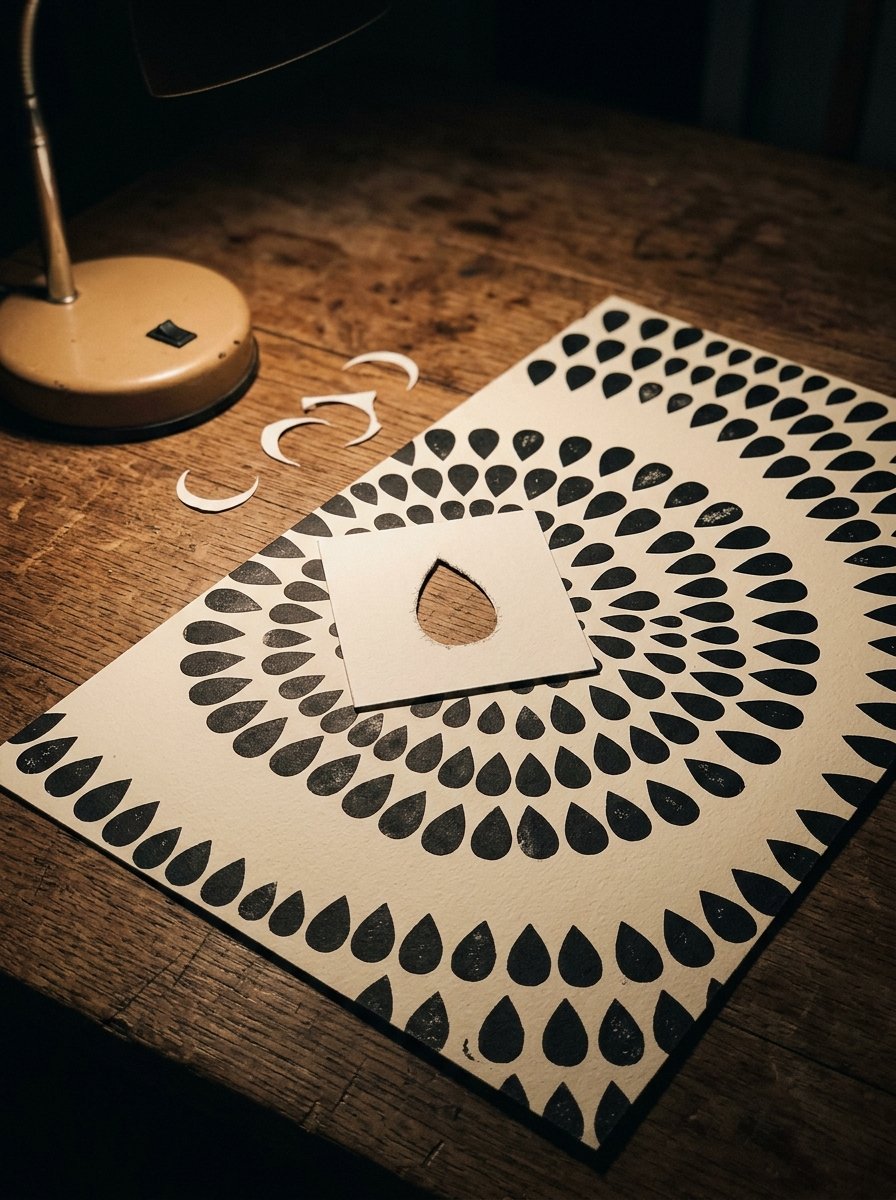
A flower gives away its whole shape even with one petal missing. That is the engine behind most flower patterns to draw.
One petal shape, drawn once, then turned. Turn it four ways and you have a flower. Repeat the flower and you have a pattern.
Nothing on the page is a new shape. It is the same shape at different angles.
(I spent years thinking a pattern meant drawing lots of different things. It means drawing one thing a lot.)
Below are 61 patterns, sorted by the evening you are actually having. Not by flower, and not by difficulty.
Start with the free pattern starter sheet. The petal is already drawn, so you begin at the turning instead of the shape.
Download the free pattern starter sheet →
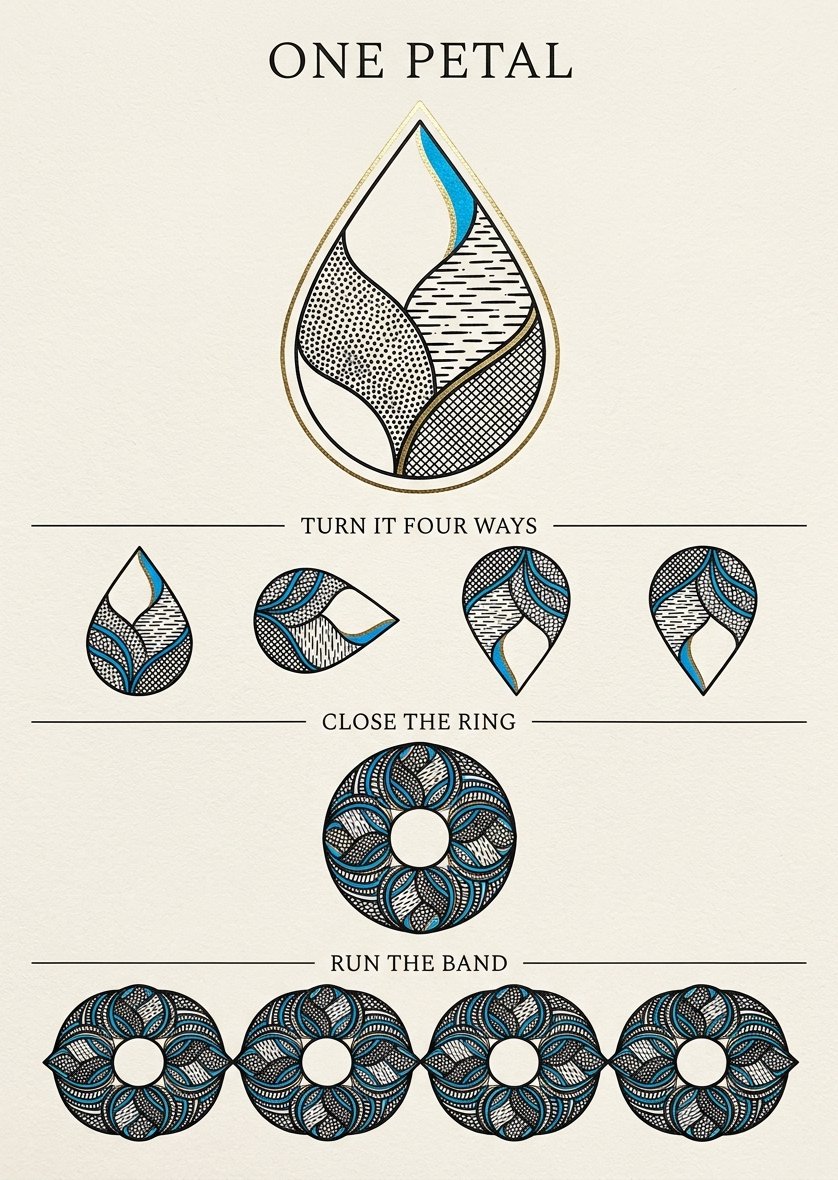
The sheet has one petal at the top and three rows under it. Row 1 turns that petal four ways. Row 2 closes the turns into a ring. Row 3 runs the ring along a band.
In the print box choose actual size, not fit to page. (Your printer will want to shrink it. Do not let it.)
Work the rows in order and repeat row 2 most. A ring that closes cleanly is the whole difference between a pattern and a pile.
You do not need special paper. Anything that takes a pen will do.
Draw the petal the size of your thumbnail, not the size of the page. Small petals forgive a wobble. Large ones report it. (I have drawn some very confident large petals.)
Trace the first few if you like. Tracing the shape is not cheating. It is how the hand learns where the curve turns.
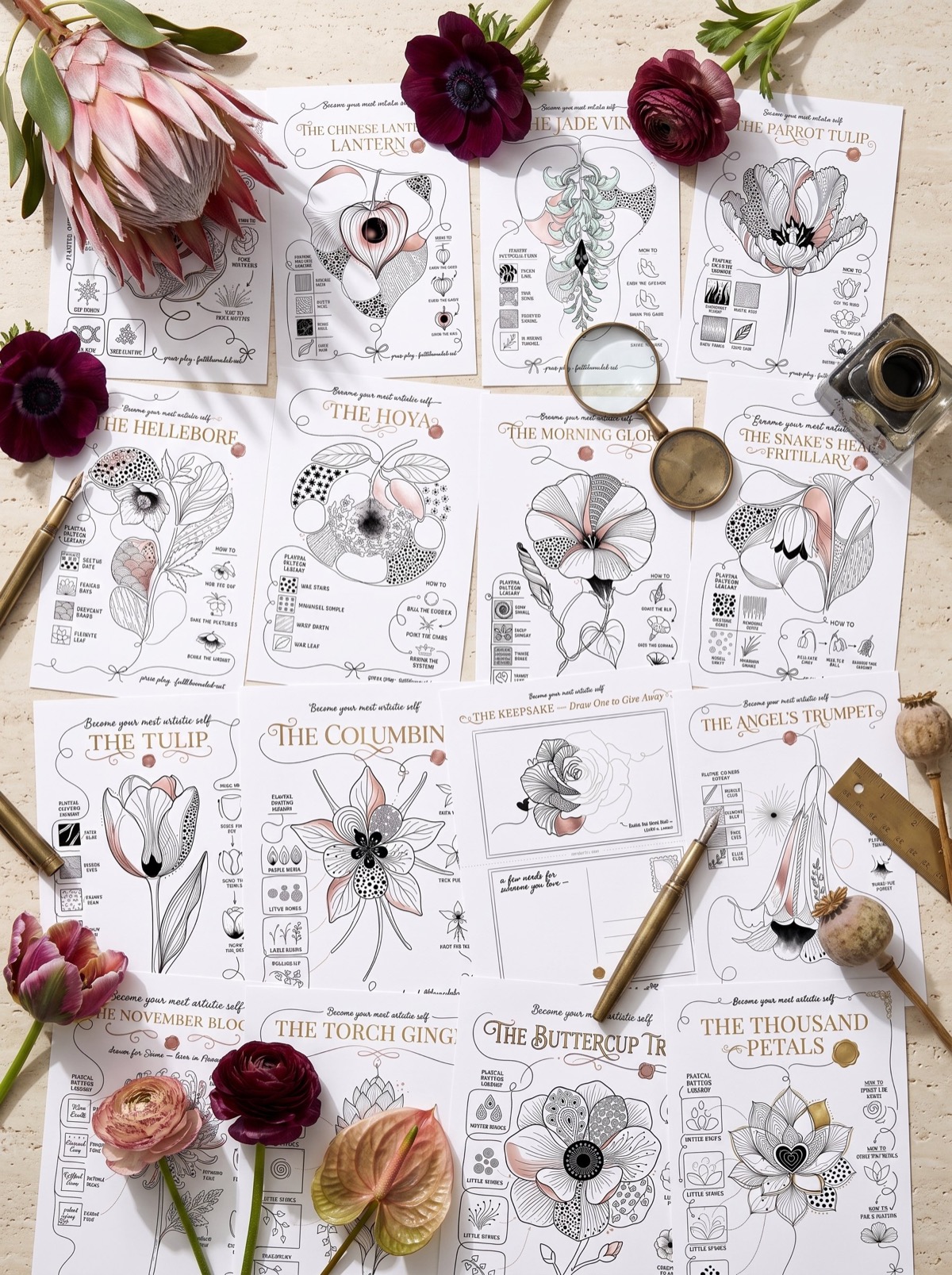
A turned petal gives you the outline, and it leaves the inside empty. That is where Bloom & Pattern comes in. This post grew out of it. It holds the patterns that go inside a flower once the shape is settled.
The Collection
Fill every petal you have just turned, with a pattern that fits the shape.
By the time the ring closes, the outline is done and the inside is still bare. Inside: 16 flowers, 73 sheets, and the patterns that go in the petals. What you get: a pattern for every petal, and a page worth pinning up.
Back to the petal. Here is what one turned shape does across an evening.
How does 1 petal shape turn into flower patterns to draw?
Draw one petal. A teardrop is enough.
Draw it again at a quarter turn. Then again, and again, until four of them meet in the middle. That is a flower. It cost you one shape and three repeats.
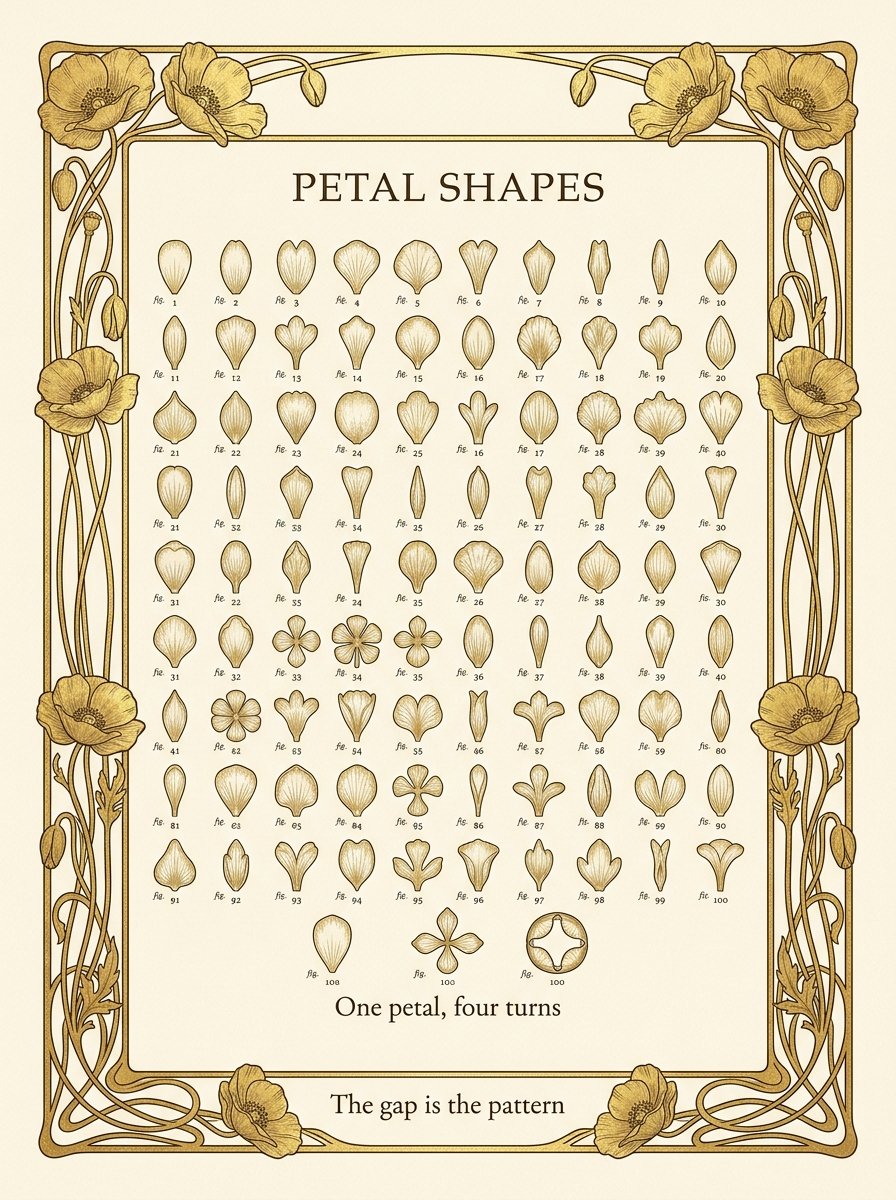
Now draw that flower again, a hand’s width along. Keep the gap the same both times.
The gap is the pattern. The flower is only the excuse. (Nobody mentions the gap. The gap is the hard part.)
The gap is the pattern. The flower is only the excuse.
Count the gap in petal widths, not in centimetres. One petal, two petals, one petal. The eye checks the ratio and never measures.
What ruins it is changing the petal halfway. A petal that fattens as it goes reads as a mistake, because the eye compares every copy to the first one.
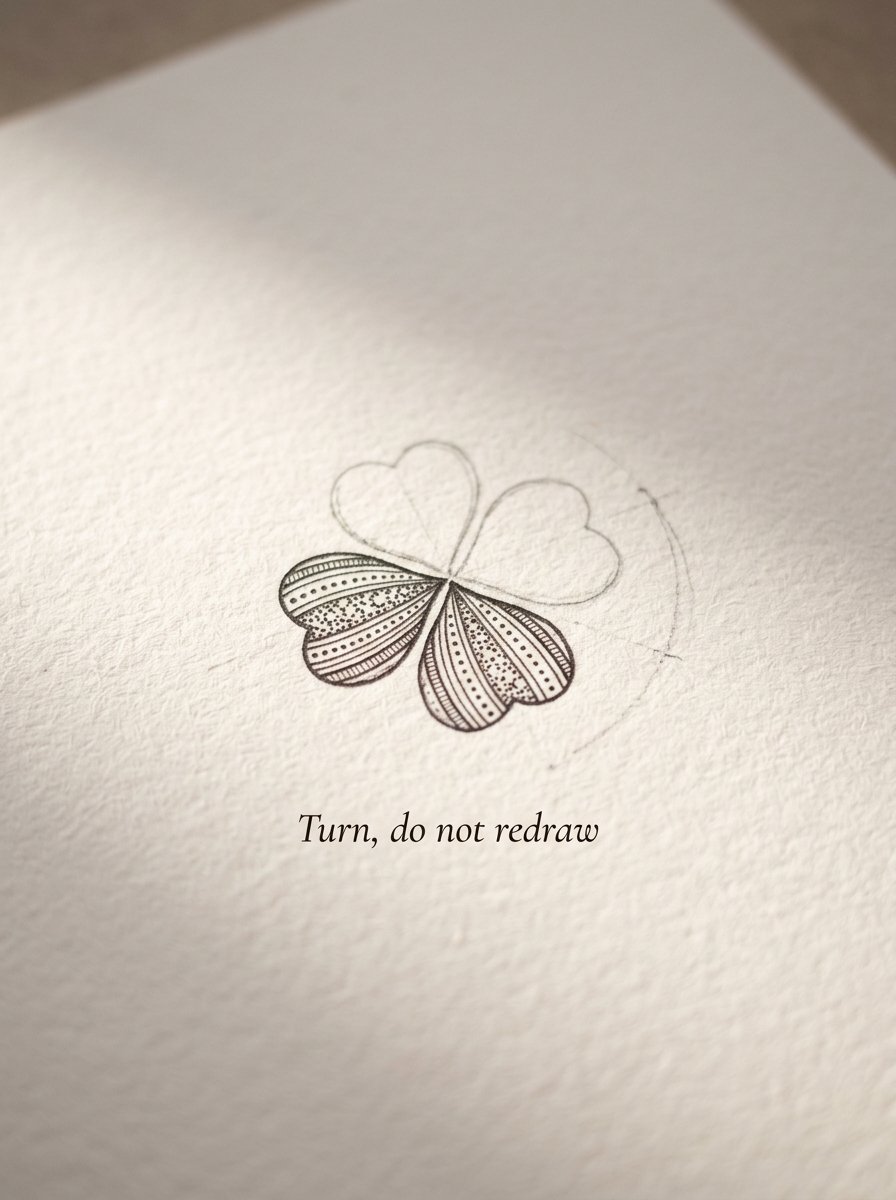
So draw a plain petal first, on purpose, and copy that one. I am serious about this. Matching a plain shape is easy. Matching a beautiful accident is not.
What do you draw when a border has to be finished tonight?
Charles Voysey sold his first wallpaper design in 1883 and was still selling patterns in 1930. He drew them for one firm, Essex & Co, from 1893 onward.
His method was subtraction. Outline kept, shading gone, detail cut back until a shape could be read across a room.
A border is that same problem at a smaller size. Outline only, and it finishes tonight.
(I used to shade borders. They took three evenings and looked worse than the flat ones.)
Start a border from the middle and work outward both ways. Starting at one end guarantees a squeeze at the other.
These 21 all run in a line. The single petal run is one petal at one tilt, evenly spaced, and the tilt stops it reading as a queue. The alternating tilt tips the same petal left, then right. The closed ring is four petals meeting, and the ring has to shut or it reads as a leak. The half ring puts two petals on the baseline like a fan.
The petal and dot alternates the two, and the dot is what sets your gap. The falling petal drops each one slightly lower than the last. The stacked pair sits nose to nose. The leaf break slips a leaf between every two flowers to rest the eye.
The stem line runs one straight rule under everything, and it is the cheapest way to look deliberate. The wave stem waves that same line. The bud run uses a narrow teardrop, a petal not yet open. The paired bud doubles it.
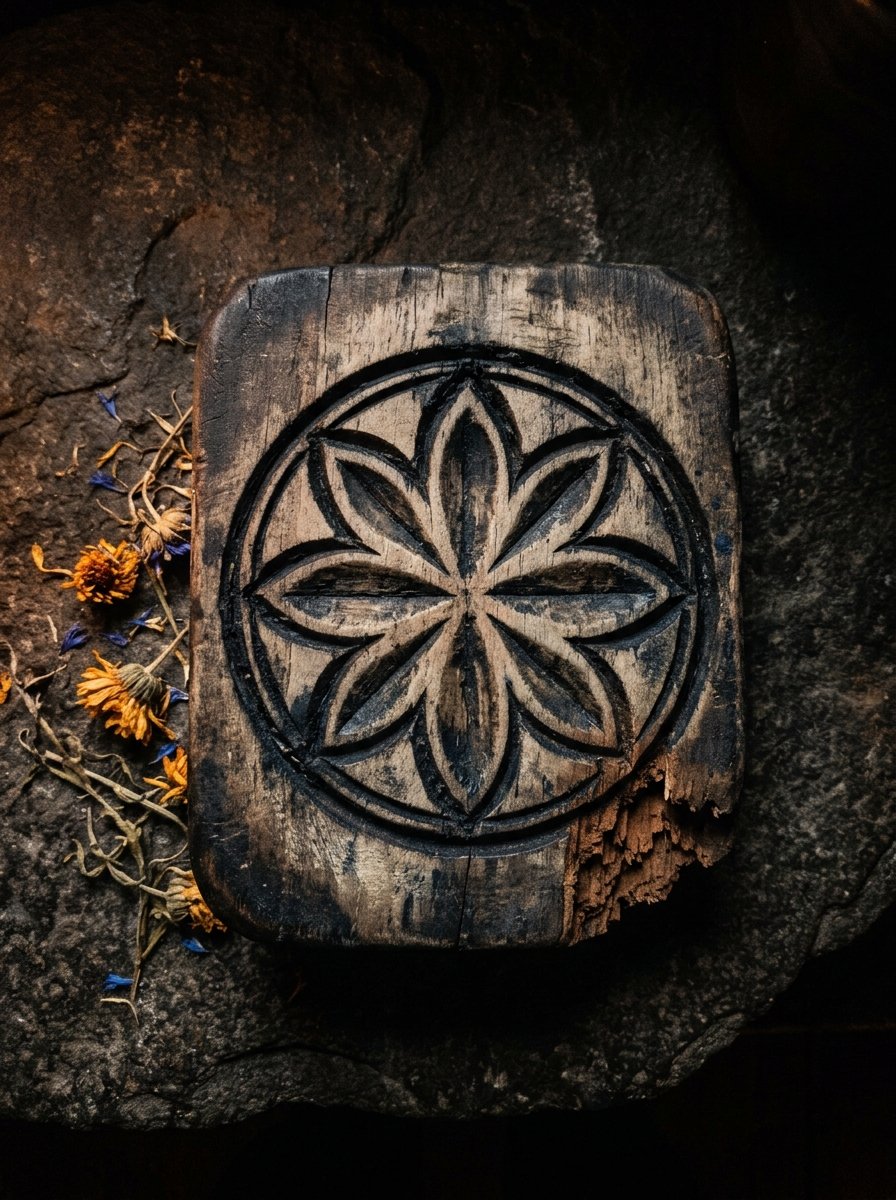
The scallop draws petal edges only, no middles. The petal arch turns the scallop upward. The overlap run crosses each petal a third of the way into the one before. The double row sets one upright row above an upside-down row.
The trailing tendril is a single curl between flowers, and mine took a fortnight to stop looking like handwriting. The berry gap drops three dots where a flower would be. The corner turn puts one flower in the corner facing outward, which is the move nobody teaches. The fade thins the petals toward one end. The anchor sets a heavier flower at each end so the border stops drifting.
Free Starter Pack
Get 10 free patterns for the petals you have turned.
Sent tonight. Dots, scallops and bold stripes, each one sized to sit inside a petal.
Unsubscribe in 1 click, no hard feelings
What do you draw when the page is empty and nothing arrives?
In 1964 Maija Isola drew a poppy, against instruction. Her own firm’s founder was known for disliking floral prints. Isola made one anyway, at a size nobody had asked for.
Unikko is one petal ring, enlarged until it fills the cloth. Over about 40 years she made around 500 prints.
The lesson for an empty page is the scale. When nothing arrives, draw the shape bigger than feels sensible.
She was told the firm did not care for florals. She drew a poppy the size of a door.
(I have started a lot of evenings by drawing something small and polite in the corner. It never goes anywhere.)
Big shapes also fail faster, which is the point. You know inside two minutes whether the page is working.
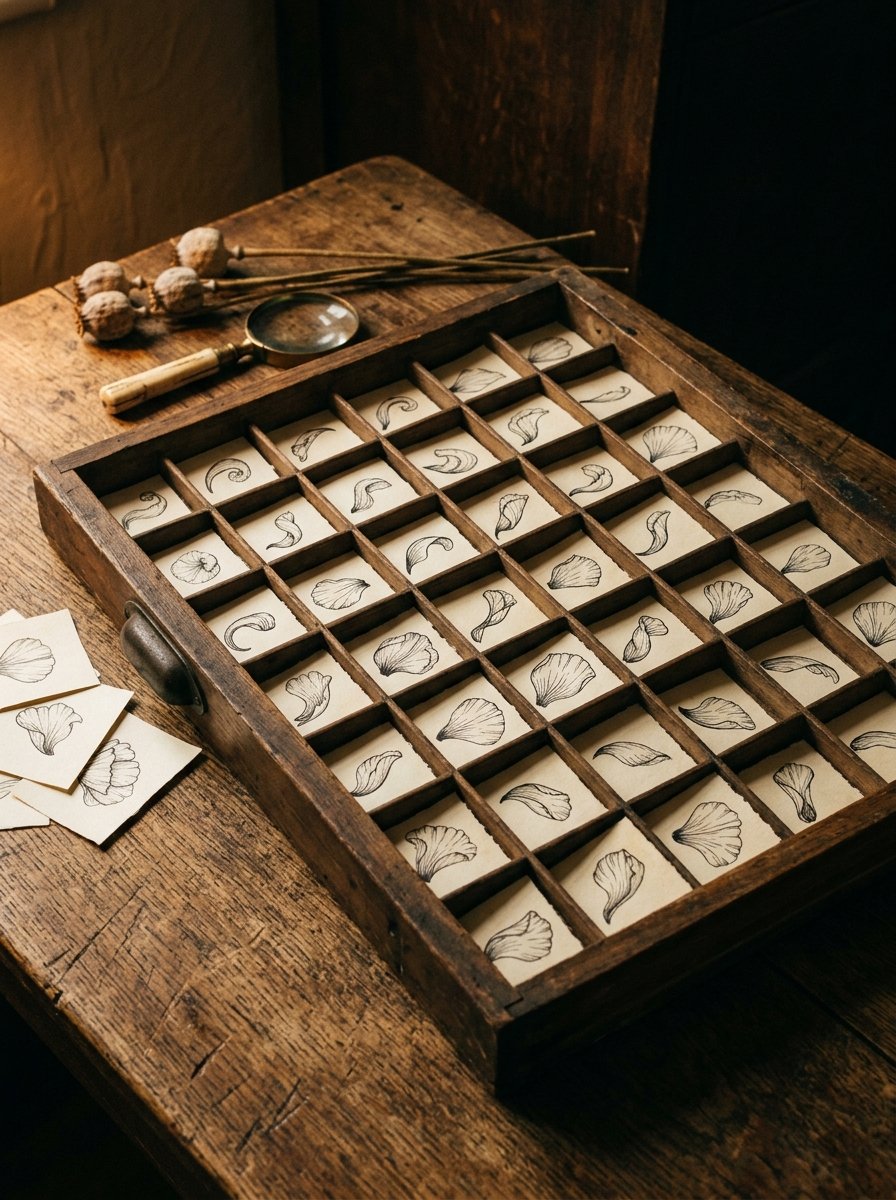
These 19 start big. One flower page-wide is a single ring drawn enormous, and it is the fastest way out of a blank evening. The half flower at the edge runs straight off the paper. The corner bloom claims one corner and leaves the rest alone. The scatter repeats one flower at four sizes with no grid under it.
The drift leans every flower the same way. The crowd lets them touch, which hides any petal you are not proud of. The horizon runs one row across the middle and keeps above and below empty. The spiral of petals winds one shape outward from a centre.
The mirrored pair faces two flowers at each other. The shadow flower draws one in outline and one solid black. The flower and its ghost repeats the second in dots only. The falling scatter tips them all downward.
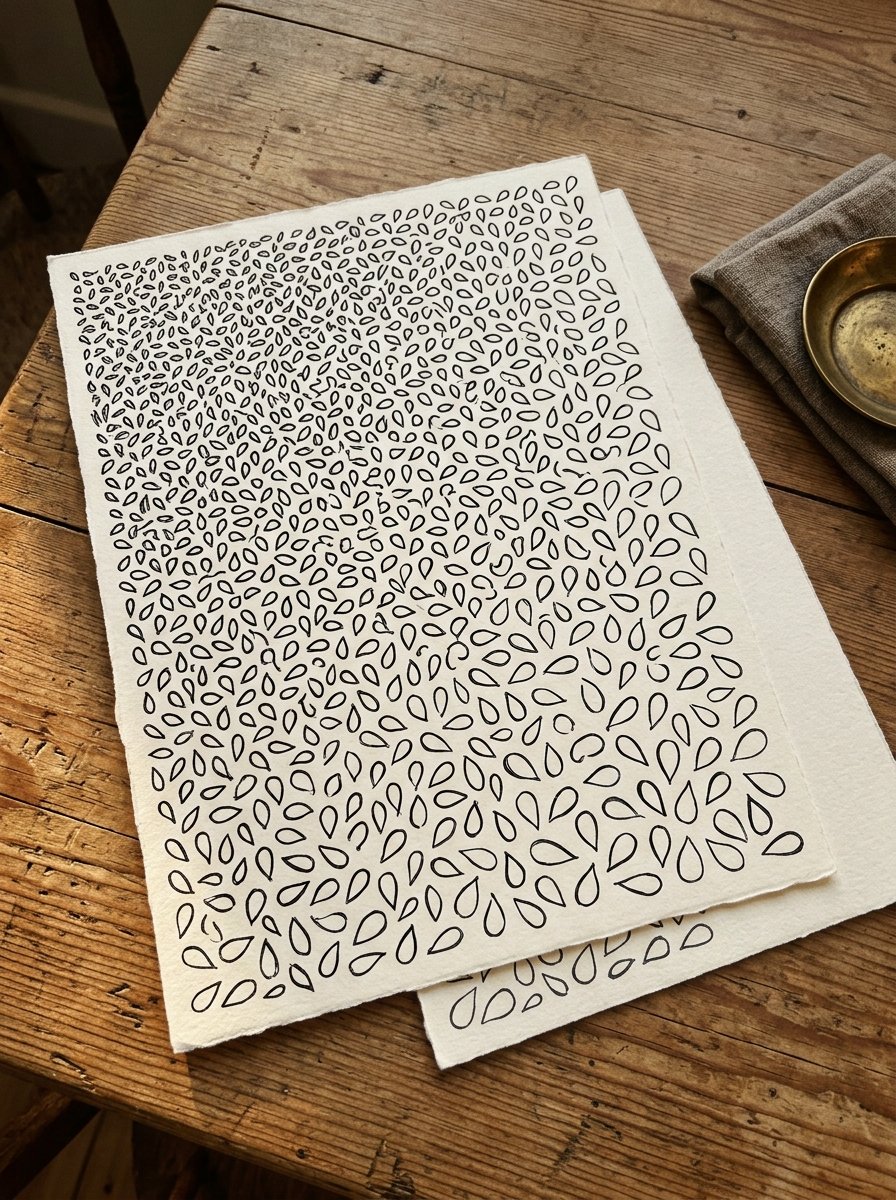
The nested rings put a flower inside a flower. The bouquet knot gathers the stems into one tie, and the tie is the only hard part. The pressed page flattens everything onto one plane. The confetti drops loose petals and no flowers at all.
The window splits the page into four quarters with one flower each. The wreath closes a ring of them, and it wants an odd count so the eye keeps moving. The stack runs them up a column.
How do you make flower patterns to draw look bought, not homemade?
May Morris took charge of the embroidery department at Morris & Co in 1885, aged 23. She ran the repeats.
Her designs were routinely mistaken for her father’s, which tells you who was actually drawing. In 1907 she founded the Women’s Guild of Arts, because the Art Workers’ Guild would not admit women.
What makes work read as bought is never the flower. It is the discipline of the repeat behind it.
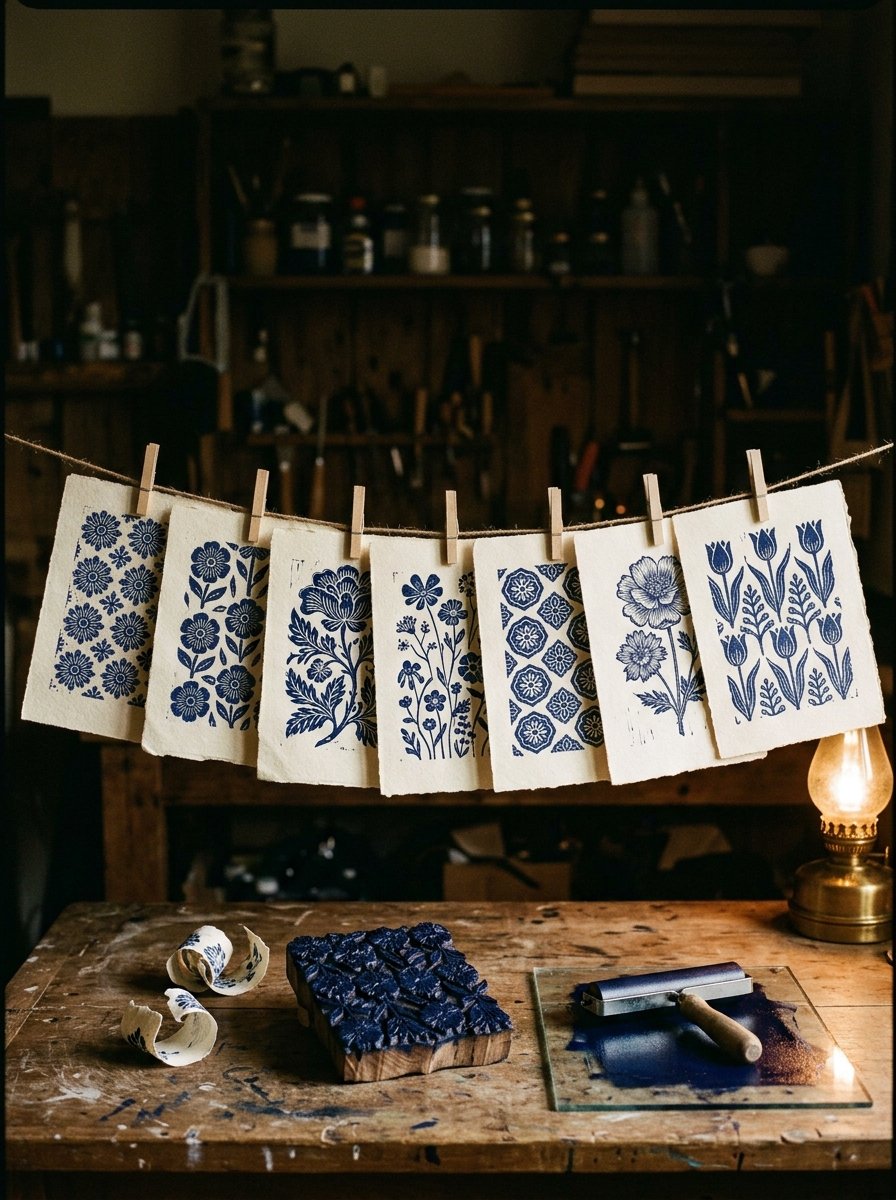
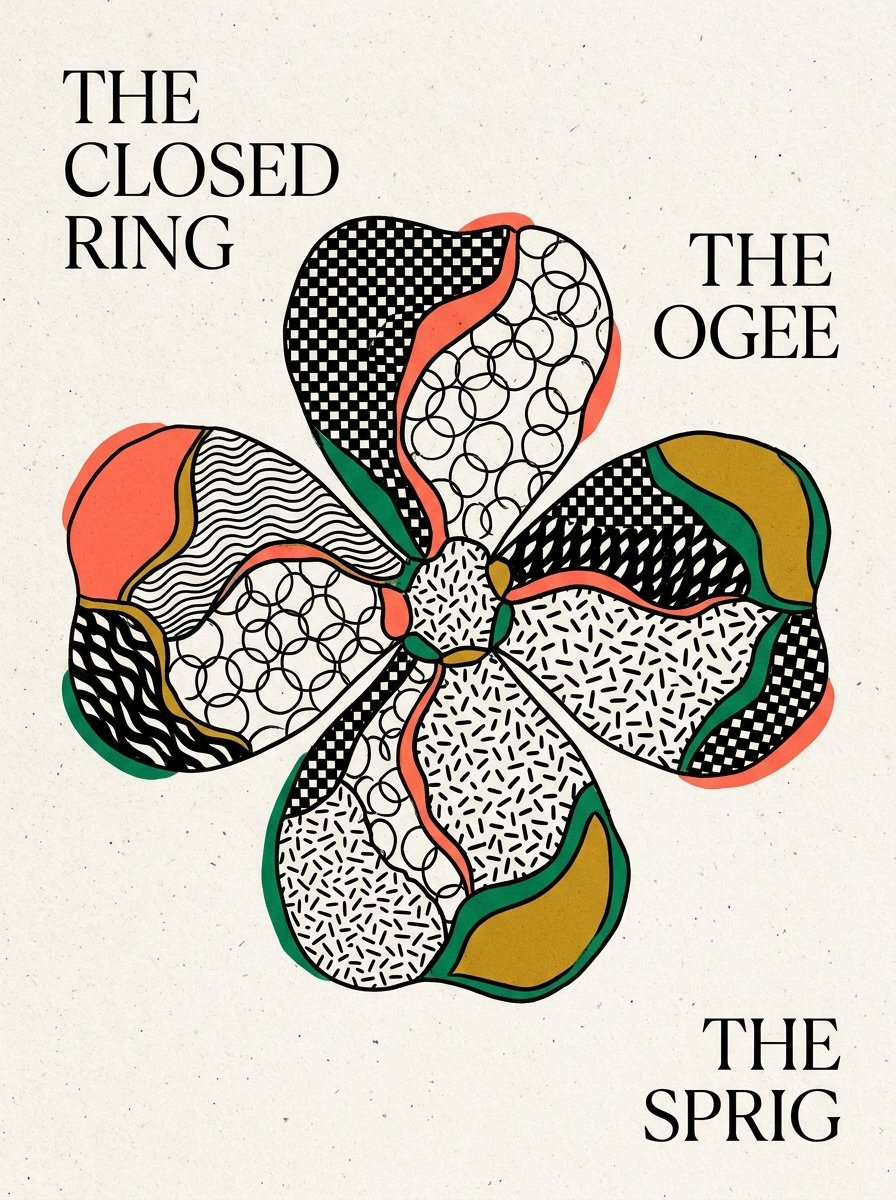
These 21 are the repeats. The half drop slides every other column down by half, and it is the single best trick on this page. The straight repeat is the honest grid. The brick slides sideways instead of down. The diamond grid sets them on the diagonal.
The ogee frames each flower in an onion shape. The trellis runs stems as the frame. The tossed repeat angles flowers at random on a grid you never draw. The two scale alternates one big flower with one small.
A repeat is not a drawing done twice. It is a decision about the gap, kept.
Decide the repeat before you draw the first flower. Marking the corners takes a minute. Choosing afterwards means redrawing everything.
The ground fill puts tiny dots behind everything, and it covers a multitude of uneven gaps. The stripe and flower alternates bands. The check and flower does the same with squares. The dark ground reverses pale flowers out of solid black.
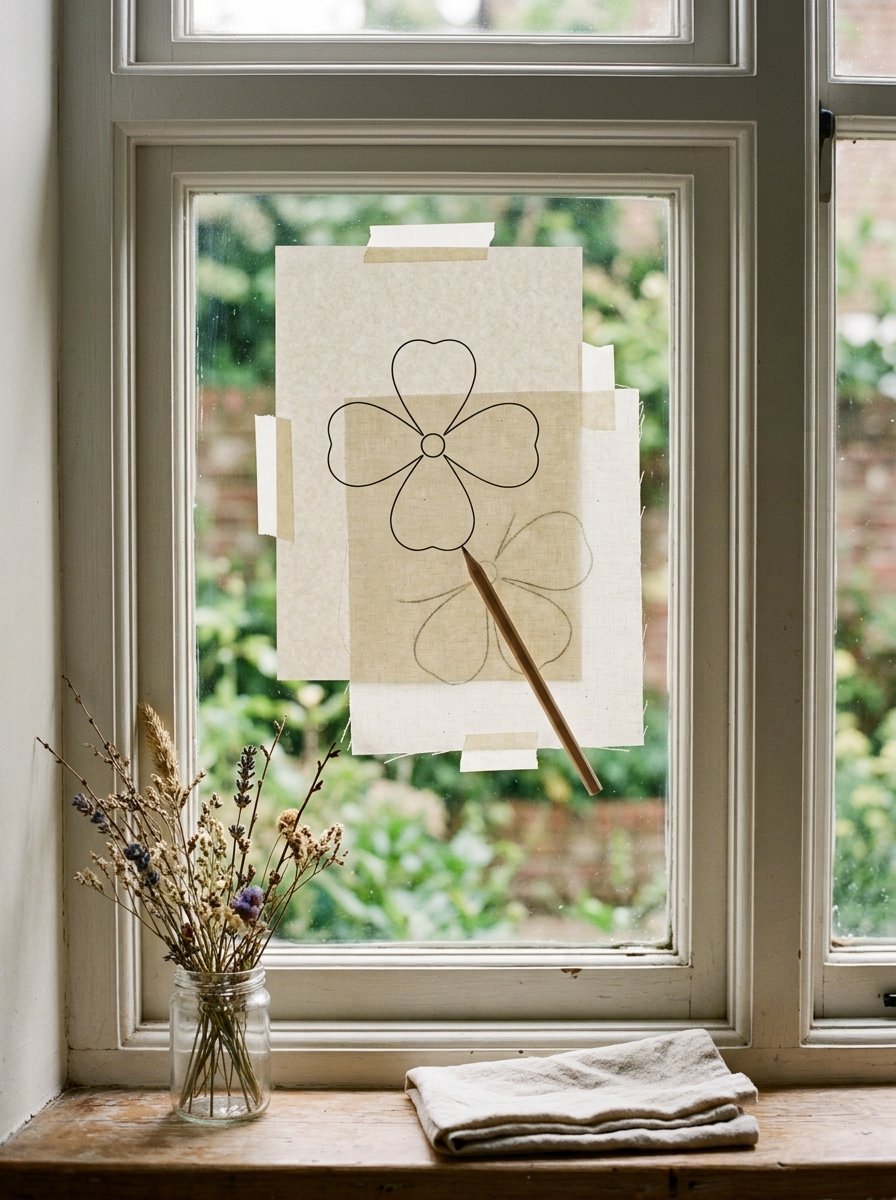
The outline only repeat drops all fills. The two colour repeat gives the flower one tone and the leaf another. The mirrored half drop flips alternate columns. The tile draws one square and turns it four ways.
The border and field runs both together, edge and middle. The sprig is three petals and a stem, tiny, repeated. It is the one I use when the paper is small. The damask sets a single ornate flower on a wide grid. The chintz cluster bunches three flowers as one unit. The spot repeat leaves generous air between single blooms.
What do you do with the pattern starter sheet tonight?
Print the sheet at actual size and rule nothing. Draw the petal at the top four times, turned.
Close one ring. That is the evening’s minimum, and it takes a few minutes.
Then pick a state, not a flower. Border tonight, empty page tomorrow, repeat at the weekend. (I keep mine in the drawer with the good scissors. I find it twice a year and am delighted every time.)
The sheet gives you the shape. Bloom & Pattern gives you what goes inside it. Each of the 16 flowers arrives three ways. An outline, a half-drawn version, and a set of patterns for the petals.
16 flowers, and the patterns that go inside every petal you turn
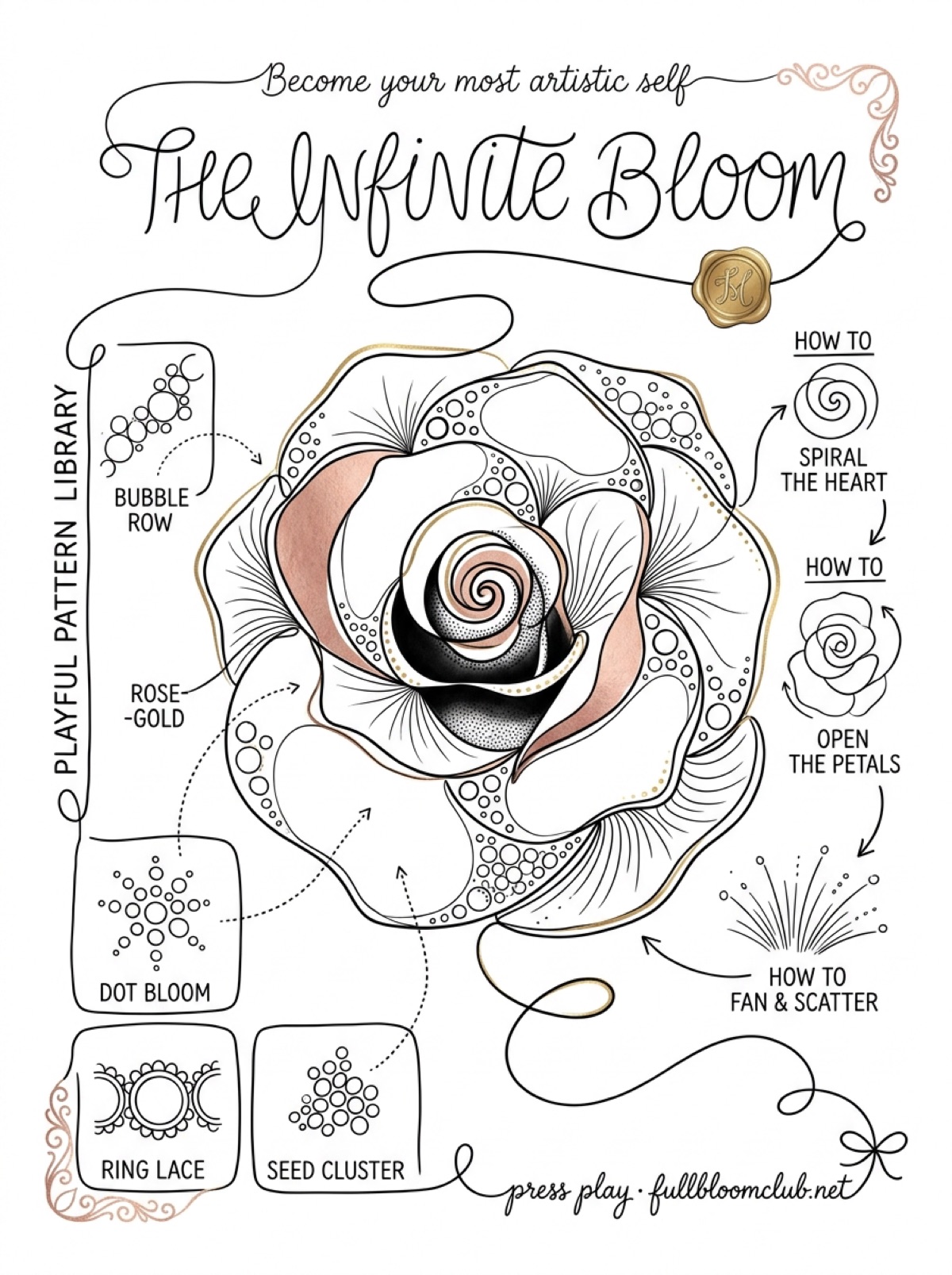
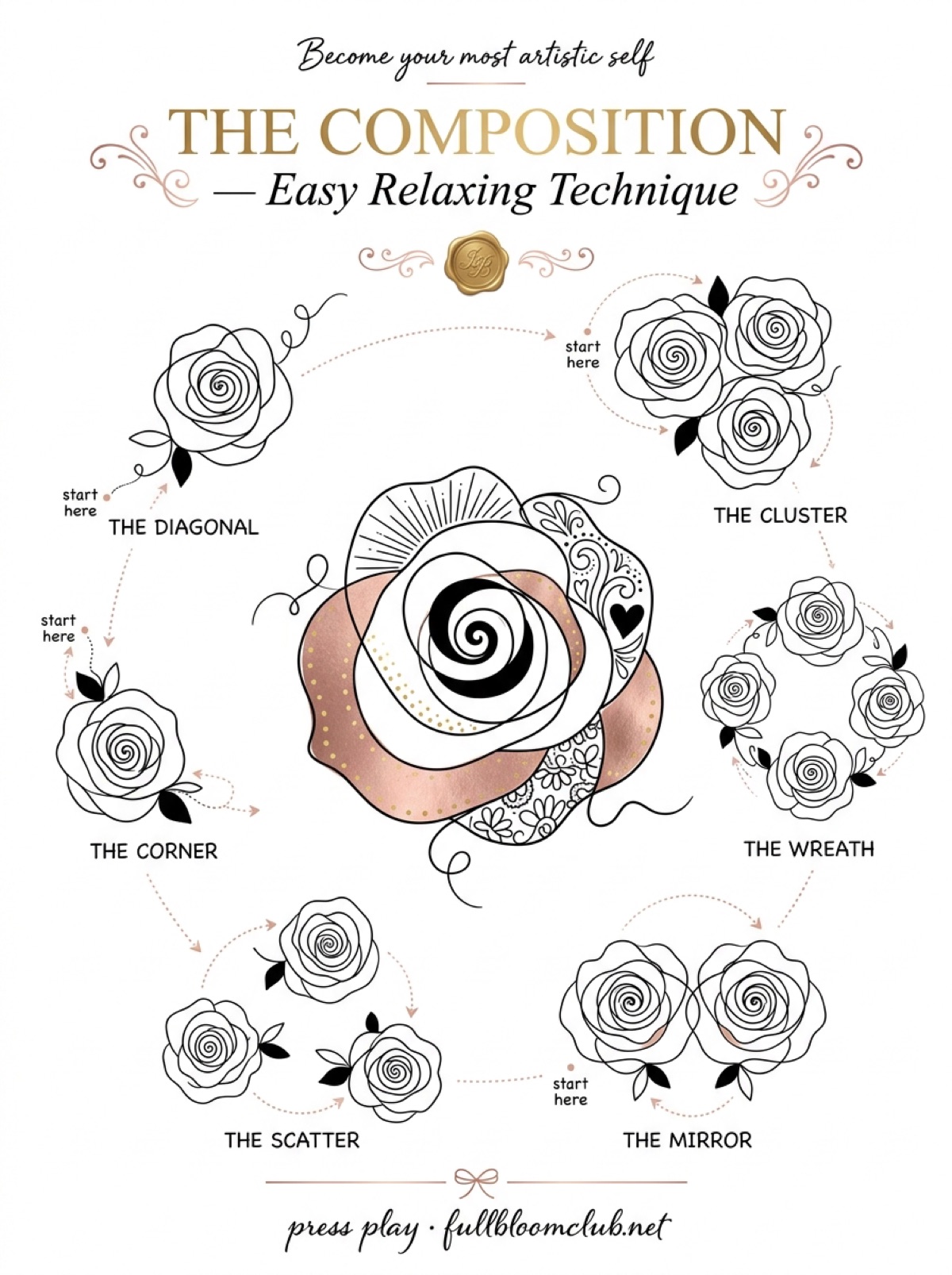
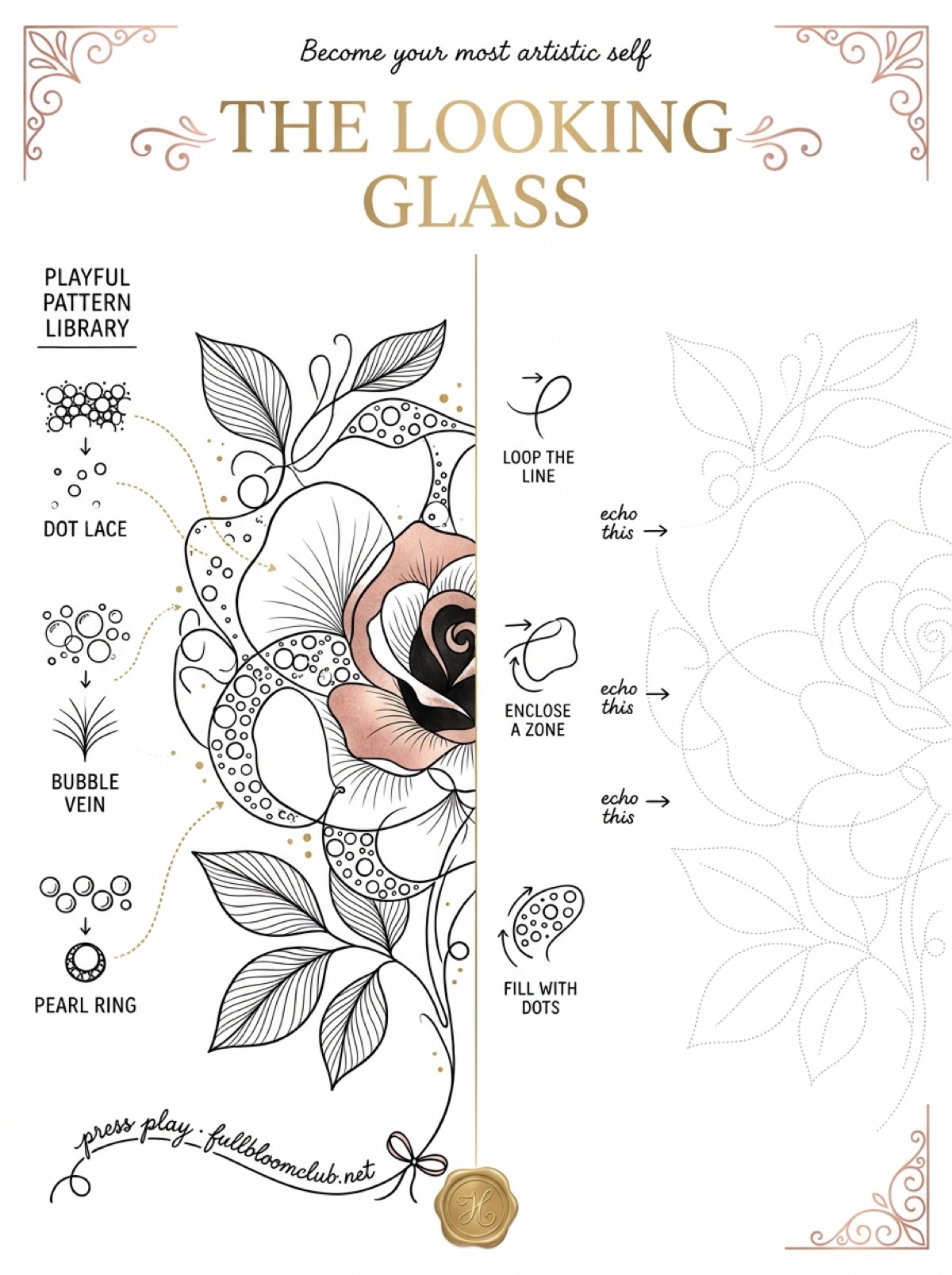
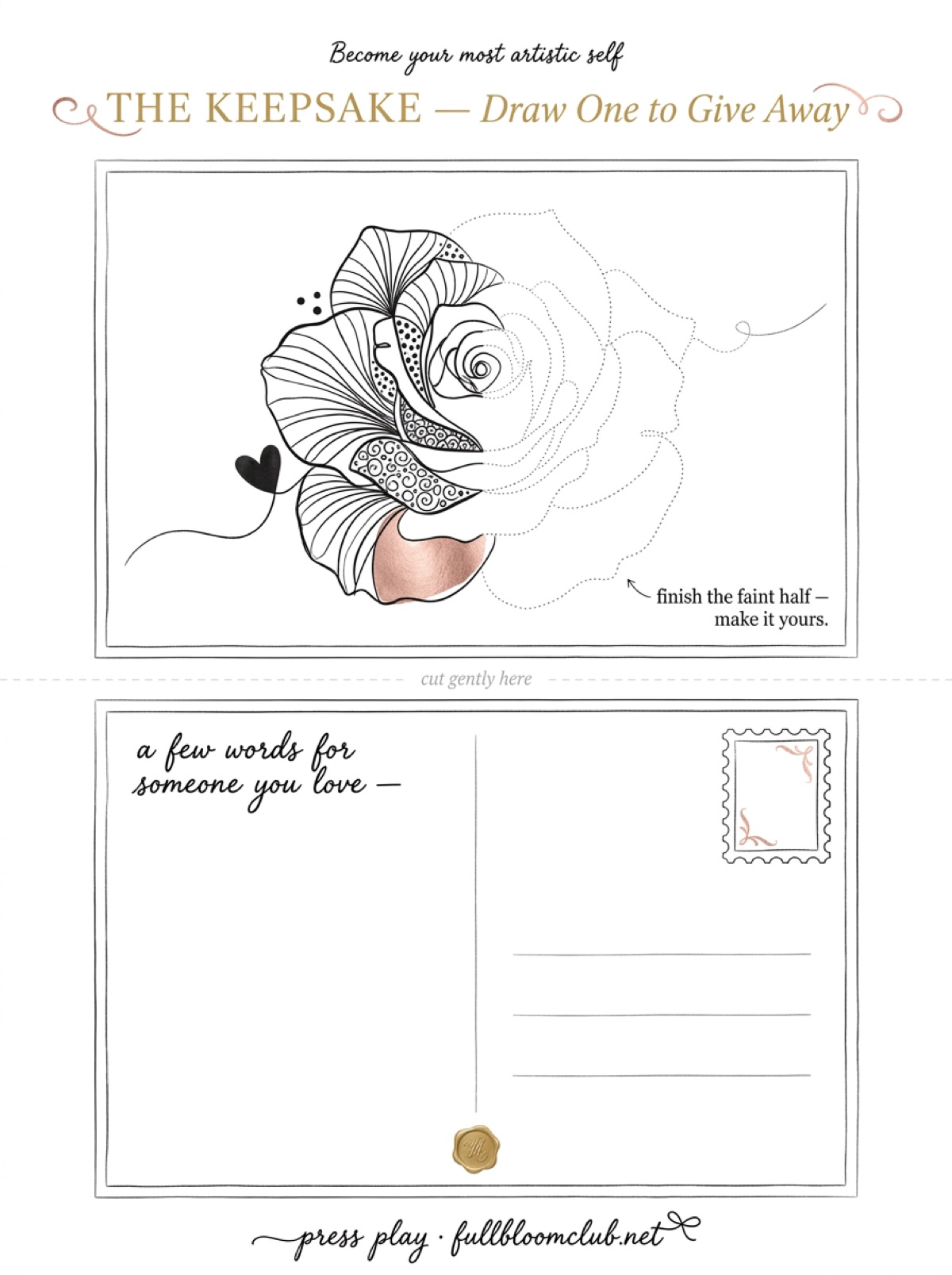
Turn one petal tonight and close the ring. Then open one flower sheet. Each flower arrives as an outline, a half-drawn version and a set of patterns for the inside. Do one an evening, and by the weekend the page has flowers nobody has to be told were traced. I print mine. I also copy them freehand, badly, and keep those.
Instant download · print as often as you like
One shape, turned, and the page fills itself while your hands are busy elsewhere.
“Simplicity in decoration is one of the essential qualities without which no true richness is possible.”
C.F.A. Voysey
Mirabelle wrote this. No training, strong opinions, many pens. Peer reviewed by a cat who turned the page over and preferred the back of it.