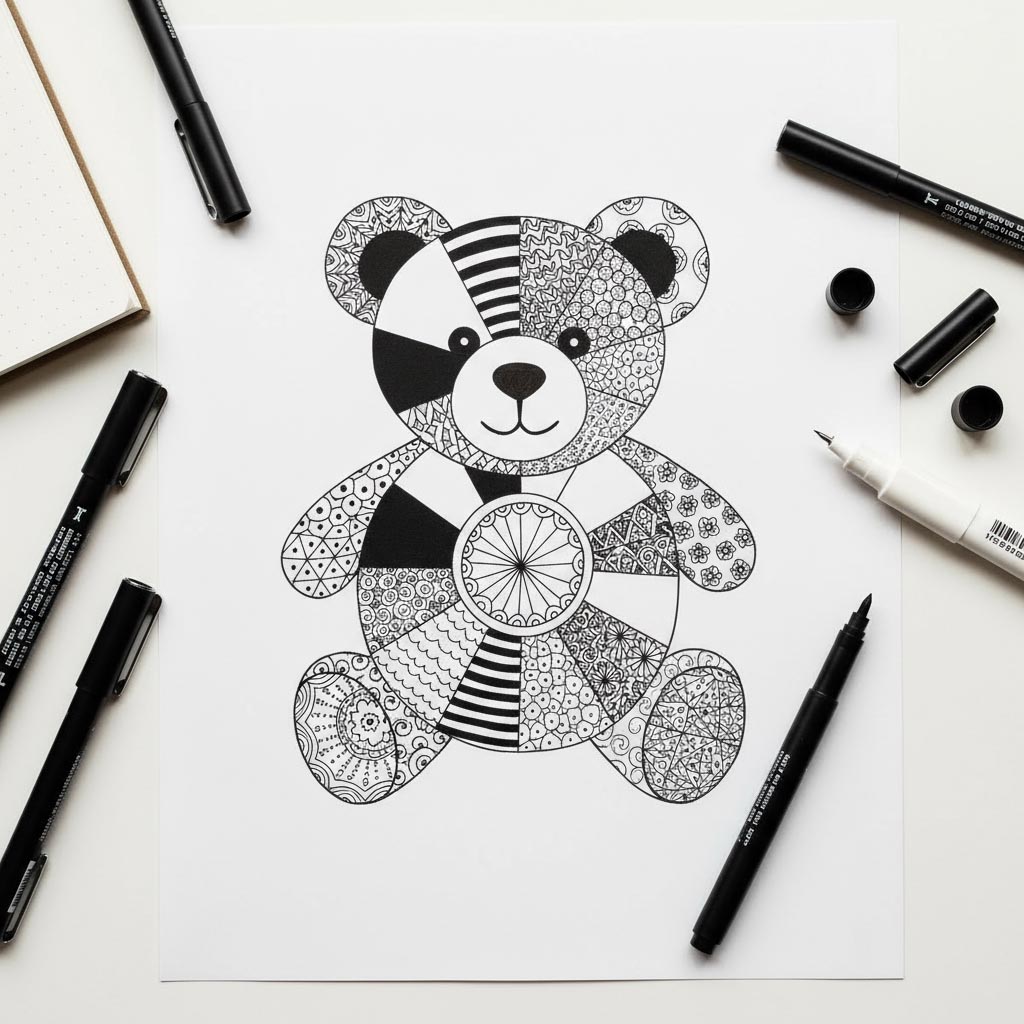
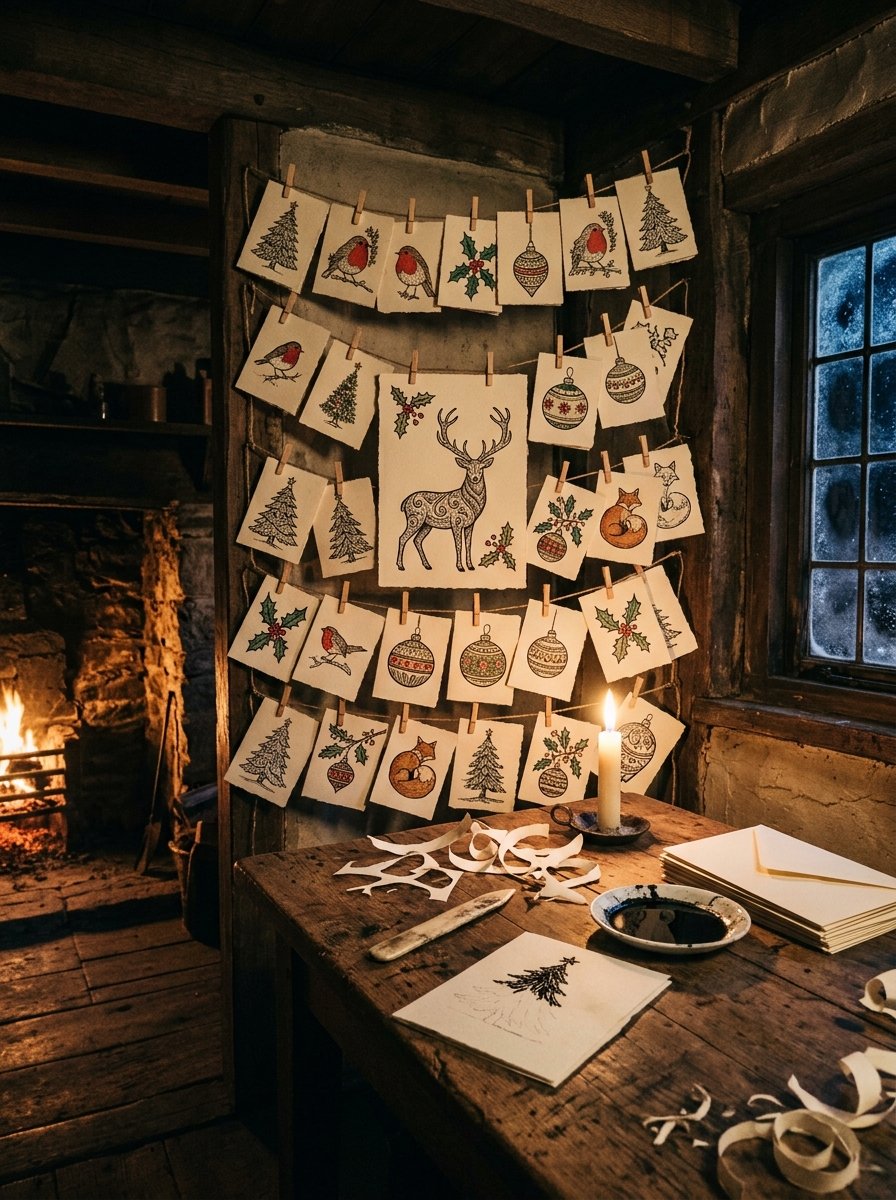
A shop-bought card has a completely blank back. A drawn one carries its picture through to the other side, in the dents the pen left. That is the difference christmas card drawing ideas are selling.
I check this on every card that arrives. (A small habit. I am not sorry about it.)
Below are 13 secrets. Every one is chained to a person who drew for a living, with a date and a source. Between them they make 39 ways into a card tonight. The 3 printable sheets come first.
Download the free shape-to-motif strip →
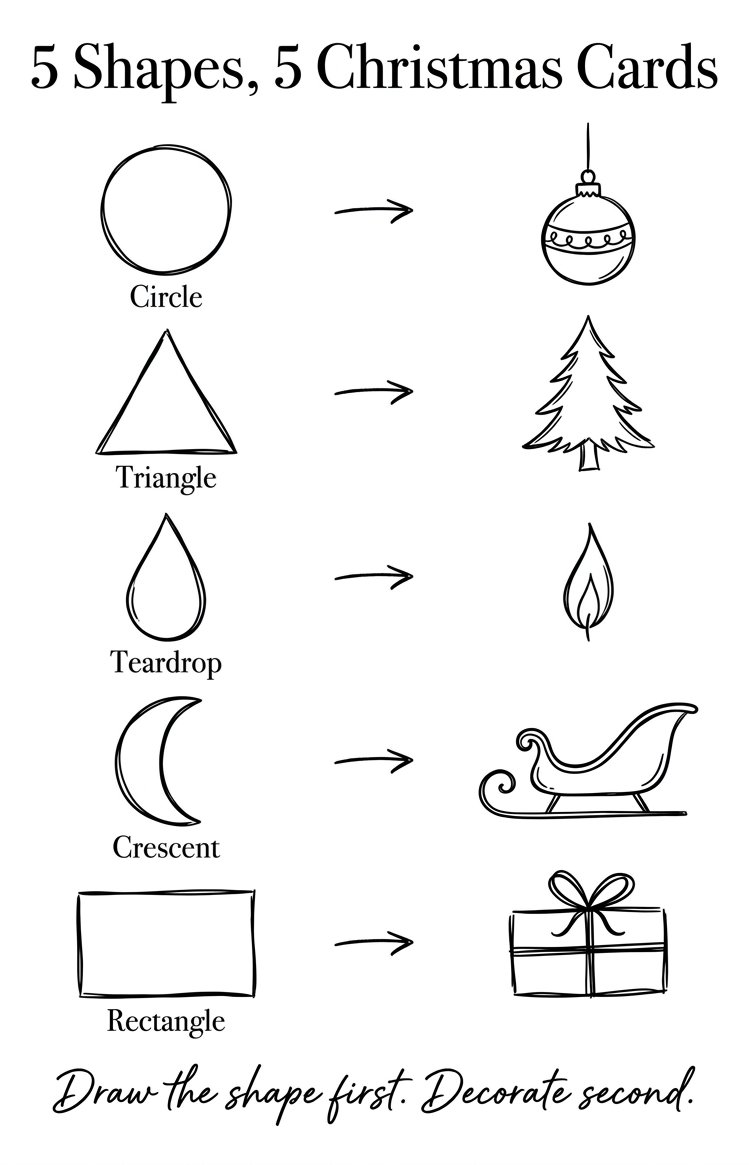
A shape you already own on the left. A Christmas motif on the right. Nothing in between but an arrow.
Print it, keep it next to the card, and the blank-paper problem goes away. A circle is a bauble. A triangle is a fir. You are not inventing anything at this point, you are decorating a shape you have drawn since school.
The 13 secrets below are not tips. Every one belongs to somebody who drew for a living, and carries a date and a source you can check. The oldest goes back to 1863. Two of them are from 1978.
None of it takes an evening class. A card is 4 inches across and most of them here take 10 minutes.
Work at the kitchen table with one pen and a stack of blank cards. Draw all of them in one sitting. The second one is always better than the first, and the fifth is the one you will want to keep.
By the time the third card is drawn, it is the subject that runs out, not the evening. That is the gap this fills.
The Collection
By the time the third card is drawn, the ideas run out first.
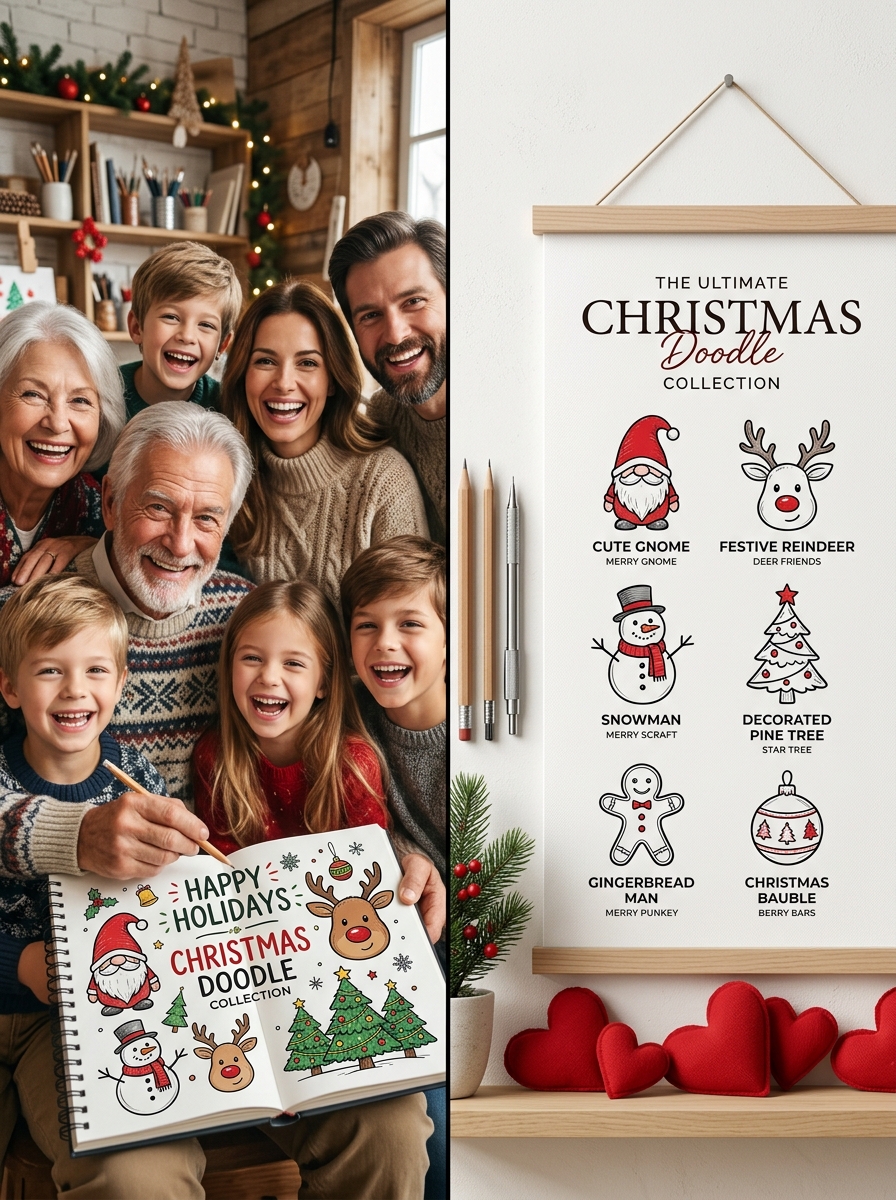
ULTIMATE CHRISTMAS DOODLE COLLECTION. A gnome, a reindeer, a snowman, a gingerbread man. For the evening you want to post something and the shops have exactly the card you would be embarrassed to give. Every character arrives as a clean outline with a pattern waiting to go inside it. What you get: a character to trace at 9pm, and a card that stays on a fridge until April.
Back to the secrets, and the first one is about who is allowed in the picture at all.
Thomas Nast invented Santa, and gave christmas card drawing ideas their entire cast
On 3 January 1863 a weekly paper printed a drawing called Santa Claus in Camp. The man who made it was Thomas Nast.
Between 1863 and 1886 he made 33 Christmas drawings for that paper. All but one had Santa in it. The North Pole was his. The toy workshop was his.
Nobody voted on any of it. He drew it, it got printed, and the world kept it.
I keep thinking about how recent that is. The whole cast is younger than most of the houses on my street.
So the cast is not yours to invent. It is already public property.
Tonight, three ways in. Draw a sack as one bag shape with a rope neck, nothing inside it. Or a chimney pot: 3 bricks and a curl of smoke. Or one sleigh runner, a long curve with the front end rolled once.
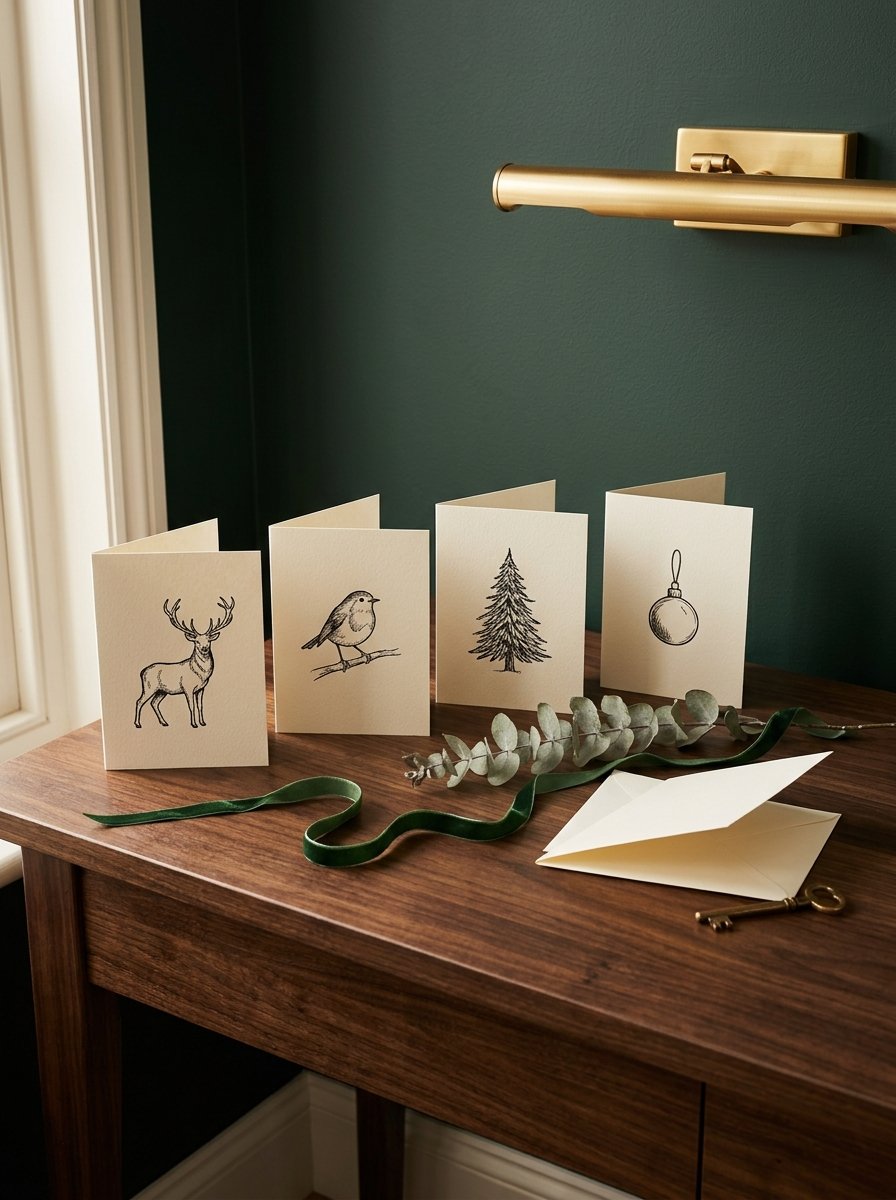
Tove Jansson drew 18 cards in 1942, which is the true scale of christmas card drawing ideas
A Finnish card publisher took 18 Christmas cards from Tove Jansson. They had offered 300 marks each. They ended up paying 1,000.
She wrote to a friend about the pace. “I can do a card a day if I work nonstop, calmly,” she said, “and one and a half if I work non-stop wildly.”
That is the real scale of a card. Not a painting. A day, or most of one, and then it goes in an envelope.
I find that steadying. (The thing is small on purpose. It was always meant to be small.)
Tonight, three ways in. Put one creature in the middle and leave the background empty. Or give something small a lantern to hold. Or run a snowdrift across the bottom third as one wavy line.
A card is a day, or most of one, and then it goes in an envelope.
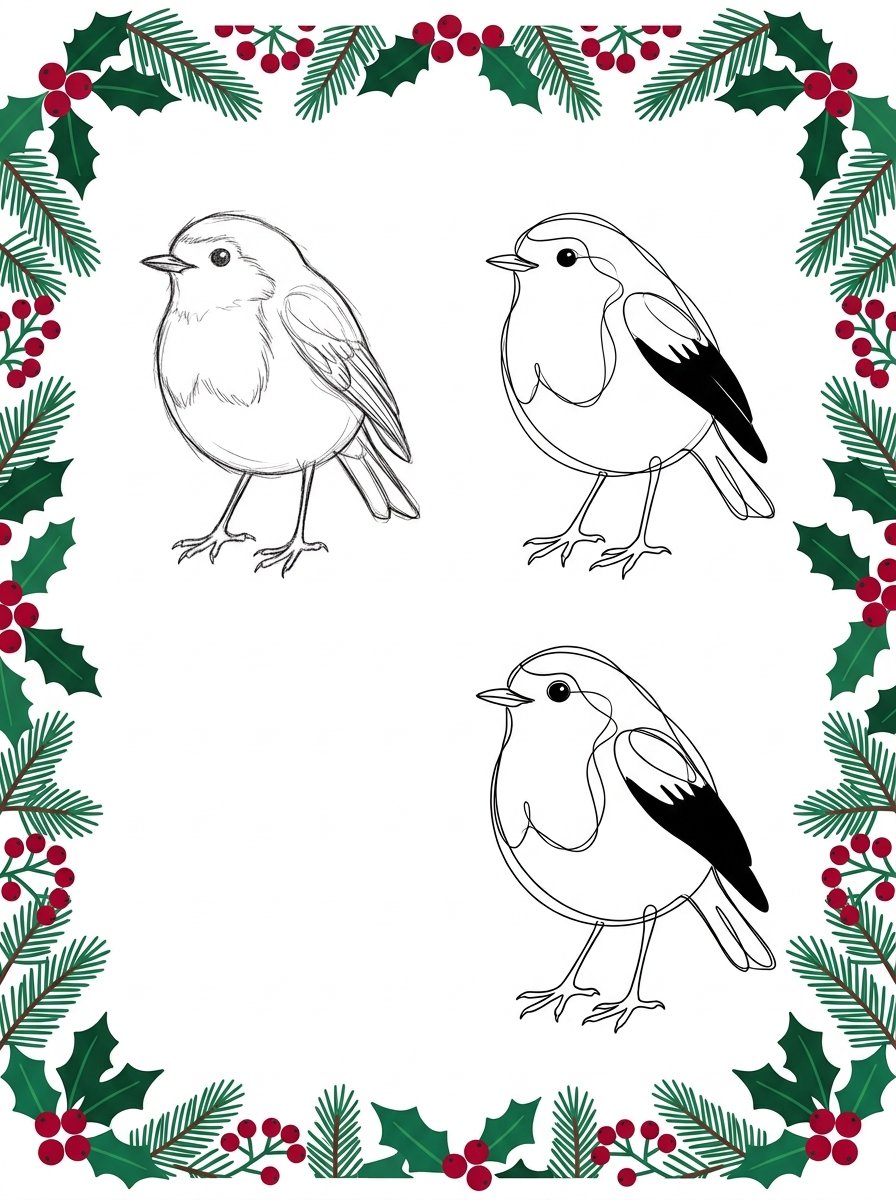
Andy Warhol broke his own line on purpose, and it is the best trick in christmas card drawing ideas
Warhol drew in pencil on tracing paper. He taped that sheet along one edge to a second, more absorbent sheet. Then he inked a short run of the line with a fountain pen and folded the two together.
The ink that came off on the second sheet was broken. Dotted. Slightly wrong everywhere.
He did this for years as a commercial illustrator. He could blot one master drawing again and again, so a client got 6 versions instead of 1. The museum that keeps his work still teaches the method.
Here is what it does for your hand. The wobble is the technique. You are not trying to hold a steady line any more.
(I have blotted 4 cards this week. Not one came out twice the same, which is the entire point of it.)
Tonight, three ways in. Ink a holly sprig and press it onto the card face. Or blot a bell twice so its edge breaks up. Or blot a wreath outline, then fill one segment solid black.
Quentin Blake does the drawing twice, and the second one is the card
Blake works over a lightbox. The rough goes underneath. A sheet of watercolour paper goes on top, usually Canson or Arches fin. The light comes up through both.
Then he draws it again. Not a tracing. “When I draw I try to draw as if for the first time,” he says, “but I can do it with increased concentration.”
He keeps waterproof ink and a heap of battered dip pens. A flexible scratchy nib, or a broader J nib.
The point is that the rough already decided everything. Where the robin sits. How big the star is. The second drawing has nothing left to worry about except the line.
I tried this at a window with no lightbox. It works, as long as the card is not too thick.
Tonight, three ways in. Rough a robin 3 times on scrap, then redraw the best one through the card at a window. Or rough a star freehand and ink it on the card. Or pencil the greeting first, then ink it through the glass.
Dick Bruna pressed the line into the paper before he ever inked it
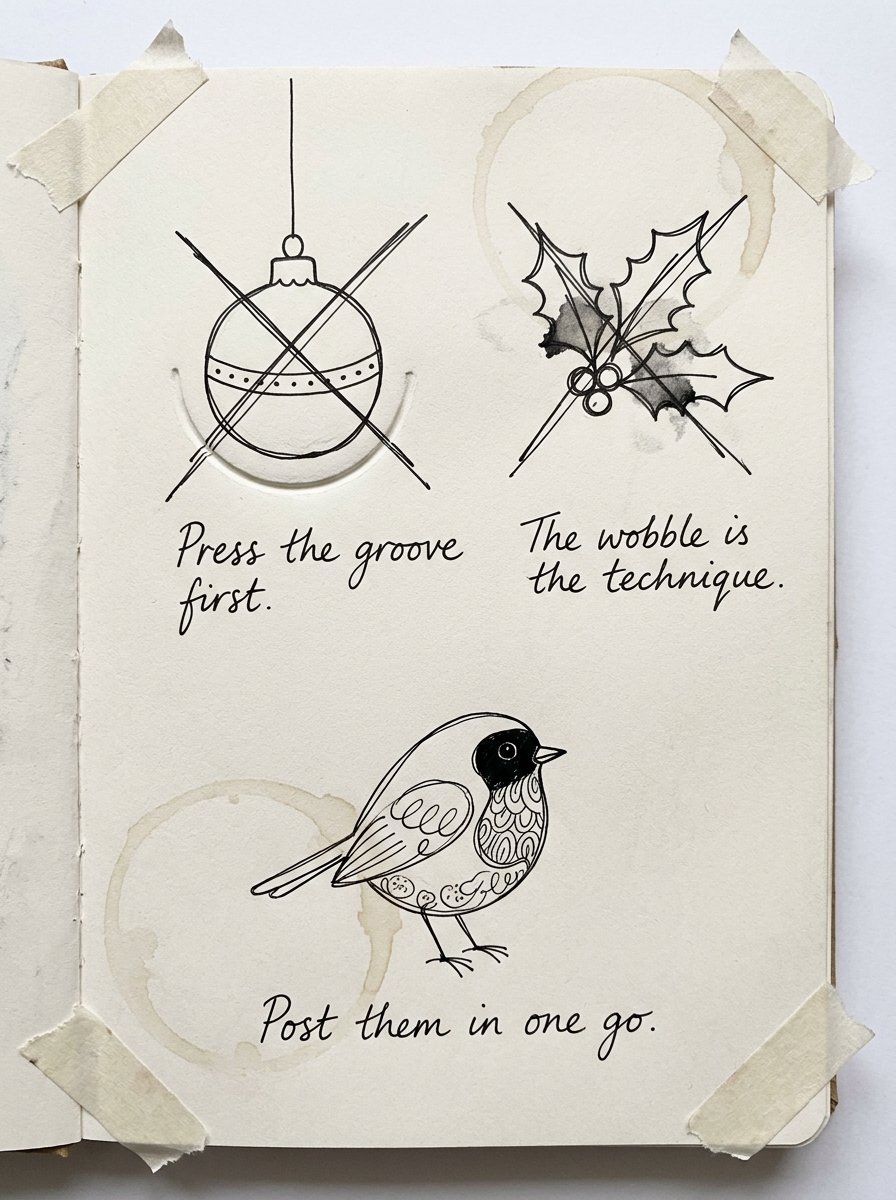
Bruna sketched on transparent paper first, chasing the pose. Then he laid textured watercolour paper underneath. He went over the lines with a hard pencil. He pressed until the outline was indented into the sheet.
Only then did he paint the contour, in black poster paint.
He threw out hundreds of attempts. He was waiting, he said, for “that moment of recognition” — the one where the face finally looks like itself.
What the groove does is steer. Press the groove first. Your hand stops aiming and starts following a channel it can feel.
(I press mine with an empty biro that stopped writing in 2019 and is finally useful.)
Tonight, three ways in. Groove a bauble with an empty ballpoint, then ink along it. Or press a candle flame in and give it one black stroke. Or press a fir as 3 triangles and ink the left edge only.
Hergé took the shading out, and small christmas card drawing ideas got clearer
Hergé drew with one line weight. The outline of a face and the outline of a mountain are the same thickness. No hatching. No cross-hatching. No cast shadow doing clever work in a corner.
Flat colour behind, and that is the whole picture.
A critic called it ligne claire in 1977, which is French for exactly what it says.
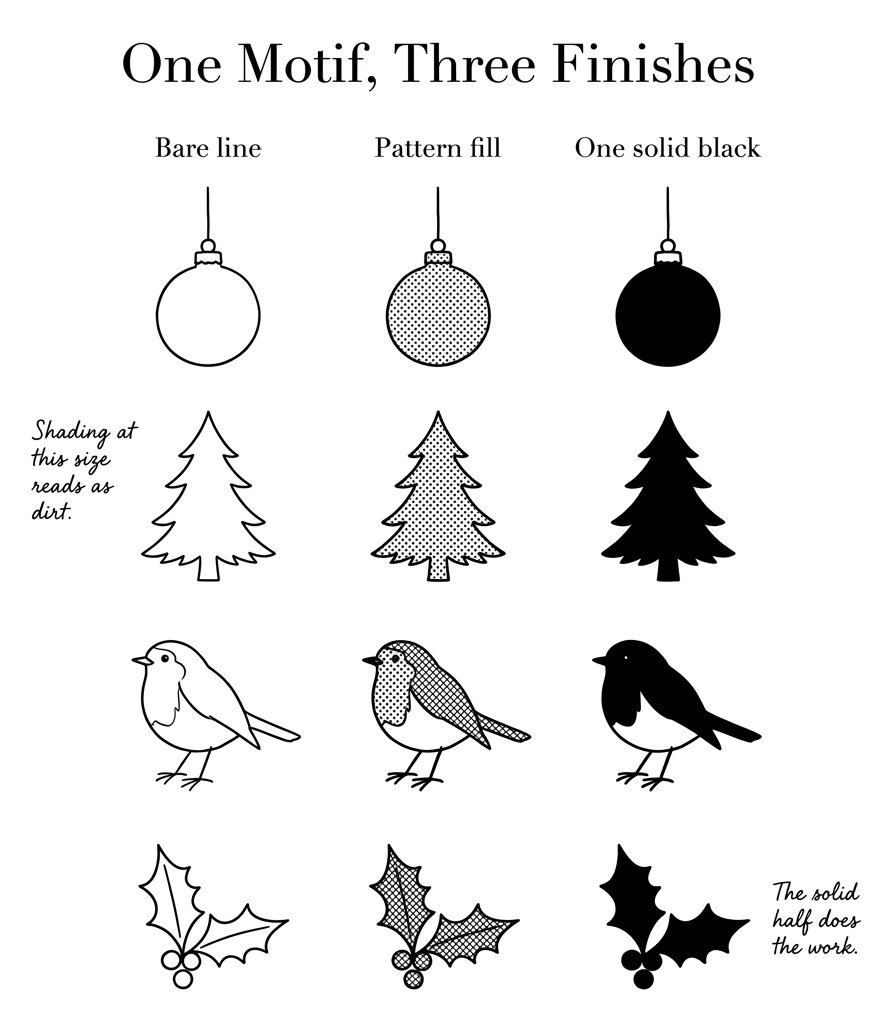
On a card this matters more than it does on a page. The drawing is 4 inches across. Shading at that size turns into a grey smudge and reads as dirt.
I shaded a stag once at card size. It came out looking like weather.
Tonight, three ways in. Draw a stag with the antlers exactly as thick as the legs. Or a parcel: 4 lines, a bow, no shadow. Or a window of 4 panes with one flat colour behind the glass.
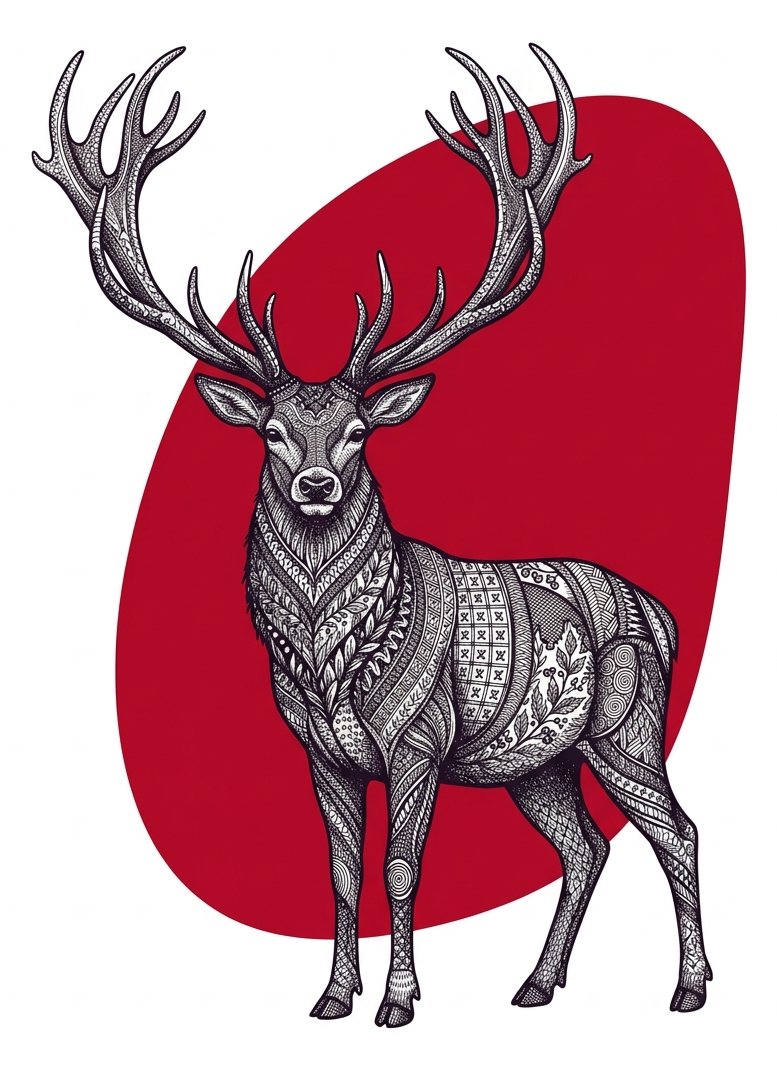
Free Starter Pack
10 pattern fills for the half of the card you have not drawn yet.
Sent tonight. Small fills for the gaps a card leaves.
Unsubscribe in 1 click, no hard feelings
Al Hirschfeld hid a name in every drawing and told people how many
In the autumn of 1945 Hirschfeld’s daughter was born. Her name was Nina. He started hiding it in his drawings that same season.
For 15 years nobody knew how many were in there. Then in 1960 he began writing a number beside his signature, so readers knew what they were hunting.
He put them, in his words, “in folds of sleeves, tousled hairdos, eyebrows, wrinkles, backgrounds, shoelaces”. His record was 60 in one 1997 portrait.
This turns a card into a game the other person plays for 10 minutes. Which is 9 minutes longer than most cards get.
(I have started doing this. Nobody has found one yet, and I am choosing to believe they are all still looking.)
Tonight, three ways in. Hide their initial in the leaves of a wreath. Or work a year into the bark of a tree. Or write a number by your own signature and say nothing else.
A hidden name turns a card into a game the other person plays for 10 minutes.
Edward Bawden picked one joke and ran it through a whole Christmas catalogue
From 1955 Bawden illustrated the Christmas catalogues for a London food shop. The first one carried 27 drawings.
The 1958 one is the one to know about. It is an extended pun on the word cat. Cats strut through it, dance through it and grin out of the margins of a grocery list.
A catalogue of hampers, and he turned it into a joke he refused to drop.
That is a useful instruction for a stack of cards. One idea, repeated with variations, beats 8 unrelated good ideas. The set starts to look deliberate.
I do this with a stack now and it halves the thinking. One idea, 8 cards.
Tonight, three ways in. Draw the same cat in 4 different hats. Or build the joke off what the person actually does all day. Or repeat one motif at 3 sizes across the card.
Raymond Briggs proved christmas card drawing ideas do not need a single word
The Snowman came out in 1978. It has no text. Not a caption, not a title page line, nothing.
Briggs drew the whole thing in coloured pencils. Everything has a faint grain. No hard ink outline anywhere, so the colours blur where they meet.
He said he wanted something “clean, pleasant, fresh and wordless and quick”.
So a card with no message inside it is not a card you failed to finish. It is a format, and it has been working for decades.
(Every card I have sent with nothing written in it got a phone call back. Make of that what you like.)
Tonight, three ways in. Draw a snowman from behind, no face at all. Or 2 figures with a gap between them. Or a scarf blowing sideways as 3 curved bands.
Charles Schulz lettered 17,897 drawings himself and never handed it off
Schulz drew a daily strip from 1950 to 2000. The published count is 17,897.
He wrote it, drew it and lettered it. Every one. No assistant inked a line, and no assistant lettered a word.
When a tremor arrived in his hand later on, the lettering went visibly shaky. He carried on. The shake is on the page and nobody minded.
Which settles the question about your handwriting, I think. The wobble in hand-lettering is not the amateur bit. It is the part a font cannot do.
Tonight, three ways in. Write the greeting in your own capitals with no ruler. Or make one letter of the word much bigger. Or run the message out of a small animal in a speech bubble.
Here is the same motif taken three ways, which is the whole of what a finish is. Print it and keep it beside the pen.
Download the free finishes matrix →
Bruno Munari gave the tree a rule so nobody would need talent for it
Munari published a small book in 1978 called Drawing a Tree. It opens with a line worth keeping: “A tree is a slow explosion of a seed.”
Then he gives the rule. Every branch is more slender than the one it came out of. The trunk splits into 2. Each of those splits into 2. Those split again.
That is the whole tree. It works for a bent one, a squat one, or one the wind has pushed sideways.
I drew winter trees badly for years by starting at the twigs. The rule works in the other direction and it is not optional.
Tonight, three ways in. Draw a bare tree by halving, trunk to twig. Or a holly branch thick at the cut end and thin at the tip. Or a wreath made from 2 splitting branches that meet.
Every branch is more slender than the one it came out of. That is the whole tree.
Milton Glaser built a Christmas tree out of a catalogue of type
A typesetting company asked Glaser for a holiday card. He did not draw them a tree.
He built one. A spindly red and green tree, assembled out of the type settings in the company’s own catalogue. Their product, stacked into a shape. It sits in a design archive at a New York college now.
Glaser was blunt about what drawing is for. “When I look at something, I do not see it unless I make an internal decision to draw it,” he wrote in 2008.
So stop drawing the object. Build it out of something that already means something to the person opening it.
I did their name as the tree once and got a photograph of it on a mantelpiece in return.
Tonight, three ways in. Build a tree out of their name written over and over. Or make a star out of the date. Or letter the greeting into a solid triangle.
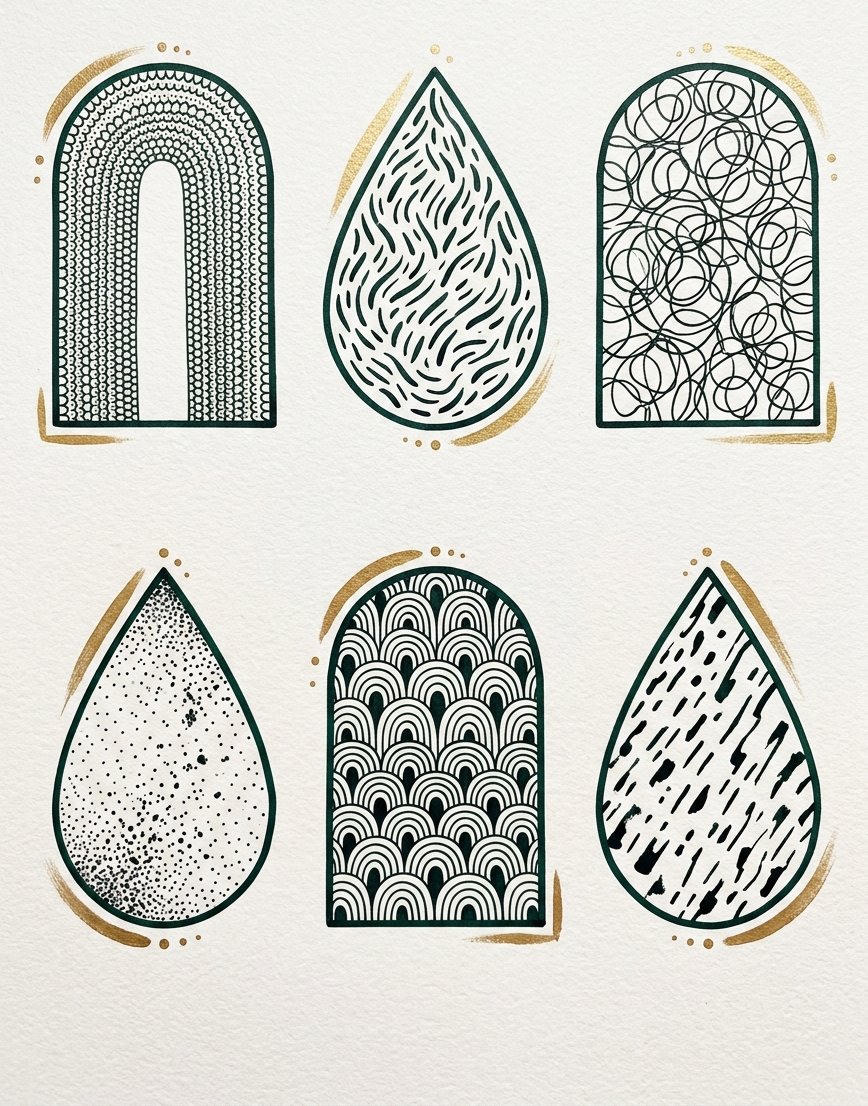
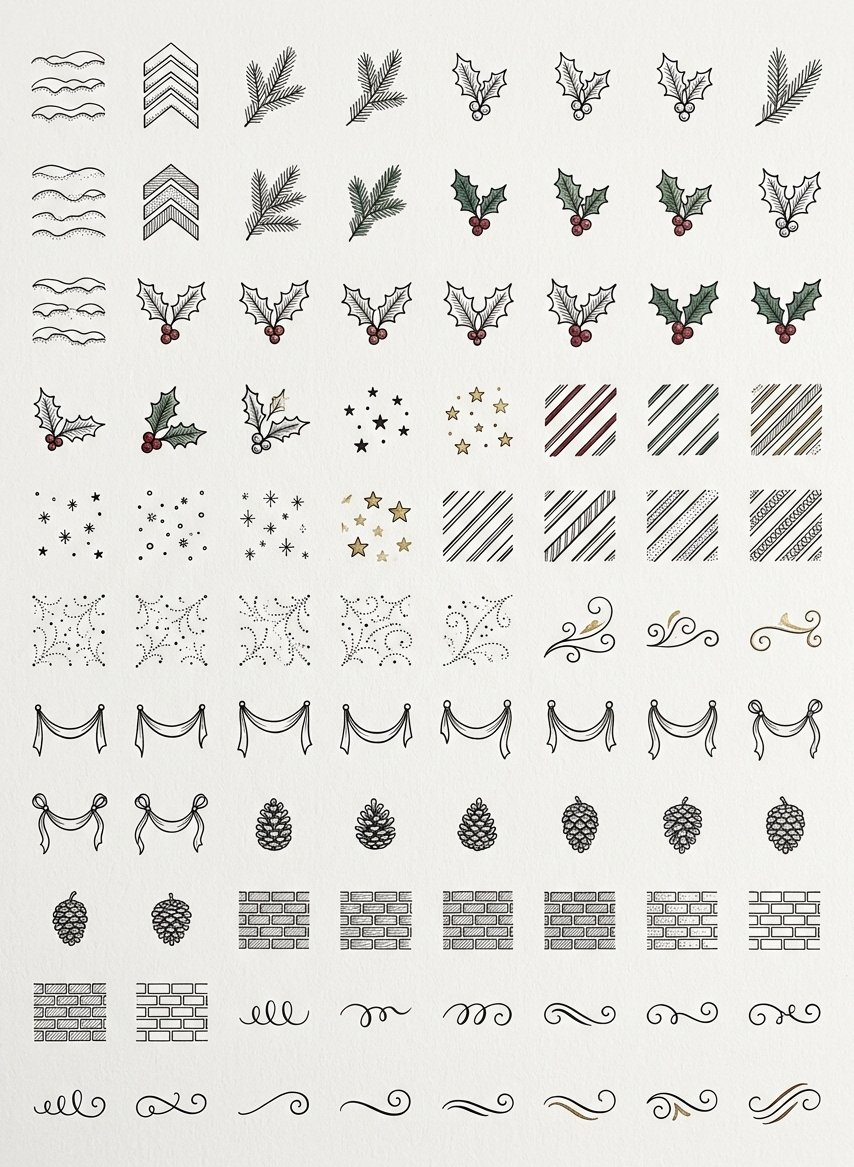
And here is the fill library, for the moment a shape is drawn and the middle is empty.
Download the free fill library →
Corita Kent wrote the rule that gets the third card finished
Corita Kent ran an art department, and she and her students wrote a list of rules for it. They ended up on walls all over the world.
Rule 6 is the one that matters at a kitchen table at 9pm. “Nothing is a mistake. There’s no win and no fail. There’s only make.”
Rule 7 backs it up and is even shorter. The only rule is work.
Read at a table with 2 ruined cards on it, that is not a poster sentiment. It is a production instruction. Make more of them and stop grading them.
(I have 2 ruined cards on the table as I write this. Rule 6 is the only reason there is a third.)
Tonight, three ways in. Draw the same card 3 times on one sheet and post the third. Or cut a window into a ruined one and make it the frame. Or send the imperfect one anyway.
The 3 printable sheets, and what to do with the envelopes
Everything above needs somewhere to land, so there are 3 sheets on this page and they do different jobs.
The first is 5 Shapes, 5 Christmas Cards. A Circle becomes a bauble. A Triangle becomes a fir. A Teardrop becomes a flame. A Crescent becomes a sleigh runner. A Rectangle becomes a parcel. Draw the shape first. Decorate second.
The second sheet is a fill library. It is a page of small patterns for the empty half of a drawn card.
The third is One Motif, Three Finishes. It takes 4 motifs and shows each one as Bare line, then Pattern fill, then One solid black. Shading at this size reads as dirt. The solid half does the work. Stop before the third layer.
Print them on the heaviest paper the printer will take. In the print settings choose actual size, not fit to page. (It will want to shrink them to fit. Do not let it.)
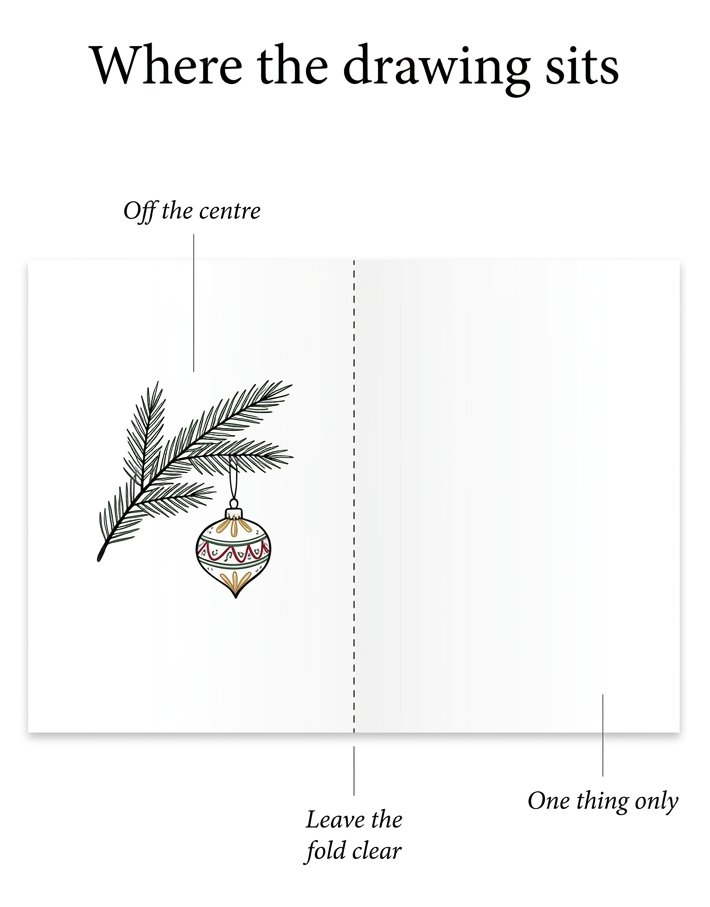
Then there is the question of where the drawing sits. Keep it off the centre. Leave the fold clear. One thing only, and let the rest of the card stay empty.
If you want a second subject for the same evening, the step-by-step Christmas drawings are the other half of this.
Now the envelopes. Write the address before you draw anything, while the card is still blank and you cannot ruin it. Draw one small thing from the card onto the back flap. Use the same motif every time, so the set reads as a set. Post them in one go. A drawn card that sits in a drawer until January is the only version of this that does not work.
Christmas characters, every one already reduced to shapes you can trace
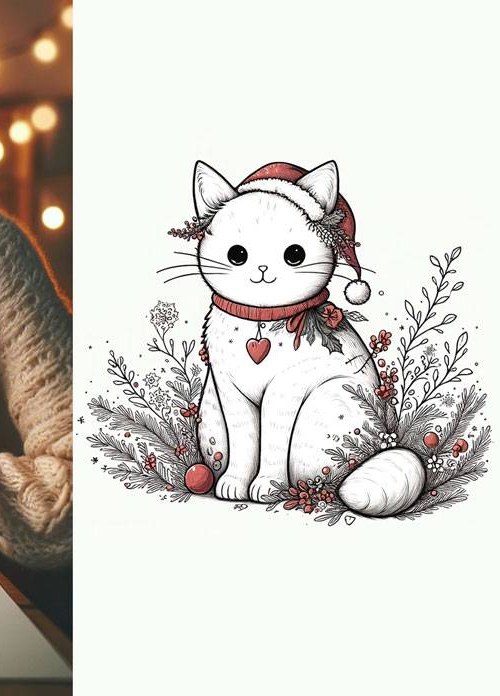
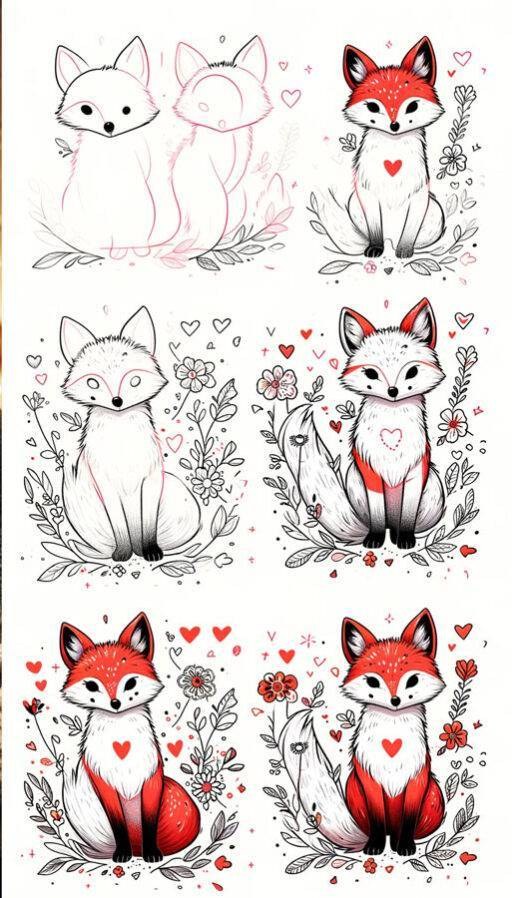
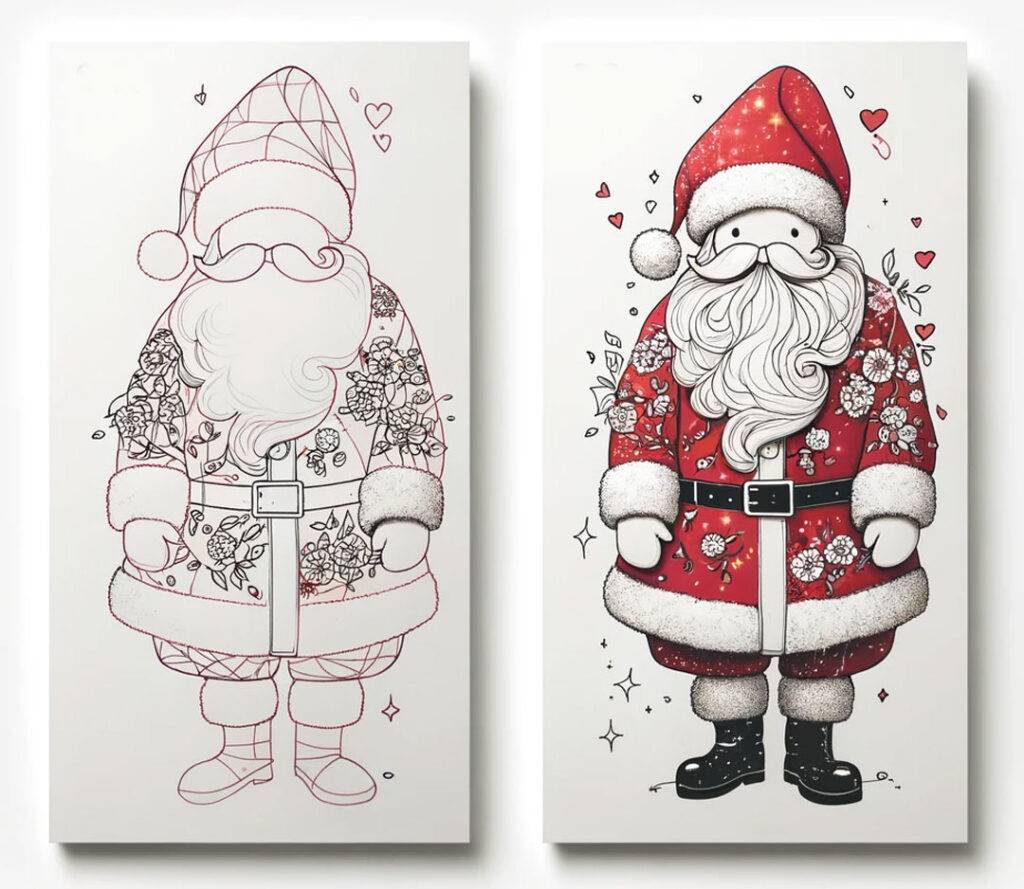
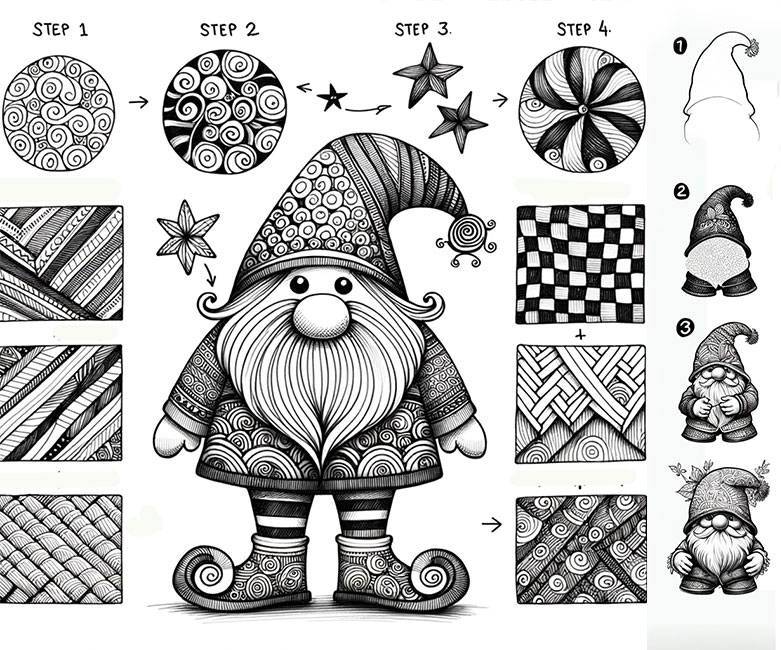
Inside: gnomes, reindeer, snowmen, trees, gingerbread men and baubles, each with its fill patterns.
Open the Christmas Doodle Collection →
Instant download · print as often as you like
The envelope goes out in the morning. The drawing carries on in somebody else’s house, on a shelf, in the dents the pen left.
Mirabelle wrote this. No training, strong opinions, many pens. Peer reviewed by a cat who supervised the envelope pile and improved none of it.