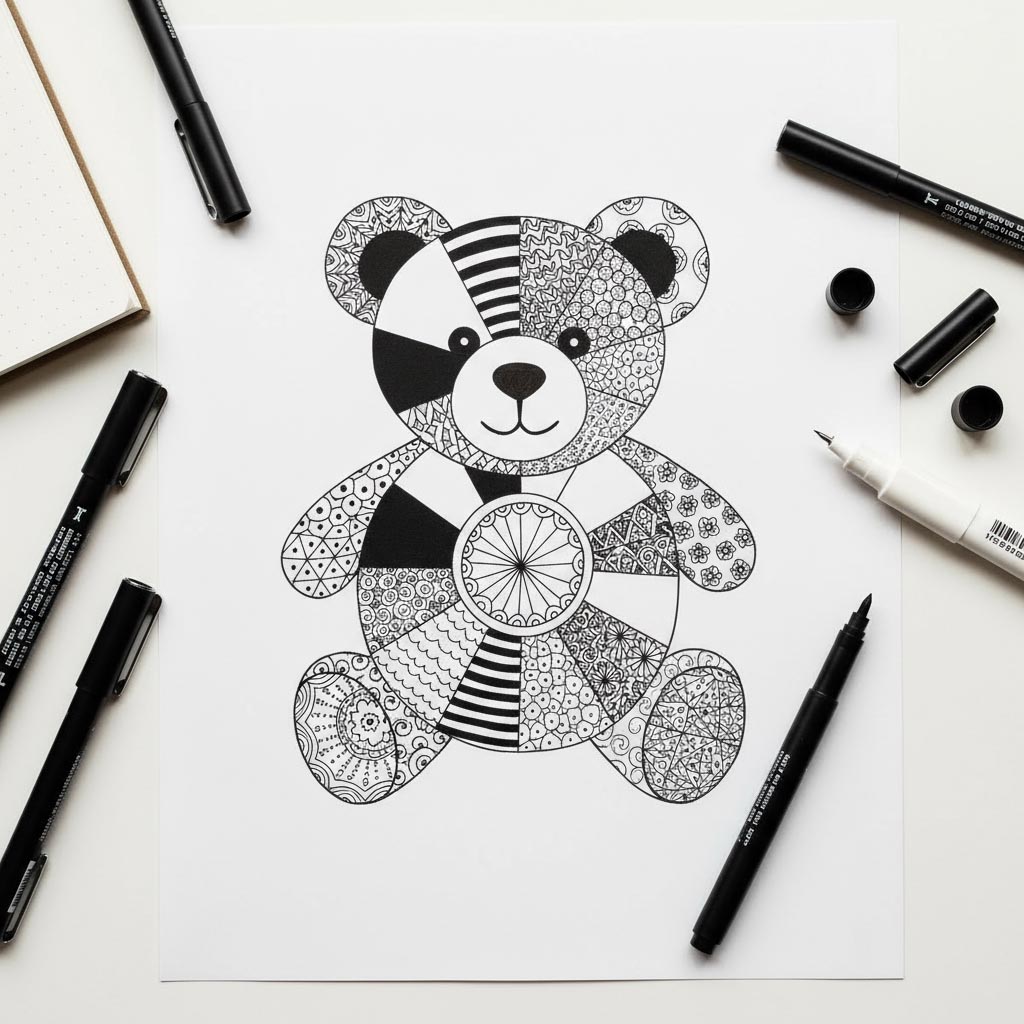
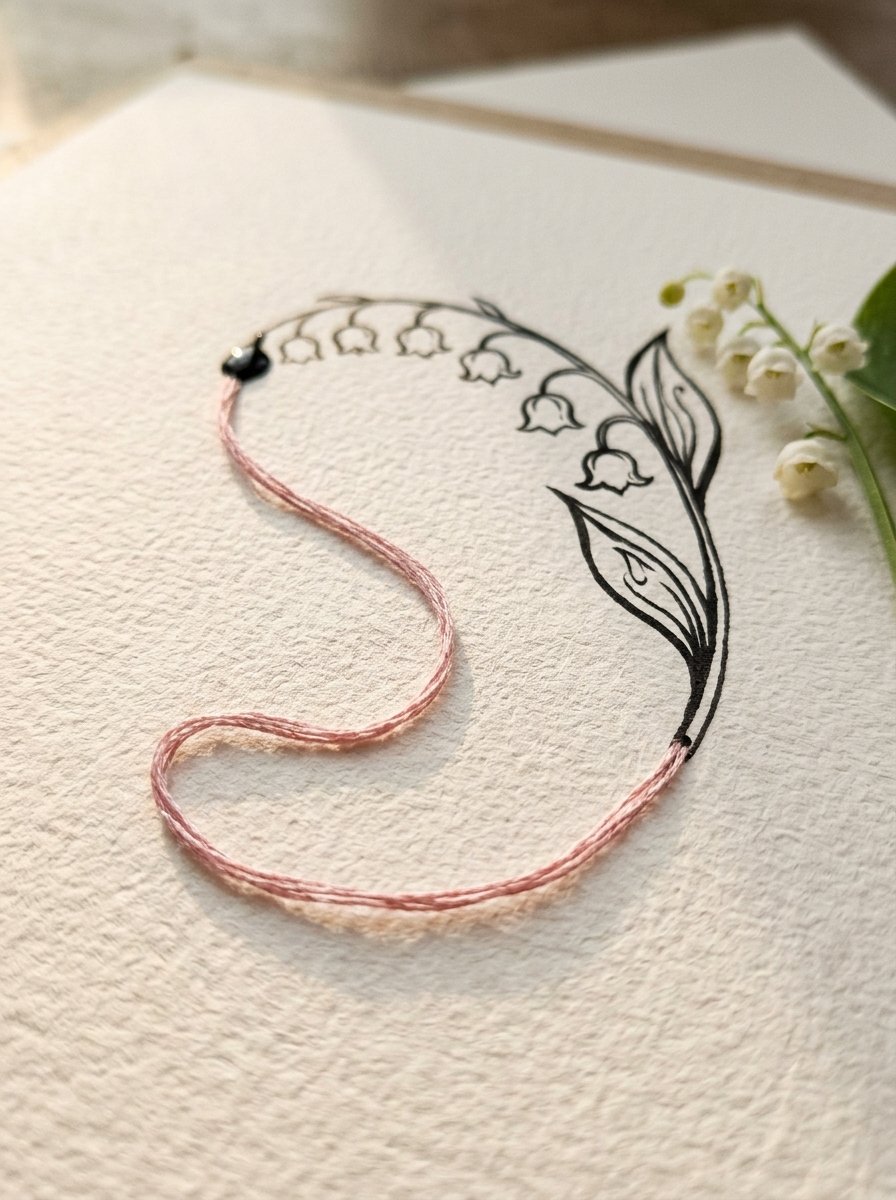
A real stem mostly just climbs. The drawn one swings out, turns and heads back the way it came, and it looks more alive for it. That swing is the whole of art nouveau drawing.
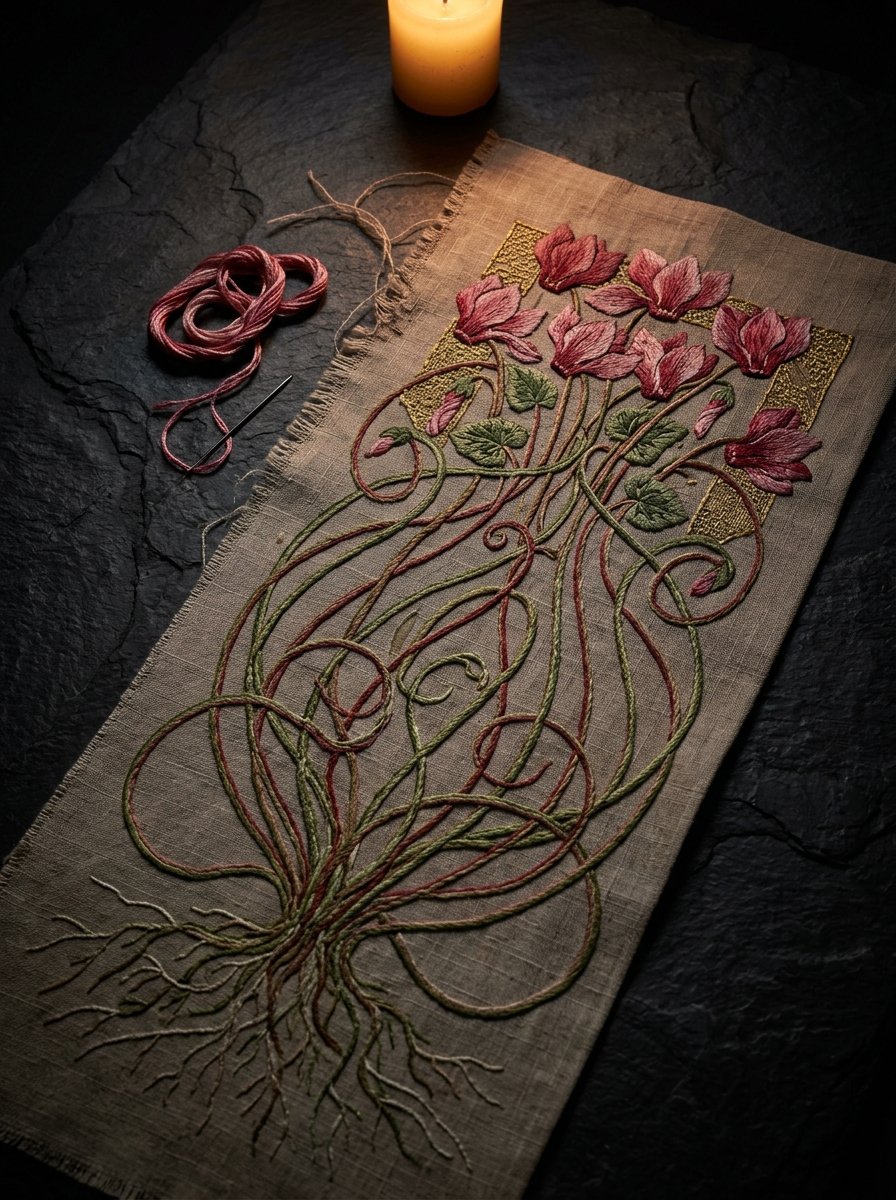
Hermann Obrist drew a cyclamen so springy that critics named the curve after a whip
Around 1895, Hermann Obrist designed a wall hanging of a cyclamen. It was embroidered in silk on linen.
He did not draw a neat bunch of flowers. He drew the whole plant, from the roots up to the petals. The stems loop across the cloth like something thrown.
Critics called it coup de fouet. It means the lash of a whip. The name stuck to a whole style. (A cyclamen is a small pink houseplant. It did not ask for this.) The story of the name) is still told in design history.
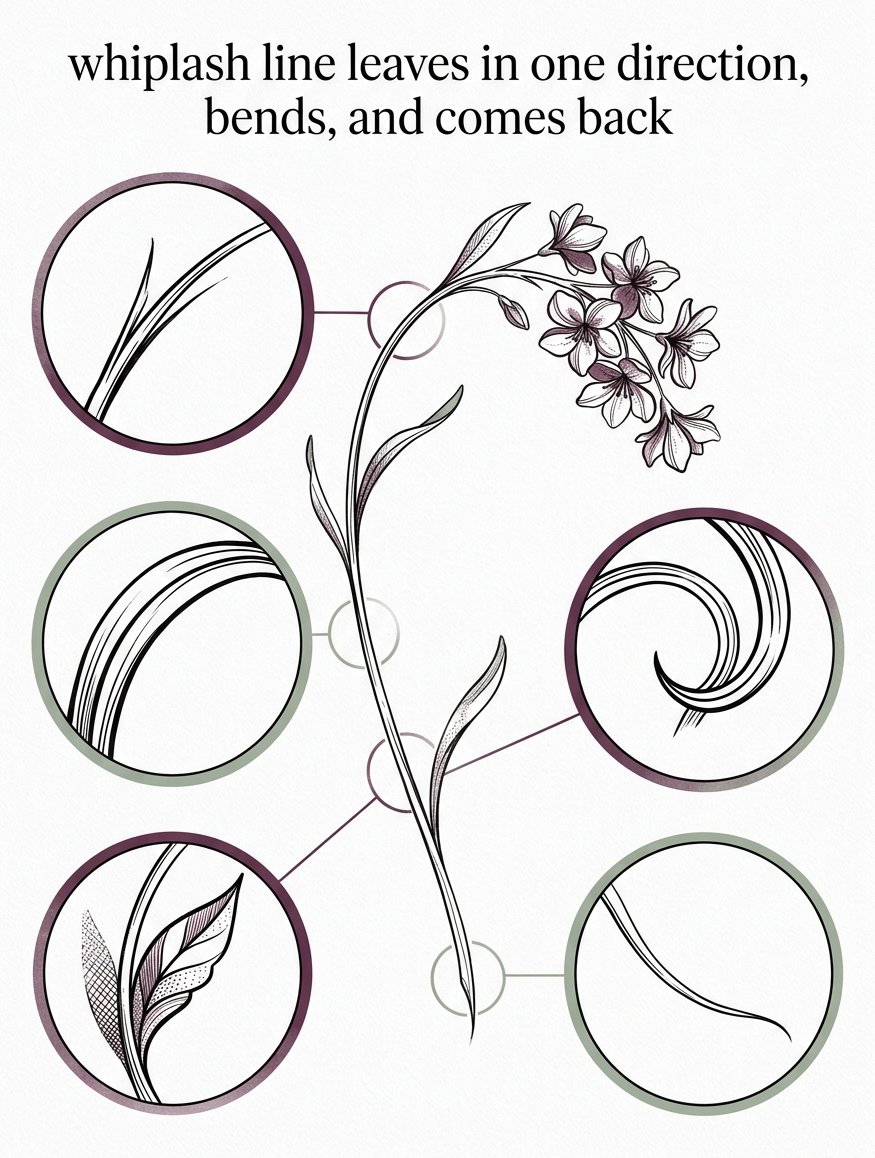
For your hand, the secret is the turn. A whiplash line leaves in one direction, bends, and comes back.
Draw it in one movement, from the elbow. A slow line wobbles. A quick line stays smooth. I drew mine from the wrist for a week. Every stem looked like a nervous question mark.
The fix was to stand up. Standing frees the elbow, and the elbow draws the long curves.
Tonight, three ways in.
Fill a scrap of paper with 20 S-curves, each one faster than the last. Or draw a cyclamen from the roots up. Let one stem loop back over another. Or copy an arching orchid stem, and push the arch wider than feels polite.
One flower makes a good evening. Some evenings you want something wilder: a flamingo neck, a peacock tail, a leopard mid-stretch. The same flowing line runs through all of them.
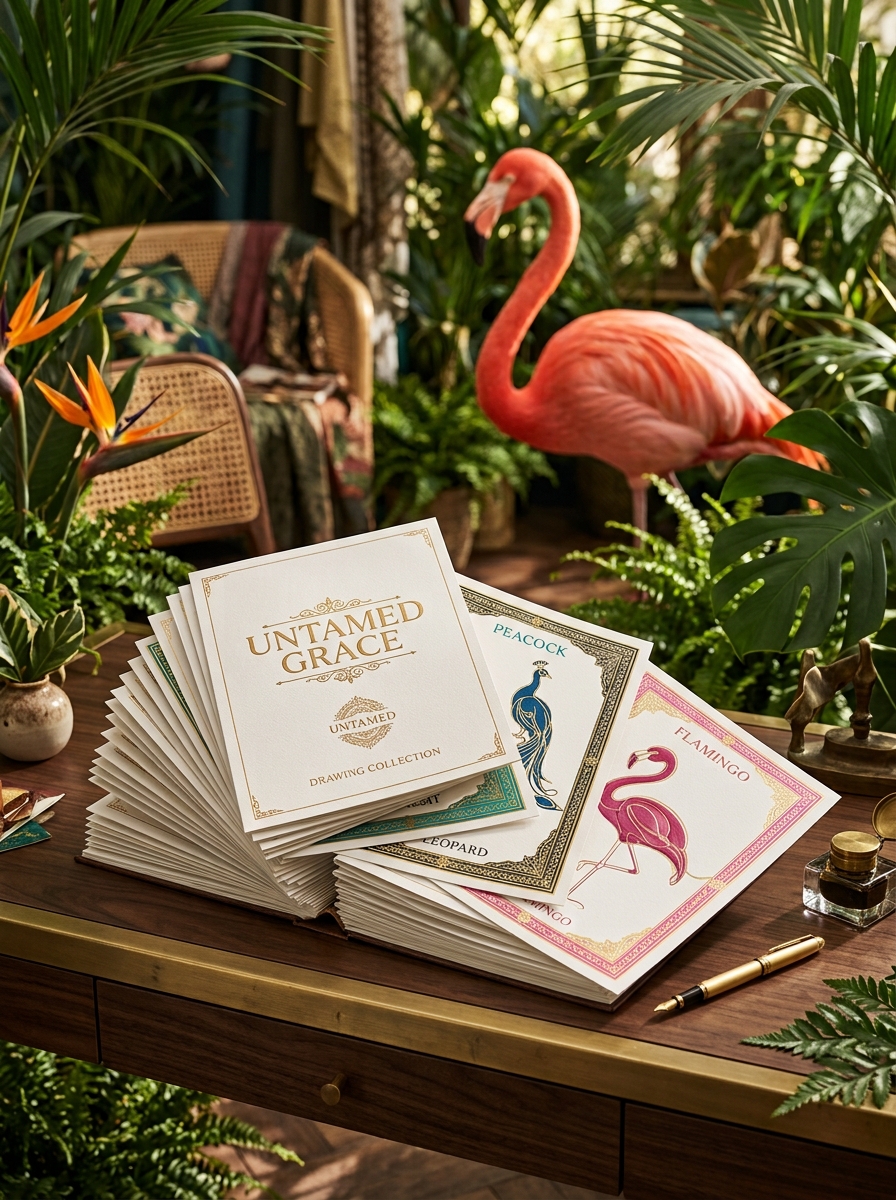
The Collection
UNTAMED GRACE. Leopards, peacocks and one unicorn.
For the evening a tulip feels too tame. Inside: 33 step-by-step line art sheets of animals, birds and flowers. (The unicorn has not explained itself.) What you get: something wild to draw tonight, and pages good enough to frame.
Back to the stem now, and a poster so narrow the flowers had to bend.
Alphonse Mucha got a rush poster job at Christmas, and its tall frame bent the flowers for him
On 26 December 1894, Alphonse Mucha was in a Paris print shop. He was correcting proofs as a favour to a friend.
The actress Sarah Bernhardt called the printer. She wanted a new poster for her play Gismonda, at once. The usual poster artists were away for the holidays. So the job went to the man doing the proofs.
His poster was long and narrow, with a near life-size figure. People loved it. Some collectors bribed the men who pasted posters up. Others simply cut them down at night. (The Mucha Foundation tells it better. The thieves had excellent taste.)
Here is what the narrow shape teaches. A tall, thin box leaves no room for a stiff stem.
So the stem bends and the leaves lean. The frame does half the design work for you. I resisted this for ages. Then I ruled a box twice as tall as it is wide. My lily curved on its own.
One more thing I learned slowly. Leave a finger’s width of space above the flower, or it looks squashed.
Tonight, three ways in.
Rule a box 4 cm wide and 8 cm tall. Fit one iris inside it. Or draw a circle behind a flower head, the way a poster frames a face. Or let one leaf touch the edge of the box and follow it round.
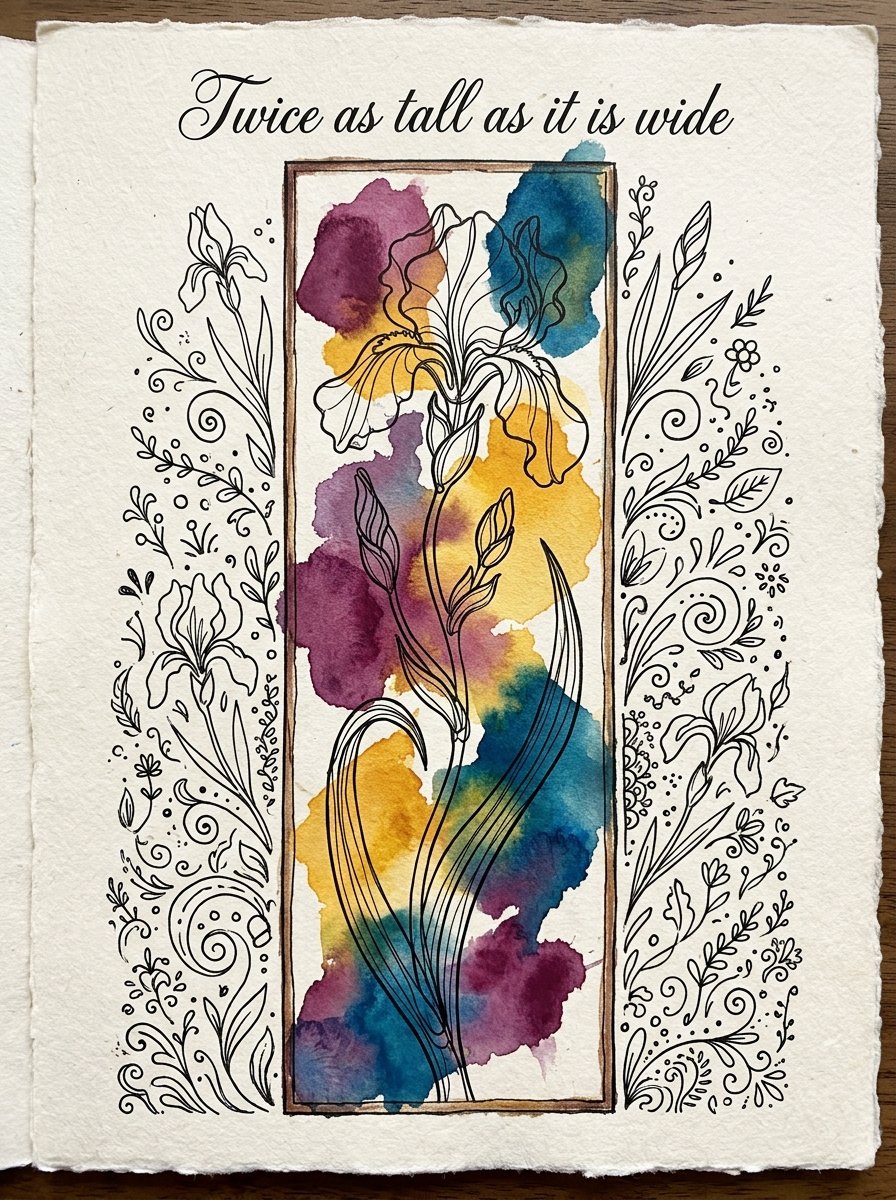
The frame does half the design work for you.
Eugène Grasset’s art nouveau drawing book of 1896 showed each plant as it grows, then as ornament
In 1896 Eugène Grasset published La Plante et ses applications ornementales. In English: the plant and its uses in ornament.
Most of the plates were drawn by his student, Maurice Pillard Verneuil. A few other artists drew the rest.
Each plant appears first as a careful botanical study. Then it comes back as design. The captions were printed in French, English and German. (A leaf, it seems, deserves three languages.) You can read the whole book online.
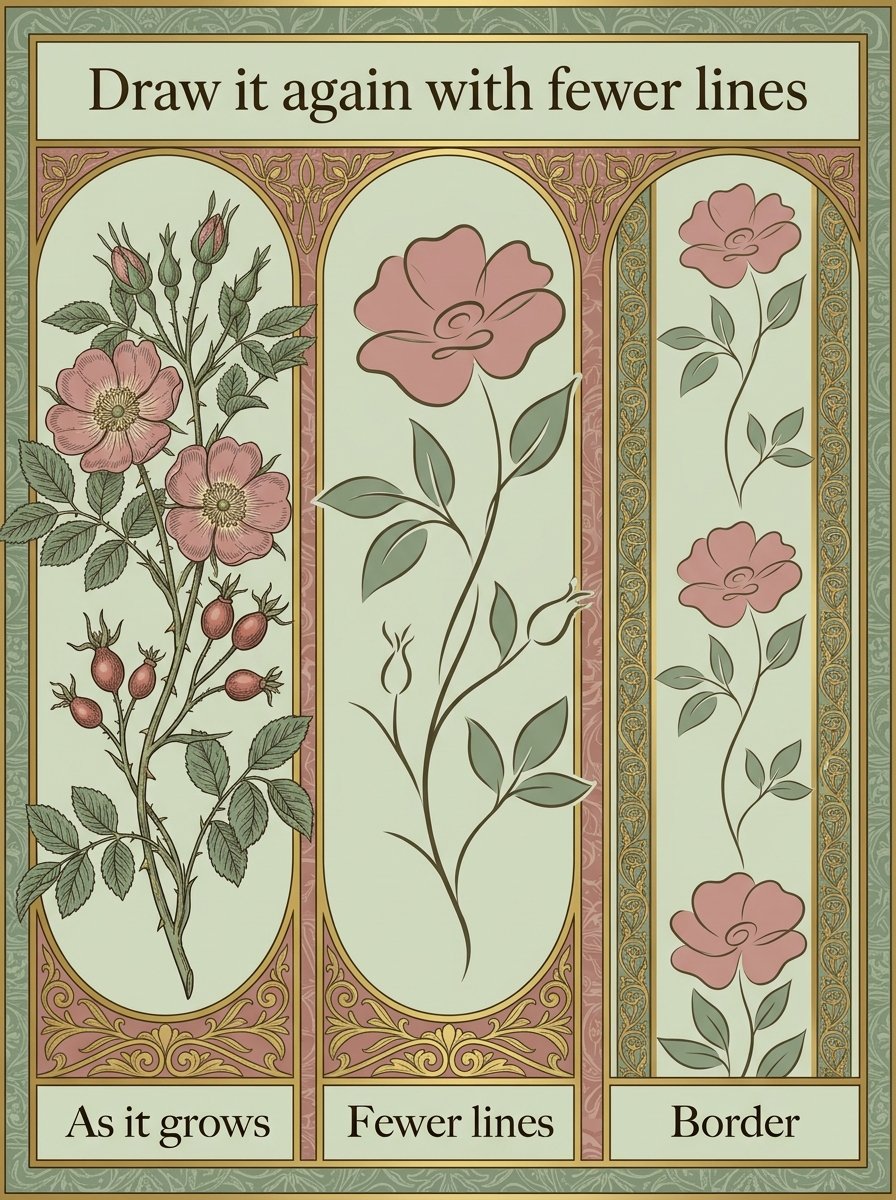
The secret is the order. Draw the real flower first. Then draw it again with fewer lines.
The second drawing keeps only the lines you liked. The veins go. The wobbles go. The best curve stays and gets longer. My first try kept everything, including a bent petal. It looked like ornament after a small accident.
Now I count. If the second drawing has more lines than the first, I start it again. This is the quiet engine of every good art nouveau drawing: the plant, then the plant with less in it.
Tonight, three ways in.
Draw a flower from a vase, just as it is. Or draw it a second time using only 7 lines. Or repeat that second drawing along a strip, like a border on a tile.
A flat, simple petal can look a little empty. Something small inside it brings it to life.
Free Starter Pack
10 pattern templates for the inside of a flat petal.
Sent tonight. Small fills to drop inside a stylised flower.
Unsubscribe in 1 click, no hard feelings
Margaret Macdonald Mackintosh made art nouveau drawing lines out of twine, beads and thread in 1900
In 1900 Margaret Macdonald Mackintosh made The May Queen. It is a panel more than 4 metres long, now in Glasgow Museums.
Read the materials list. It sounds like a sewing basket: gesso, hessian, scrim, twine, glass beads, thread, mother of pearl and tin leaf.
Twine and thread are lines you can move. You can lay a length down, look at it, and nudge it. (I tried this with a shoelace. The shoelace had better curves than I did.)
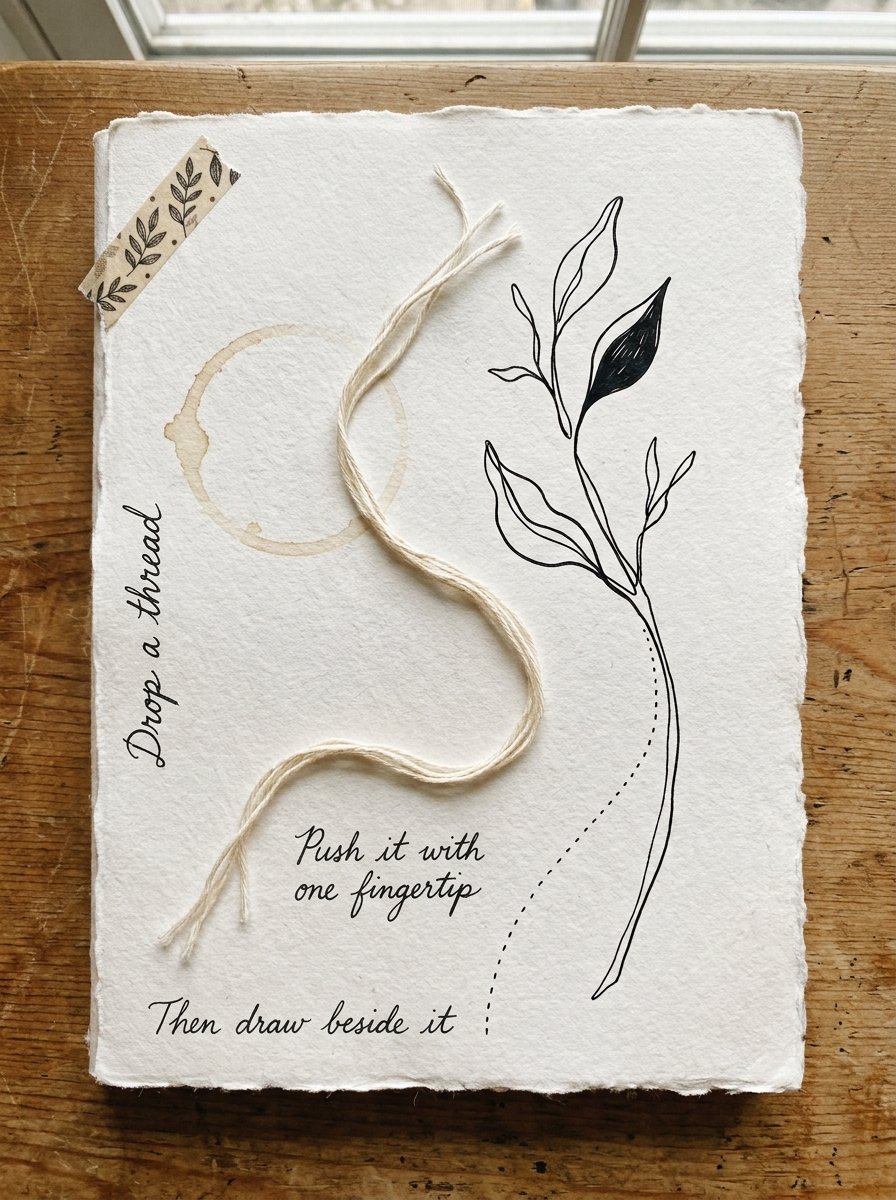
The secret is to find the curve with something soft first. Drop a length of thread on the page. Push it with one fingertip until the curve looks right. Then draw beside it.
Thread cannot make a sharp corner. That is why its curves look so easy.
Plain cotton thread works best. Wool is too fluffy to read, and fishing line springs off the page.
Tonight, three ways in.
Drop a thread and copy its curve as a stem. Or lay three threads and turn them into one flower with three stems. Or tape a thread down, and draw leaves that lean the way it leans.
Hector Guimard gave Paris 141 Métro entrances built from the same few iron parts
Around 1900 Hector Guimard designed entrances for the new Paris Métro. By 1913, 141 had been built.
He did not design each one from scratch. He designed standard cast-iron parts. They could be put together in different ways, for big sites and small ones.
The first entrances went up within 6 months of the design. Their lamps rise on curving stalks. People often compare them to lily of the valley. Today 86 still stand as protected monuments. (Every morning, people hurry to work under a giant iron flower.)
The secret: design one good piece, then use it again. Draw one stem with a bud at the tip. Then flip it and draw its mirror image beside it.
Two mirrored stems make an arch. Four make a gate. I used to redraw every stem from scratch. Half of them came out looking tired.
Tracing paper is what makes this easy. I keep a pad of it right next to the good paper.
Tonight, three ways in.
Draw one curling stem on tracing paper. Flip the paper to make an arch. Or repeat one stem four times around a circle. Or draw a lamp post that grows a lily of the valley bud at the top.
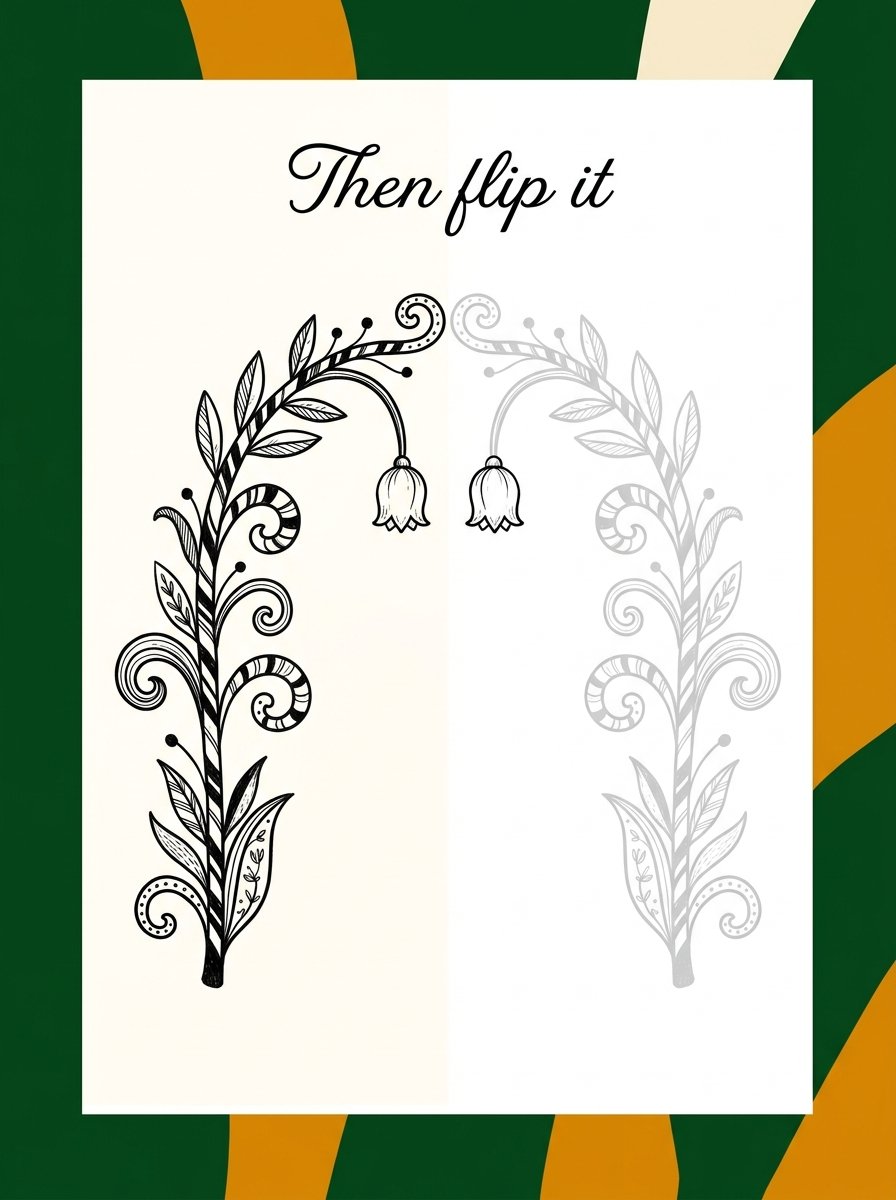
Two mirrored stems make an arch. Four make a gate.
Émile Gallé wrote lines of poetry into his glass, and the words curve among the flowers
Émile Gallé ran workshops in Nancy, in eastern France. He made glass and furniture there.
On many glass pieces he added words, lines taken from poets. He called them speaking vases. The words sit among the flowers, not on a label underneath.
In a letter of 1893 he said the words gave the work its soul and its voice. That is a lot to ask of a vase. (The vases seem to have managed.)
He also put a line about his roots on his workshop doors. Hold on to that one for later.
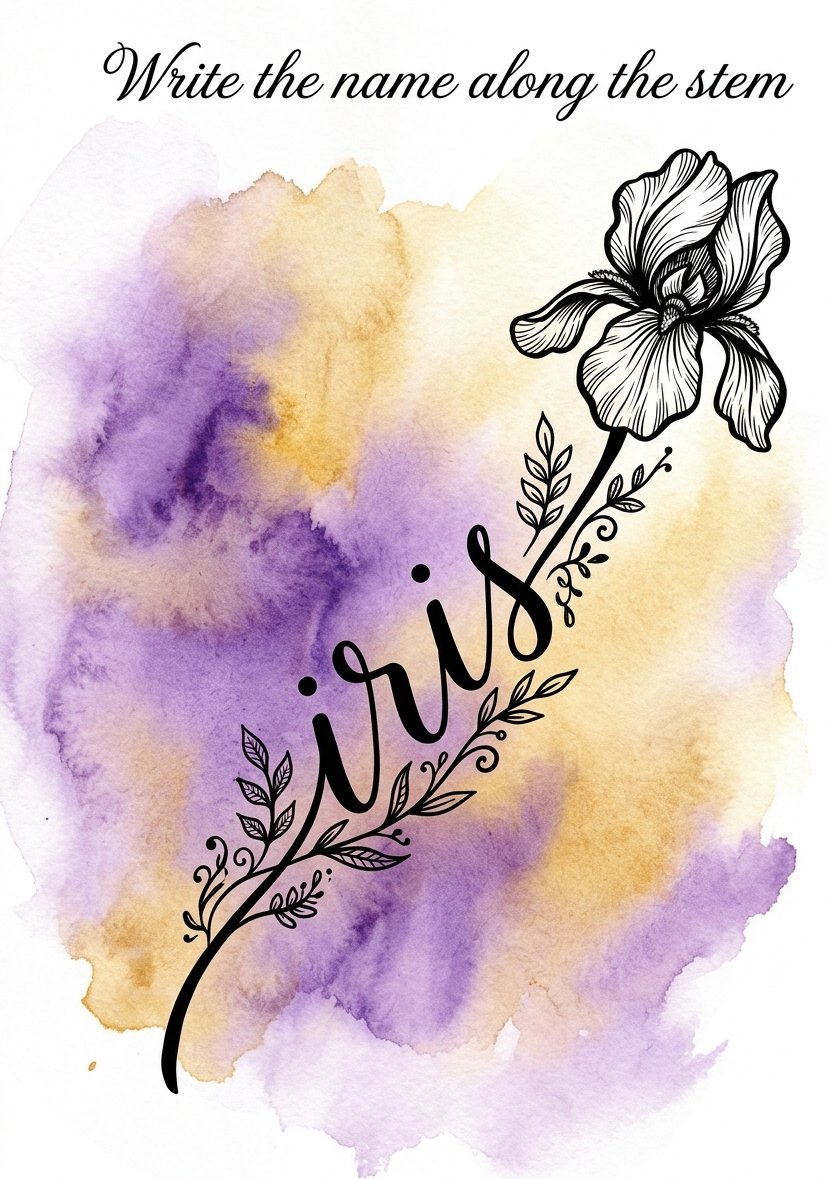
The secret for your hand: a word is also a line. Letters can curve along a stem, just like leaves.
Write the name in pencil along the curve first. Then ink the stem so it touches the letters. My first try said iris in letters so big the iris had nowhere to grow.
Keep the letters smaller than the leaves. If the word is louder than the flower, it becomes a sign.
Tonight, three ways in.
Write the name along the stem, small and joined up. Or write one word you like around the edge of a flower head. Or let the last letter turn into a curling tendril.
Maurice Pillard Verneuil filled a book of 1897 with animals turned into art nouveau drawing patterns
Grasset’s student got a book of his own the next year.
In 1897 Maurice Pillard Verneuil published L’animal dans la décoration, with 60 colour plates. Grasset wrote the introduction.
Inside, swans and stags turn into designs for wallpaper and cloth. (A stag on wallpaper is a stag that has agreed to hold still.)
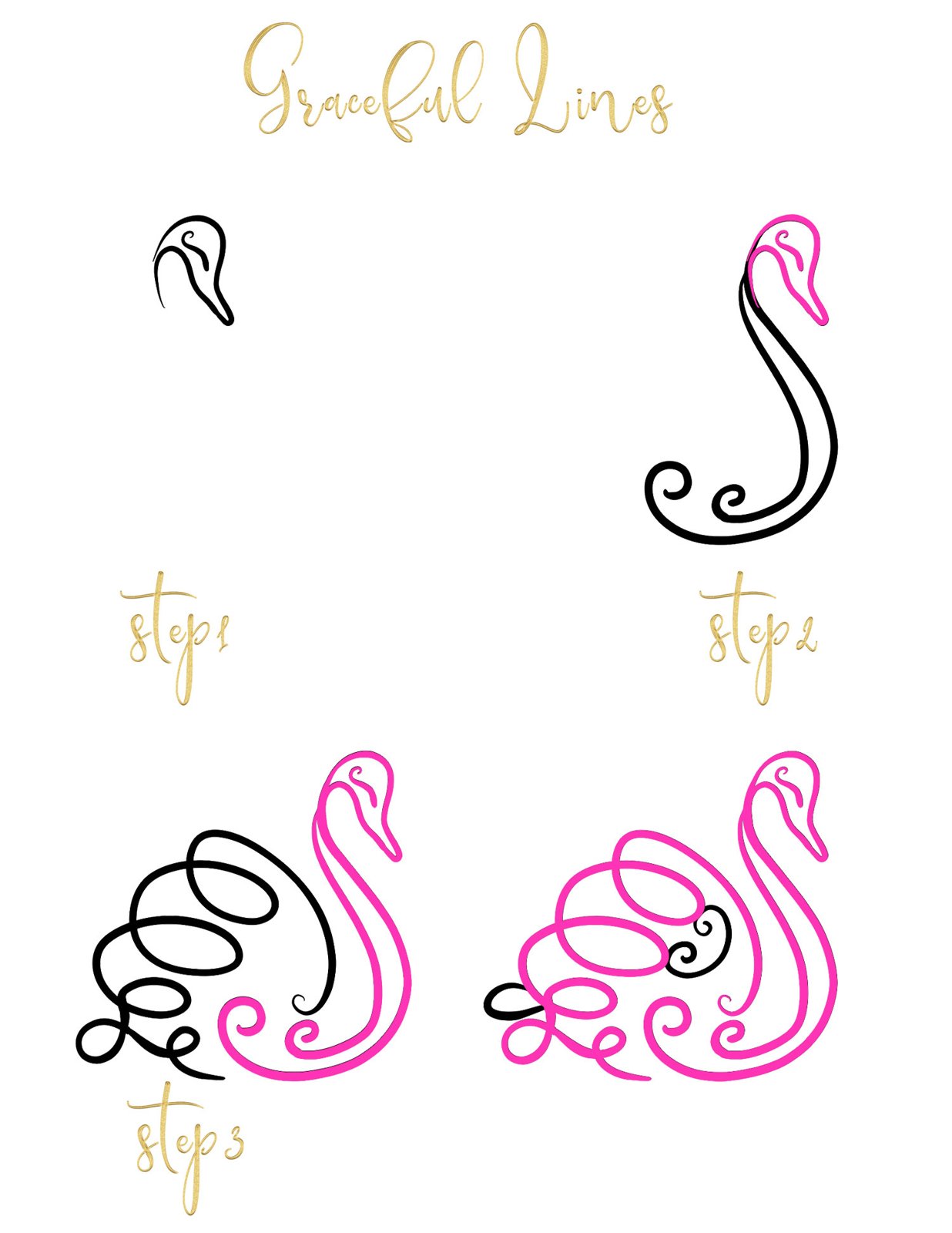
The secret: an animal becomes ornament when one part of it becomes the whiplash.
Pick the longest part. That might be a swan’s neck, a peacock’s tail or a fox’s tail. Draw that curve first, and biggest.
Then fit the rest of the animal around it, smaller. I did it the other way round for months. My birds all looked stuffed.
A swan is the easiest place to start. Its neck is already an S before you touch it.
Tonight, three ways in.
Draw a swan’s neck as one big S, then add the body. Or give a peacock a tail that loops twice before it ends. Or repeat a small bird along a border, every tail curling the same way.
Tonight’s art nouveau drawing exercise puts all 7 secrets into one lily of the valley
This one is longer. Give it about 30 minutes and a clean sheet of paper. I have run it 4 times. It costs 1 sheet every time, usually the good one.
First, Mucha’s box. Rule a rectangle twice as tall as it is wide. (Mucha’s was tall enough for a life-size Sarah Bernhardt. Yours only has to hold a lily.)
Now Obrist. Draw one stalk in a single quick swing from the elbow. Let it arch over near the top and touch one side of the box. A stalk drawn in 3 careful instalments shows all 3 joins.
Grasset next. Draw two leaves lightly, as they really look. Then go over them with fewer lines. (This is where the hand wants to add veins. Veins are what you came to remove.)
Macdonald for the second stalk. Drop your thread beside the first one, nudge it, and draw along it. I nudge mine about 6 times before the curve looks accidental.
Guimard for the bells. Draw one small bell on tracing paper. Trace it again and again down the stalk, each one a little smaller. (Same trick as the Métro: 1 good part, then 141 entrances.)
Gallé for a word. Write one small word along the bottom of a leaf, in pencil first. Keep it short. I tried convallaria once and the leaf could not carry it.
Verneuil last. If a bee comes to visit, give its path the same curve as the stalk.
The free exercise sheet below shows the lily of the valley in 4 steps. Print it and keep it next to your paper.
Download the lily of the valley exercise sheet →
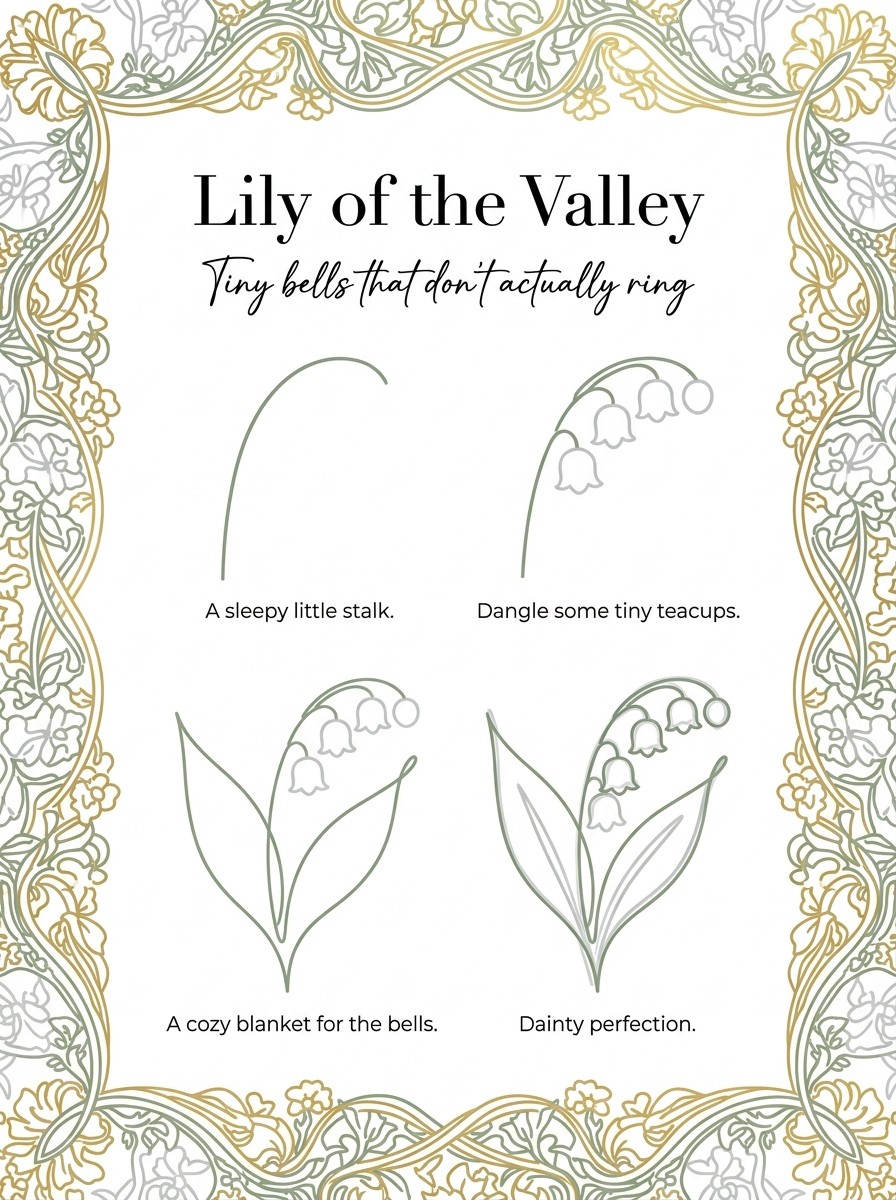
When the stalk looks as if it would spring back if you touched it, stop there. That is the flowing line.
After the lily, the same curve is waiting in a flamingo’s neck and a leopard’s tail. Untamed Grace has 33 animals, birds and flowers, each drawn step by step.
33 wild line drawings, each one built step by step
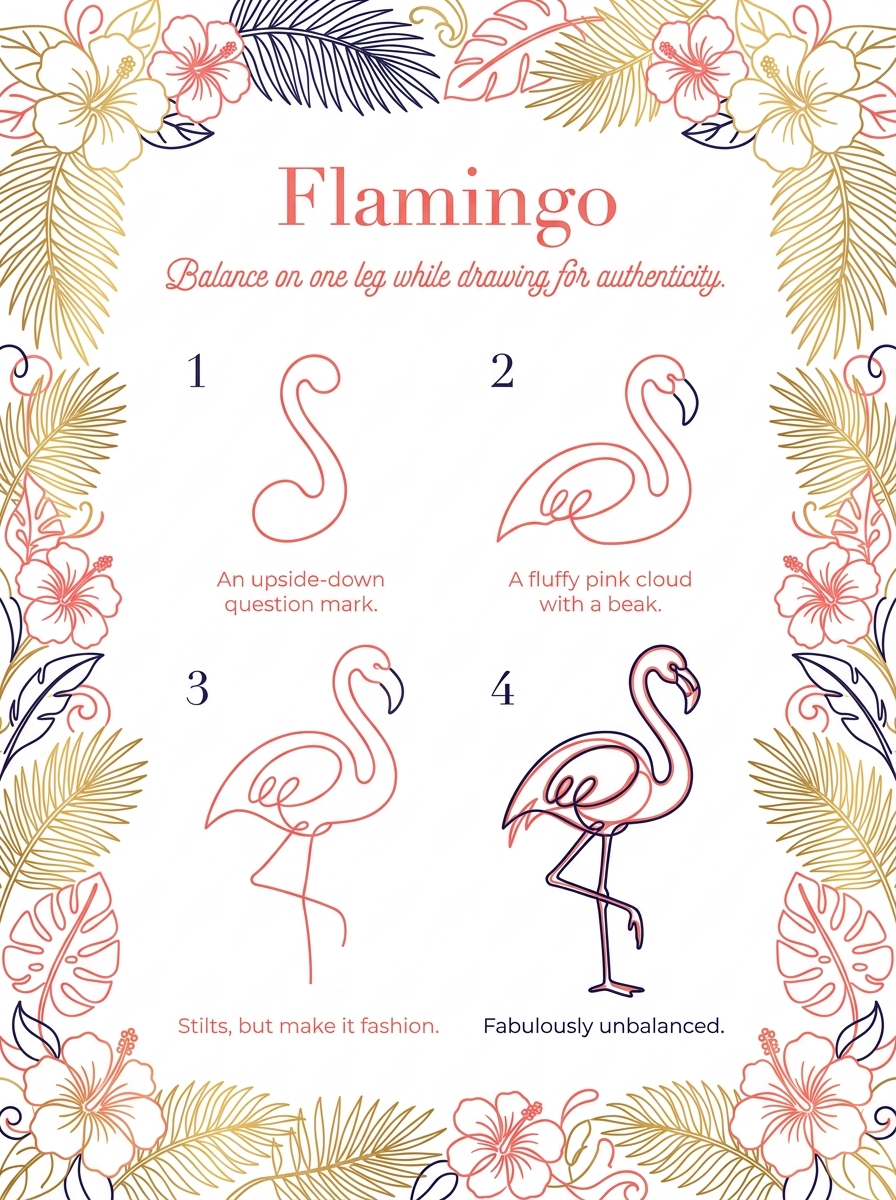
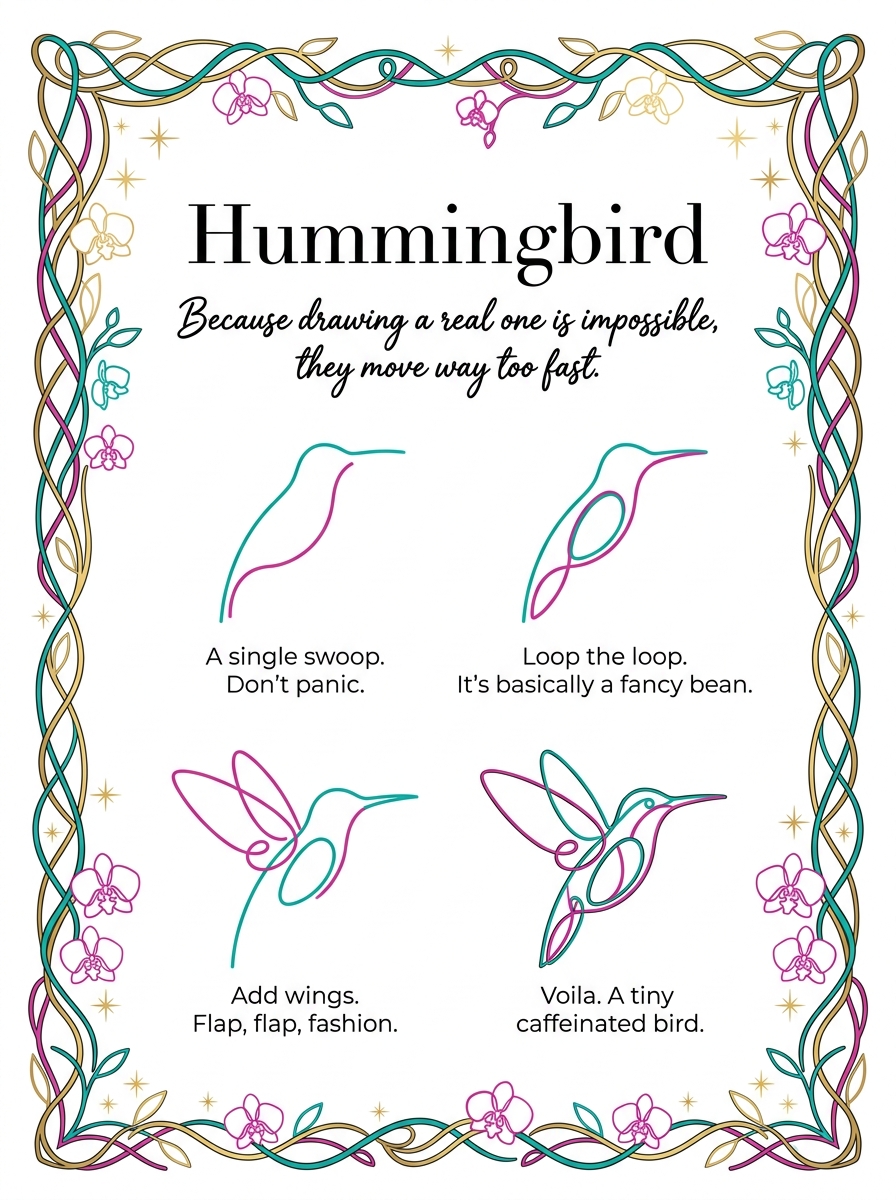
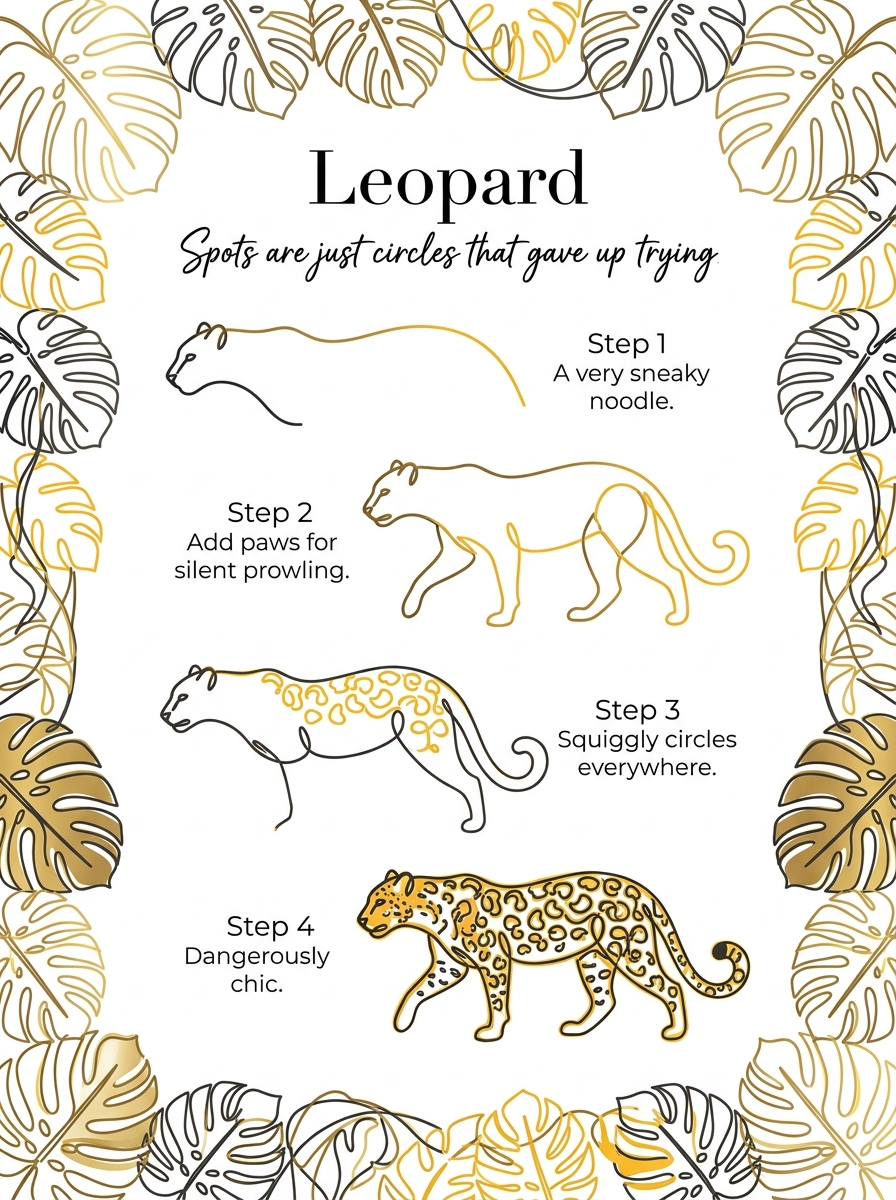
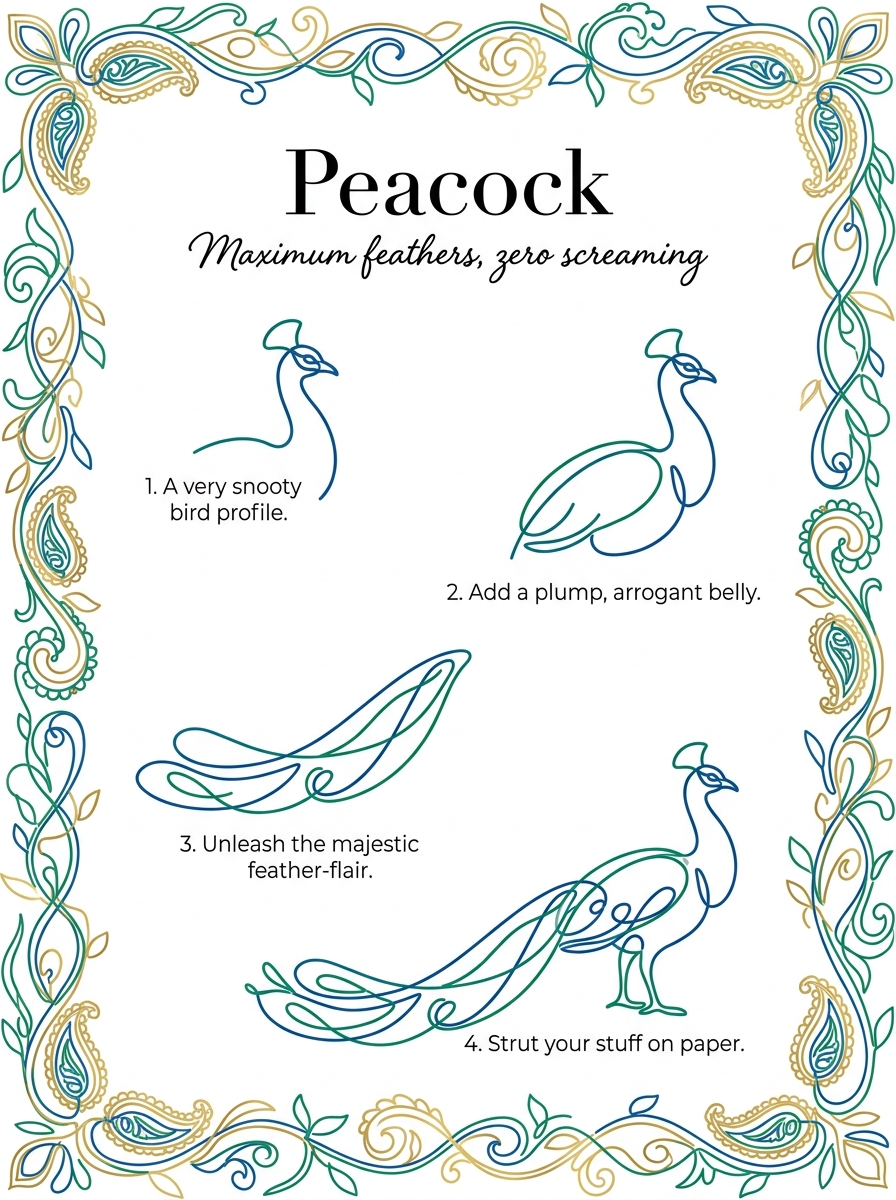
Start with the flamingo, and draw the neck curve first. Inside: 33 step-by-step sheets of animals, birds and flowers, ready to print.
Instant download · print as often as you like
Put the pen down while the stalk is still mid-swing. Leave the lamp on. The curve will keep leaning after you leave the room, like a plant that has heard about the woods.
“My root is deep in the woods, among the mosses, around the springs.”
Émile Gallé, motto on his workshop doors in Nancy
Mirabelle wrote this. No training, strong opinions, many pens. Peer reviewed by a cat who reviewed the lines and kept the ribbon.