In the summer of 1936 a Dutch printmaker took a boat to Spain for the second time in his life, walked into a fourteenth-century palace in Granada, sat down on the floor and started copying the wall.
Not sketching it. Copying it, tile by tile, for days, with his wife helping. M. C. Escher had no mathematical training whatsoever — his understanding of the geometry was, in his own biographers’ words, visual and intuitive. He could not have told you the group theory behind a single one of those tilings. He just wanted the shapes, and the only way to have them was to sit on a cold floor and take them down by hand. He called it “a real mania to which I have become addicted, and from which I sometimes find it hard to tear myself away.”
The most famous pattern artist of the twentieth century got his vocabulary by copying somebody else’s wall. Which is the first thing nobody tells you about zen doodle patterns: they are not invented. They are borrowed, and they always have been.
The eighteen below, grouped:
- What nobody says about where patterns come from — four secrets about borrowing, and why it is the whole craft
- What nobody says about the black — three secrets, and the one that turns a flat page into a finished piece
- What nobody says about how many — four secrets about restraint, which is harder than density
- What nobody says about the shape underneath — four secrets about the division, which is the decision everything else sits on
- What nobody says about the hand — three secrets about speed, pressure and the pen you already own
 Save
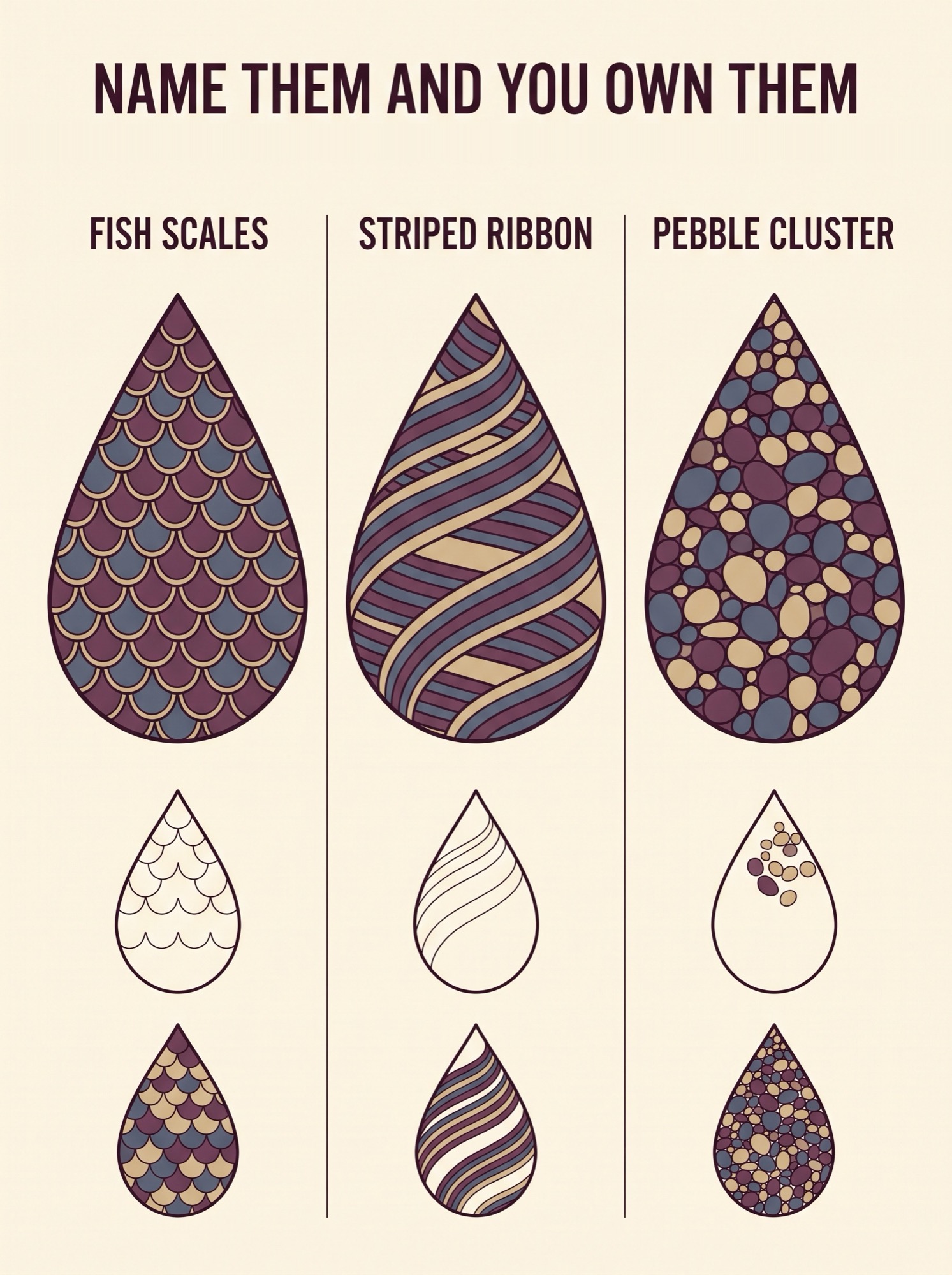
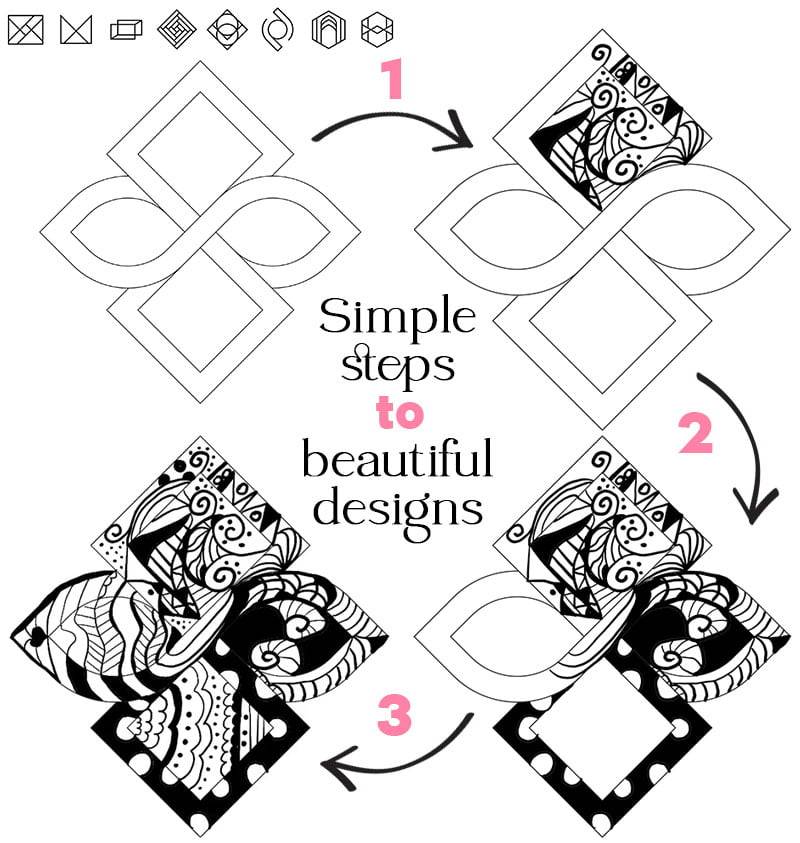
SaveOne shape, three named fills, one pen. That is the whole craft in a single page — and the moment a fill has a name, your hand can find it again next week.
The Collection
ZENDOODLE MASTERY — Scales, ribbons, and the pleasure of filling a shape properly.
The set for the evening you do not want to think, only to occupy your hands until the noise drops. What you get: something to do at the kitchen table that does not involve a screen, and a page of pattern work dense enough that people ask how long it took.
The eighteen secrets start where every pattern artist actually starts, which is not with a blank page. It is with something somebody else already drew.
What nobody says about where zen doodle patterns come from
Eighty years before Escher sat on that floor, an architect named Owen Jones published a book for exactly this purpose. The Grammar of Ornament, 1856, printed by Day and Son. It is a set of plates of the world’s ornament, gathered so that designers could take from it, prefaced by thirty-seven numbered propositions. One of them says the quiet part out loud: true art, Jones wrote, consists of idealising, and not copying, the forms of nature.
The Victorians published a 37-rule manual for borrowing patterns and nobody called it cheating. They called it the grammar.
- Nobody invents a pattern — Fish scales are on a fish. Pebbles are in a river. Every fill you will ever draw already exists somewhere and is waiting to be looked at properly.
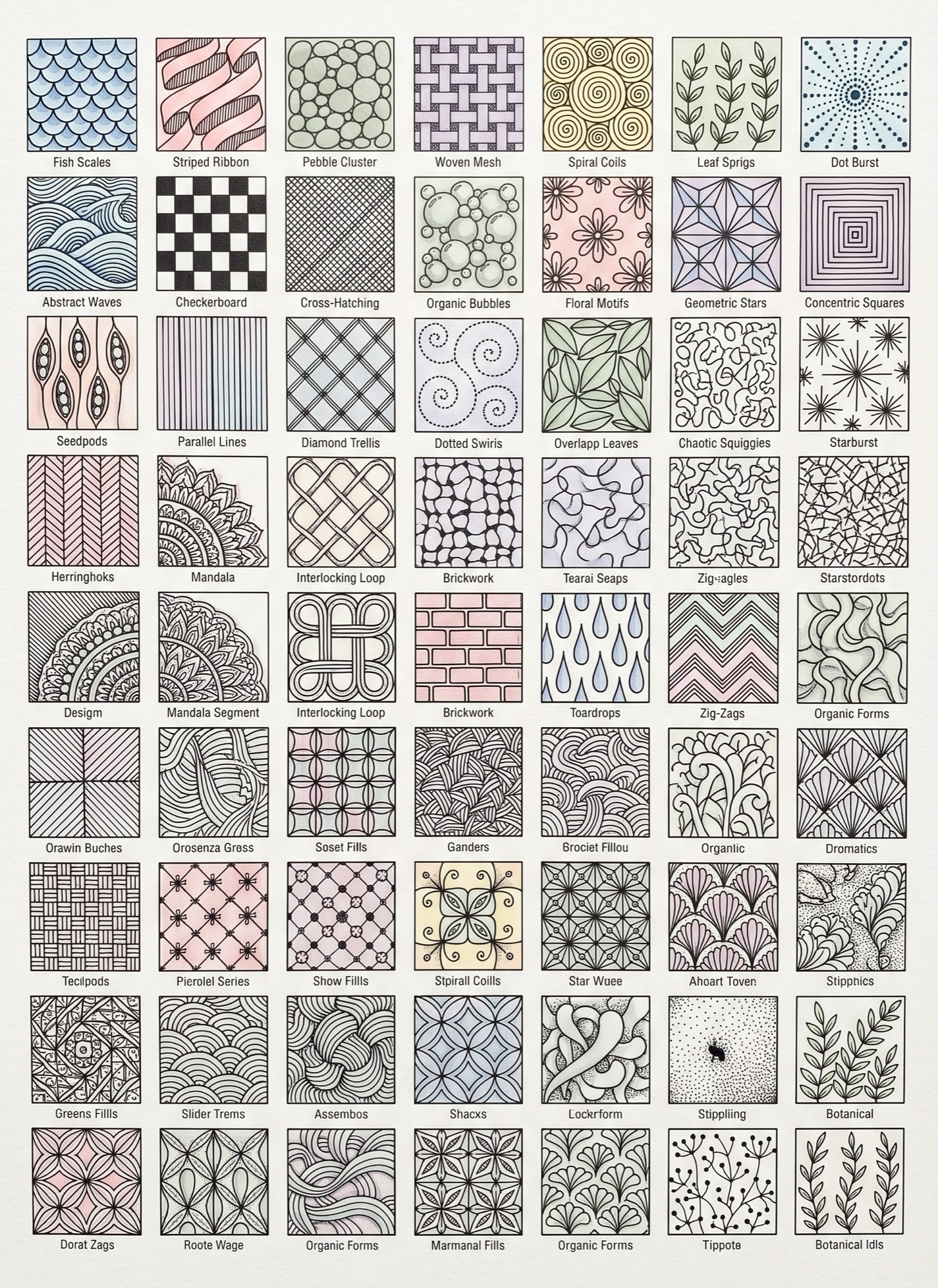
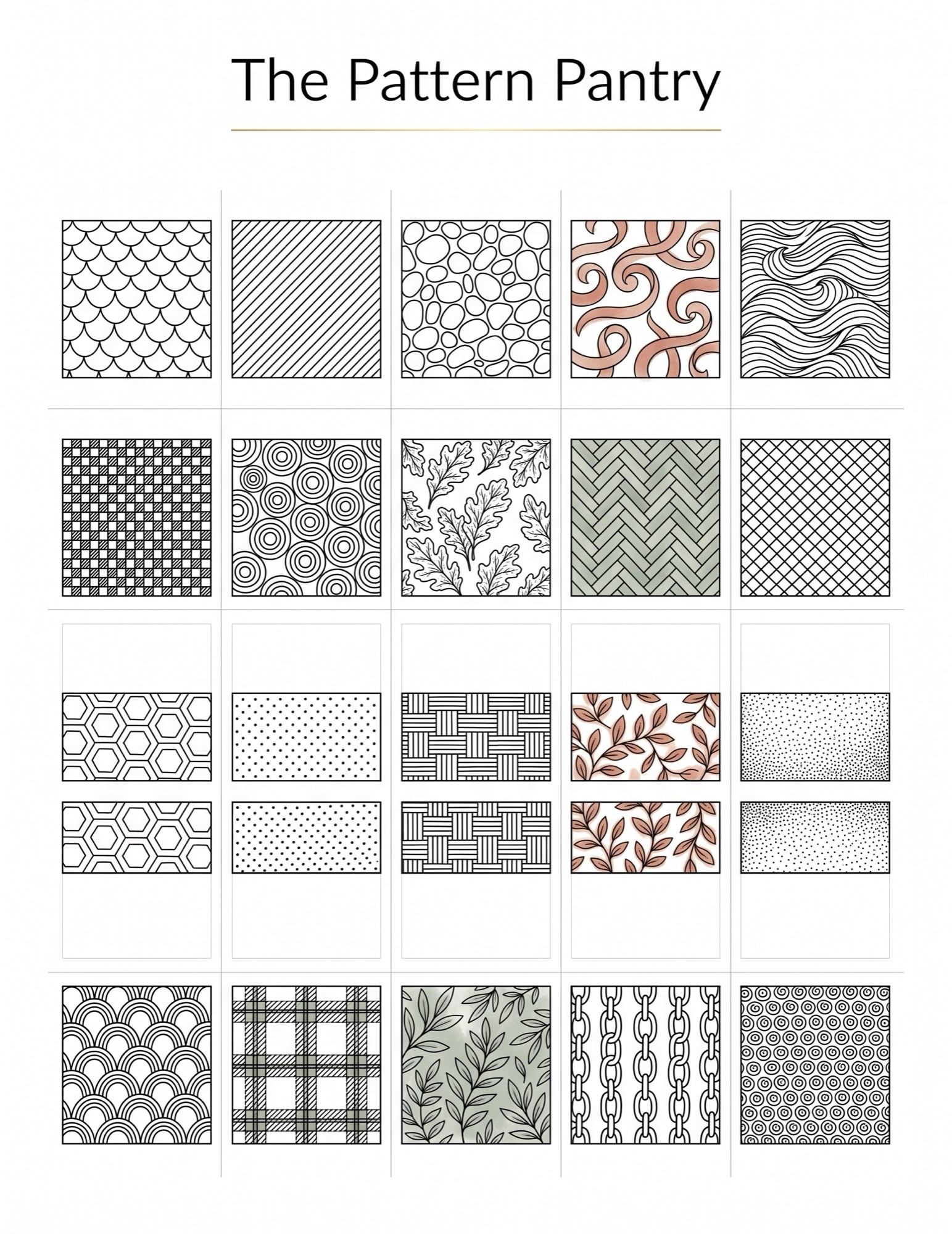
- Name them and you own them — An unnamed pattern is a squiggle you cannot repeat. Fish Scales, Striped Ribbon, Pebble Cluster, Cross-Hatching, Dense Dots, Wavy Lines, Checkered Squares, A Solid. Eight names is a working vocabulary.
- Copy the whole thing before you change it — Escher took the tile down exactly, then spent thirty years altering it. That order is not optional and it is not humility. You cannot vary a shape you have not yet drawn.
- The source does not have to be beautiful — A drain cover, a tweed jacket, a crumpet. The best fills in my sheets came off a bathroom tile and a shortbread tin.
 Save
SaveThat chart is the entire argument in one page. Not one of those swatches is original and not one of them needs to be. Borrow it, nobody invented these.
What nobody says about the black
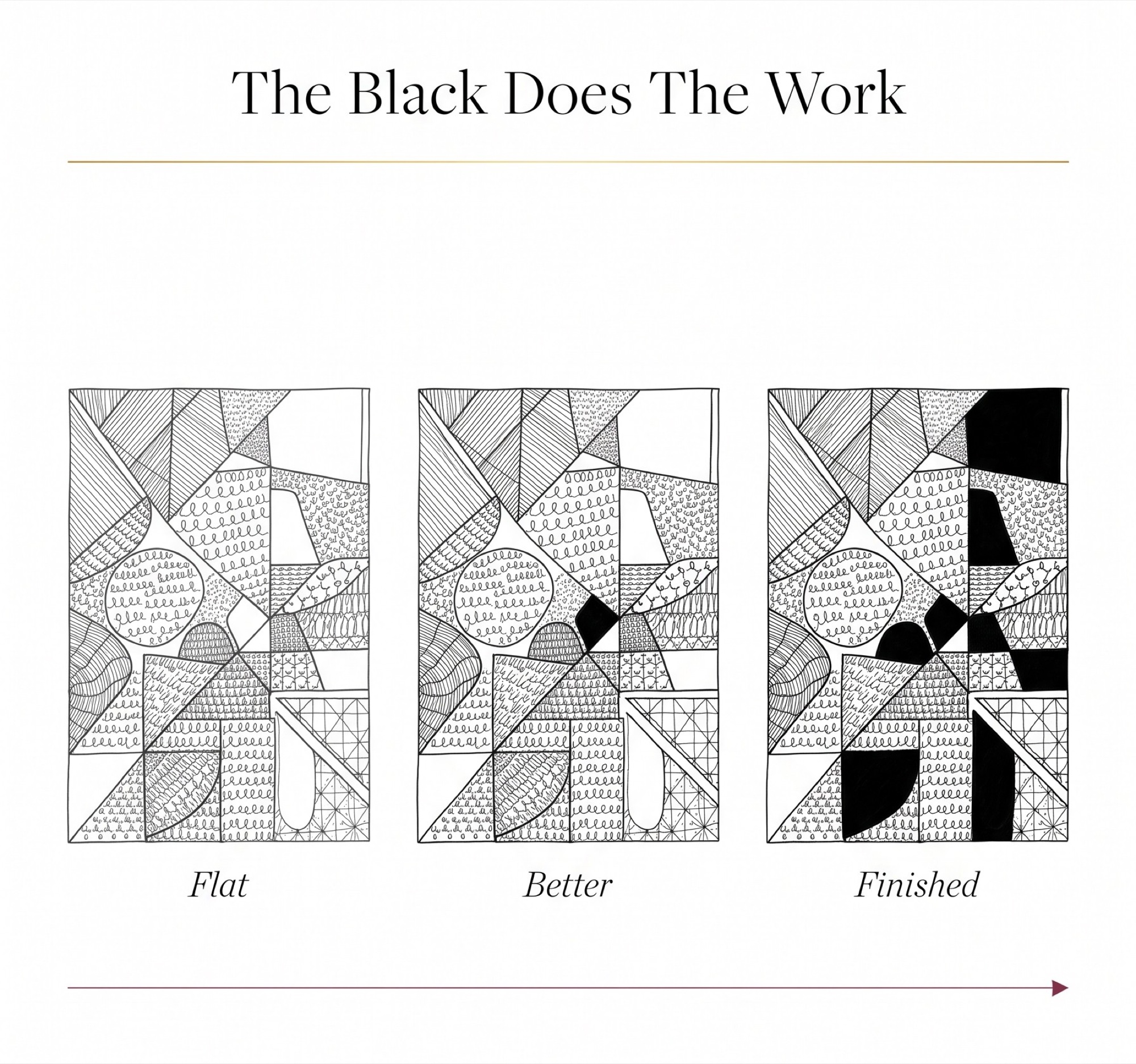
Here is the secret that separates a page that looks finished from a page that looks like homework, and almost no tutorial prints it: a drawing made entirely of line is grey. Not black — grey. Fine lines at a distance average out into a flat mid-tone, and a flat mid-tone reads as unfinished no matter how much work went into it.
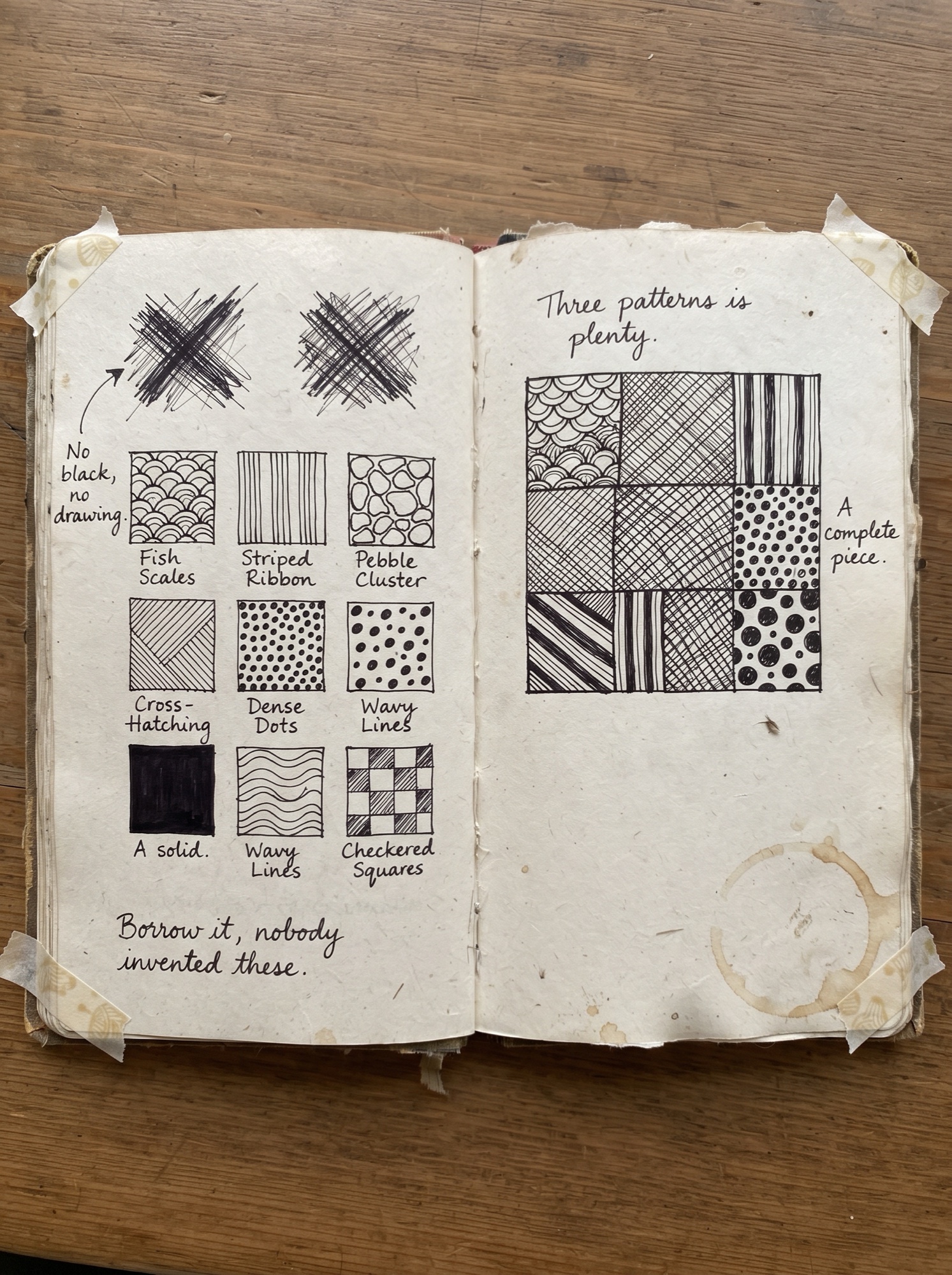
- Fill something solid, always — One shape, completely inked. It is the difference between a pattern study and a piece. No black, no drawing.
- Three solids, not one and not nine — One reads as an accident. Nine reads as a blot. Three makes the eye travel and gives the page a shape you did not have to plan.
- The solid goes where the eye should stop — Not in the corner, not at the edge. Slightly off-centre, and never symmetrical with another one.
 Save
SaveThe two crossed-out swatches on that page are mine and they are crossed out for the same reason: I drew them in line only and they came out grey. The note is the fix.
 Save
SaveWhat nobody says about how many zen doodle patterns to use
Every beginner page of zen doodle patterns has the same problem and it is not lack of skill. It is eleven patterns in one drawing. The instinct is that more vocabulary means more accomplished, and the instinct is exactly backwards.
- Three patterns is plenty — One dense, one open, one solid. That is a complete piece and it has been since the first tile floor.
- Repeat a fill in a non-adjacent shape — Repetition is what makes it read as designed rather than as a sampler. Two shapes apart, never side by side.
- Leave one shape completely empty — White is a pattern. It is the only one that costs nothing and the only one everybody forgets to use.
- Vary the scale, not the vocabulary — The same fill drawn small in one shape and large in another does more work than a fourth pattern ever will.
 Save
SaveWhat nobody says about the shape underneath
Every guide to zen doodle patterns starts with the fills. Almost none of them mention that the fills are the second decision. The first is the division — how the blank area gets cut into the compartments you are about to fill — and it does more for the finished page than any amount of pen work.
Escher’s wall was already divided when he sat down in front of it. That is what a tiled wall is. He inherited the hardest decision in the medium and spent his days on the easy half, and he still called it a mania.
The patterns are the part everybody photographs. The division is the part that decides whether the photograph is worth taking.
- Cut with fewer lines than feels right — Five or six compartments in a page. Twelve turns every fill into a stamp too small to read, and small fills are what make a page look anxious.
- Make the compartments different sizes — Equal compartments read as a grid, and a grid asks to be filled evenly, which is how a page ends up flat. One large, two medium, two small is a composition before a single fill exists.
- Let a line run off the edge — A division that stops politely inside the border makes the drawing feel like a specimen. One line carried right off the paper makes it feel like a fragment of something bigger.
- Draw the division in pencil and live with it overnight — It is the only part you cannot fix later. A fill you dislike gets covered by a solid. A bad division is under everything.
This is also the honest answer to why the sheets in the collection are built the way they are. The division is done for you on every one of them, which is not laziness on your part — it is the same head start Escher walked into a palace to get.
 Save
SaveWhat nobody says about the hand
- Go faster in the dense fills — Slow lines wobble. The scallops in a scale fill want to be flicked, not drawn. Speed is what makes them look confident and it costs nothing to try.
- The pen you own is the right pen — Any fineliner that does not bleed. A second, thicker pen for the solids saves time, and that is the only reason to own one.
- Turn the paper, not your wrist — Every awkward angle in a curved fill disappears if you rotate the page instead of contorting your arm. Nobody says this and everybody needs it.
 Save
SaveThe confession about the eleven-pattern page
I know the three-pattern rule because I broke it for about two years. My pages had scales and ribbons and pebbles and waves and checks and a border and a second border, and I thought density was the same thing as effort. It is not. It is the opposite of a decision.
What actually happened is that I could not choose, so I included everything, and then I was annoyed that the result looked busy rather than considered. Restraint is a skill and it arrives later than the pen work does. The page above with three fills took me a quarter of the time and it is the one that got framed.
 Save
SaveStart with the vocabulary, not the page
Do not begin with a finished drawing in mind. Begin with the chart. Draw each named fill in a small square until your hand knows it — that is twenty minutes and it is the only practice that transfers to everything afterwards.
Free Starter Pack
10 templates. 1 of them ends up framed.
Sent tonight. The first takes 12 minutes.
Unsubscribe in 1 click, no hard feelings
The chart above is free and yours. When you want the rest of it — every fill, every build, every finished page — the full collection is below.
What is the difference between zen doodle patterns and doodling?
A doodle is what your hand does while your attention is elsewhere. Zen doodle patterns are the opposite: a named fill, drawn deliberately, inside a shape you decided on first. The materials are identical. The intention is not, and the intention is the whole difference on the page.
Do I need special paper?
No, but avoid anything thin enough to see through. Dense fills put a lot of ink into a small area and cheap paper feathers, which turns a crisp Dense Dots fill into a grey smudge. Ordinary card stock is plenty.
Can I use colour with zen doodle patterns?
Yes, and the rule is the same as the black: less than you think, and in fewer places. One accent colour used in two compartments will do more than five colours spread evenly, because the eye reads the repeat as a decision. What kills a coloured page is filling every compartment — at that point the colour is doing the dividing, and the pen work you spent the evening on stops being visible at all.
How long does one page take?
A single shape with three fills, twenty minutes. A full page, an evening — and it is the rare kind of evening work you can genuinely abandon halfway and resume without any loss, because a half-filled shape does not go stale.
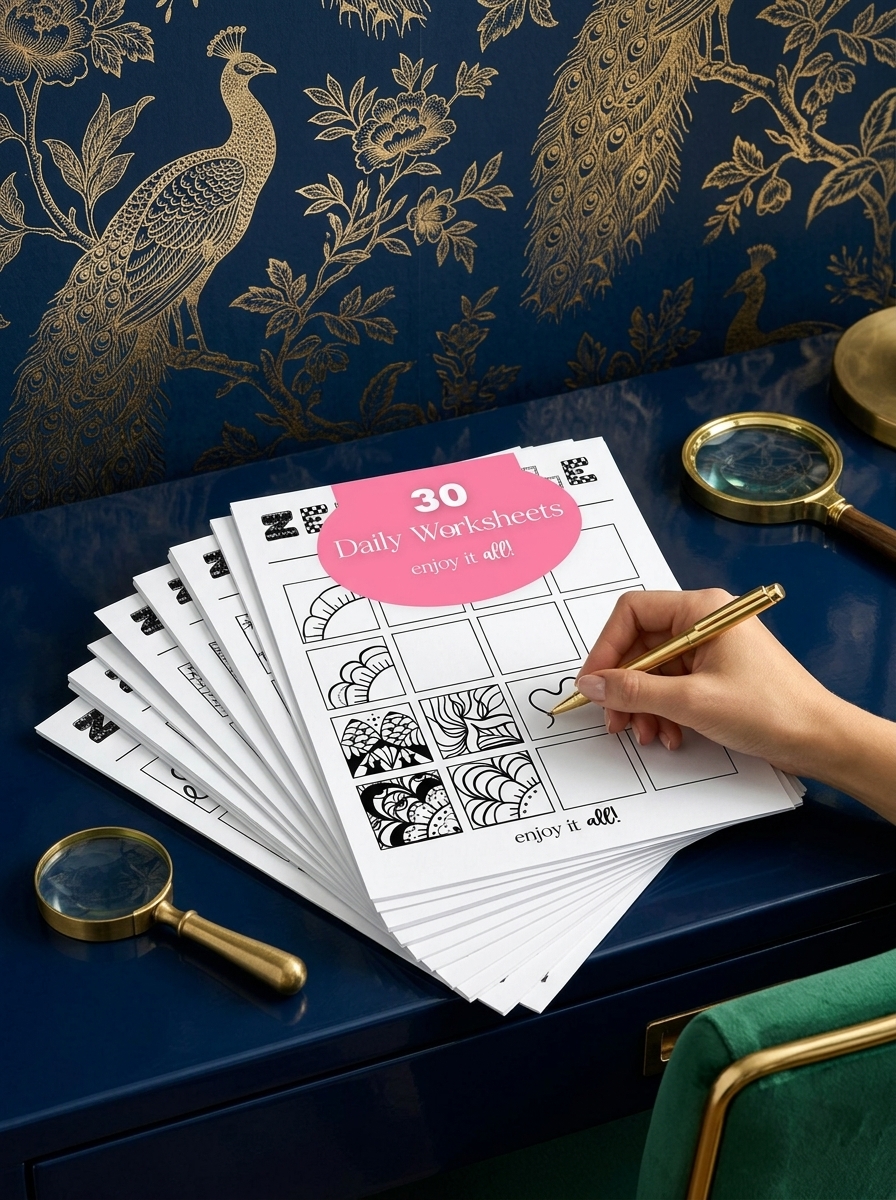
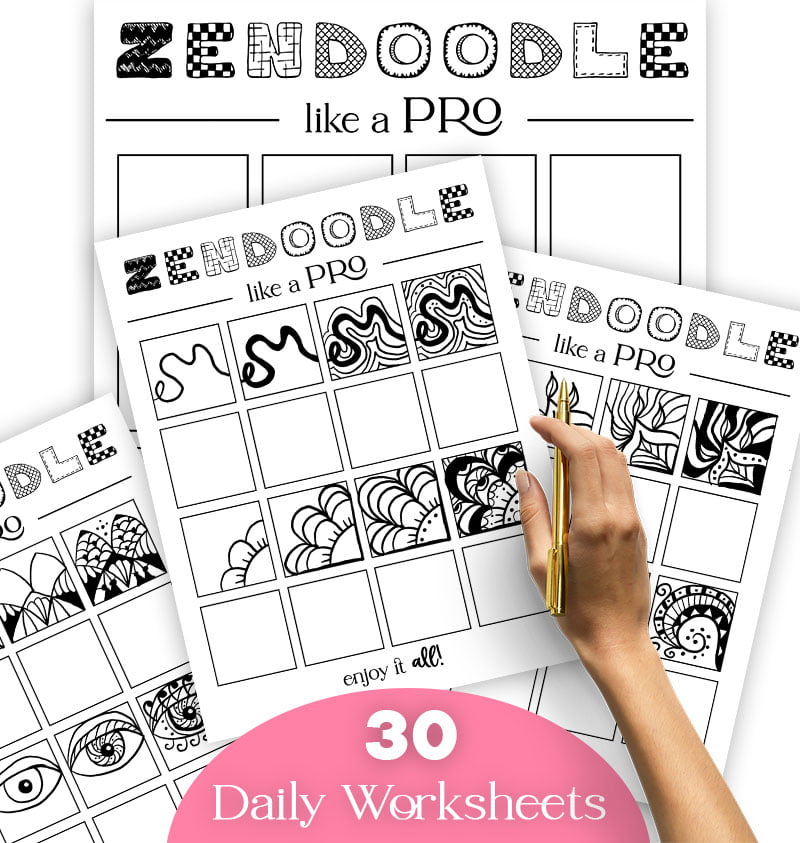
30 daily sheets, every fill named and built
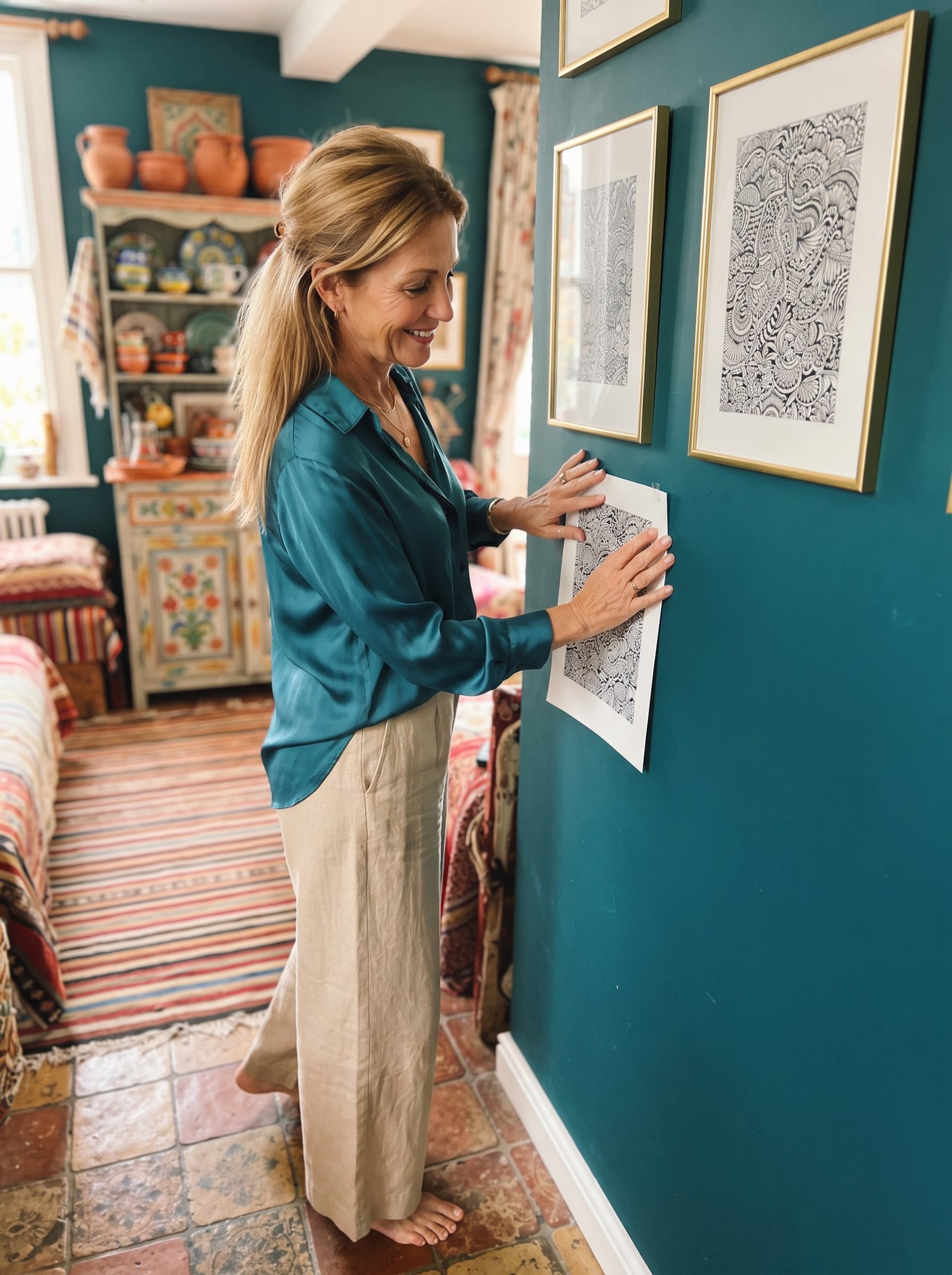
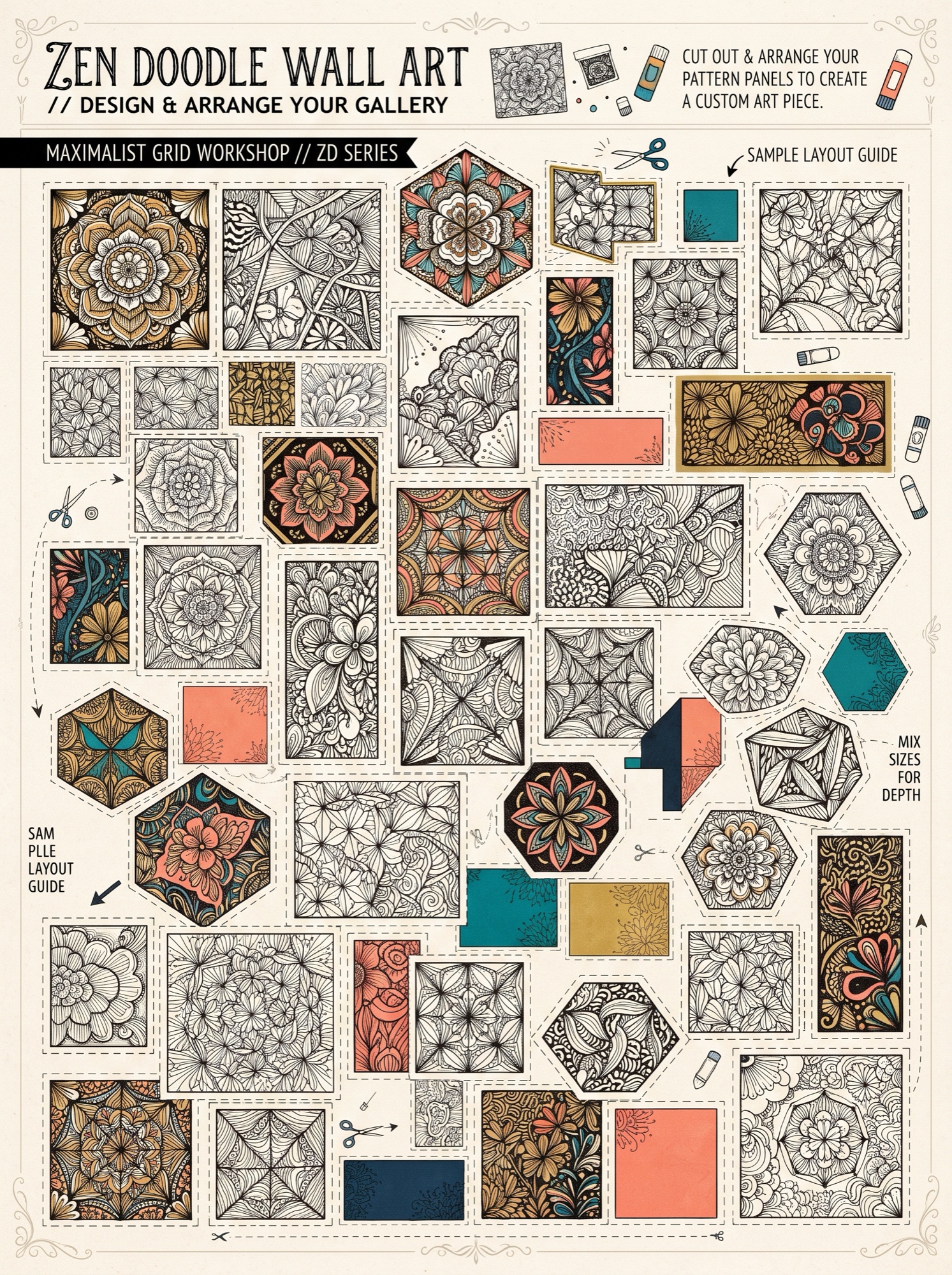
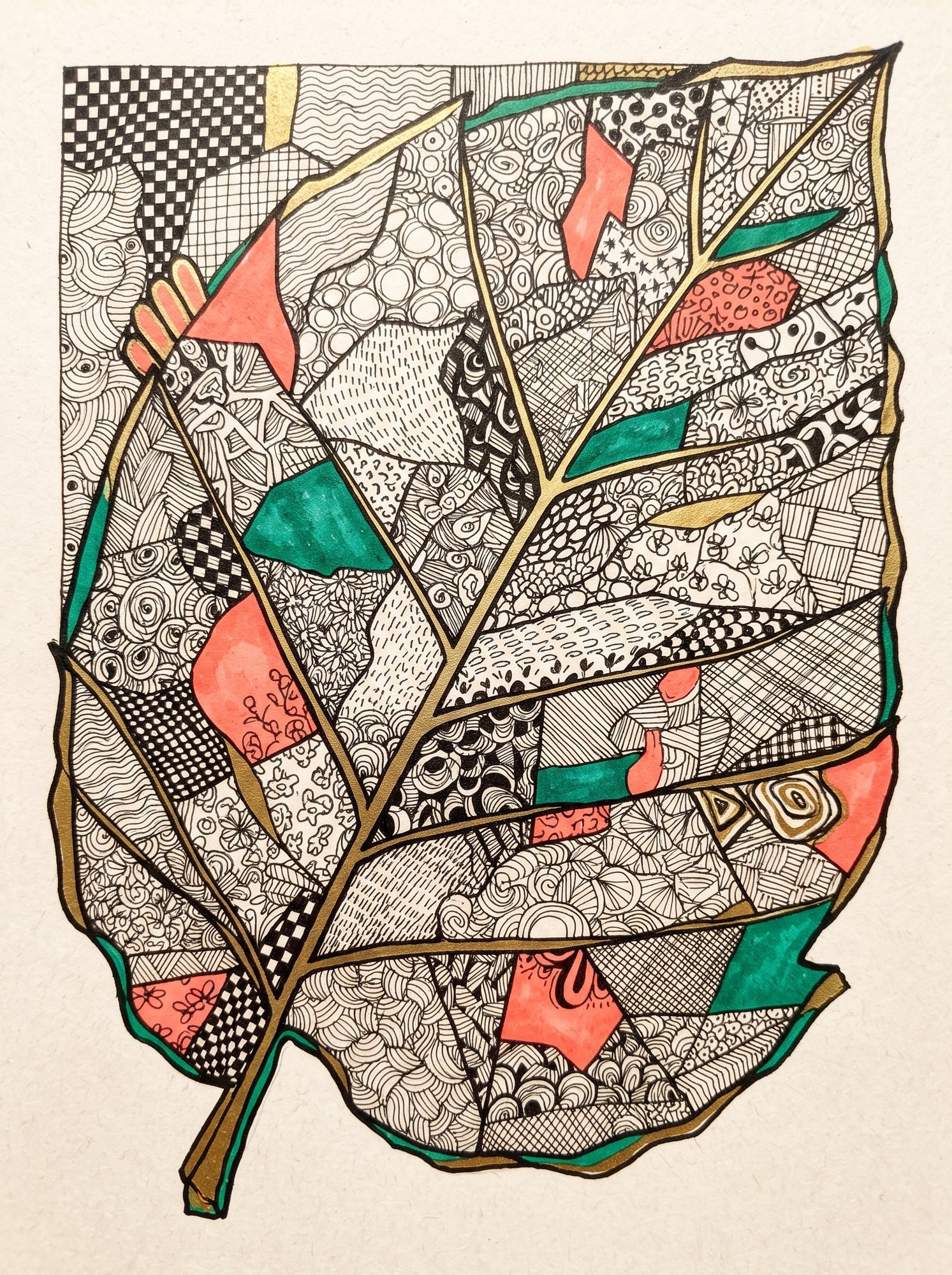
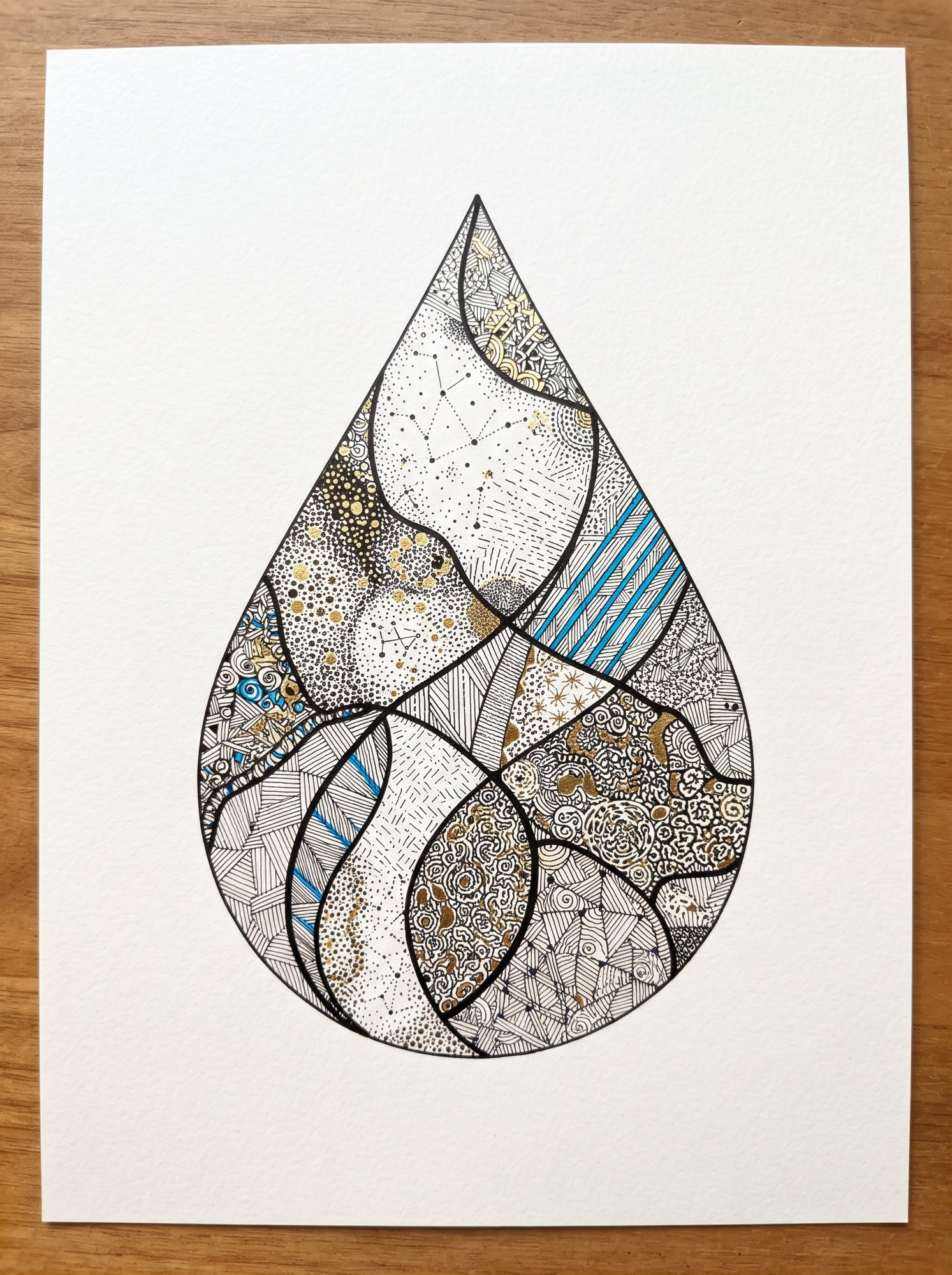
Tonight it is one shape and three fills at the kitchen table. By the weekend it is a page dense enough that somebody picks it up to look properly. Every named fill, every build, every solid — the whole route from an empty outline to something worth framing.
Instant download · print as often as you like
Escher crossed a country twice for his pattern vocabulary and slept badly for it. Yours is a chart, and it is downloadable. Slight advantage, honestly.
Mirabelle wrote this. No training, strong opinions, many pens. Peer reviewed by a cat who has never once been wrong out loud.