A card is the only drawing you are allowed to make out of one thing. One flower. One fox. One lit candle. The occasion does the rest of the work for you.
So the whole job is choosing the one thing. Get that right and a wobbly line reads as charm. Get it wrong and no amount of skill rescues it, which is why people who draw perfectly well still stand in a shop reading the back of a card.
The first Christmas card was made in 1843 because a civil servant called Henry Cole was too busy to write his Christmas letters. He commissioned the design, had 1,000 printed, used the ones he needed and sold the rest for a shilling each. The entire greeting card industry begins with a man dodging his correspondence.
Which tells you what a card has actually been about since the very first one. Never whether you can draw. Only whether you picked the right one thing to put on it.
What is below:
- 50 card drawing ideas, grouped by season — the one thing to put on each, and why it works
- The 500-year-old studio technique — the one that makes tracing legitimate
- 4 moves — blank paper to a card in an envelope
- 3 finished cards to draw tonight — free, on this page, no sign-up
- The one mistake — the one I made, in writing
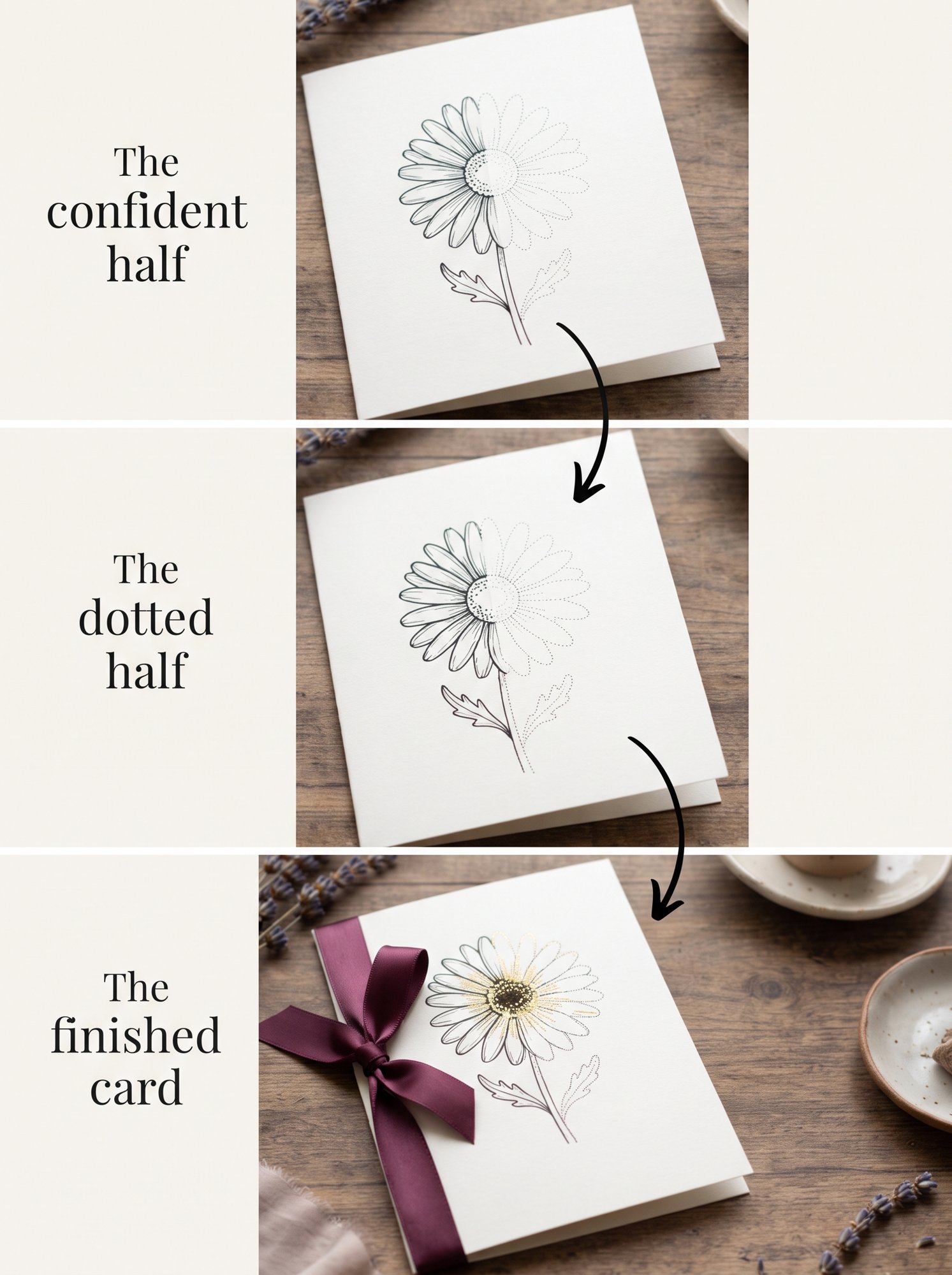
Start with the carnation. It comes to you half-drawn — the left side finished in solid ink, the right side the same shape waiting in faint dots for your pen to bring across. Draw it before you read the rest. Nobody comes to a page like this to read it.
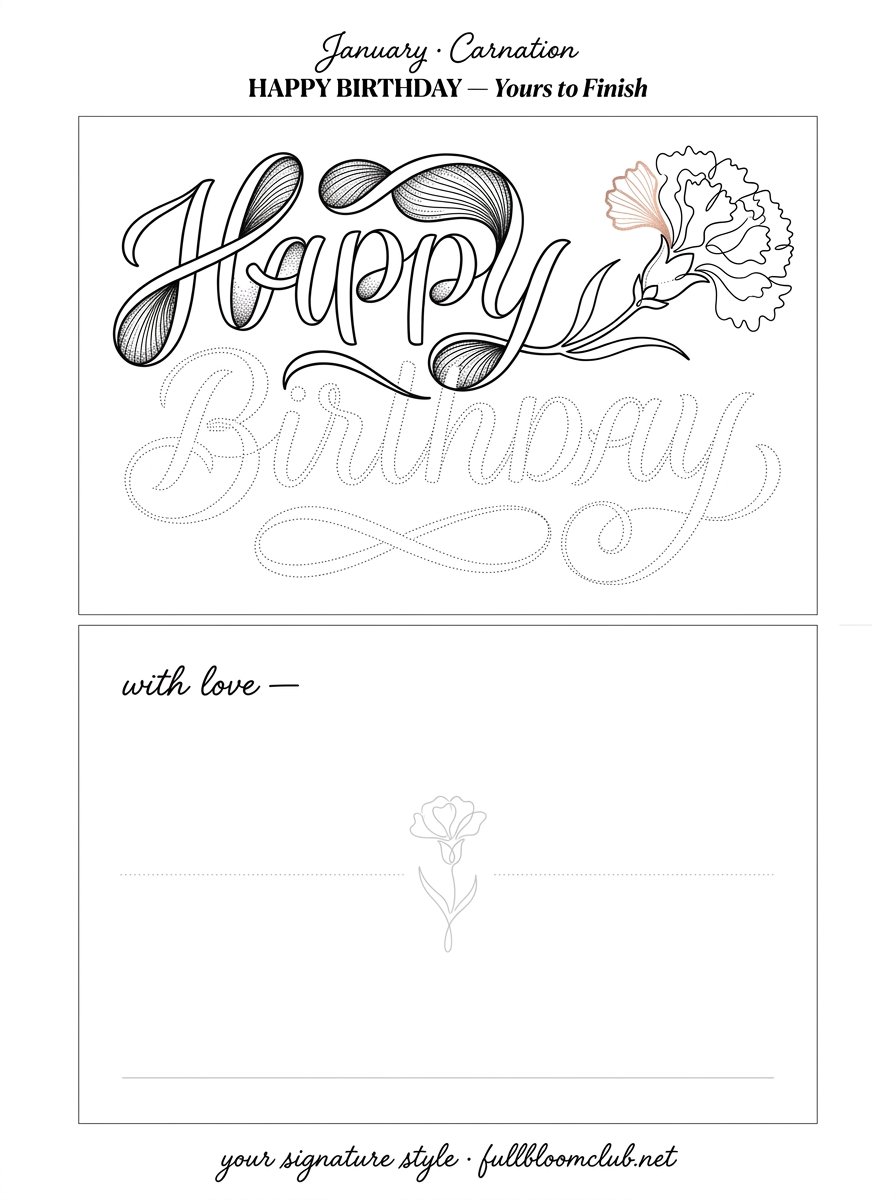
Notice what that card never asked you for. No composing, no centring, no deciding how big the flower should be — all of it settled before the page reached you. What is left is the pleasant part, moving a pen along a line that is already right.
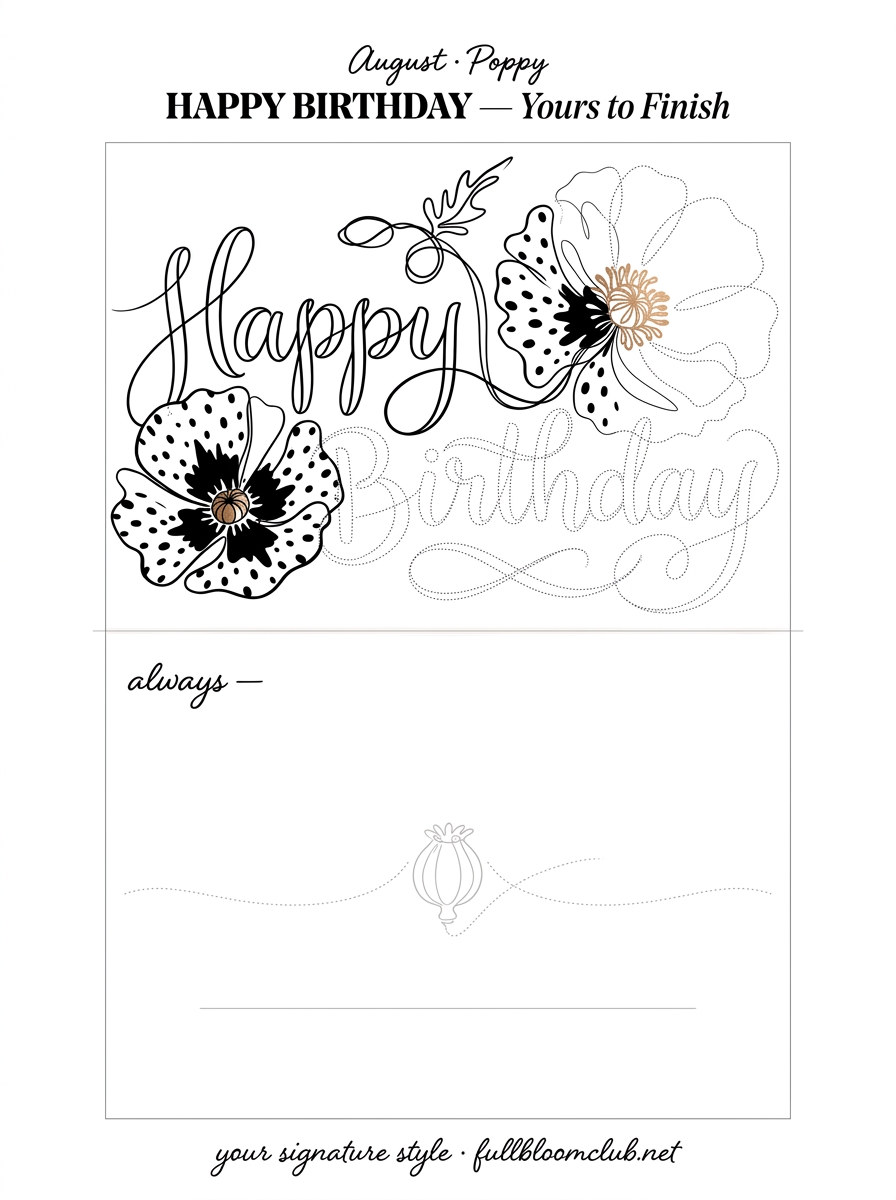
Which is lovely until Thursday, when it turns out to be somebody’s birthday, the only card in the house is a January carnation, and they were born in August. One card solves one evening. The reason there are 50 is that the year keeps asking.
The Collection
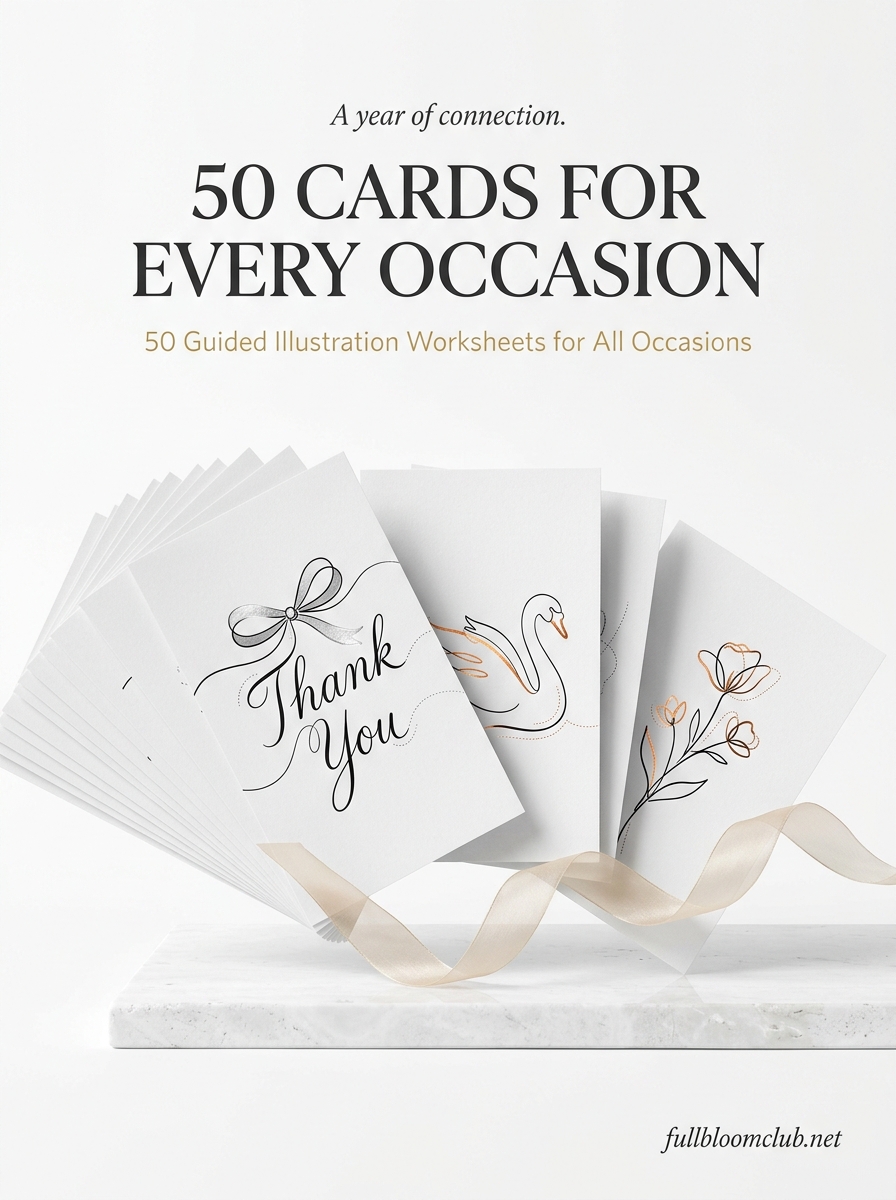
50 CARDS FOR EVERY OCCASION — foxes, birth flowers, and one champagne coupe. Every card arrives already half-drawn.
The set for the Tuesday you remember that somebody’s birthday is Thursday. What you get: 10 minutes at the table that are not scrolling, and a card that stays on a windowsill long after anybody remembers what it cost.
That single page is the whole method. Everything after this is which subject to put on which occasion, and why the dotted half is not the shortcut it looks like.
The Secret Every Renaissance Workshop Already Knew
Somewhere in your head there is a rule that says tracing is cheating. It is a school rule. It was written to stop children copying each other’s homework, and it has been quietly following you around ever since, applying itself to things that are not homework.
Here is what the best workshops in Europe actually did. A full-size drawing called a cartoon was pricked with hundreds of tiny holes along its outlines. The pricked sheet was held against the wet plaster and charcoal dust was pounced through the holes. When the sheet came away, the wall carried the design as a field of black dots, and the painter followed them.
The technique is called spolvero, and it came into wide use in the 1400s for frescoes. The largest Renaissance cartoon that survives is Raphael’s for The School of Athens — 285 centimetres tall, 804 centimetres wide, still in Milan.
The greatest walls in Europe were painted by following someone else’s dots. Your card is allowed to be.
So a faint half is not training wheels. It is the oldest transfer method in Western painting, shrunk to the size of a card — and the confident half sits right beside it, showing you the answer while you work.
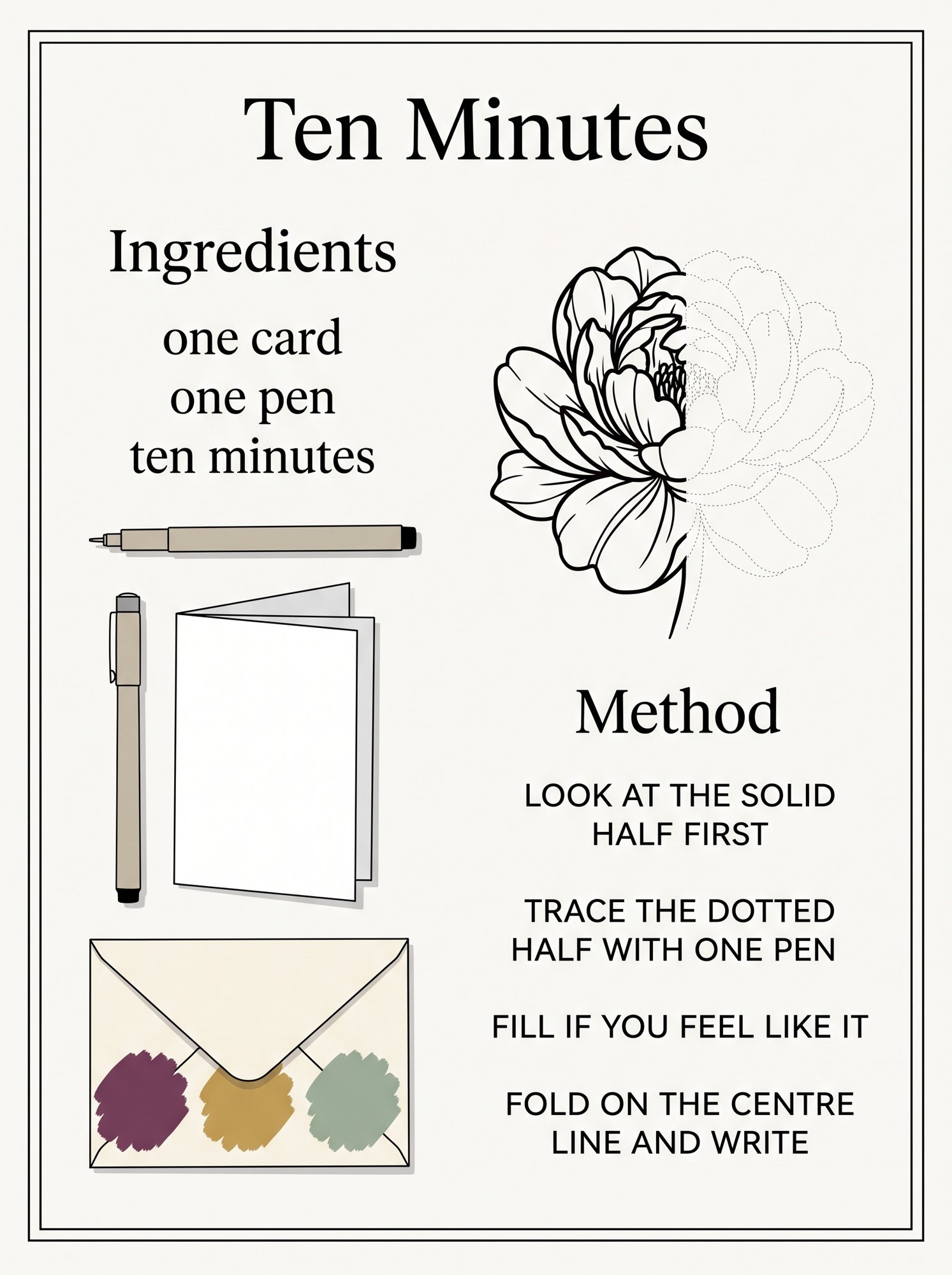
How to Finish a Card in 4 Moves
Ingredients: one card, one pen, ten minutes. Method below.
Three states, in this order: The confident half. The dotted half. The finished card.
- LOOK AT THE SOLID HALF FIRST — ten seconds, no pen. That is the line you are about to make, already made. Your hand copies what your eye has recently studied far better than it copies an instruction.
- TRACE THE DOTTED HALF WITH ONE PEN — whatever is nearest. Do not switch pens halfway; the join is the only place the two halves can disagree.
- FILL IF YOU FEEL LIKE IT — the dots and small repeated marks in the solid half are an invitation, not a requirement. A card finished in pure outline looks deliberate.
- FOLD ON THE CENTRE LINE AND WRITE — the back already carries an opening and a ruled line under it. You supply three words. Three is plenty. Three is more than most people get.
Winter Card Drawing Ideas: Foxes, Stags and the Whole Christmas Shelf
In 1880 a Boston printer named Louis Prang ran a public competition for Christmas card designs and put up prize money — $1,000 for first place, $2,000 across the top four. More than 800 designs came in. He ran it again for four years. Painters who exhibited in galleries entered a competition to design something you post.
Winter carries the most ideas, because winter is when people actually send things.
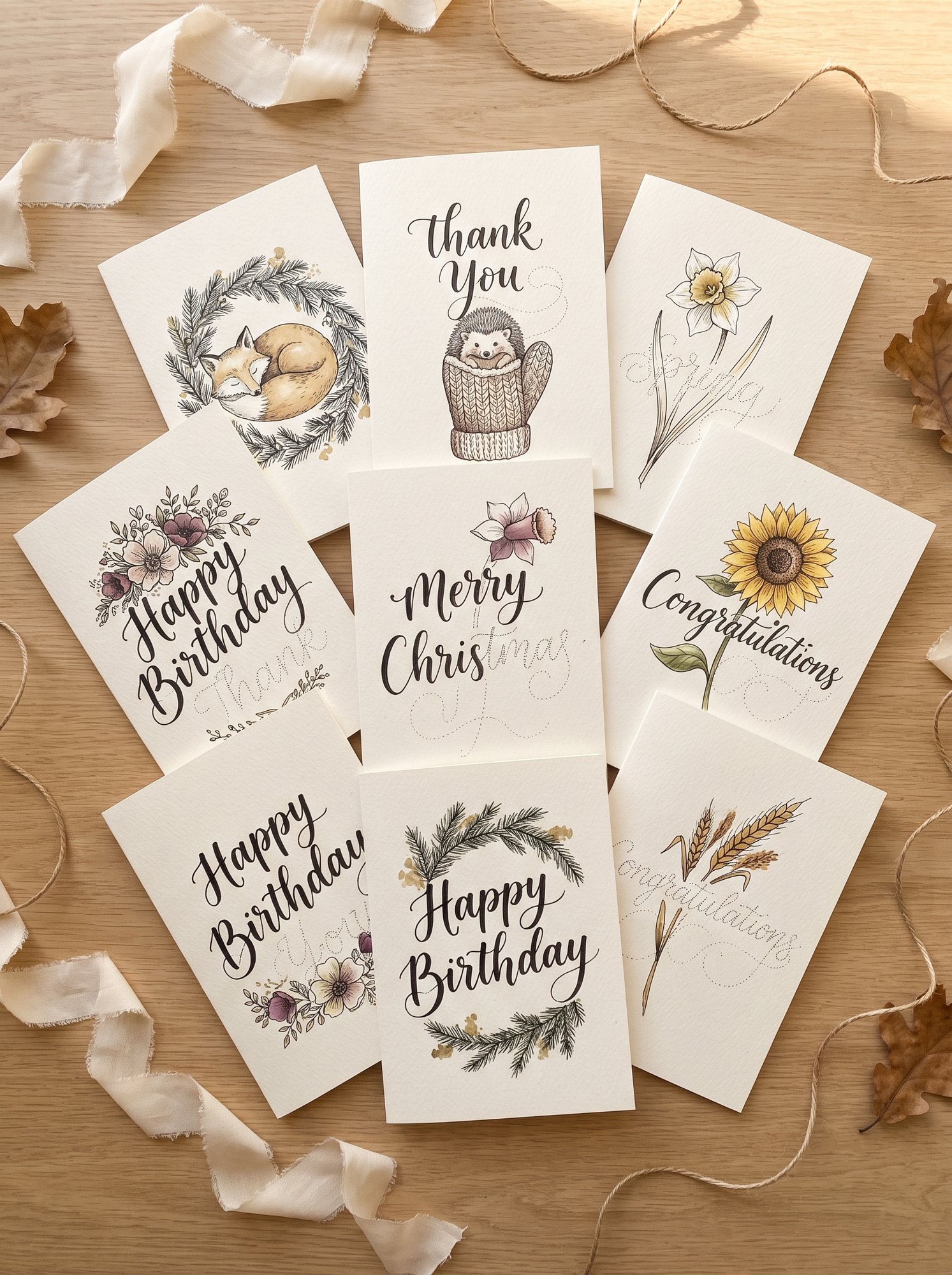
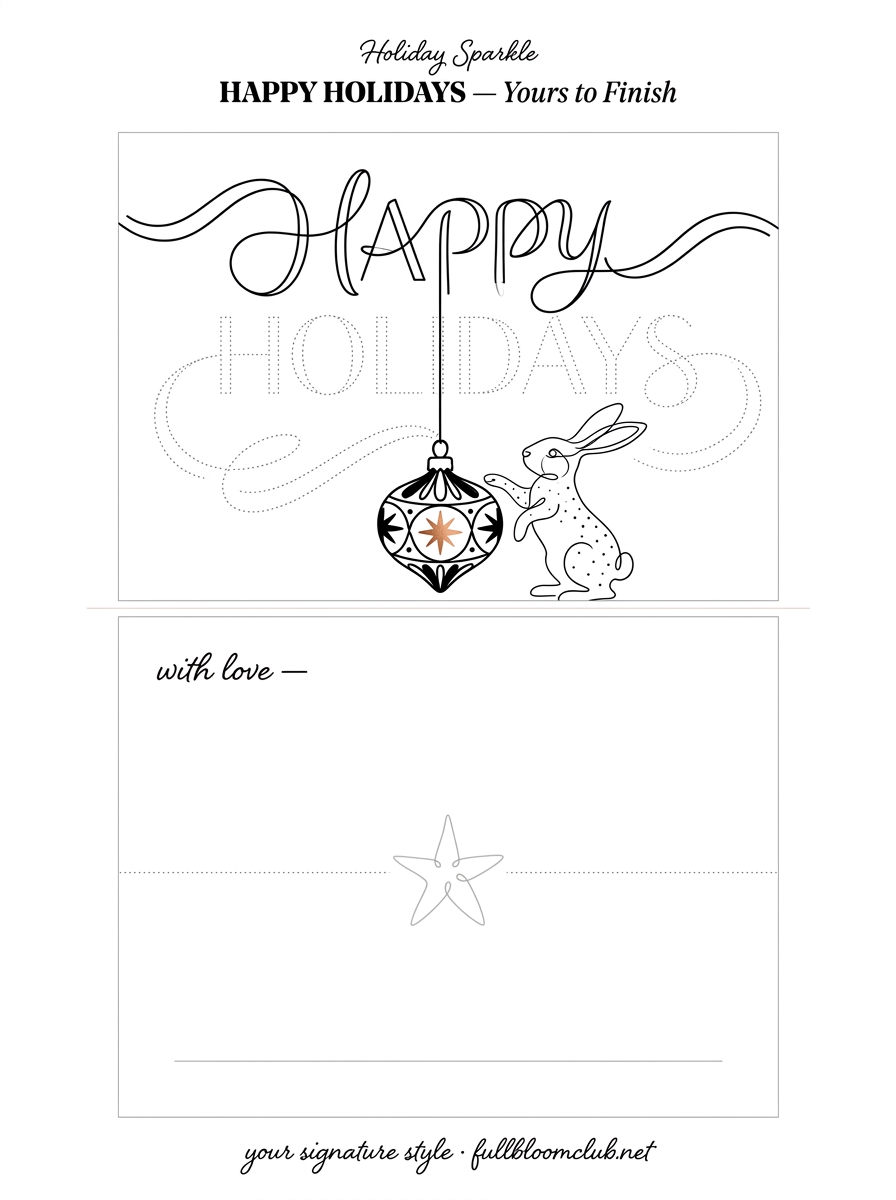
- A Fox in a Winter Wreath — half the wreath inked, half dots, and MERRY solid while CHRISTMAS waits
- A Stag & Pinecone — the antlers are the show-off shape, and they are on the solid side
- A Polar Bear & the North Star — the calmest card in the set
- A Hedgehog in a Mitten — for the person who will keep it on the fridge until March
- A Robin & Squirrel — two animals, one line of dots between them
- A Sleeping Fawn & Holly — the one that looks like it took an hour
- A Bunny & Ornament — for a child, and children trace dots faster than you do
- A Single Lit Candle — for December when the reason is not festive
- December · Narcissus & Holly — the birthday card for anyone born in the busiest month of the year
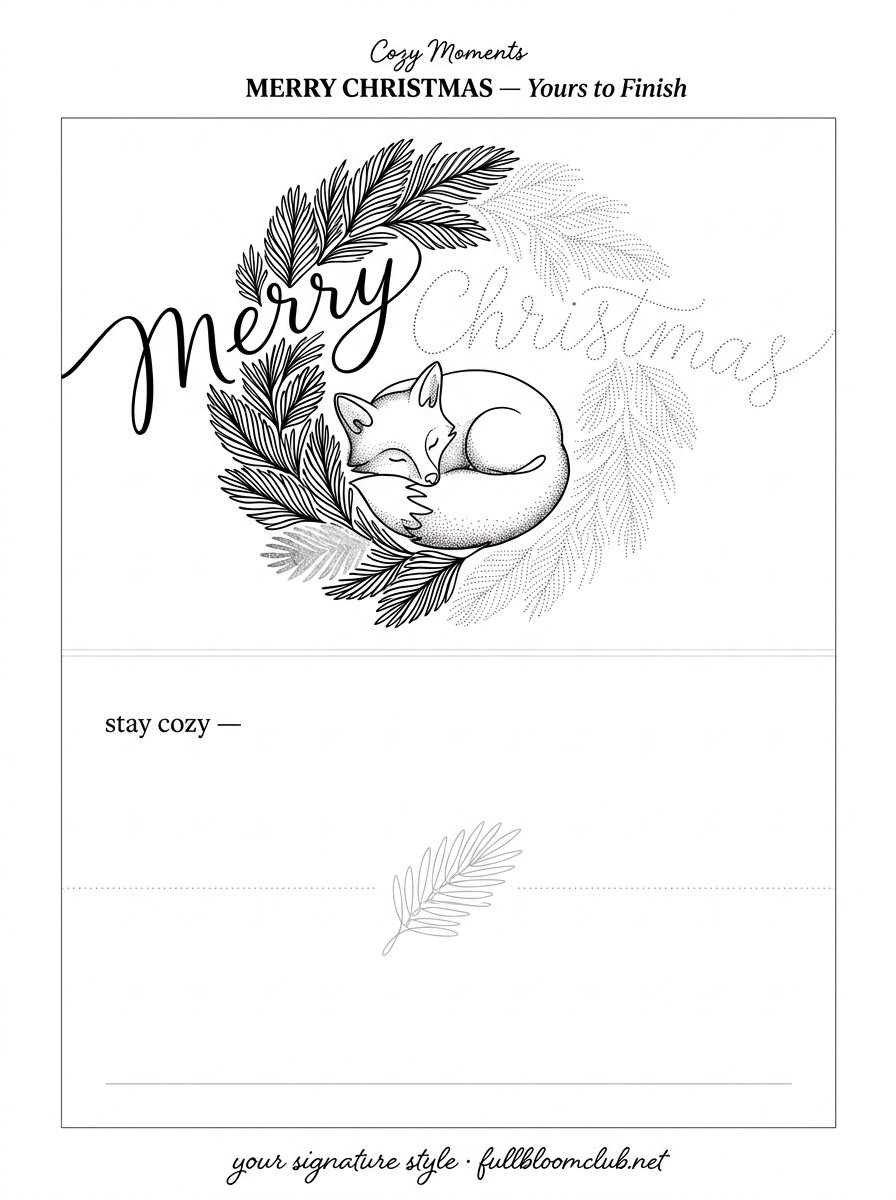
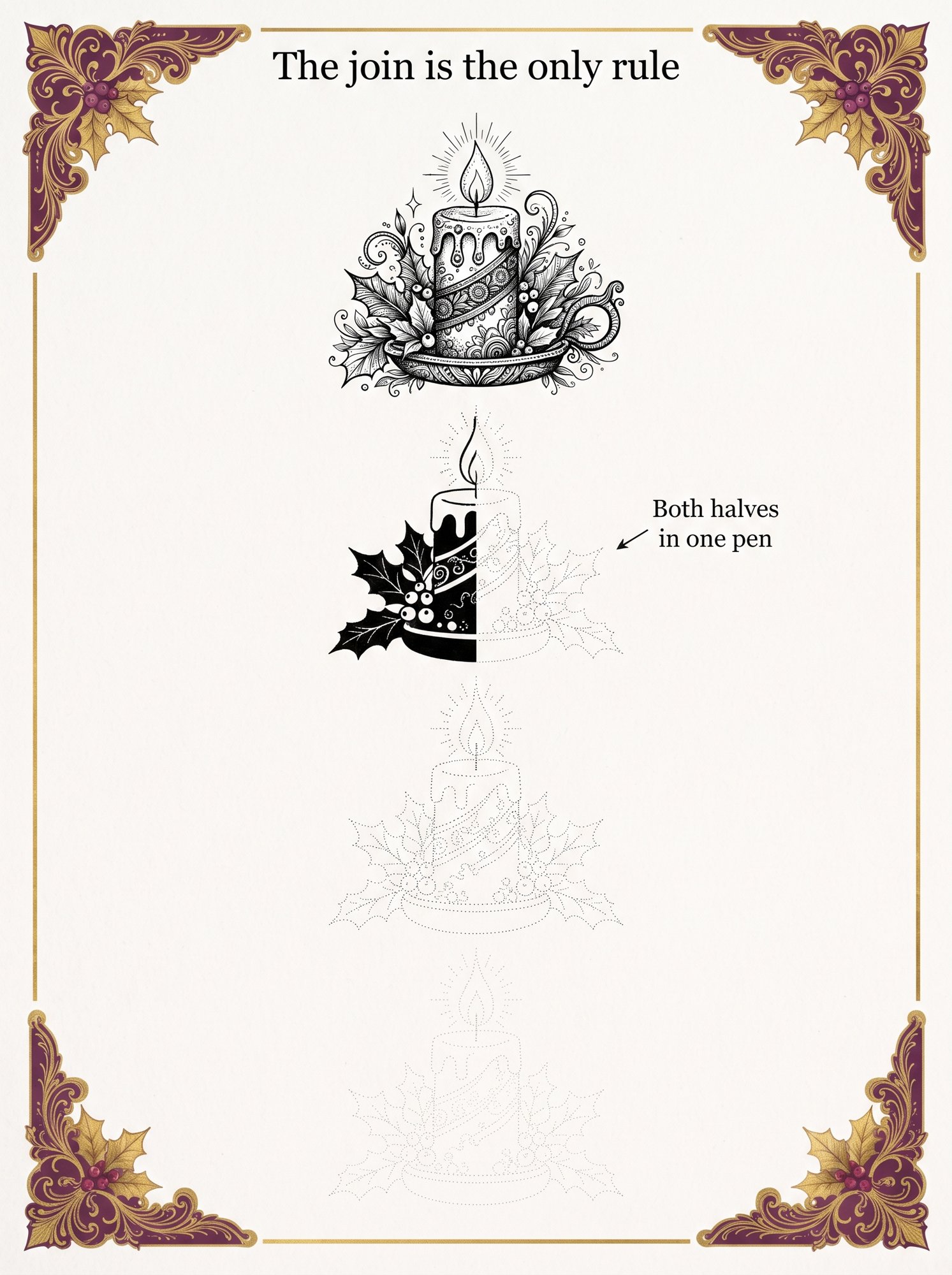
The fox is the one that shows you how far the dots are willing to go. Half that wreath is inked and half of it is waiting, and the two halves meet across the middle of a sleeping animal. If you want to see the fade itself pulled apart, the candle below runs the same shape four times, from full ink down to almost nothing.
Spring Card Drawing Ideas: The Year Starts Over
In 1847 a young woman in Worcester, Massachusetts was sent a valentine from England, looked at it, and thought she could do that. She could. Esther Howland set up an assembly line on the third floor of her family home with an all-female workforce — roughly 50 years before Henry Ford is credited with the idea — and by 1880 the New England Valentine Company was turning over more than $100,000 a year.
She started with one card somebody else had made, and a fairly reasonable opinion of herself.
- March · Daffodil and May · Lily of the Valley — the two birthday cards nobody has in a drawer
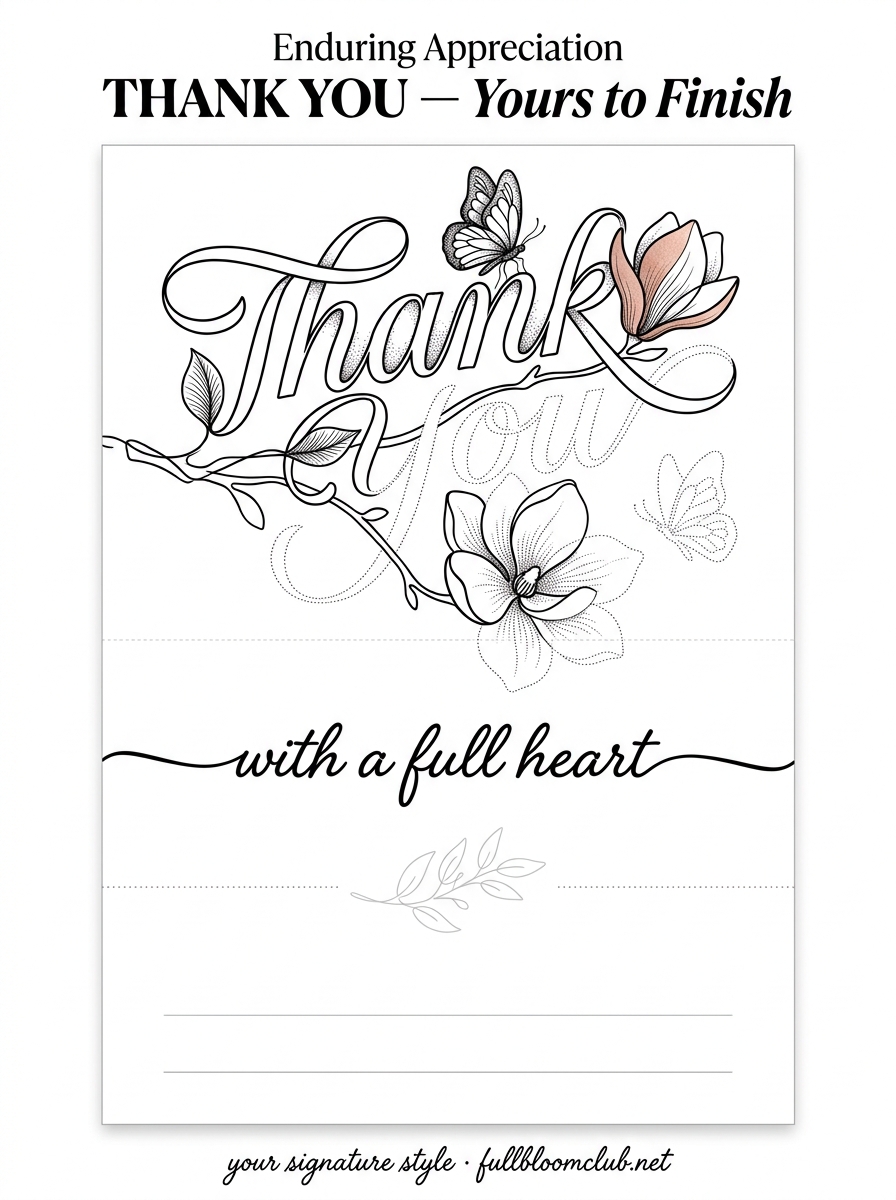
- A Honeybee & Blossom — thank-you, and the least sentimental way to say it
- A Peony & Butterfly and A Magnolia & Butterflies — the two that look most like a gallery print once the fold is cut off
- Ranunculus in Bloom — the layered one, and the best argument for filling the petals
- A Bunny with a Balloon — new baby, first birthday, or an adult having a bad week
Summer Card Drawing Ideas: Cards for No Reason at All
Van Gogh wrote some 820 letters, and the museum that holds them counts more than 240 sketches inside them. They were not decorations. He drew in the letters to show his brother what he was working on, because describing a painting in words is a miserable business and he had a pen in his hand anyway.
A drawing in a letter is not showing off. It is a faster sentence.
- A Little Sailboat and A Hot-air Balloon — the two that go to people who have moved away
- A Single Sunflower Turning — August, or any month, for someone having a good one
- A Pair of Cherries and A Lemon & Leaf — small, sharp, the fastest cards in the set
- A Snail on a Leaf — the joke card, and a genuinely lovely drawing
- A Pot of Tea with Steam — the steam is the half you finish, which is the wittiest idea here
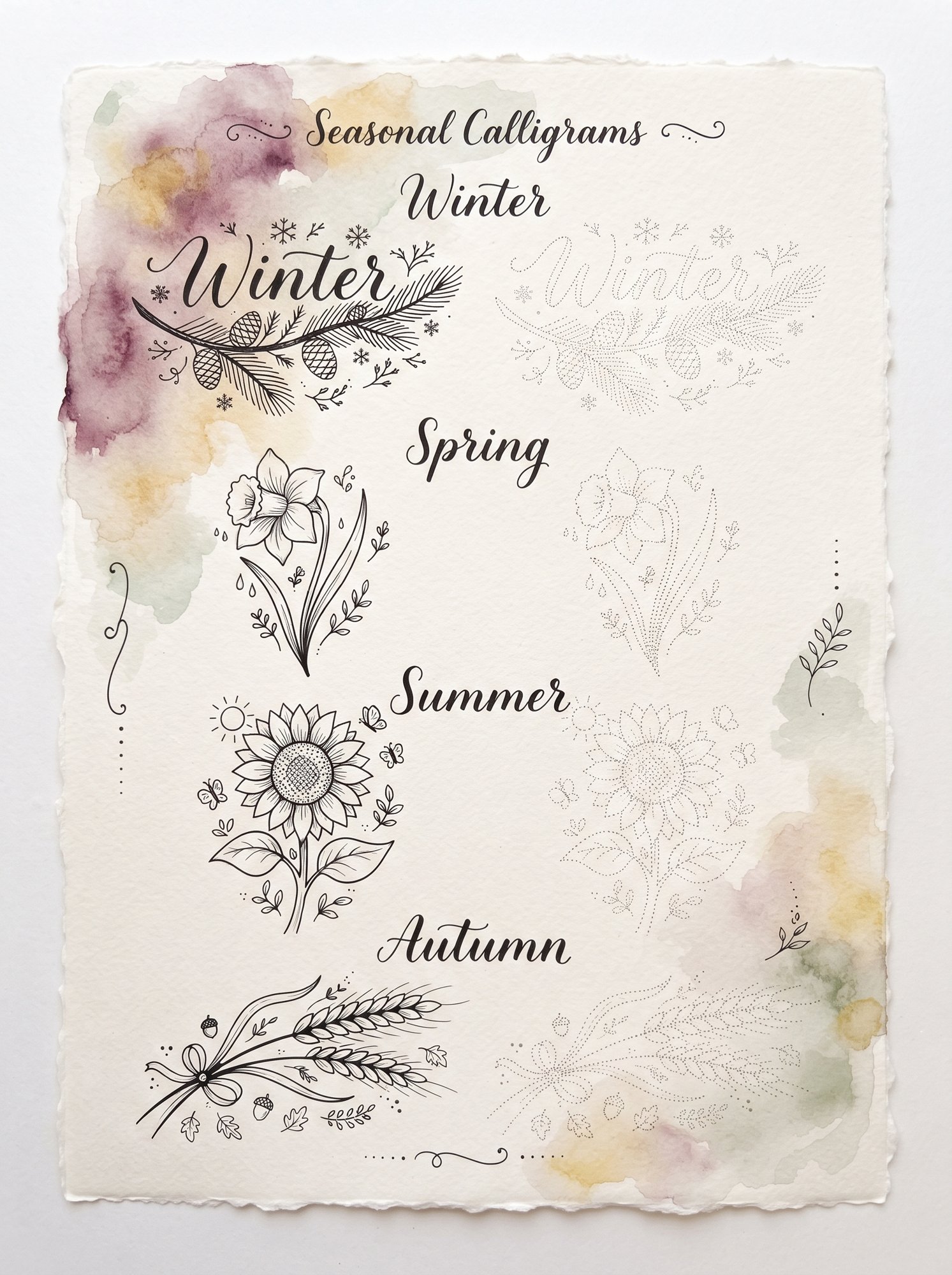
Autumn Card Drawing Ideas, and the Ones With No Season At All
Until 1902 a picture postcard made you choose. The back was for the address and nothing else, so any message had to be written across the picture. Britain divided the back that year — message on the left, address on the right, a printed line down the middle — and the picture finally got the whole of the other side.
Every card since is that decision. A front that is only a picture, a back that is only for you. A card you draw is still built to that shape: the writing side wants a ruled line, and the picture side wants one subject and no explanation.
- A Single Wheat Stalk and October · Marigold — harvest, thanks, and the end of the growing year
- A Poppy of Thanks — for remembrance, and the quietest card here
- Forget-me-nots, A Dove with an Olive Branch, A Weeping Willow Branch — the sympathy cards, and the shops have exactly the thing you would be embarrassed to give
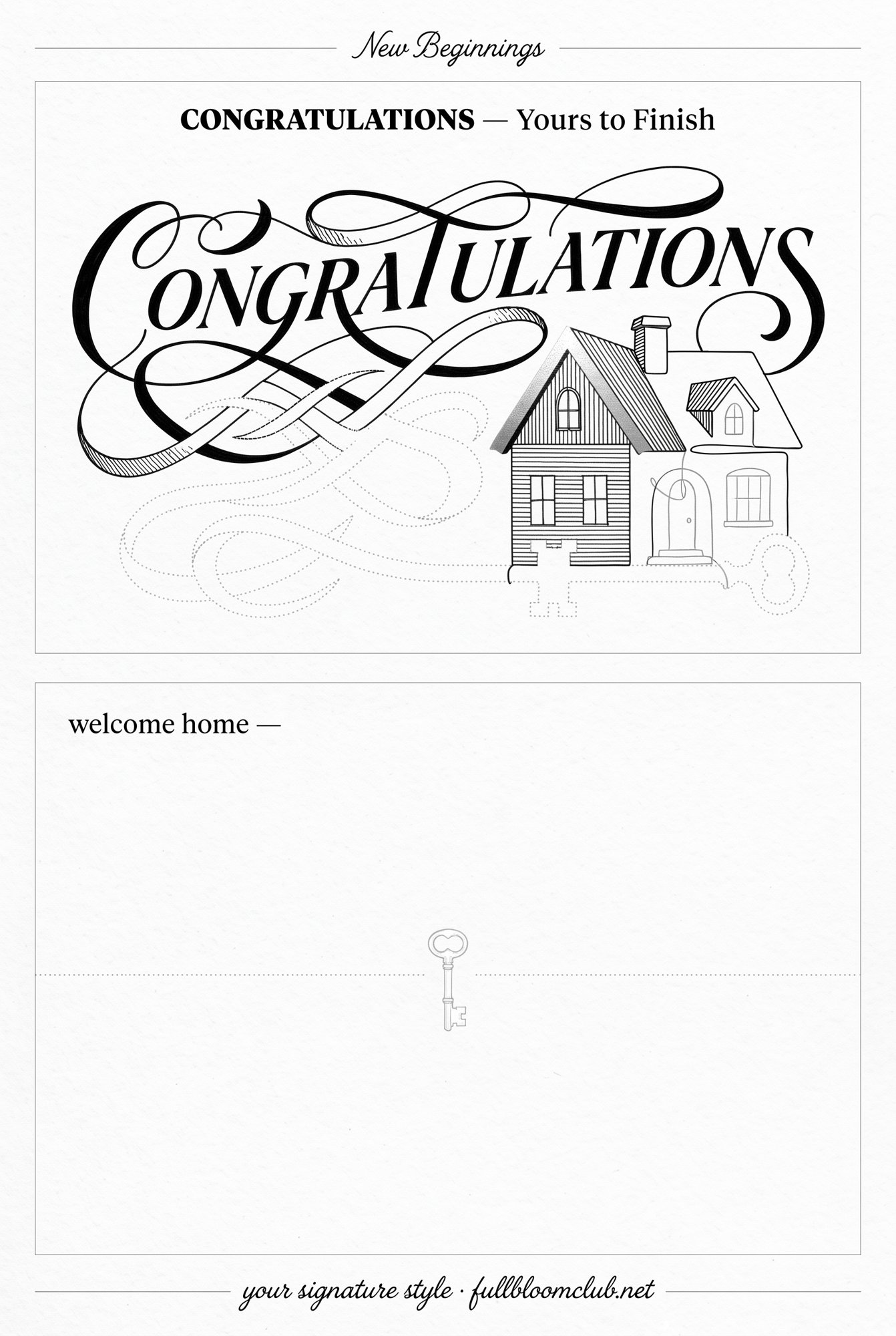
- A Little House with a Key — new home
- Entwined Rings in One Line, Two Swans Forming a Heart, Two Doves Facing, A Heart of One Continuous Vine — weddings and anniversaries
- A Champagne Coupe and An Award Rosette — one for the promotion, one for the eight-year-old
- A Little Bird at a Window, A Cottage Window with Flowers, A Potted Plant on a Sill, A Sleeping Fox Curled — thinking of you, get well, and the ones with no occasion attached at all
The 12 Birth Flowers, and Why They Beat a Generic Card
Every month has a flower attached to it and almost nobody knows their own. January is carnation. February iris, March daffodil, April daisy, May lily of the valley, June rose, July larkspur, August poppy, September aster, October marigold, November chrysanthemum, and December narcissus with holly.
That is the whole trick of a birthday card that lands. You are not drawing a flower, you are drawing her flower, and the first thing she does is ask why that one. It is the least glamorous idea on this page and the one you will use most, because birthdays are the only occasion that arrives on a schedule.
December gets the kind pairing. Anybody born that month has spent a lifetime receiving one present and one card with holly on it, so a narcissus in front of the holly is a correction nobody asked for and everybody notices.
What I Got Wrong the First Time
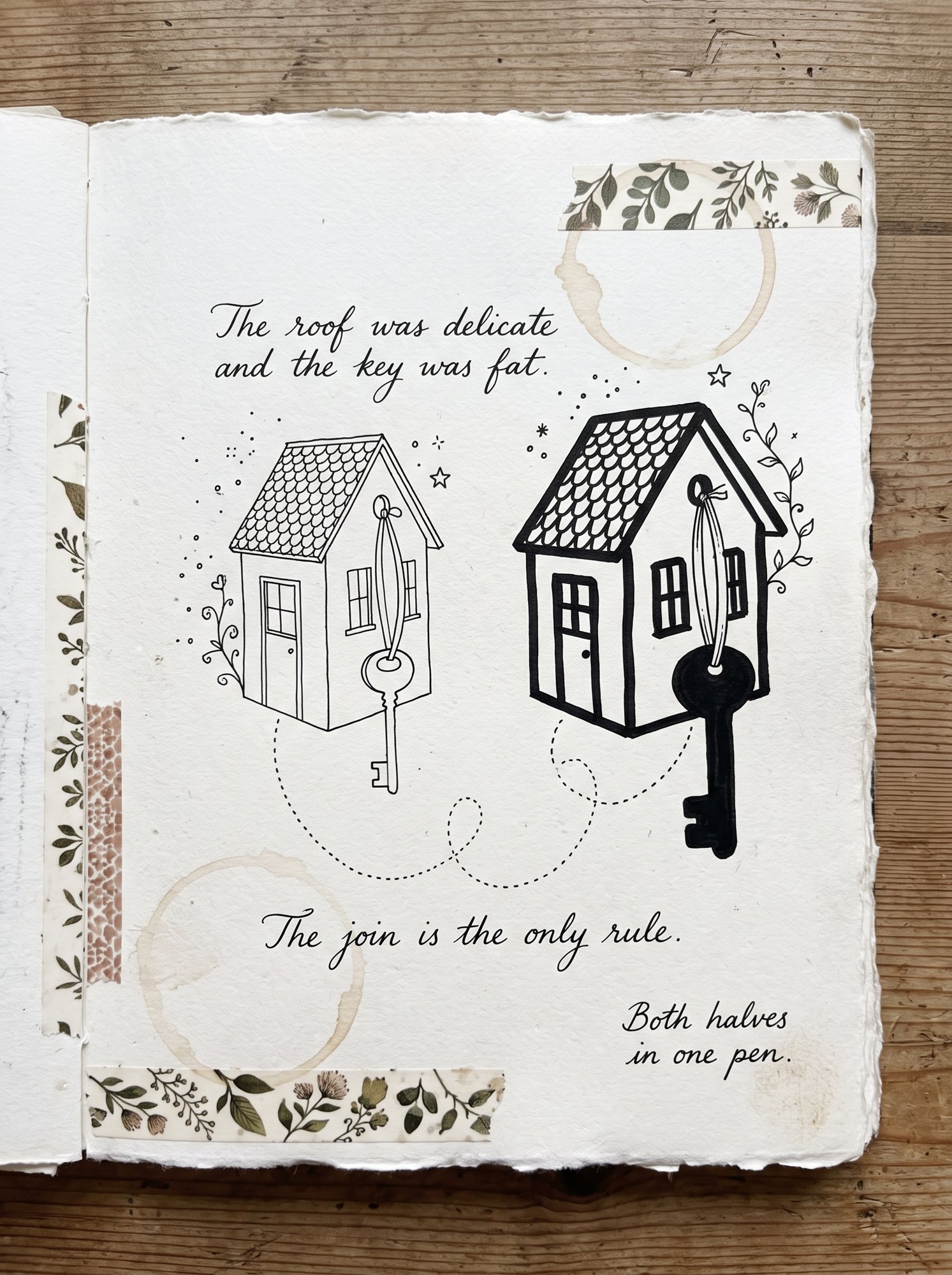
I traced the dotted half of the little house card with a thicker pen than the one the solid half was drawn with, because it was the pen on the table and I was not thinking. The two halves stopped matching immediately. The roof was delicate and the key was fat.
I sat and resented it for about eleven minutes, and then I went back over the solid half with the thick pen as well, so the whole card was heavy. It looked deliberate. It looked, honestly, better than the ones I had done properly.
The join is the only rule. Both halves in one pen. Which pen is entirely your business.
What are the easiest card drawing ideas for a complete beginner?
Start with the cards where the dotted half is one shape rather than several. The single candle, the pair of cherries, the lemon, the wheat stalk. You are making one continuous decision instead of six small ones, and the finished card does not look like a beginner’s card — it looks like restraint.
Can I do this if I genuinely cannot draw?
You are not drawing. You are following a dotted line that is already the right shape, with the finished version printed beside it for reference. If you can sign your name you can trace a carnation. The part that requires nerve is the writing on the back, and there is no worksheet in the world for that.
What pen and paper do I need?
The pen nearest you. A ballpoint from the kitchen drawer traces a perfectly good fox. For paper, the thickest your printer will accept — around 200gsm card stock folds into something that stands on a mantelpiece, and ordinary paper works fine if you do not mind a card that leans.
Free Starter Pack
10 pattern templates — the fills that go inside step 3.
Sent tonight. Enough to make every card in the house look different.
Unsubscribe in 1 click, no hard feelings
The carnation, the fox and the little house are yours. When you want the rest of the year — every occasion, every birth month, the whole winter shelf — the full collection is below.
50 cards, every one of them already half-drawn
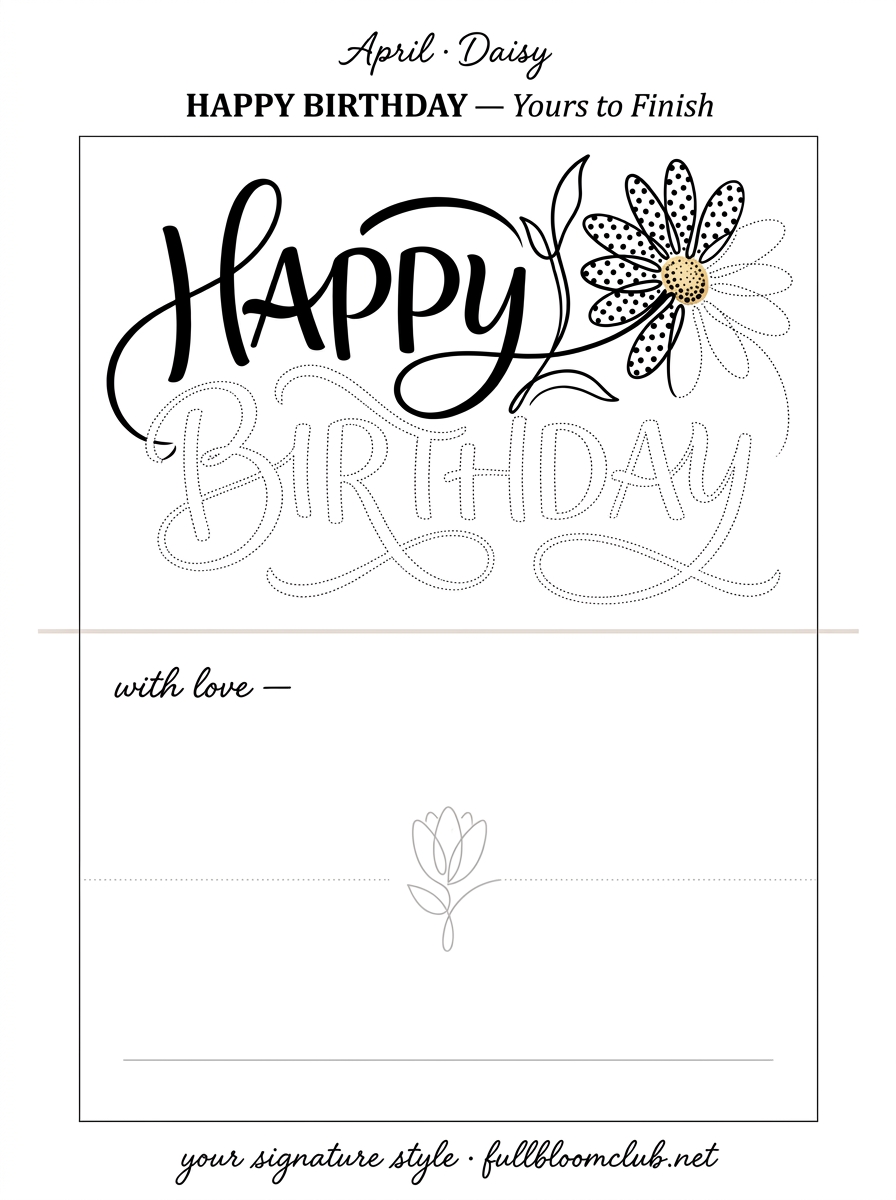
Tonight it is one card at the kitchen table. By Saturday it is a birthday covered, a thank-you posted, and the quiet superiority of never again standing in a shop reading other people’s words off the back of a card. 12 birth months, the whole winter shelf, weddings, new homes, sympathy, and the ones with no occasion attached at all.
Instant download · print as often as you like
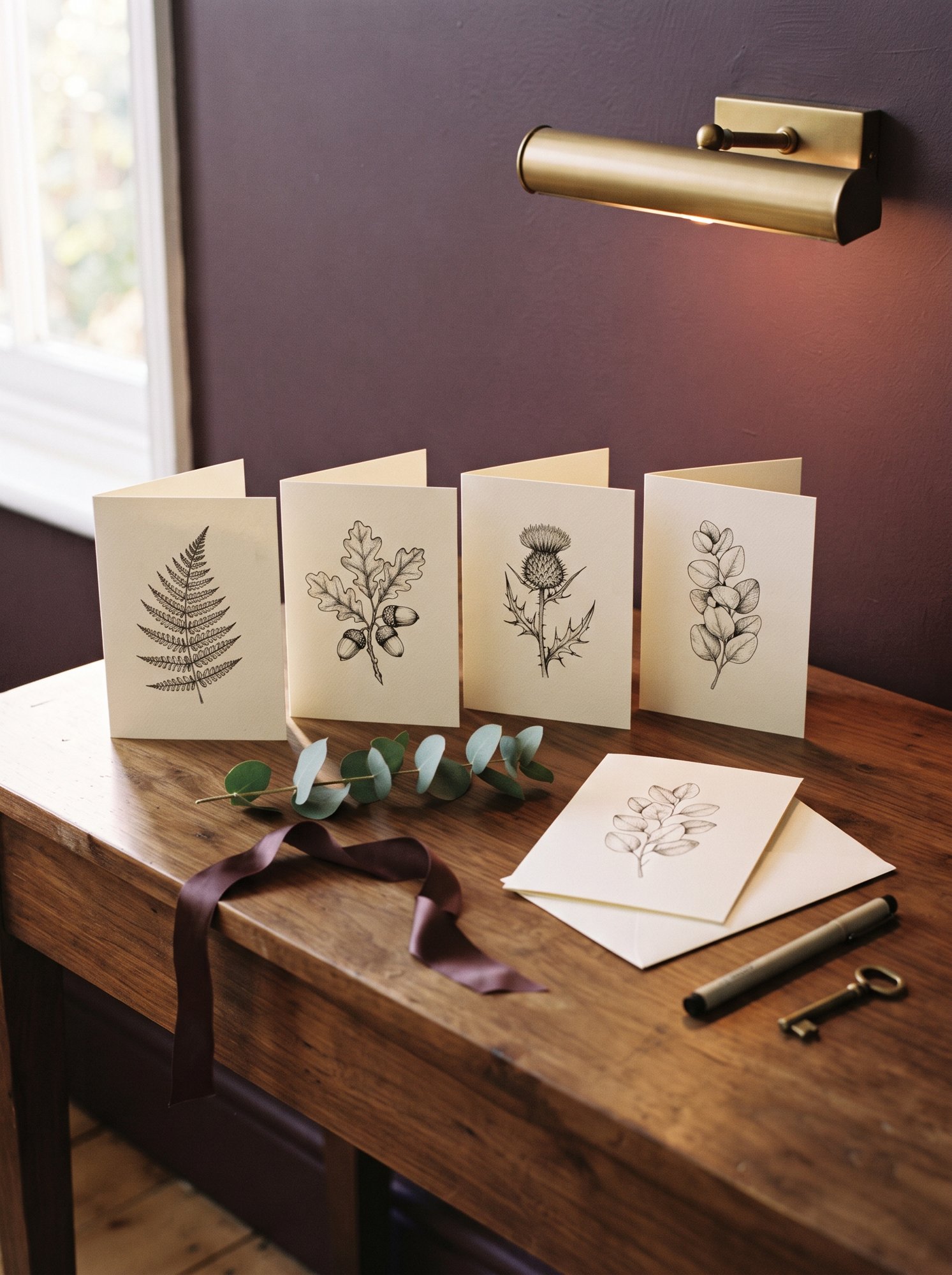
Pick the person who crossed your mind while you were reading this. Card, pen, ten minutes, and it goes in the post tomorrow before you can talk yourself out of it.
Mirabelle wrote this. No training, strong opinions, many pens. Peer reviewed by a cat who abstained.