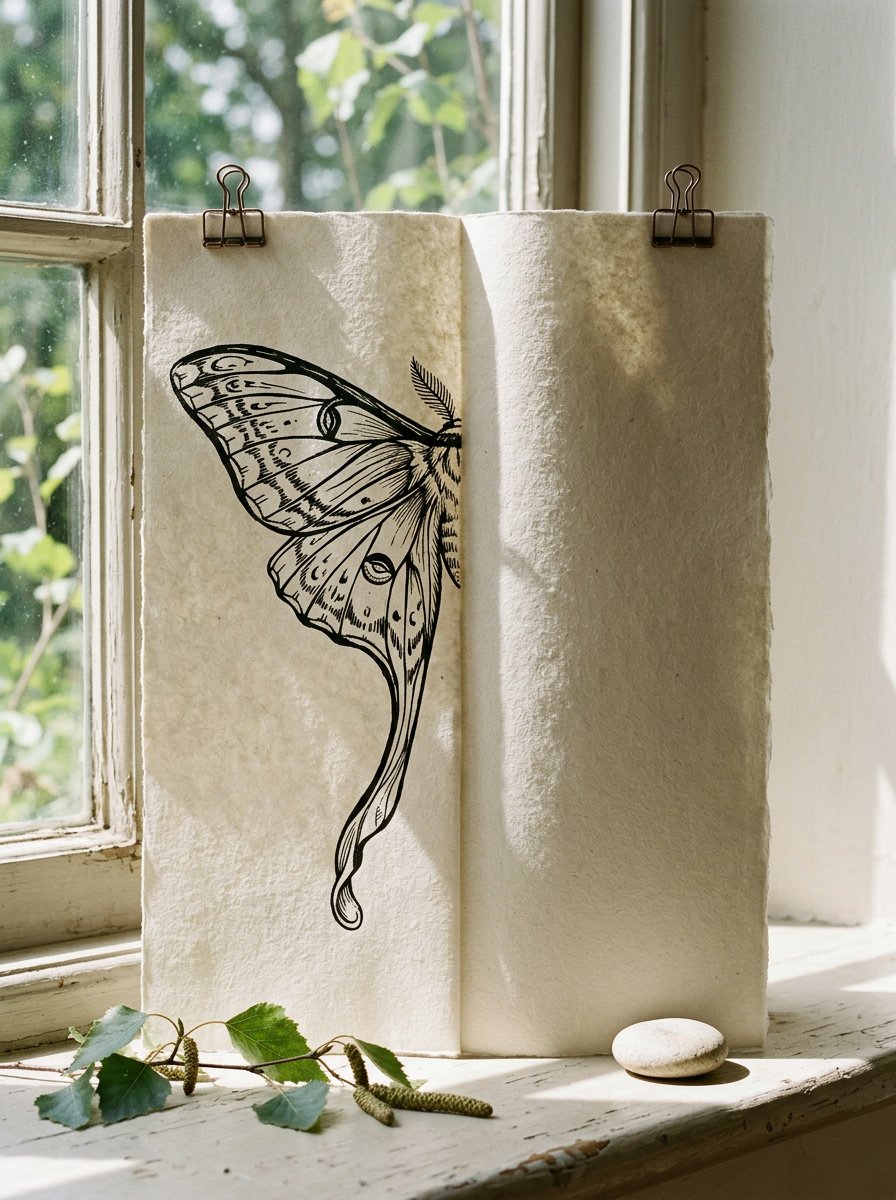
A book of English moths printed in London in 1766 opens with its engraver apologising for his own plates. A luna moth drawing needs less steadiness than he thought, because a fold does the hard part.
The hard part was never the wings. It was thinking you had to draw both.
A luna moth is four shapes and a pair of antennae. Two broad upper wings. Two lower wings trailing into long tails. A small furry body between them.
Nothing in it is fiddly. What stops people is a rule nobody checks.
The rule says a symmetrical thing needs a steady, accurate hand. It does not. It needs one good wing and a decent answer.
Download the free wing sheet →
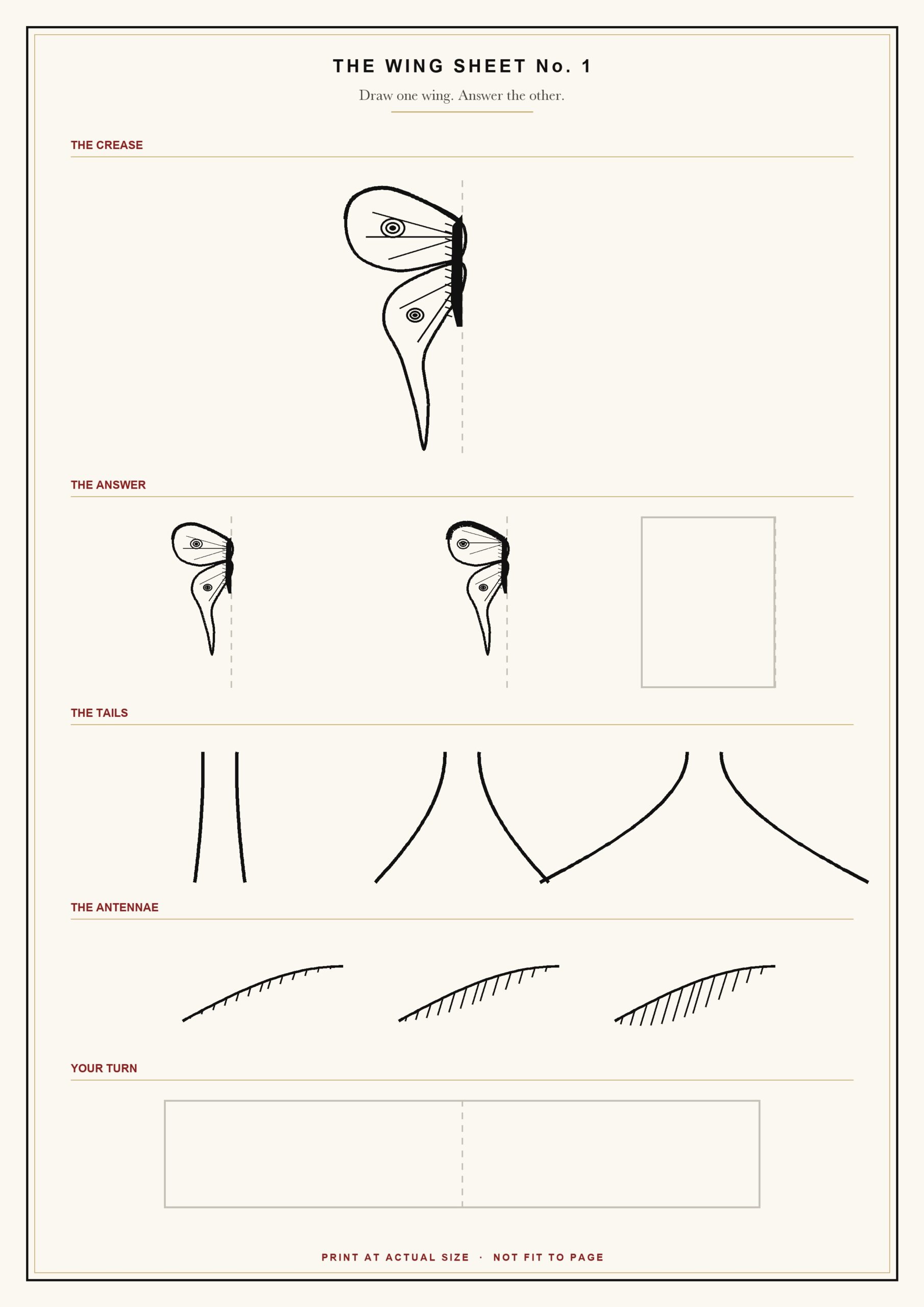
The sheet carries one printed left wing, an empty right half, and a fold line down the middle. Print it at actual size, not fit to page. (Shrink it and the tails come out too thin to ink cleanly.)
Under that sit three practice bands. One for tails, one for antennae, and one blank square with its own crease.
Below, four things. Why the steadiest hand in the room is not the one that matters. The two transfer tricks that do the second wing for you. The three small changes that stop a moth reading as wallpaper. And the order the parts go in, which is what actually decides whether it works.
None of it needs a new pen. A pencil, a fineliner, and a sheet you can see through will cover the whole evening.
I have drawn this moth on printer paper, on the back of an envelope, and once on a napkin.
Draw the left wing first, even if you are right-handed. That keeps your drawing hand off the wet line.
Work slowly on that one wing. Everything after it is cheaper than you think. The paper is about to do most of the second one for you.
The Collection
33 sheets, and not one of them asks you to draw both sides
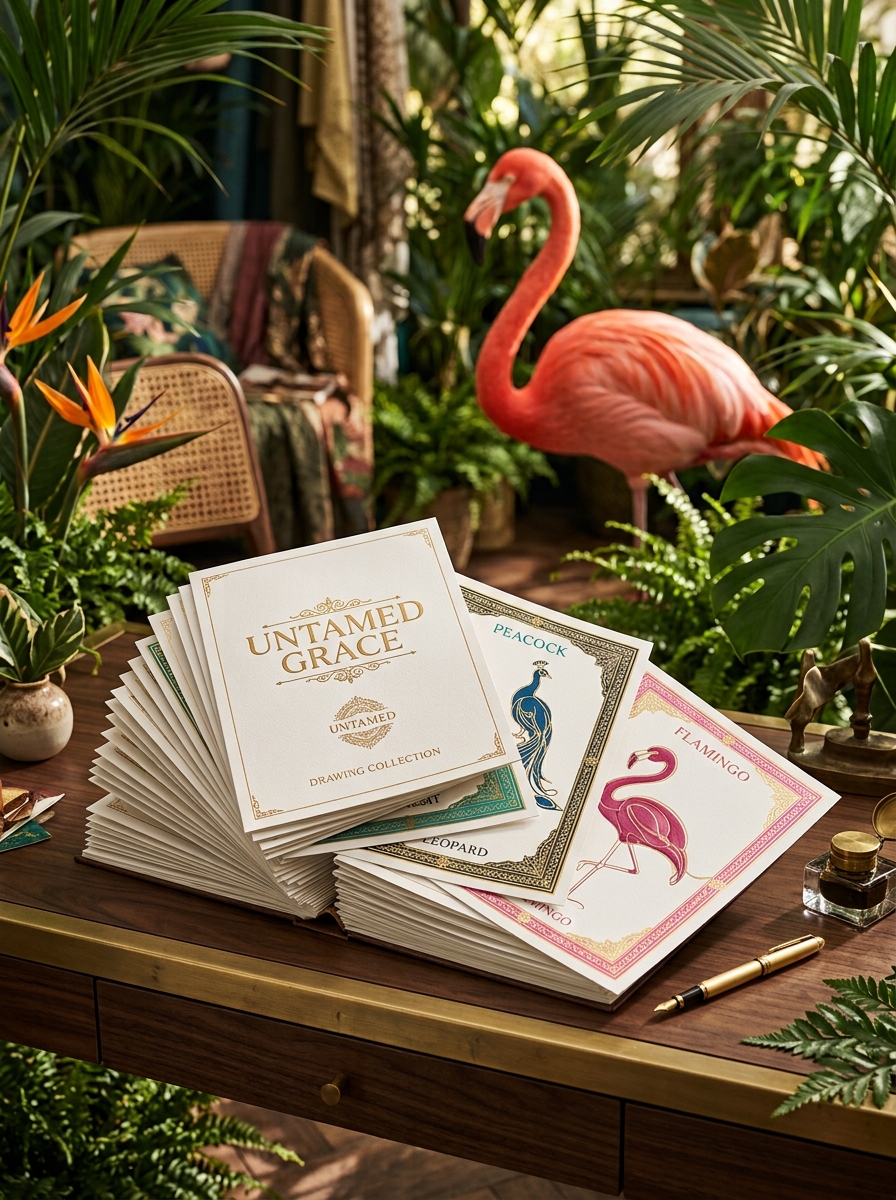
UNTAMED GRACE. Long necks, folded wings, and one unicorn. For the evening you want a whole creature finished, not a corner of one. (The unicorn arrived without explanation and I have stopped asking for one.) Inside: 33 line-art sheets, 8 of them birds. What you get: a quiet hour with the phone face down, and a finished creature to pin up by Friday.
Back to the crease, and what the right-hand side is actually for.
The steady hand is not what a luna moth drawing runs on
A book of English moths and butterflies was printed in London in 1766. The man who made it paid for it himself. He drew every plate, then engraved every plate.
He had never engraved anything before in his life.
He says so in his own preface, before the reader can notice it:
“as I never before attempted to engrave, I hope the Faults which may be found in the Plates will be excused on that Account.”
That book is The Aurelian, and the 1766 printing is scanned page by page. Its plates were cut by a beginner apologising in advance.
(I think about that sentence more than is reasonable. He shipped it anyway. I am still working on that part.)
Moses Harris is worth one more line. He laid out tidy rules for telling a moth from a butterfly. Then he wrote this about his own rules:
“there is not one of the above Rules, but has an Objection.”
He printed the rules and admitted they leak, on the same page.
So the reference plates for this subject were cut by an unsteady hand. The man holding it knew his own rules were approximate. He made the book anyway.
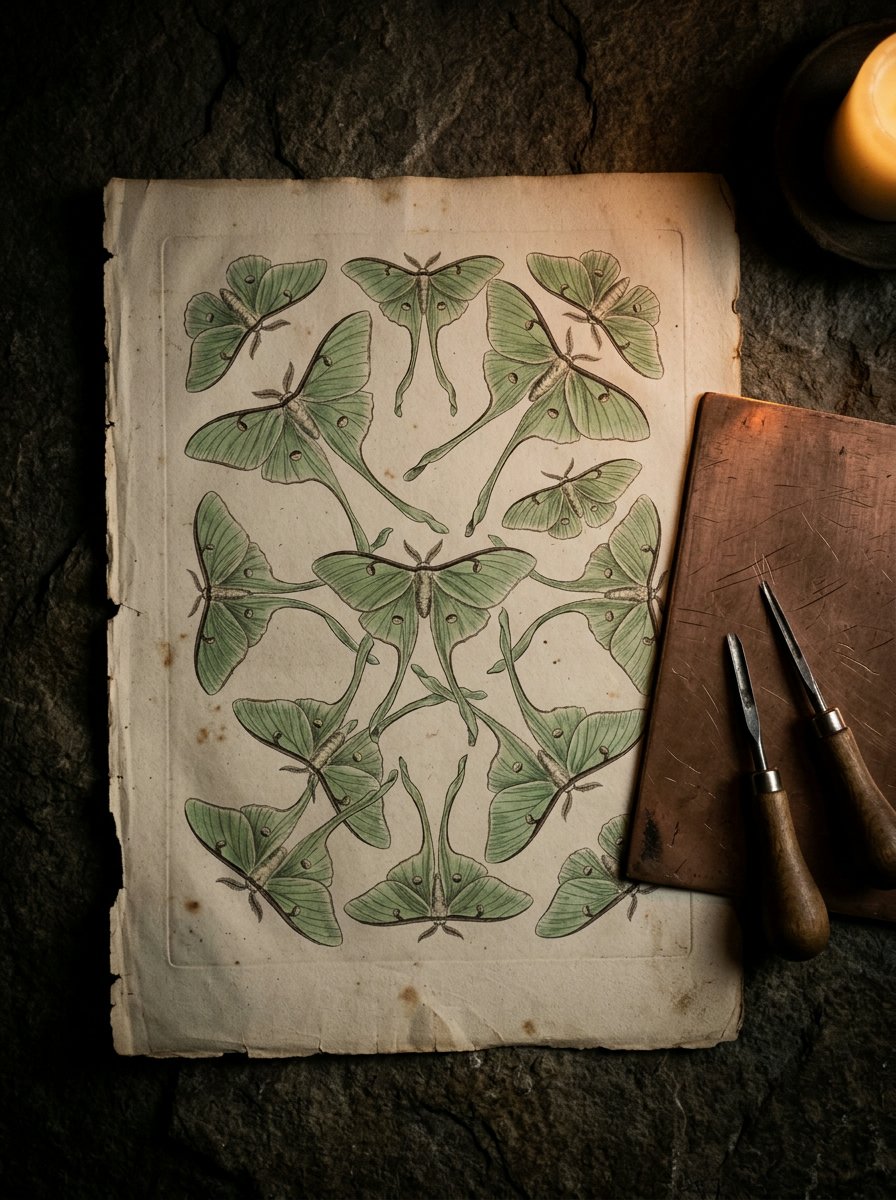
Your hand is not the problem it has been telling you it is. Accuracy is not what those plates are made of. Commitment to one side of the paper is.
Nobody draws both sides, and the moth painters never did either
Here is the thing nobody says out loud. A symmetrical drawing is almost never drawn twice.
You draw one wing properly. Then you get the second one by other means.
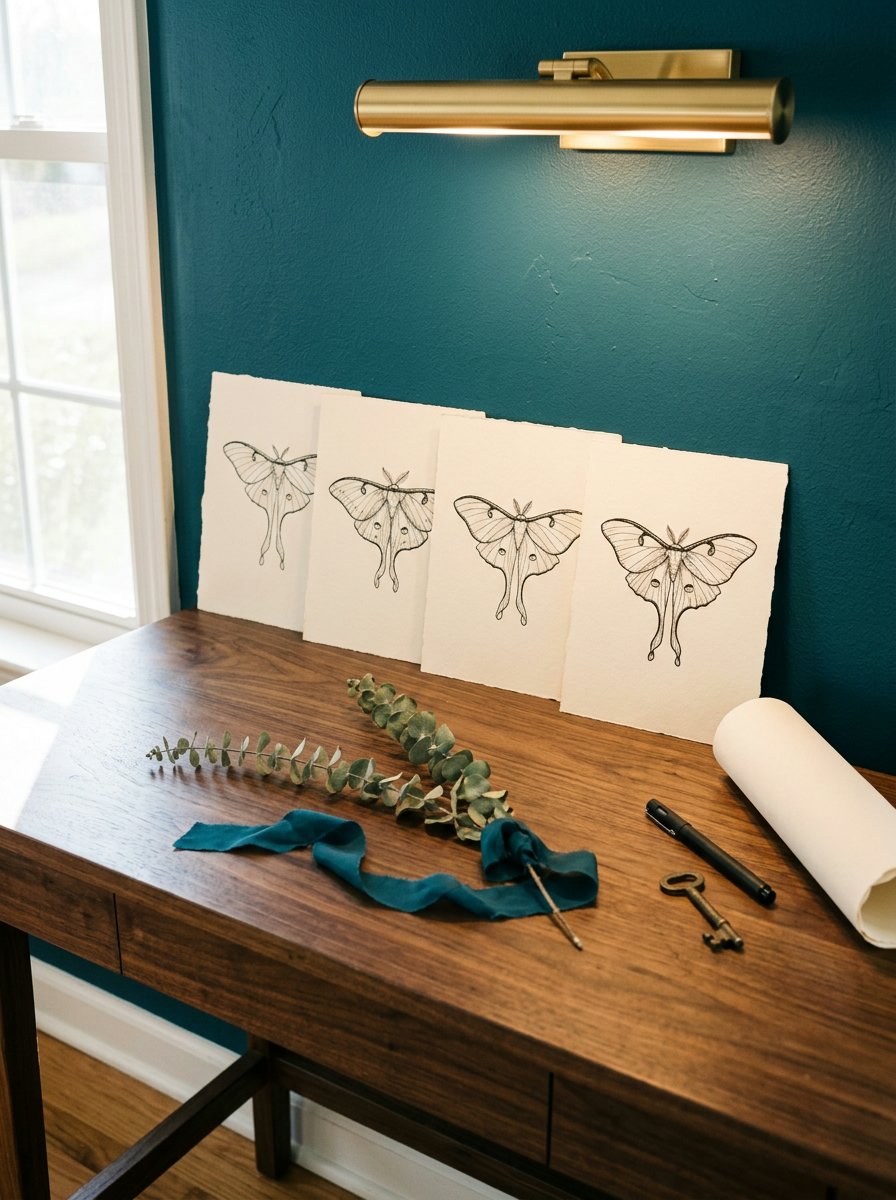
The fold is the simplest way. Draw your left wing hard, in soft dark pencil, right up against the crease.
Fold the sheet shut. Rub the back of the paper firmly with a thumbnail. Open it.
There is a faint grey wing waiting on the right. It is backwards, it is soft, and it is in exactly the right place.
Now ink it. You are tracing, and tracing is not cheating. It is what the crease was for.
The second method needs a window. Draw the left wing, turn the whole sheet over, and hold it flat against the glass in daylight.
The line shows through the paper. Trace what you can see.
(I did this at a kitchen window for a year. Somebody eventually told me it has a proper name. I still call it the window.)
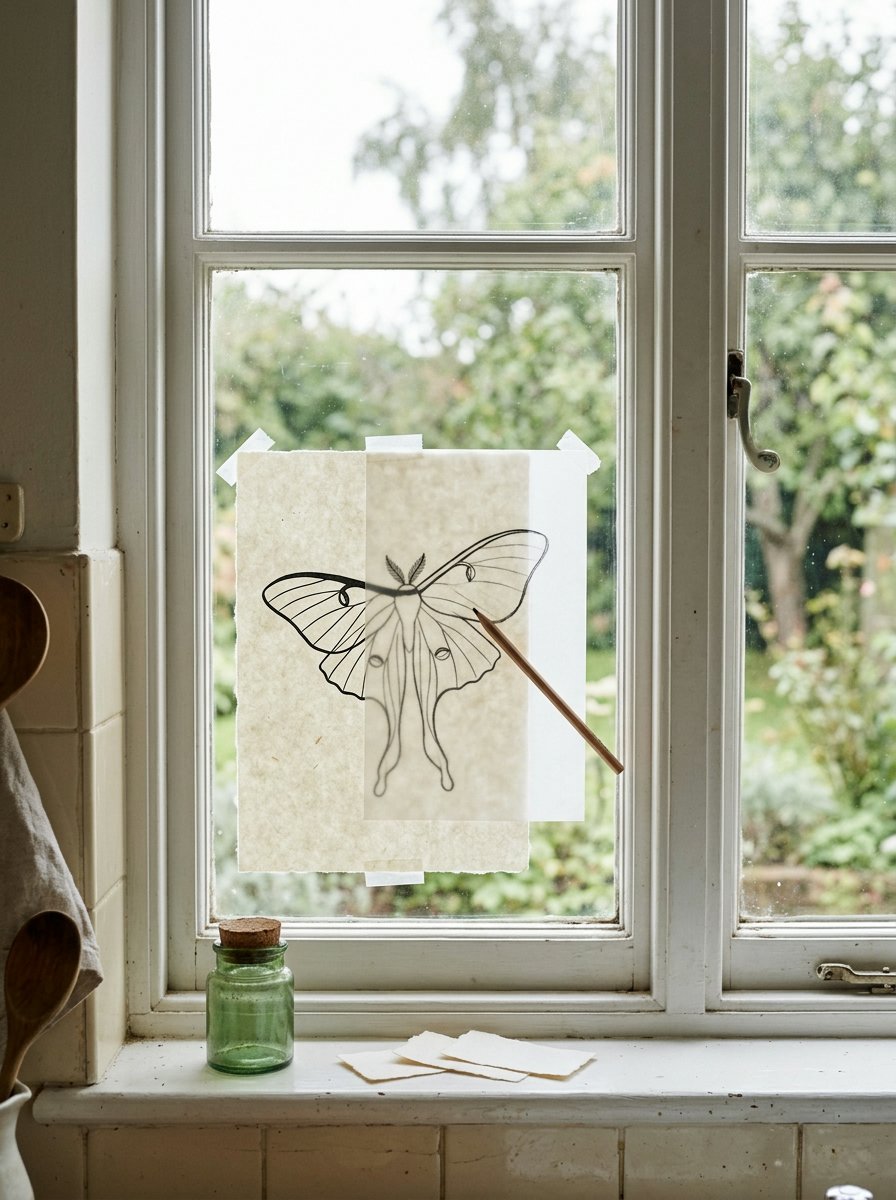
The third method is the meanest and the fastest. Draw the left wing. Then draw the right one freehand and refuse to look back and forth.
Comparing is what ruins it. Your eye starts auditing, your hand starts hedging, and the line goes timid.
All three methods give you the same thing. You get an outline you did not have to earn twice.
One warning about the fold. Use soft pencil and press properly, or nothing transfers and you will do it four times.
Paper matters here more than the pencil does. Thin copy paper folds cleanly and gives up its line at once.
Heavy cartridge paper resists both. Save that for the version you mean to keep.
A luna moth drawing also wants a little colour, eventually. The wings are a pale, tired green.
One wash, or one coloured pencil, and you are finished.
What you do on the right-hand side is an answer, not a repeat
Now the correction, and it is the whole post.
A transferred outline gets you the shape. If you then copy the inside of the left wing exactly, the moth goes flat on the page.
It stops reading as a creature. It starts reading as a length of furnishing fabric.
Two identical halves is what cloth does. It is not what anything with a pulse does.
The man who understood this best had done both jobs.
Before he drew a single moth, Jacob Hübner spent three years as a designer and engraver in a cotton factory. His job was drawing patterns for printed cloth.
He then spent the rest of his working life on European moths and butterflies, plate after plate, out of Augsburg.
So he knew exactly what an exact repeat is for. It is for fabric.
A machine does it, and a machine does it better than you.
When he came to the moths, he could tell a repeat from a drawing.
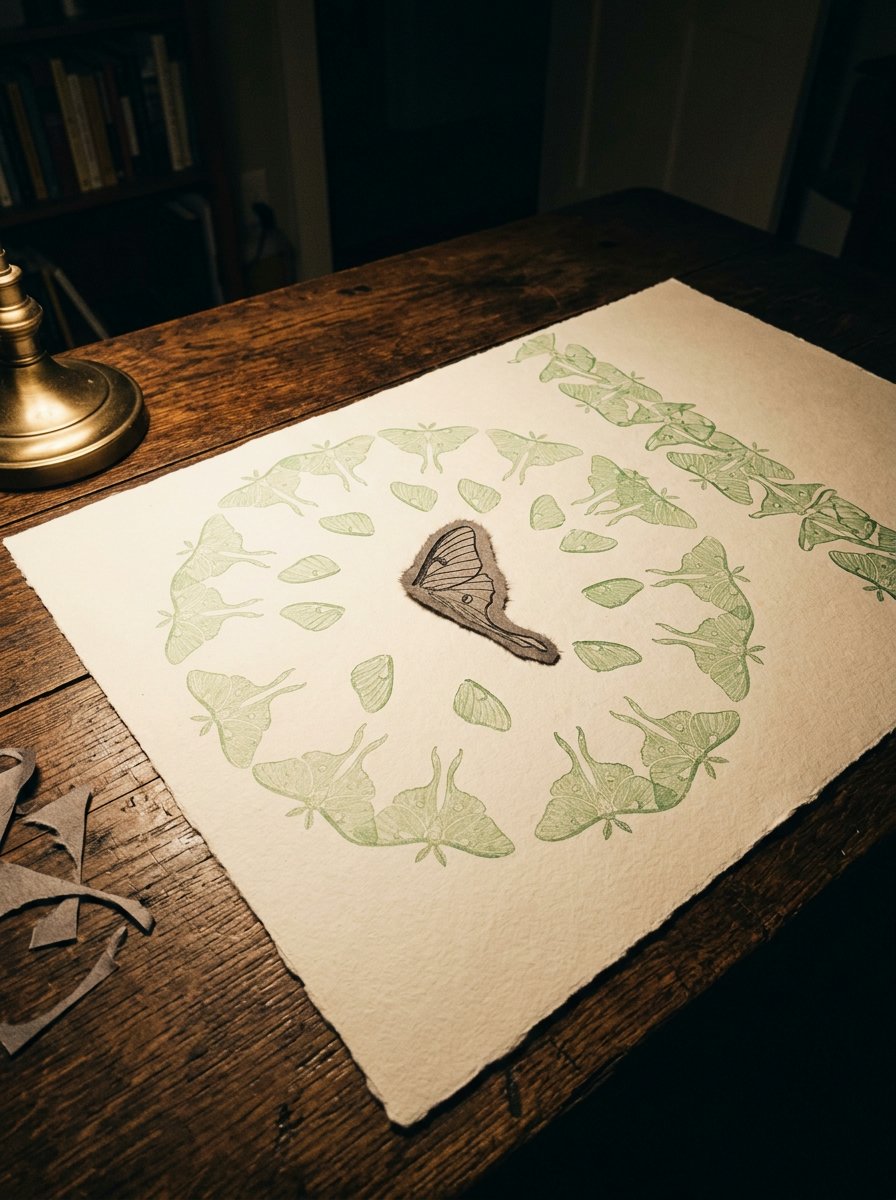
That distinction is easy to feel once somebody names it. A repeat is the same thing again.
An answer is the same idea, differently.
So transfer the outline, then change the inside. Not much. Enough.
Make the band on the right wing a little thicker. Let one eyespot sit closer to the edge than its partner. Start the vein lines at a slightly different height.
Those are the three. Thicker band. Eyespot nearer the edge. Veins starting higher.
(I test this on a scrap first. Two wings, same outline, one copied and one answered. The answered one wins every time now.)
Nobody will look at it and say the bands are uneven. They will say it looks alive.
That is the trick, and it costs about four seconds of deliberate carelessness.
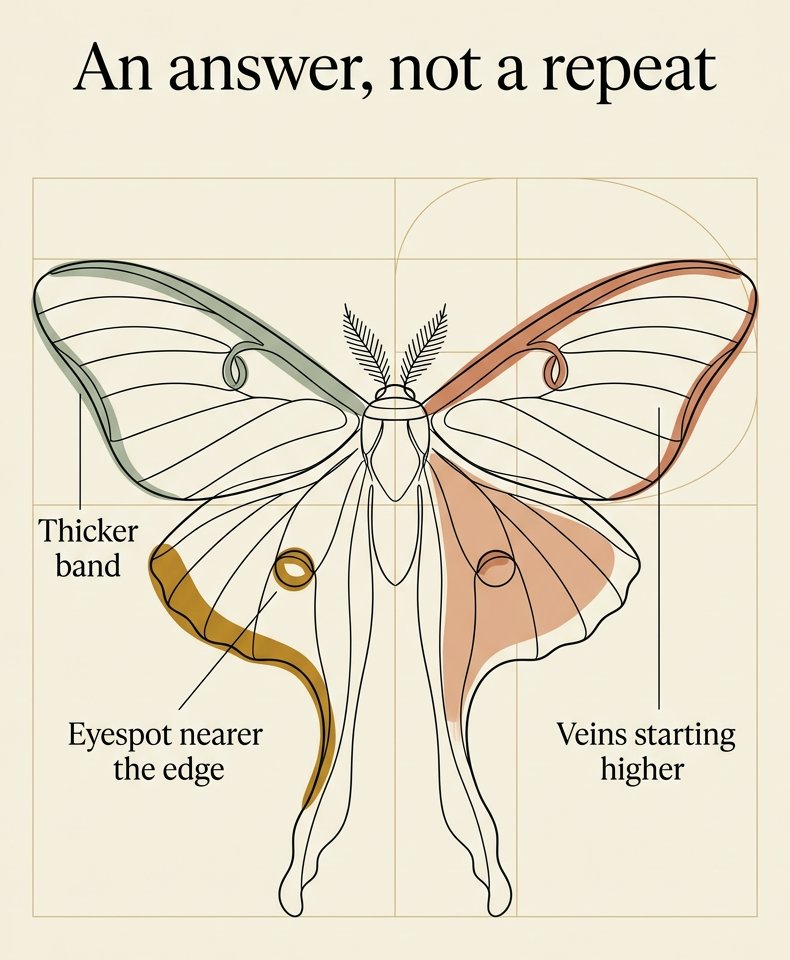
There is a limit, and it is worth knowing before you enjoy yourself too much.
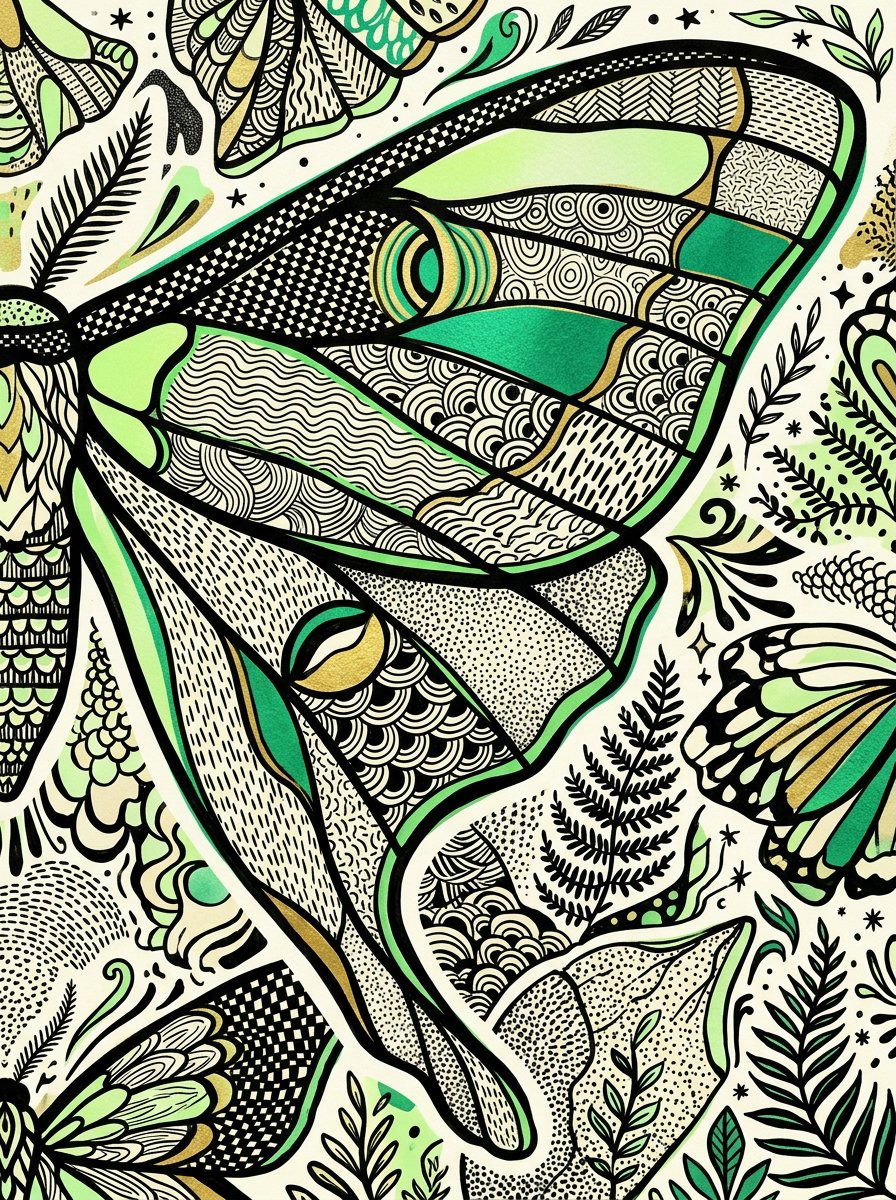
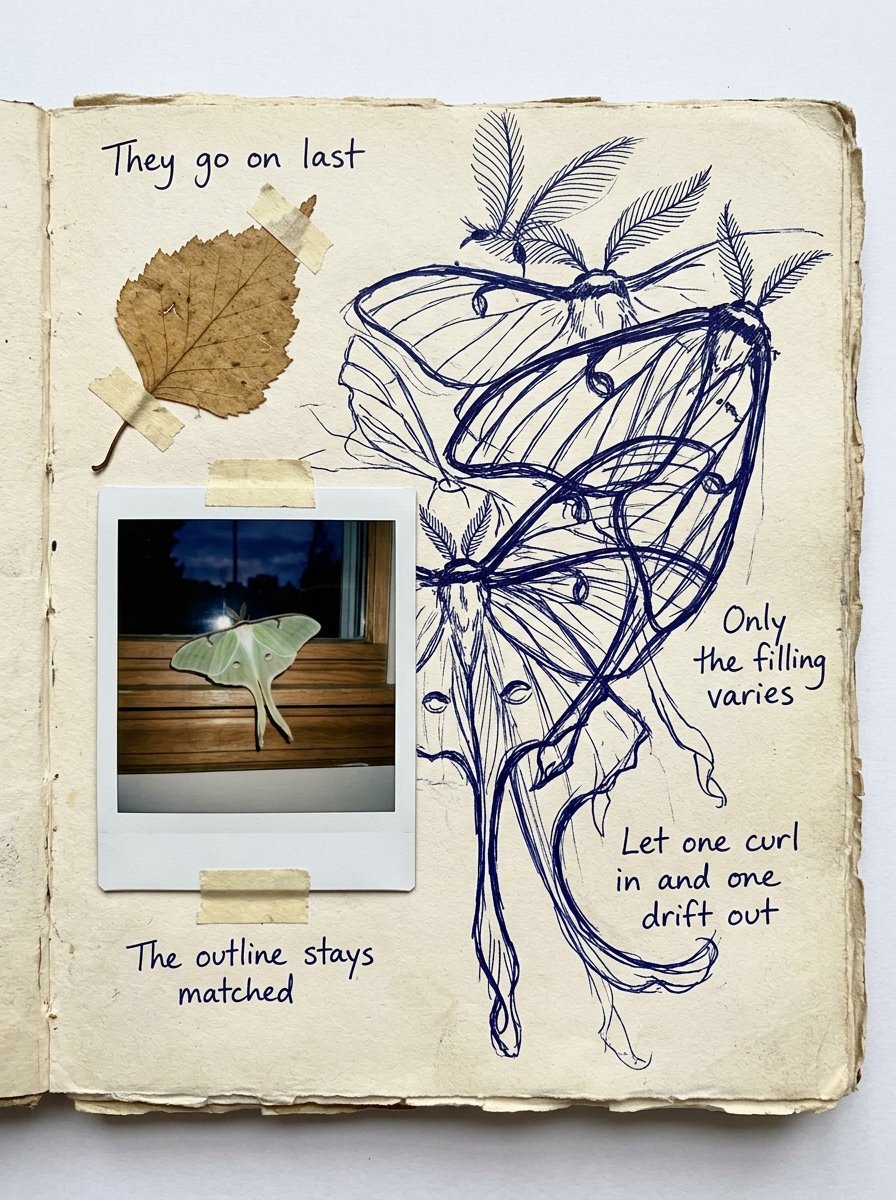
The outline stays matched. Only the filling varies.
Get that backwards and it stops looking like a moth. It starts looking like a mistake, which is a different thing entirely.
So here is the short version of what stays and what moves. The outline stays. The silhouette stays. The tails stay the same length as each other.
Everything inside those lines is yours to shift. Bands, spots, veins, and how heavily you fill them.
(I keep a scrap beside me and test the pair before I commit to either. It has saved a great many evenings.)
A luna moth drawing comes apart into four parts, and only two of them are the wings
Build it in this order. The order matters more than the drawing does.
Upper wings first. They are broad, and slightly squared at the shoulder, and wider than feels right.
Draw the left one. Transfer it. Then answer it.
Lower wings second. They hang below and behind the uppers, and they are where the tails come from.
The tails are the part everyone gets wrong. I got them wrong for a long time.
They are long, they twist, and they should not leave the wing at the same angle.
Give them different angles on purpose. A moth with two perfectly matched tails looks pinned to a board.
Let one curl in and one drift out. Nothing else you do to this drawing buys so much for so little.
The body third. It is furry, and it is much narrower than you think.
Draw it thinner than your instinct wants. Then add the fur outward from that line, in short strokes.
A thick body is the fastest way to turn a moth into a bee.
(I drew bees for about a fortnight without knowing why. It was always the body.)
Then the fills. This is where the answering happens. It is also where an evening goes, if you let it.
The designer who drew these best sold his patterns to the people who printed cloth and wallpaper. That was the day job, in Paris, and it paid.
Then in 1928 E. A. Séguy published Papillons. It runs to 20 plates, each one coloured through hand-cut stencils.
Between them those plates carry 81 moths and butterflies.
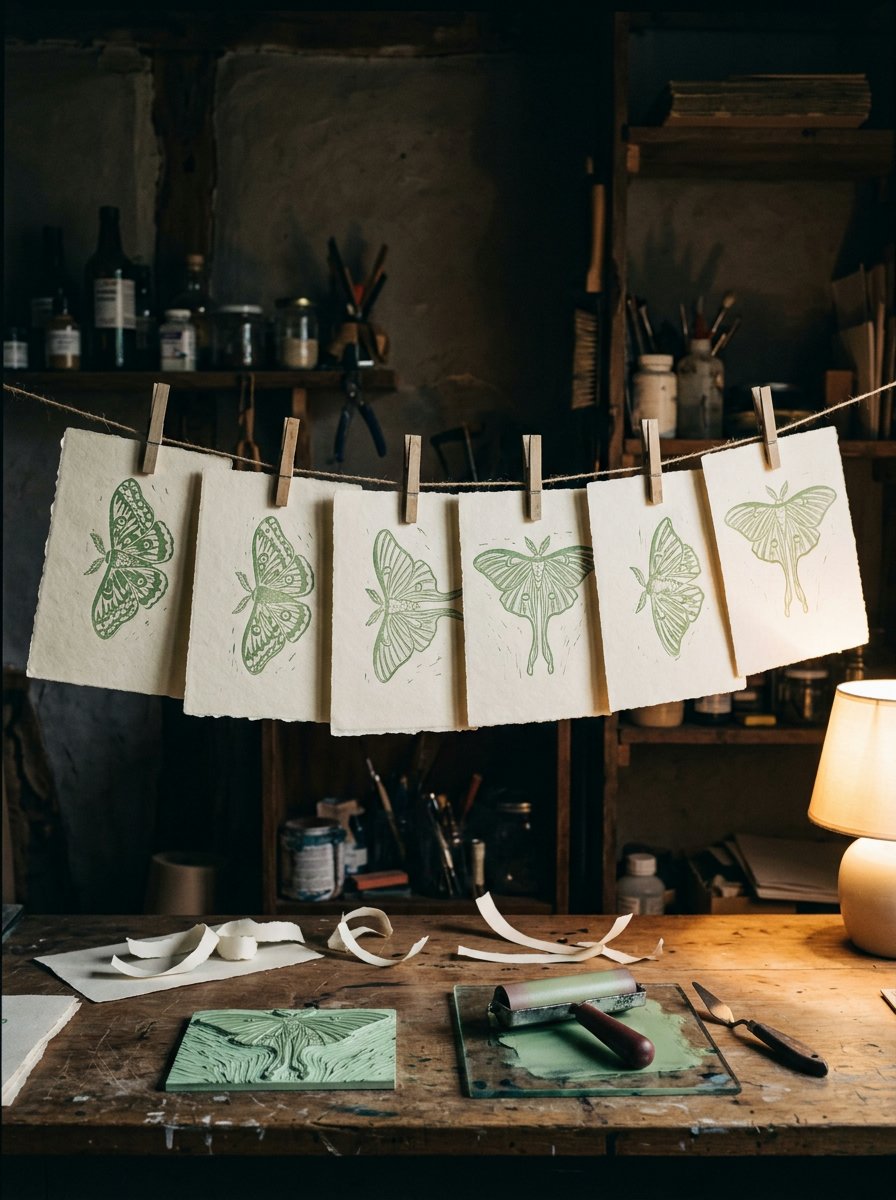
Look at how they sit on the page. They are turned, tilted and overlapped, at different sizes.
Not one of them is laid out flat and mirrored, like a specimen on a pin.
A man who drew repeats for a living spent his own time refusing to draw one.
So vary the fills. Then vary the angle too. A moth drawn slightly turned is worth three drawn flat.
Colour goes last, and you want less of it than you think. A luna moth drawing survives on one green and one darker line.
Two greens start competing and the wing goes muddy. I have done that more than once, and it is never rescuable.
The antennae decide the character of a luna moth drawing, and they go in last
Two feathered combs, wide at the base, tapering to a point.
They are the most expressive part of the whole insect, and they take under a minute.
They go on last. Always. Put them in early and you will spend the rest of the drawing protecting them.
Wide, generous antennae read confident. Thin, cautious ones make the moth look worried.
(Mine came out worried for months. I was drawing them very carefully, which is the exact opposite of what they need.)
Sweep each one out from the head in one movement. Then add the teeth along the underside.
Do not draw the teeth one at a time. Run them, the way you would rule a quick row of dashes.
And let the two antennae disagree. One a little higher. One a little more open.
That is the last answer you give the drawing. It is also the one that does the most work.
Then stand back and stop.
A moth is finished long before you think it is.
One last thing, about the head. It is small, and it sits low, tucked down between the shoulders of the upper wings.
Draw it too high and the whole moth looks startled. (Mine looked startled for most of a year.)
Print the wing sheet and answer the first wing tonight
The sheet has one printed left wing, a crease, and an empty half waiting.
Ink the printed wing first, so your hand learns the shape while nothing is at risk.
Then fold, rub, and open it. Ink the ghost on the right, changing three small things as you go.
Thicker band. Eyespot nearer the edge. Veins starting higher.
That is one luna moth drawing. It takes about 20 minutes, and it will not look printed, because you did not print it.
(I still do mine on the sheet first, and I have drawn a great many of them.)
If the first one comes out stiff, do not repair it. Start another one instead.
A second luna moth drawing takes half the time and comes out twice as loose. That happens every single time, and I have stopped questioning it.
Free Starter Pack
10 pattern templates, for the wing you have outlined and not yet filled.
Sent tonight. Bands, dots and fine stipple, sized for the inside of a wing.
Unsubscribe in 1 click, no hard feelings
Then do it again on plain paper, with no crease at all. You will find out how much of it your hand already knows.
Every creature in the folio was drawn one side at a time
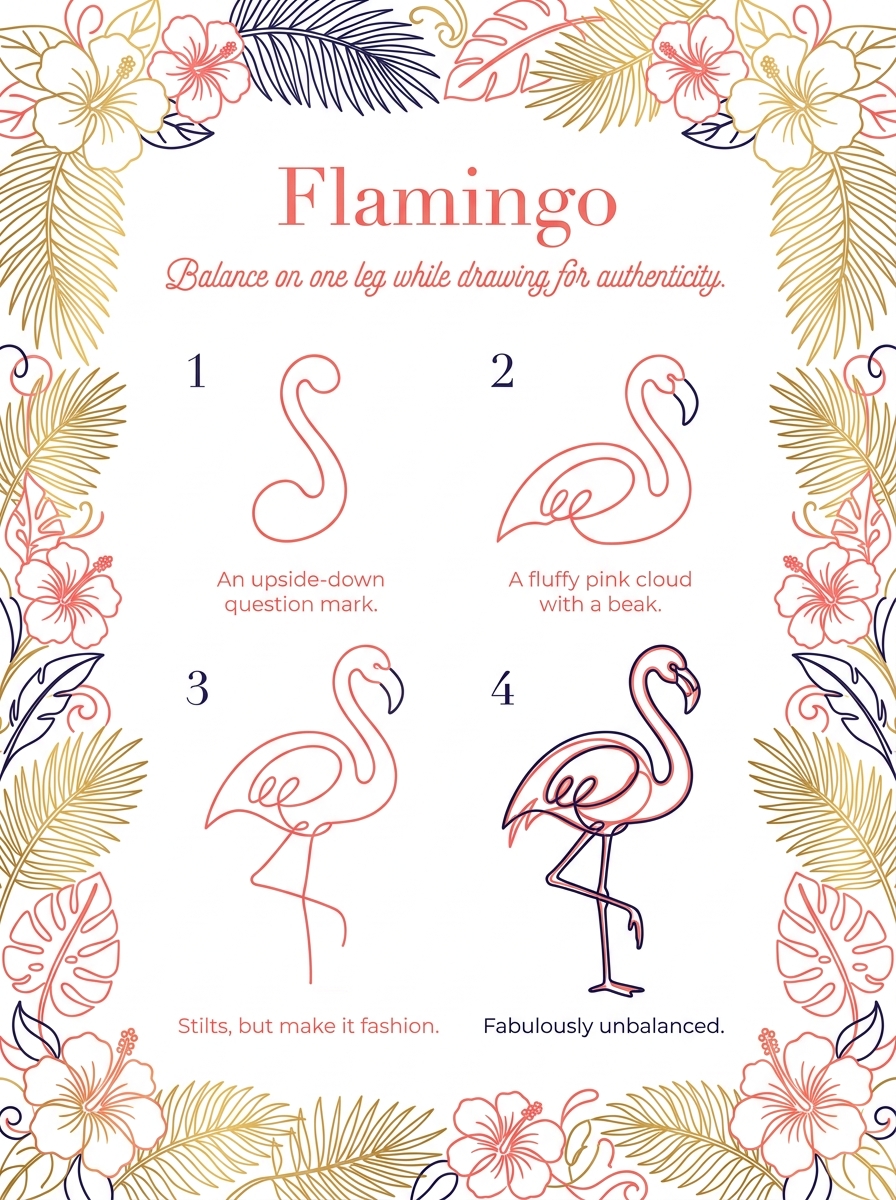
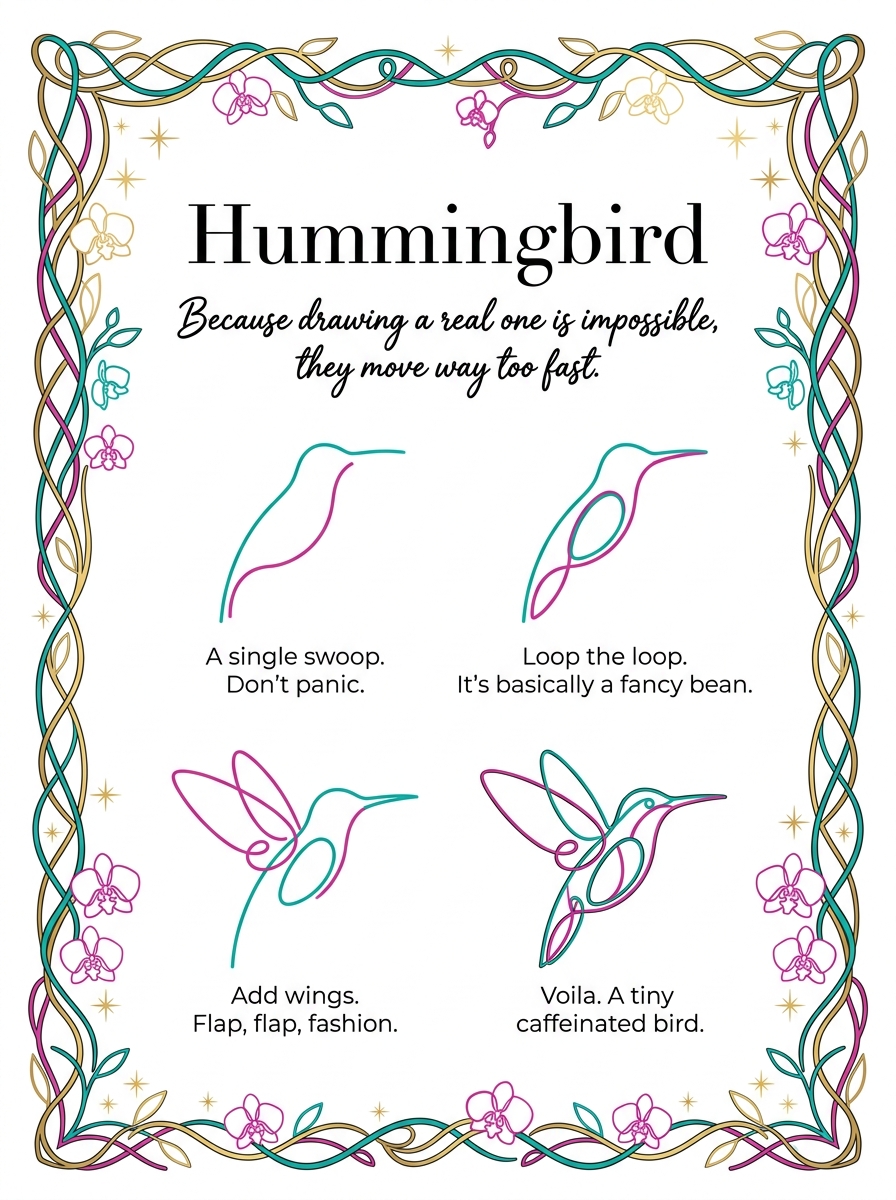
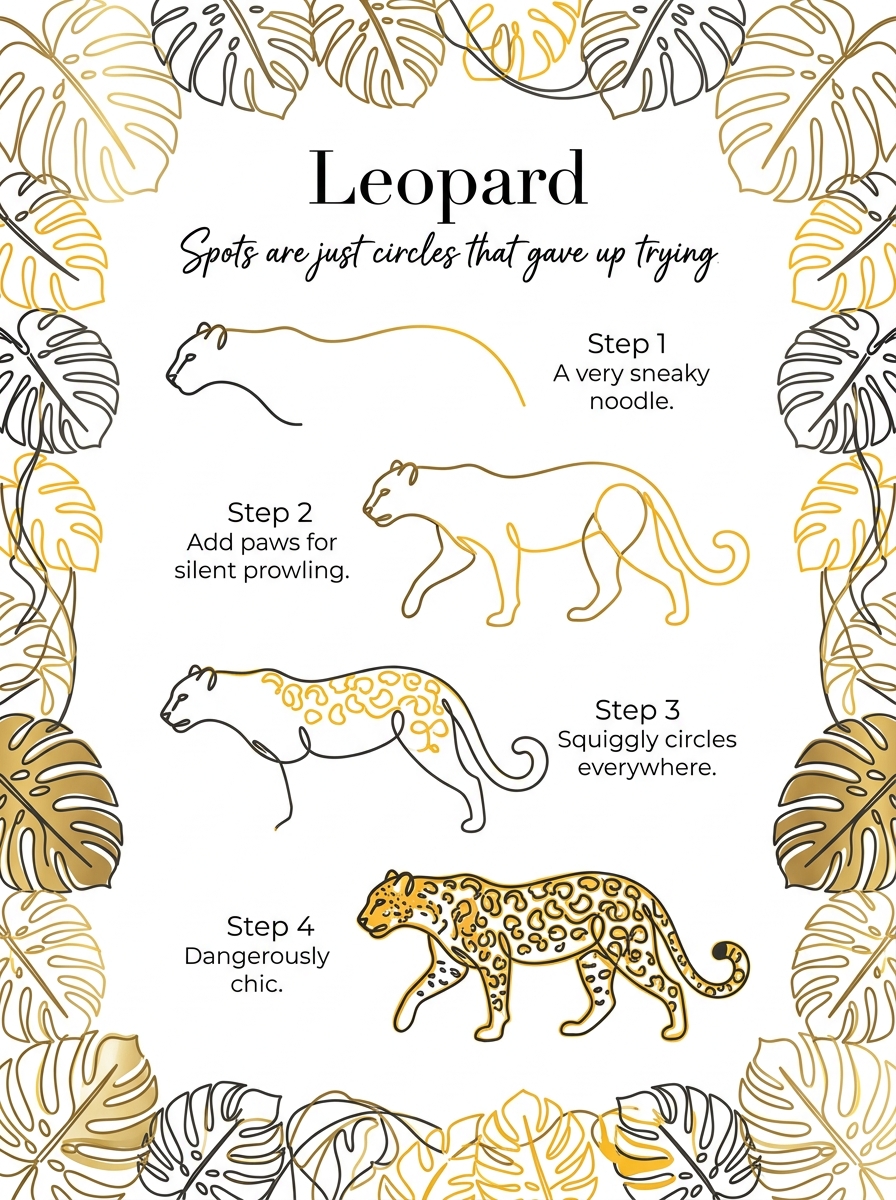
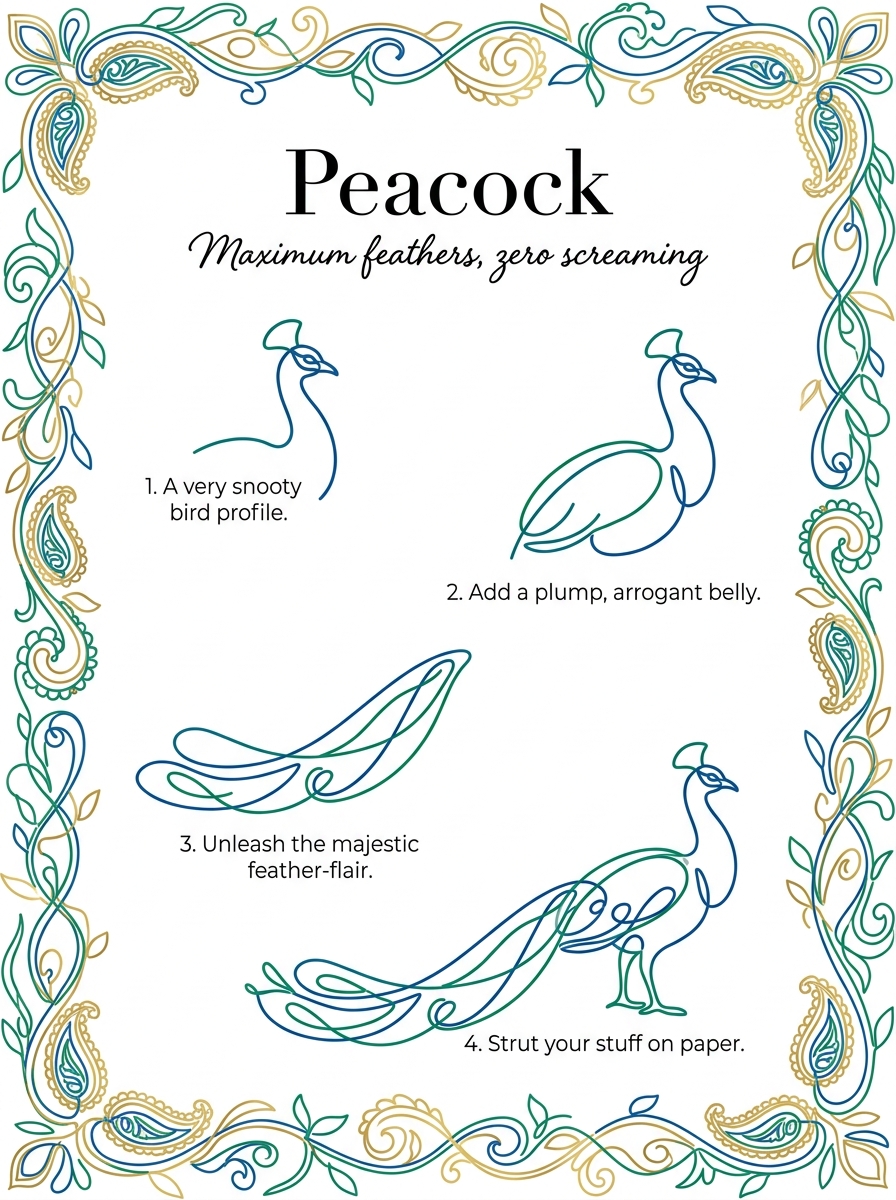
Trace the outline, then change what goes inside it. Inside: 33 line-art sheets, 8 of them birds, plus a scarab, a dragonfly and one unicorn. I print them, and then I redraw them without the print. The redrawn ones are the ones I keep.
Open the Untamed Grace folio →
Instant download · print as often as you like
A moth spends one night getting its wings flat enough to fly. You get an evening, a fold of paper, and considerably less at stake.
“After a short Time, they nicely expand themselves, hanging very flat, and exactly even with each other.”
Moses Harris, The Aurelian, 1766
Mirabelle wrote this. No training, strong opinions, many pens. Peer reviewed by a cat who watched the second wing appear and took no interest in the first.