A scribble is the only mark on earth that cannot be done wrong. That is why the intuitive drawing exercises here all begin with one.
So the blank page was never a shortage of ideas. It was a shortage of marks. An empty sheet gives the eye nothing to argue with.
(I can plan a drawing for 40 minutes and produce one clean page and one cold tea.)
Below are 63 exercises that all begin the same way. You make the mess first. You decide what it is second.
Print the free starter sheet and keep it under your hand.
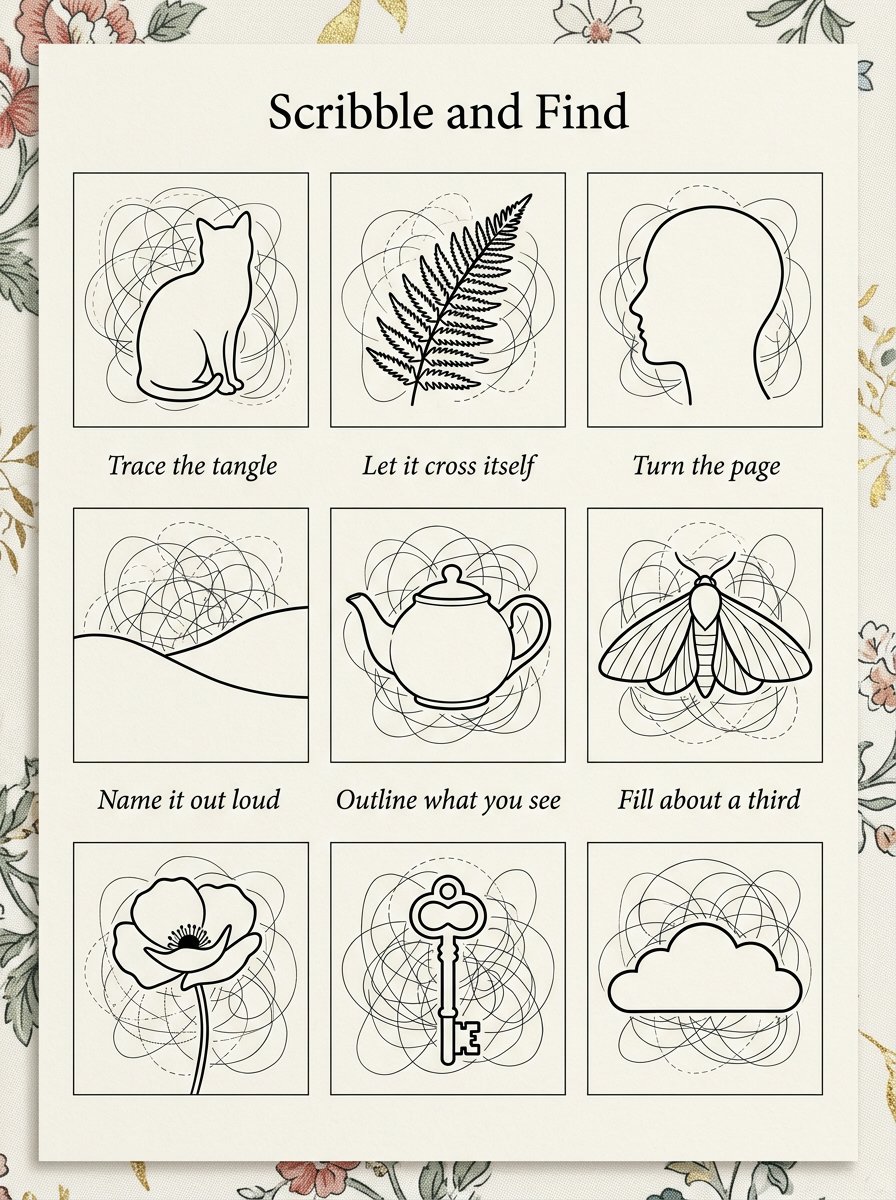
The sheet holds 9 ready-made tangles, and a different answer found in each one. Trace the tangle, or copy it roughly. Then turn the page until something appears in it.
Then outline what you see and leave the rest alone. Turning the page is not optional. (I skipped it for a year and found nothing but hills.)
Everybody is taught to decide what to draw before they draw it
Here is the belief, and almost all of us carry it. Drawing starts with an idea. First you choose a subject.
Then you find a reference. Then you draw. No idea, no evening.
It is a school rule. It was written to keep 30 children pointing at the same jug for an hour.
It has been quietly following us around ever since. It now applies itself to evenings it was never built for.
The trouble is the order. Deciding is slow, and it happens in words. The hand is quick, and it happens in shapes.
Send the words first and the hand sits there waiting to be told.
Intuitive drawing swaps the two. The marks go down before the subject exists. (It feels like cheating. It is closer to letting the fast one go first.)
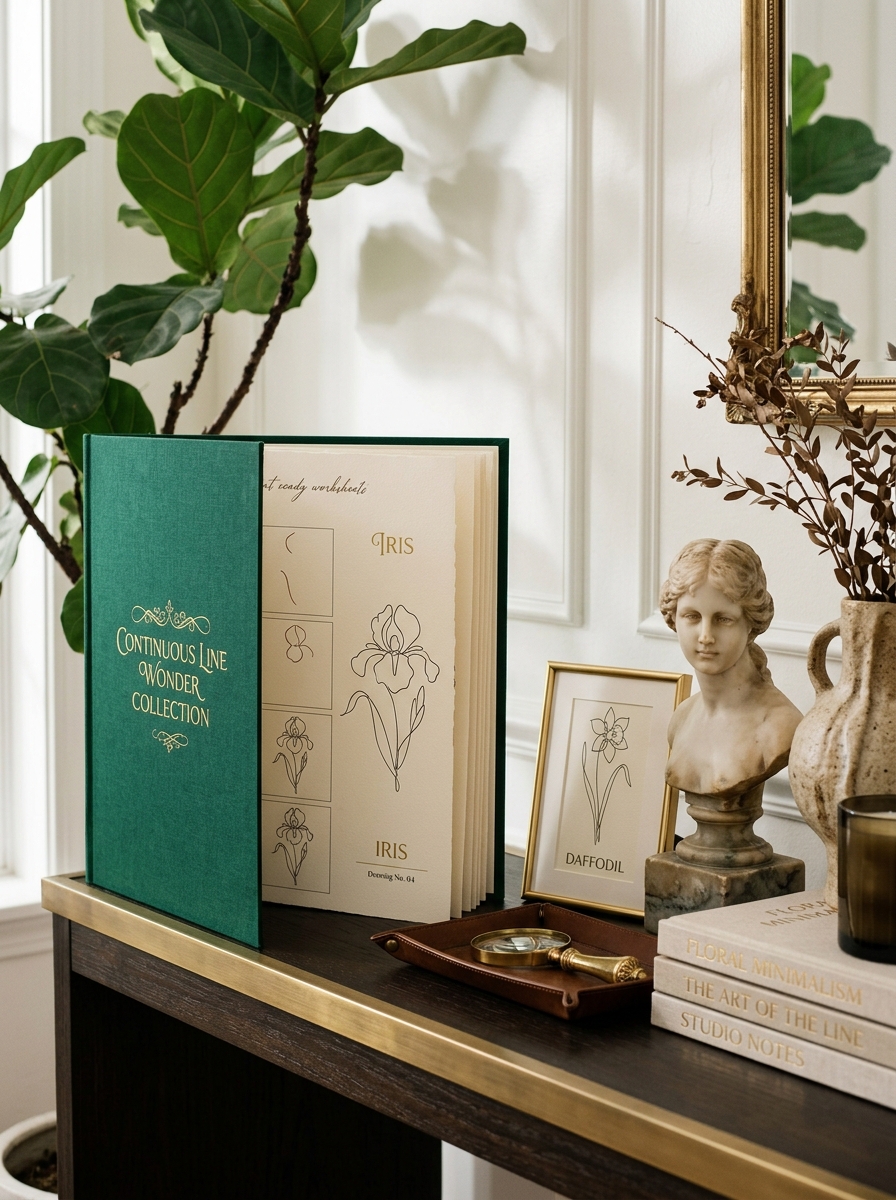
A line that keeps moving is the easiest kind of mess to find things in. That is why I keep Continuous Line Wonder next to the scrap paper. It holds 30 flowers, each built in 3 steps. Most use one line for the bloom and a second for the stem.
The Collection
CONTINUOUS LINE WONDER — poppies, swans that started as a mess, and a line that keeps moving.
Some evenings the scribble turns into a flower, and then you want another flower. Inside: 30 blooms, every one broken into 3 steps a wandering line can follow. What you get: a fresh bloom for every evening, and a stack of ink drawings worth keeping.
Now the correction, from a man not trying to prove anything.
A telephone call in July 1962 produced 12 years of work
In July 1962 a French painter took a phone call and picked up a ballpoint. He doodled while he talked.
Black, blue and red, on whatever was in front of him.
What he saw was a tangle of cells. Closed shapes, outlined in black, some filled flat with colour, some left white.
The painter was Jean Dubuffet, and he named what came out of it L’Hourloupe.
It ran from 1962 to 1974, and left the paper for sculpture, painted rooms, then buildings you could walk inside. (A dozen years of work, out of a phone call.
I think of it whenever I announce I am not in the mood.)
What he found was a system, not a picture
Here is the part that matters tonight. He did not find a subject in that scribble. He found a way of cutting it up.
Every place the line crossed itself made a closed cell. He outlined each cell firmly. Then he filled some flat and left the others white.
That is a rule anyone can follow, and it needs no idea at all.
The scribble decides where the shapes go. You only decide which ones get filled.
Try it once before you read on. Scribble, outline every closed shape, fill about a third of them. Fill half and it goes muddy.
(I have proved that more times than I would care to write down.)
Intuitive drawing works because the hand is faster than the plan
The method is four moves, and they never change. Trace the tangle. Turn the page. Outline what you see. Fill about a third.
Trace the tangle means put down a loose line with no destination. Let it cross itself 6 or 7 times.
Keep the pen moving and do not lift it to think.
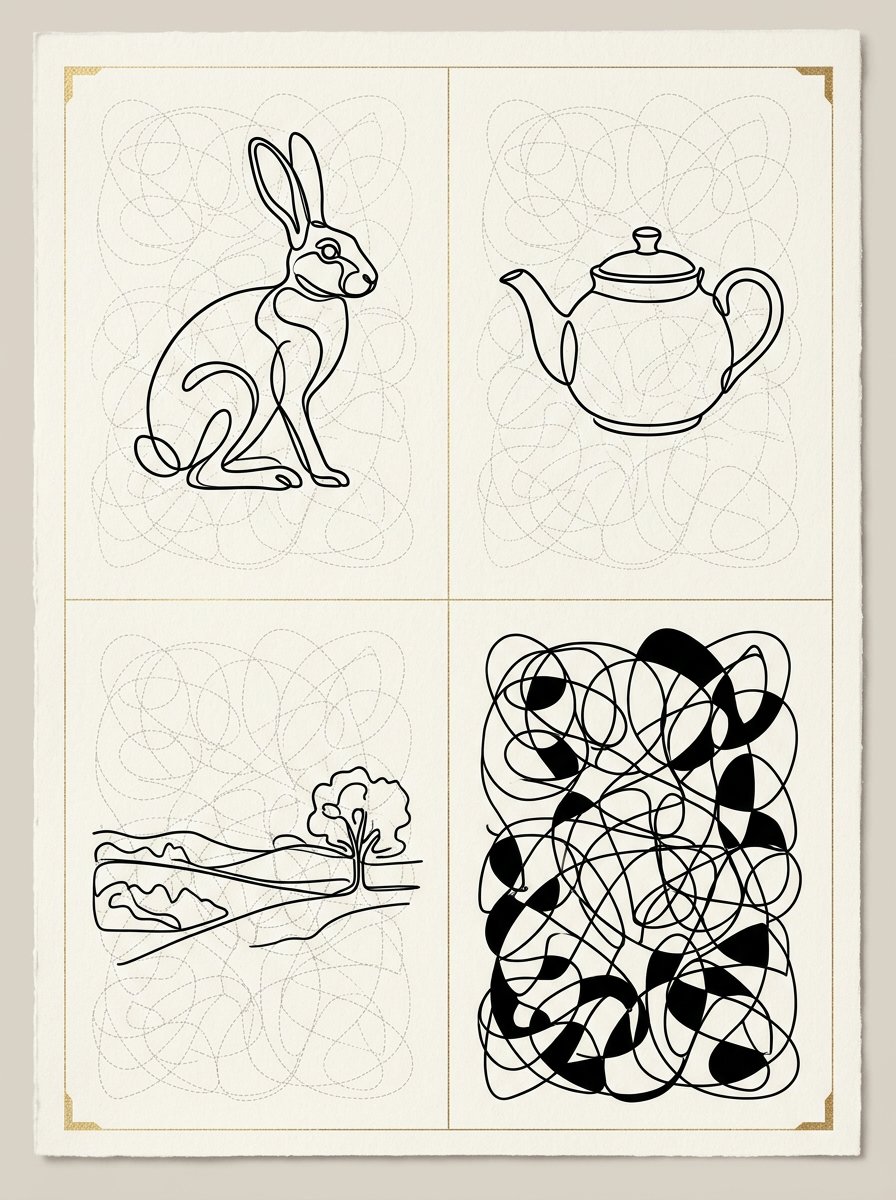
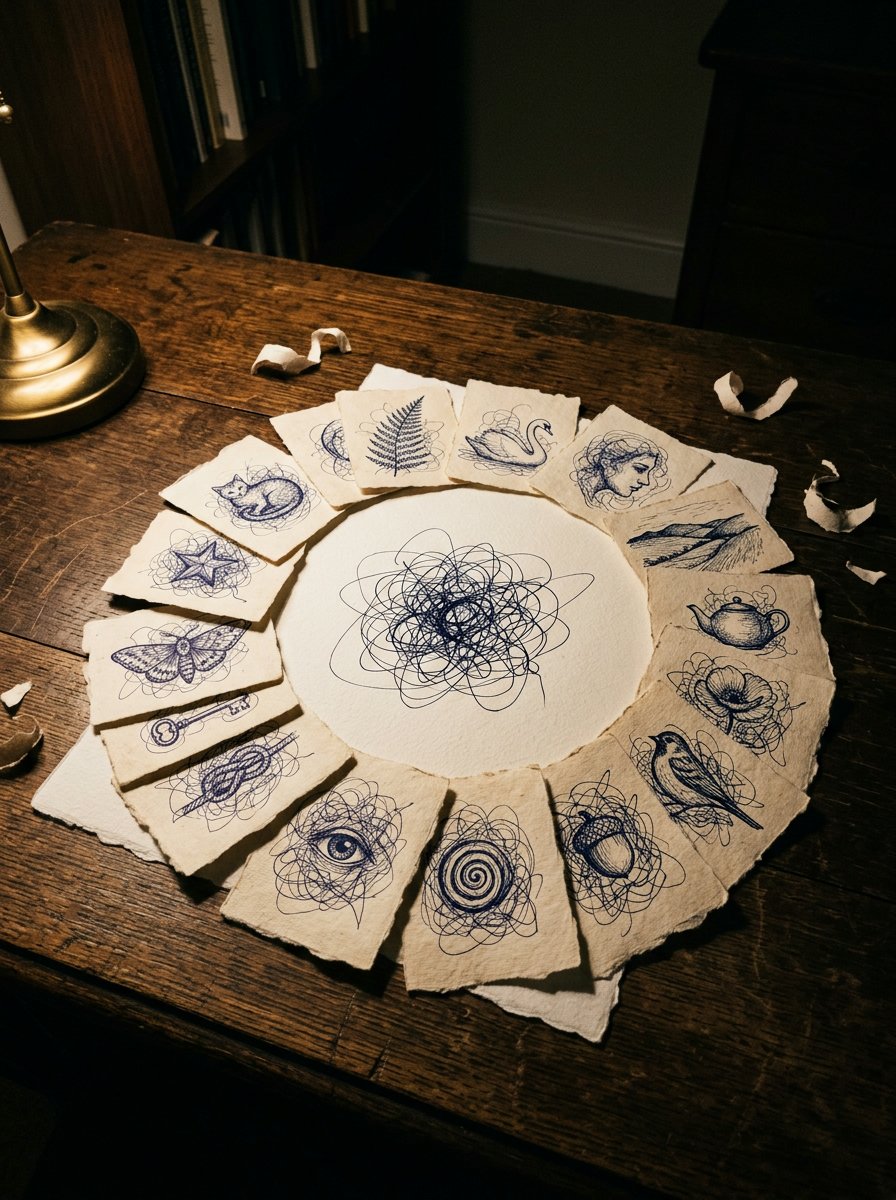
The same kind of tangle, four different answers. Three found creatures or objects. The fourth found nothing and filled a third of the cells, which is still a drawing.
Turn the page means rotate the paper slowly, all the way round. Something will surface at an angle you did not draw it at.
This is the move people skip, and skipping it is why nothing appears.
Outline what you see means go over only the lines that belong to the thing you found.
Press a little firmer. The eye follows the darker line and forgives the pale ones underneath.
Fill about a third means choose which closed shapes go solid. Leave the rest as paper.
(Paper is a colour. It is free, and it is the only bright one you get.)
One New Yorker draughtsman called the doodle the brooding of the hand
Saul Steinberg published 642 drawings and 85 covers in The New Yorker. He described himself as a writer who draws.
He called drawing a way of reasoning on paper.
The line that matters here is his. “The doodle is the brooding of the hand.” It appears in Harold Rosenberg’s book about him, published in 1978.
So the scribble is not the warm-up before the thinking. It is where the thinking is happening. (Which retires the idea that I have wasted an evening.
I have simply been reasoning, in blue ink, badly.)
A painter in 1958 said a loose thread was enough to start him
Joan Miró was asked how he began. His answer came in a 1958 conversation with the critic Yvon Taillandier, later published as I Work Like a Gardener.
“I begin my pictures under the effect of a shock… The cause of this shock may be a tiny thread sticking out of the canvas.”
Then he adds the useful half. “And so a bit of thread can set a world in motion.”
That is why a scribble works and a clean page does not. (Nobody has ever been shocked by an empty sheet of A4. I have tried, at length.)
A first mark has one job. It interrupts the blank, and the eye does the rest.
The three rules that make intuitive drawing work on paper
Rule one. The scribble must cross itself. A single curve gives you nothing to find, because there are no closed shapes in it.
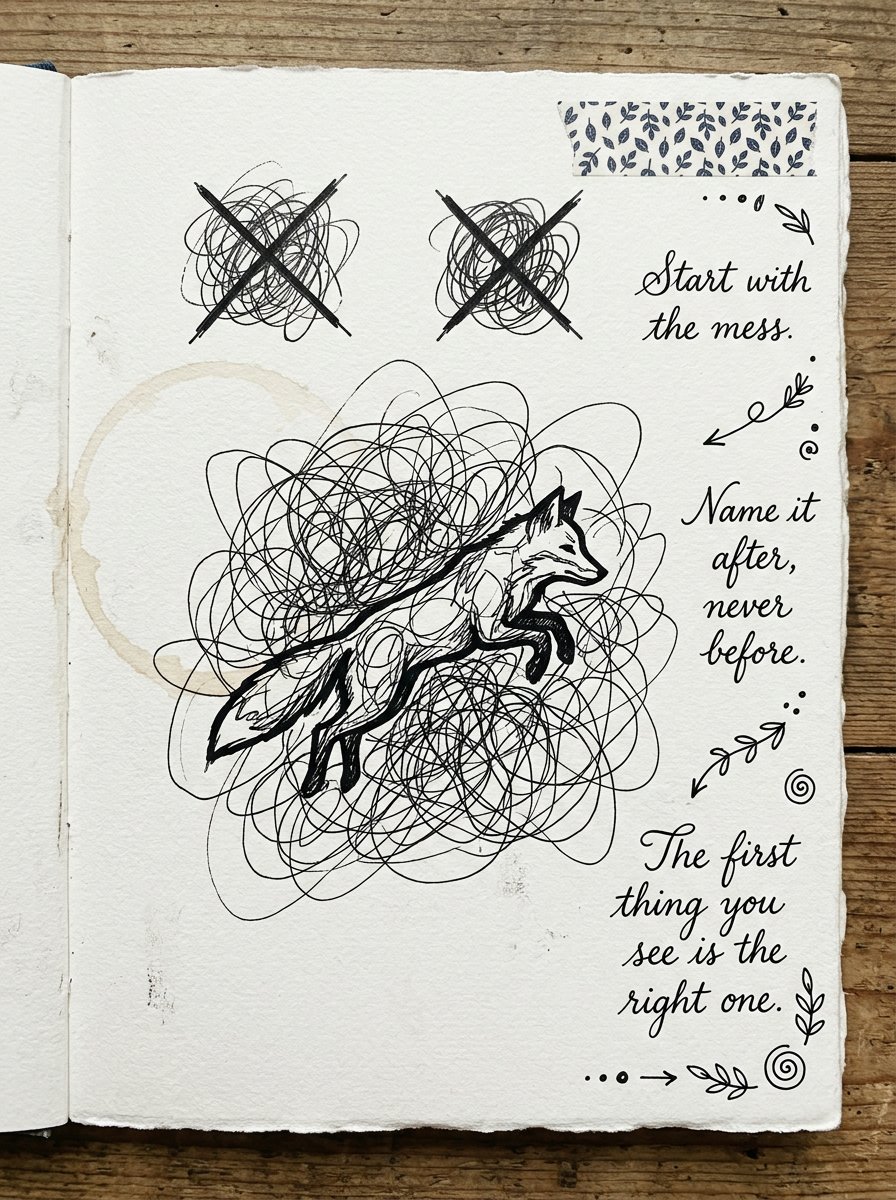
My notes in the margin say the same things every time. Start with the mess. Name it after, never before. The first thing you see is the right one.
Aim for 6 crossings before you stop.
Rule two. Name it out loud once you see it. The naming locks it in. Say nothing and the eye keeps changing its mind, and you will outline three creatures on top of each other.
Rule three. Outline first, fill second, always. Fill early and you glue shapes together that were meant to stay apart.
I did that for a fortnight and made 20 grey puddles.
What ruins an intuitive drawing, and the fix for each
Most intuitive drawing evenings fail in one of four ways, and all four are cheap to fix.
The scribble is too neat. A tidy spiral has no accidents. Scribble faster than feels reasonable and let the pen skid.
Nothing appears. You have not turned the page. Rotate it fully, twice, then look again on the way back from the kettle.
Everything appears at once. Pick the shape nearest the middle. The others will still be there tomorrow.
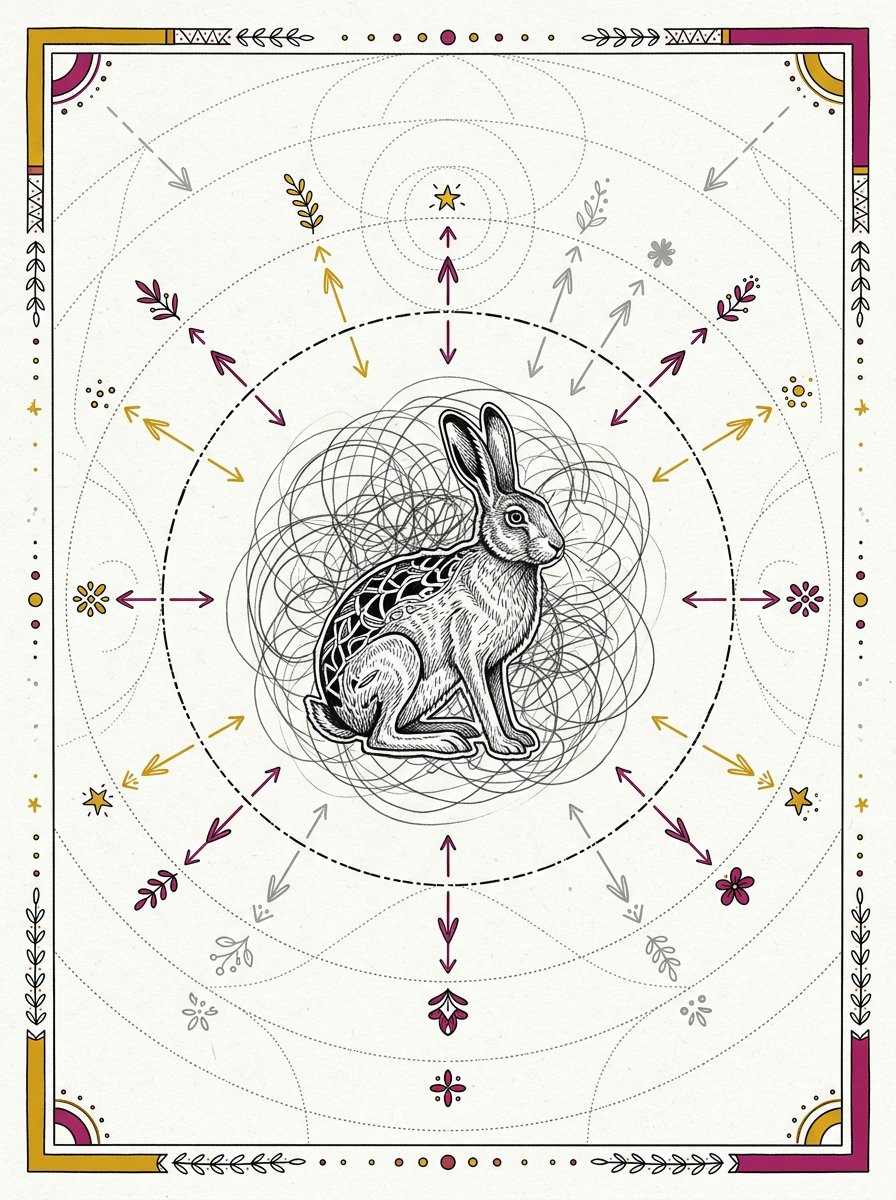
The hare is the found shape, and the guidelines show where the small extras go. Keep them off the creature itself. (Mine crowded the ears for a month before I noticed.)
The drawing goes muddy. You filled too much. Go back to a third and let the paper carry the rest.
(Muddy is the honest word. My first month looked like weather.)
63 intuitive drawing exercises for evenings with no plan
These 63 intuitive drawing exercises all start with a tangle. Each names the move that makes it work.
(I have done all 63. Several badly, and a few badly on purpose.)
Creatures come easiest, because a closed loop already looks like a body. The cat in the loop uses the biggest closed shape. The sleeping fox needs its tail found first.
The owl in two crossings wants two circles side by side. The fish that fits one curve takes the smoothest arc.
The hare with long ears borrows two stray line ends. The snail on a spiral needs a coil already in the tangle. The beetle in a closed oval is the easiest of the lot.
The swan on a long S keeps the S thin and unfilled.
The frog in a squat triangle comes from three crossings. The moth in a figure of 8 outlines both wings before filling either.
The ruin here is symmetry. (I straightened a hare for a week and produced a shopping bag.)
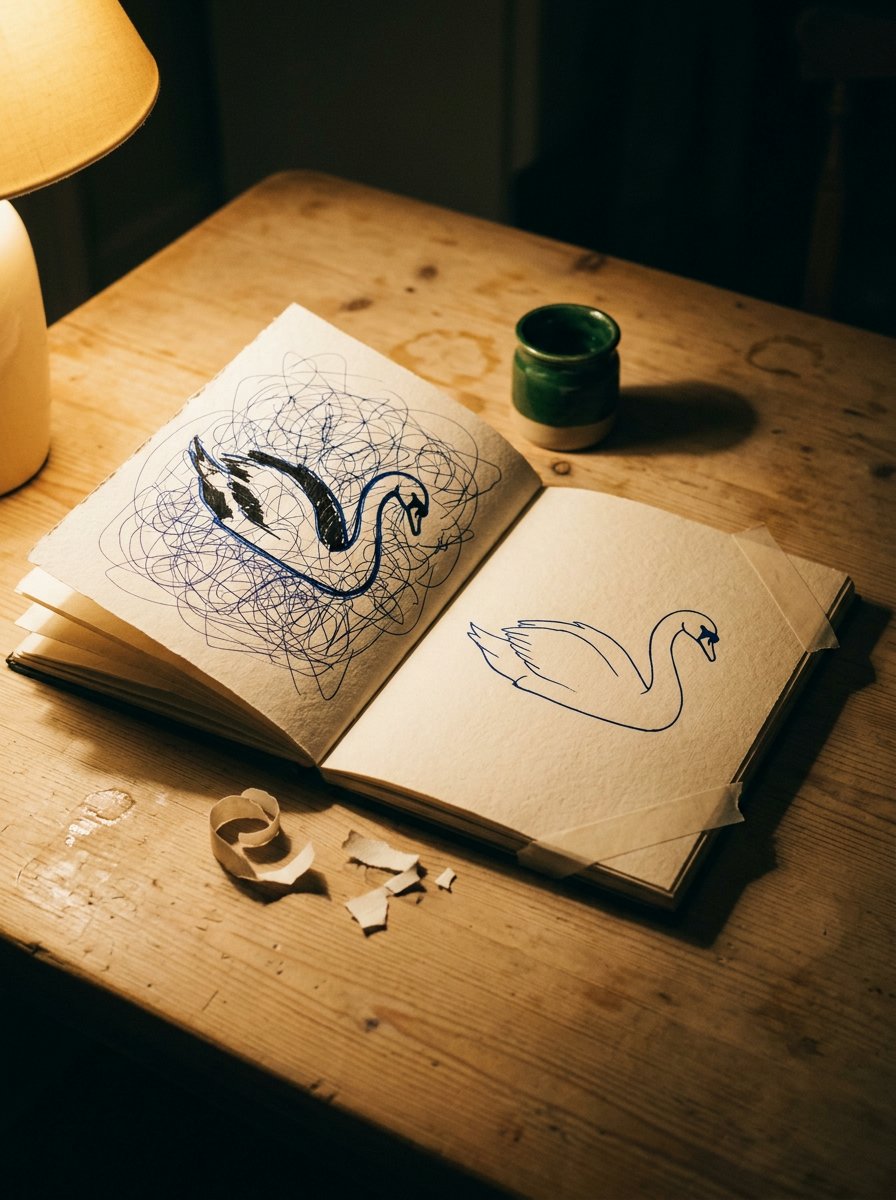
The left page is where the swan was found. The right page is the same swan drawn again, once the shape was known. Both are worth keeping, and only one took any nerve.
Plants forgive more, because nothing in a garden is regular. The poppy from a crushed circle takes your most battered loop. The fern along one wandering line puts leaves either side of the longest stroke.
The thistle in a spiky tangle wants the scratchiest corner. The tulip in three strokes suits 4 spare minutes.
The seed head as a burst of dots swaps outlining for dotting. The ivy that follows the edge runs along the border. The onion flower as a ball of loops is small crossings, packed tight.
The grass that leans one way tilts every blade the same.
The rose from the middle out starts at the tightest knot. The leaf skeleton drawn in veins draws only the lines inside.
The ruin is tidiness. A plant that looks planted looks printed.
Faces arrive whether you want them or not. The profile in a single wave uses one ripple as brow, nose and chin. The crowd of small heads makes every small loop somebody.
The dancer in one falling line takes a downhill stroke. The hand from its own outline is traced, then found inside.
The hat that decides the person is the fastest character here. The back of a head is for when the face refuses. The two people talking keeps the gap white.
The sleeping figure in a long curve wants no face. The ruin is the eyes. Put them in last.
Landscape lives in the long strokes. The hill line and nothing else is one stroke, kept. The row of roofs closes the bottoms of a zigzag.
The tree in winter is the tangle itself, plus a trunk. The river seen from above keeps two long lines.
The coastline traced from a tear uses the paper’s torn edge. The path that goes over the hill narrows as it climbs. The fence in perspective shrinks its posts one way.
The cloud from its flat base is drawn upward. The ruin is the horizon. Put it across the middle and the page goes flat.
Objects are where this gets funny. The chair from its shadow draws the dark shape only. The teapot in one loop keeps the spout as a spike.
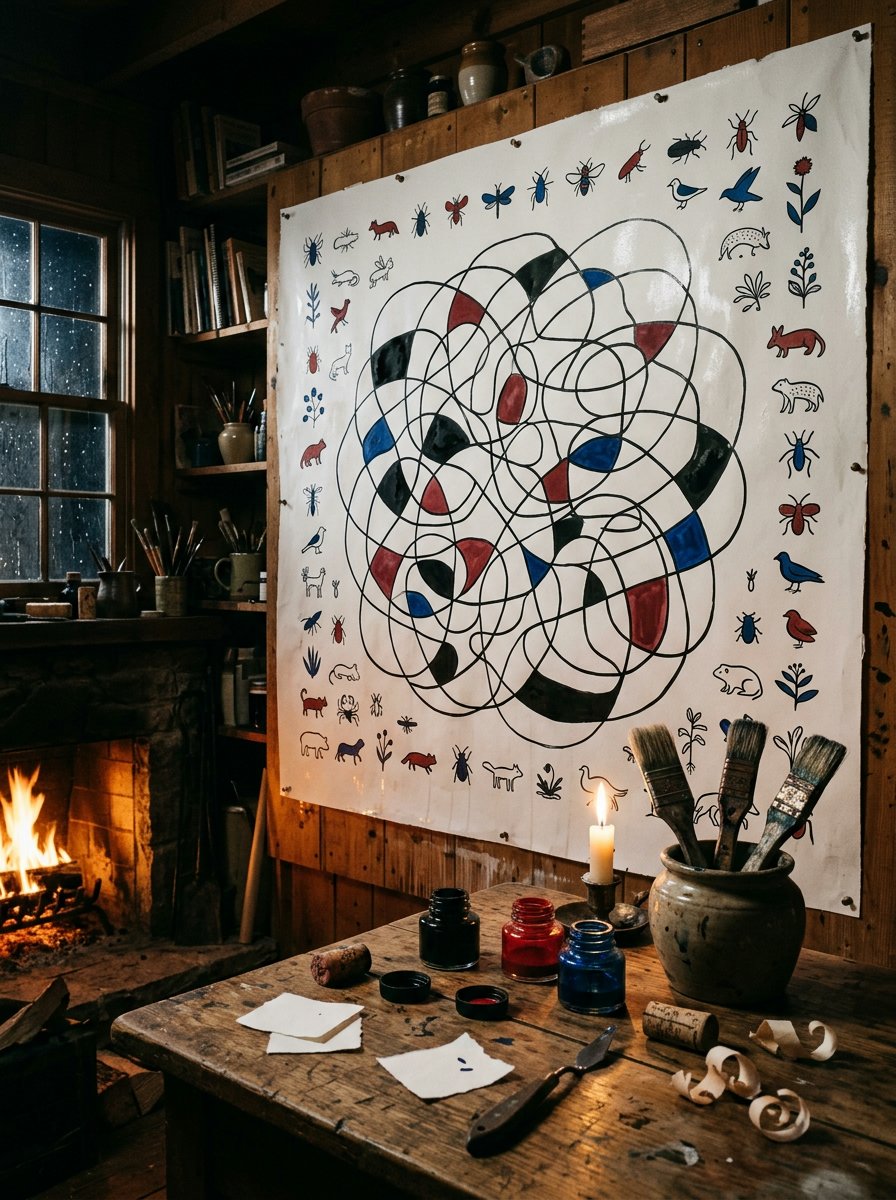
Panels like this one are what the method turns into when it is left alone. One tangle at the centre, a third of its cells filled. The small found creatures collect around the edge over weeks.
The bicycle nobody can draw is meant to go wrong. The shoe from the side is one long sole line.
The key that is mostly a hole outlines the gap. The lamp and its pool of light fills the pool, not the lamp. The folded cloth follows the lines that turn.
The stack of books wants its verticals off. The ruin is correctness. (My bicycle has 3 wheels. I have made my peace with it.)
Pattern is closest to what came out of that phone call. The filled cells is the original move. The map of nowhere names each cell like a country.
The stained glass thickens every outline first. The contour map nests shapes inside shapes. The woven band alternates which cell goes over.
The ripple field repeats one curve across the page. The cracked glaze wants straight crossings. The dotted gradient crowds its dots at one end.
The striped cell mixes lines and solid black. The negative shape fills all but the thing you found.
Then the games, for evenings when a scribble feels like homework. The eyes-closed scribble is the loosest tangle you will make. The wrong hand gives a line you could not fake.
The 10-second scribble forces speed. The shared scribble lets somebody else make the mess.
The scribble passed on comes back after they have found something. The same scribble twice finds two answers in one tangle.
The scribble in the dark is drawn with the lamp off. The torn scribble is ripped in half and finished separately.
The scribble you keep is the one you pin up. A found drawing beats a planned one. The ruin is judging too early.
(Every game here looks foolish for its first 30 seconds. I have timed it.)
The starter card to keep beside the pen
Print the intuitive drawing starter card below and put it where the pen lives. It carries the four moves and nothing else.
Everything else on this page is optional. Those four are not.
↓ Download the starter card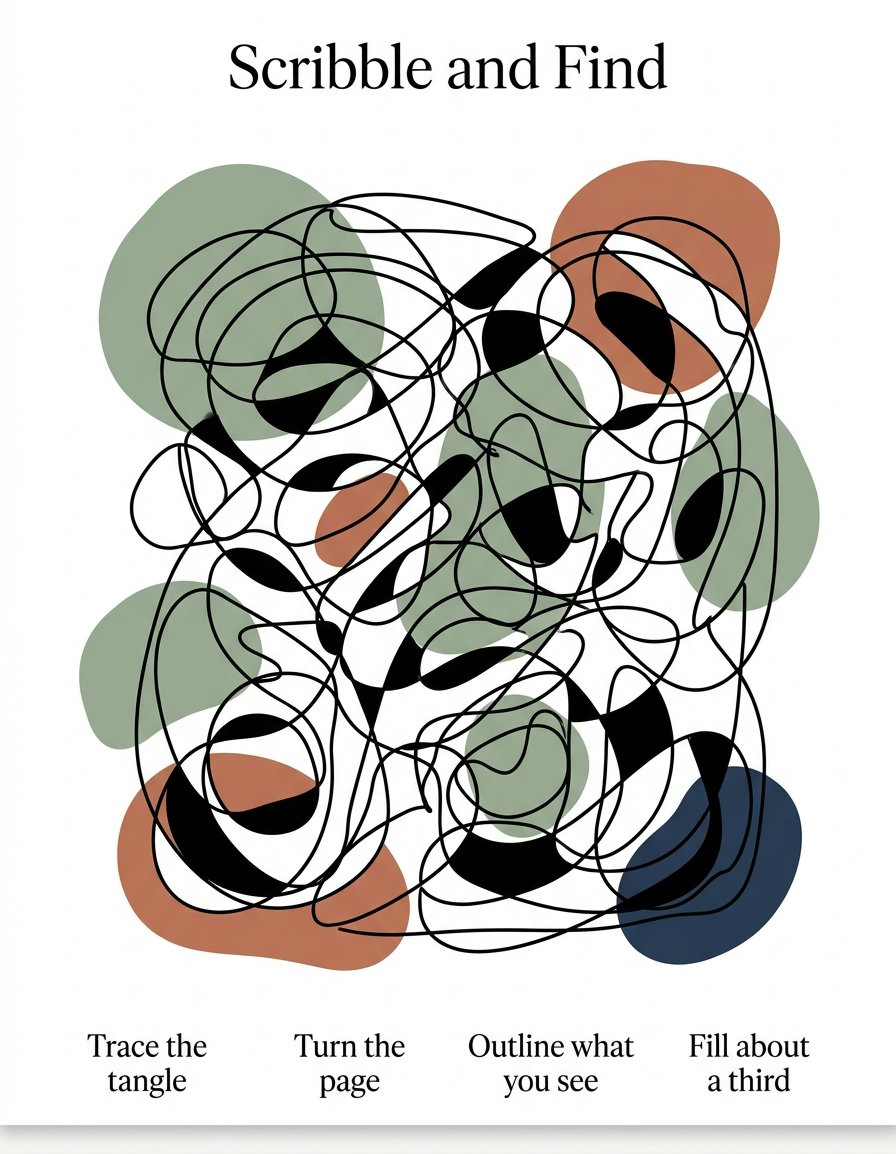 Save
Save
Use it as a checklist for the first 2 weeks. Tangle, turn, outline, fill. Catch yourself deciding what to draw before the pen has moved.
Look at the card and put a mess down instead. (Mine is stuck to a cupboard door and is now completely blue at the corners.)
Free Starter Pack
Get 10 free pattern templates to fill your found shapes with.
Sent tonight. Dots, checks and waves for the third of the cells you decide to fill.
Unsubscribe in 1 click, no hard feelings
Once the four moves are automatic, the scribble stops being the hard part and the subject does. That is the evening to hand the shape over to somebody else and keep the line for yourself. Continuous Line Wonder has 30 flowers waiting, each built in 3 steps from continuous lines.
30 flower worksheets, each built in 3 steps
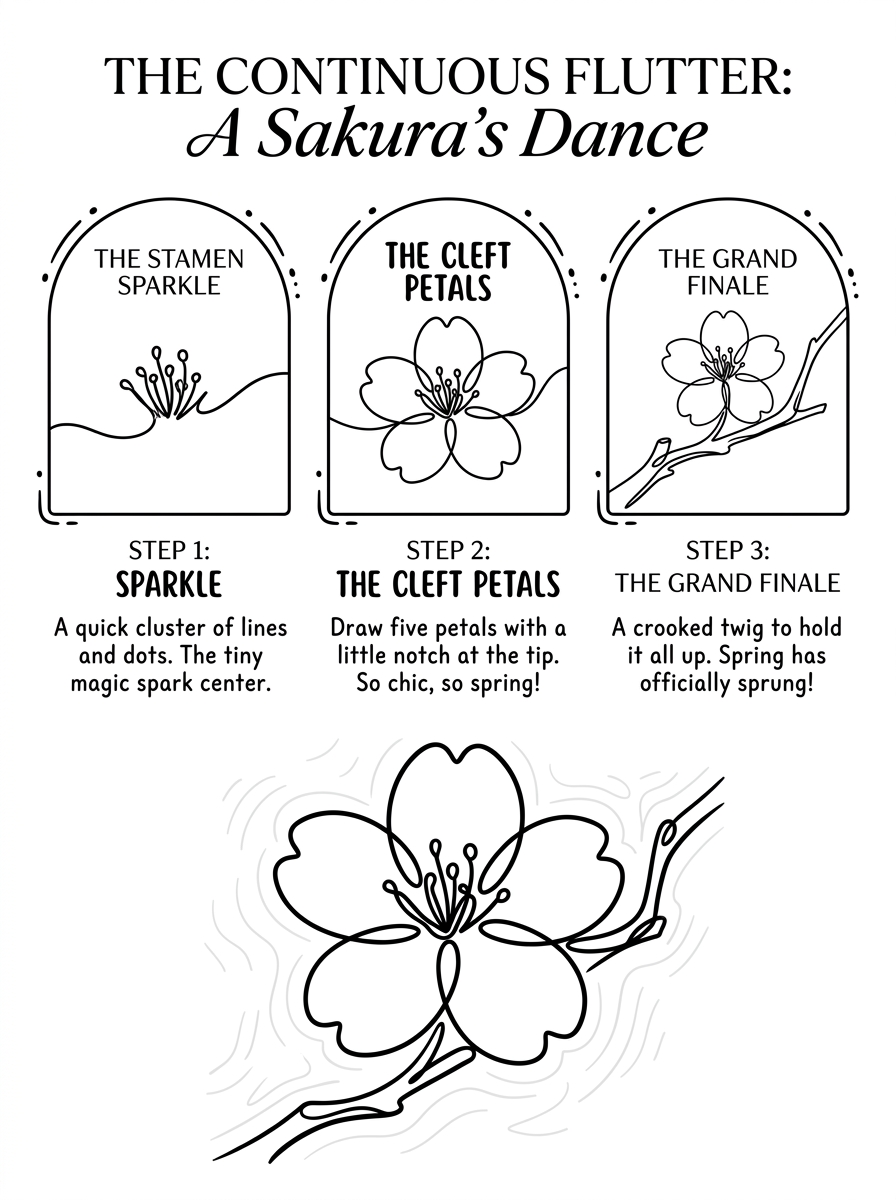
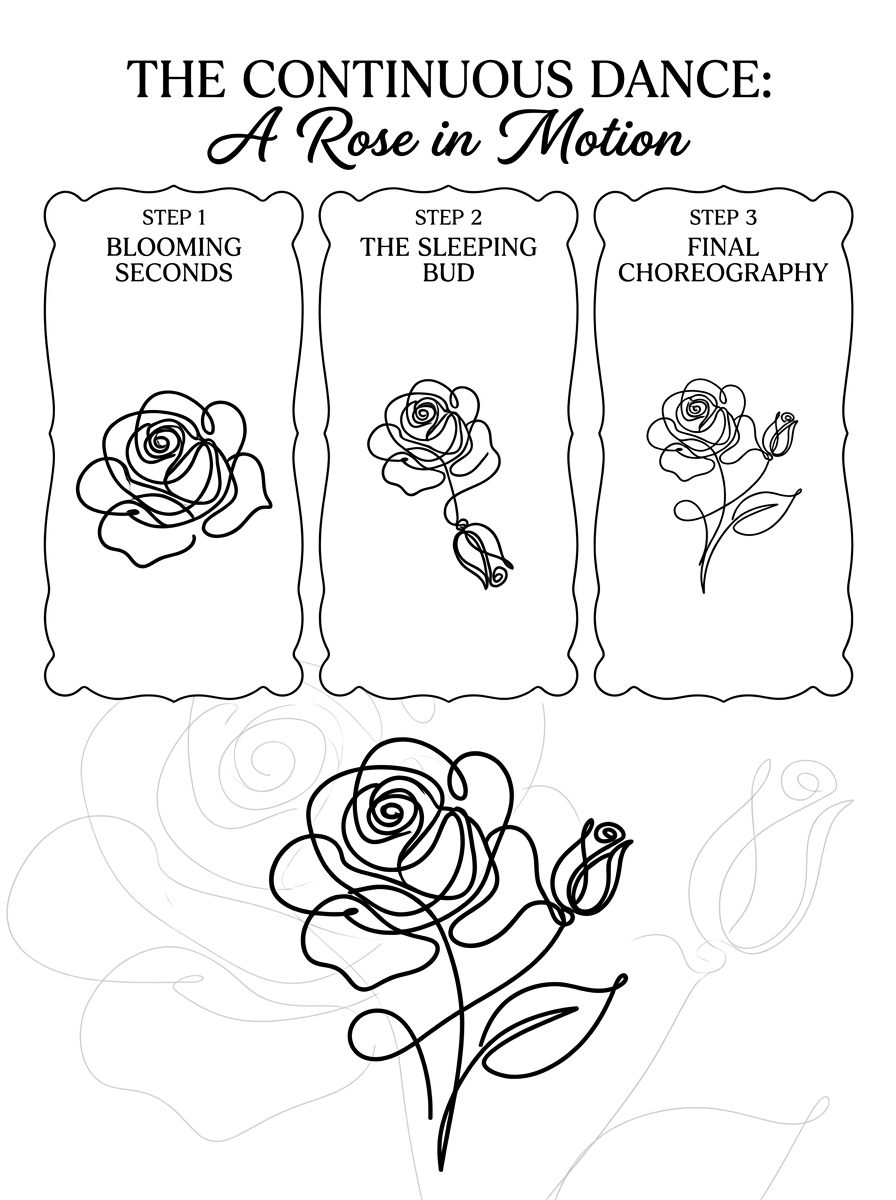
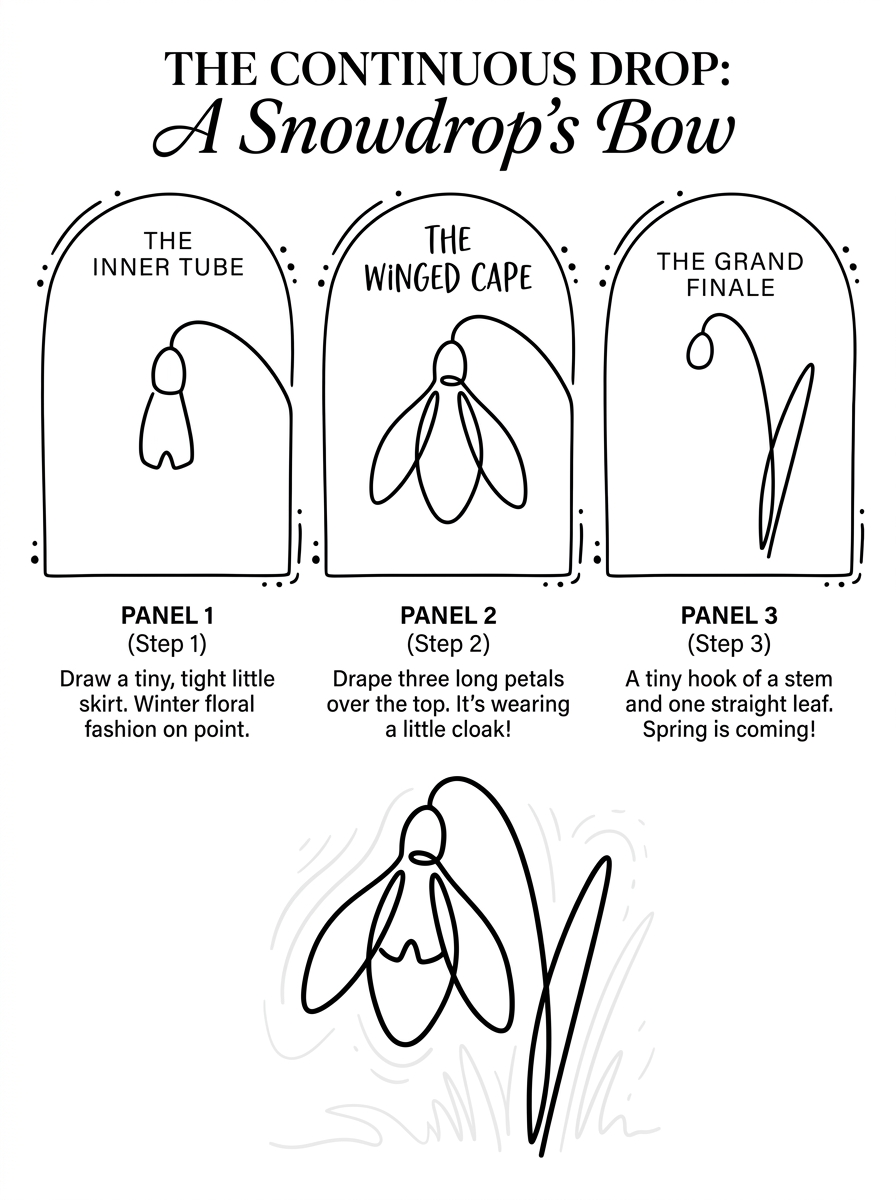
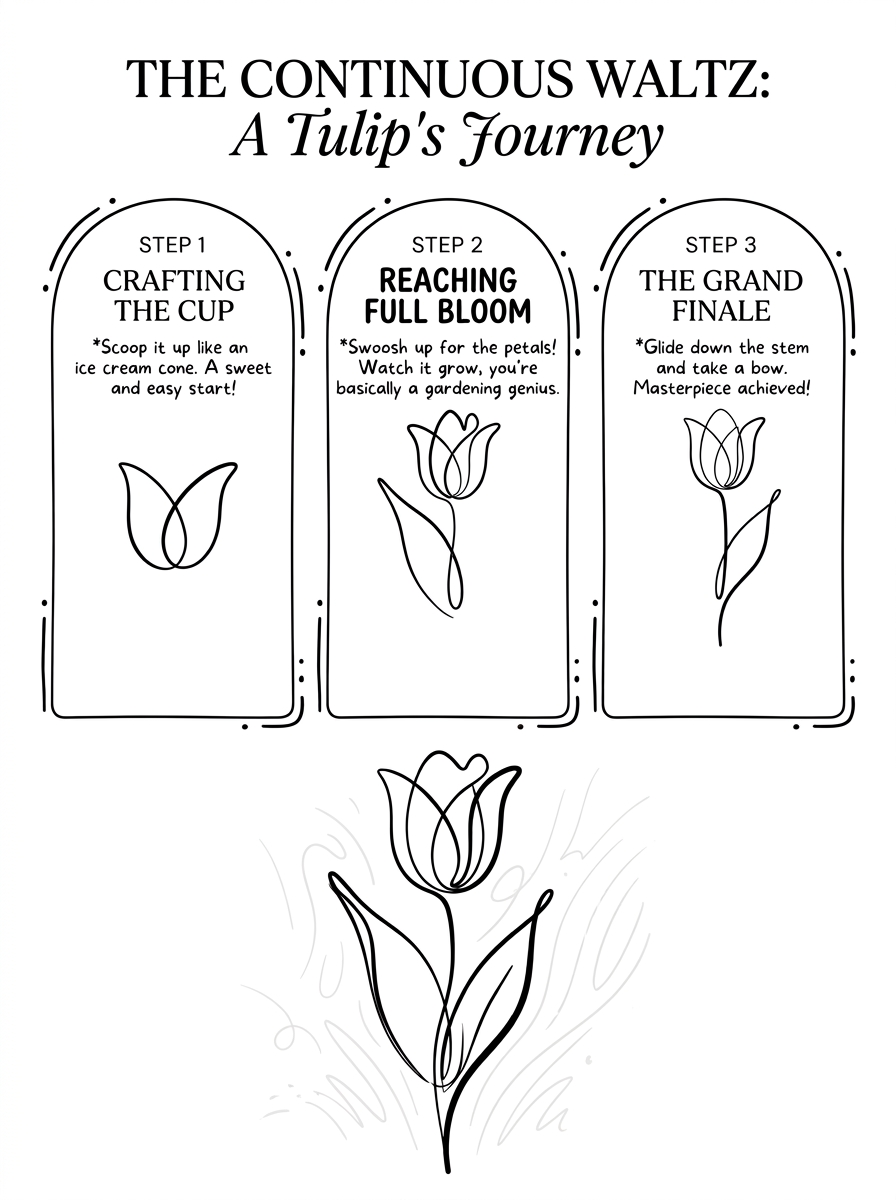
Pick one flower an evening. The shape is already decided, so the only job left is the line. Print the sheets, or copy each flower freehand onto the back of your scribbles.
Instant download · print as often as you like
A scribble is a room with the lights off, and every one of them has something in it. Feel along the walls.
The switch is never where you expected. The room is always better than the plan you had for it.
“The doodle is the brooding of the hand”
Saul Steinberg, in Harold Rosenberg’s Saul Steinberg, 1978
Mirabelle wrote this. No training, strong opinions, many pens. Peer reviewed by a cat who watched the whole thing from the warm end of the desk.