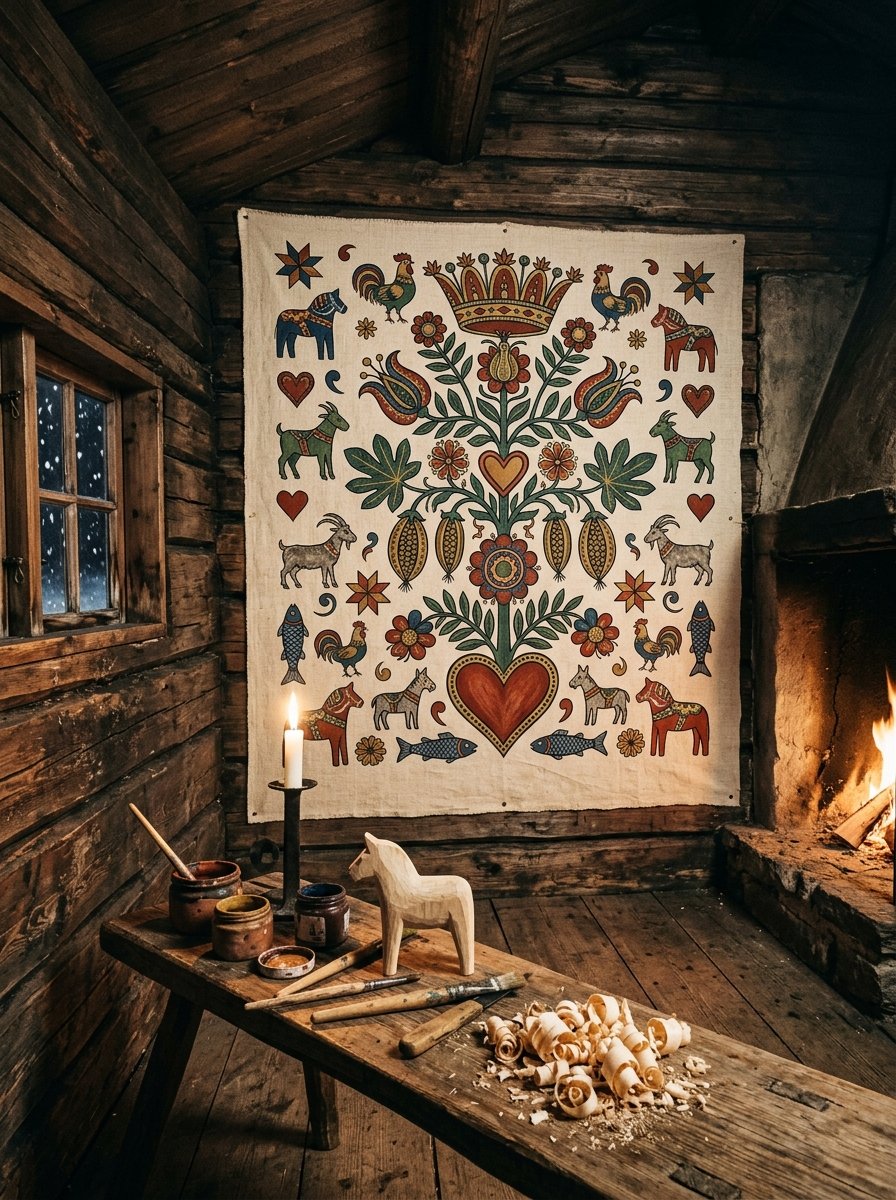
The most copied flower in Scandinavian folk art has never grown anywhere on earth.
Painters in Dalarna kept getting the same commission: a plant out of an old story, said to come up to full height overnight and throw shade over a sleeping man. The word reached them as kurbits, from the Latin for gourd. Nothing of the kind grew there.
So they reasoned backwards from it. Anything that greedy had to look greedy: leaves like open hands, blooms the width of a face, pods that drag the stem over.
(I have drawn a great many flowers with the real thing in front of me. Not one had the nerve of a plant somebody guessed.)
Below is the order the shapes go in, which no photograph will tell you. That comes to 40 motifs, none of them more than four strokes.
Download the free fill sheets →
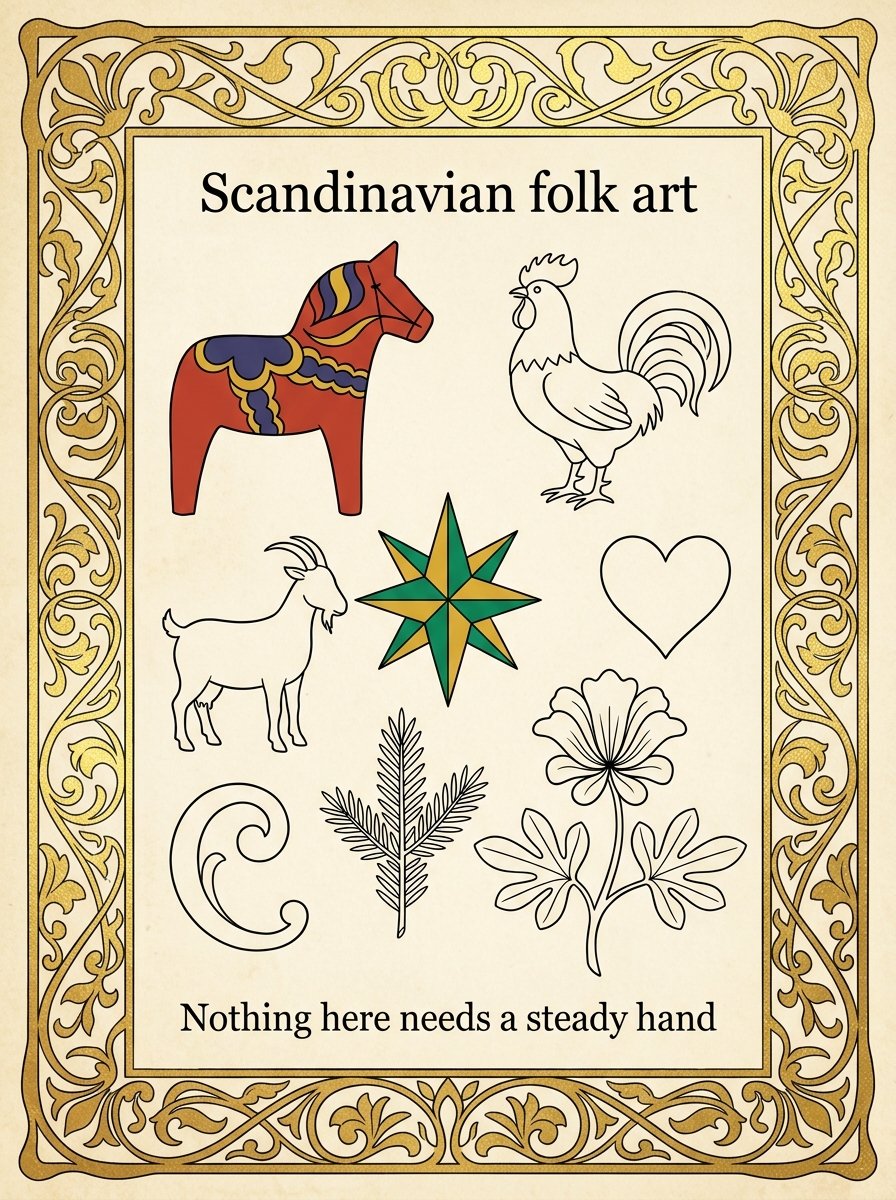
None of Scandinavian folk art asks for a steady hand. Accuracy was never the ambition, so a line that wobbles lands inside the style instead of counting as a fault in it.
Every shape is closed, flat and outlined. Nothing to foreshorten, nothing to blend, no soft edge to lose your nerve on halfway through.
What it does ask for is appetite. These are rooms where nobody left a gap: people who owned very little painted every surface they had, including the backs of doors nobody was going to open and the undersides of shelves nobody was going to look at.
Which leaves one obstacle, and it is never the drawing. It is the shape to start from — the 20 minutes that go on deciding what to fill, while the pen sits there fully prepared to work, and the tea goes cold in support.
The Collection
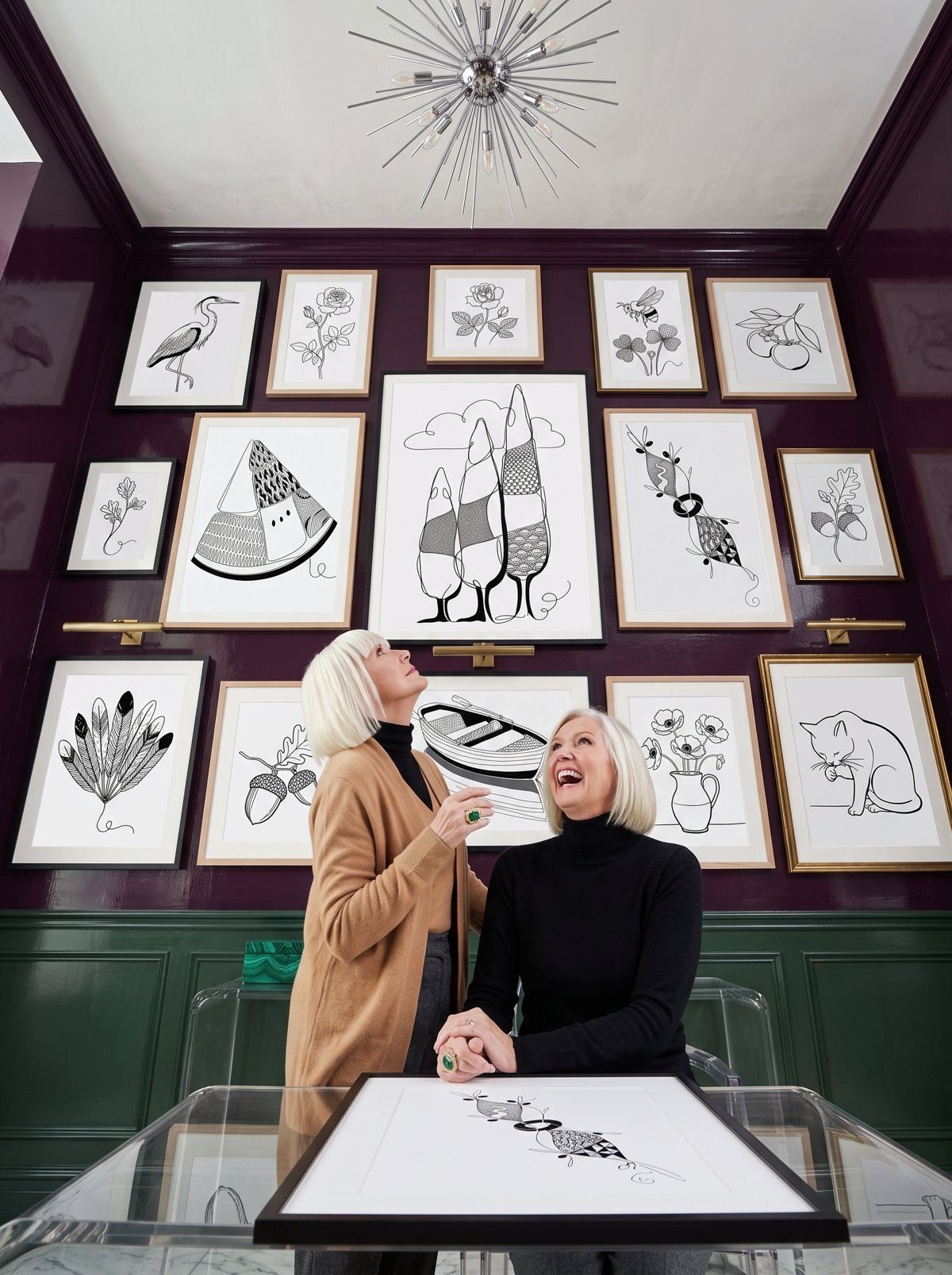
THE 100 COLLECTION — cranes, moons, stones, and 100 outlines that have done the choosing already.
The set for the night the hand is willing and the head has no suggestions: 100 finished pieces, each supplied 3 ways — the art, a tracing sheet, a worksheet. (Choosing is the part that quietly eats an evening. That has been handled.) What you get: a shape on the table before the kettle boils, and a wall that looks like one hand rather than 100 attempts.
Back to the flower, since everything else on this page came down from it.
A 14-year-old in Leksand invented the plant that Scandinavian folk art never stopped painting
Winter Carl Hansson was born in 1777 in Yttermo, a village in Leksand parish, and he had a brush in his hand by 14. From 1791 he painted whole rooms — walls, doors, cupboards, chests — for farms that owned almost nothing else worth looking at.
He was one of the painters given that unpaintable brief, and his answer set the house style of a province. When Gustaf Ankarcrona went through the work in the early 1900s, he put Hansson at the front of the Dala painters and called him a style-former.
(A teenager, no model, no reference, no way of checking. I have turned down commissions on far better grounds.)
Back Olof Andersson of Ullvi carried it on, and between them the flower was settled by about 1810. Everything painted since is a copy of a guess — which is the permission buried in this whole tradition. There is no correct version to fall short of.
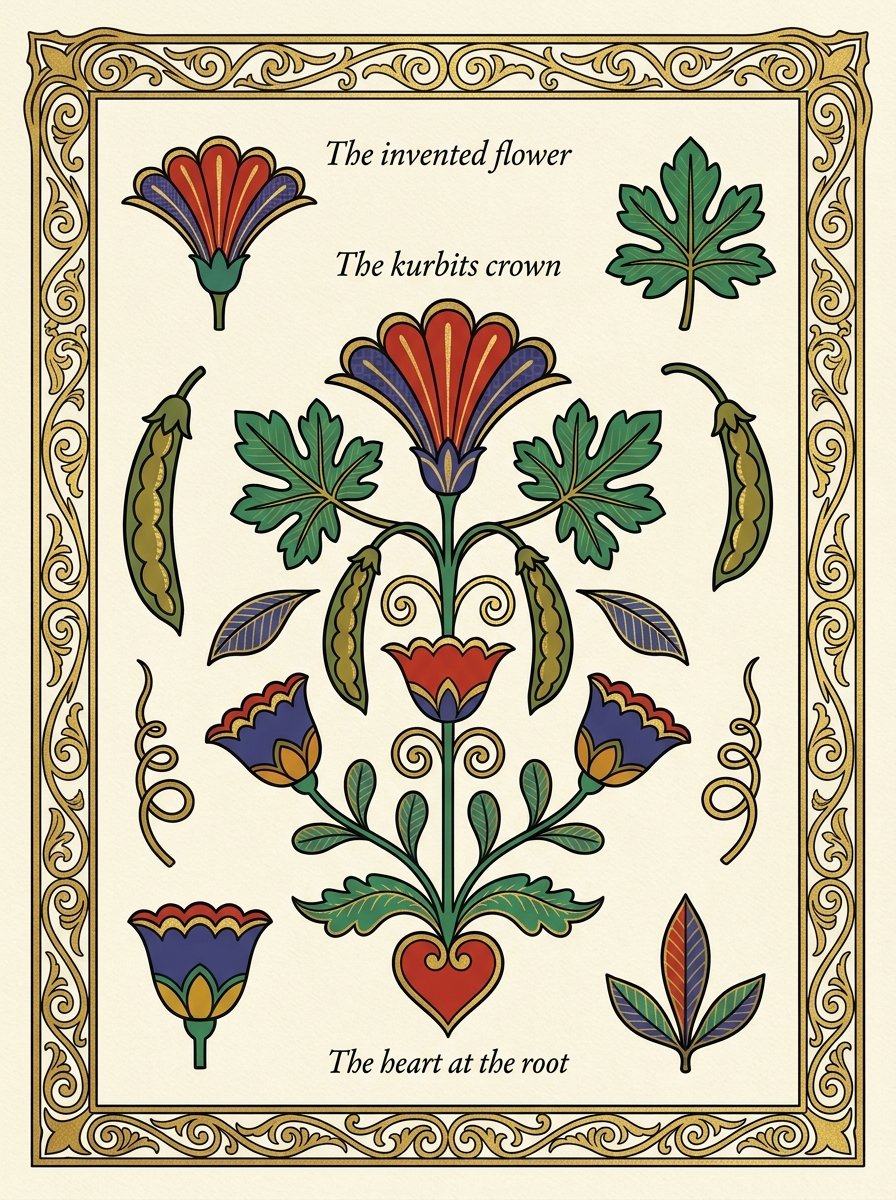
The crown goes on last, always. It sits on top of everything else, so it has to be told what it is sitting on, and mine came out cramped for a fortnight before I worked that out.
The stem leans before anything hangs off it. Bend it first and the heavy pod reads as weight; bend it afterwards and it reads as an accident. The open leaf wants a different fill in every lobe — the same fill in all of them and the whole plant goes flat.
The tendril is two loops. I have tried it with three, and three looks like a spring. The false tulip nobody has ever asked me to identify, and if they do, it is a tulip. The paired stems want a wider gap than feels right; every pair I have drawn was too tight.
The fan of small buds is what you reach for when one side has come out heavier than the other. The heart at the root goes in even when the plant already looks finished — it is the thing that stops it floating. And the double scroll is the corner filler, because when a page feels unbalanced it is nearly always a corner.
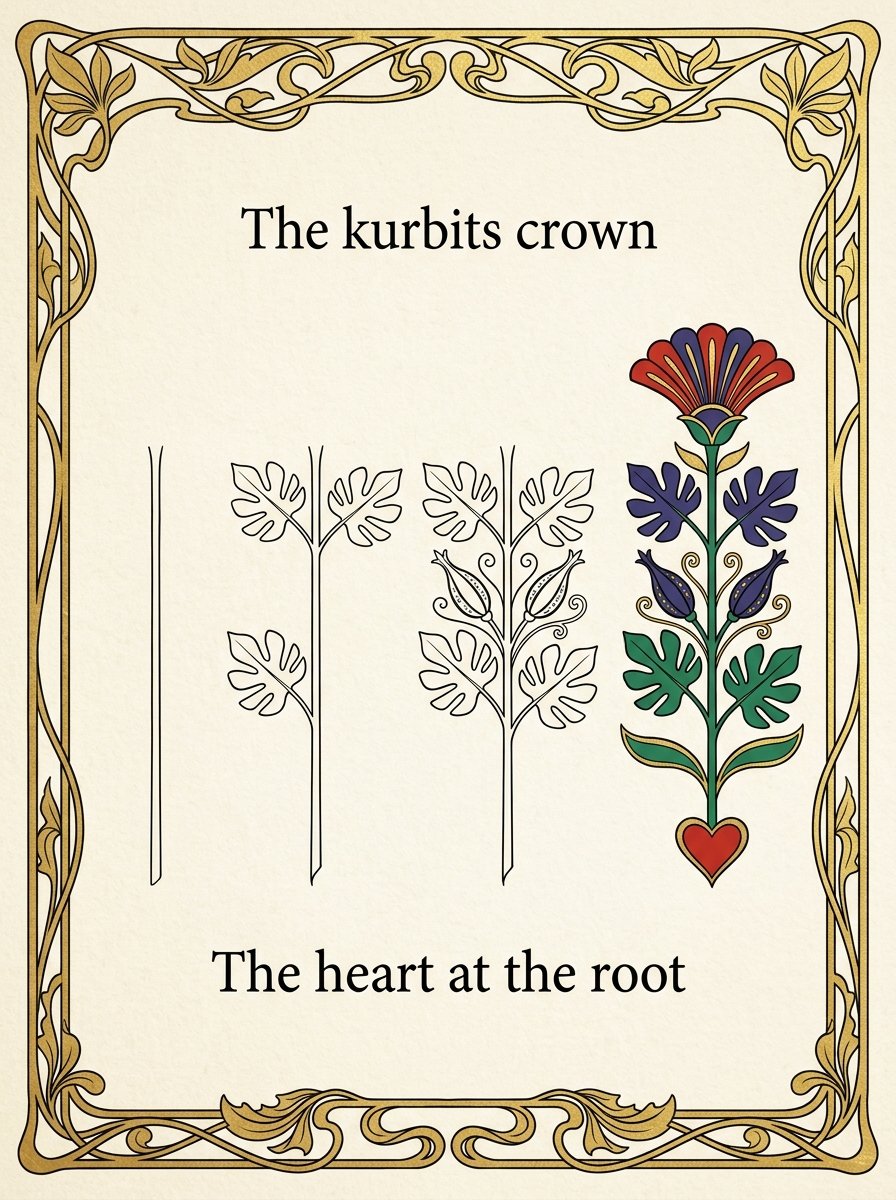
Four moves, in that order, and it comes out standing up rather than sagging. Stem, then leaves, then pods, then the crown across the top.
Two brothers in Nusnäs sent a wooden toy to New York and it came home as the face of a country
The horse began as something to do with the offcuts. Carvers in Dalarna whittled them by firelight out of what was left over, and children got them, and nobody thought of it as art at any point.
In 1928 the brothers Nils and Jannes Olsson set up a workshop in the village of Nusnäs and started making them properly.
Then Sweden went to the New York World’s Fair of 1939. The exhibition artist Anders Beckman and the architect Bibi Lindström stood a painted horse 9 feet tall outside the pavilion door, and a country introduced itself to the world with a scaled-up nursery toy. The workshops sent 20,000 small ones for visitors to carry home.
(Every national pavilion at that fair was arguing for its own future. Sweden brought a red horse with flowers on its bottom and won the argument.)
The animals are the most forgiving shapes in Scandinavian folk art and the easiest to overwork. Outline, close it, then treat the inside as a fresh sheet of paper.
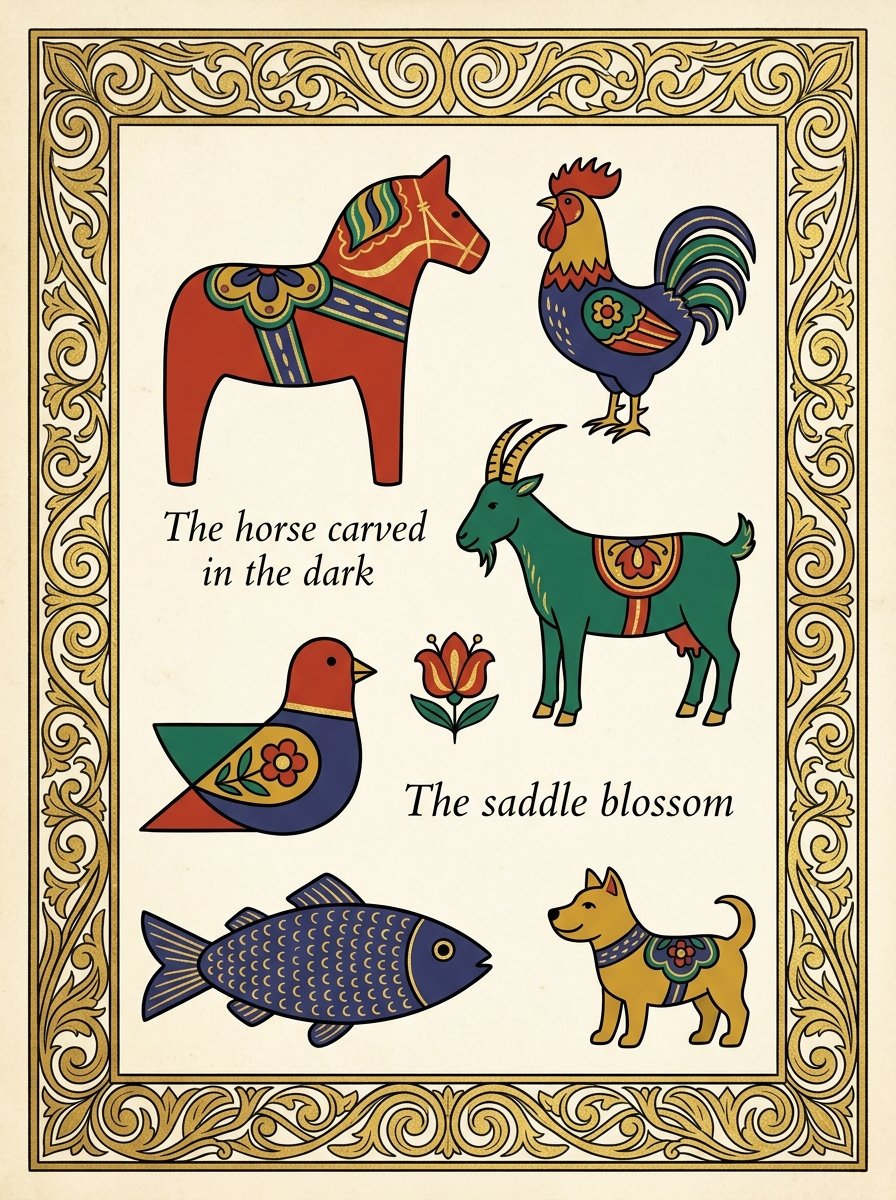
Resist rounding the horse. The stiffness is the charm and leaving it alone takes more nerve than drawing it did. Fill the harness band before the body, so the body can take whatever pattern is left over. One saddle blossom, centred — two, and you have built a rocking horse.
The rooster’s comb goes on last, because it is the only fiddly part and it is far easier once everything under it has settled. On the goat, horns first: they set the angle of the head and there is no fixing that afterwards. If the sitting bird looks wrong, the beak is too big. It is always the beak.
Every arc on the fish leans the same way, and one row leaning back the other way reads as damage rather than variety. The small dog wants its tail up. The facing pair — two of anything, nose to nose — is the fastest way to make a page look composed. The standing deer is the one to draw when a panel needs something tall and calm in it.
Thomas Luraas played the clarinet, and painted the Norwegian half of this tradition with one comma
Luraas was born in 1799 in Tinn, in Telemark, and he was two things at once: a rose painter and a clarinettist. His brother Knut played the Hardanger fiddle. It was that kind of household.
He travelled for work, and the rooms are still named after the farms that hired him — Suigard Juvland at Rauland in 1832, Gunvaldjord at Haukeli in 1840, Lønndalen at Tuddal in 1849. A man arrives with brushes on his back; a fortnight later the room is a different room.
What he was painting is not a set of shapes at all. Rosemaling is one stroke — a fat comma, thick at the belly, drawn out to nothing — repeated at different sizes and turned in different directions until it fills a wall.
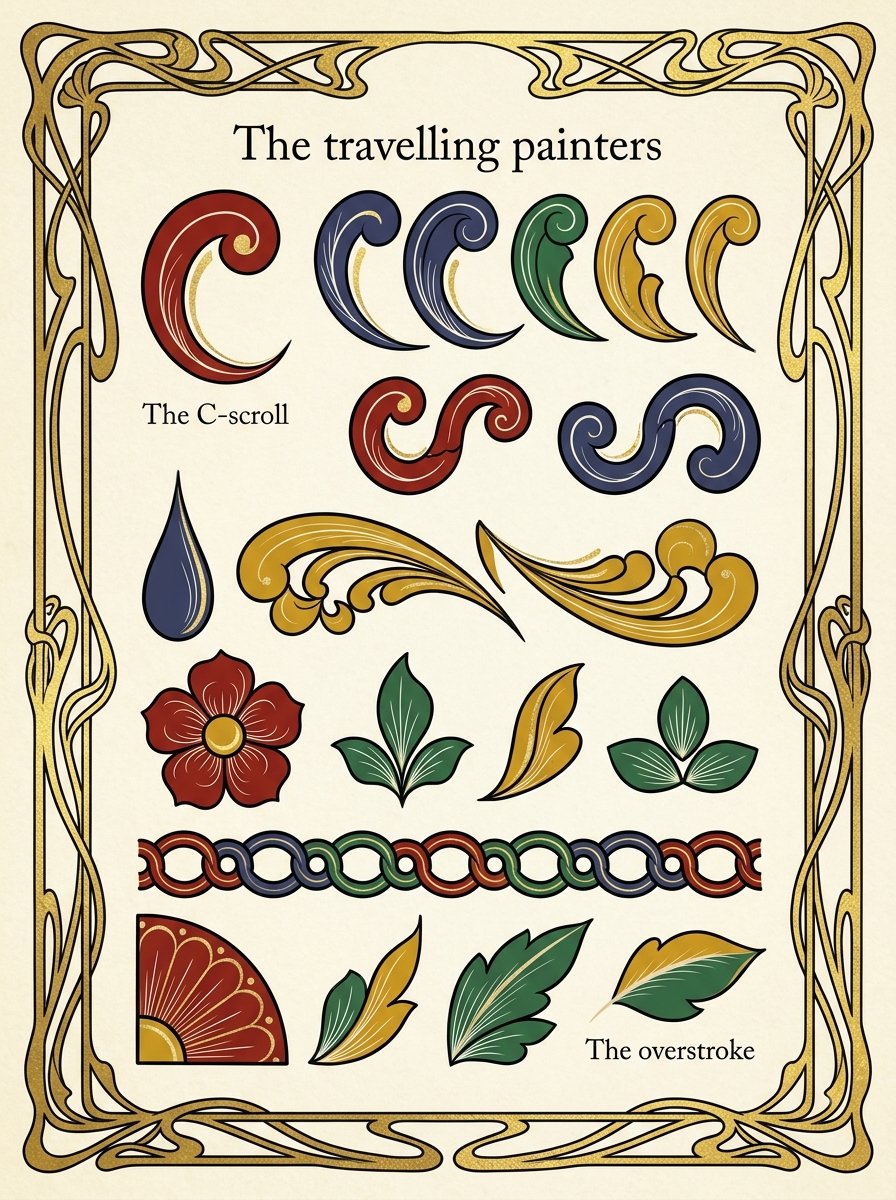
Run 20 C-scrolls on a scrap before you commit one to the page. Mine arrive somewhere around number 12, and I have no explanation for that beyond the fact that it happens every single time.
The S-scroll is two separate strokes meeting in the middle; drawn in one go it wobbles at the join. The teardrop is start slow, finish fast, and the lift at the end is the hard part. Give the rose cluster an odd number of petals — even numbers come out looking like a diagram of a rose.
Middle leaf longest on the leaf spray, and let the outer two touch nothing. The border chain is what you reach for where two things meet badly, and it hides almost anything. The corner fan goes wherever your eye keeps catching, because a corner that catches the eye is a corner asking for one.
The flat rosette is the quiet one, for when a panel is already busy. Crossed stems are how you get out of a symmetry you have painted yourself into. And the overstroke — a pale line laid over the top of a finished shape — goes on when the thing already looks done.
The pale stroke goes on after it looks finished. That is not a flourish. That is the difference between a shape and a piece of rosemaling.
The Christmas hangings spent 11 months of the year rolled up in a chest
Bonader are the Scandinavian folk art nobody saw for most of the year. They were painted on cloth or on paper, then rolled and put away. They came out for Christmas and for feast days, went up across the walls of a dark farm room for a fortnight, and went back in the chest to be handed down as part of the inheritance.
Which is why nothing on them is small or clever. A hanging had to carry across a room lit by a fire, so every shape on it is big, flat and readable from the far wall — and that makes them the best place to start if the flower has defeated you.
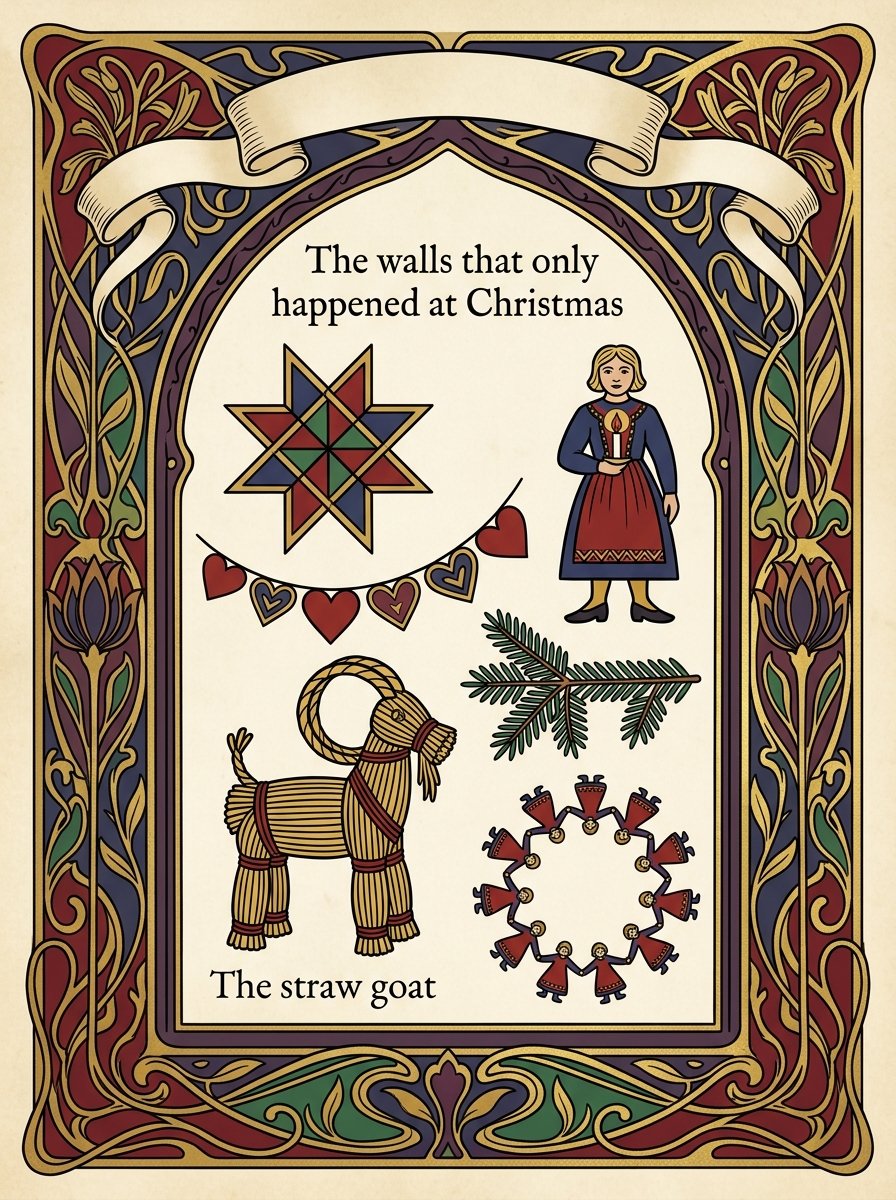
The star is two squares, one turned. Drawing 8 separate points never comes out even, and I have the evidence in a drawer. The straw goat is parallel lines of slightly uneven length; perfectly even reads as printed.
The candle bearer needs her feet pointing outward, or she looks like she is going over. Alternate the tilt on the heart garland — all upright is a border, alternating is a garland. Draw the fir sprig down one side and back up the other, because both sides in one pass never match.
Keep every figure in the ring the same size, including the ones at the back; shrink one and you have accidentally invented perspective. Draw the arched doorway before whatever is going inside it. Two birds facing a heart is the oldest arrangement here and still the best one. The little house wants a smoking chimney and nothing else.
And leave the banner blank. A blank banner looks deliberate; a badly lettered one looks like a mistake with a caption.
These hangings travelled further than the farms did. Florence Dibell Bartlett’s collection of them opened at the Art Institute of Chicago on 22 December 1931 and came down on 17 January — hung, in other words, for exactly the season they were painted for, four and a half thousand miles from the nearest one.
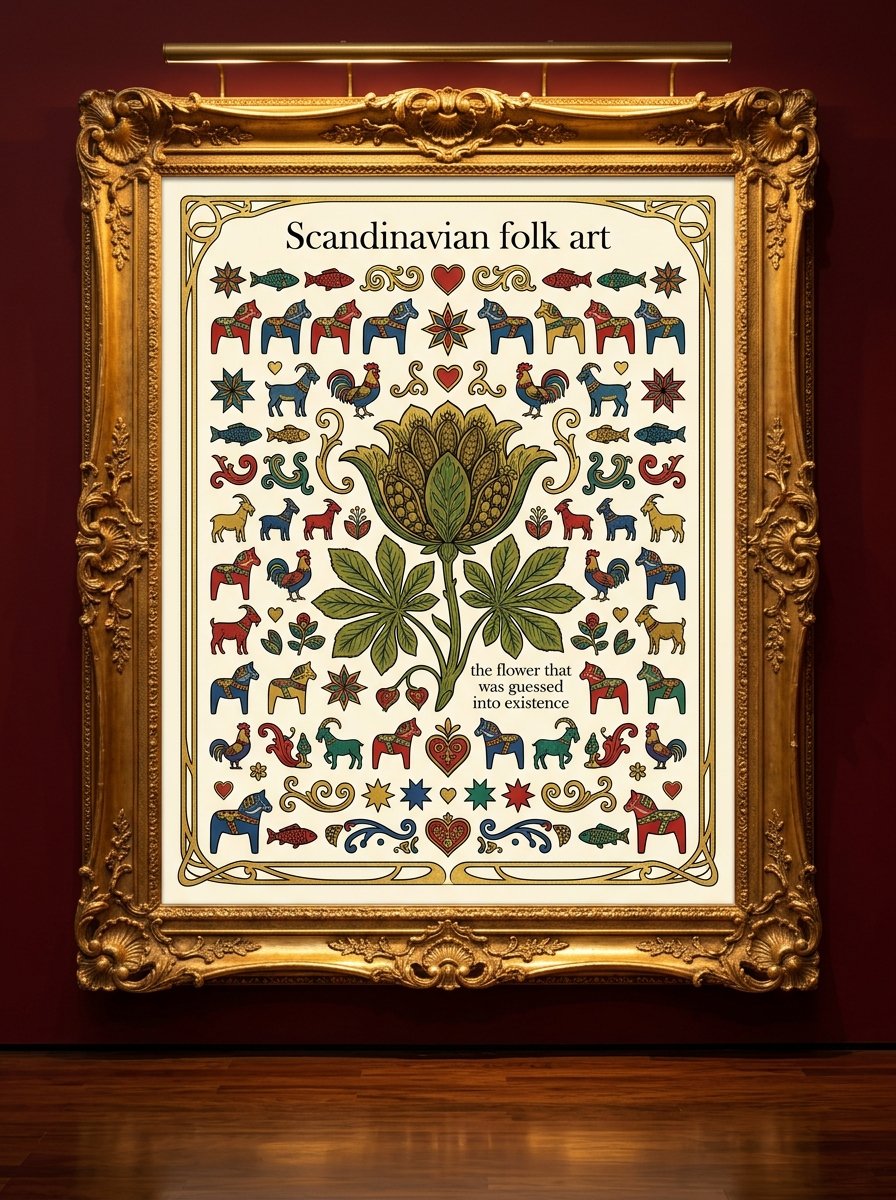
(Somewhere in that room there was a farmer’s wall hanging under museum lighting, being admired by people in coats. I hope the painter would have found it funny. I find it wonderful.)
Per Lysne painted scrolls on wagon boxes, and when the factory shut he painted plates instead
Lysne learned rosemaling at home in Laerdal, in Sogn, from his father Anders Olsen, whose work went to the Paris Exposition of 1893. He arrived in Stoughton, Wisconsin in 1907 at 27 and found work in the wagon factory, putting striping and scrolls onto finished wagon boxes.
Then the Depression closed the factory. He picked the brushes back up and started painting flat wooden plates instead — cream and pale yellow, bright flowers, a word or two of Norwegian around the rim.
They sold. Orders came from a Chicago department store, and by the early 1940s anyone turning up at his back-yard studio wanting one was told to expect to wait up to a year.
(A year. For a plate. I would like that written on a card and propped where I can see it.)
What he proves is the useful part: these motifs do not need a wall, a plank or a province. They need a flat surface and somebody willing to fill it. There are 8 habits underneath all of it, and I break two of them every time I sit down.
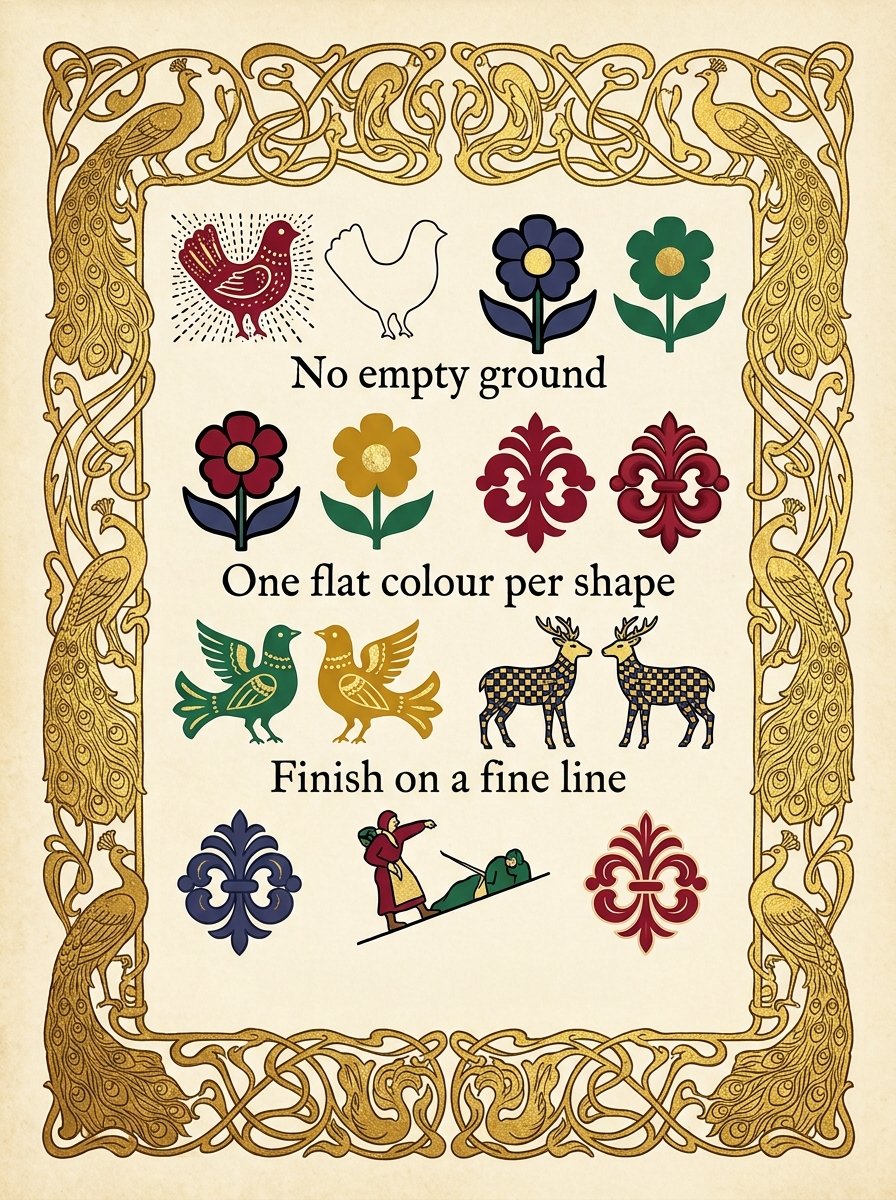
No empty ground: fill the gaps last and stop before you think you should. That is the one I always overrun. Outline after filling rather than before, because the line covers a multitude of wobbly edges.
One flat colour per shape — shade one thing and you now owe the other 39 the same courtesy. Symmetry roughly, never measured; measured stops looking hand-made and starts looking bought.
Choose each fill for the gap it has to cover, never for what the shape is supposed to be. Put the ground line wherever the page needs it, since nobody has ever once checked. Only write a word if the word is going to be beautiful. And finish on a fine pale line over the top, which is the cheapest transformation available to anybody.
The fill is a second drawing, and it owes nothing at all to the first.
What is Scandinavian folk art actually called?
Three names, one habit. Scandinavian folk art is the umbrella and nobody in it used the phrase. Kurbits is the Swedish painting out of Dalarna, built around that invented plant. Rosemaling is the Norwegian side, built around the comma stroke. Bonader are the painted hangings that went up for Christmas.
(You can say all three at a dinner party and sound as though you have been to the museum. I am not going to be the one who checks.)
How do you tell a Swedish motif from a Norwegian one?
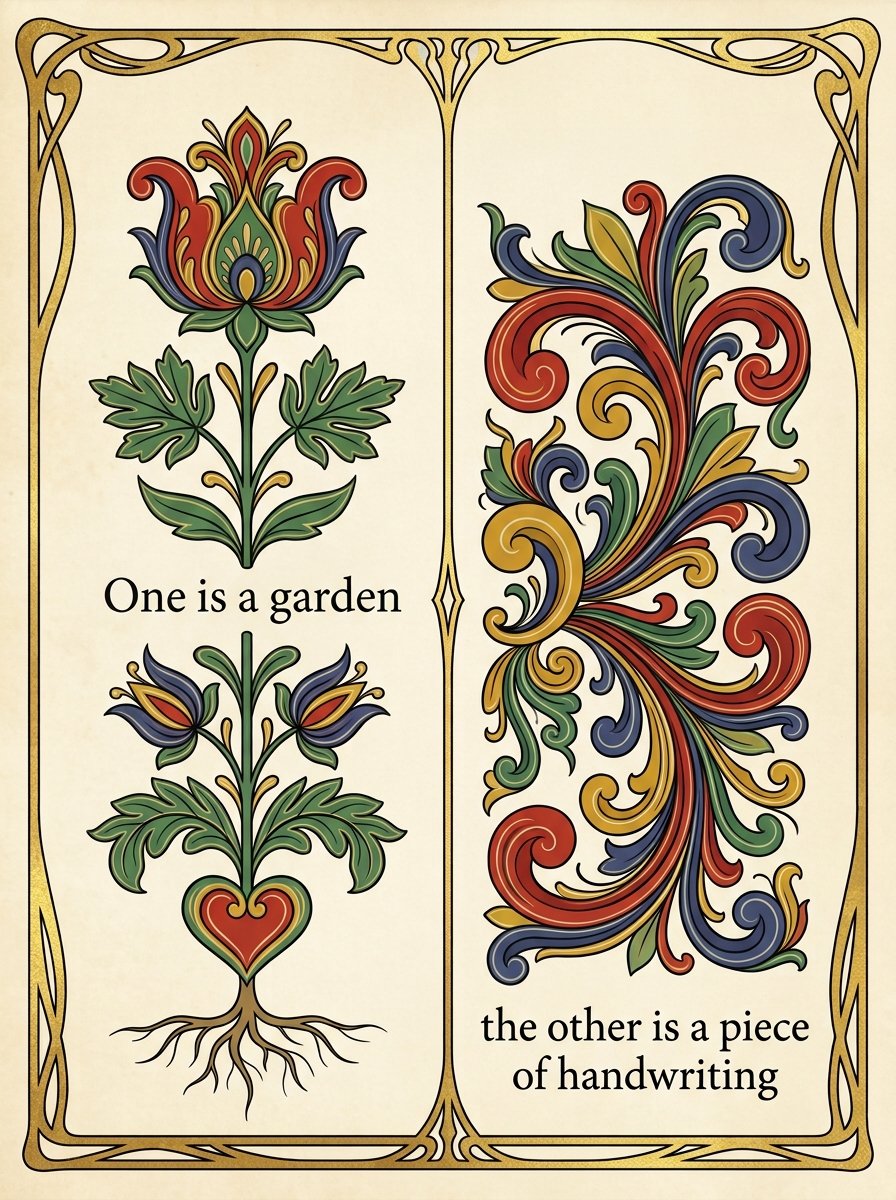
Watch which way it grows. Swedish work climbs upward out of a root and is organised around a plant. Norwegian work spreads outward from a scroll and is organised around a stroke.
One is a garden. The other is handwriting.
Either way you are going to want empty shapes to practise the fills on, and the fills are the half nobody hands out.
Free Starter Pack
10 outlines with nothing inside them, which is the difficult half already done.
Sent tonight. Somebody else has drawn the shape; every fill in it is yours to invent.
Unsubscribe in 1 click, no hard feelings
The habits above work on anything with an edge round it, which is the entire lesson of a man who went from wagon boxes to dinner plates. What they will not do is choose the shape for you at 9pm on a Tuesday.
100 pieces, art and tracing sheet and worksheet
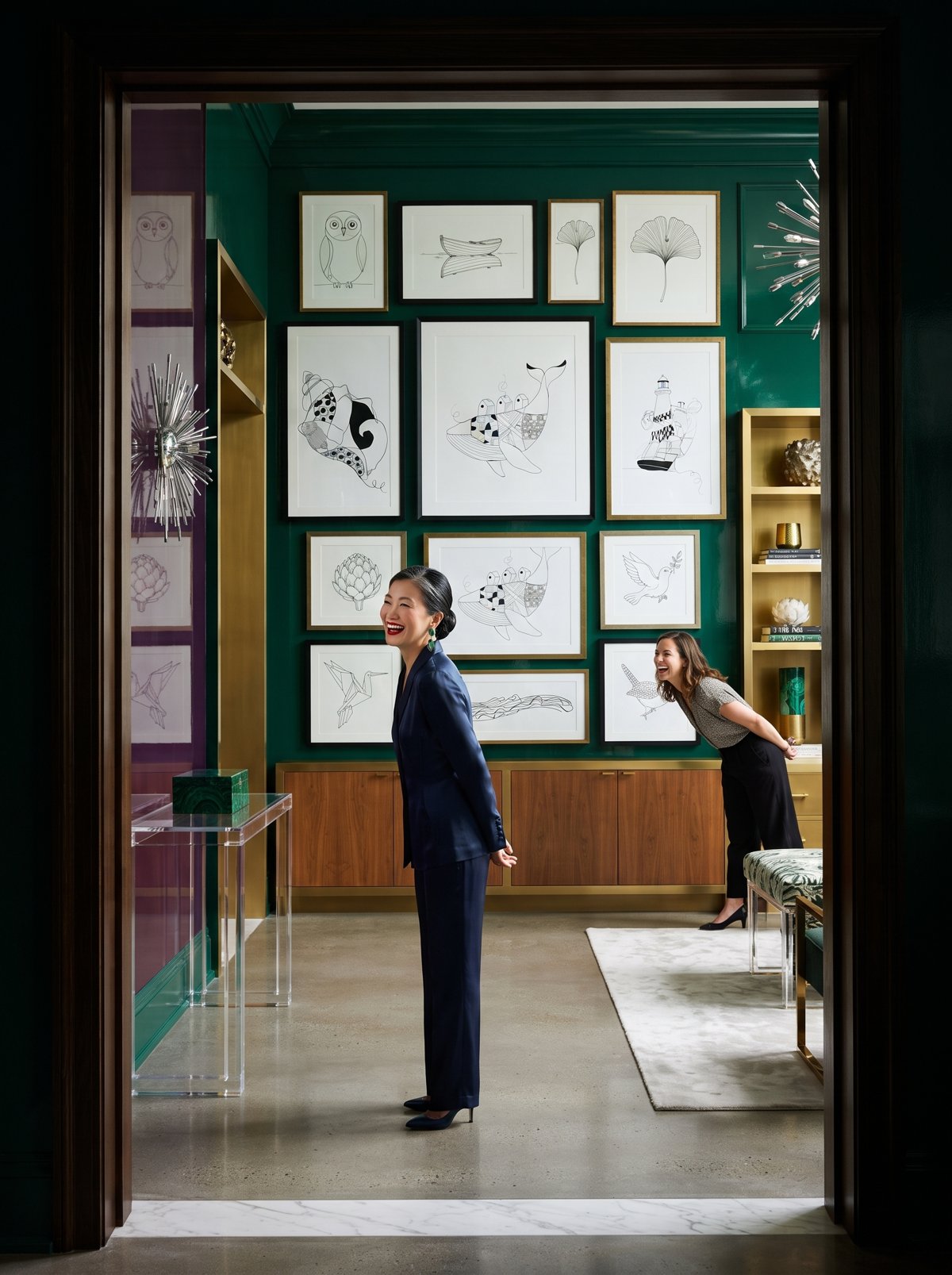
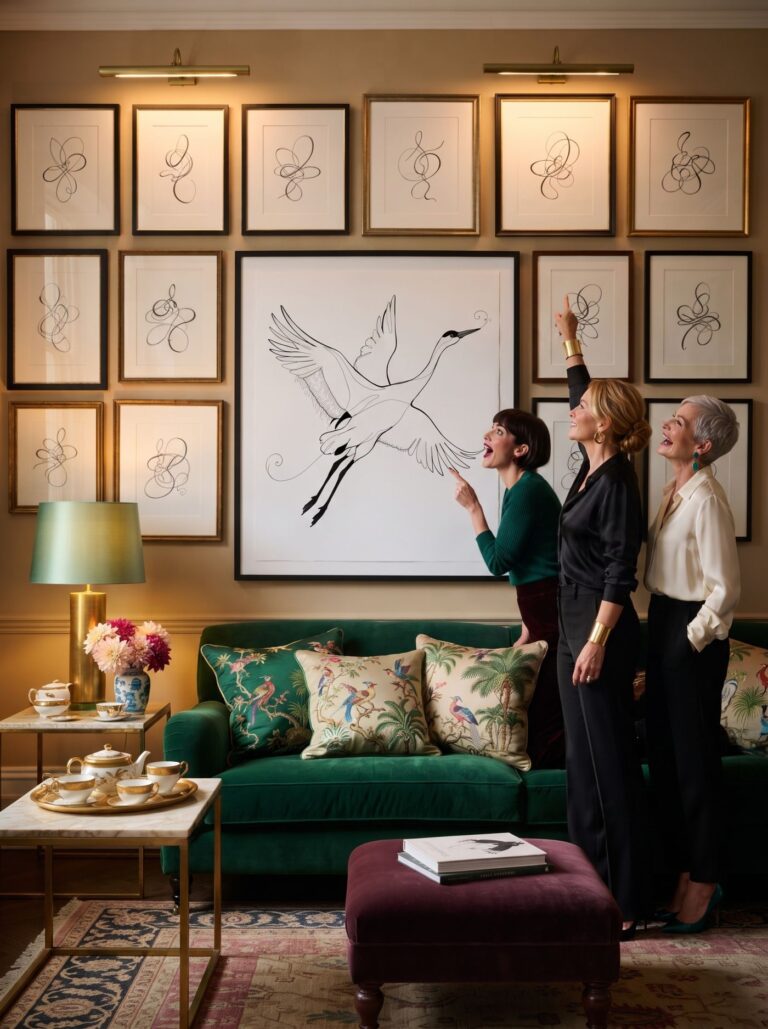
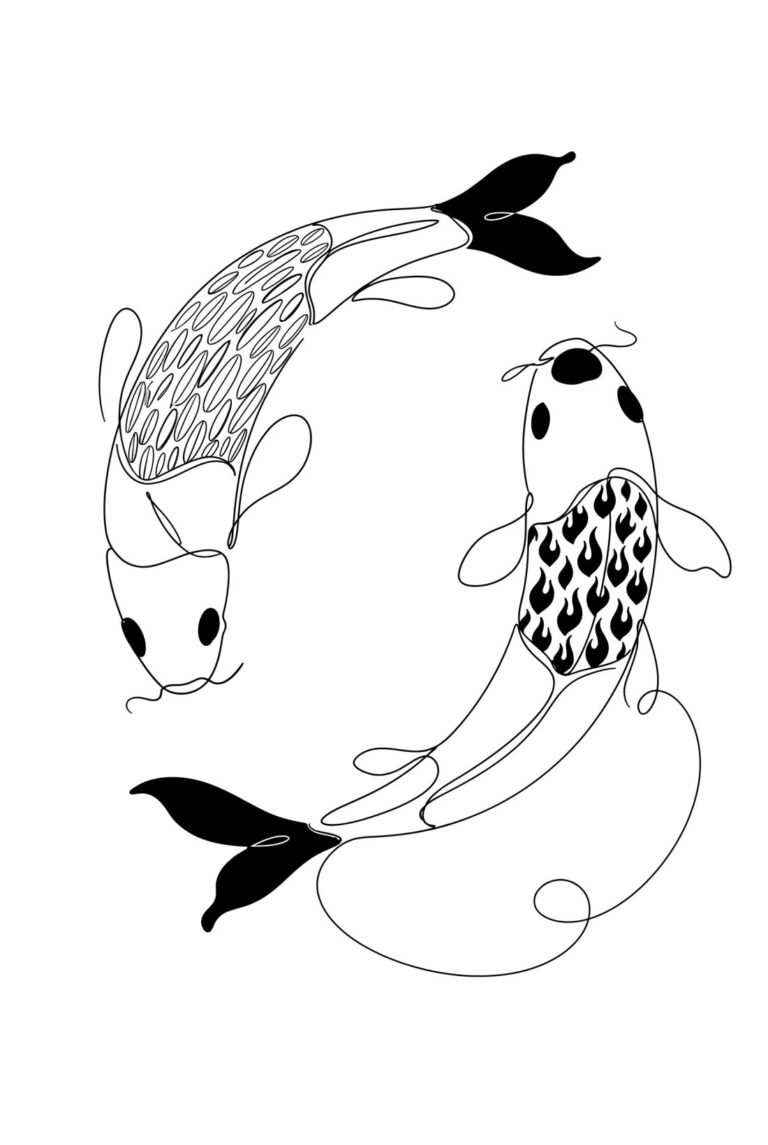
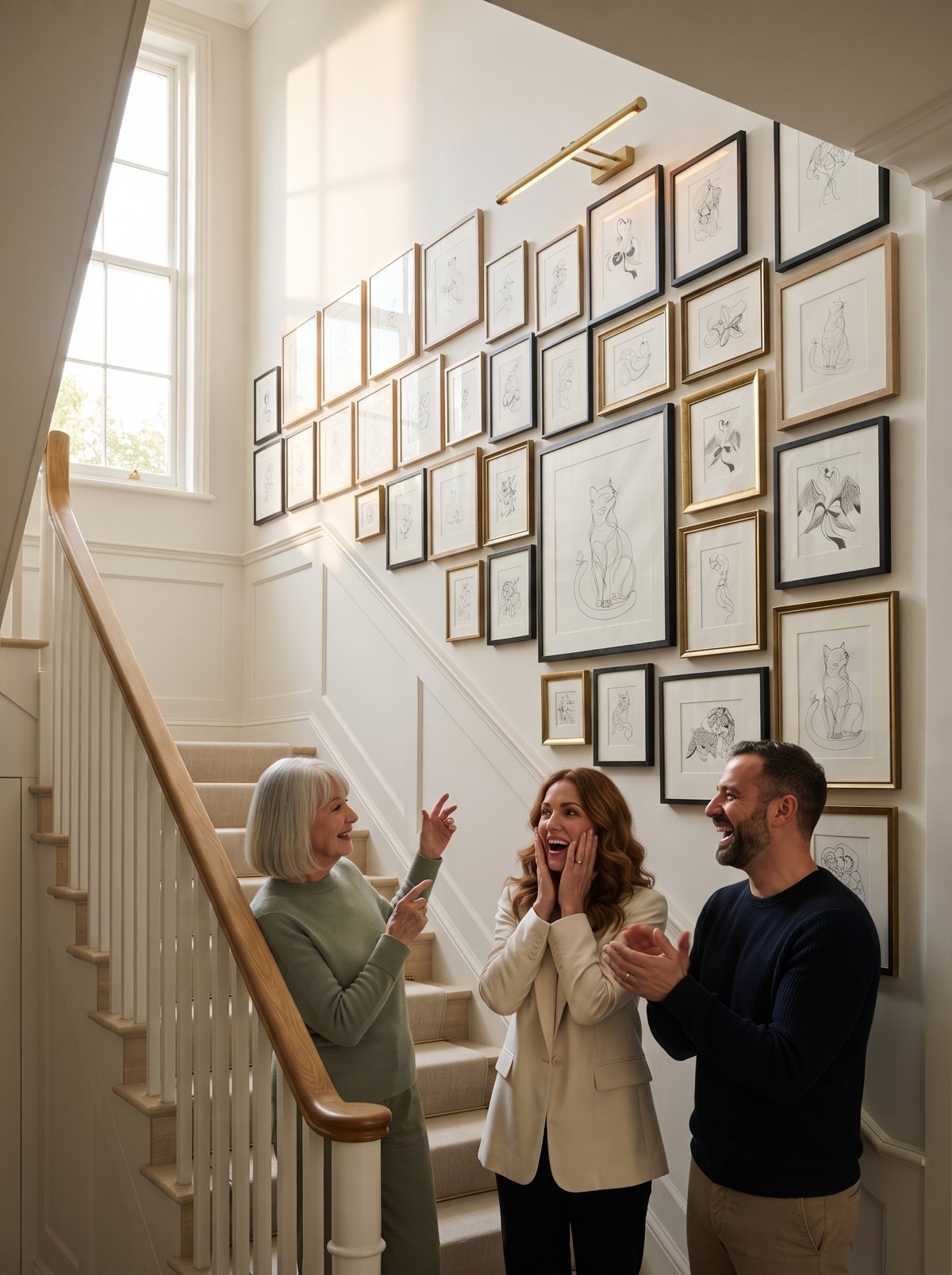
It starts as one outline and an hour that goes quiet. By Sunday there are 3 of them up the stairwell, same ink, same size, no shape drawn twice. Cranes, moons, stones, grasses and feathers, each supplied as the art, a tracing sheet and a worksheet, ready to print.
Instant download · print as often as you like
All of it came out of houses with almost nothing in them, in winter, by firelight, made by people who had never once seen the thing they were painting.
The dark end of the year arrives whatever anybody does about it. A page of flat red horses, gold stars and one impossible flower is a small and stubborn argument with it, and the argument takes about an hour to make.
“Men se min kurbits, dess resning och snits!” — But look at my kurbits, the stand of it, the cut of it!
Erik Axel Karlfeldt, Kurbitsmålning, Hösthorn, 1927
Mirabelle wrote this. No training, strong opinions, many pens. Peer reviewed by a cat who reviewed only the parts within reach.