Almost every drawing Hokusai made was destroyed on purpose.
A woodblock drawing is pasted face down on the block and cut straight through it. Printing the picture means shredding the drawing. The print survives. The drawing does not.
So the ones that still exist are the ones nobody printed. 103 of them surfaced at a Paris auction in 2019, unseen for over 70 years, because the book they were drawn for was never published.
(I have thought about that far more than is reasonable. A whole career measured mostly in what got cut away.)
Which leaves a question worth an evening: if the drawings are gone, what is left of his hand? Eight marks, and they are all in the one picture you can already picture.
Below: 8 marks Hokusai used constantly, what each one does, and how to make it tonight with one pen.
- The claw — his foam ends in curled fingers, the same curl at 3 sizes.
- The low horizon — he drops the waterline and gives the sky the page.
- The tiny far thing — Fuji is the smallest object in the most famous picture of a wave.
- The line that changes weight — thick where it turns, thin where it leaves.
- One imported colour — a single new blue ran an entire series.
- The scatter — foam as loose dots, never drawn twice the same.
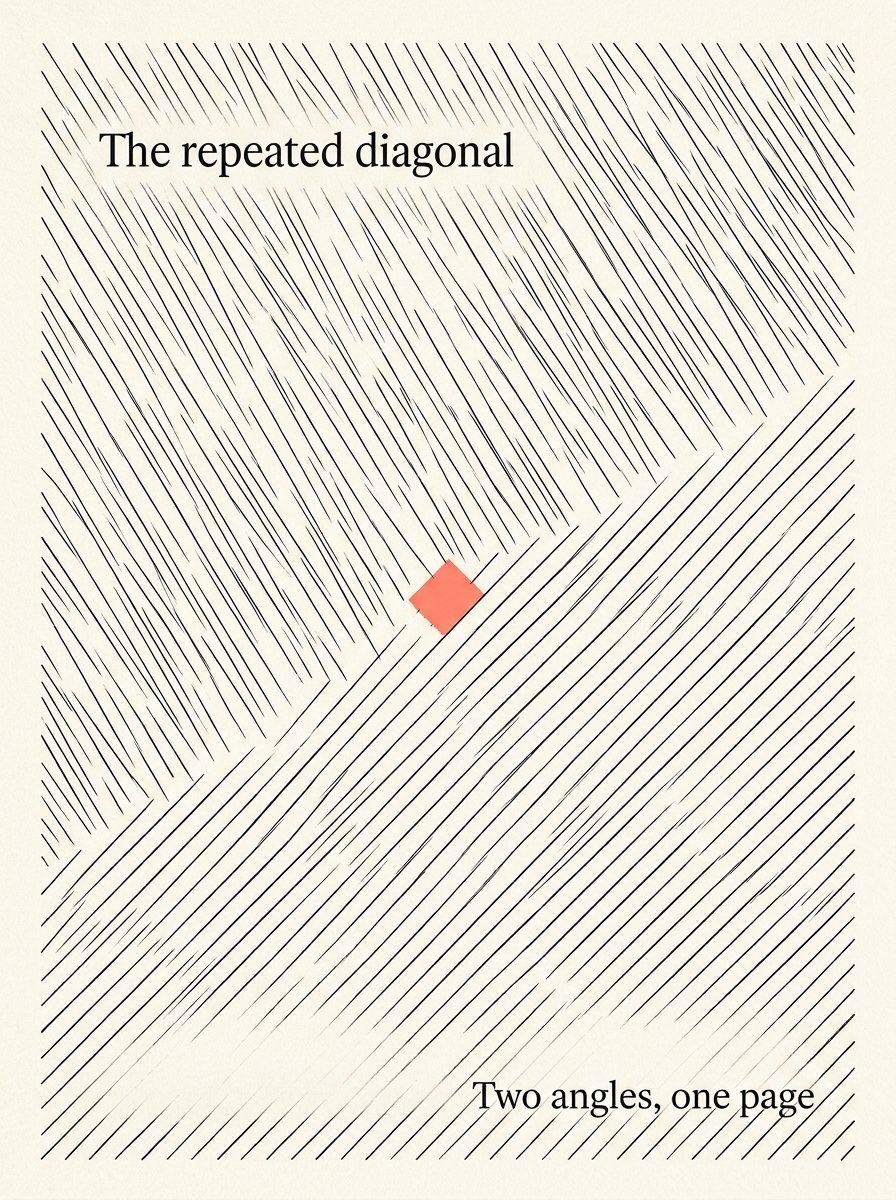
- The repeated diagonal — rain, rope and rigging are all one angle, over and over.
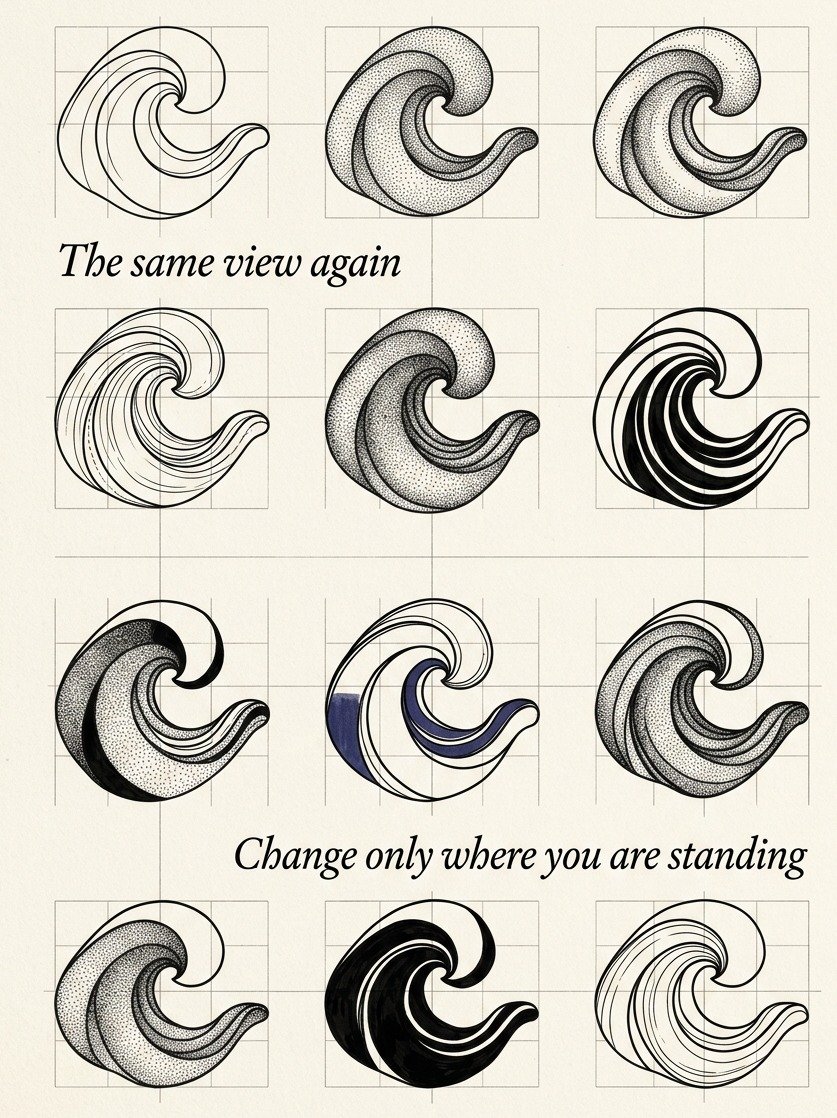
- The same view again — a series called 36 that ended up 46.
Download the free fill sheets →
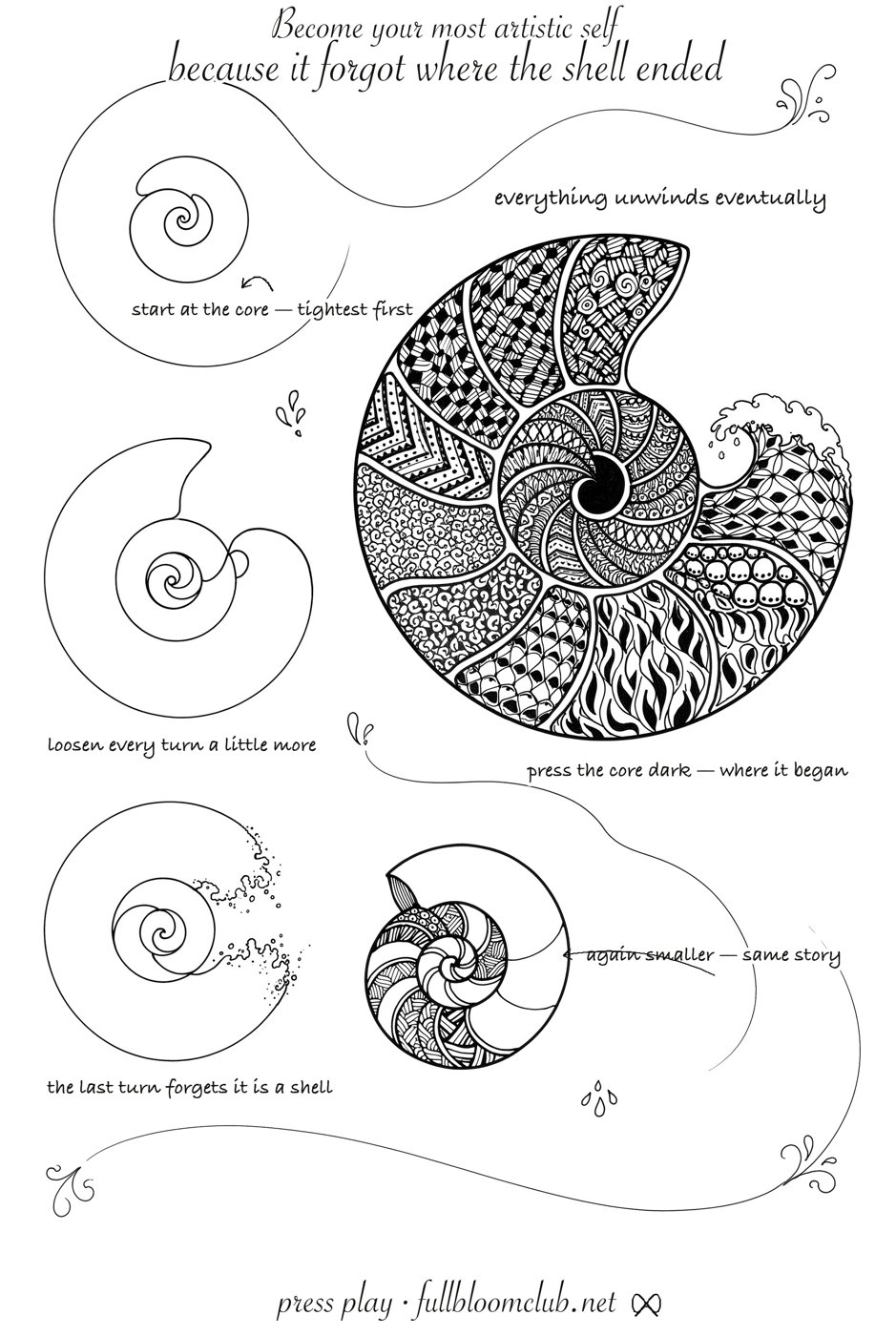
Start with the wave sheet. The spiral is already drawn; the only job is filling it.
None of the 8 needs a brush. They were designed for woodblock, which means they were designed to be cut by somebody else — so every one of them is a shape a person can repeat.
That is the useful accident of his whole career. A brushstroke only you can make is a signature. A mark a stranger can copy is a method, and he spent 40 years publishing methods.
He had over 200 students scattered across Japan and most of them never met him. The books did the teaching.
Which is where the problem starts on a Tuesday evening. You can learn all 8 in an hour and then you are looking at a blank sheet with no subject to put them on.
The Collection
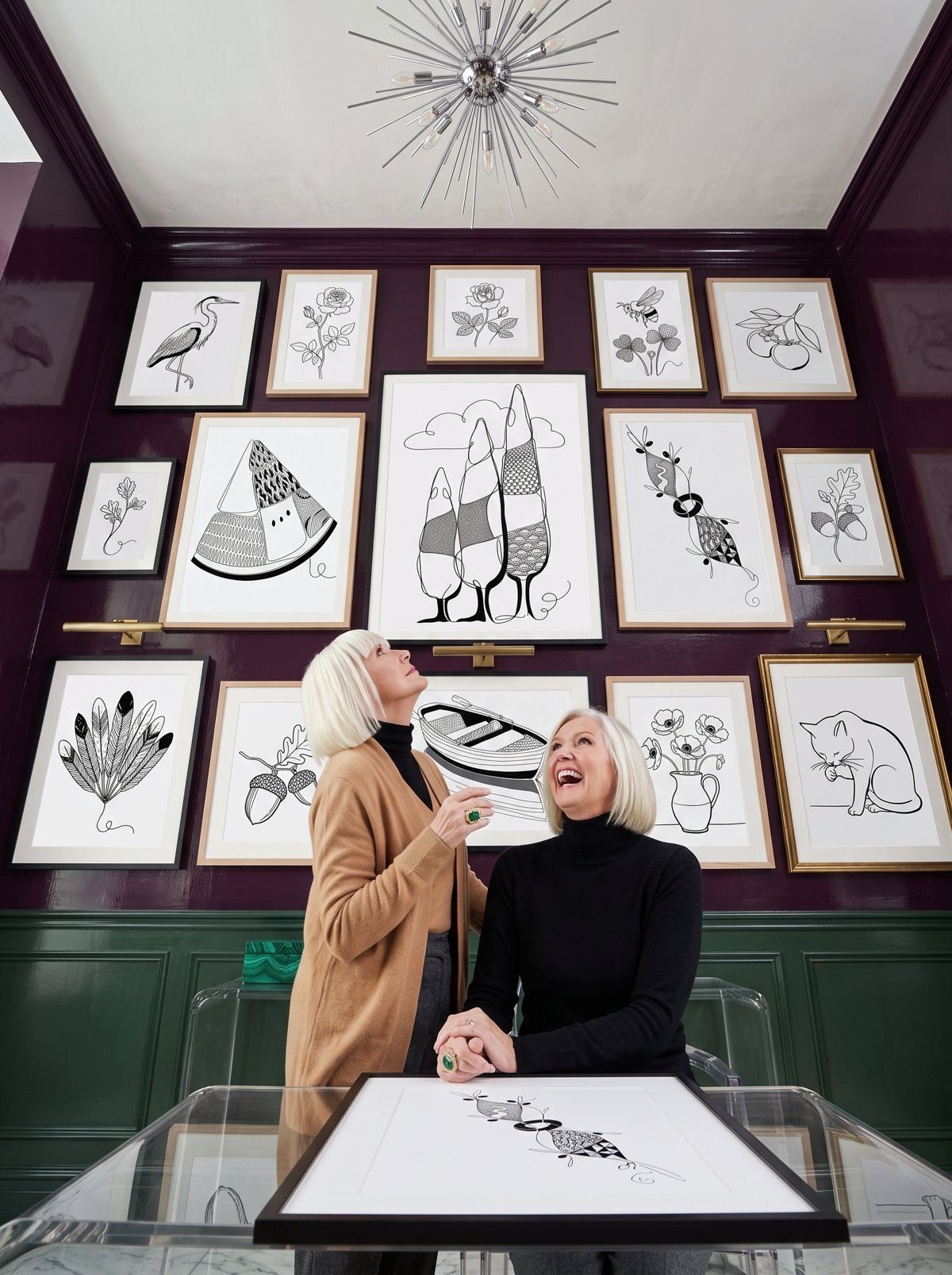
THE 100 COLLECTION — cranes, moons, stones and 100 pieces that hang together.
The set for the point where one good page stops being enough and you want a wall of them. 100 finished pieces, each supplied 3 ways — the art, a tracing sheet and a worksheet — so you can copy it, trace it, or build it yourself. (There is no version of this where you run out of subjects by Thursday.) What you get: something waiting every evening, and 100 pieces that look like one collection rather than 100 attempts.
Back to the marks, starting with the one you already know by sight.
1 — The claw
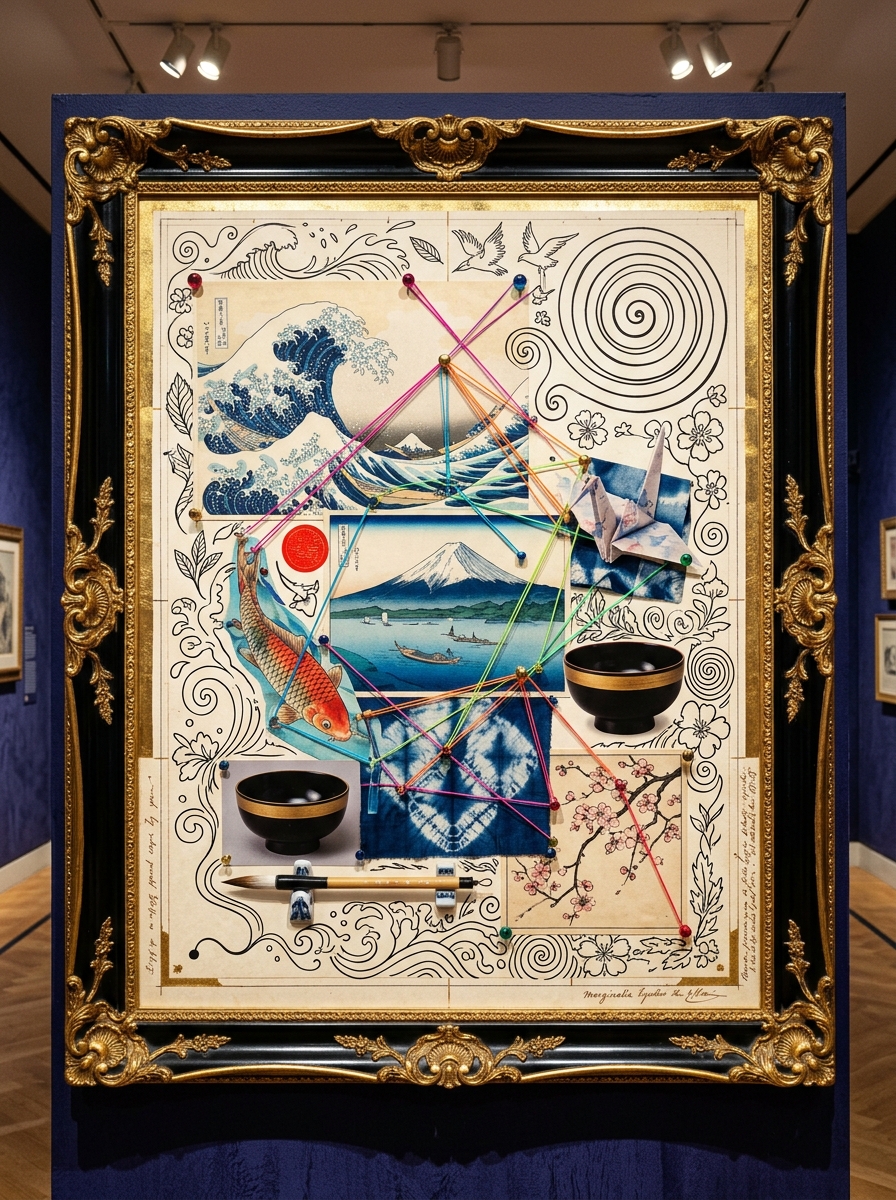
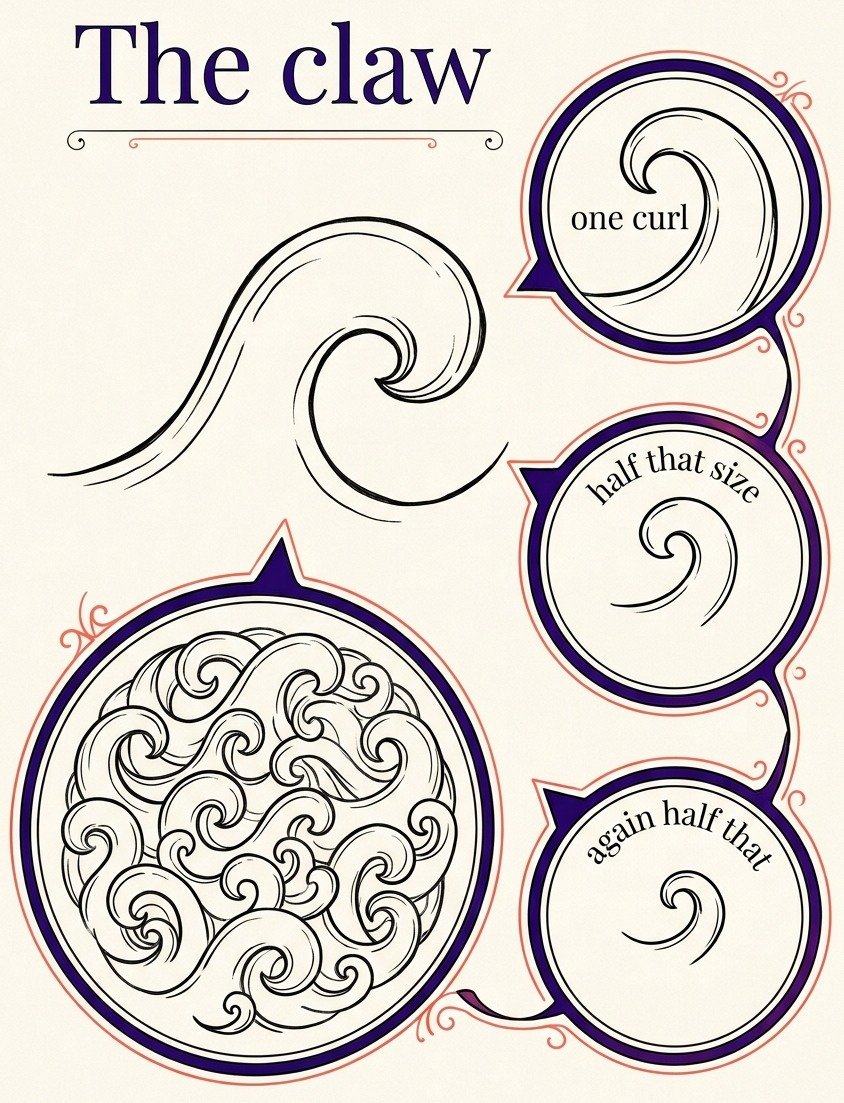
Look at the top of the famous wave. The foam does not end in a fringe or a spray. It ends in curled fingers, each one hooking back on itself, and the same hook appears at three sizes: the huge one at the crest, mid-sized ones down the slope, tiny ones at the tips.
One shape, three scales. That is the entire texture of the sea in that picture.
It works because your eye reads repetition at different sizes as depth. Draw 40 identical curls and you get wallpaper. Draw the same curl big, medium and small and you get distance.
Do this: draw one curl the size of your thumbnail, then the same curl half that size beside it, then again half that. Fill a shape with the three sizes mixed.
2 — The low horizon
He put the waterline low and let the sky and the wave take everything above it.
Beginners tend to cut the page in half. The half-and-half page is the flattest composition there is, because neither part wins and the eye has no reason to move.
Drop the line to a third of the way up and the top two thirds become the subject whether you intended it or not.
He does it constantly in the Fuji prints. The land sits along the bottom edge like a shelf, and the weather gets everything else.
It also solves a problem you have not noticed yet: a low horizon gives you somewhere to put nothing. Empty space stops feeling like an unfinished corner and starts feeling like air.
Do this: rule a light line one third up your page. Everything interesting goes above it. Leave the bottom third nearly empty.
3 — The tiny far thing
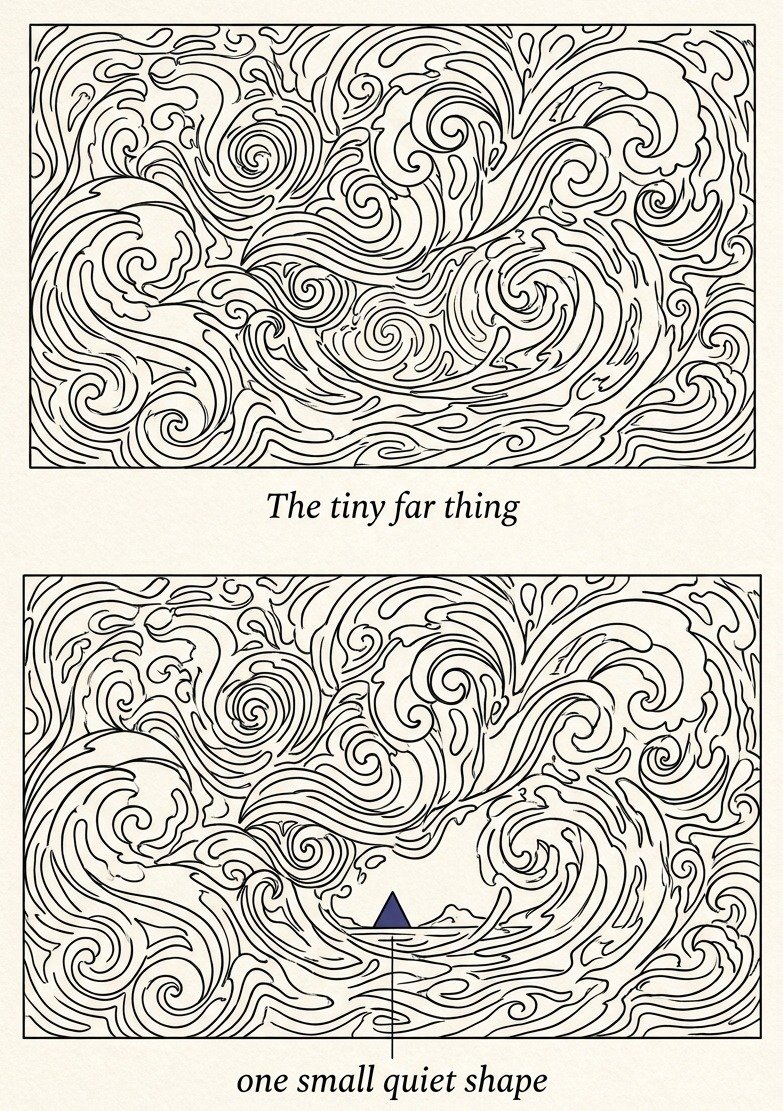
In the most famous picture of a wave ever made, Mount Fuji is present, and it is the smallest object on the page. The mountain goes unnoticed for years at a time, which is exactly what it is there to do.
That is not modesty, it is a mechanism. One small, calm, distant object makes everything around it enormous.
Without the mountain the wave is just water. With it, the wave is bigger than a mountain.
Do this: finish any busy page, then add one small quiet shape near the horizon. Nothing else changes and the whole page grows.
4 — The line that changes weight
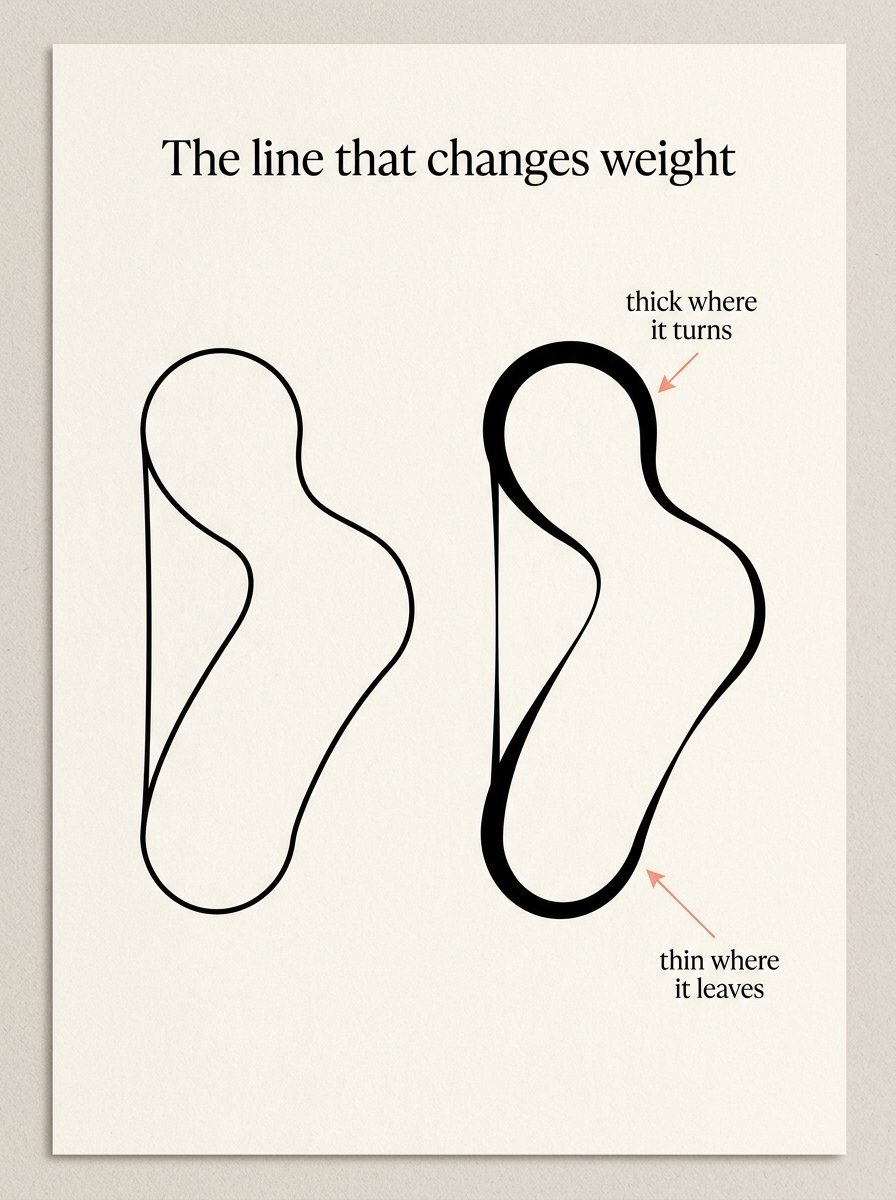
Run your eye along any of his outlines and it swells and thins. Thick where the line turns a corner, thin where it leaves. It never has one width all the way round.
A line of constant width reads as a border. A line that changes weight reads as a thing.
You do not need a brush for it. A fineliner does it by slowing down and speeding up, and a pencil does it by leaning.
Do this: draw any closed shape in one go, pressing harder on the curves and lifting on the straights. Compare it with the same shape drawn evenly.
5 — One imported colour
Just before the New Year of 1831 the publisher Eijudō advertised a new series of prints of Mount Fuji, and the selling point was not the mountain. It was the blue.
Prussian blue was the first modern synthetic pigment, invented in Germany and shipped into Japan through Dutch and Chinese traders. It was newly available, it was intense, and it held its colour in a way the old plant blues did not.
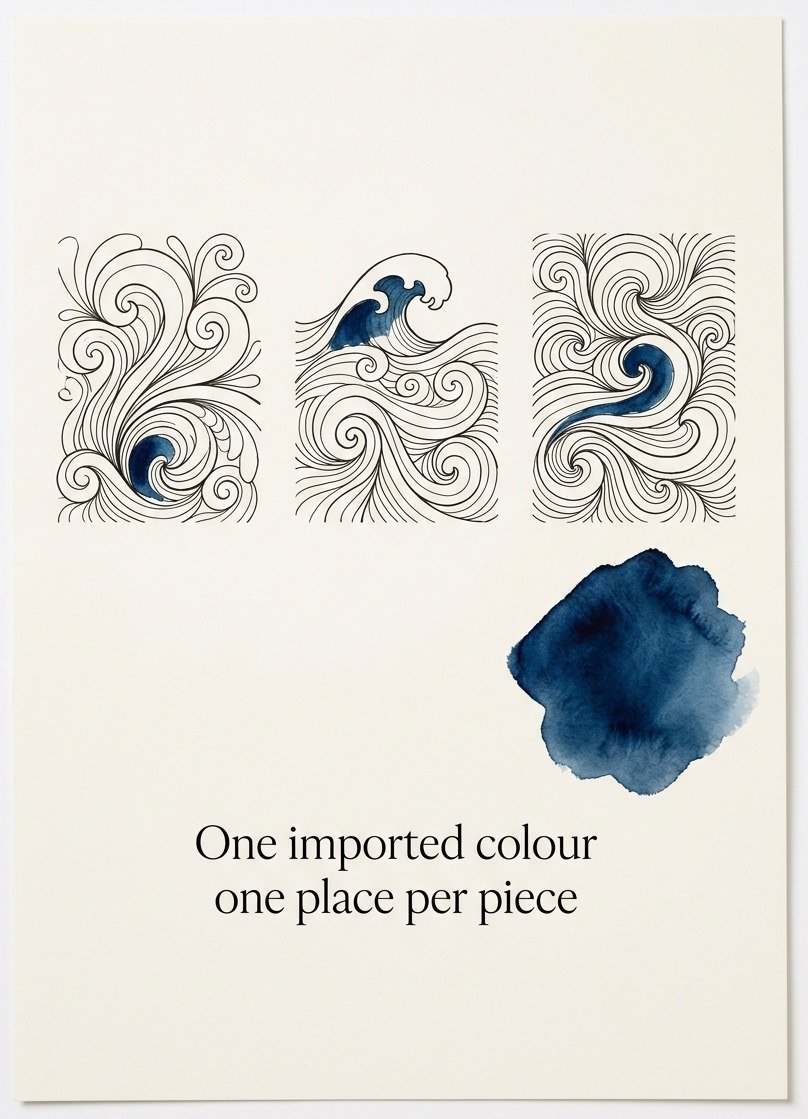
That series is the reason we think of Hokusai in blue at all. One colour, used everywhere, and it built a look that outlasted 2 centuries.
He was still thinking about colour at the very end. The last instruction book he published, in 1848, a year before he died, was a treatise on the use of colour.
(It is printed entirely in black ink. He describes every colour in words and lets his students do the rest, which is either a printing budget or the driest joke in Japanese art history.)
Do this: pick one colour for everything you make this month. Use it in exactly one place per piece.
6 — The scatter
The foam droplets in his water are not drawn twice the same. They vary in size, they clump in some places and thin out in others, and there is no grid anywhere.
Even spacing is the thing that makes a drawing look printed. Uneven spacing is what makes it look observed.
The trick is that you cannot achieve it by trying. Scatter deliberately and you produce a pattern. Scatter fast, without deciding, and you produce weather.
This is the one that separates a drawing that looks made from a drawing that looks generated, and it costs nothing but nerve. The nerve is in stopping.
A scattered field is finished about 4 seconds before you think it is. Everything after that is you making it neat, and neat is the enemy of this particular mark.
Do this: fill a shape with dots as quickly as you can, without looking at the previous dot. Stop before you tidy it.
7 — The repeated diagonal
Rain in his prints is a set of straight parallel lines at one angle. So is rigging, so is rope, so is a rush mat and so is the side of a mountain.
He is not drawing the object. He is drawing one angle, many times, and letting the direction do the describing.
The discipline is the hard part. The moment 2 of the lines disagree about the angle, it stops being rain and becomes scribble.
Do this: cover a third of a page in parallel strokes at a single angle, then a second area at a different single angle. Two angles, one page.
8 — The same view again
Thirty-six Views of Mount Fuji sold so well that they printed 10 more, which is why a series called 36 contains 46 prints. Nobody renamed it.
He was not hunting a new subject. He was standing somewhere else and looking at the same one.
This is the least glamorous of the 8 and the one that changes the most. A subject drawn once is a study. The same subject drawn 12 times is a body of work, and the 12th is always the one people stop at.
Do this: pick one shape and draw it once a night for a week. Change only where you are standing.
Do I need a brush to draw like Hokusai?
No, and a brush will get in your way for the first month.
Everything above was designed to survive a woodblock cutter — a craftsman who took the drawing and carved it into cherry wood. A mark that cannot be cut does not make it into a print, so his working vocabulary is unusually simple. A fineliner reproduces all 8 of these marks.
Which Hokusai drawing book should I actually start with?
None of them, and this is the least helpful true answer on the page.
His teaching books were written for people who already worked in a studio, in a language that assumes a brush, a block cutter and an apprenticeship. Reading them cold is like being handed somebody else’s recipe notes.
The 8 marks above are what survives the translation. Take those, put them on a shape you like, and the books become interesting later rather than discouraging now.
Free Starter Pack
10 templates of empty shapes. Somewhere to put all 8 marks.
Sent tonight. Outlines only, so the subject is already decided and the marks are the only thing left to do.
Unsubscribe in 1 click, no hard feelings
Every one of the 8 marks needs something to sit on, and that is the honest bottleneck. Not skill, not the pen — a subject waiting on the table when you sit down.
100 pieces, each one supplied 3 ways
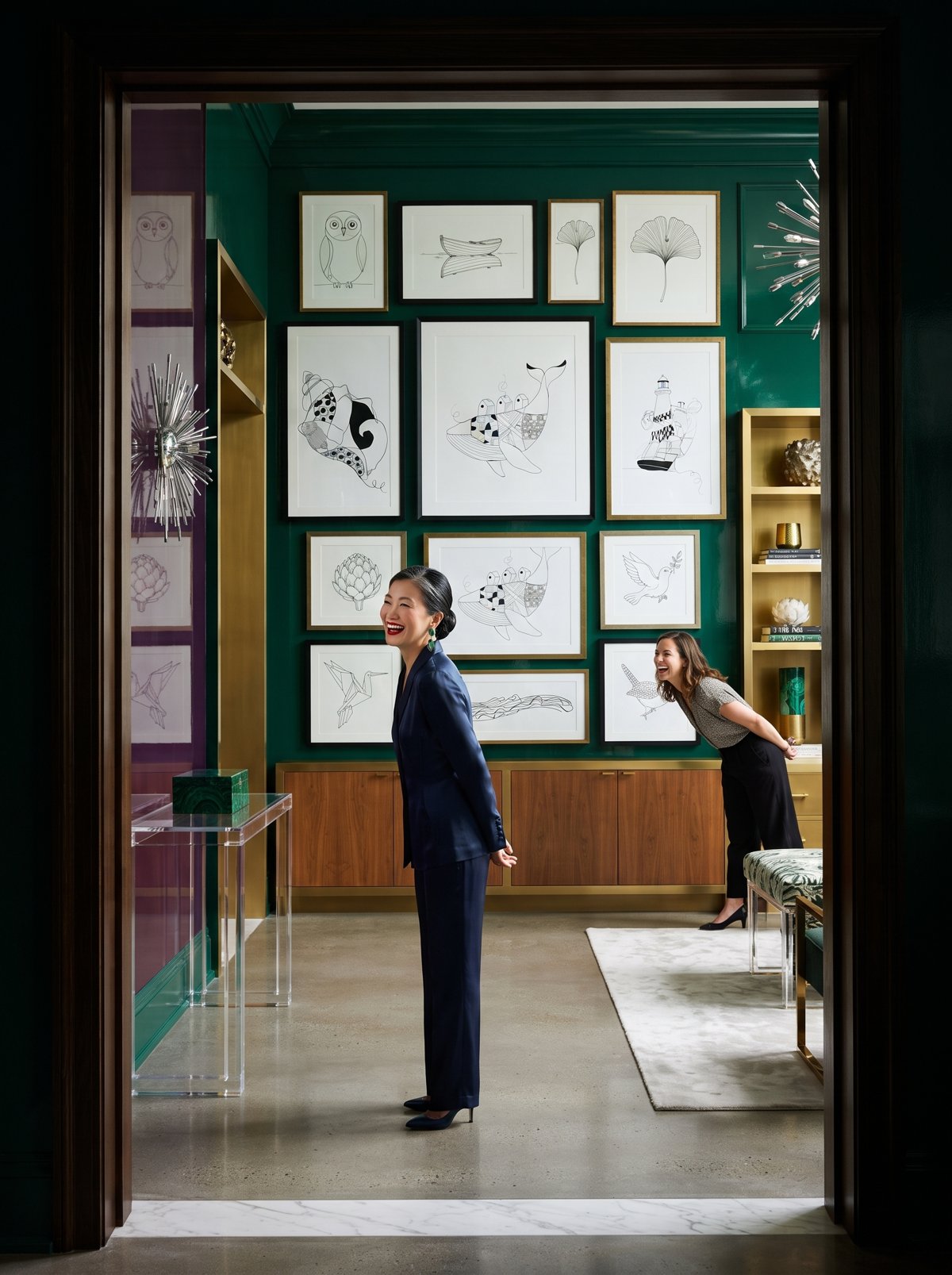
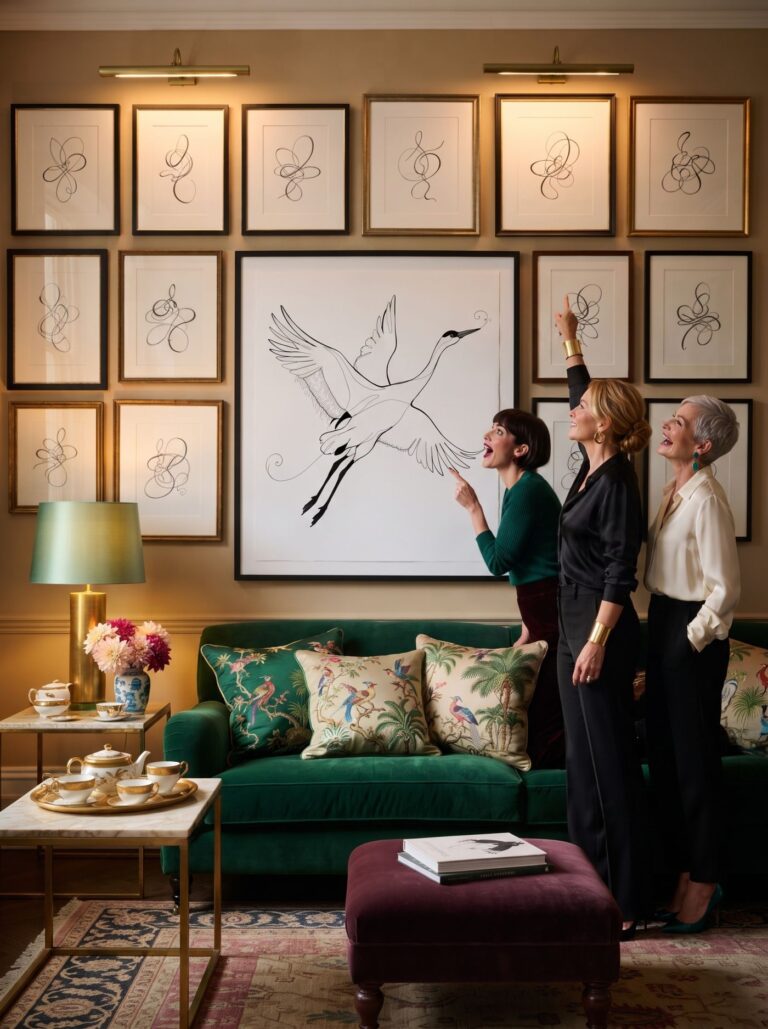
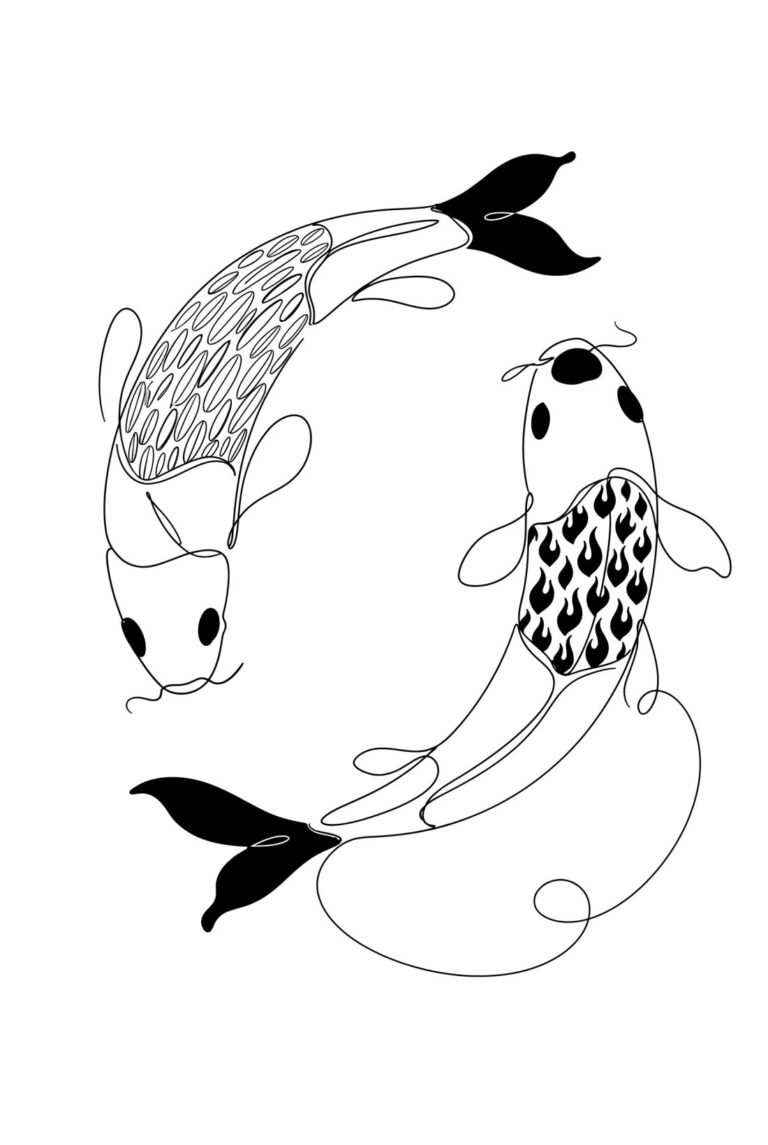
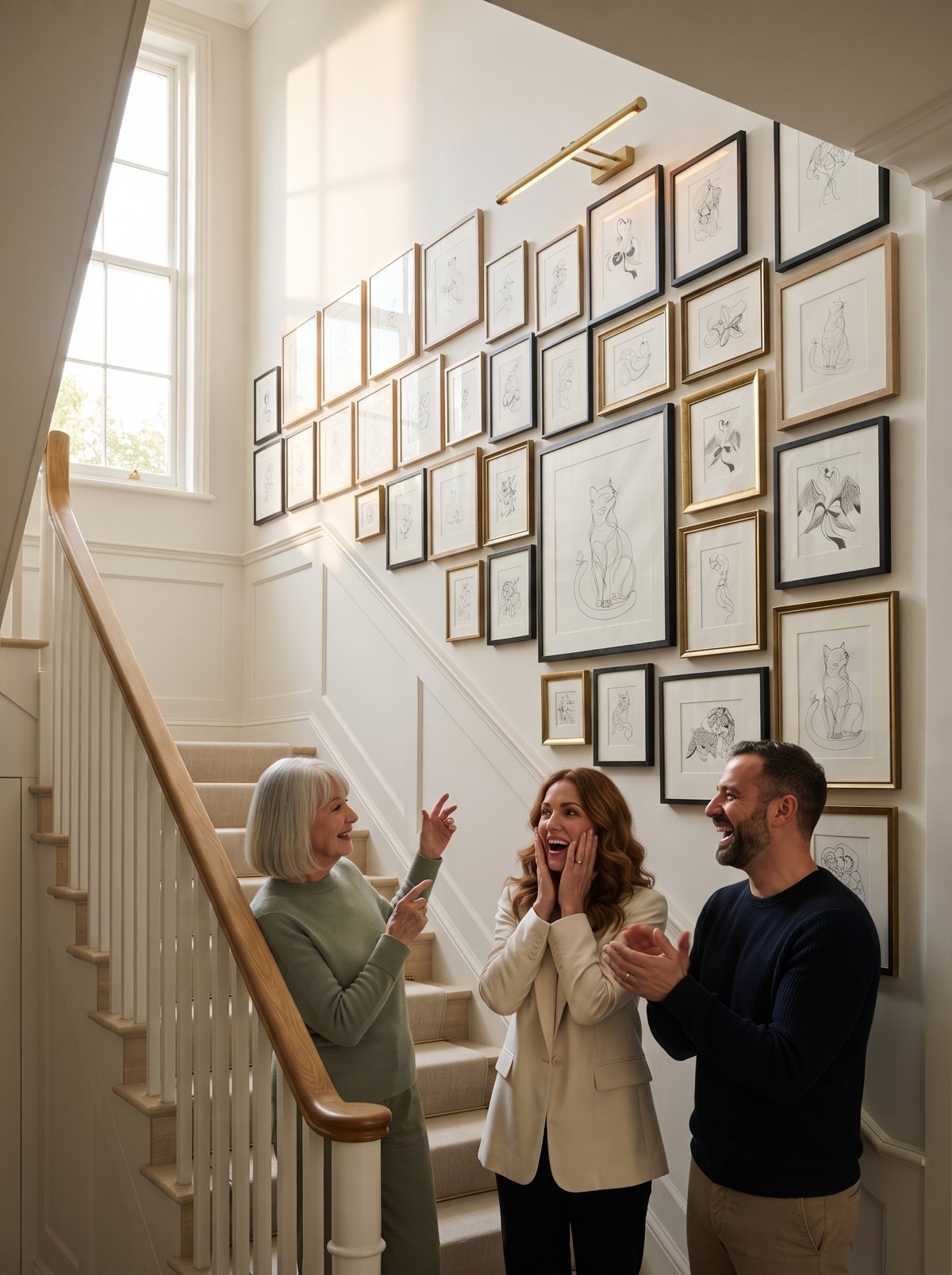
Tonight it is one piece, filled slowly while the room goes quiet. By the weekend it is 3 of them framed above the stairs, same ink, same size, no two alike. Cranes, moons, stones, grasses, feathers — 100 of them, art and tracing sheet and worksheet, ready to print.
Instant download · print as often as you like
He kept changing his name. More than 30 of them across one lifetime, and from his mid-70s he signed himself Gakyō Rōjin Manji, which translates as the old man crazy to paint.
“Until the age of seventy, nothing I drew was worthy of notice.”
Hokusai, One Hundred Views of Mt Fuji, 1834
Mirabelle wrote this. No training, strong opinions, many pens. Peer reviewed by a cat who has slept on the same cushion since 2019 and considers that a series.