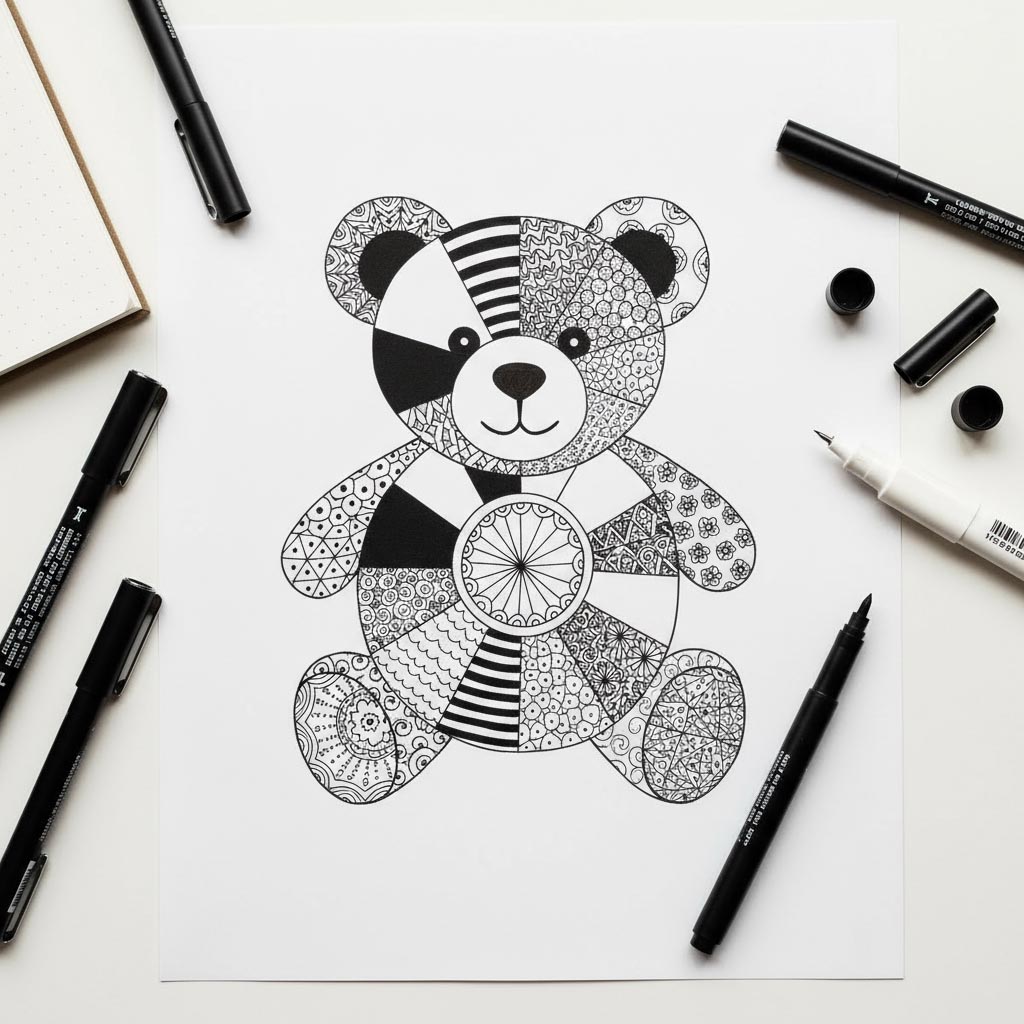
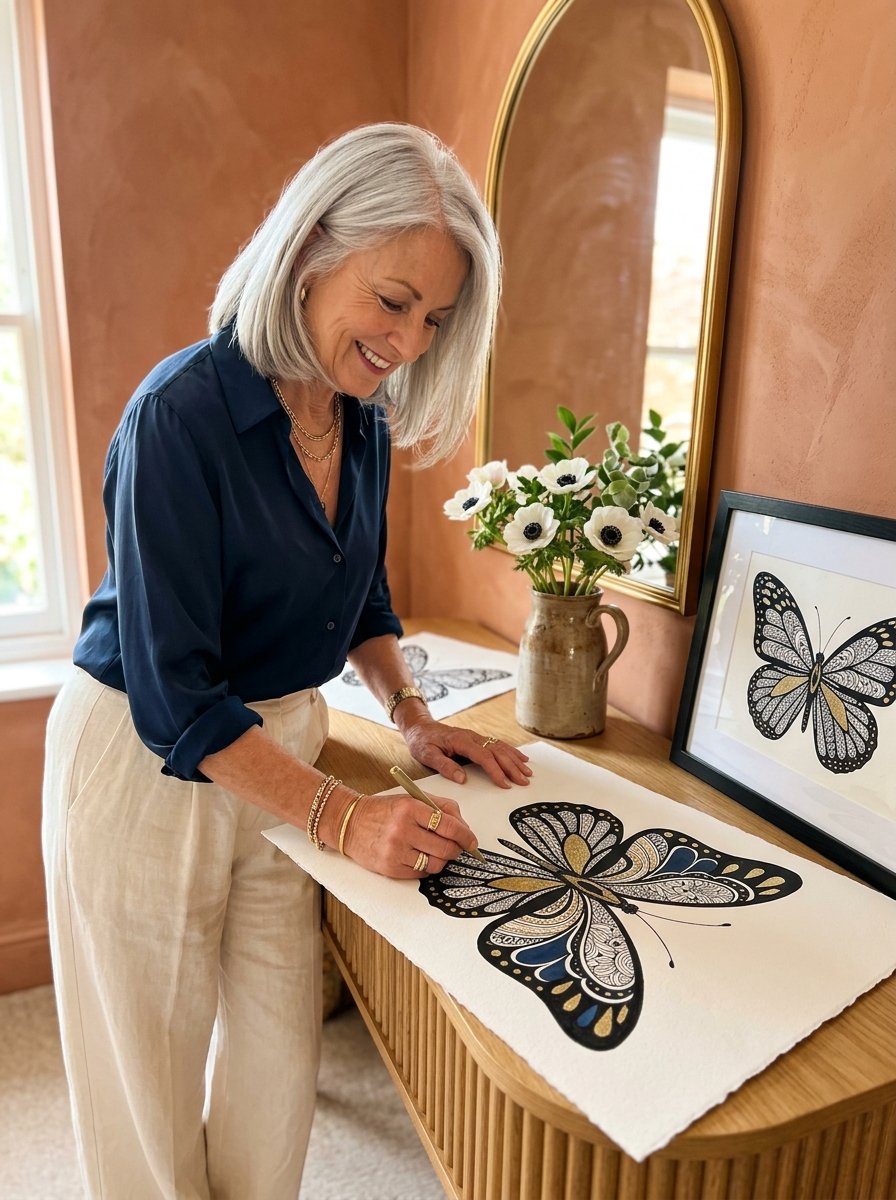
A butterfly is two shapes and a line down the middle. Everything that makes one worth framing happens inside those shapes, which is good news, because the shape takes 90 seconds and the inside is the part you will enjoy.
You draw one half. You fold the paper, or you turn it over and go along the lines you can feel from the back, and the second half arrives without an argument. Then the wing stops being a shape and becomes a container.
Vladimir Nabokov spent his afternoons at a museum microscope, looking at the insides of butterfly wings.
He saw things in there that nobody could prove until 2011, thirty-four years after he died.
He also kept writing. In the summer of 1948 Véra drove him across the American West so he could catch butterflies, because she was the only one of the two of them with a licence. Somewhere in the passenger seat he started the first draft of Lolita on his entomology index cards.
The most notorious novel of the century began life on a filing system for moths. (I have not been able to call an evening unproductive since.)
That is the whole method and it costs you nothing. Look at the inside of the wing. The outline is ninety seconds. The inside is where the butterfly is actually won.
18 wing designs below, grouped by what fills them:
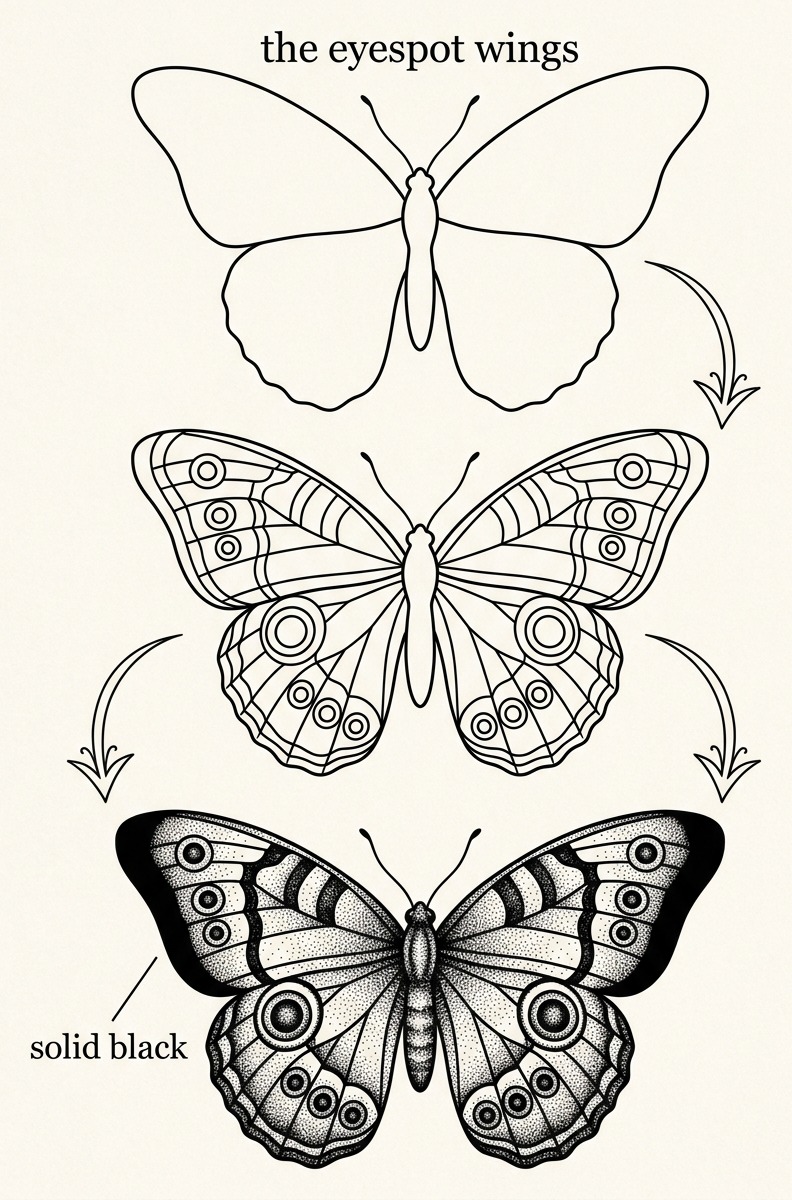
- The eyespot wings — the mark that works on lions — concentric ovals. The single most recognisable mark on any butterfly.
- The banded wings — where nature does the copying — parallel marks following the wing edge, and the spacing that makes them work.
- The lace wings — you are drawing the skeleton, not the lace — the natural cells of the wing, filled one by one. The long, slow, good ones.
- The solid-and-gap wings — the halves that do not match on purpose — black where you commit, white where you do not.
Every one of those is a pattern poured into a shape. Which means the wing is never the hard part. The vocabulary of marks is.
A butterfly you would actually frame needs 30 or 40 fills at your fingertips, not four.
That is the real bottleneck and it is not a talent problem. Nobody invents 30 fills from nothing with an empty wing in front of them at 9pm.
The Collection
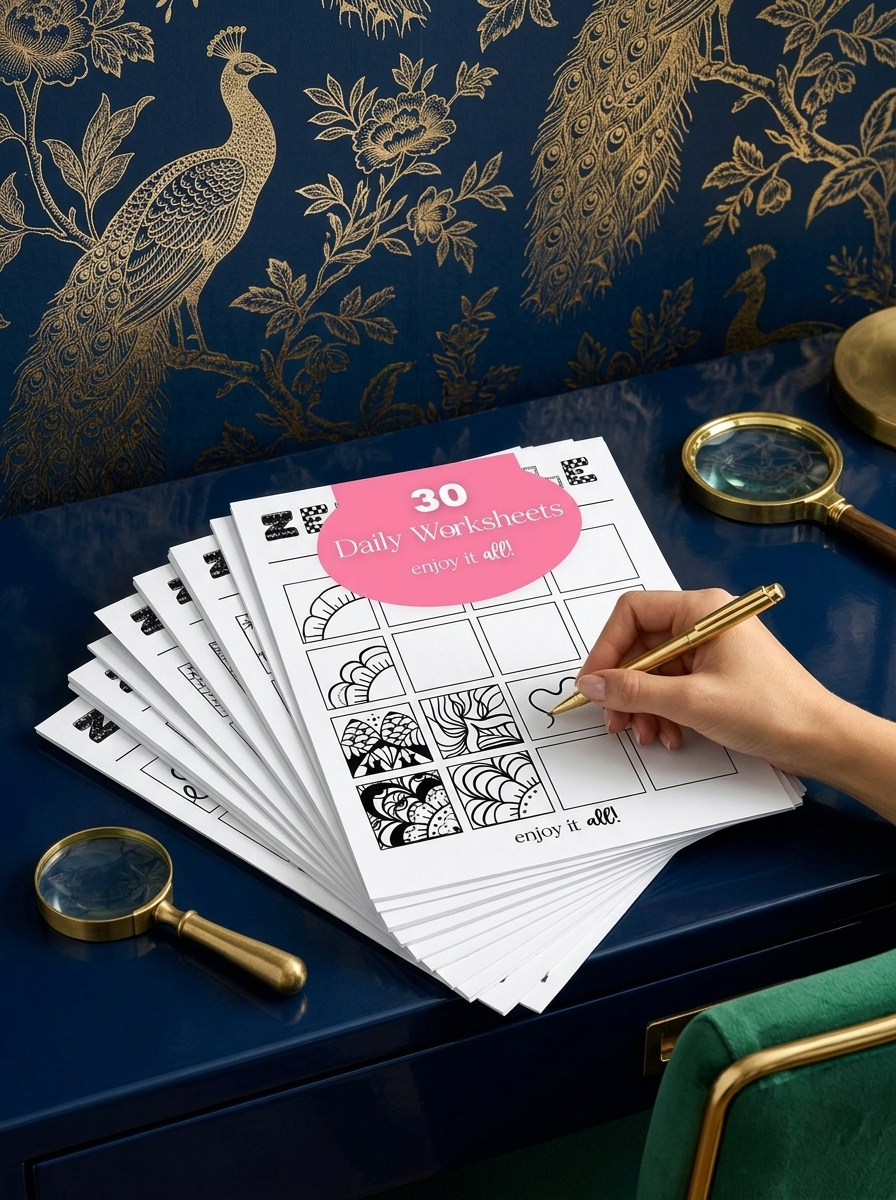
THE ZEN DOODLE TOOLKIT — scallops, stipple, scales, and 30 ways to fill a wing.
The set for the point in the evening where the outline is done and the wing is sitting there empty, waiting to be filled by somebody with more than four ideas. 30 fill patterns, each broken into stages, so the inside of a wing stops being the part you dread. What you get: a vocabulary your hand keeps, and butterflies that stop looking like siblings.
Back to the wing, and the fold that does half of it for you.
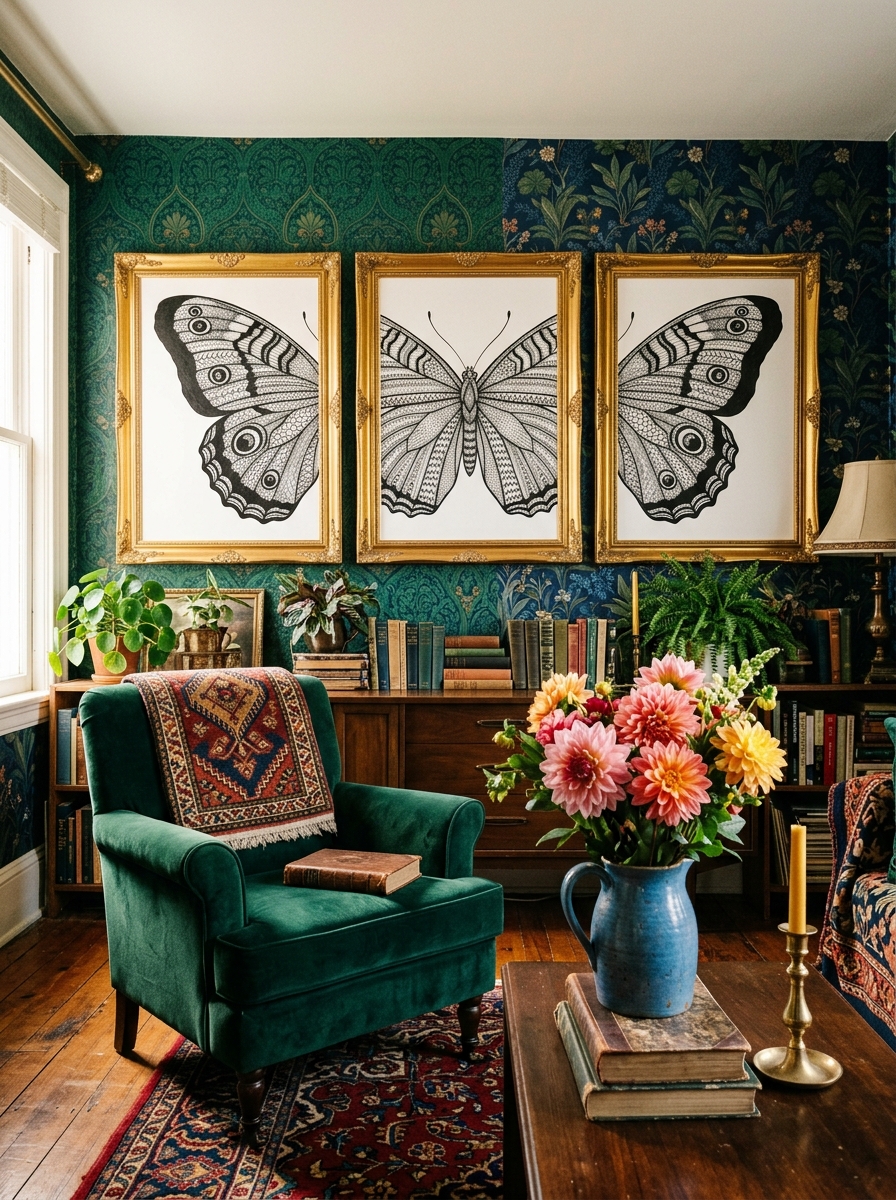
Hung as a row they stop being drawings and start being a scheme, which is the moment the room takes them seriously.
Draw one wing. The paper draws the other
Draw one wing. One. Then fold the sheet along the body line and trace through against a window, or turn the paper over and go along the grooves your own pen left. The second wing is a copy, not a performance. Every symmetry problem anybody has ever had with a butterfly comes from drawing both sides freehand and then hoping they would agree, which they have never once done.
A German doctor called Justinus Kerner was doing this deliberately by 1857. He dropped ink on a page, folded it shut, opened it, and found a symmetrical creature looking back at him. He wrote a short poem for each one.
His son published the collection in 1890 as Klecksographien, and a good number of the plates are unmistakably butterflies. Kerner was not drawing them. He was folding, and then naming whatever turned up. (Rorschach borrowed the method 30 years later and got considerably more famous for it.)
Nobody has ever looked at a butterfly and thought: I wonder if the left side is accurate.
Once both wings exist, stop drawing the butterfly. It is finished. Everything after this point is filling, and filling is a completely different activity with completely different rules and a completely different mood. (It is also the exact point at which the tea goes cold. I have tested this across roughly 40 butterflies and the tea has never once survived the second wing.)
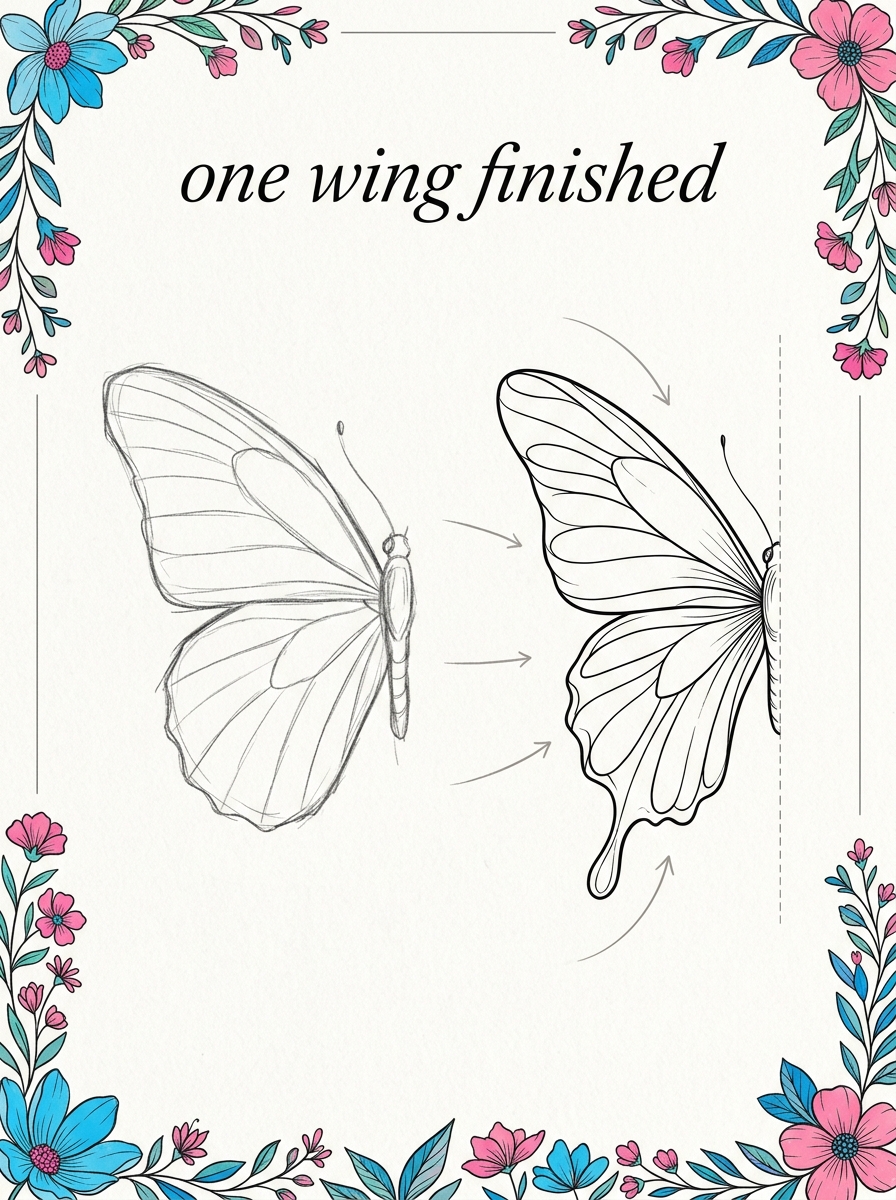
The three moves are the same on all 18 below: outline one wing, mirror it, then choose what goes inside. Only the third move is a decision.
18 butterfly wings, and the reason each fill works
Work down them or open at the group that suits the evening. Each group starts with the thing nobody tells you about that kind of mark — where it came from, what it does to a person looking at it, and why it survives being drawn badly.
The eyespot wings
- 1. The single stare — one large eyespot per wing: 3 concentric ovals, darkest in the middle, one white dot off-centre for the shine. Nothing else on the wing at all.
- 2. The row of four — 4 small eyespots marching along the lower edge, each smaller than the last.
- 3. The blind eye — an eyespot with no white dot. Reads as closed, and is far more unsettling than the open one.
- 4. The double ring — 2 rings of different weights around one centre, the outer one broken.
- 5. The eyespot that got away — one spot drifting off the wing edge and half-cut by it — the version that looks deliberate to everyone except you.
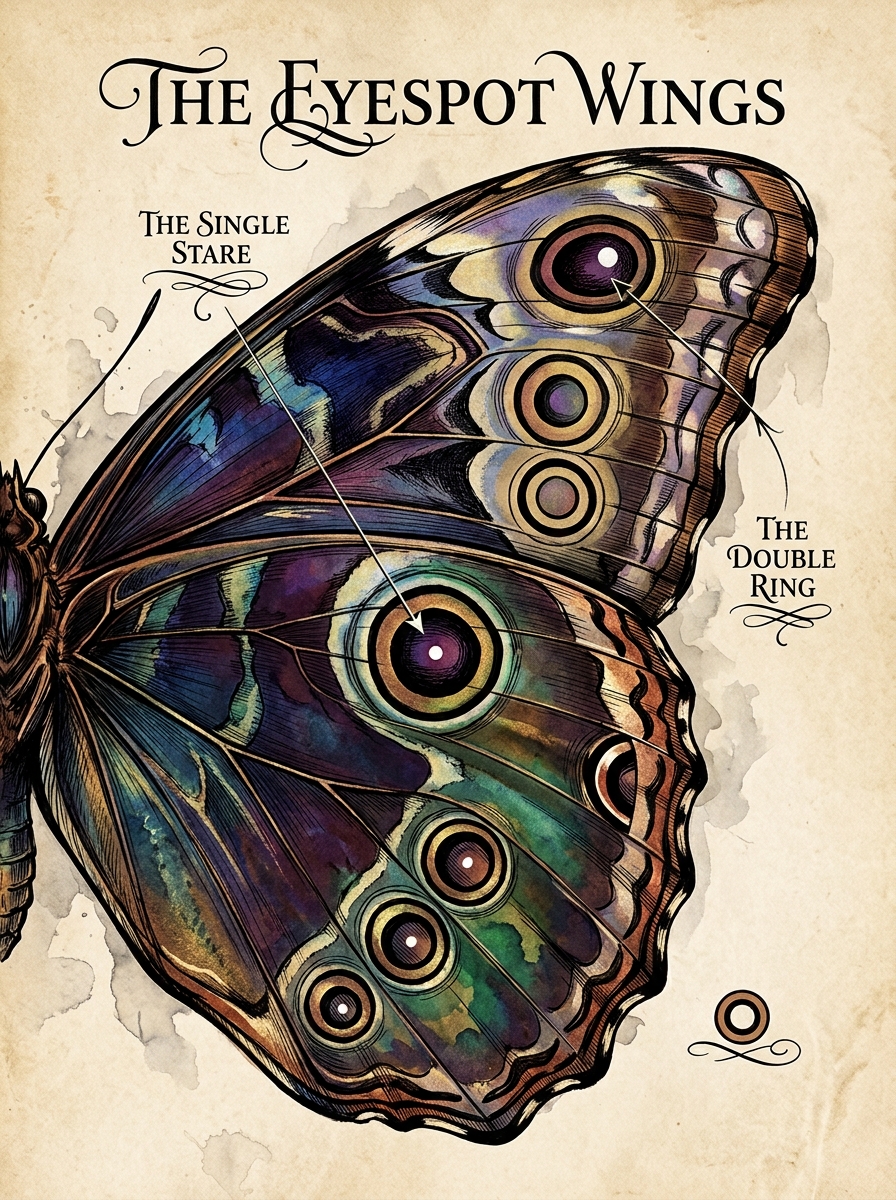
The eyespot is the best thing on this page and it takes about eight seconds.
Three ovals, darkest in the middle, one white dot sitting off to the side. That is the entire instruction. From across a room the wing now reads as finished, and nothing else you draw tonight is going to do that for you.
Vasari tells the story of Giotto painting a fly onto a face his teacher Cimabue had drawn. Cimabue came back to the panel and tried to brush it off.
That is what a well-placed mark does. It reaches the body before it reaches the opinion. The whole Ghent-Bruges school of illuminators built a border style on it a century later, painting insects with little cast shadows so they sat on the page like objects somebody had dropped there.
An eyespot is the cheap version of that trick and it is available to you tonight. So draw it first, on both wings, before anything harder. If the evening then falls apart, and evenings do, you have still made something.
The banded wings
- 6. 3 bands, wide to narrow — parallel to the wing edge. The spacing does the work, not the thickness.
- 7. The chevron — bands that meet at the wing spine in a shallow V, like a very calm arrow.
- 8. Band, gap, band — the gap is the same width as a band, and the whole thing suddenly looks designed.
- 9. The gradient band — one band filled with dots that thin out toward the body.
- 10. The interrupted band — a band that stops halfway and resumes, offset. Nature does this constantly.
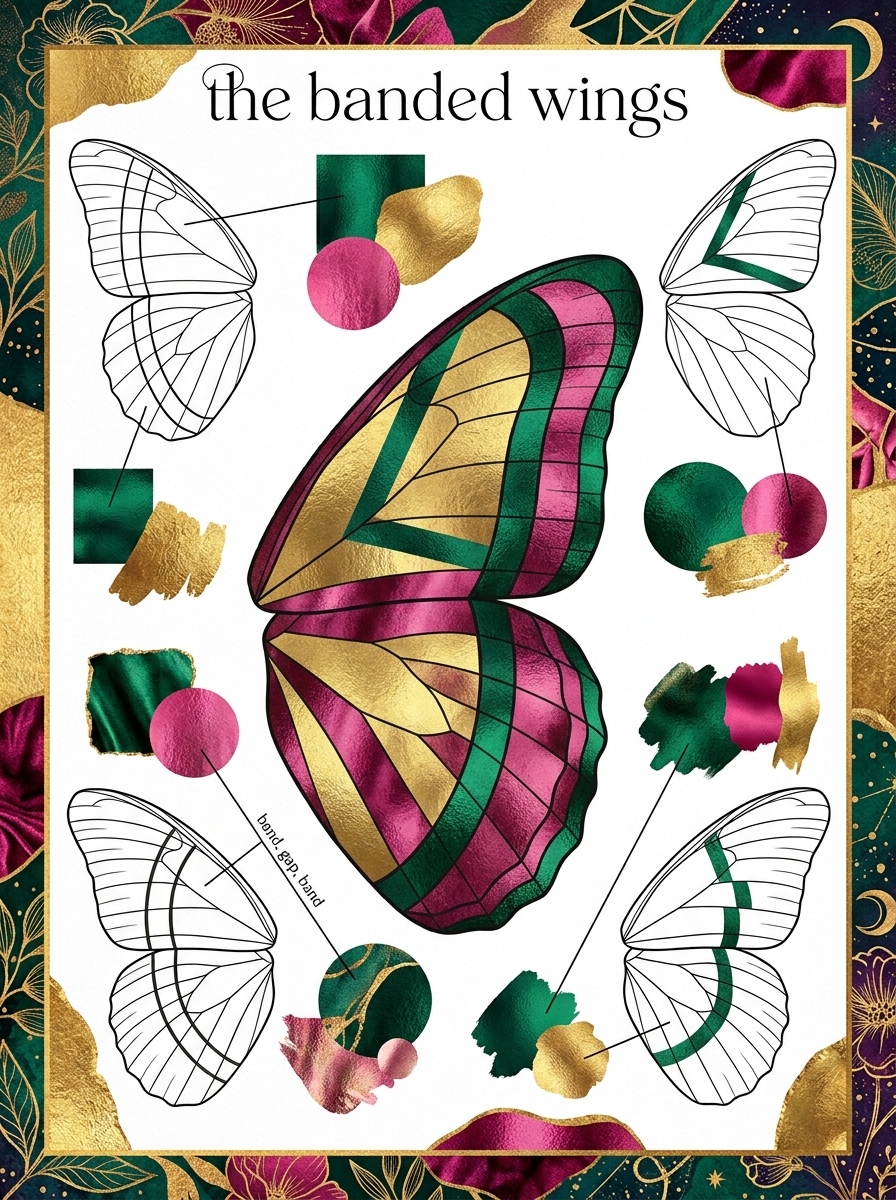
Bands are the one place where copying is not cheating.
When a band goes wrong, do not invent a better one. Look at the band above it and steal the spacing exactly.
The eye is reading the gaps, not the bands. Which is why the spacing is the whole job and the thickness is almost nothing. (I once spent an entire evening making five bands sit evenly and produced something that belonged on a deckchair. Three is the number. Three is always the number.)
The lace wings
- 11. The cell map — the natural veins divide a wing into cells; fill every other cell and leave the rest white.
- 12. Full lace — every cell filled with a different small pattern. This is the one that eats an hour and is worth it.
- 13. Lace at the edges only — dense at the wing margin, empty toward the body, so the eye travels outward.
- 14. Negative lace — fill the veins heavily and leave the cells blank. The inverse of what you expect and it reads as stained glass.
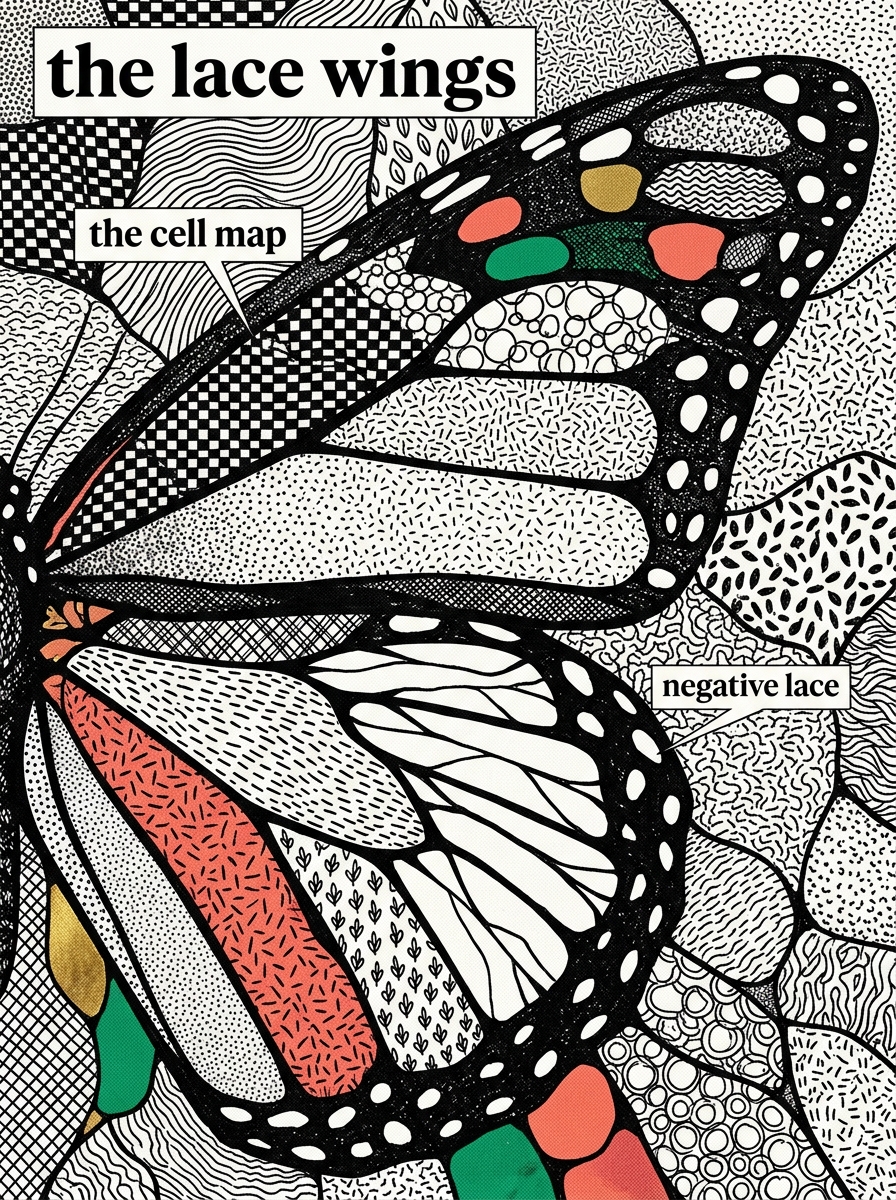
Everyone who finds lace impossible started with the lace.
The veins go first. Faint, fast, barely there. They are scaffolding, not drawing, and nobody will ever look at them.
What they do is divide the wing into small rooms. The rooms are the thing you fill, and each one only ever needs one idea. (Start with the pattern instead and you are roofing a house that has no walls yet. I did that for a year and kept being surprised when it sat down.)
The solid-and-gap wings
- 15. Half black — the upper wing solid, the lower wing empty. The cheapest drama available.
- 16. The dipped edge — a broad solid margin all the way round, as though the wing has been dipped.
- 17. Solid body, open wings — ink the body heavily and leave the wings as line only.
- 18. One wing finished — the left wing complete, the right wing left as bare outline. Unfinished on purpose, and it is the one people ask about.
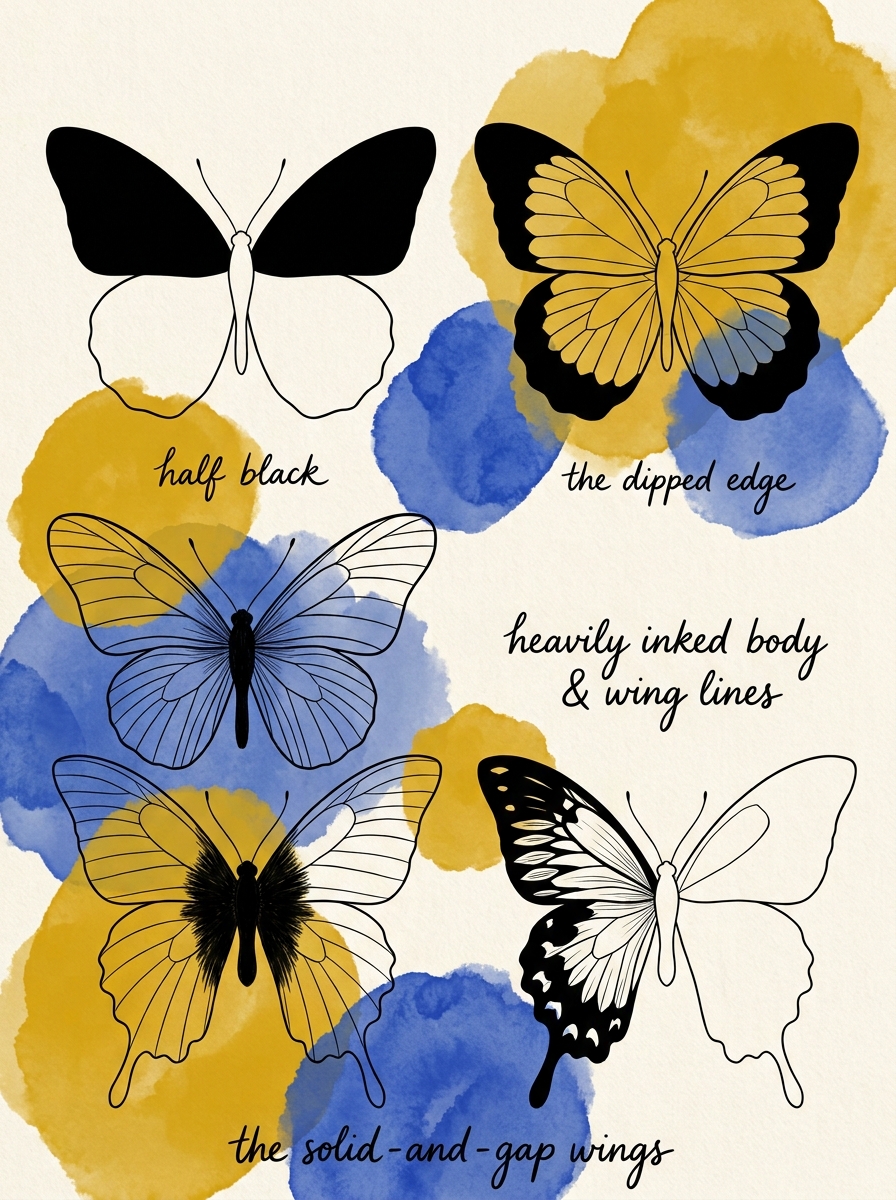
Solid black is the fastest way to make a drawing look decided.
It is also irreversible, which is exactly why it works. You cannot fiddle with black. The moment it goes down that part of the evening is finished and you have to move on.
The half-done wing runs on the same nerve. Finished side genuinely finished, bare side genuinely bare. Hedge the middle and it stops reading as a choice and starts reading as abandonment, which is the one thing anybody can smell from the doorway.
Why your butterflies are all starting to look like siblings
A wing is a set of enclosed spaces, and an enclosed space wants a texture. That is the whole relationship. So the limit on how good your butterflies get is not draughtsmanship — it is how many different textures your hand knows without having to think.
- Dots and stipple — the most forgiving. Density does the shading, so there is no wrong dot.
- Parallel lines — follow the wing veins rather than the page edge, and the cell looks intentional.
- Scallops and scales — overlapping half-circles. Reads as feathering at a distance.
- Tiny repeated motifs — one leaf, one teardrop, one comma, repeated until the cell is full.
- Solid black — not a texture at all, and the reason the others read.
Five is enough for a decent butterfly. 30 is enough for a wall of them that stop looking related.
The gap between those two numbers is not talent and it is not practice. It is vocabulary, and vocabulary is the one thing in drawing you can simply be handed. (Roughly one winter if you build it yourself. One evening if you do not. I have made my peace with that sentence.)
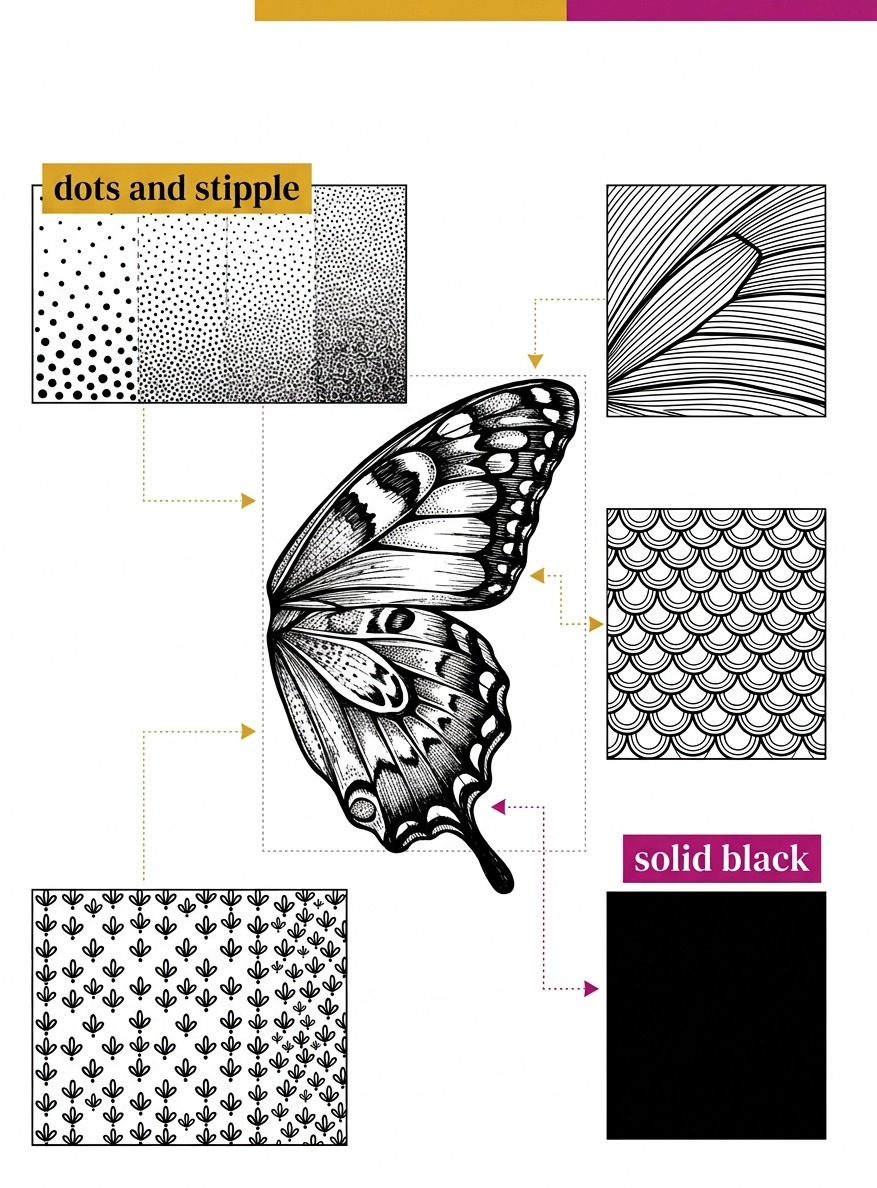
Mix at most three in one wing. Four starts to argue with itself, and the wing stops reading as a wing and starts reading as a sampler — which is a real and slightly sad object, usually found in a drawer next to the good scissors.
The three things that decide whether it goes on a wall or in a drawer
Three things, and none of them is accuracy.
Size. Draw it bigger than feels sensible, filling most of the page. A small butterfly on a big sheet reads as a study. A big one reads as a piece.
Contrast. At least one genuinely solid black area, or the whole thing greys out from the doorway.
One empty region. Left alone on purpose, so the eye has somewhere to sit down.
Frame it with a wide mount and a plain frame. A drawn butterfly in a busy frame looks like a specimen someone inherited. In a plain one it looks like a decision.
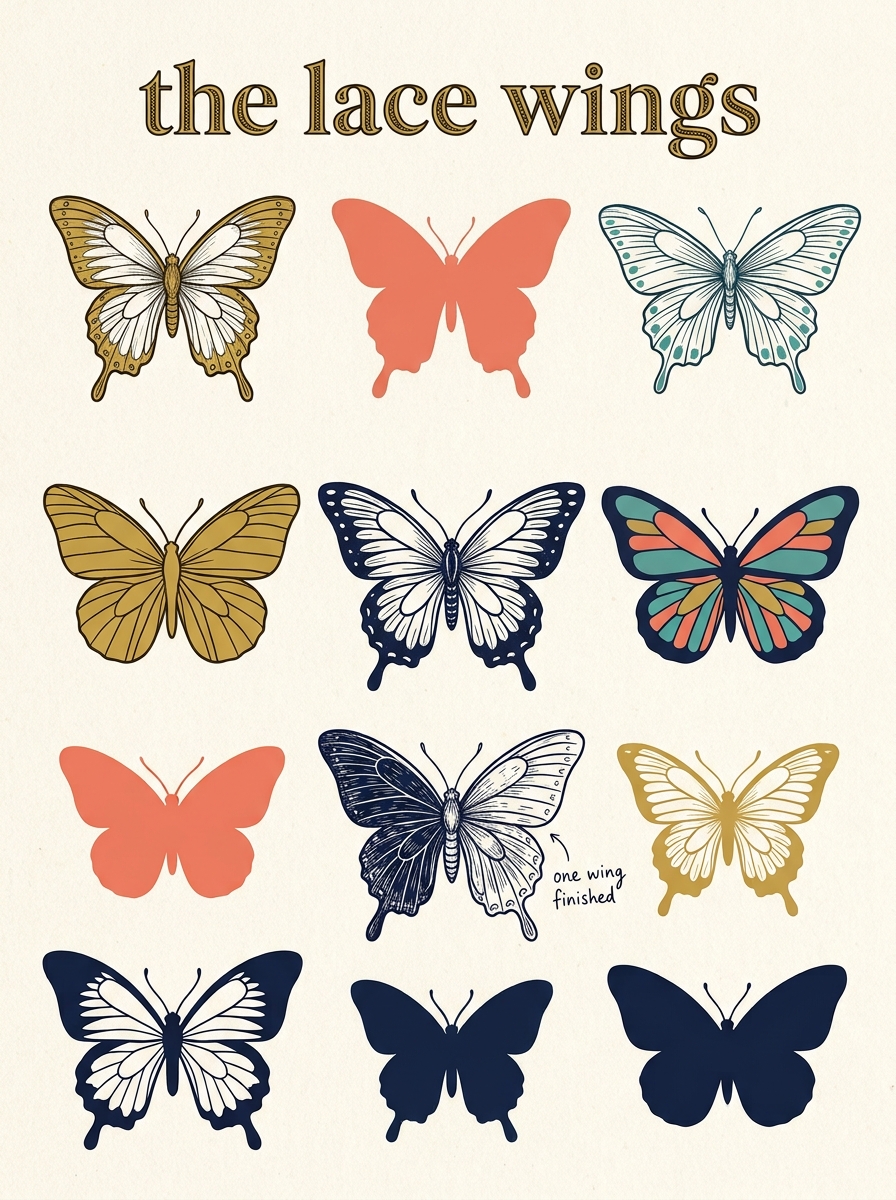
Jan van Kessel spent the 1650s in Antwerp painting butterflies onto small copper plates. More than 300 of them, each insect alone on a plain cream ground with nothing else going on.
They were never made to hang alone. They went up in sets, and some of them began life as the doors of the cabinets that held the actual specimens.
Three of them in a row, same size, same ink, different fills, is a wall. One is a nice drawing. The difference costs two more evenings.
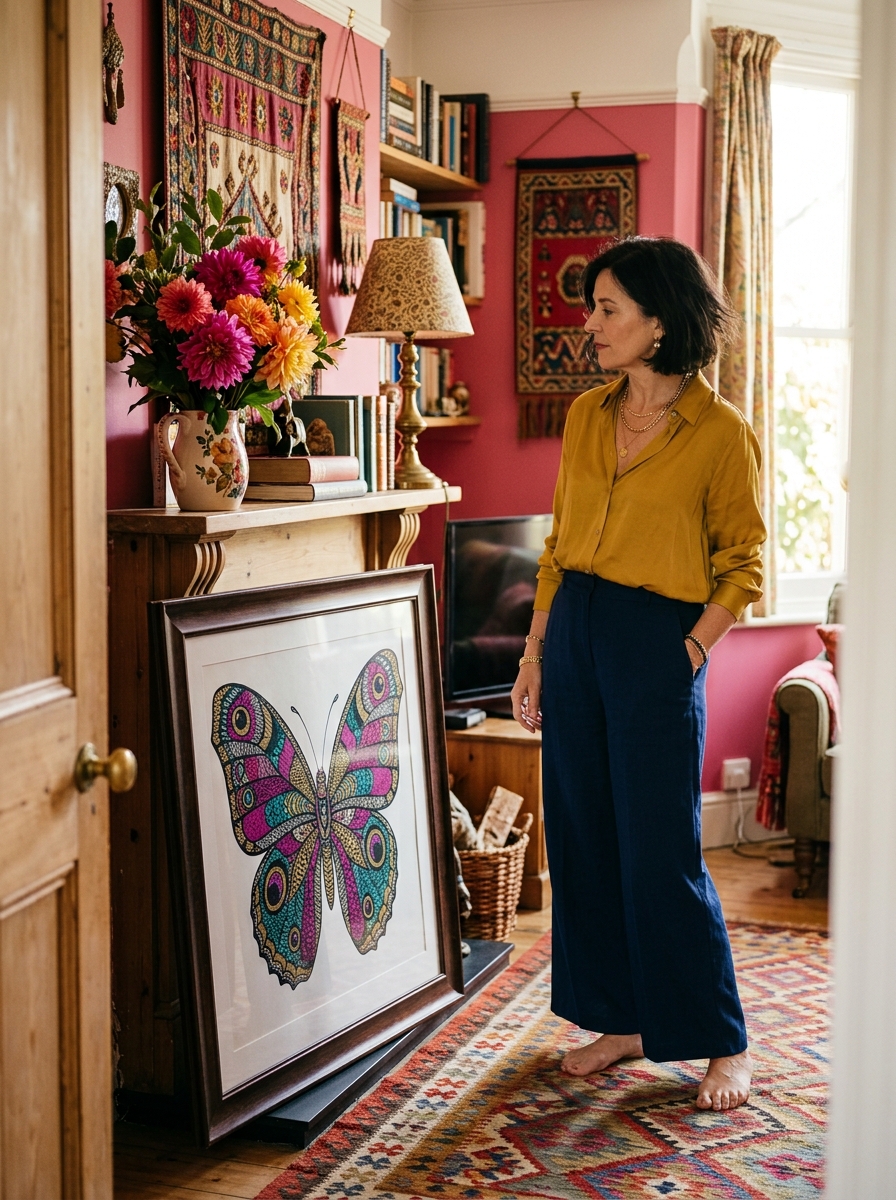
Prop the first one somewhere you walk past. You will know within two days whether it earns the wall, and the answer is almost always yes.
The blot rule: whatever happens, do it twice
There is one repair technique on this page and it is the most useful thing in the article, so it gets its own heading rather than a sad little box at the end. It goes like this: whatever you have just done wrong, do it again, in the same place, on the other side.
I learned it badly. I had inked a full lace wing over about 90 minutes, moved across to start the second one, and put a fat blot straight through the middle of the finished one.
I sat there being unreasonable about it for longer than I am going to write down.
Then I filled the blot into a solid black eyespot, put an identical one on the opposite wing, and it turned into the best thing I drew that month.
Every mistake on a butterfly can be answered by repeating it on the other side. Symmetry forgives absolutely anything. That is a mechanical property of the shape and not a metaphor about life. (Though if you would like it to be one, I am not going to stop you.)
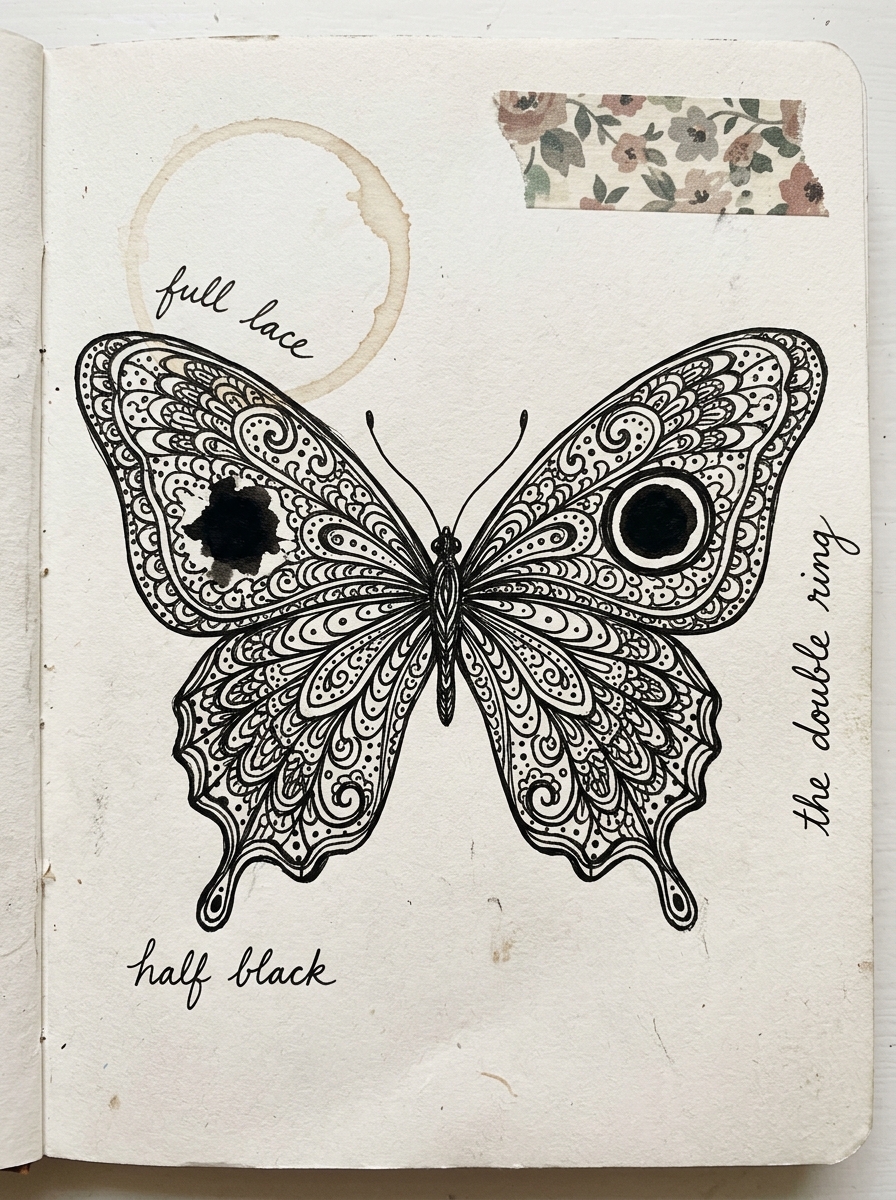
So there is no such thing as a ruined butterfly. There is only an asymmetrical one, and that is a two-minute problem with a known solution.
Why do my butterflies keep coming out as moths?
The antennae, almost every time. A butterfly’s end in a small club, like two pins pushed into the head. A moth’s taper away or go feathery.
Fix that one detail and the whole insect changes species.
The other two giveaways are a body drawn too thick and too furry, and wings spread flat when a resting butterfly holds them closed above its back. (A fine liner for the fills, a broader one for the solid areas. That is the entire equipment conversation and it is less interesting than the antennae.)
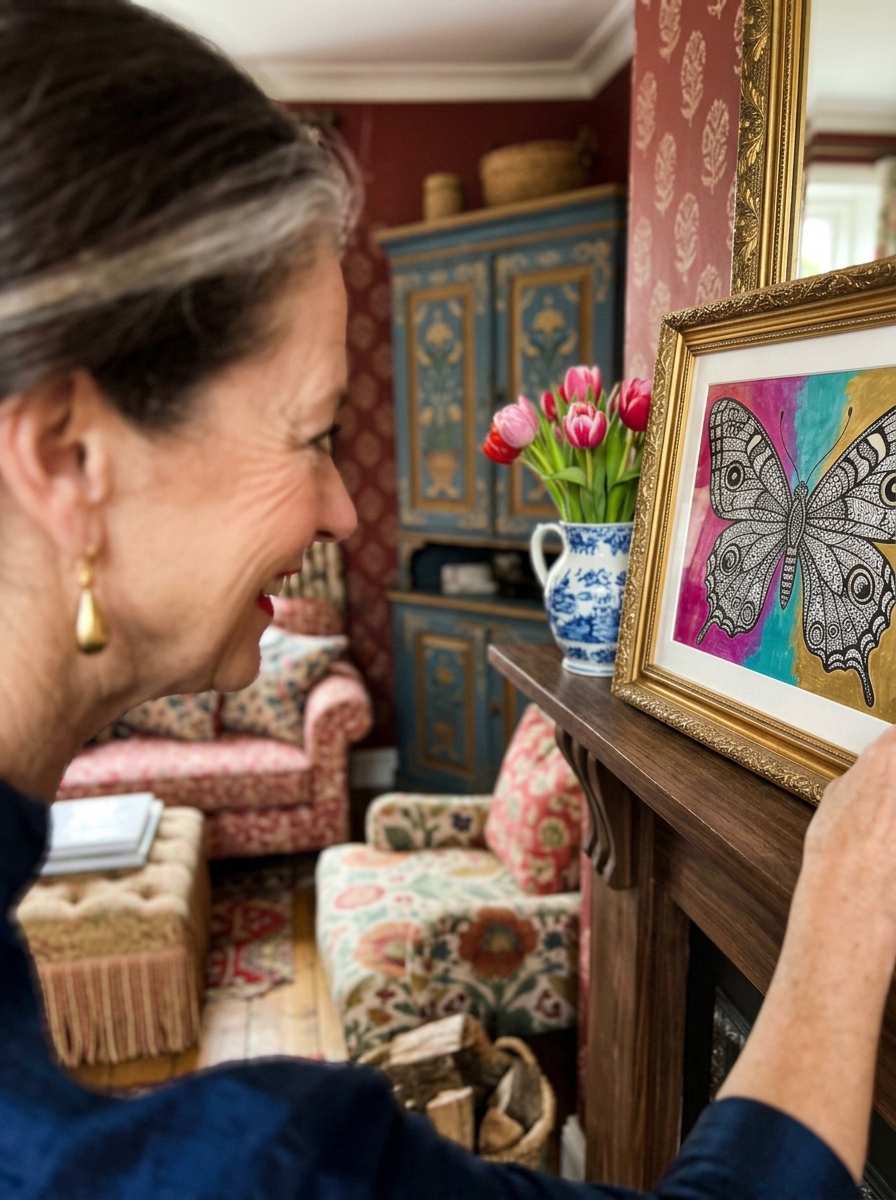
Close up is where the fills earn their keep. From across the room it is a butterfly; from a foot away it is 40 small decisions you made on a Tuesday, none of which anybody will ever ask you about.
How do I get both wings the same size?
You do not draw them the same size, you copy one. Fold, trace, done. If the paper is too thick to see through, draw the first wing, turn the sheet over, and go over the lines you can feel from the back — then flip it and it is there, faint, waiting.
Are butterfly wing patterns real or invented?
Both, and it stopped mattering a long time ago.
Real butterflies carry eyespots, bands and cell structures exactly as described above. They also borrow each other’s constantly and nobody has ever stopped them.
And the best answer to this belongs to Nabokov, who spent decades at that microscope getting real ones exactly right.
On the dedication pages of the first editions he gave his wife, he drew butterflies that do not exist. He gave them Latin names as well. Morpho verae. Papilio verae. Arlequinus arlequinus, in the front of Look at the Harlequins.
So the arrangement is yours. Nobody is checking your species. (The one man on earth qualified to check did not bother checking his own.)
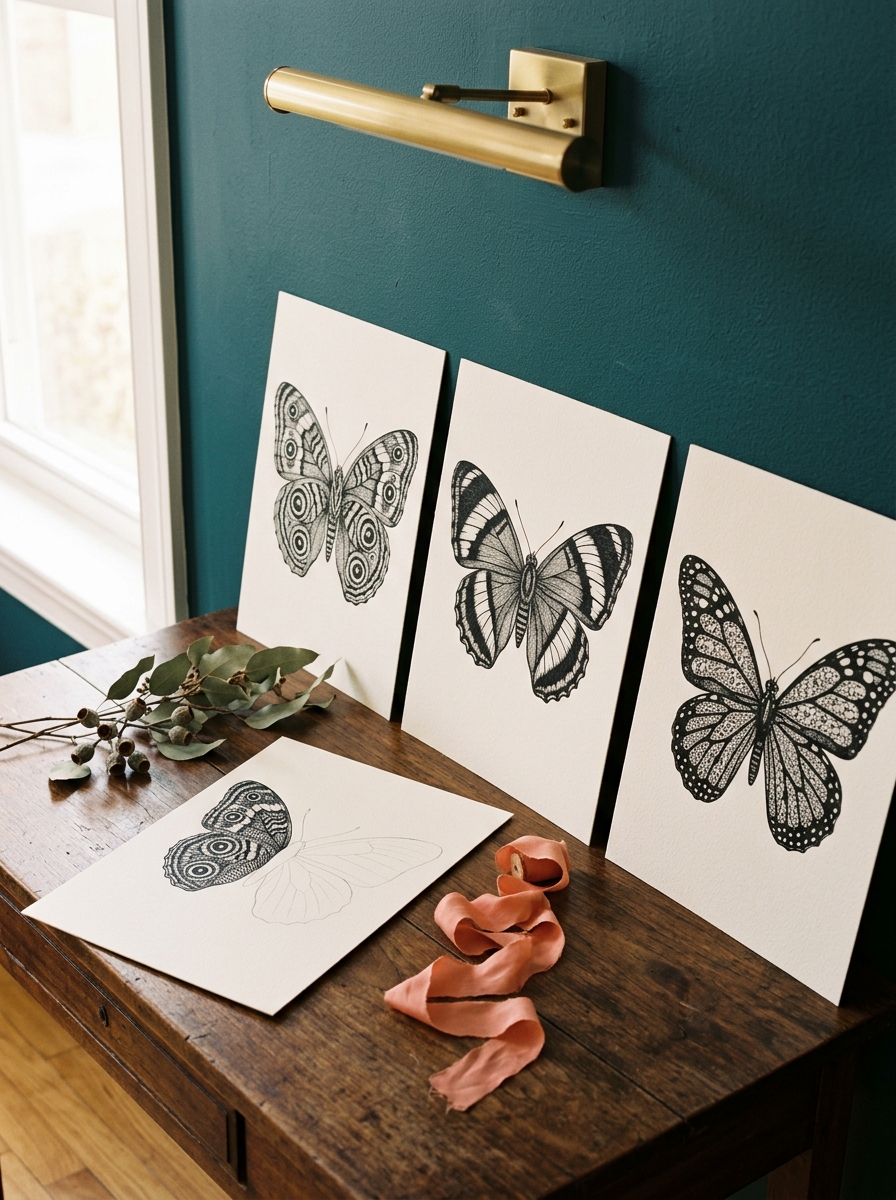
They do not have to match. They have to agree — same ink, same scale, same amount of black — and then three separate evenings start looking like one deliberate idea.
Do I have to draw the body and the antennae?
Yes, and they take about 20 seconds between them. Excellent return.
The body is three segments and a line. Head, thorax, a tapering abdomen. Draw it narrower than instinct suggests, because instinct is quietly thinking of a bee.
The antennae are two fine curves with a thickening at the tip. That is the whole insect outside the wings.
On timing, since you will want to know before starting one at half past 10: the outline and the mirror take under 5 minutes, a banded wing takes 20, and a full lace wing takes 90 of which you will notice about 10.
Free Starter Pack
10 pattern templates. Enough to fill 6 wings.
Sent tonight. Stipple, scallops, scales and lace — the fills this article keeps asking for.
Unsubscribe in 1 click, no hard feelings
30 fill patterns, every one broken into stages
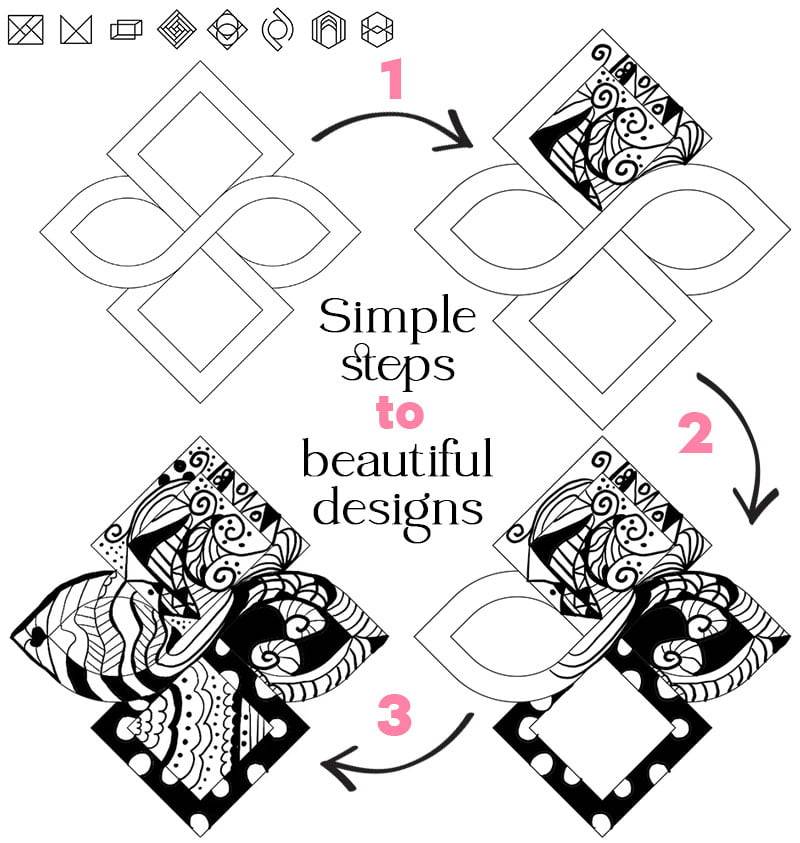
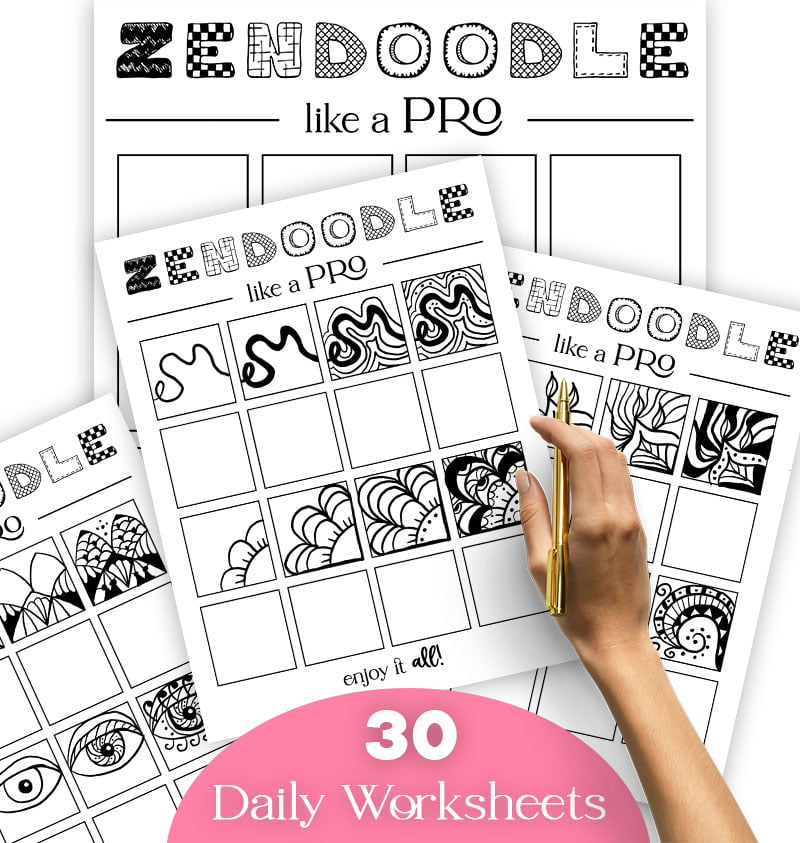

Tonight it is one wing, filled slowly while the room goes quiet. By the weekend it is three butterflies in a row above the stairs, same ink, same size, no two fills alike. Every scallop, every stipple field, every solid black margin — the whole route from an empty outline to something worth hanging.
Instant download · print as often as you like
Fill one wing slowly and something turns up on the paper that was not there when you sat down. It will not fly. It will, however, hang.
“This is ecstasy, and behind the ecstasy is something else, which is hard to explain.”
Vladimir Nabokov, Speak, Memory
Mirabelle wrote this. No training, strong opinions, many pens. Peer reviewed by a cat who has strong views on anything with wings.