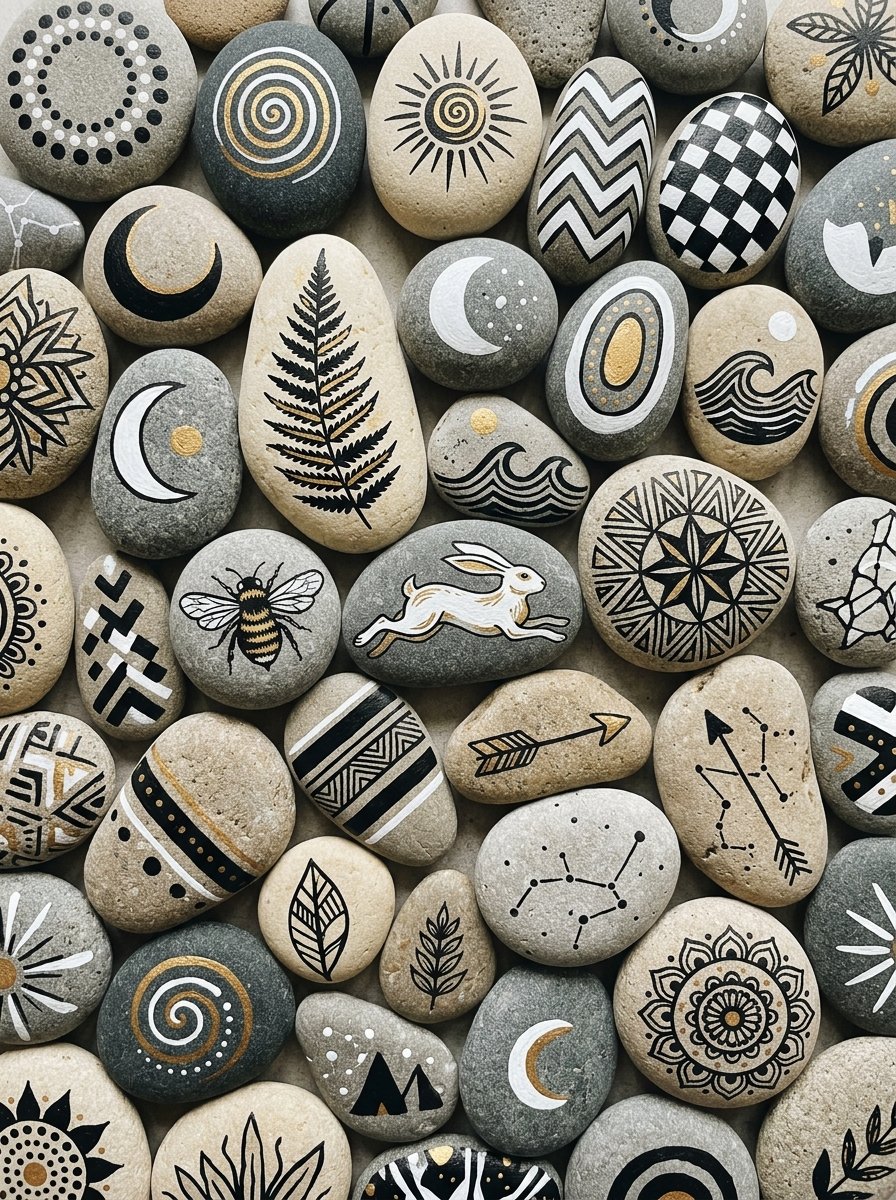
A dry stone tells you nothing at all. A wet one shows its banding, its speckle and its one pale seam. Every one of these 139 rock painting ideas for adults starts there.
Dry the stone and the markings go quiet. They have not moved. They are exactly where they were.
So the designs below are grouped by what the stone already is. Round, flat, veined, dark, or shaped like something.
Pick up a stone first. Then read the group it belongs to.
Start with the free sheet. Print it, cut out the outline that matches your stone, and trace round it.
Download the stone design sheet →
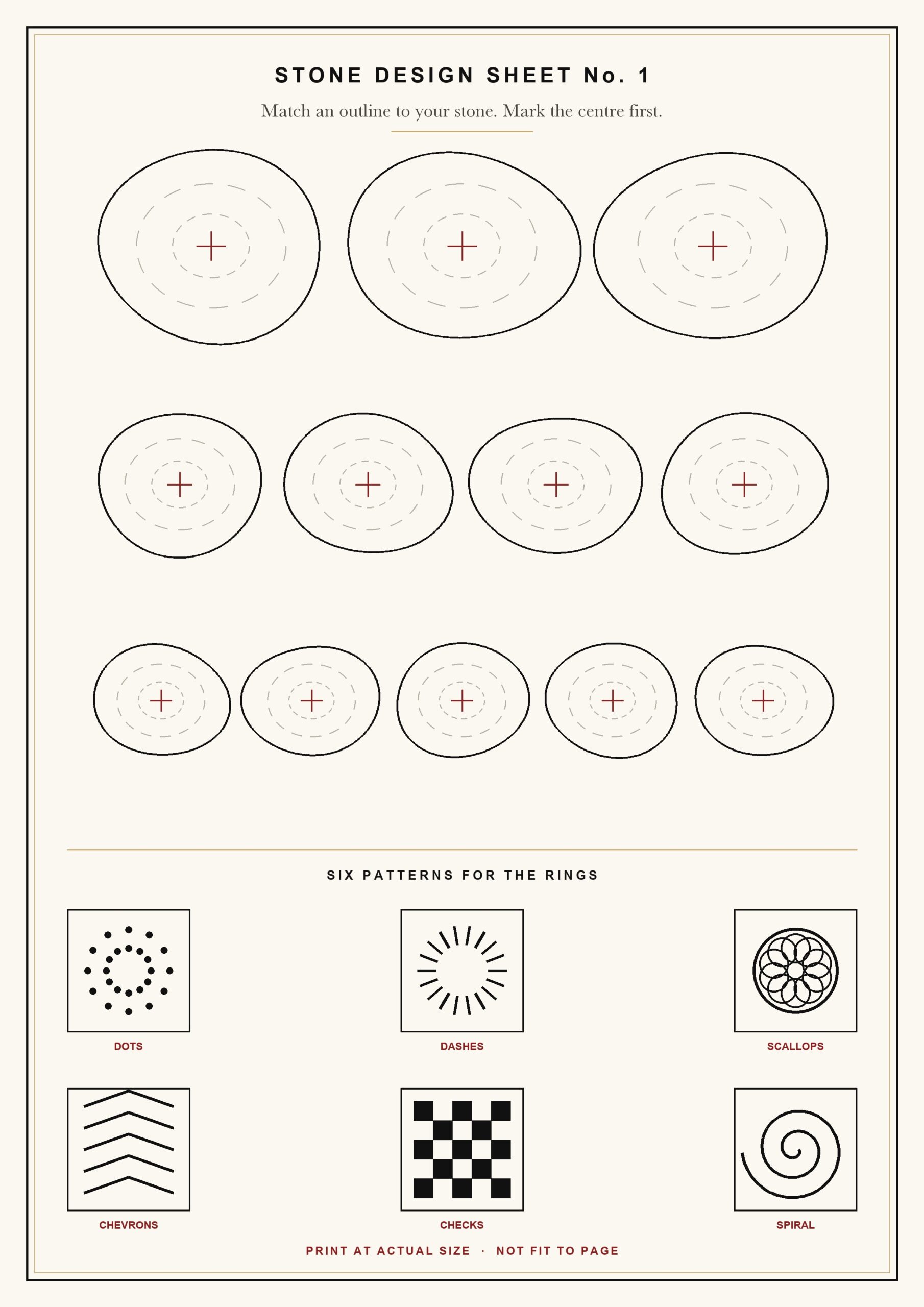
The sheet holds 12 stone outlines in three sizes, plus 6 pattern swatches. Hold a shape against your stone. If it is close, it will do.
Trace round the outline onto the stone with a pencil. Ordinary pencil wipes off wet stone, so work dry.
Then mark the centre. The sheet prints a small cross in every outline for this. (I skipped the cross for a whole summer. Every ring I painted drifted to one side, and I blamed the brush.)
One thing before paint touches anything. Wash the stone, then let it dry for an hour. Beach stones carry salt, and paint lifts off salt in flakes.
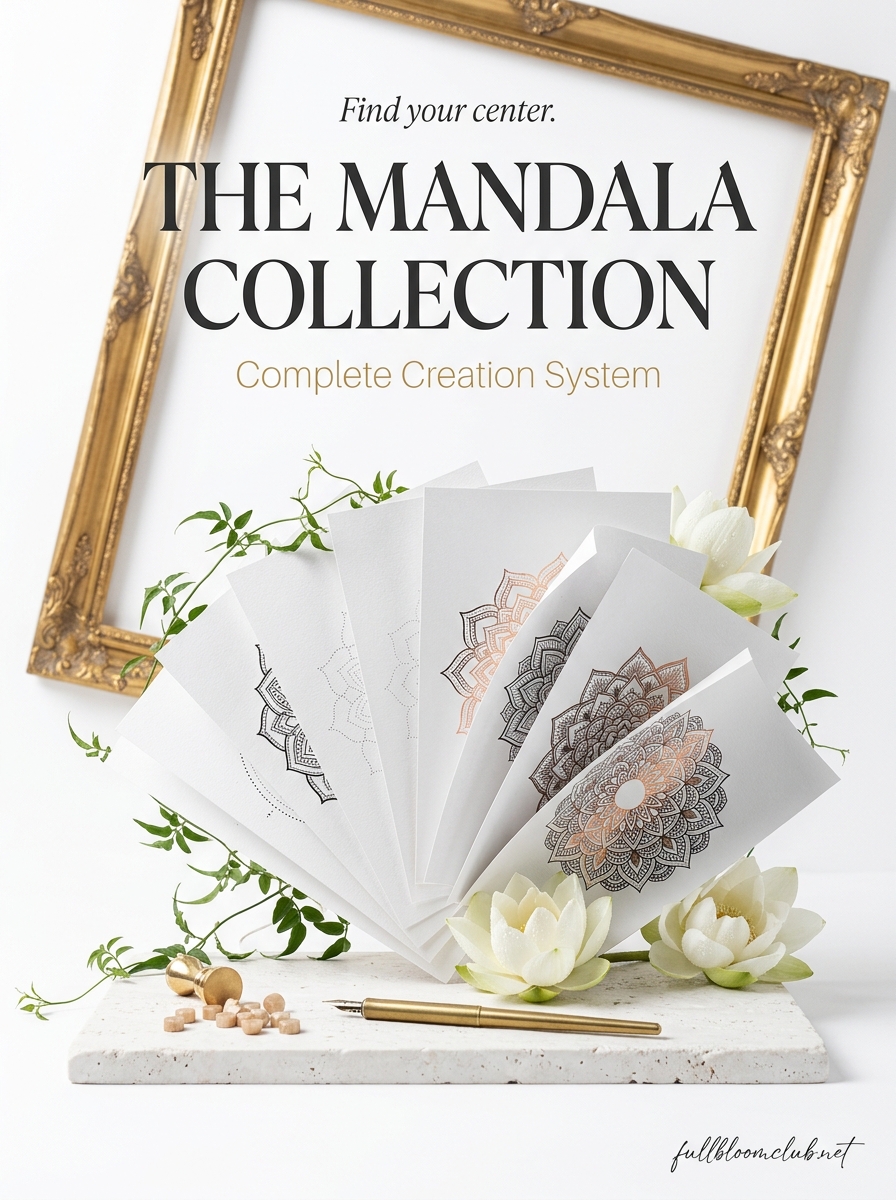
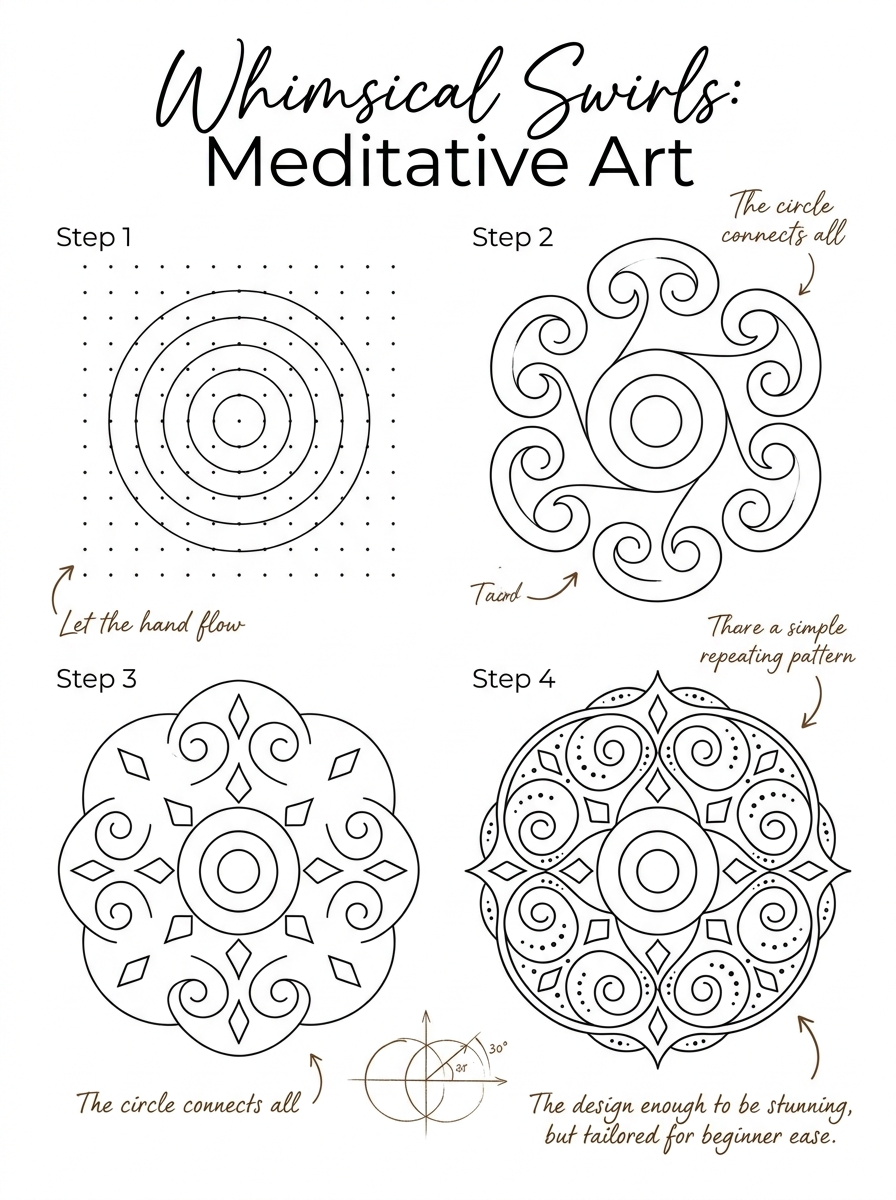
A round stone wants to be built from the middle outwards, ring by ring. That is also how a mandala is built. So I keep the mandala toolkit open beside the stones. Its 8 master grids are centres waiting for rings.
The Collection
MANDALA WORLD — a centre, a ring, and then another ring.
Every design starts at a centre dot and grows outwards, which is the one move a round stone asks for. What you get: 8 master grids to work out from, and 88 elements so the next ring is never a blank.
Now the groups. Find your stone in one of them and start there.
The roundest stones want a design that grows outwards from one dot
A round stone has no top. Turn it and nothing changes, so nothing tells you where to begin. The middle is the only honest place.
In the summer of 1934 Max Ernst pulled a granite pebble out of a stream near Maloja in Switzerland. He painted it in black, red and yellow, letting the bare granite show through between the shapes. His forms run all the way round the curve rather than sitting on one face. That is the whole lesson of a round stone.
Dot rings come first for everyone. Find the centre before the first dot. Concentric rings want uneven gaps. Equal gaps read as a target. (A target is a perfectly good thing to paint. It is just not the thing you meant.) A sunburst is easier drawn from the rim inwards. A spiral always tightens too fast, so run two on a scrap.
A flower centre is 1 dot and 6 around it. Petal rings go on after that, never before. Scalloped rings hide a wobble better than straight ones. Dashed rings are the forgiving version of dot rings. Triangle rings look sharp and need a sharp pen. I fitted 9 petals round a centre meant for 6 once. The last 3 became decoration.
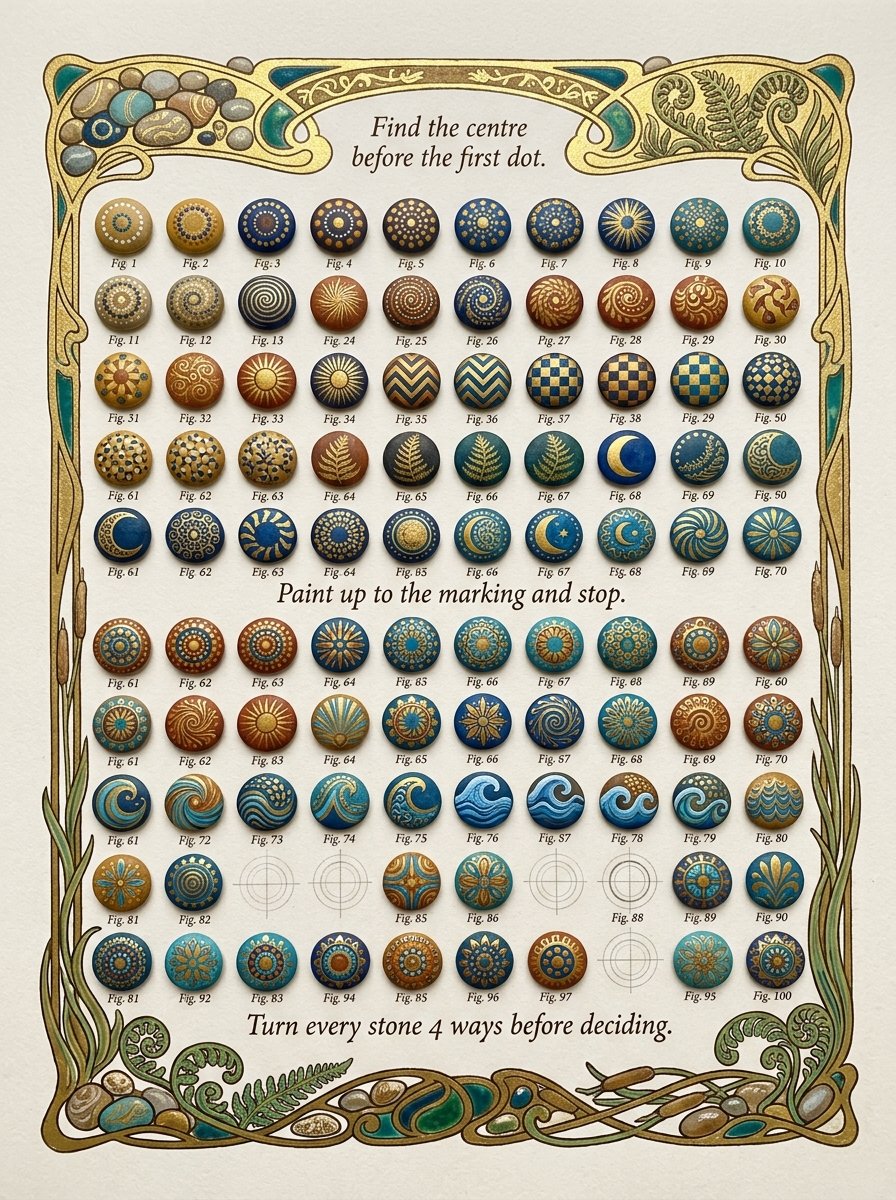
Teardrop petals all have to point the same way round. Lace rings want a very fine tip and a slow hand. Wheel spokes should be an odd number. An eye wants its white dot last.
A moon face is 3 marks and no more. (The 4th mark is always a mouth. The mouth is always a mistake.) Ripple rings work best off centre. A compass rose needs its 4 long points drawn first. Nested circles are the one design that forgives everything.
A pinwheel reads as movement if the curves all bend the same way. A rosette is petal rings done twice. A dandelion clock is dots on hairlines, painted outwards. A bullseye is the quickest finished thing on this page.
Turn the stone as you paint, instead of turning your wrist. The hand stays still and the ring comes out round. (A wrist turning on a curve draws an egg. I have a shelf of eggs.)
Flat stones behave like small paintings, so these rock painting ideas for adults borrow from a page
A flat stone has a front. It sits down one way and shows you a rectangle, and a rectangle behaves like paper.
Somebody worked this out in the 1530s. Sebastiano del Piombo was the first painter of his era to work on slate. He did it because he believed a painting on stone would outlast one on canvas or wood. He was right, which is a pleasant thing to know while painting a stone from the garden.
A horizon line is the whole picture. Put it a third up, never halfway. A hill line wants 2 bumps, not 3. A row of rooftops is just triangles on a line. A single tree should lean. (Every tree I have painted upright on a stone looks like it is waiting for a bus.)
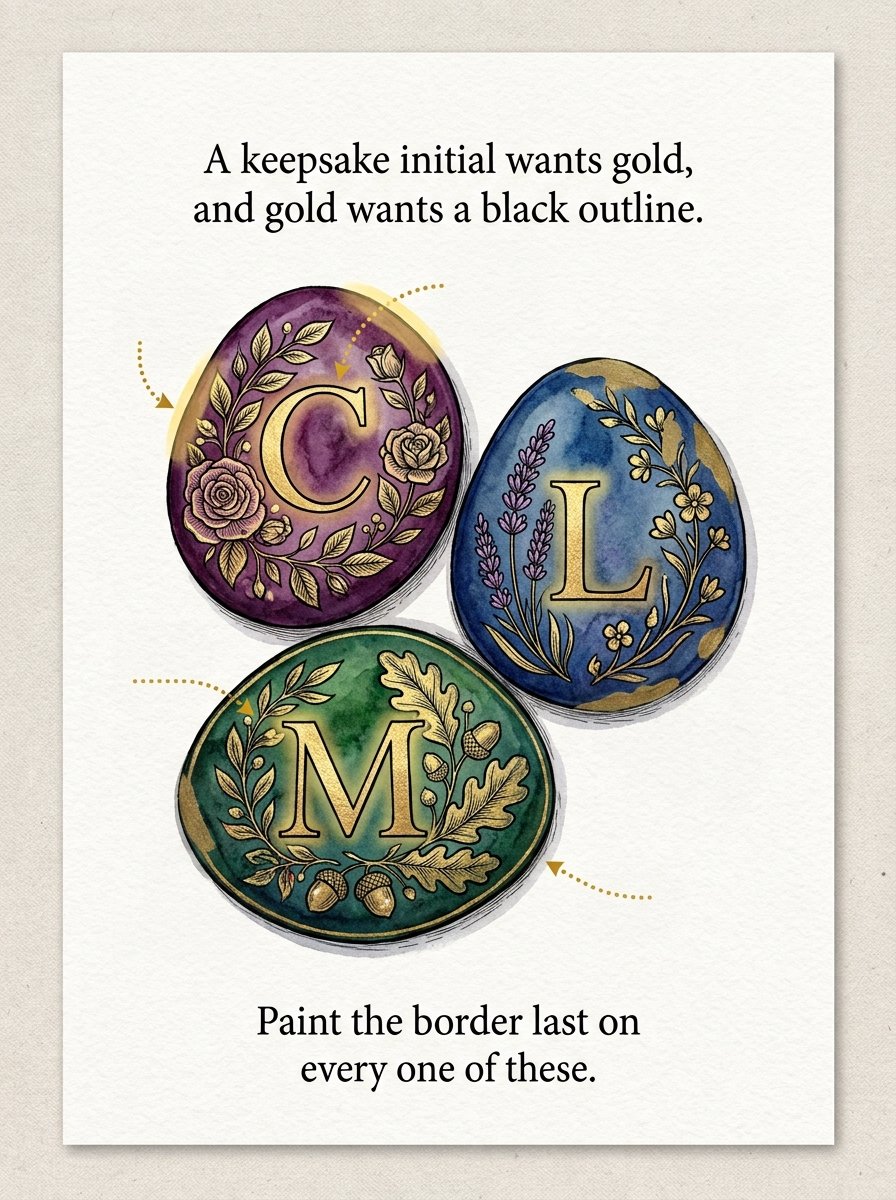
A moon over a line needs nothing else on the stone. A border frame goes on last, because it covers the untidy edge. A corner motif in 2 corners beats one in 4. A monogram should be drawn in pencil twice before paint. (Letters bend away from you on a curve. Catch it on the second pencil pass.)
One word is a design, and the short words look best. Stripes want an odd count. Checks only work if you paint the dark squares and leave the light ones bare.
A quilt square is 4 small designs in one. A tile pattern is the same shape flipped. A fan is a quarter circle of lines. A wave band should never be even.
A chevron band goes wrong at the ends, so start in the middle. (Both ends then go wrong equally, which reads as a decision.) A ladder is 2 lines and rungs. A diamond lattice needs a pencil grid first. Herringbone is the one to try on a scrap. A bee is 3 stripes and 2 wings. A leaf is a line with a fan either side.
A fern is that leaf repeated smaller. A feather is a fern with a gap down the spine. Paint the border last on every one of these. The border is what makes it look finished. (It also hides where the pattern ran out of stone. Mine often does.)
The markings already in the stone can do most of the drawing for you
Hold the stone to the light and the veins show.
They are a drawing somebody else started.
Antonio Tempesta made a career of exactly this. Between 1610 and 1620 he painted on a banded Italian limestone. Its own veining already looked like the skyline of a whole city. He painted only the parts that were missing. He did the small half.
A vein makes a river if you paint banks either side. The same vein makes a branch with leaves hung off it. It makes a horizon if it runs flat. It makes a road if you narrow it as it goes up. (A vein will not go where you want it. That is the whole arrangement.)
A crack becomes lightning with nothing added. A parting line becomes hair. Speckle becomes stars on a dark stone. Speckle becomes a flock if you outline 3 of the dots. (Outline 6 and it stops being birds and starts being weather.)
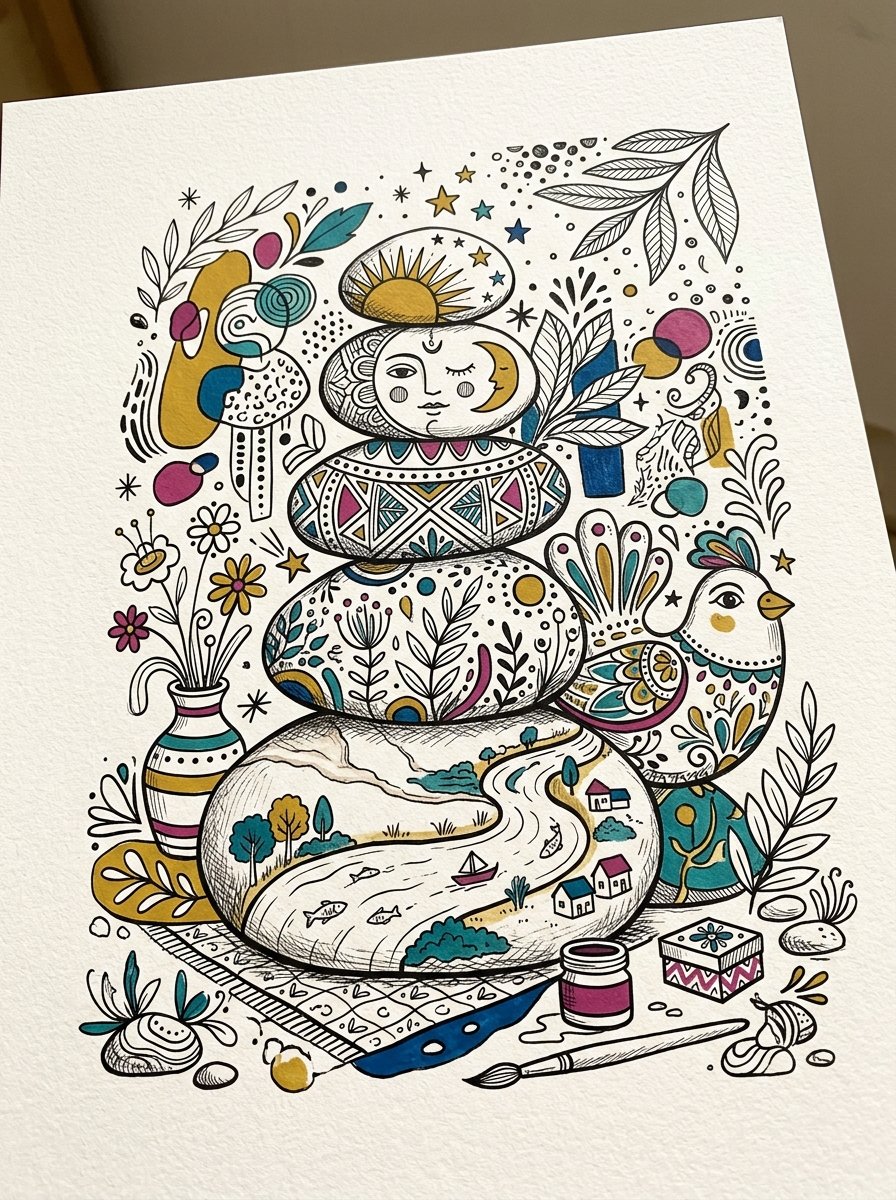
Speckle becomes bubbles rising if you circle them. A band round the middle is a belt. The same band is a ribbon if you paint a knot on it. A pale seam is a path, and paths look better curved.
A seam across the top is a wave crest. A soft grey patch is smoke. A rust spot is a sun. A smaller rust spot is a moon. A round rust spot is a berry.
A hole is an eye, and the stone chooses the animal. A hole near the edge is a window. A chipped point is a beak. A ridge is a spine to hang legs from. A dark half is water. A light half is sky. A quartz streak is a comet and needs no tail.
I argued with one stone for a week about what it was. It was a seal, and it had been a seal the whole time.
The rule for all of them is the same. Paint up to the marking and stop. Painting over it throws away the reason you chose the stone. (I painted over a quartz seam in 2021. I have thought about it since.)
Dark and speckled stones only need the few marks that catch the light
A dark stone is already the background. Nothing has to be filled in, which makes this the fastest group here.
Jacques Stella built pictures this way in Rome in the 1620s. He worked on black slate. He left areas of it unpainted, so the bare slate became the dark part of the picture.
The stone did the shadows. He painted the light.
White dots make a constellation. Join 3 of them and it becomes a real one. A white outline animal reads from across a room. A white botanical sprig is 1 stem and 5 leaves. A white moon should sit off centre.
White lace is dots and loops, nothing harder. White script needs a pen you have tested. White waves are 3 lines with gaps. White mountains are 2 triangles and a line.
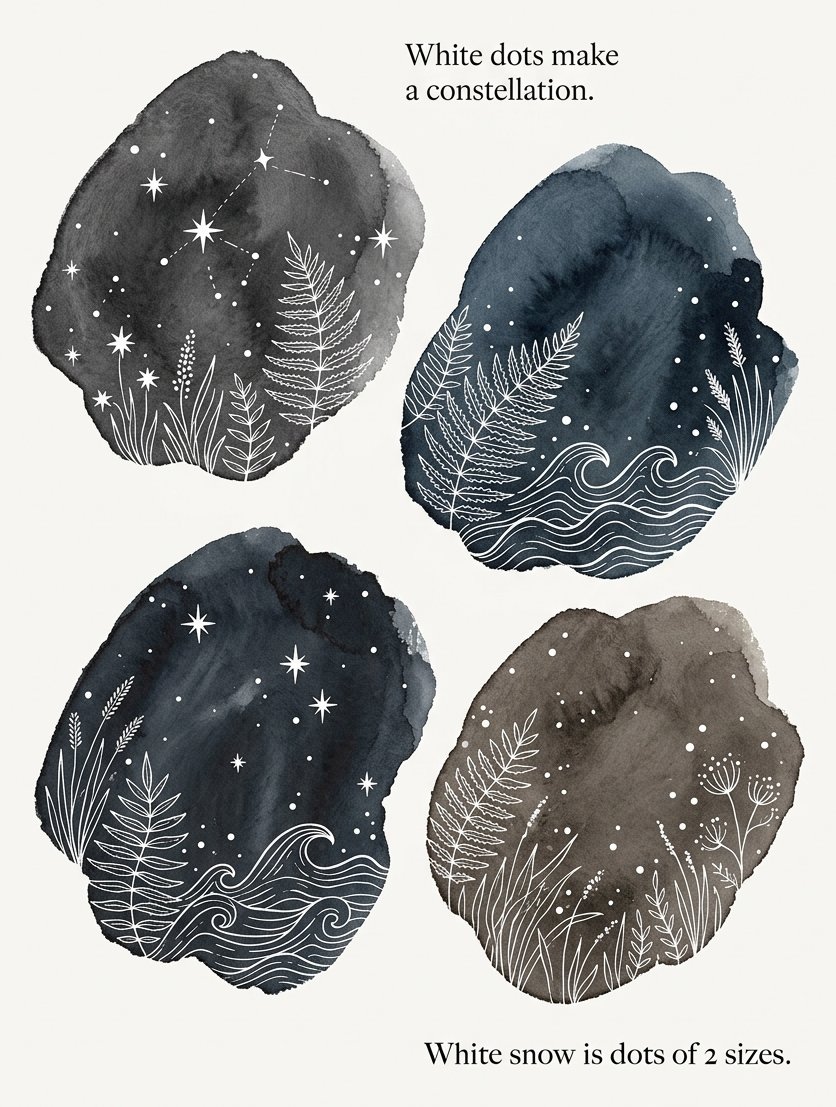
A white fern is drawn from the tip back. A white web starts with the spokes. White wheat is a stalk and 12 short strokes. A white feather wants a gap down its middle.
White rain is slanted lines, all one way. White snow is dots of 2 sizes. White stars look right at 4 points, not 5. A white ring round the whole stone is a finished object in 2 minutes.
A white leaf skeleton is a fern with the fill missing. White coral is branching lines that never cross. A white jellyfish is a dome and loose threads. White antlers should be uneven. A white honeycomb needs a pencil grid. White arrows want an odd number. White birds are 2 curves each. White grass is drawn upwards, always.
Use 1 white pen and nothing else in this group. A second colour on a dark stone usually flattens it. (I have a drawer of coloured pens that have been to a beach exactly once.)
The best rock painting ideas for adults finish a shape the stone has already started
Some stones arrive halfway to being something. An egg, a wedge, a long smooth curve. The job is to finish it, not to cover it.
Erdal Parlaklı has earned his living painting pebbles in Antalya for 20 years. The form of the stone he picks up decides what goes on it. He spends about 3 days on one. He describes stone painting as a determination, which is a good word for it.
An egg shape becomes a bird if you add a beak at the narrow end. The same egg becomes an owl with 2 circles high up. A teardrop becomes a mouse, tail off the point. An oval becomes a fish, and the eye goes further forward than feels right.
A long oval becomes a whale with 1 curved line. A triangle becomes a fox face, ears at the wide end. The same triangle becomes a mountain if you turn it over. A wedge becomes a slice of melon in 3 colours.
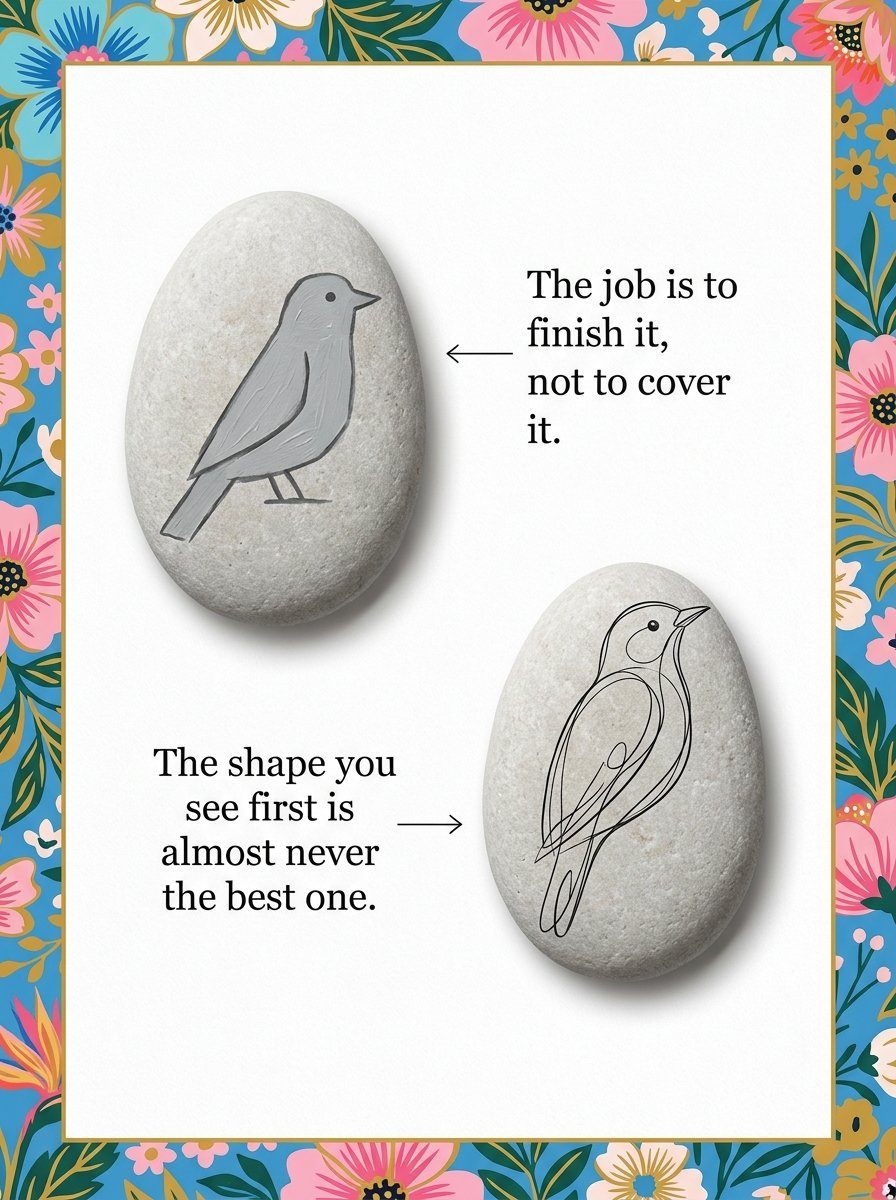
A long stone becomes a sleeping cat, nose to tail. A long stone with a hump becomes a hare. A rounded lump becomes a hedgehog, spines on one side only. A kidney shape becomes a sleeping dog.
A pointed stone becomes a leaf, veins drawn last. The same point becomes a flame. A lumpy stone becomes a toad and enjoys it. A flat disc becomes a sun. A thin stone becomes a bookmark with a border.
A pitted stone is already a moon, so just outline the craters. A humped stone is a hill with a tree on top. A two-lobed stone is a pair of butterfly wings. A heart-shaped stone gets left alone except for a border.
A square stone becomes a house, roof drawn on the top edge. A notched stone becomes a crown. A forked stone becomes a bare tree. A smooth pale stone becomes a candle with 1 small flame.
Turn every stone 4 ways before deciding. (Mine spent a fortnight as a very poor whale before somebody turned it and it was obviously a cat.)
The shape you see first is almost never the best one.
Some rock painting ideas for adults are made to be left somewhere, and that changes how you paint them
A stone you keep can be complicated. A stone you leave has about 2 seconds to work, from further away than you think.
In March 2015 Megan Murphy walked a two-mile stretch of Sandy Neck beach on Cape Cod. She left 5 painted stones along it, each about the size of a golf ball. One of them said “You’ve got this”. The idea went round the world from a 2-mile walk.
A two-word message is the whole design. A single word is better. An arrow only works if it is huge. A heart wants a thick outline, not a thin one.
A small sun reads at 10 paces. A rainbow arc needs 4 bands, not 7. A fried egg is the one everybody picks up. A ladybird done properly has an uneven number of spots and is worth rescuing from its reputation.
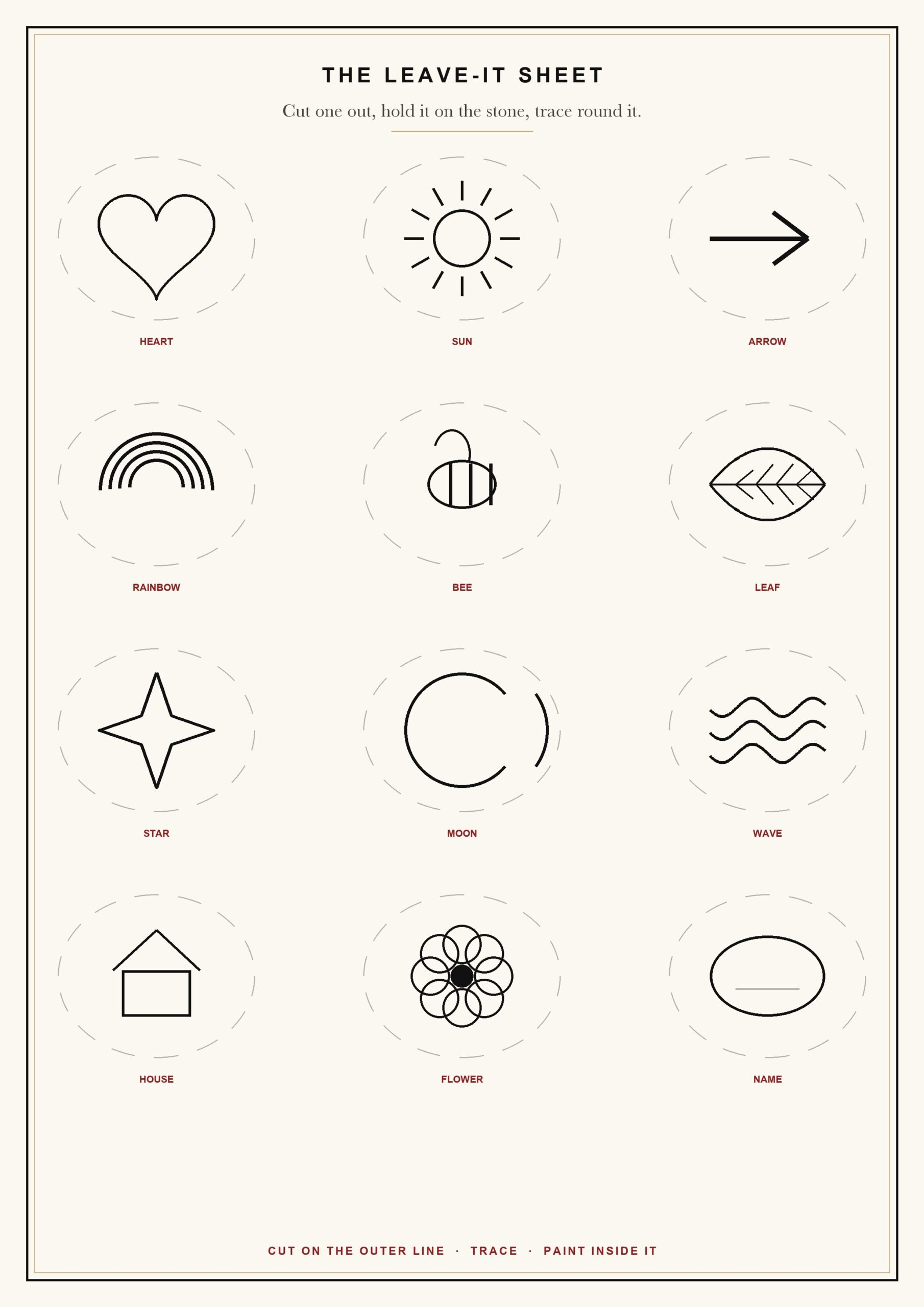
The second sheet is the leave-it set. Cut out a design, hold it on the stone, trace round it, and paint inside the line.
A house number goes by the gate and wants 1 colour only. A plant marker gets the name on the flat top. A garden label should be sealed twice. A monogram paperweight needs a border to look deliberate.
A pair of bookend stones want the same pattern at 2 sizes. A set of 4 coasters is a set only if the rings match. A doorstop wants wide stripes. A bowl of stones works if they share one colour.
A stacked cairn should have its pattern painted after stacking. A path edge is 20 stones with the same simple ring. A pot topper is 3 stones, all different. A gift tag stone takes a single initial.
A place setting stone takes a name in pencil first. A keepsake initial wants gold, and gold wants a black outline. A hidden stone for a park should carry no address. A matching set of 5 rings is the calmest evening on this page.
Seal anything that goes outdoors. 2 thin coats of clear sealer, an hour apart, and never 1 thick one. (I sealed one in the rain once. It stayed tacky for a week and collected a moth.) Indoors, stand a row of them along a shelf edge. Face them all the same way, tallest at the ends. On a windowsill, put the palest stone where the light lands.
Free Starter Pack
Get 10 free pattern templates for the rings of a round stone.
Sent tonight. Bold rings, dots and scallops that fit inside a circle.
Unsubscribe in 1 click, no hard feelings
Every design in this post is a small pattern held inside a circle. After a few evenings I ran out of patterns before I ran out of stones. The mandala toolkit is where I go for the next one. A mandala is nothing but rings of pattern round a centre dot.
8 master grids and 88 elements, all built out from one centre
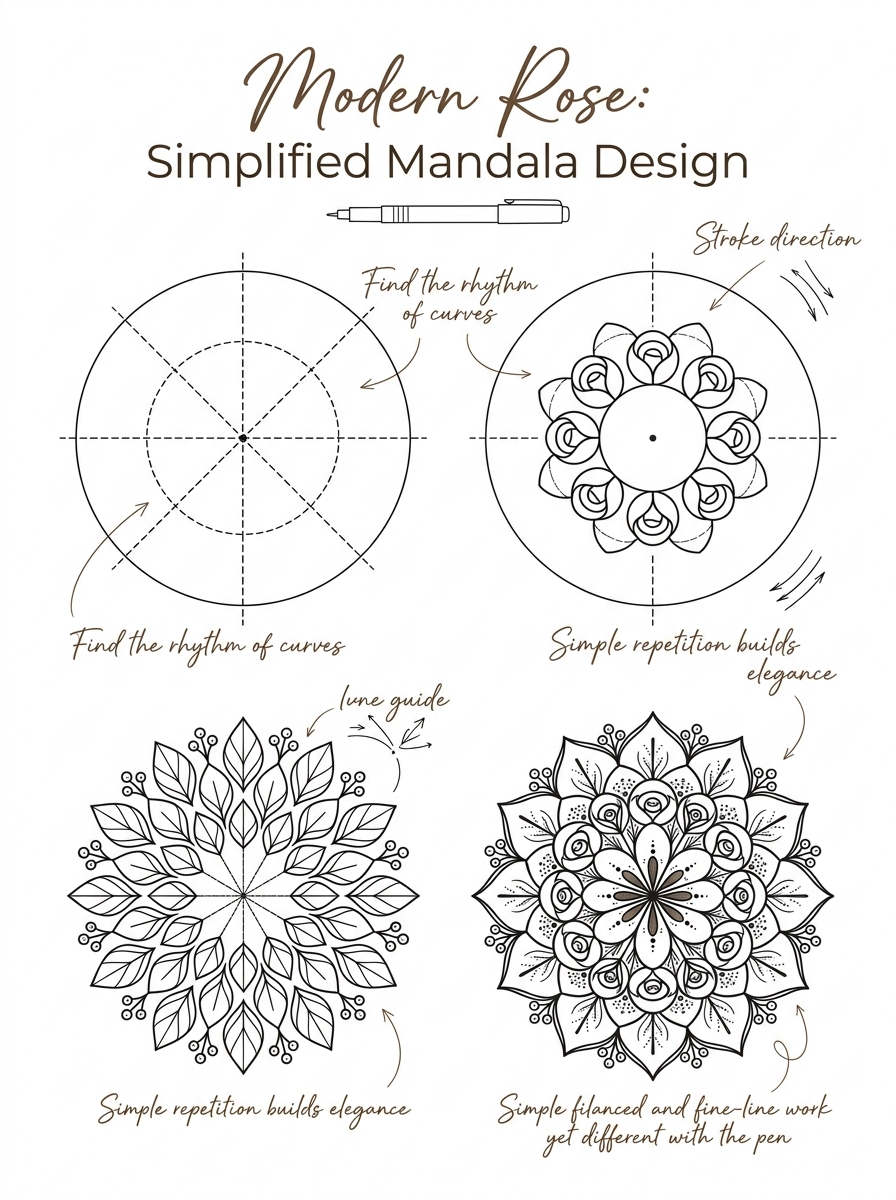
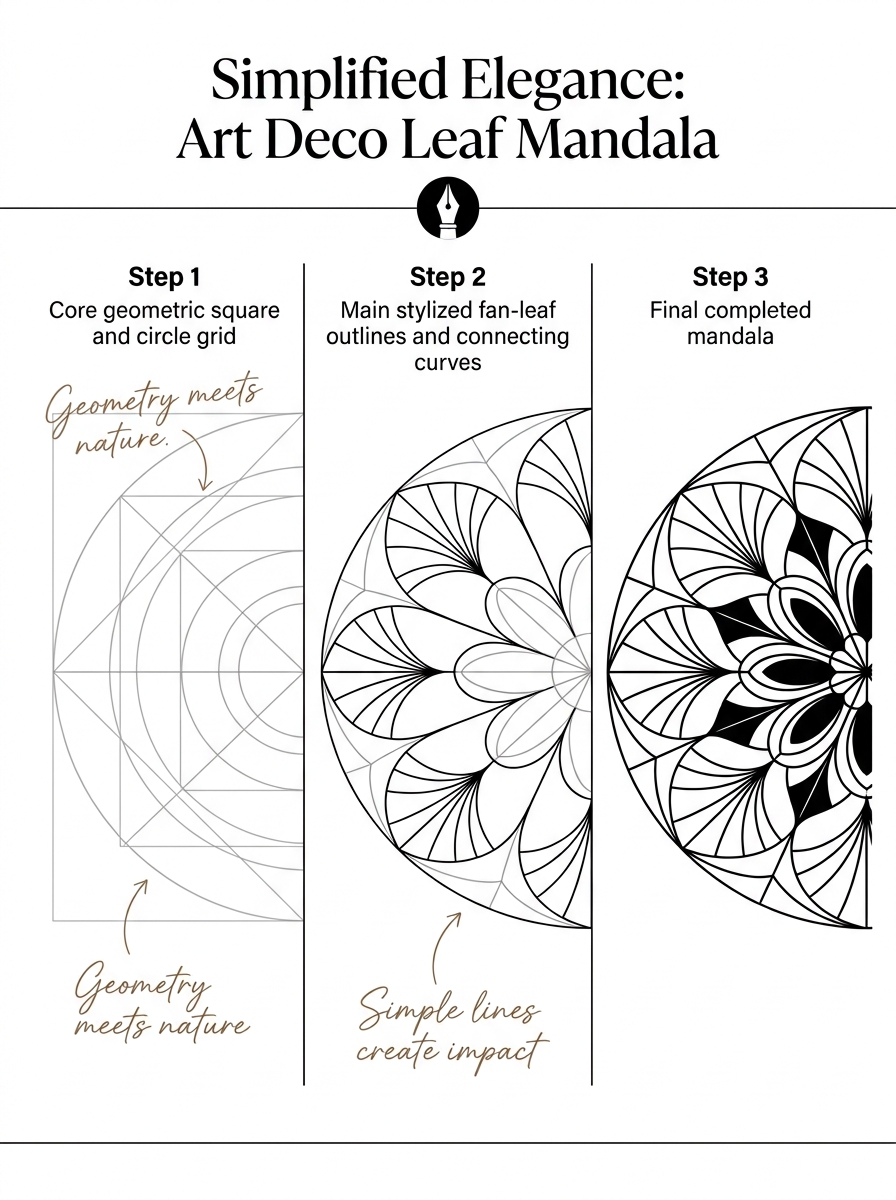
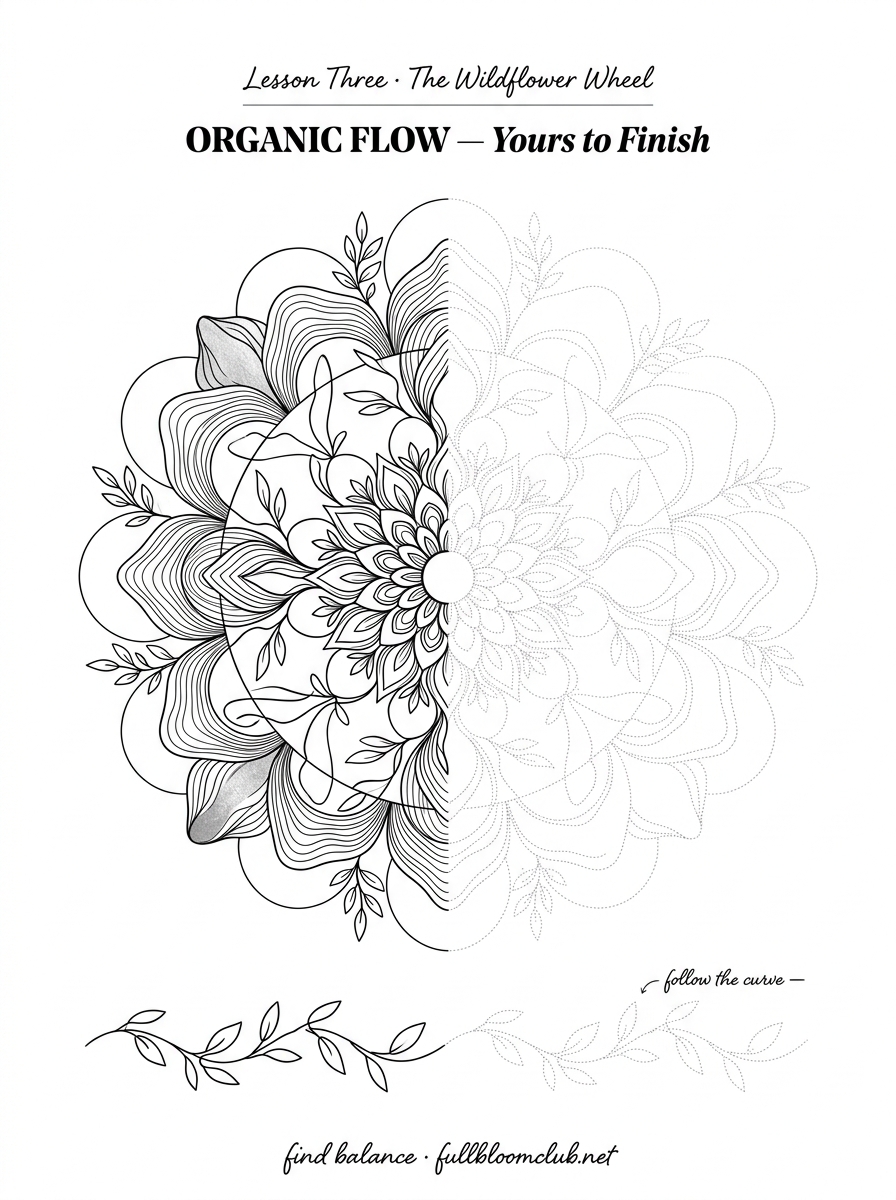
Draw one ring on paper tonight. When the hand knows it, take it out to a stone. Print the grids, or work freehand.
Instant download · print at home
A stone has been getting itself ready for this for a very long time. It has been rolling about and losing its corners, waiting for somebody with a pen and an evening to spare.
“It means to be like a stone, to be as tough and resilient as a stone.”
Erdal Parlaklı, Antalya
Mirabelle wrote this. No training, strong opinions, many pens. Peer reviewed by a cat who tested every stone for sitting quality.