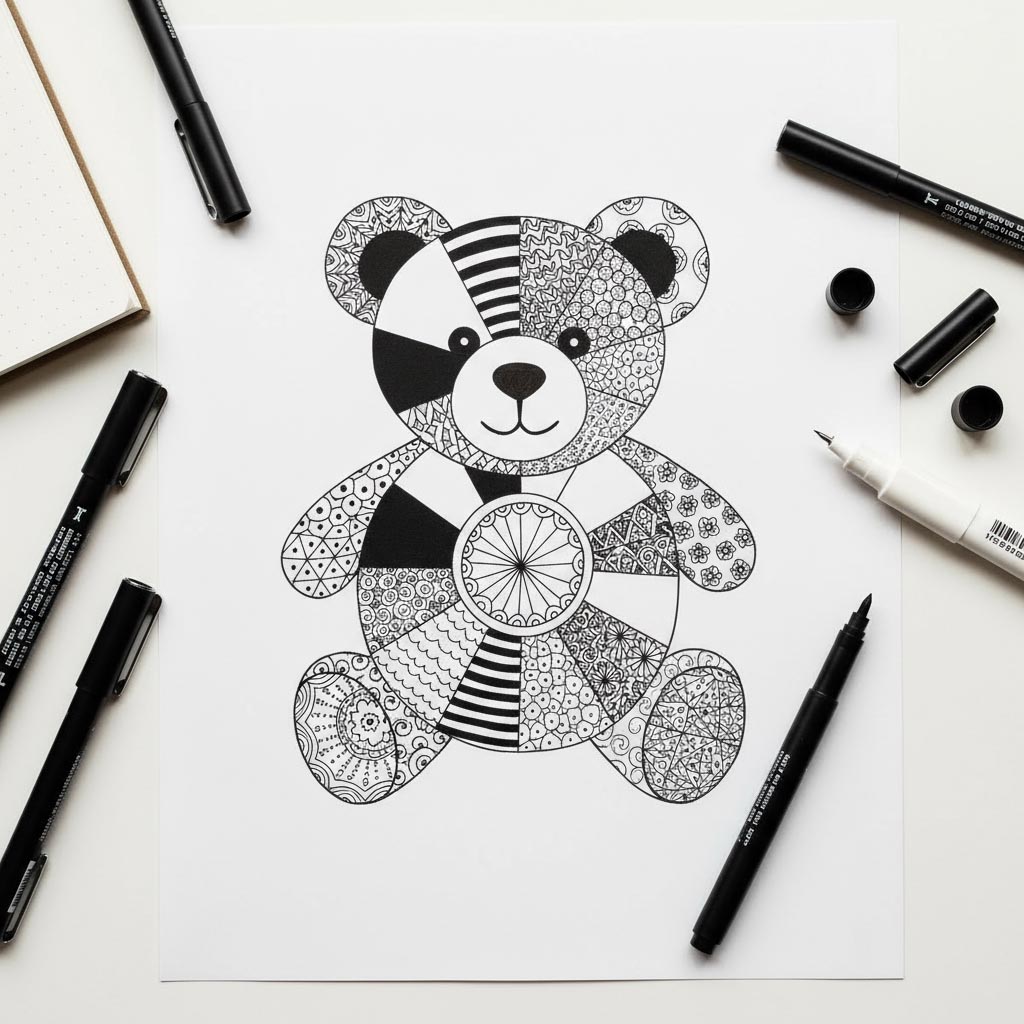
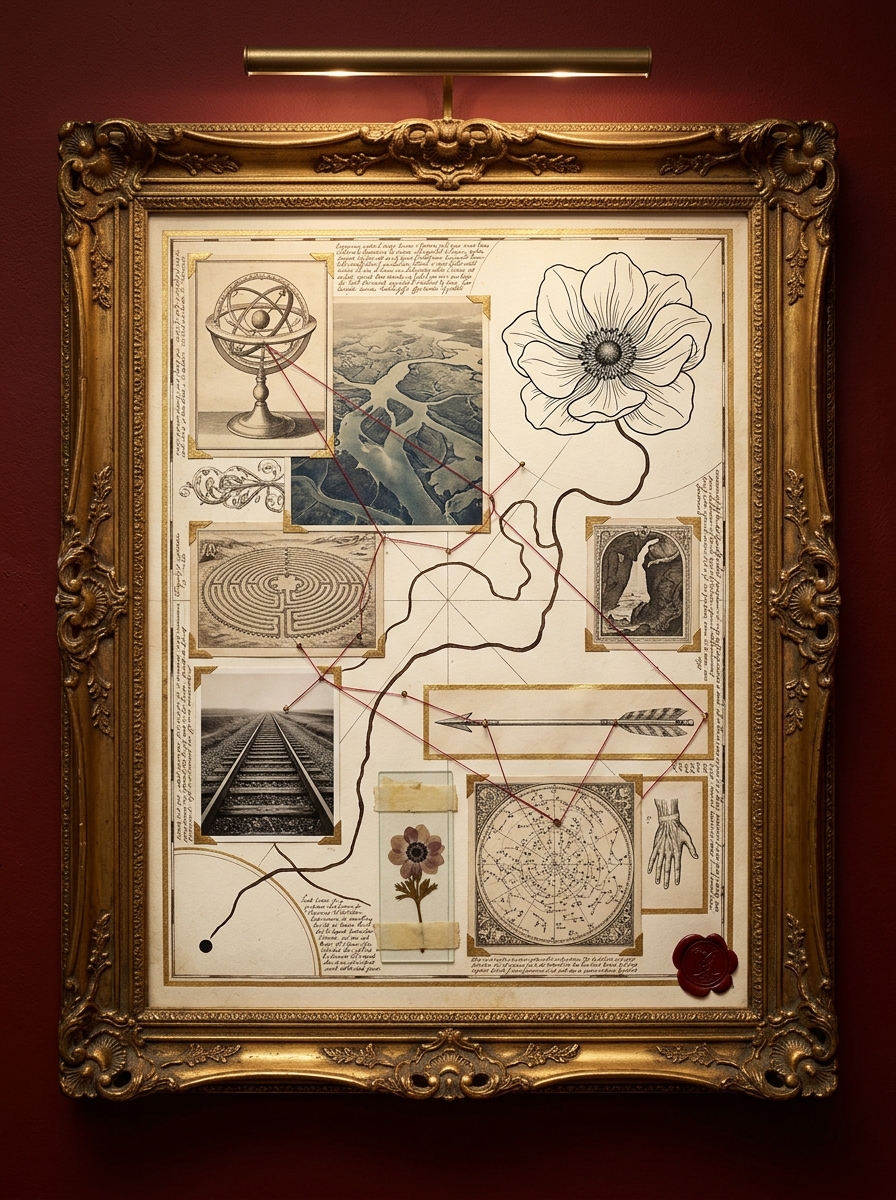
1,253 drawings in a single year. That is the count, and the man who made them was dying while he did it.
Paul Klee had had scleroderma since 1935 and it went for the joints of his hands first. By 1939 going back over a line was not something his hands would do.
So he stopped going back over them. He put the pen down, walked it once, lifted it, and started the next one. 1,253 times in the year before he died.
It is the largest year of his life, and it happened once he lost the ability to correct anything. Which makes him the least likely teacher of line drawing for beginners, and the best one.
What is below: why the first line is usually the right one, the exercise that proves it in about 4 minutes, and one flower you can draw tonight without correcting anything.
Download the free anemone sheet →
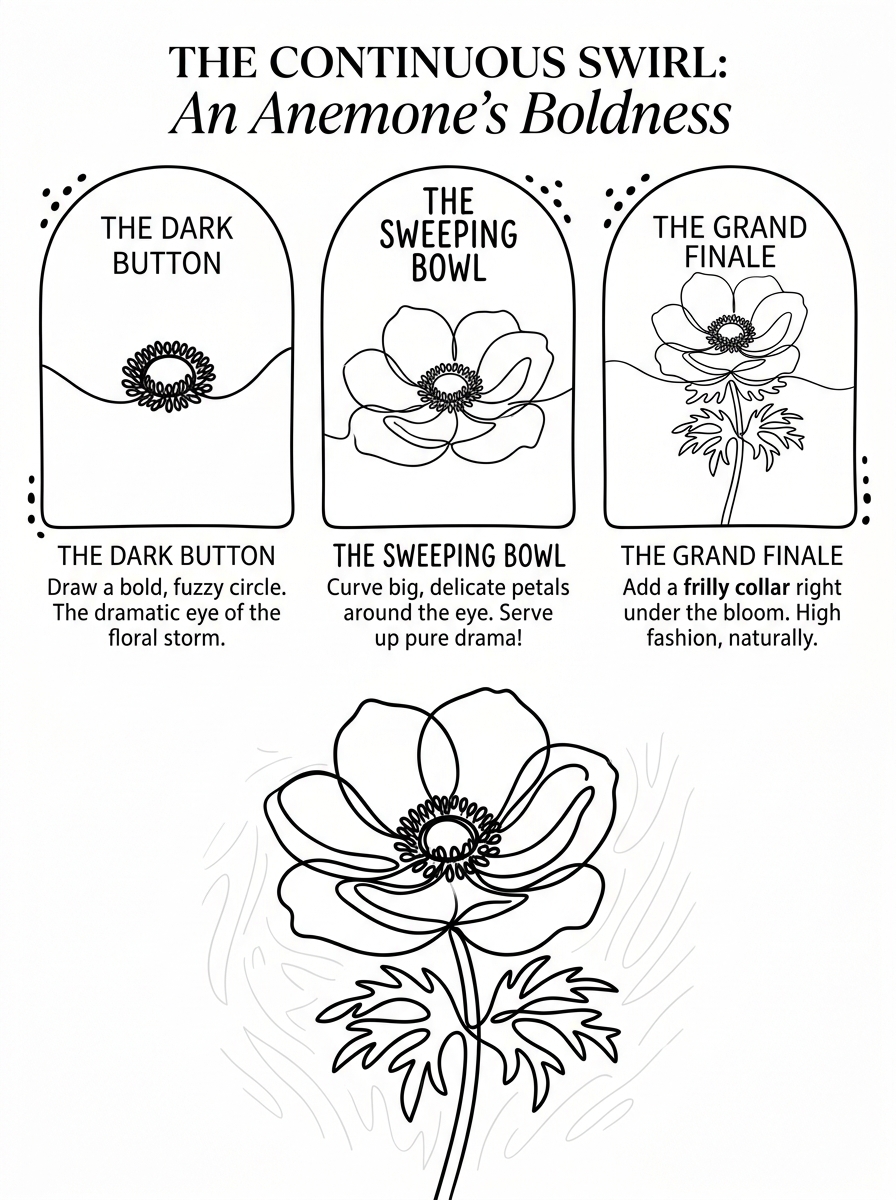
One walk of the pen. The dot is where it lands, the arrow is where it leaves, and there is nothing in between for you to have an opinion about.
That is the whole method, and it is also the whole argument. The trouble is almost never the first mark.
It is mark 2, and mark 3, and the small grey hairy area where marks 4 through 9 went. Which is a problem practice does not touch, because practice is what put them there.
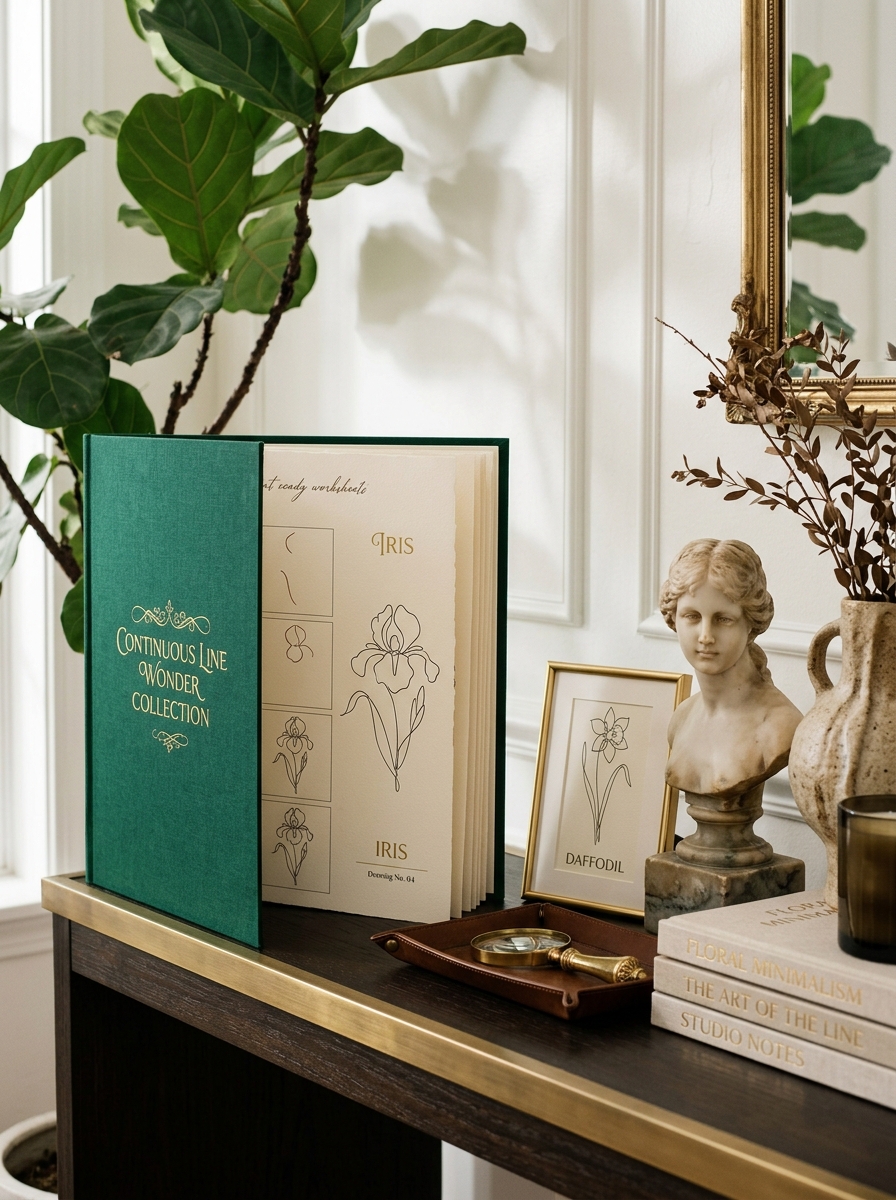
The Collection
CONTINUOUS LINE WONDER — petals, stems, and 30 flowers you are not allowed to correct.
The set for the evening when you have decided, again, that you will draw something and not ruin it this time. 30 flowers, each one a single walk of the pen, with the start marked and the finish marked and nothing in between to argue with. (Being told where to stop is the expensive part.) What you get: a flower in about 10 minutes, and no version of the evening where you thicken a stem for 40 minutes.
Back to the anemone, and to the awkward question underneath all of this: how would you even know whether your first line was any good, when you have never once let one stand?
The first line was probably right and you never found out
Here is what actually happens at the table. You put down a stem. Something about it looks wrong — not wrong in a way you could name, just wrong — so you go over it. The second pass is heavier, so now the stem is the darkest thing on the page and it has become the subject of the drawing.
You go over it again to balance it. Then the flower has to get heavier to keep up.
Nothing was corrected at any point in that sequence. It just got louder. (I have a folder of these. Every one of them started as a light, quick, perfectly reasonable drawing that I then rescued to death.)
The reason it looks wrong in the first place is worth knowing, because it is not your eye. It is your vocabulary.
Your hand draws what is actually in front of it. Then some other part of you compares that against the word “flower” and reports a mismatch.
The mismatch is real. It is just not a mistake. It is the gap between a living thing and a filing label, and the living thing is the one you are supposed to be drawing.
You are not fixing the drawing. You are asking the drawing to agree with a word.
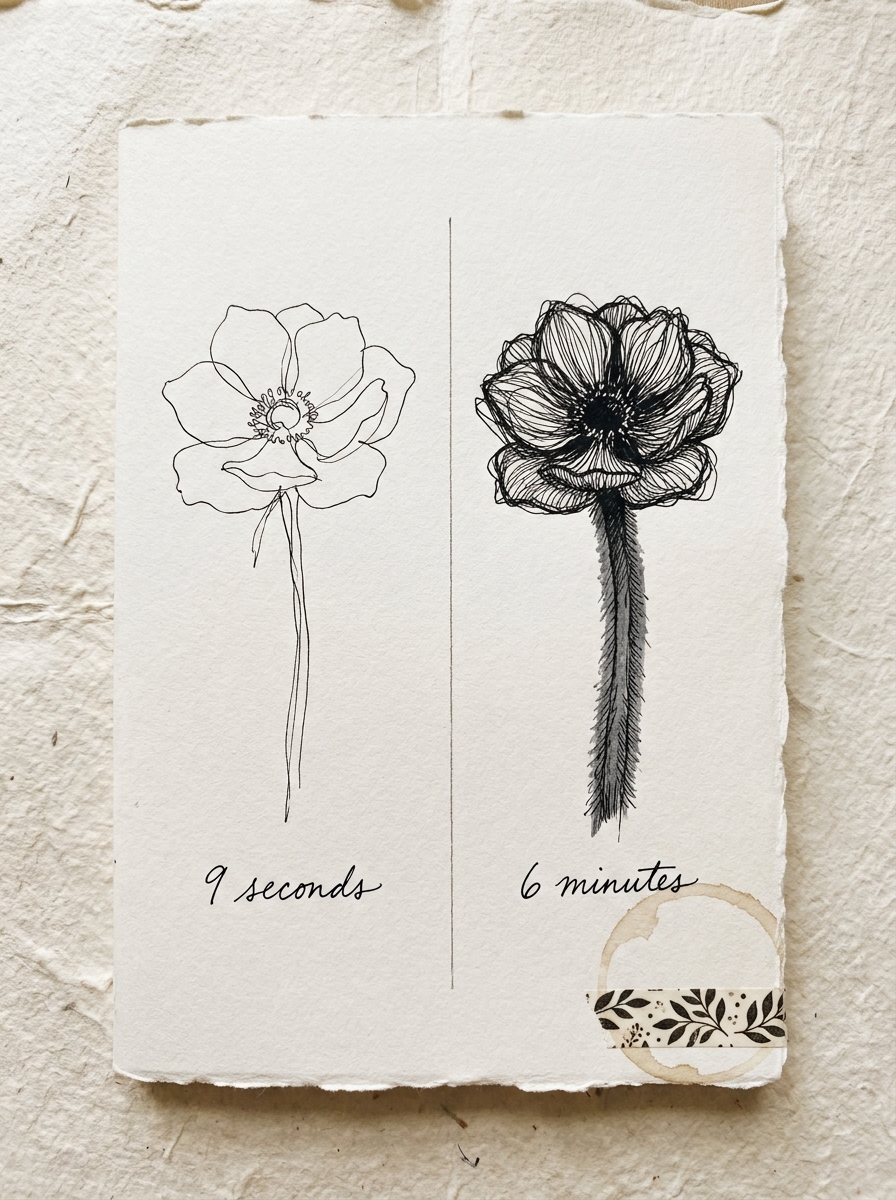
Same shape twice. The left one took 9 seconds. The right one took 6 minutes and is worse, and you can see exactly where the worrying started.
1979, and the drawing exercise that removes your opinion
Betty Edwards published Drawing on the Right Side of the Brain in 1979 and it has been in print ever since, largely on the strength of one exercise.
You take a line drawing — she uses a Picasso portrait — turn it upside down, and copy it upside down. That is the entire instruction. People who insist they cannot draw produce something startlingly accurate, and are usually annoyed about it.
Her explanation was that the verbal side of the brain refuses the job. In her words, it says “I don’t do upside-down. It’s too hard to name the parts”, and hands the work to the side that can actually see.
The neuroscience in that book has aged like milk. Left brain, right brain, the whole tidy split — not how any of it works. (Which is a shame, because it was the most useful wrong idea in the history of art teaching.)
The exercise, however, still works every single time, and the reason it works is the reason this article exists: you cannot correct a shape you cannot name. Turn the flower upside down and the word “petal” stops arriving. What is left is a curve and an angle, and your hand has never had a problem with curves and angles.
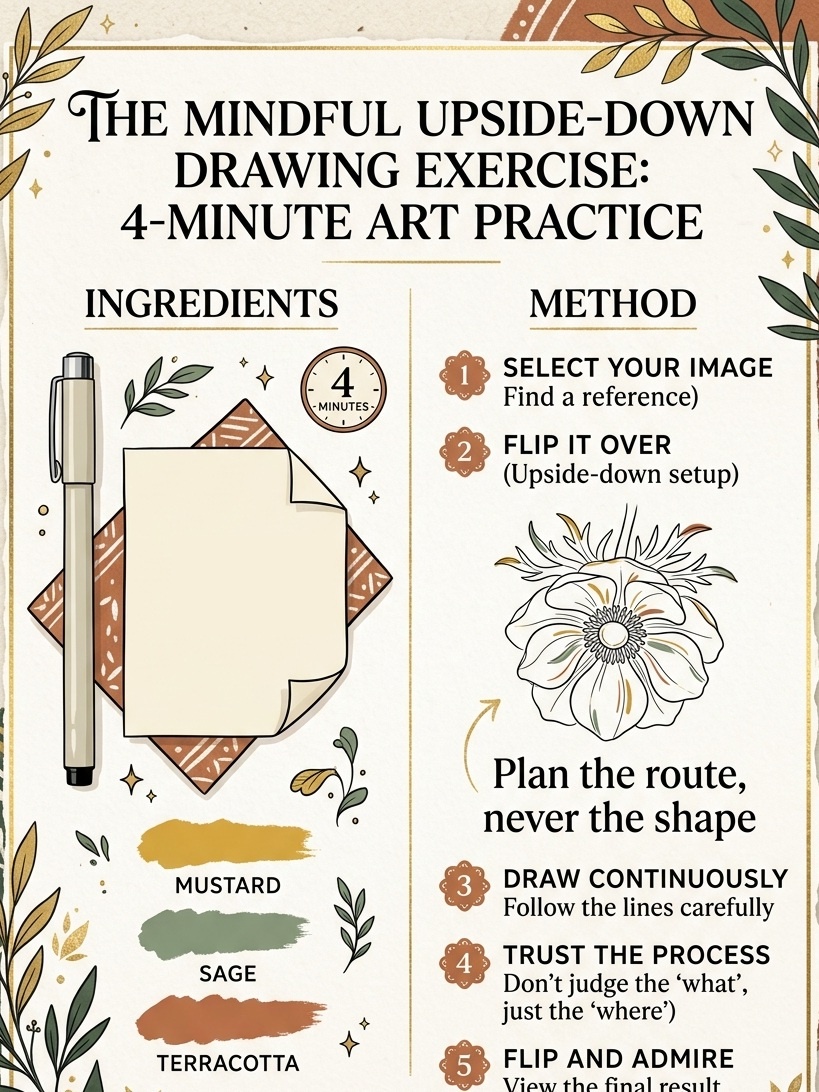
4 minutes, one pen, and no part of the instruction requires you to judge anything. Do it once before the flower and the flower goes differently.
What the hand does when nobody is supervising it
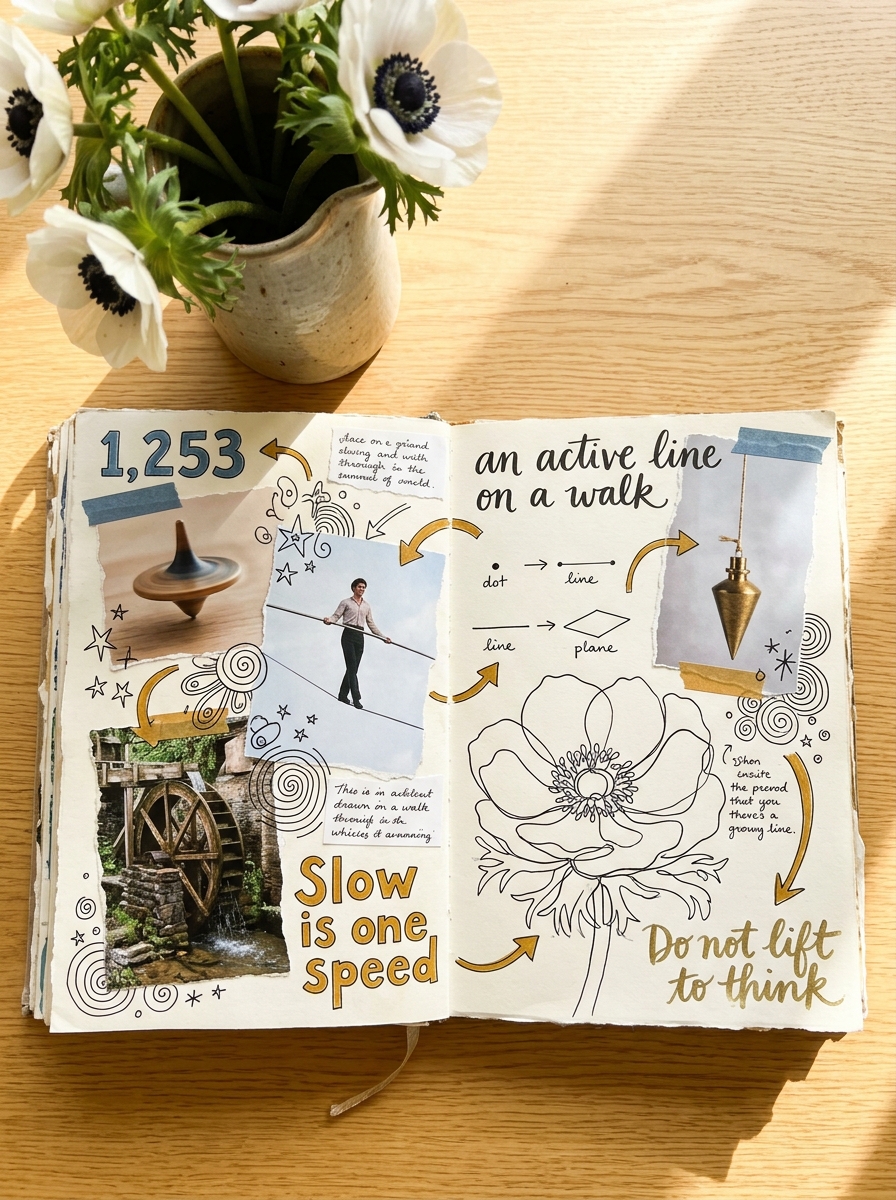
Somebody else worked the route out first. Dot, line, plane, and then the flower at the end of it.
Klee had a phrase for this that his students at the Bauhaus wrote down. He called drawing “an active line on a walk, moving freely, without goal”, and he put it in a teaching book in 1925 as though it were a technical instruction, which is what it is.
The word doing the work in there is goal. A line with a goal is being steered, and a steered line looks steered. A line on a walk arrives somewhere slightly unplanned and looks alive, and every single person who sees it will assume you meant it.
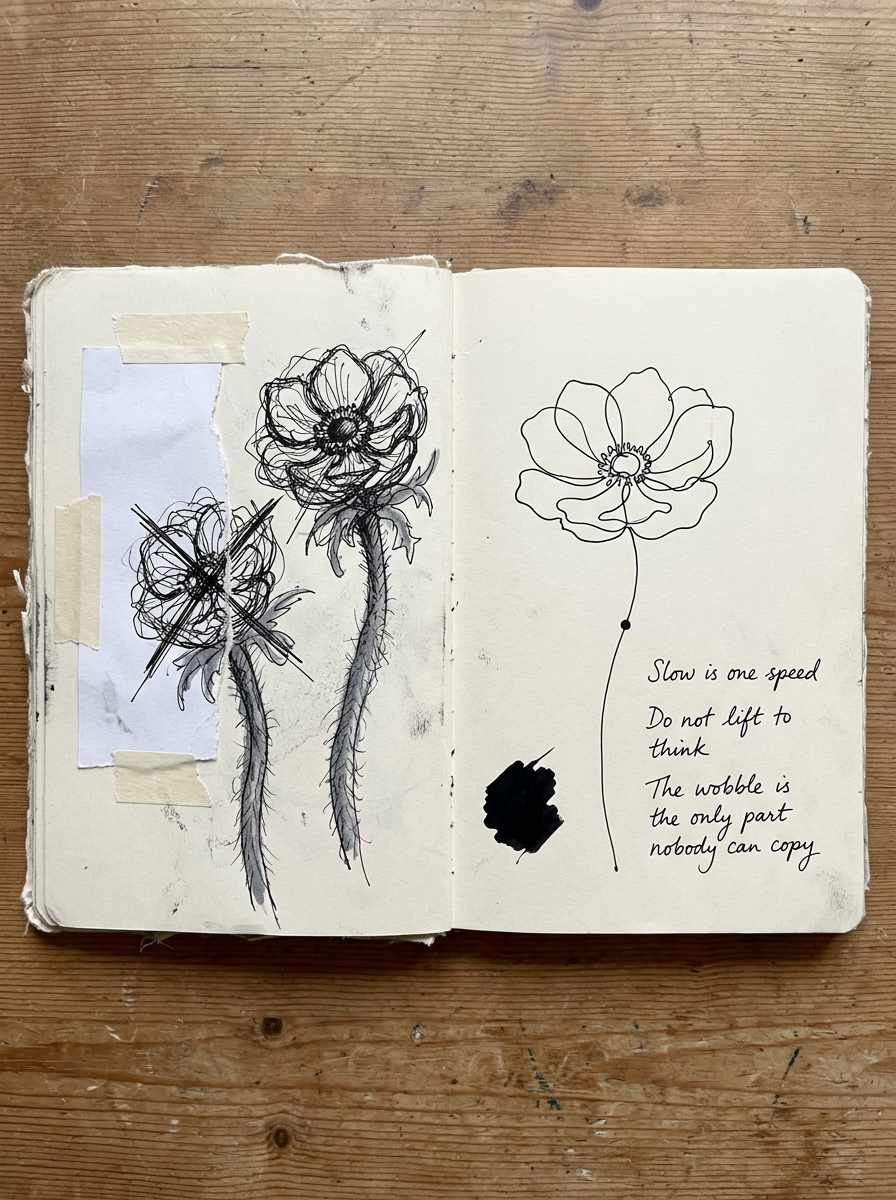
The two on the left were rescued. The one on the right was not. The notes are the whole of it.
So the practical version, and it fits on one hand.
- Put the pen down and decide, before you move, that this line is the one you are keeping.
- Move slowly. Slow is not the same as careful. Slow is one speed; careful is a lot of small stops.
- When it goes somewhere you did not plan, keep going. The wobble is the only part nobody can copy.
- Do not lift to think. Thinking happens before the pen lands or it does not happen.
- Finish. A finished wrong flower teaches you something. A perfect abandoned stem teaches you nothing at all.
The rule that does the heavy lifting is the fourth one. Lifting the pen is not a pause, it is a vote of no confidence, and the line you put down afterwards always knows.
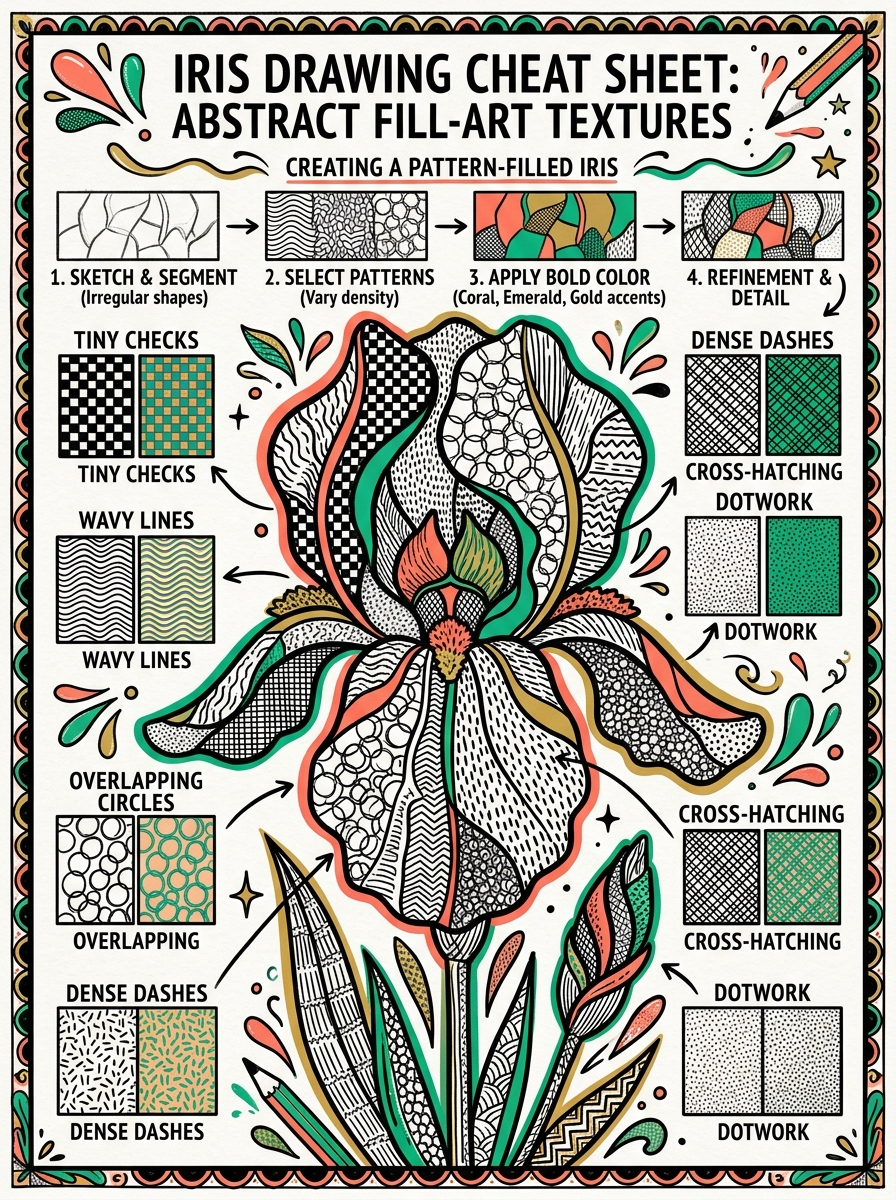
And when a shape does come out too empty, the answer is a texture inside it, never a heavier outline. The outline is finished. It was finished the moment it closed.
Slow is one speed. Careful is a lot of small stops.
The year the tool chose itself
Matisse had major surgery in 1941 and spent much of what was left of his life in a wheelchair. He turned to drawing and to cut paper, and the reason given is beautifully unromantic: they were physically more manageable.
He did not simplify because he had arrived at some late wisdom about simplicity. He simplified because that was what the body would still do, and it produced the work everybody now puts on their wall.
There is a version of this available to you tonight and it costs nothing. One pen, one sheet, no eraser.
Not as a discipline. As a constraint, which is a kinder thing entirely. A discipline is something you have to keep up. A constraint just quietly removes the option to make it worse.
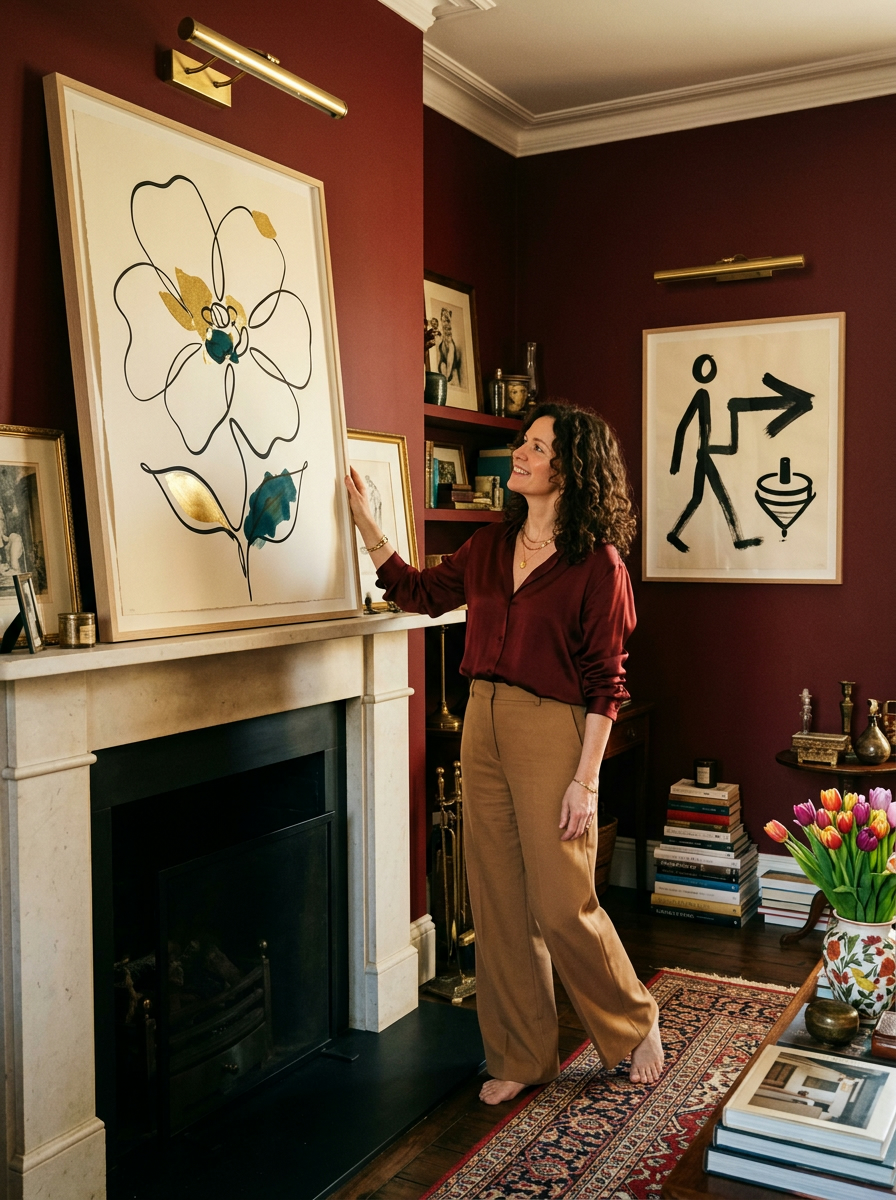
Propped on the mantel, and the stepping back is part of it. Nobody can judge a drawing from the chair they made it in.
A row of them along a hall, same pen, same size, none of them rescued. That is a scheme. One is a nice drawing.
Line drawing for beginners: where to start, and it is not a rose
Every guide to line drawing for beginners starts with a rose. Start instead with something whose outline you cannot picture with your eyes shut. The anemone is good for exactly this reason: almost nobody can describe one. There is no stored diagram for the word, so nothing turns up mid-line to tell you it is wrong.
Bad beginner subjects are the ones you have seen ten thousand times — a rose, a tulip, a daisy. You are not drawing those from life. You are drawing them from the picture in your head, and the picture in your head is a logo.
Anemone, then. Poppy, magnolia, snowdrop, cosmos. Ragged things with no official shape.
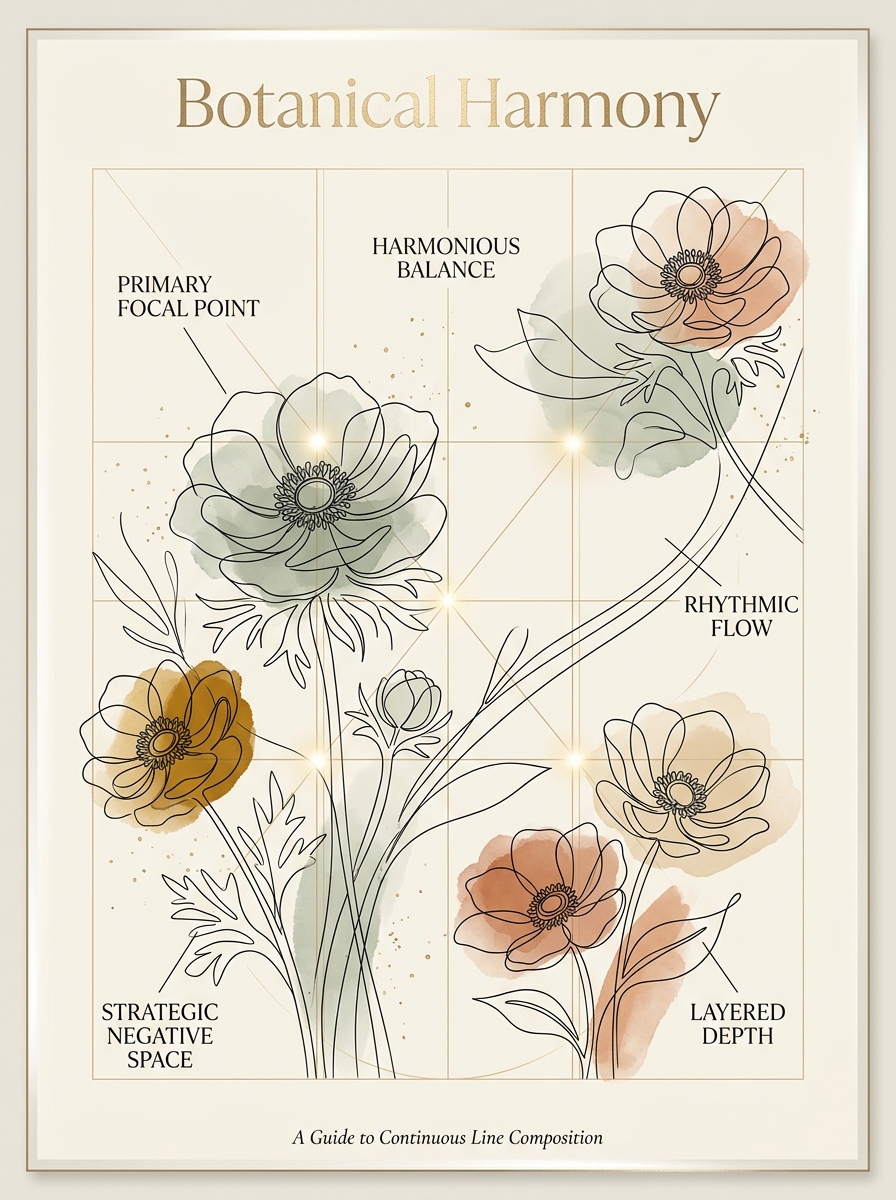
Put it slightly off centre and large. A small flower in the middle of a big sheet reads as a test. A big one reads as a piece.
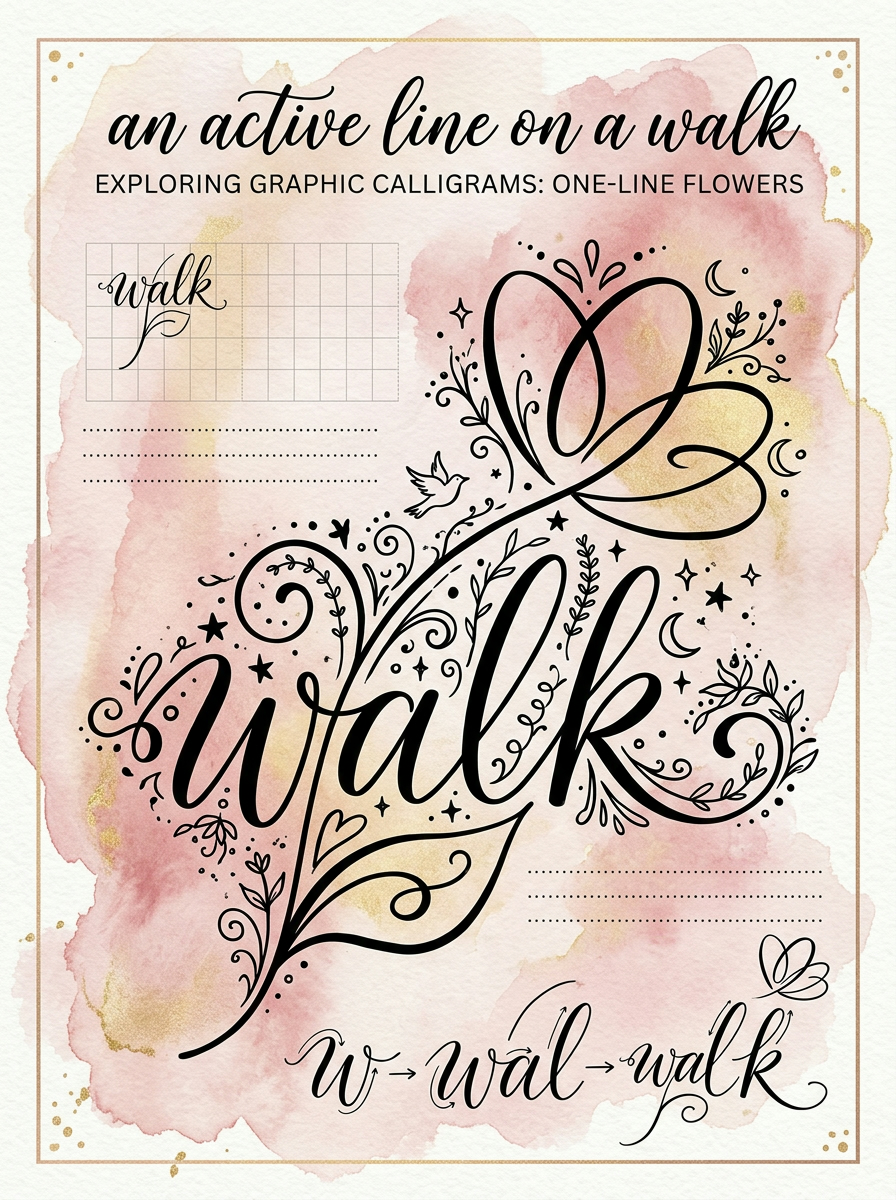
Klee’s instruction, drawn the way he meant it. The word and the flowers are the same walk, and the pen lands once.
Am I allowed to plan it before I start?
Plan the route, never the shape.
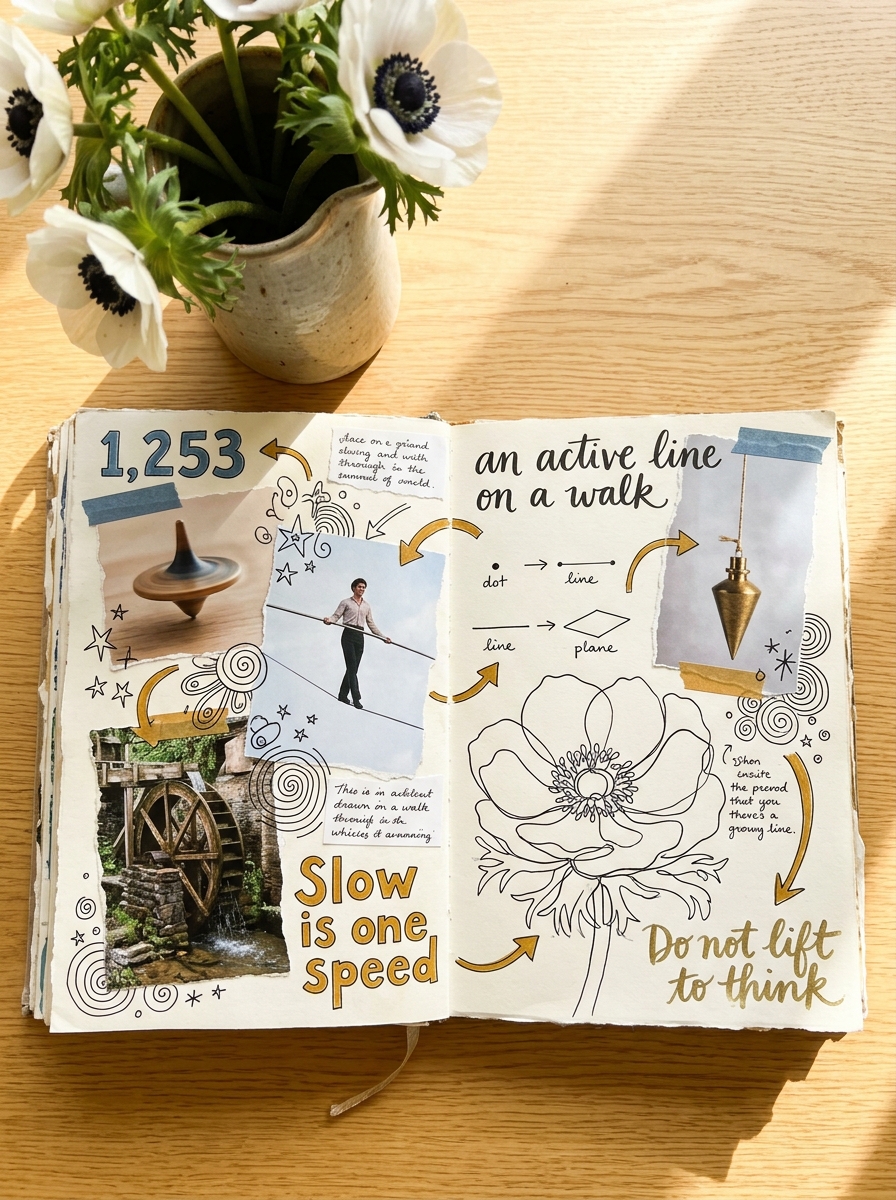
Everything on that page is the route. Where the pen lands, where it turns, what it is allowed to do on the way. Not one line of it is the flower.
Looking at the flower for 20 seconds before the pen lands is not planning, it is the job. Deciding which side you enter from and roughly where you intend to come out is also the job, and it is the difference between a walk and wandering.
What is not allowed is a light pencil version underneath. That is not a plan, it is a first draft, and the ink will follow it obediently and come out looking traced. (Ask me how I know. Actually do not, there are 30 of them in a drawer.)
What do I do when the line crosses itself?
Nothing. Crossings are the best thing that happens in a one-line drawing.
A crossed line is the only visible proof that the whole thing was made in one go, and it is the detail people lean in for. Fixing it — lifting, jumping the gap, tidying the overlap — removes the single piece of evidence that you did the difficult thing.
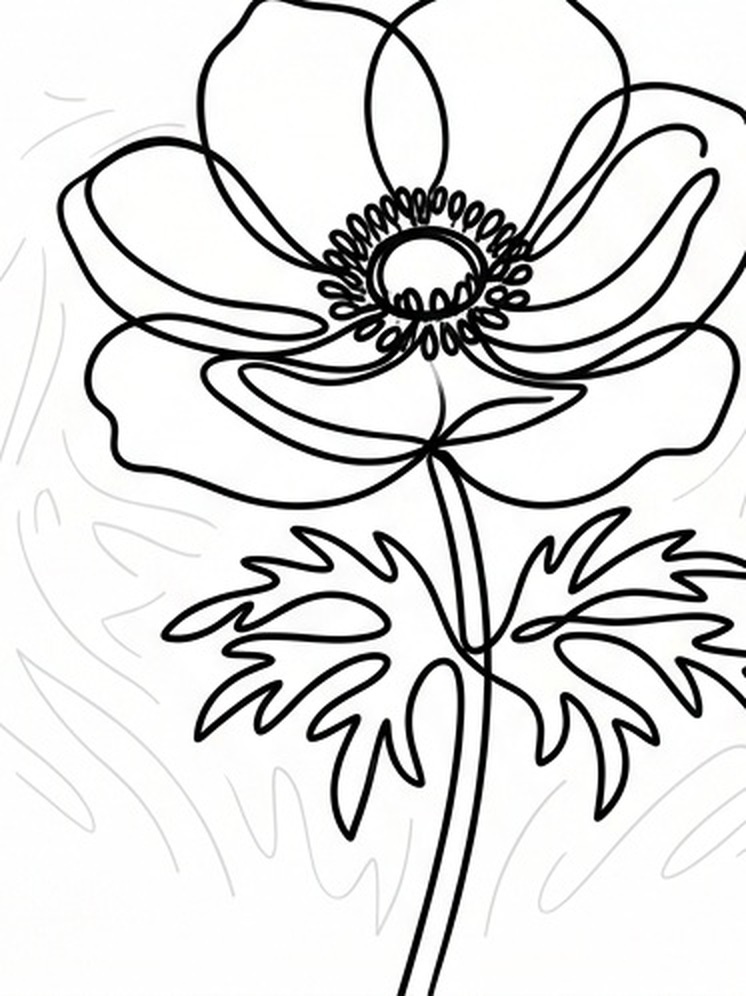
Left alone, a crossing is the signature. Tidied, it becomes a gap, and a gap just looks like the pen ran out.
Free Starter Pack
10 pattern templates. For the flowers that come out too empty.
Sent tonight. A one-line flower leaves enclosed spaces behind it, and every one of them starts asking to be filled.
Unsubscribe in 1 click, no hard feelings
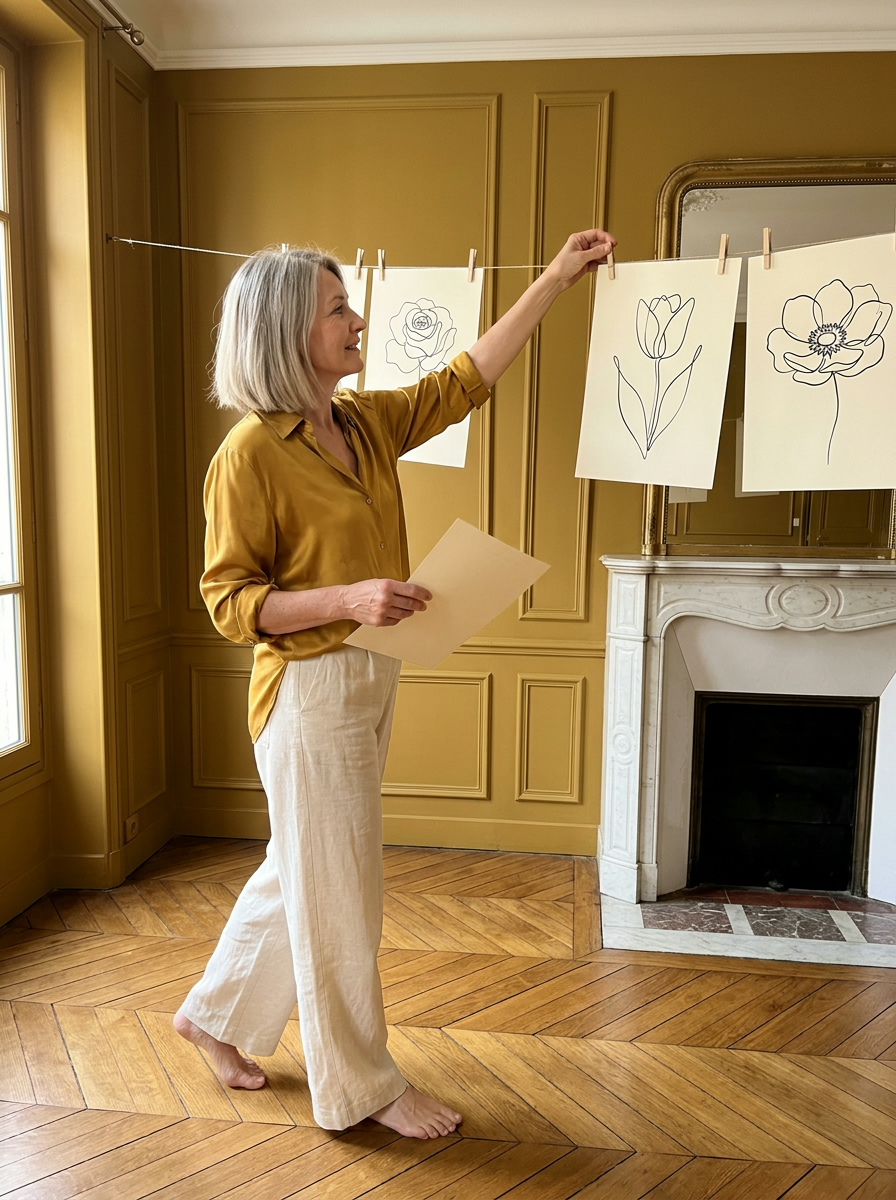
Four evenings, pegged up in the order they were drawn. Not one of them was gone over twice, and from the far end of the room you cannot tell which was first.
None of that requires you to know where to start the line, which is the one thing a blank page genuinely will not tell you. That part has to come from somebody who has already worked out the route.
30 flowers, each one drawn as a single walk of the pen
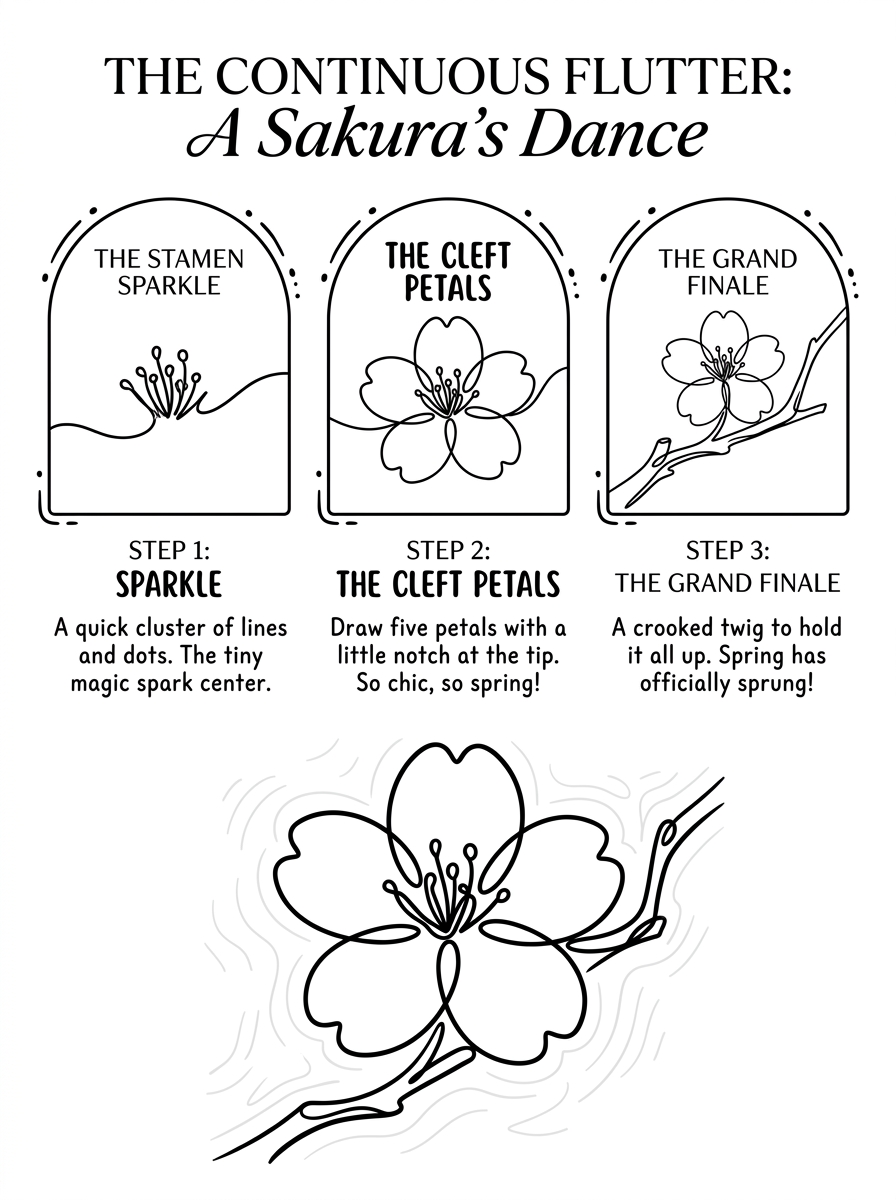
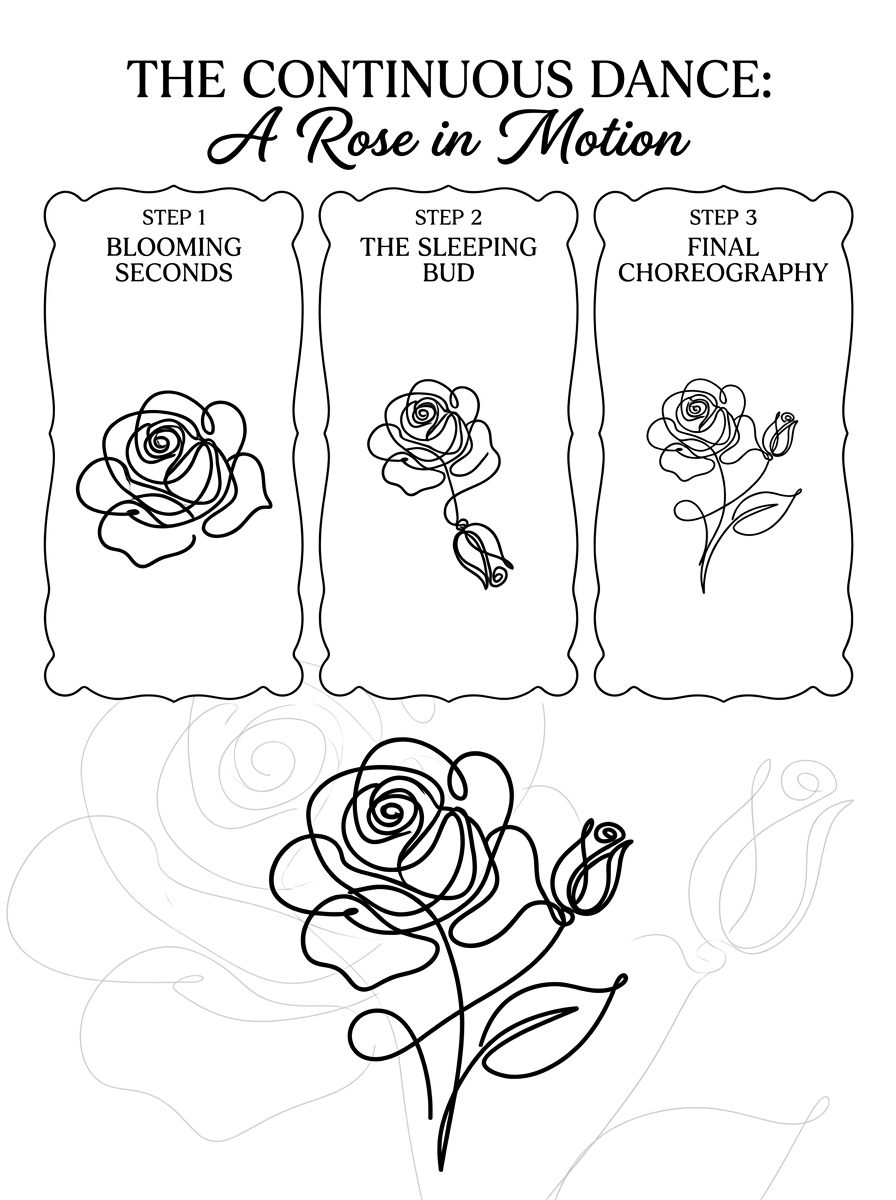
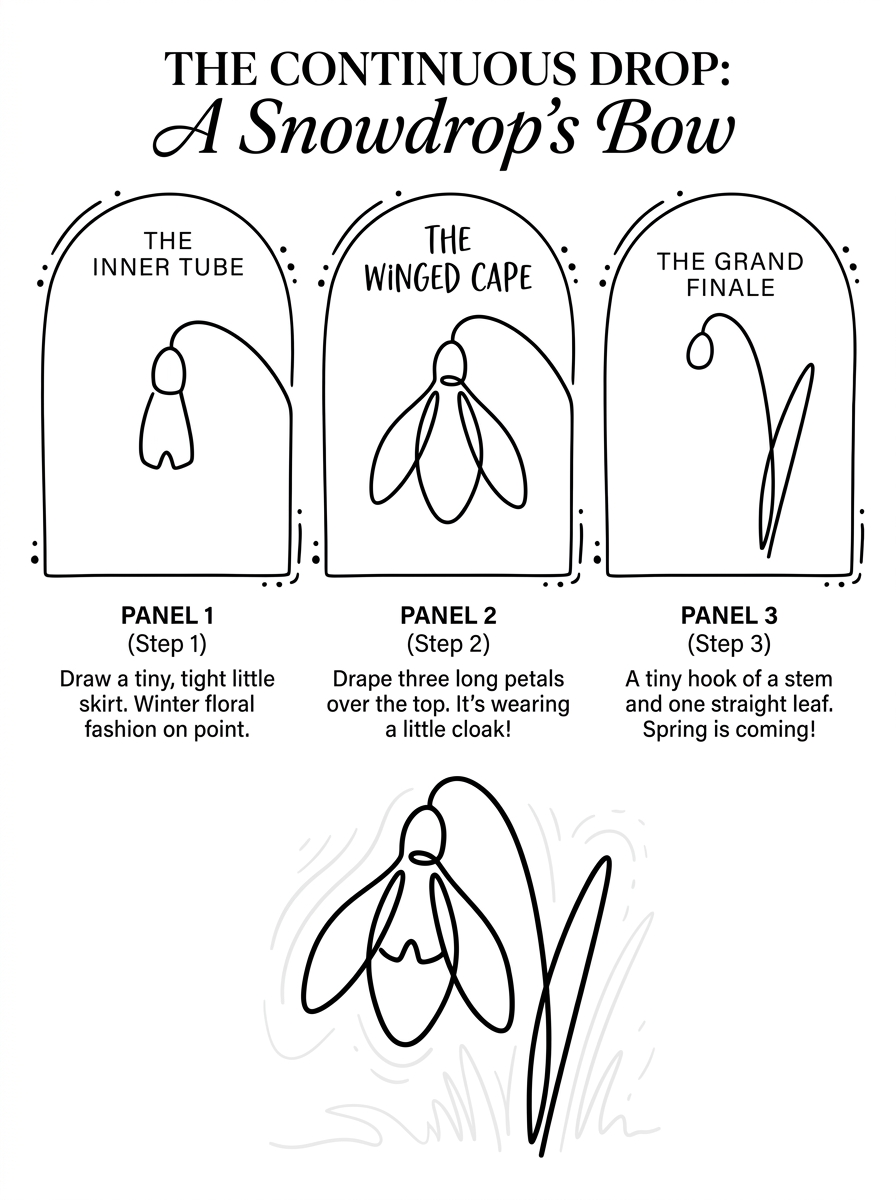
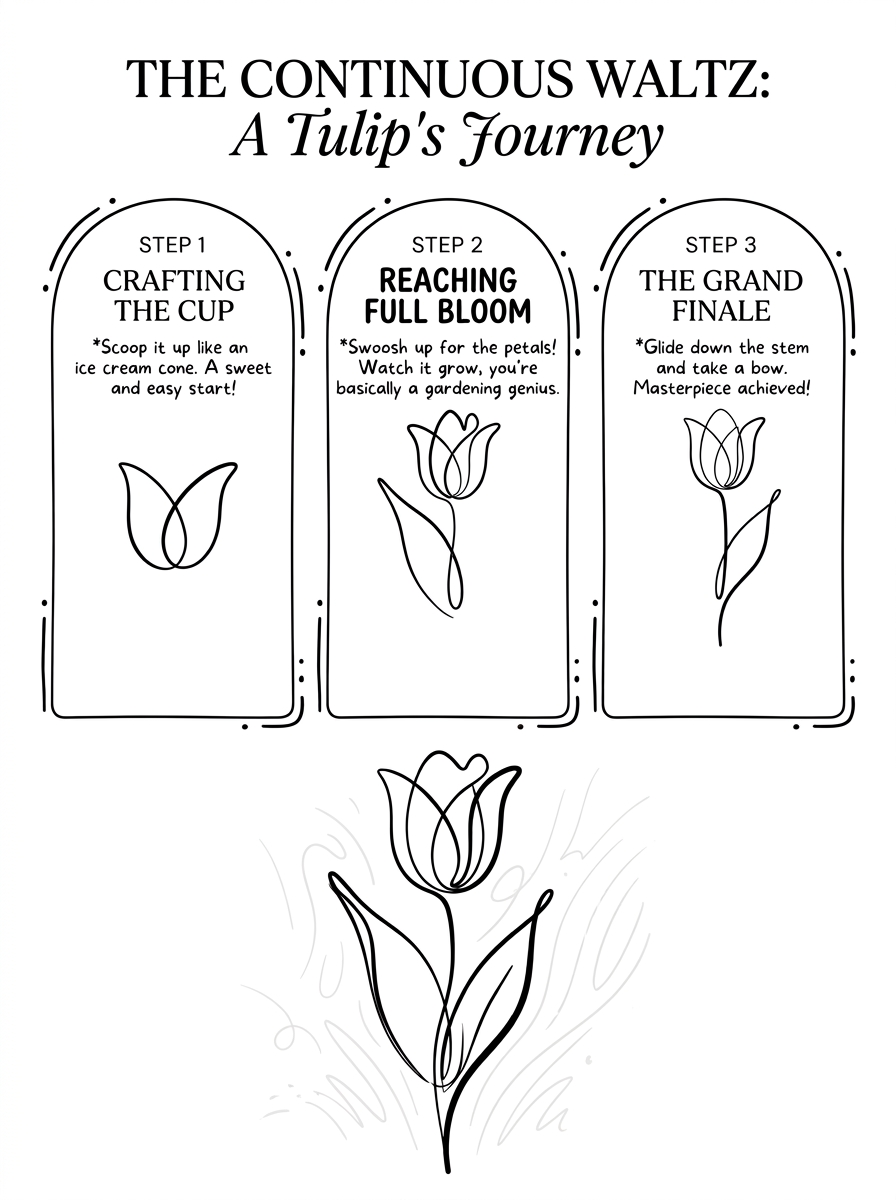
Tonight it is one anemone at the kitchen table, done before the tea goes cold. By the weekend it is a row of them along the hall, same pen, same size, not one of them gone over twice. Anemone, poppy, magnolia, snowdrop — the whole set, marked where the pen lands and where it lifts.
Instant download · print as often as you like
Put the pen down and let it go for a walk. It will take the long way round, stop to look at things you would have hurried past, and come home with something neither of you planned.
“An active line on a walk, moving freely, without goal. A walk for a walk’s sake.”
Paul Klee, Pedagogical Sketchbook, 1925
Mirabelle wrote this. No training, strong opinions, many pens. Peer reviewed by a cat who has never corrected anything in his life.