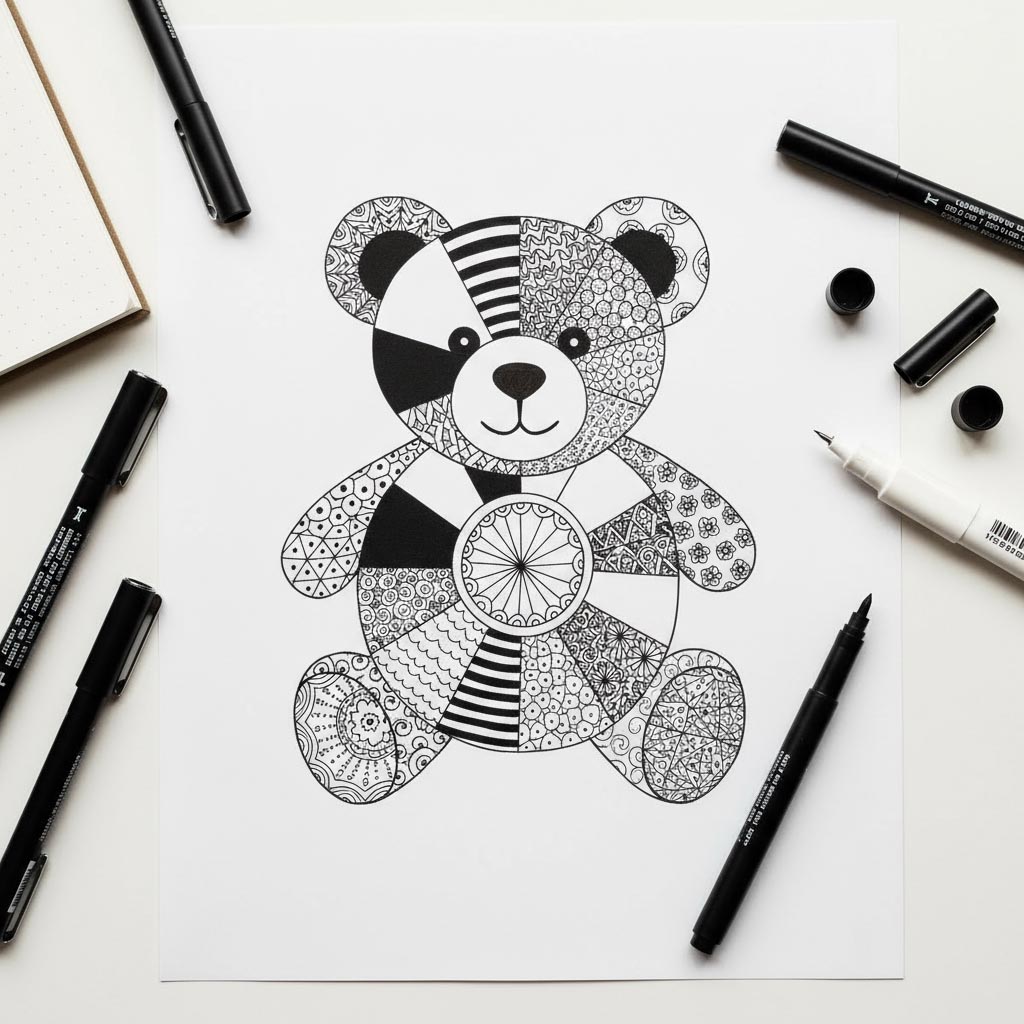
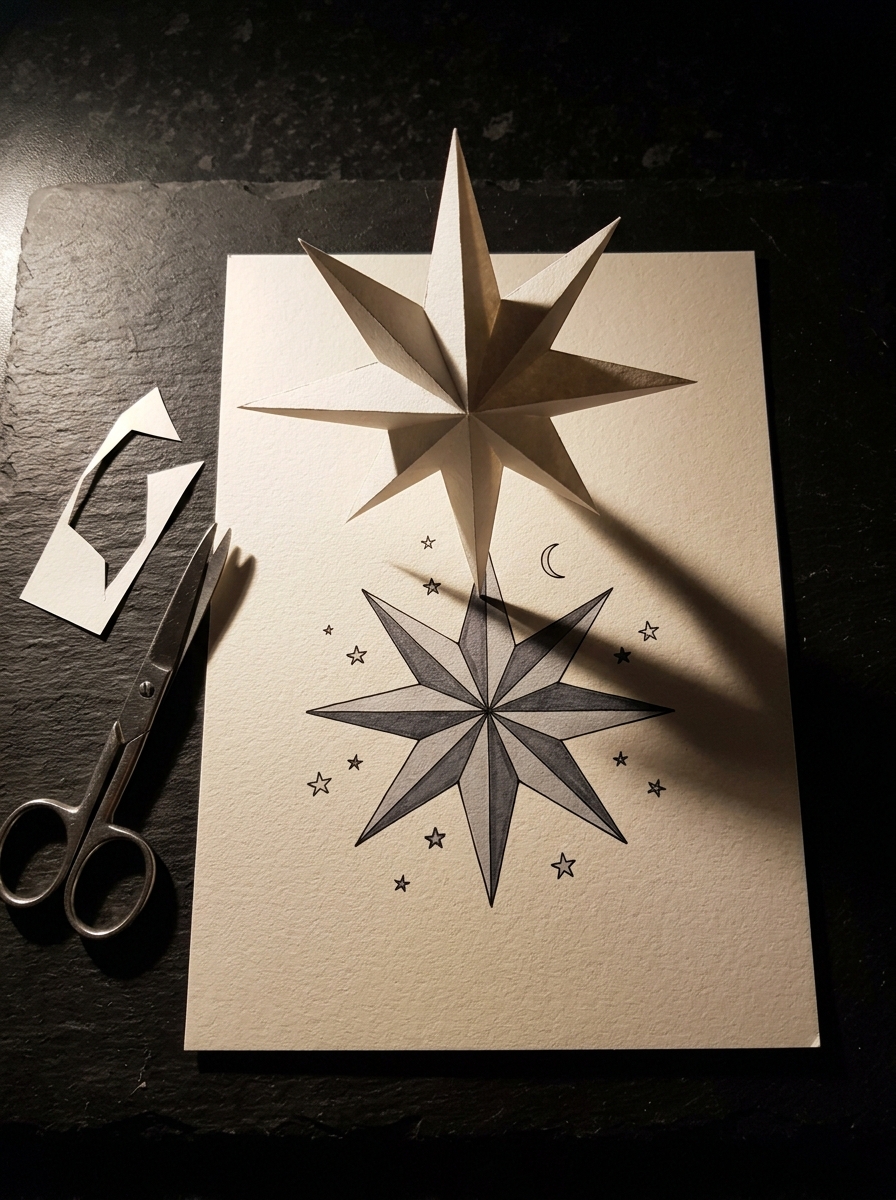
Add one point to a star and it stops being a star. Draw 4 and the eye reads a sparkle. Draw 5 and it reads a star. Draw 8 and it reads a compass rose. A celestial drawing does not work because it is accurate. It works because of a count.
Nothing else changed. Not the size. Not the neatness. Not your hand. (I have drawn a great many wobbly ones. The wobble has never once given it away.)
So a star is straight lines meeting at a middle. A sun is a circle and one decision about its face. That is the whole material for tonight.
What makes a celestial drawing read as a star and not a smudge?
The middle does the work. Every point has to aim at one centre. Mark that centre with a dot first. Then run the lines out from it.
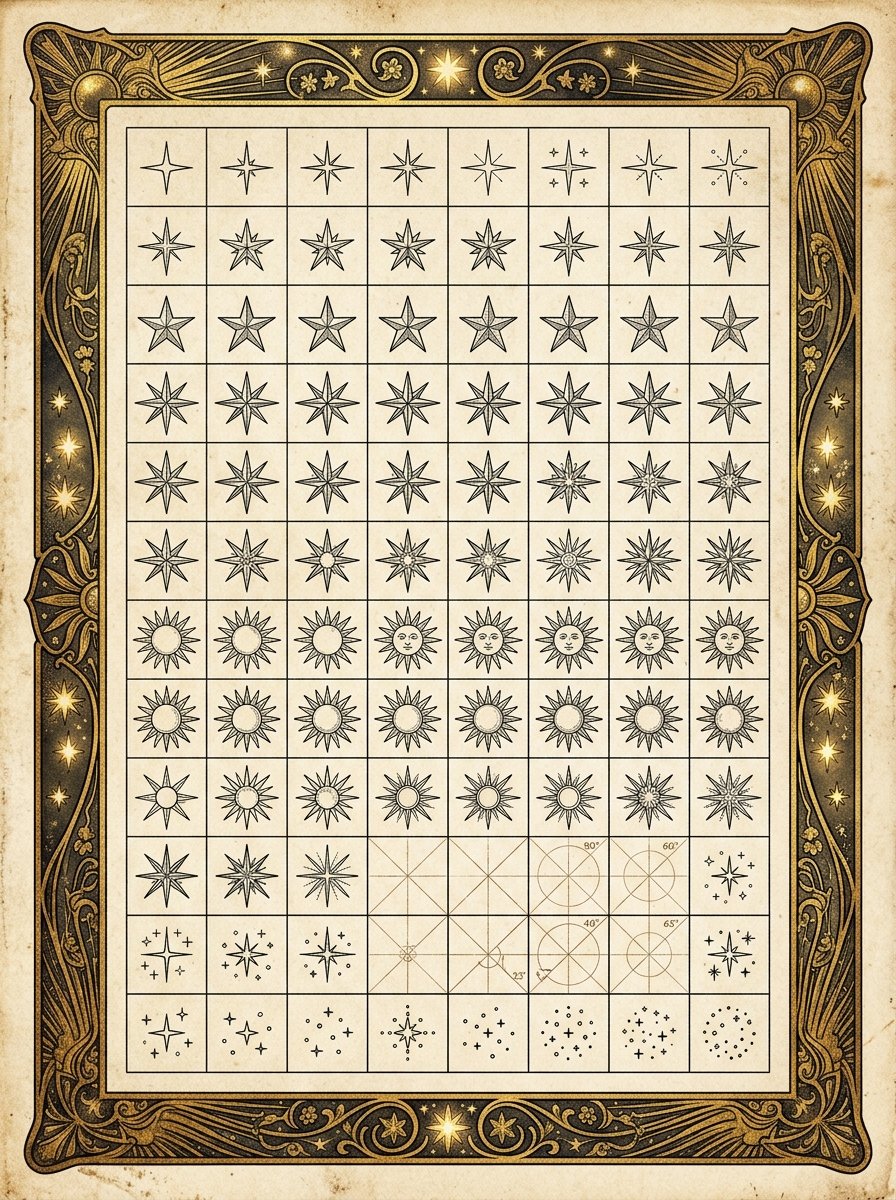
That dot is the only accurate thing on the page. Set it, and the points can be as crooked as they like. Skip it, and a 5-point star quietly becomes a starfish.
The second rule is length. Keep the points roughly even and the star reads calm. Make one point twice as long and it reads like a flash. Both are useful. Neither is a mistake.
A star is not a drawing of a star. It is a decision about how many points you can be bothered with.
An 8-point star is the same build, twice. Draw a cross. Draw a second cross over it, turned 45 degrees. Join the tips. It comes out even because the crosses did the measuring, not your eye. (Mine used to lean. The crosses fixed that in one evening.)
A star outline takes about 2 minutes. Filling one with pattern is the part nobody hands you. Done well, it looks designed. Done quickly, it looks coloured in. That difference decides whether the page gets kept or quietly binned.
The Collection
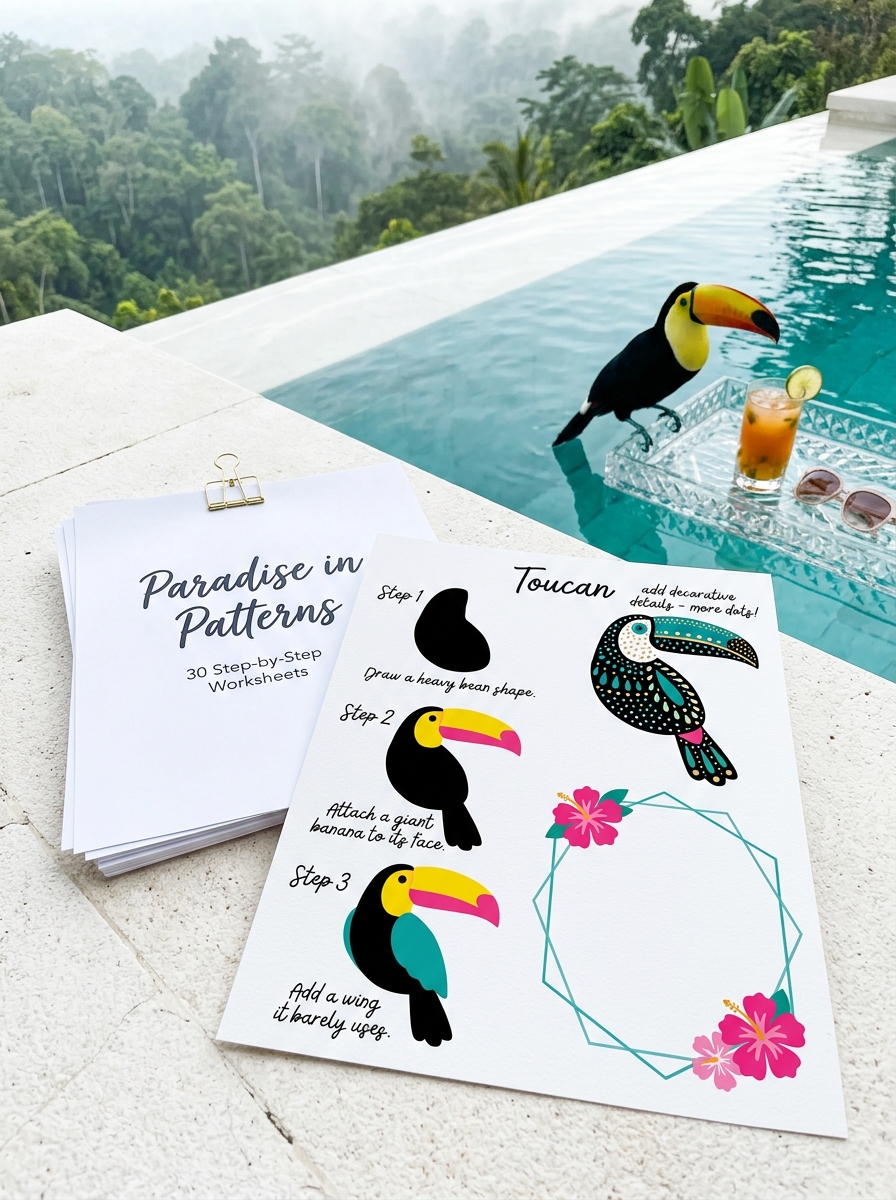
PARADISE IN PATTERNS — 32 sheets, 22 of them birds. Bold shapes, vivid pattern, and never a blank page.
Lay the shape, layer the colour, add the dots. What you get: 30 minutes that go quiet, and a bird bright enough to pin up.
Below are 45 celestial drawing ideas, sorted by the state you are actually in tonight. Not by subject. You already know which one you are in. An edge to decorate, a blank page to survive, or one small square that has to look finished.
Which celestial drawing ideas fit around the edge of a card?
Borders are the cheapest win in this whole subject, because a border is a repeat and a repeat hides everything.
Andreas Cellarius, 1596 to 1665, drew the Harmonia Macrocosmica and Johannes Janssonius printed it in Amsterdam in 1660. It ran to 29 engraved plates. Johannes van Loon cut 10 of them.
The constellation figures on those plates were not newly designed. They were lifted from an earlier engraver, Jan Pieterszoon Saenredam. The grandest star atlas of its century borrowed its shapes. It spent its effort on the cutting instead. (I find that enormously freeing, and I think about it most times I start an edge.)
So borrow the shape and spend your attention on the spacing. Start with a row of 5-point stars along the top edge, all one size. The eye then reads a band instead of a scatter. Run the same row again and leave every third star hollow. Drop tiny 4-point sparkles into the gaps.
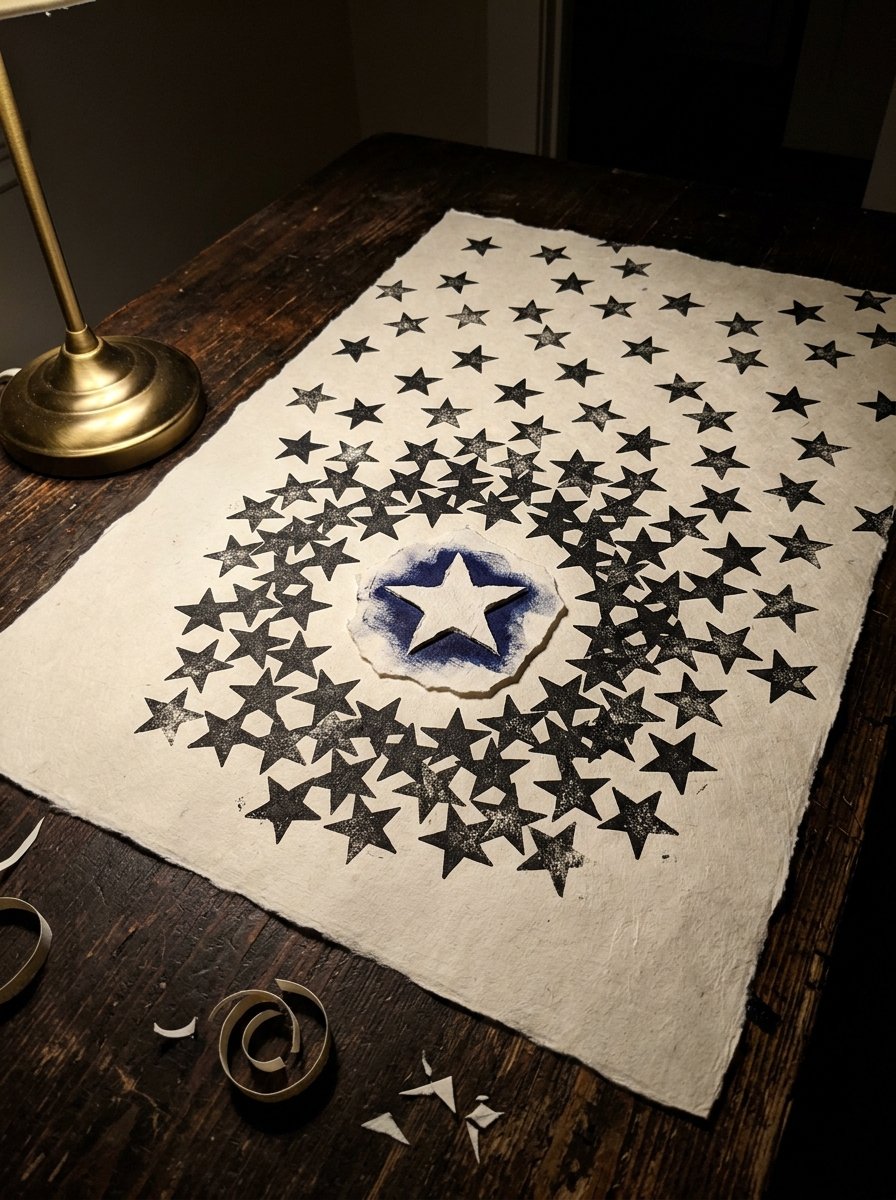
Put a single 8-point star at one corner only, and nothing at the other three. Draw a thin double rule and sit the stars on the upper line. Let them shrink as they travel toward the corner. Tuck one thin crescent at the end of a row, like a full stop.
Set dots between the stars, spaced wider than feels right. Give one star a single long ray pointing back into the card. Stack three stars in a column down the left edge. Build a border of nothing but dots, with one star at the end to justify them.
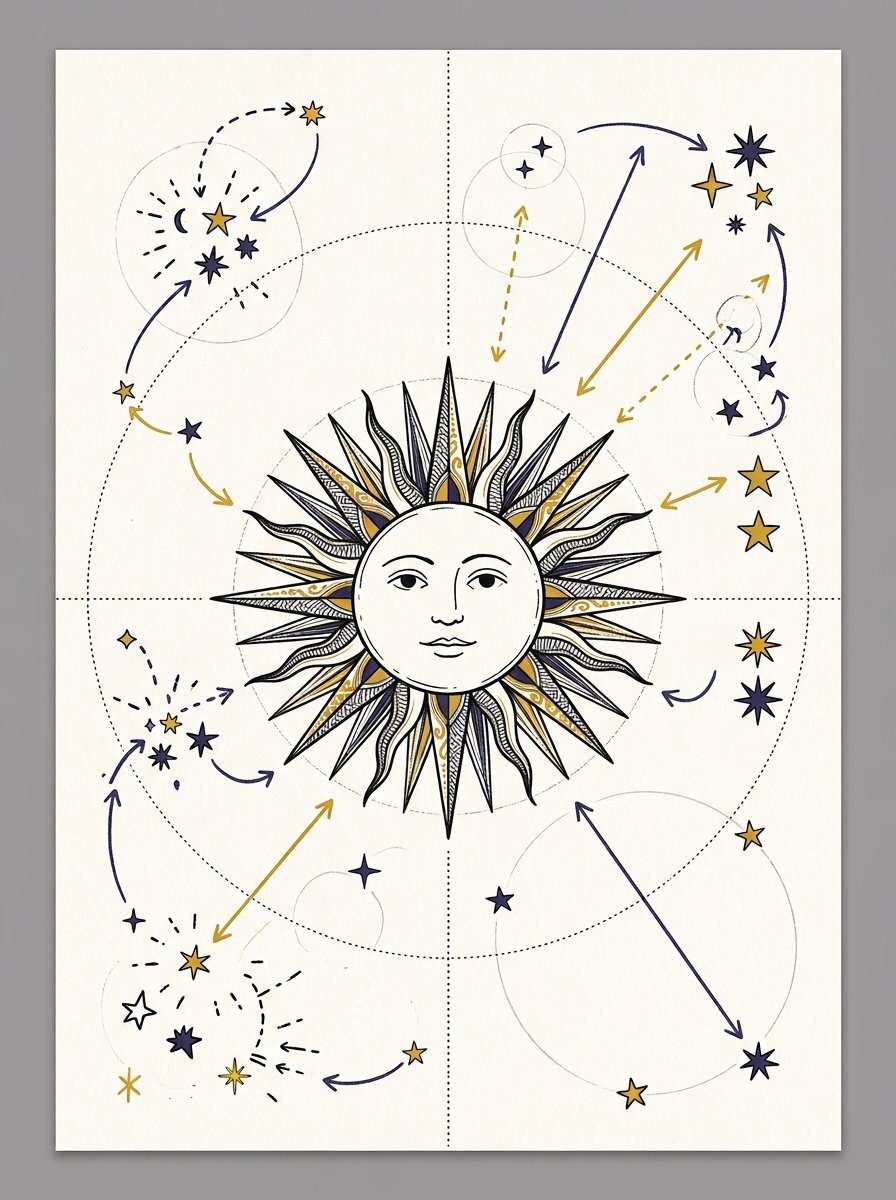
Draw star outlines with a solid black centre. Ring a written initial with 8 small stars. Follow a curve instead of a straight line. Let one star sit half off the edge, cropped by the paper. That last one looks like confidence and costs nothing.
What do I draw when the whole page has to be night?
A blank page is not a shortage of ideas. It is a shortage of somewhere to start.
Maria Clara Eimmart worked in her father’s observatory in Nuremberg. She drew what she saw through the telescope in pale pastel on dark blue card. She made about 235 studies of the Moon. That ran from 11 January 1693 to 8 March 1698, between the ages of 16 and 21. She titled the collection Micrographia stellarum phases lunae ultra 300.
The useful part is the card. She did not draw darkness onto white paper. She put light onto something already dark, one small mark at a time. That flips the blank page completely: you are not filling a void, you are adding the bright bits.
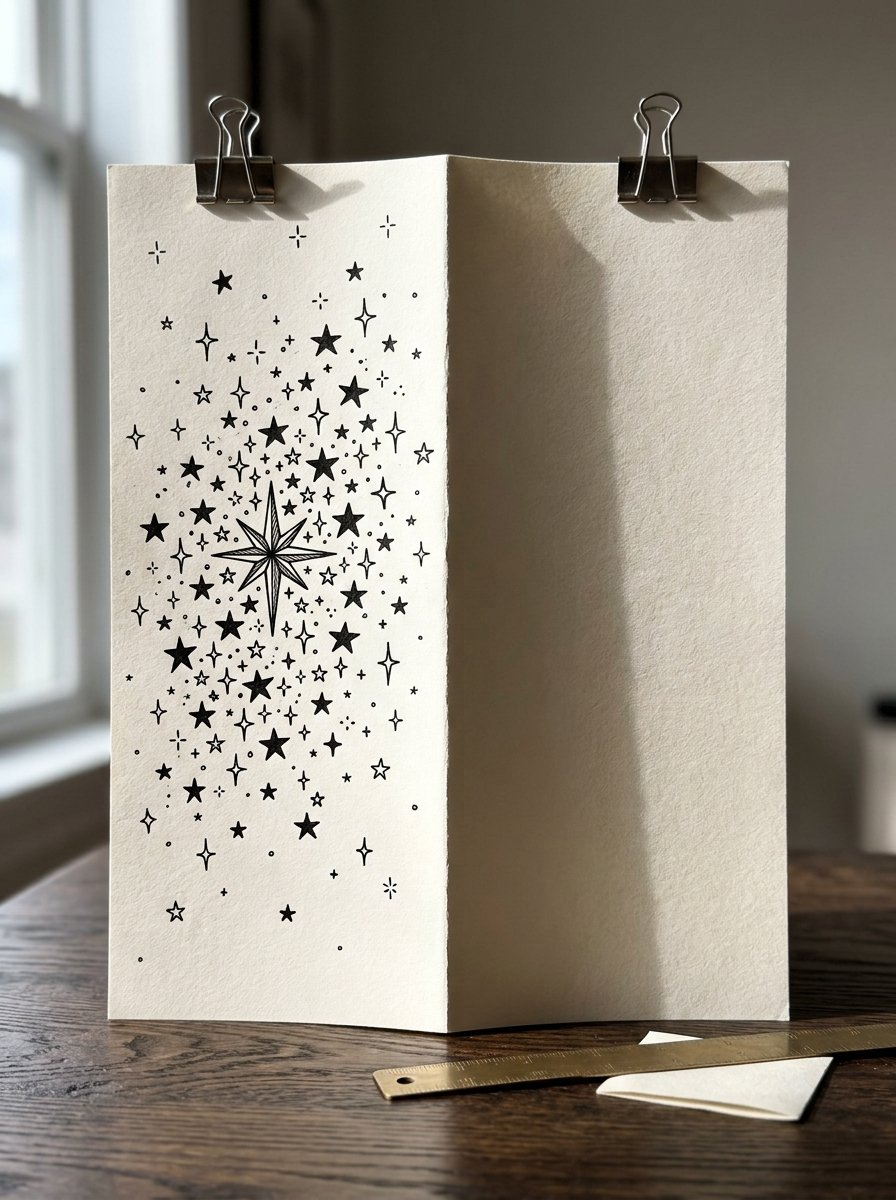
So fill a whole sky with 4-point sparkles and nothing else. Or put one big 8-point star in the middle and let small ones orbit it. Divide the page into four squares and give each a different density. Work on a dark wash in white ink and see how fast it goes.
Run a dense band of stars across the middle and thin it toward the edges. Draw one sun with a face, corner to corner, taking up everything. Draw 12 suns instead, each with a different expression. (Mine drift from serene to mildly disappointed, which I have stopped fighting.)
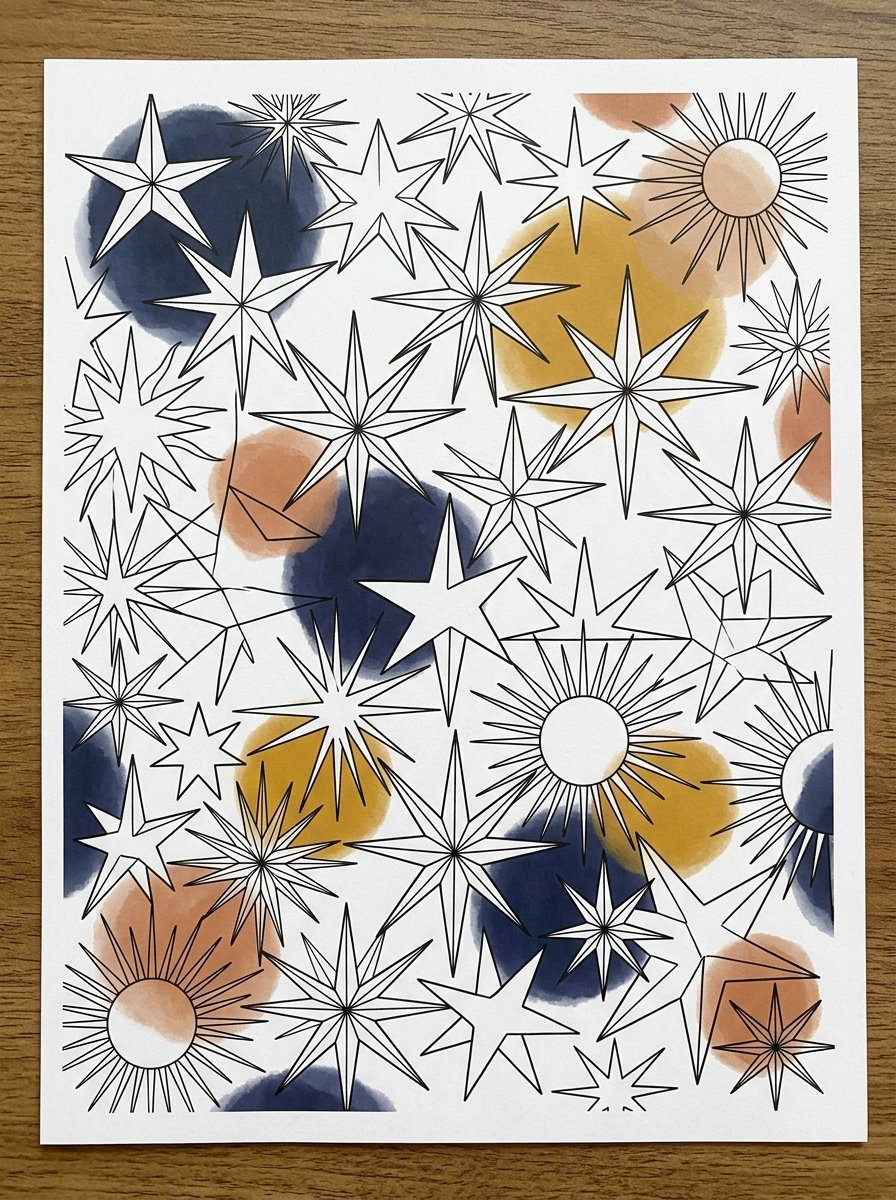
Give every star exactly 5 points and no two the same size. Send rays from one corner across the whole sheet. Rule a faint grid, then draw freehand over it. Ring an empty middle with concentric circles of small stars.
Fill a page with star outlines and leave them for a night when you want to fill things in. Make half the page dense and half nearly empty, with one star crossing the join. Spiral stars inward, shrinking as they turn. Build a sky from dots in 3 sizes only.
How do I space stars so the sky does not look speckled?
This is what separates a night sky from a page of pinpricks. Almost nobody says it out loud. Every celestial drawing on this page rests on it.
Even spacing is what goes wrong. A sky with stars at equal distances reads as wallpaper, or as a fault in the paper. Real skies clump. So clump yours on purpose.
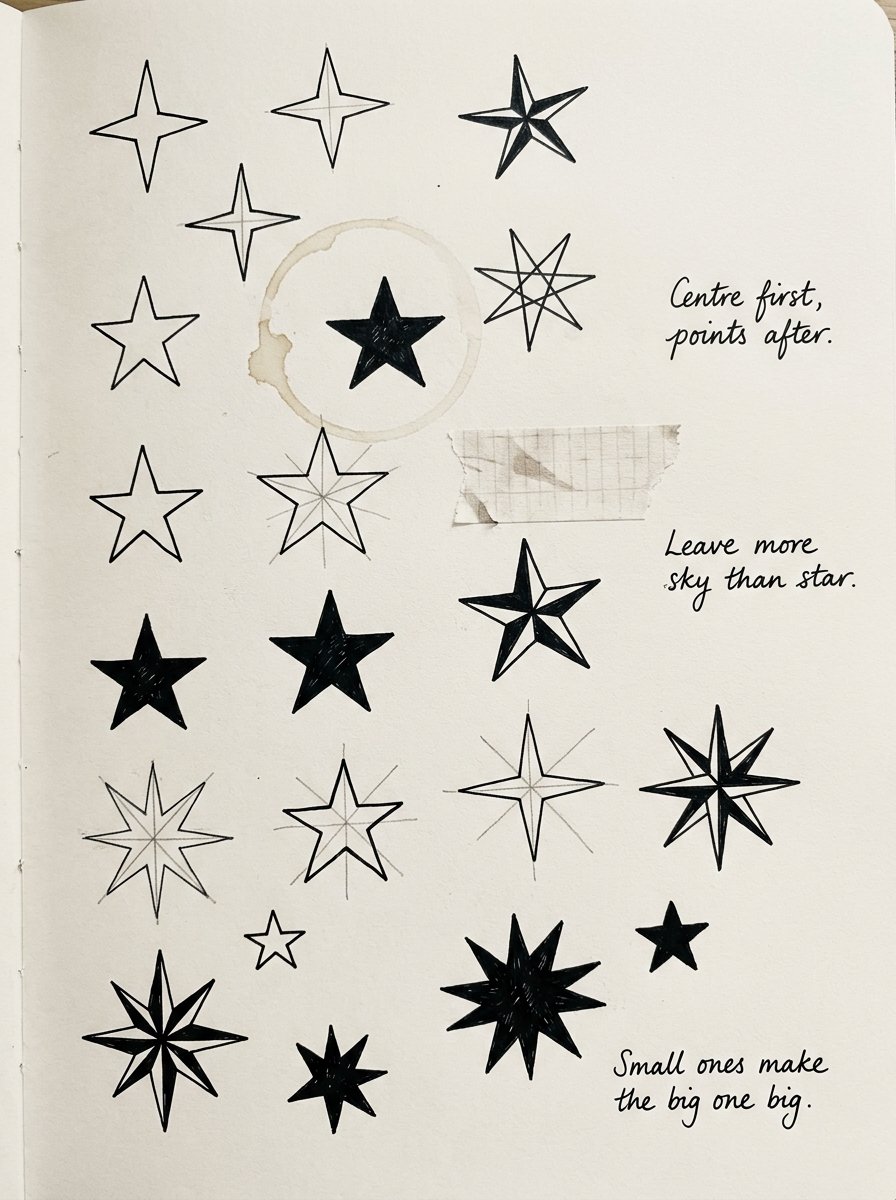
I keep three notes in the margin of my own page and they have not changed in a year. Centre first, points after. Leave more sky than star. Small ones make the big one big.
The last one is the whole mechanism. A big star only looks big next to small ones. Draw the large star first. Then crowd 4 or 5 tiny sparkles near it. Then leave a wide clear area with nothing at all. The empty part is doing as much work as the ink.
Empty sky is not unfinished. It is what makes the stars you did draw mean something.
If a sky already looks speckled, do not add more stars. Add one much larger one, and leave a bigger gap somewhere else. It recovers faster than it has any right to.
Which celestial drawing ideas finish in one small square?
Some evenings you do not want a project. You want one object, done, on the table. These celestial drawing ideas are built for exactly that.
Étienne Léopold Trouvelot made roughly 7,000 astronomical drawings. In 1881 Charles Scribner’s Sons printed 15 of them as large chromolithographs. His method is the borrowable part. He set a fine glass grid at the focus of the telescope, then drew onto paper ruled with matching squares. He never drew the sky. He drew one square at a time.
That is exactly how a small finished thing gets made. Rule a square. Fill only that.
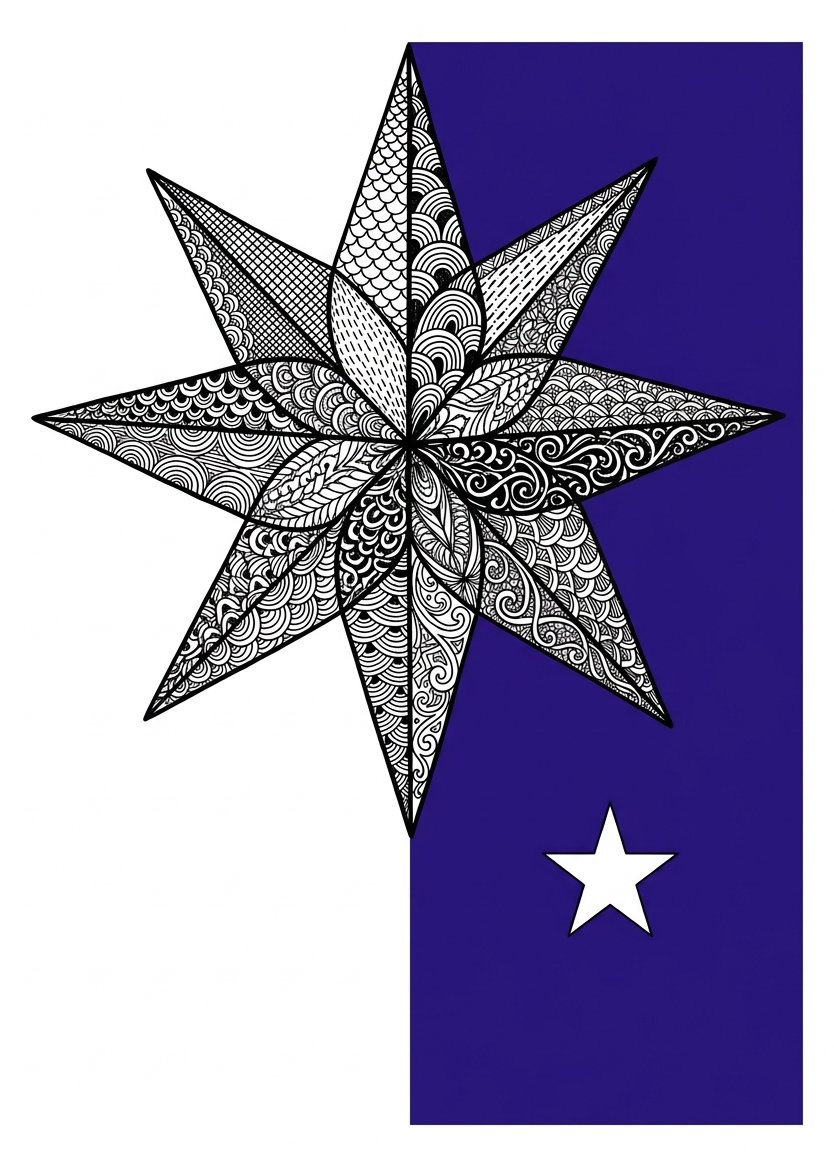
Put one 5-point star, solid black, in the centre of a small square. Frame a 3-inch patch of sky with a ruled line. Draw a single sun with a face no bigger than a coin. Draw one star filled with pattern and nothing around it at all.
Try one star inside a circle that just contains it. Overlap two stars and make the top one solid. Rule a tiny grid of 9 stars, 3 by 3. Give an 8-point star alternating solid and hollow points. Sit one star on a single horizon line. Set another off-centre and let the empty side do the work.
Draw a sun with closed eyes and a straight mouth. Repeat one star 5 times, fainter each time. Fill a small square edge to edge with sparkles and one big star. Add a ruled halo of short dashes. Or draw one star, once, and leave it alone. (That is an idea, not a cop-out, and it is the one I use most.)
What none of those 15 tell you is what goes inside the star once the outline is closed. A star is a container. Scallops, dashes, little stacked arcs: the fill is where a small square stops looking like homework.
Free Starter Pack
10 pattern templates. 1 of them ends up inside a star.
Sent tonight. The first fills in 12 minutes.
Unsubscribe in 1 click, no hard feelings
What is on the free starry border sheet?
The sheet is 4 blank card panels, each with a different star border already drawn around the edge. One is a plain band of 5-point stars. One shrinks toward the corner. One is dots with a single star. One is an 8-point star at one corner only.
Set the print size to actual size rather than fit to page. Then work inside the border, not on it. Write a name. Draw a sun with a face. Or leave the middle empty and let the edge carry the card.
Download the free starry border sheet →
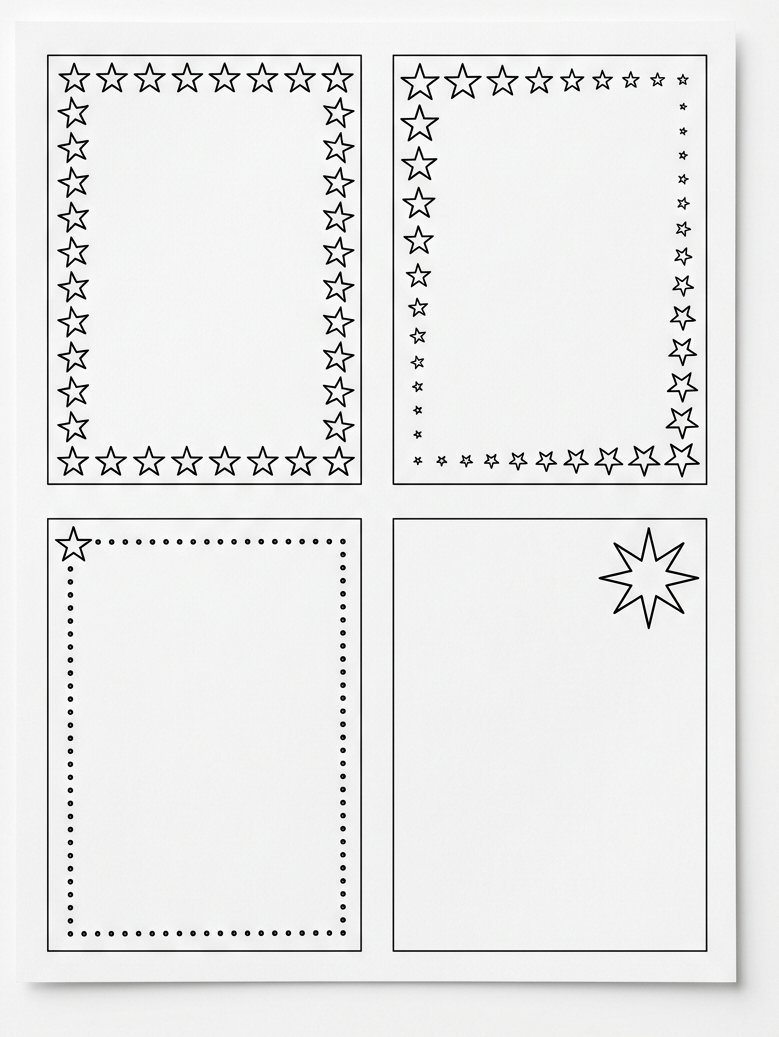
I use the shrinking one most. It makes a card look composed when I have made no decisions whatsoever. Moon phases are a different evening, and they have their own sheet.
Stars are straight lines. Suns are circles. Both are shapes. Filling a shape with pattern is the one thing this collection was built to teach. A macaw and an 8-point star want the same treatment. Lay the shape, layer the colour, add the dots.
32 sheets of bold shapes, 22 of them birds
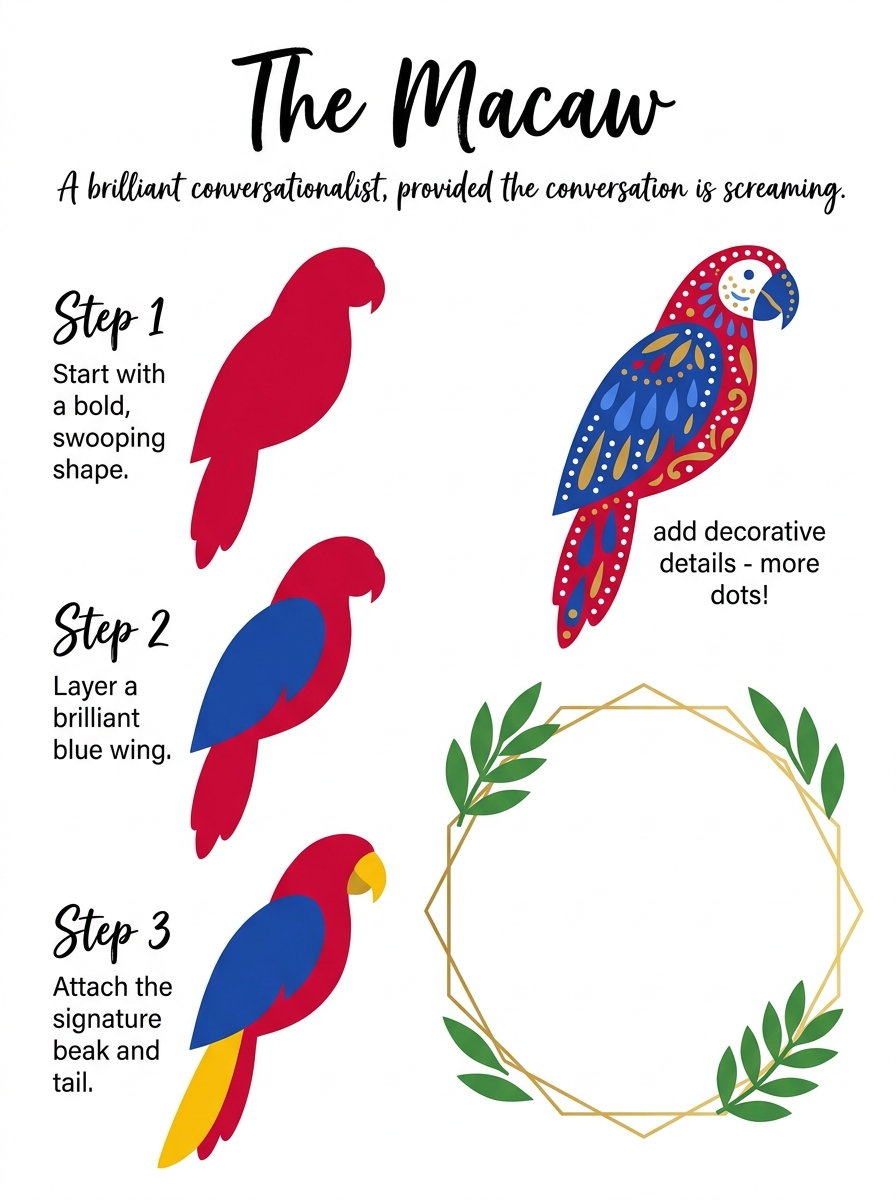
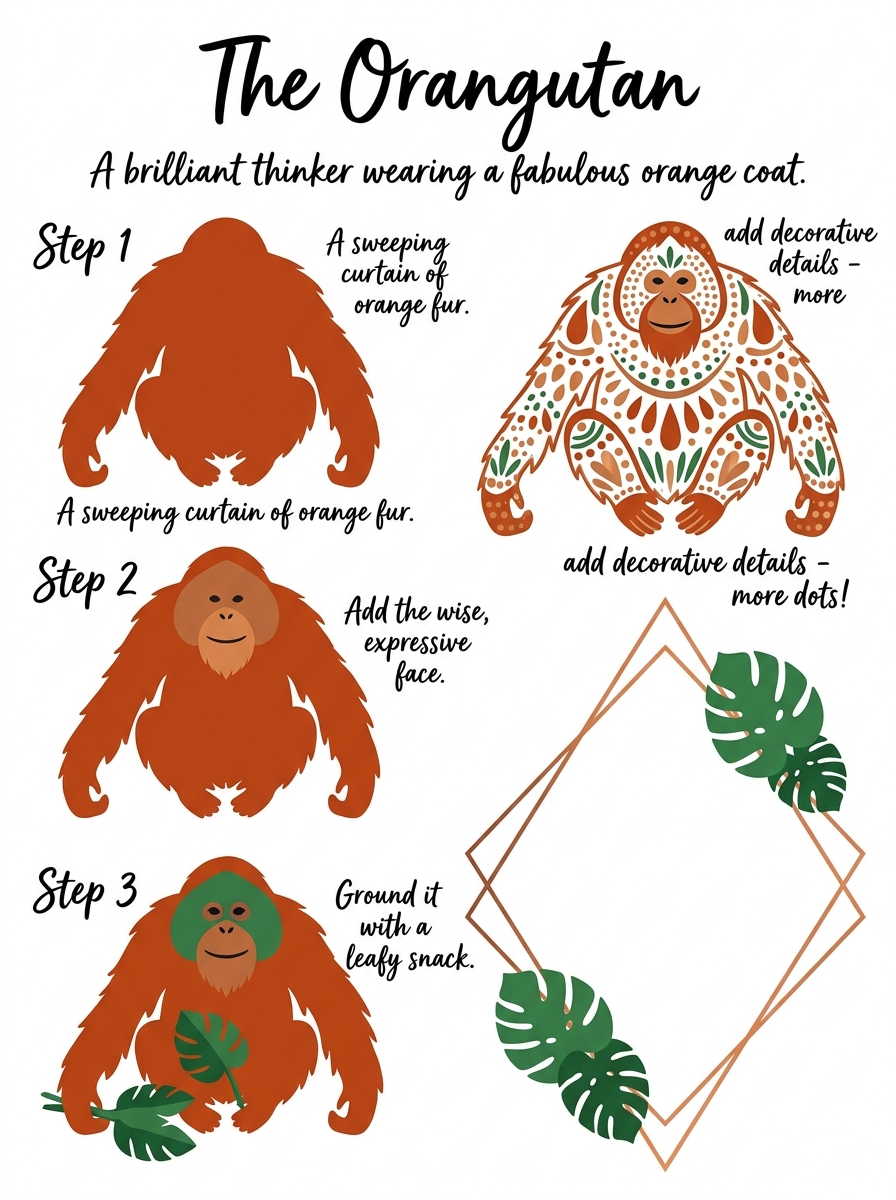
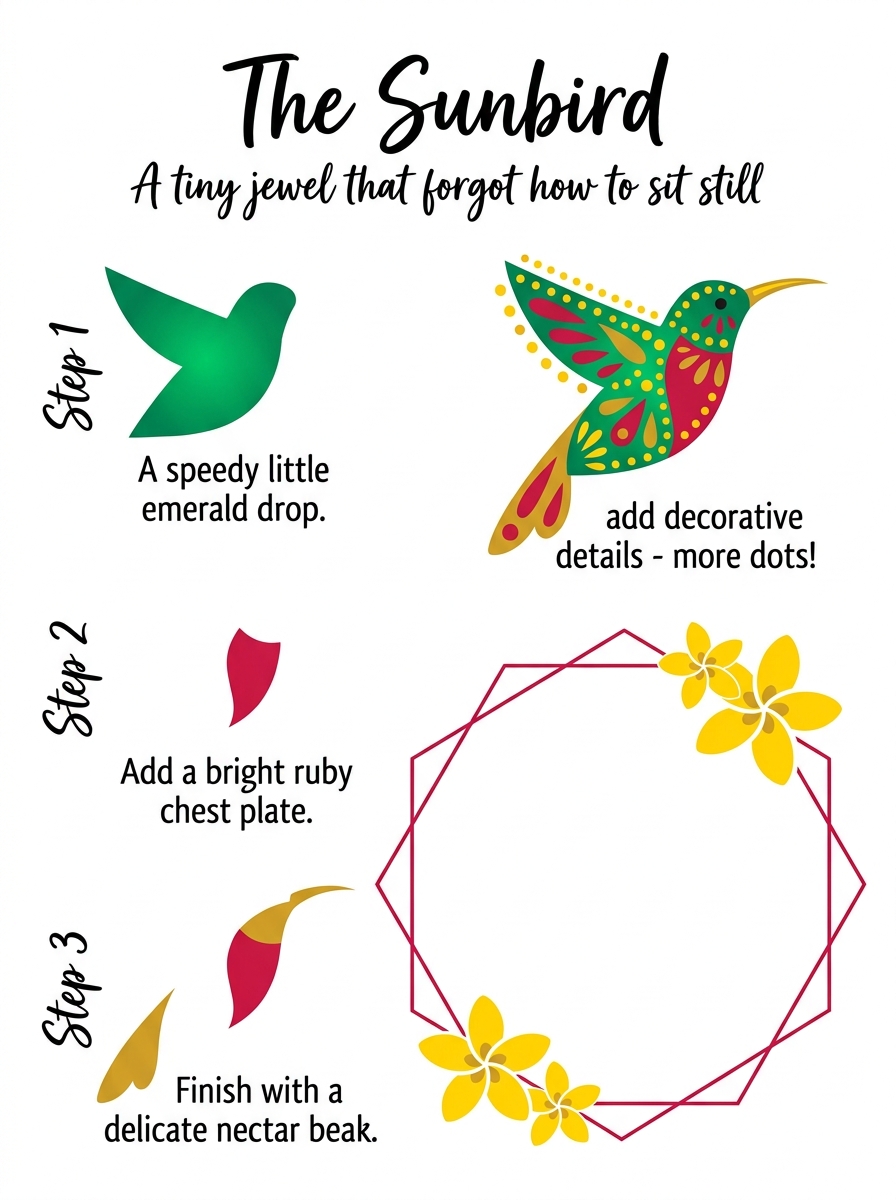
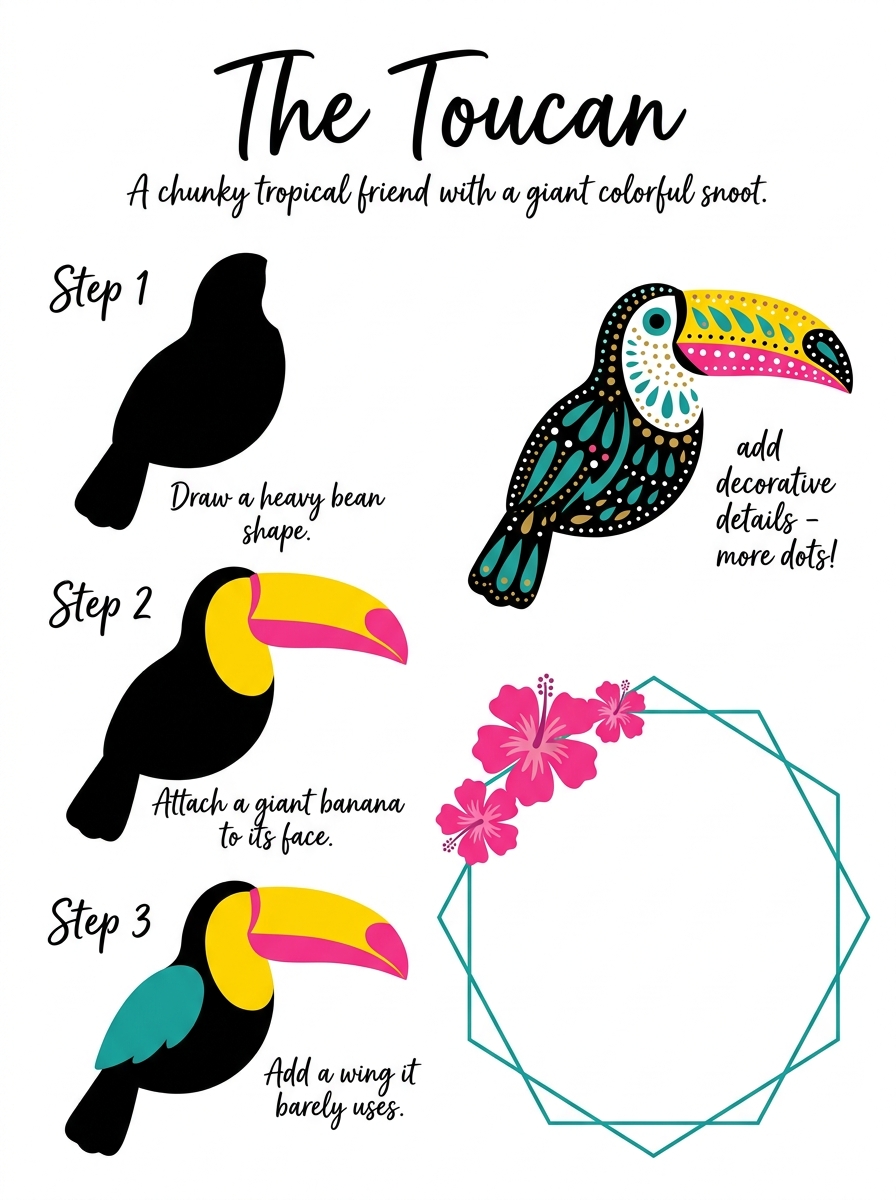
Tonight it is one star border on a card. Next week it is a macaw in full pattern, a toucan, a sunbird covered in dots. Every sheet builds the same way: lay the shape, layer the colour, add the dots.
Instant download · print as often as you like
The sky gets drawn one small mark at a time, and not one of them is the important one. Put the pen down often. The page keeps the count for you.
“At such favorable moments I have seen the Galaxy gleaming with light, and appearing as if composed of star-dust or of precious stones.”
É. L. Trouvelot, The Trouvelot Astronomical Drawings Manual, 1882
Mirabelle wrote this. No training, strong opinions, many pens. Peer reviewed by a cat who sat on the finished sky and rearranged three stars.