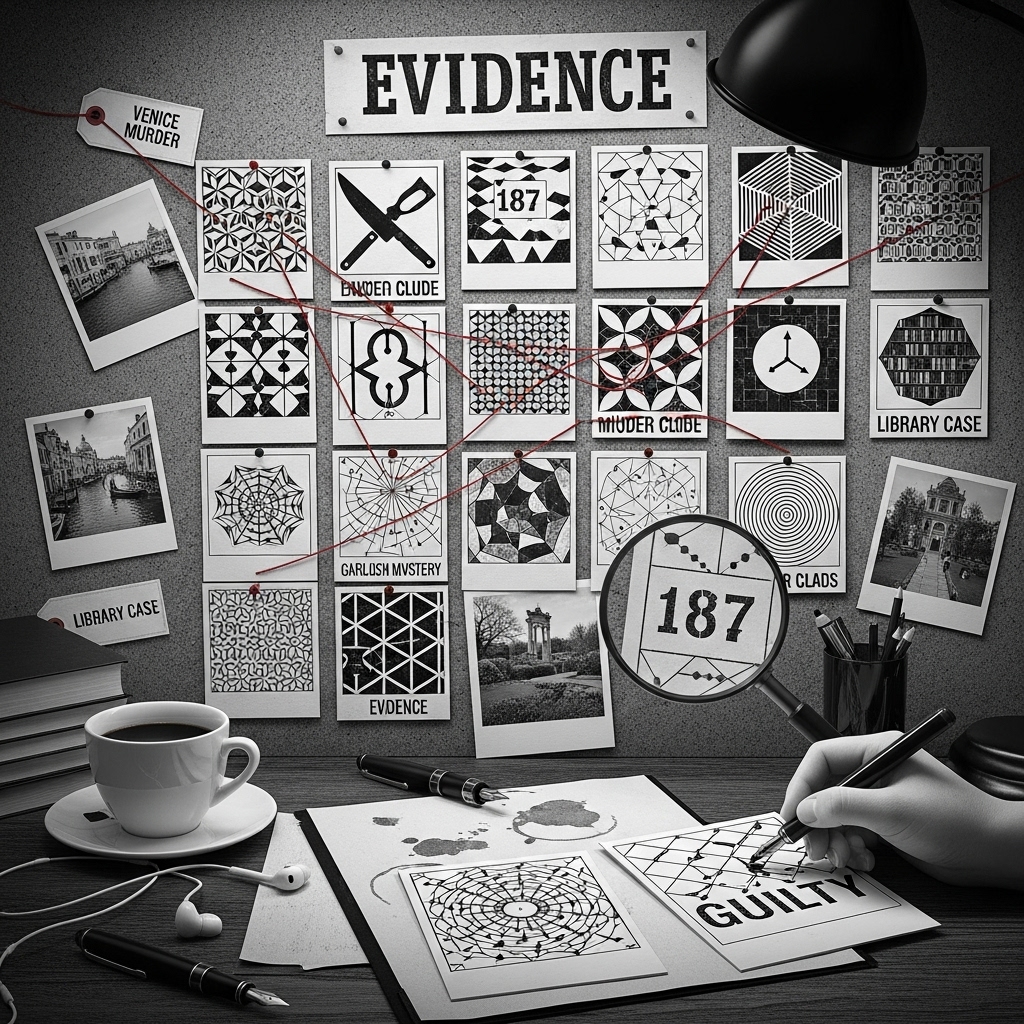
You’re about to think almost like Agatha Christie on her best day…
Hi, I’m Margaret Pike. I solve murders using the same style method that helped Agatha Christie write 66 detective novels – she did needlepoint while plotting every murder. The patterns freed her mind to see who the killer had to be.
Did you know? Einstein figured out relativity while sailing in circles. Churchill planned battles while laying bricks in repetitive patterns. Your hands are about to be busy so your mind can catch killers.
Welcome to the most thrilling 7 minutes of your morning.
One technique. Endless discoveries.
You draw patterns while I tell you about murder. That’s it. But here’s what happens: When your hands are busy with repetitive motions, your brain does something incredible – it starts seeing connections everywhere.
It’s why you solve problems in the shower. Why your best ideas come while driving. Why knitting grandmothers are impossible to lie to – their hands are busy, so their minds see everything.
The Greeks walked in spirals to solve philosophy. Tesla walked the same route daily while inventing. Now you’ll draw patterns while solving murders.
Case 1: “The Swiss Account Scandal” Banker dies clutching chocolate worth more than your car. You’ll find the killer using the same spiral patterns that ancient Greeks used to hide gold locations. Simple spirals. Deadly results.
Case 2: “First Edition, Last Chapter” Book dealer murdered with a $50,000 manuscript. Medieval monks hid secrets in decorative borders – you’ll hide a killer’s name in yours.
Case 3: “The $500 Bottle Problem” Wine expert poisoned at a blind tasting. Your patterns work like a wine’s “legs” on glass – they reveal everything about what’s really inside.
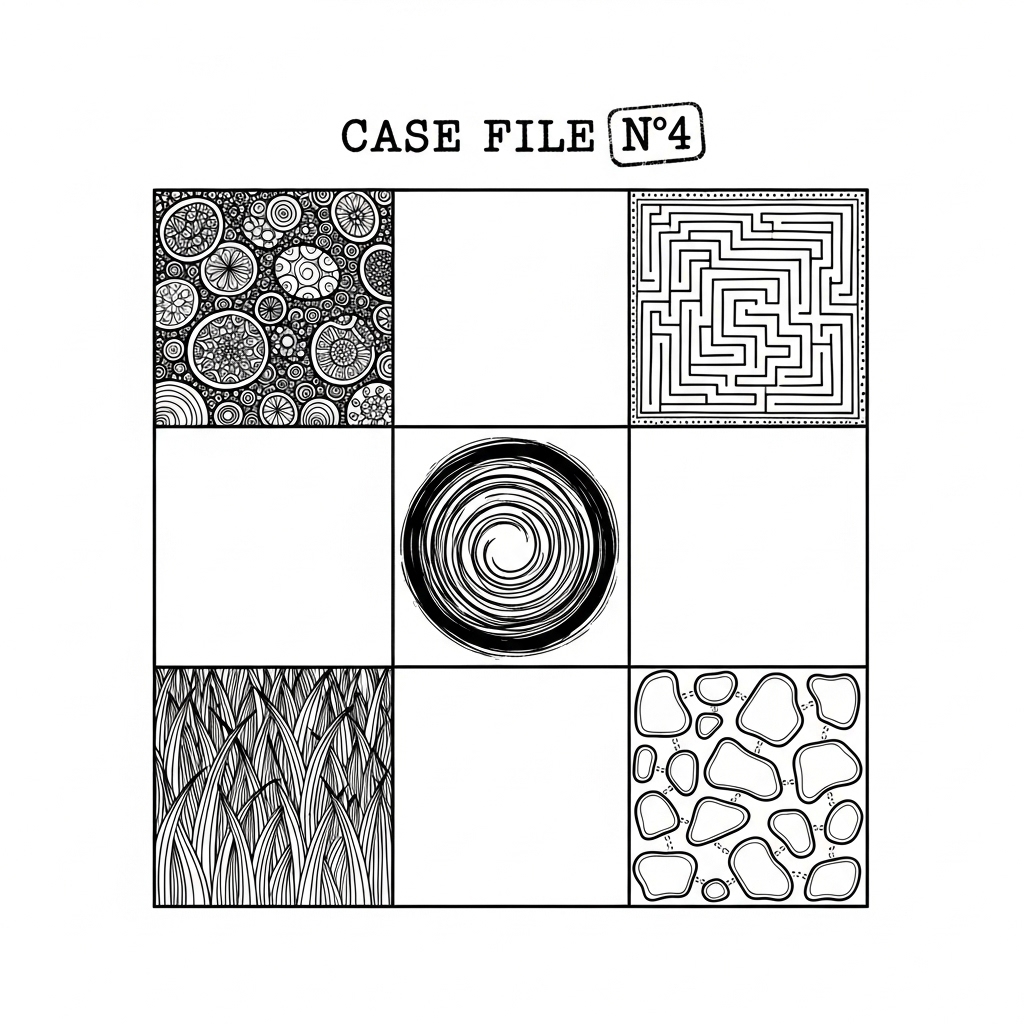
Case 4: “The Perfect Neighborhood Murder” City planner killed by someone who hated her cul-de-sacs. Japanese gardens hide meanings in every stone placement. Your patterns hide the killer.
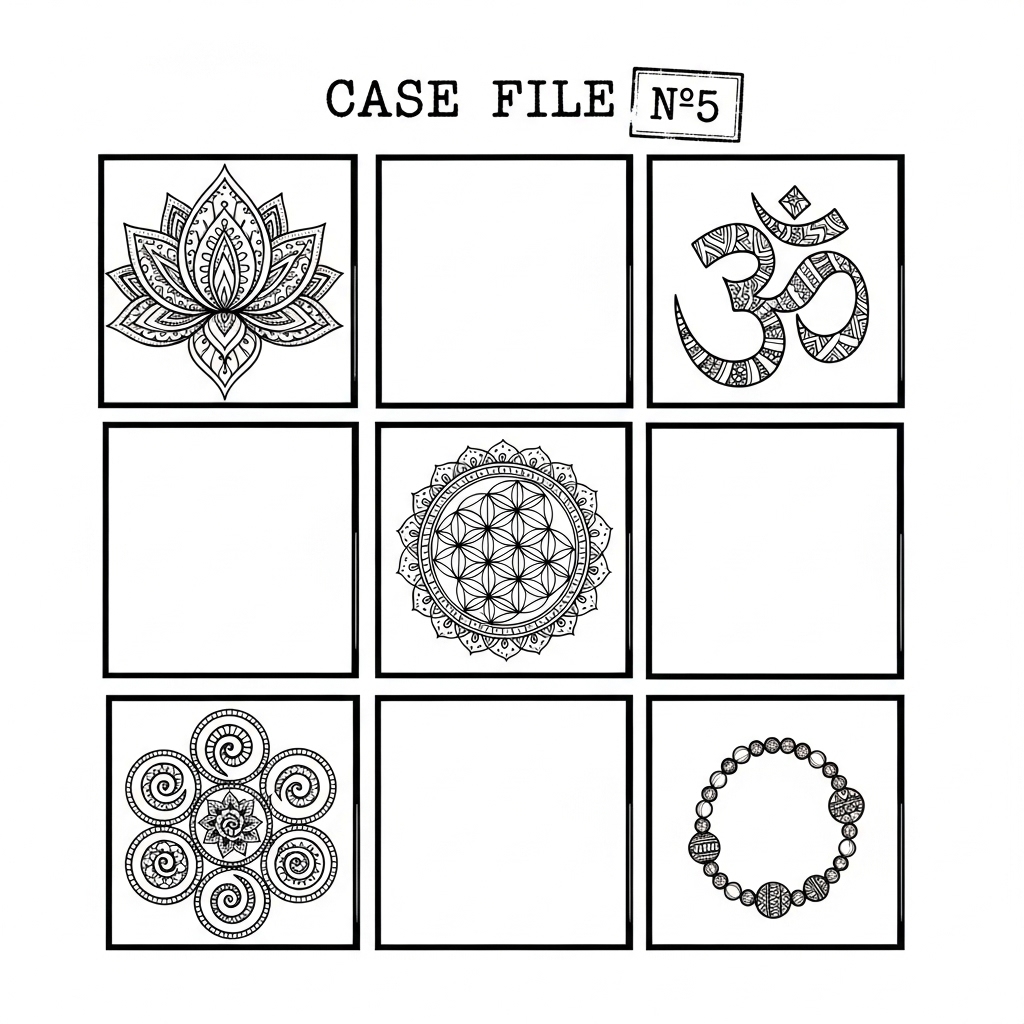
Case 5: “Extremely Permanent Meditation” Yoga guru dies in child’s pose. Tibetan monks spend weeks creating mandalas, then destroy them instantly. You’ll create patterns that destroy alibis.
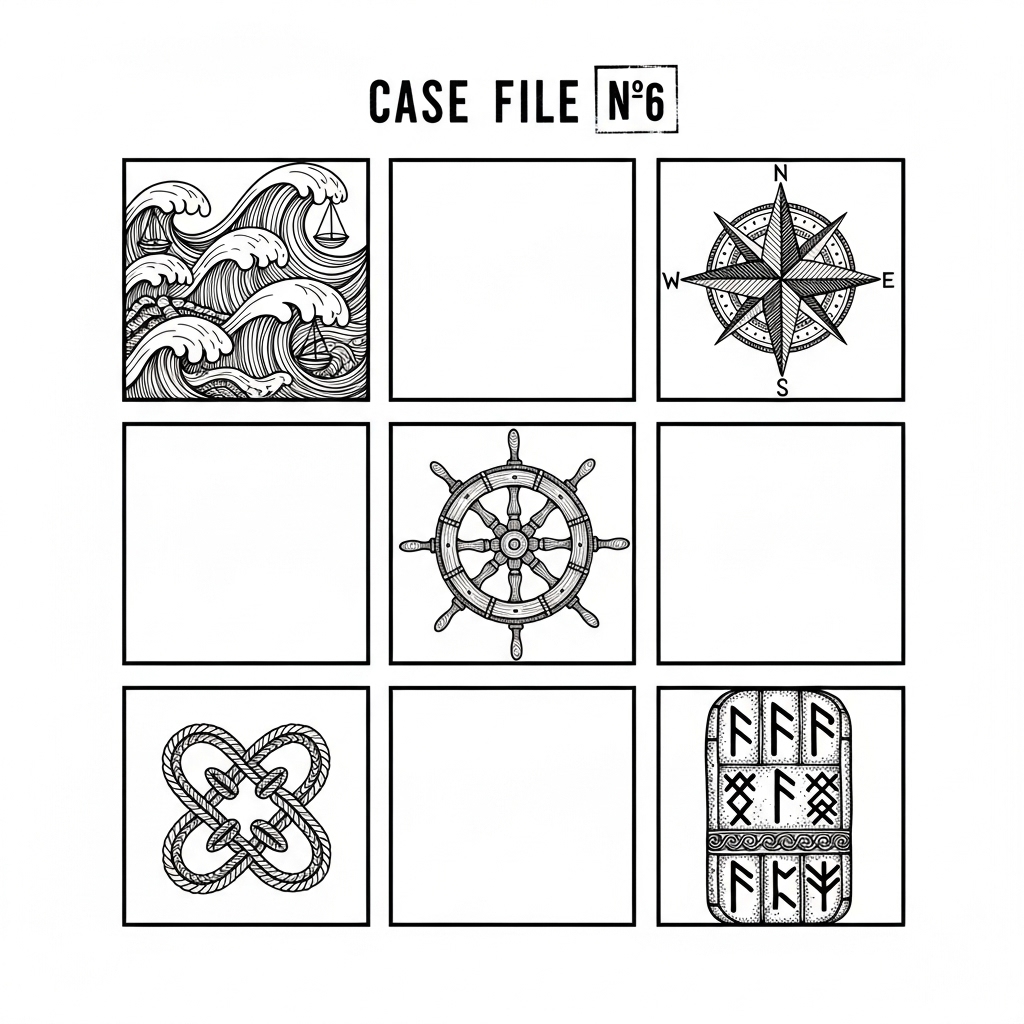
Case 6: “Lost at Sea (On Purpose)” Ship’s navigator vanishes between ports. Vikings navigated by memorizing wave patterns. Your patterns navigate straight to the murderer.
Case 7: “The Dinner Party Disaster” Chef poisoned by her own tasting menu. The Borgias hid poison plans in dinner seating charts. Your pattern reveals who sat where death was served.
Case 8: “Priceless and Lifeless” Gallery owner killed surrounded by art worth millions. Picasso said he painted what he thought, not what he saw. You’ll draw what everyone else missed.
Case 9: “The Greenhouse Effect” Botanist strangled among prize orchids. Darwin drew plant patterns for 20 years before seeing evolution. You’ll see murder in 7 minutes.
Case 10: “Death by Numbers” Data scientist killed by her own algorithm. Ada Lovelace invented computer programming using only pattern punch cards. Your patterns will compute the killer.
You already think in patterns:
→ You know which grocery line will move fastest
→ You can spot a fake designer bag from across the room
→ You know who’s getting divorced before they do
→ You can tell who made the potato salad just by looking
The Bletchley Park codebreakers who saved WWII? They recruited crossword puzzle champions. NASA hires origami artists to design spacecraft. Every genius in history used patterns to see what others couldn’t.
Now it’s your turn.
In 7 minutes, you’ll create something that looks like abstract art but works like a detective’s brain. The killer’s name will emerge from your patterns like those Magic Eye posters – once you see it, you can’t unsee it.
No complex theories. No dense explanations. Just you, a pen, and the sweet satisfaction of being smarter than everyone thinks.
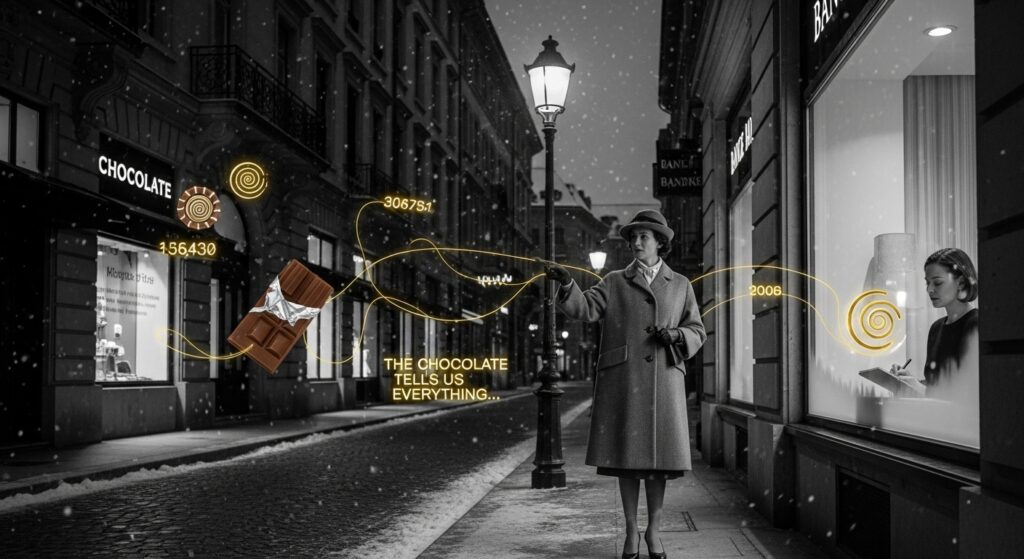
The police said Henri died of natural causes. But I’ve never seen a heart attack victim clutch a $40 piece of chocolate like it was the Holy Grail.
I’m Margaret Pike, and after 40 years of solving murders that “never happened,” I know a message from beyond the grave when I see one.
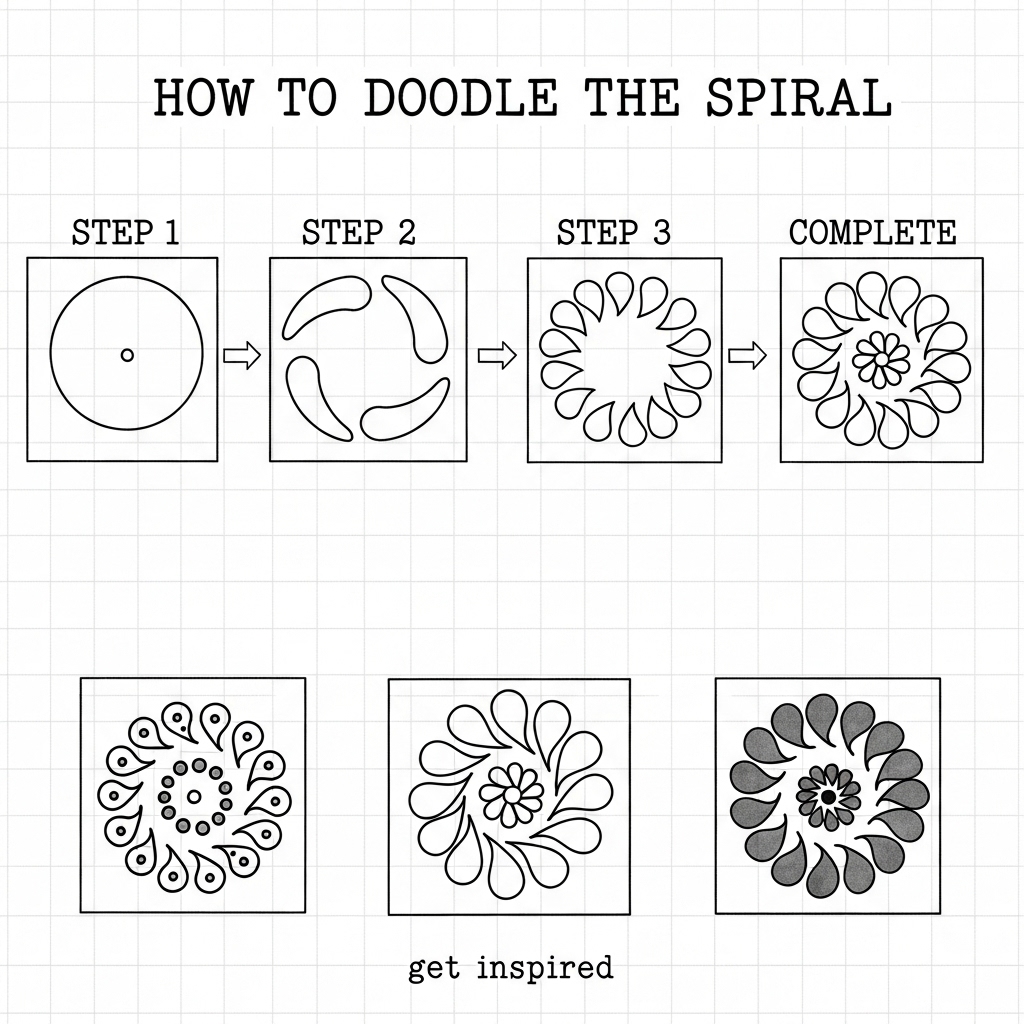
Here’s what you need to know about spirals: Leonardo da Vinci hid them in his paintings – not for beauty, but as memory devices. He’d sketch spiral patterns in his notebooks to remember where he’d hidden his most dangerous inventions. The same technique that protected Renaissance secrets is about to help you catch a killer.
Picture this: March 1962, Geneva. Back when Swiss banks were so secret, they didn’t even give you a toaster for opening an account – they gave you a number and a nod. The city smelled like fresh bread and old money. Women wore gloves to go shopping, men tipped their hats, and if you wanted to call someone, you asked the operator to connect you. Banking meant sitting across from someone who knew your grandmother’s maiden name, not typing numbers into a machine.
Henri Dubois ran the kind of private bank where clients arrived in cars with tinted windows and left through different doors. At 52, he looked like everyone’s favorite uncle – the one who snuck you butterscotch candies during church. But Henri had a peculiar habit: every night at 9 PM sharp, he’d eat one piece of Valrhona chocolate while reviewing the day’s accounts. Just one piece. The man had more self-control than a nun at a bakery.
Tuesday morning, 7:23 AM. Henri’s secretary, Marie, finds him slumped over his desk, stone cold dead, clutching that precious chocolate square. But here’s the thing – the chocolate had a spiral pressed into it. Not the company logo. A deliberate pattern, like someone had used it as a wax seal.
The office safe stood wide open. Everything intact except one item: a leather folder containing what Henri called his “insurance policy” – account numbers arranged in spiral patterns, each spiral representing a different client’s hidden fortune.
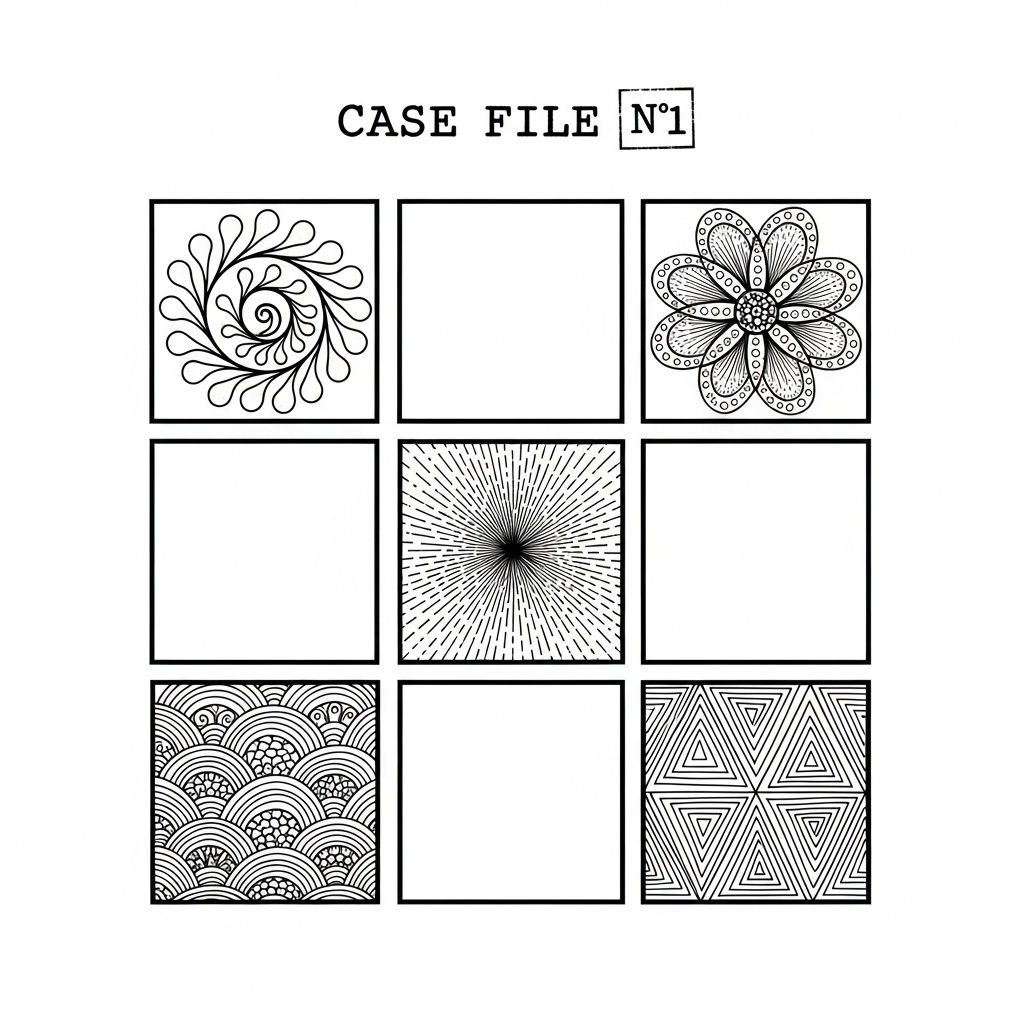
Now, before we solve this, grab your case file. You see that grid? We’re going to use it just like da Vinci would have – hiding the truth in plain sight.
Three people had keys to Henri’s office:
Marie Laurent, his secretary for twenty years. Sweet Marie, who brought homemade soup when Henri’s wife died, who knew which clients paid in diamonds and which in art. Last week, she’d overheard Henri planning to close the bank and disappear to Argentina. Twenty years of loyalty, and she’d be left with nothing but a pink slip and dangerous knowledge.
James Mitchell, an American “businessman” who’d been moving money through Henri’s bank since the Korean War ended. James claimed it was for importing Swiss watches to Texas, but those watches sure required a lot of cash transfers at odd hours. Henri had started asking questions about serial numbers.
Isabelle Dubois, Henri’s own daughter, back from art school in Paris with expensive tastes and a cocaine habit she thought daddy didn’t know about. She’d been photographing documents in his office, claiming she was “making art about capitalism.” Henri had cut off her allowance last month.
Look at your grid – see that spiral in the top-left corner? That’s not just decoration. It’s the exact pattern pressed into Henri’s chocolate. The killer knew about da Vinci’s method.
First empty square (top-center): Write “JM” here. These initials appeared on a napkin under Henri’s coffee cup – the killer’s calling card, written while Henri was dying.
Second empty square (middle-left): Draw a simple key – just a circle with a line. This represents the spare key Henri kept hidden, which the killer used to enter after hours.
Third empty square (middle-right): Write the number “9.” This is crucial – it’s not just Henri’s chocolate time, it’s the number of spirals in the stolen folder.
Fourth empty square (bottom-center): Draw three dots in a triangle formation. These represent the three chocolates the killer left behind – a taunt, really.
Now look at the center of your grid – that sunburst pattern. In da Vinci’s code, the center is where all truths converge.
Here’s what happened: James Mitchell killed Henri Dubois. But not for the reason you think.
James wasn’t laundering money from Korea – he was hiding Nazi gold that American soldiers had “liberated” in 1945. Henri’s spiral system wasn’t just organization; it was based on actual Renaissance treasure maps that Henri’s grandfather had used to hide Jewish families’ valuables during the war. Henri had figured out that James’s “watch imports” matched the exact amounts stolen from those hidden accounts.
The chocolate? James knew Henri’s routine because he’d been watching him for months. He pressed the spiral pattern into poisoned chocolate using an old seal from Henri’s own desk – the one Henri’s grandfather had used to mark which families had entrusted him with their savings.
James wrote his initials on that napkin as Henri died, thinking he was being clever – leaving a fake clue pointing to “Just Marie” instead of “James Mitchell.” But Henri, even dying, managed to grab the evidence that would damn his killer: that chocolate with the spiral pattern that matched the very accounts James had been pillaging.
The three chocolates James left behind? One for each decade he’d been stealing from the dead.
You know what’s funny about spirals? No matter how many times you go around, you always end up back at the center. And at the center of this case was simple American greed dressed up as international banking.
Marie found the stolen folder the next morning, hidden in James’s briefcase. He’d been so confident, he hadn’t even left town. The Swiss police, usually discrete as their banks, made quite a show of arresting an American at the Geneva airport.
Sometimes the most elegant patterns hide the ugliest truths. But that’s why we draw them out, one spiral at a time, until even the cleverest killer can’t hide anymore.
Henri’s chocolate? They say his daughter keeps one piece on his grave, replaced every week. She draws spirals in her sketchbook now – not for art, but for remembering.
The police called it a robbery gone wrong. But I’ve never seen a thief leave $50,000 behind and take a bookmark.
I’m Margaret Pike, and trust me when I say that some stories really can kill you.
Here’s what you need to know about medieval manuscripts: Those gorgeous borders weren’t just decoration. Monks used them to hide messages about everything from love affairs to murder plots. The roses, feathers, and vines you see in the Book of Kells? Half of them are actually coded confessions. The Vatican still won’t translate some of them – too scandalous, even after 800 years.
Picture Boston, October 1958. The leaves were showing off like teenage girls at a sock hop, all reds and golds. Kennedy was running for re-election to the Senate, people still dressed up to go shopping downtown, and if you wanted a book, you talked to a human being who actually read them. No clicking “add to cart” – you had conversations about Hemingway over coffee that cost a nickel.
Eleanor Blackwood ran the kind of rare book shop where dust was considered patina and credit cards were viewed with suspicion. At 48, she had the kind of beauty that came from reading poetry and drinking good wine – refined, sharp, slightly dangerous. Every Thursday night, she’d stay late to catalog new acquisitions, alone with her books and a glass of sherry.
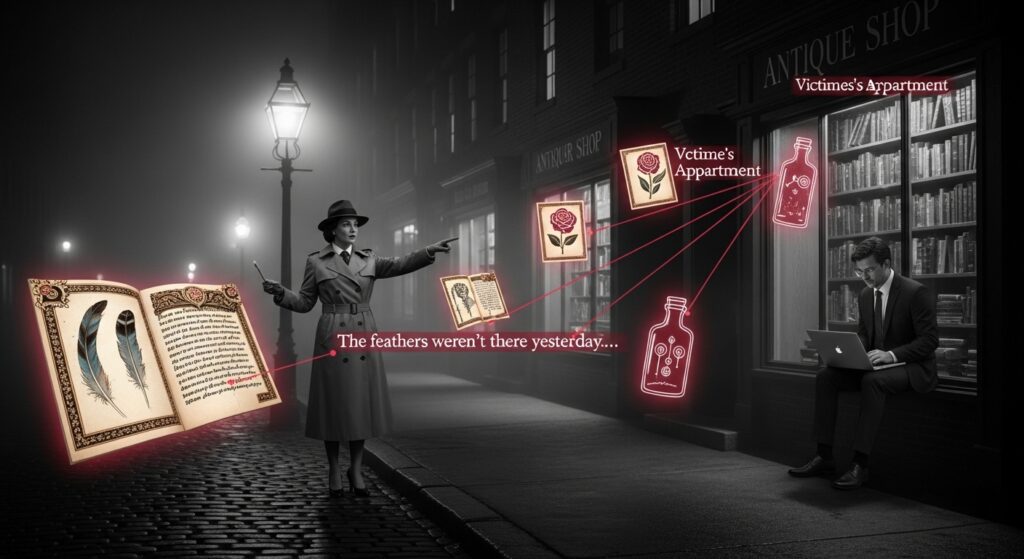
Friday morning, 8:15 AM. Her assistant Thomas finds her face-down on a $50,000 illuminated manuscript – a one-of-a-kind medieval text about poisons, ironically enough. The manuscript’s gold-leaf borders were smeared with blood, but here’s the strange part: the killer had added new decorations to the medieval borders. Fresh ink. Fresh patterns. Feathers that weren’t there before.
The shop’s cash box sat untouched. First edition Dickens, worth thousands, still on the shelves. But Eleanor’s personal notebook – where she recorded the true provenance of every book – was missing. Along with a bookmark she always kept in her pocket, a silver feather that had belonged to her grandmother.
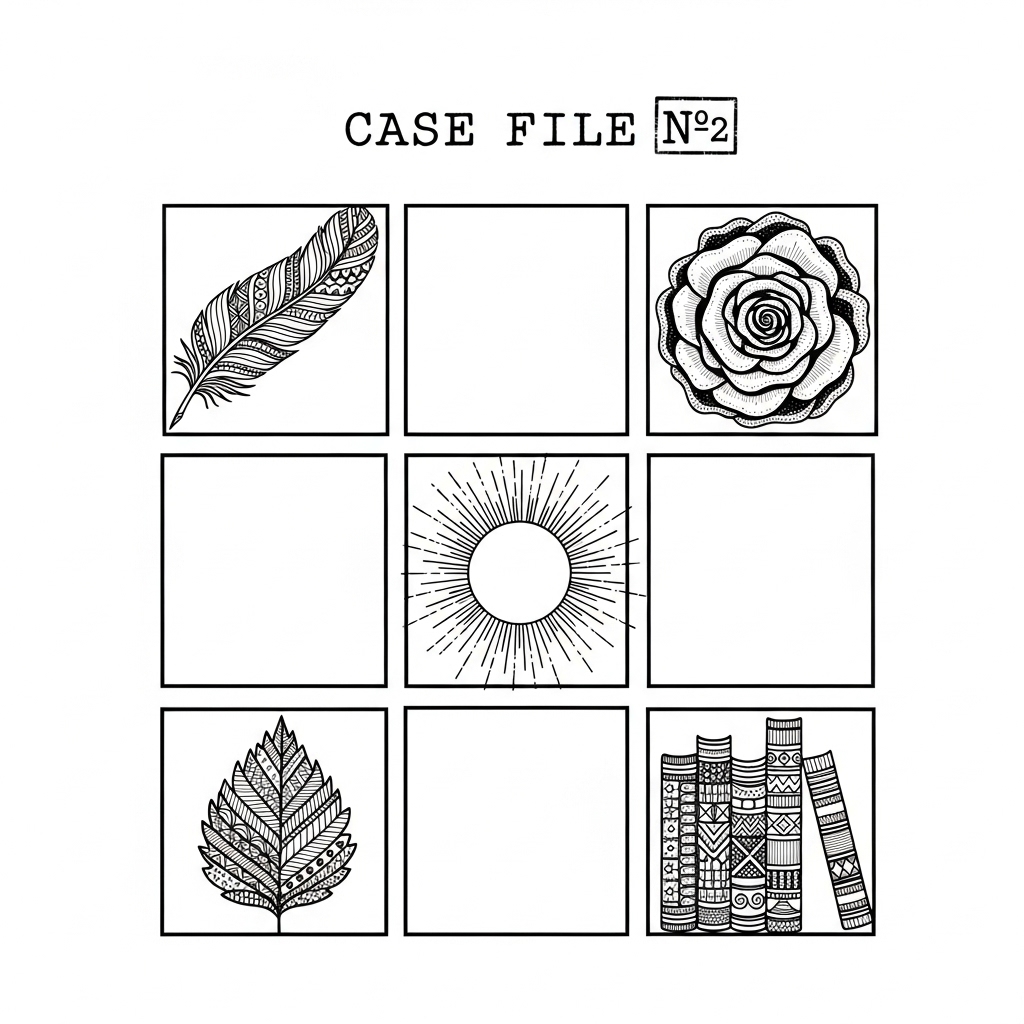
Grab your case file. See those patterns? We’re about to do what those medieval monks did – hide the truth in beauty.
Three people knew Eleanor stayed late on Thursdays:
Thomas Hartwell, her assistant for five years. Quiet Thomas, who could spot a forgery at fifty paces and had been secretly writing love letters to Eleanor that he never sent. Last week, Eleanor had discovered Thomas was selling information about her acquisitions to rival dealers. She’d planned to fire him Friday morning.
Vivian Cross, Eleanor’s best friend since college and owner of the antique shop next door. Vivian had been borrowing money from Eleanor for years, always swearing she’d pay it back “when her ship came in.” That ship had arrived – Vivian had inherited a fortune from her aunt. But Eleanor had already hired a lawyer to collect the debt.
Robert Blackwood, Eleanor’s ex-husband, a failed novelist who’d been forging rare book inscriptions to pay his gambling debts. Eleanor had evidence that could send him to prison, but she’d been holding it back – either from kindness or for blackmail. Robert had come by the shop Thursday afternoon, begging for one more chance.
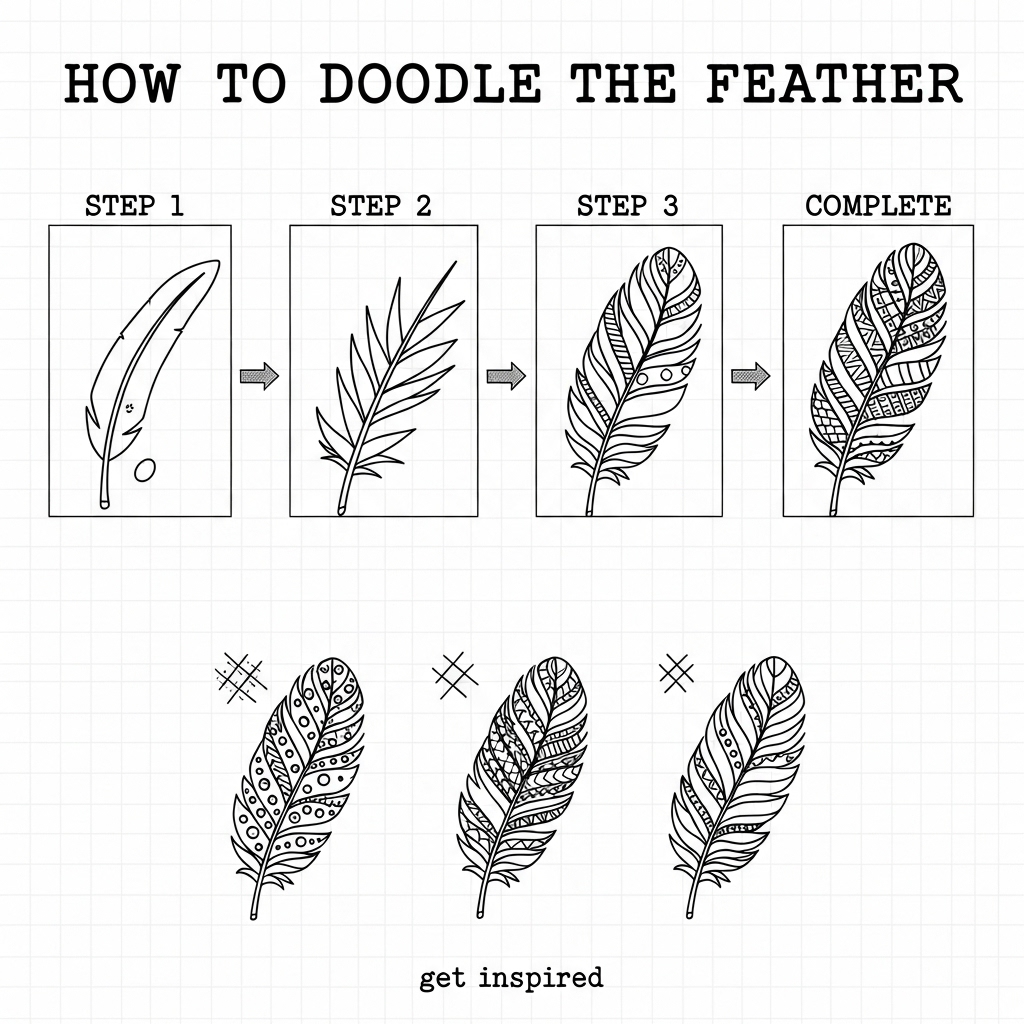
Look at your grid – that feather in the top-left corner? It’s drawn exactly like the silver bookmark the killer took. Medieval monks drew feathers to represent truth taking flight.
First empty square (top-center): Write “VC” here. These initials were hidden in the new feather pattern the killer drew on the manuscript – worked into the decorative barbs.
Second empty square (middle-left): Draw a simple rose – just a spiral with a few petals. This represents the pressed rose the killer left between pages 48-49, Eleanor’s age.
Third empty square (middle-right): Write the number “23.” This is the page where the manuscript described the exact poison used to kill Eleanor.
Fourth empty square (bottom-center): Draw two interlocking circles. This represents the wedding rings found in Eleanor’s desk – not one set, but two.
Look at the center sunburst – medieval monks called this the “eye of God,” where all truths are revealed.
Here’s what happened: Vivian Cross killed Eleanor Blackwood. But the motive will break your heart.
Those two sets of wedding rings? One was Eleanor’s from her marriage to Robert. The other was from Eleanor’s secret marriage to Vivian’s father in 1935, annulled when their families found out. Eleanor wasn’t just Vivian’s friend – she was her stepmother, hidden in plain sight for twenty-three years.
The inheritance Vivian received? It should have been Eleanor’s. Vivian’s father had left everything to his “first wife,” but Vivian had destroyed the will and forged a new one. Eleanor had discovered the truth when she found their marriage certificate hidden in a book Vivian had sold her – a medieval text about forbidden love.
The poison came from the manuscript itself – Eleanor had been showing Vivian the page about extracting digitalis from foxgloves, not knowing Vivian had already prepared a fatal dose in the sherry. As Eleanor died, Vivian drew new patterns in the manuscript’s borders – feathers for the truth that would never take flight, roses for the love that had been buried.
That silver feather bookmark? It had been Vivian’s grandmother’s, given to Eleanor as a wedding gift in 1935. Vivian took it back, the only proof of a marriage that had haunted three generations.
The pressed rose between the pages? From Eleanor and Vivian’s father’s wedding bouquet, kept all these years.
Thomas found Vivian the next morning, sitting in Eleanor’s chair, adding more patterns to the manuscript – an endless spiral of feathers and roses, each one a year of lies. She’d used the same ink Eleanor used for her catalogs, thinking she could rewrite history one decoration at a time.
You know what’s tragic about illuminated manuscripts? The most beautiful borders often frame the darkest stories. But that’s why we trace them with our fingers, follow their patterns – sometimes the only way to understand a murder is to draw it out, one feather, one rose at a time.
They say Vivian still draws patterns in her cell. Always the same: feathers that never fly, roses that never bloom, and the initials “EB” hidden where only she can see them.
You want to know the difference between murder and wine? Wine gets better with age.
I’m Margaret Pike, and I just watched a man die doing what he loved most – being right about wine.
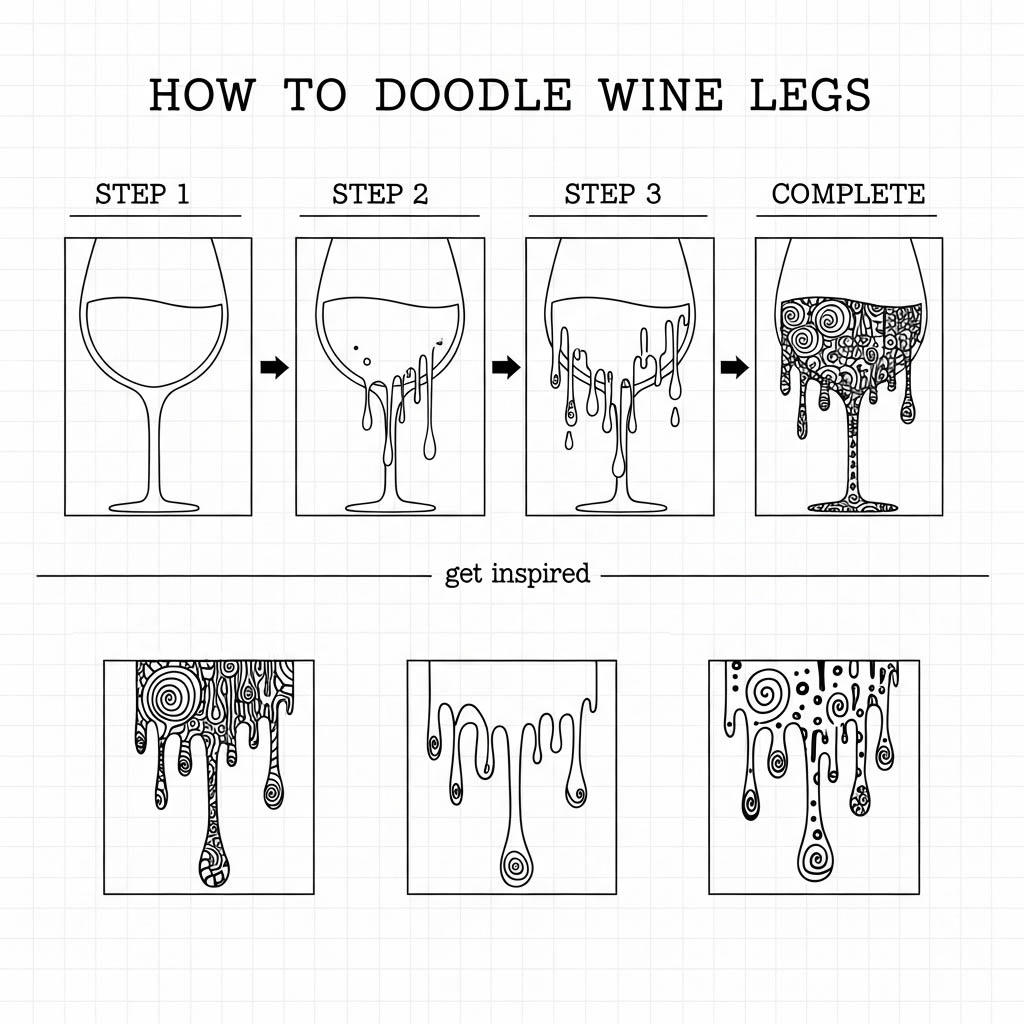
The ancient Romans had a saying: “In vino veritas” – in wine, there is truth. But they also knew something we’ve forgotten: the patterns wine makes on glass, what we call “legs” or “tears,” can tell you if someone’s trying to poison you. Roman slaves would swirl their master’s wine and watch how it clung to the glass. Wrong pattern? Don’t drink. It saved Caesar’s life twice. Didn’t help him with the knives, but that’s another story.
Saturday night, Napa Valley, 1974. America was just starting to realize we could make wine that didn’t taste like disappointment. The Watergate hearings were on every TV, gas cost 55 cents a gallon, and people still thought a wine costing more than $10 was showing off.
Richard Thornton was the kind of wine expert other experts called “sir.” Blind tasting champion five years running. The man could tell you which side of the hill the grapes grew on just by sniffing the cork. Insufferable? Absolutely. But when Richard said a wine would be worth something, collectors listened.
Here’s the scene: The annual Harvest Moon Blind Tasting at Château Margaux – not the French one, the California pretender. Eight judges, twelve wines, and enough ego to float a yacht.
The seventh wine comes out. Richard swirls, sniffs, sips. His face changes. Not his usual “this wine offends me” expression. Real fear.
“This is wrong,” he says. “The legs are–”
And then Richard Thornton, who once described a $3 bottle as “an assault on humanity,” falls face-first into his scoring sheet. Dead before the wine stopped swirling in his glass.
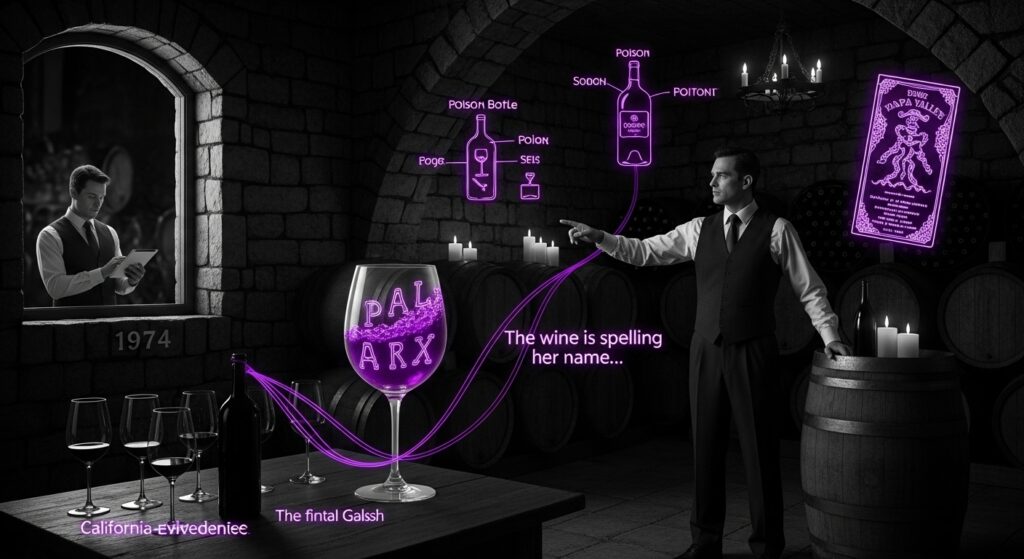
But here’s what made my blood run cold: the wine in Richard’s glass was still moving, creating patterns on the sides. Perfect spirals, then stars, then something that looked like letters. Chemistry doesn’t do that. Poison does.
Everyone saw Richard die. But only three people could have poisoned wine number seven:
Marcus Chen, the sommelier who’d been pouring all evening. Richard had humiliated Marcus last year, publicly declaring his family’s vineyard produced “grape juice for people who hate themselves.” Marcus poured with precision, but his hands shook every time he served Richard.
Diana Rothschild, fellow judge and Richard’s ex-lover. She’d been making notes all evening in a small notebook – not about wine, but about Richard. Every gesture, every word. They’d been partners until Richard sold her father’s wine collection and kept the profits. She’d smiled when Richard died. Actually smiled.
Bernard Foucher, the French chef who’d prepared the palate cleansers. Bernard had been adding something extra to Richard’s portion all night – claimed it was honey for Richard’s throat. But Bernard’s daughter had killed herself after Richard’s review destroyed their restaurant. Honey? Or something sweeter than revenge?
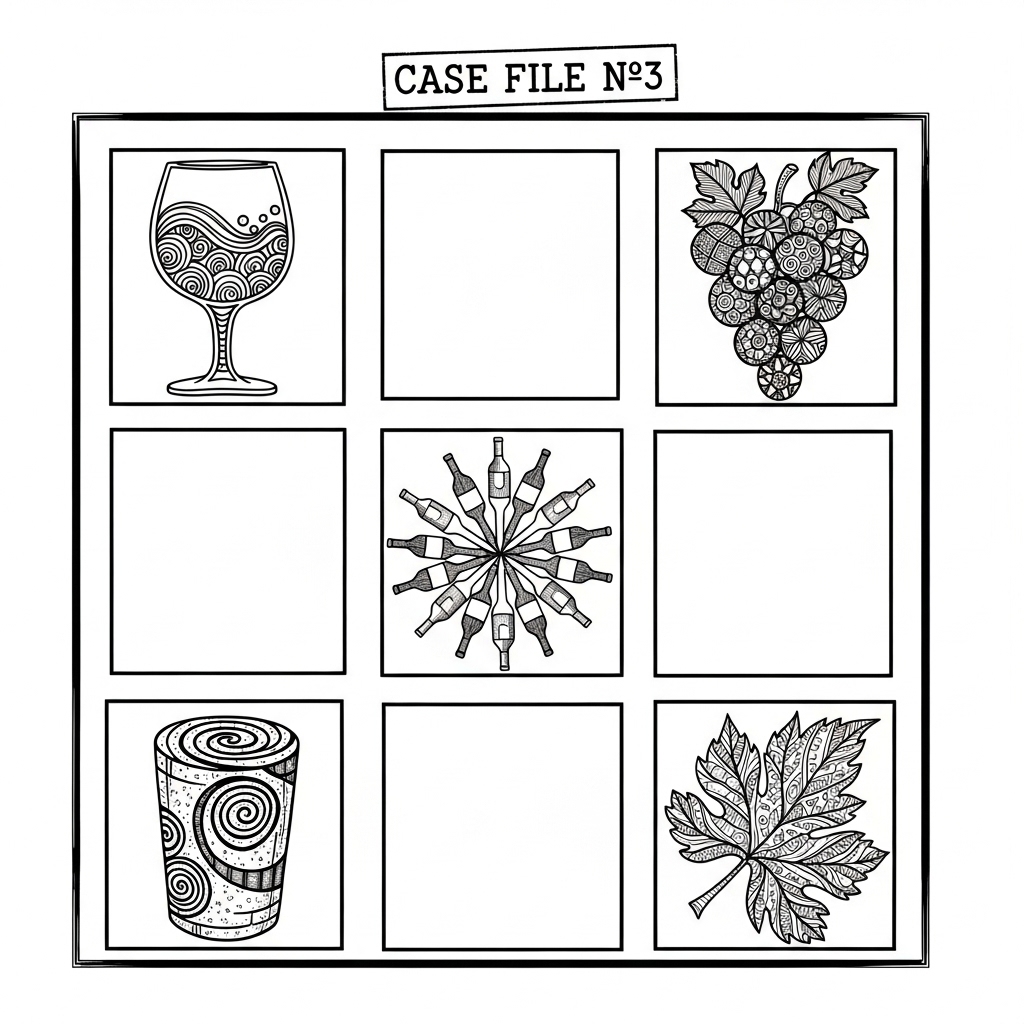
Now look at your case file grid. Those aren’t just pretty patterns – they’re telling you exactly how Richard died.
First empty square (top-center): Draw wine glass legs – three curved lines running down. This matches what Richard saw in his final glass.
Second empty square (middle-left): Write “pH 7” – the acidity that revealed the poison when mixed with wine.
Third empty square (middle-right): Draw a star – matching the pattern the poisoned wine made, impossible unless something alkaline was added.
Fourth empty square (bottom-center): Write “DF” – the initials hidden in the wine’s pattern as Richard died.
The center mandala? That’s your moment of clarity, when wine and water separate to show truth.
Diana Rothschild had spent three years planning this. She’d studied chemistry, learned about thallium – tasteless, odorless, but changes how liquid moves on glass. She knew Richard always swirled exactly three times, always held the glass at the same angle. She’d calculated exactly how the poison would reveal her father’s initials – David Foucher – in the wine’s tears.
Yes, Bernard’s last name was Foucher. Diana’s maiden name. The chef was her uncle.
But here’s the twist that changes everything: Diana didn’t poison the wine. She poisoned Richard’s palette cleanser six wines earlier, knowing it would activate only when it met the specific tannins in wine number seven – a 1969 Château Margaux from her father’s collection, the last bottle Richard had stolen and she had bought back for tonight.
The wine legs that revealed “DF”? Not her initials. Her father’s. David Foucher had hidden his signature in his wines using a technique from Roman times – specific minerals that created patterns only visible when the wine reached perfect temperature and oxidation. Richard was killed by a dead man’s signature, delivered by his daughter’s hand.
Marcus saw it happen. He’d been watching the patterns all night, recognizing the ancient Roman technique his grandfather had taught him. But he said nothing. Professional courtesy among those Richard had destroyed.
You know what’s beautiful about wine? It remembers everything – the soil, the rain, the hands that picked the grapes. Richard died tasting the one thing he never understood: that wine isn’t about being right. It’s about remembering.
Diana still has her father’s notebooks. Pages of patterns, each one a different wine, each one a message he never got to send. She draws them sometimes, spirals and stars and letters that only appear when conditions are perfect.
The police called it an allergic reaction. The wine community called it karma. I call it the most patient murder I’ve ever seen – three years of planning for three seconds of recognition in Richard’s eyes when he realized the wine was telling him exactly who was killing him and why.
Sometimes the truth isn’t at the bottom of the bottle. Sometimes it’s in the tears running down the sides, spelling out verdicts that take years to deliver.
The police said Martha Hendricks was dead. Martha said the police needed their eyes checked.
I’m Margaret Pike, and this is the first time I’ve solved a murder where the victim kept interrupting me to offer coffee and banana bread.
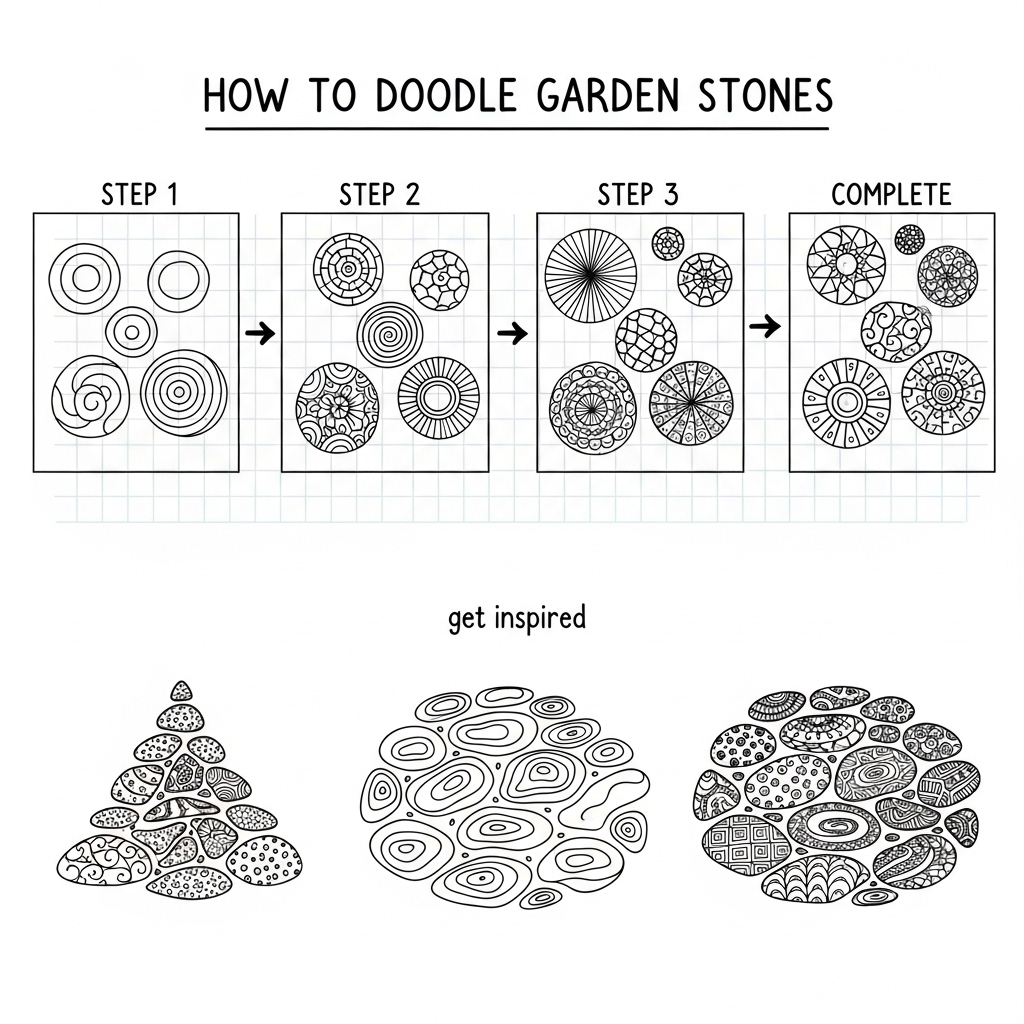
Here’s what you need to know about Japanese gardens: Every stone placement means something. Three rocks in a triangle? Heaven, earth, and humanity. Five rocks in a circle? The elements protecting your home. But in 1675, a Japanese gardener named Yamamoto used rock patterns to hide messages about which feudal lords were having affairs. The scandal was so juicy, they turned his garden into a national monument. Today, we’re using the same patterns to catch a “killer” who’s actually just really, really petty.
Welcome to Maple Grove, Connecticut, 1971. The kind of place where the biggest crime was parking on the wrong side of the street on Tuesdays. Everyone had 2.5 kids, a station wagon, and opinions about their neighbors’ lawn height. Coffee cost 25 cents, neighbors actually borrowed cups of sugar, and the town meetings were more dramatic than anything on television.
Martha Hendricks, age 58, was the city planner who’d committed the ultimate suburban sin: she’d designed seventeen cul-de-sacs in a town that preferred straight streets. “Better for community building,” she’d said. “Better for making me car sick,” everyone else said.
Monday morning, 9:15 AM. Martha’s assistant Janet walks into the office to find Martha “dead” at her desk, face-down on development plans. Red ink everywhere – looked like blood if you squinted and had terrible eyesight. A note stabbed to the desk with a letter opener: “DEATH TO CUL-DE-SACS.”
Here’s where it gets fun: Martha was absolutely fine. Sitting right there, eating a donut, watching Janet scream. “I wanted to see who’d be happy I was dead,” Martha explained, powdering her nose while paramedics checked her pulse to humor her.
But someone HAD tried to “murder” Martha – socially speaking. They’d submitted fake development plans under her name proposing a cul-de-sac shaped like a middle finger. Very anatomically correct. Very inappropriate for the church newsletter.
Grab your case file. Those patterns aren’t just zen doodles – they’re mapping out suburban warfare.
Three people had access to Martha’s office and reason to want her reputation dead:
Betty Nakamura, head of the Garden Club and Martha’s best frenemy. Betty’s Japanese garden was perfect until Martha’s cul-de-sac redirected traffic past it. Now everyone could see Betty’s meditation stones spelled out “BITE ME” in Japanese. Betty claimed it meant “Peace and Harmony,” but her nephew from Tokyo said otherwise.
Frank Peterson, the local mailman who’d walked the same route for 20 years until Martha’s cul-de-sacs added three miles to his daily delivery. Frank had started leaving passive-aggressive notes in Martha’s mailbox. Not threats, just corrections to her grammar and suggestions that she consider retiring to Florida.
Susan Chen-Williams, PTA president and marathon runner whose jogging route had been “destroyed” by Martha’s circular streets. Susan had been seen measuring the exact radius of each cul-de-sac at midnight, muttering about “geometric inefficiency” and “cardiovascular sabotage.”
Look at your grid – that rock garden pattern in the top-left? It’s exactly like Betty’s “BITE ME” stones.
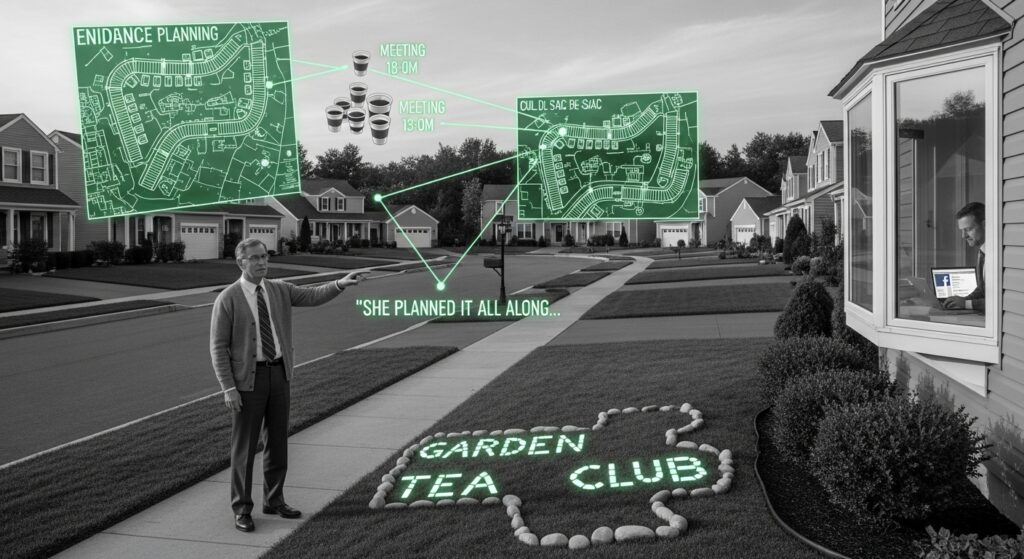
First empty square (top-center): Draw five dots in a circle. This represents the five neighbors who started the “Martha Must Go” tea club (they served coffee).
Second empty square (middle-left): Write “BWL” – the initials found on the fake development plans, written in perfect Palmer Method cursive.
Third empty square (middle-right): Draw a simple house with a circular driveway. This was Martha’s actual revenge plan – making EVERYONE’S driveway a cul-de-sac.
Fourth empty square (bottom-center): Write “3:15” – the time of the secret neighborhood meetings at Betty’s house (right after General Hospital).
The center pattern is a traditional Japanese “ensō” – a circle representing the universe, or in this case, the endless loop of suburban drama.
Here’s what really happened: Betty, Susan, and Frank ALL “killed” Martha. Together. At their tea-club-that-served-coffee.
They’d created an elaborate plan called “Operation Dead End” (Frank’s pun, he was very proud). Betty used her garden design knowledge to create the anatomical cul-de-sac. Susan calculated the exact angles to make it recognizable. Frank, with his perfect handwriting, forged Martha’s signature.
But here’s the beautiful twist: Martha knew all along. She’d been attending their meetings disguised as Betty’s “cousin from Tucson.” The wig was terrible, everyone knew it was Martha, but they were all too polite to say anything. It became this elaborate theater where Martha listened to them complain about Martha while serving Martha’s famous banana bread.
The “death threat”? Martha wrote it herself. The red ink? Strawberry jam from her morning toast. The whole “murder” scene? Community theater practice for their production of “Arsenic and Old Lace.”
You see, Martha had discovered something wonderful: the more cul-de-sacs she built, the more her neighbors talked to each other. They bonded over their mutual frustration. Betty’s garden club grew from 5 to 50 members. Frank started a walking club for “cul-de-sac survivors.” Susan organized 5K runs through the circular streets called “Loops for Life.”
Martha had created the perfect neighborhood – not through design, but through giving everyone something to complain about together.
The fake murder? It was Martha’s retirement announcement. After 30 years of city planning, she wanted to go out with a bang. The whole neighborhood showed up to her “funeral” – which turned into a surprise retirement party where they roasted her (verbally) for three hours.
Betty’s “BITE ME” stones now actually spell “BEST MENTOR EVER” (in English, she gave up on the Japanese). Frank delivers mail on a golf cart Martha bought him. Susan named her first marathon medal after Martha – she trained by running all seventeen cul-de-sacs in order.
You know what’s funny about patterns? Sometimes the most chaotic ones create the most beautiful communities. Every stone Betty placed in anger became part of a garden that won national awards. Every cul-de-sac Martha drew brought neighbors together who’d never spoken before.
Martha still lives in Maple Grove, in a house at the end of the most notorious cul-de-sac. She hosts the tea-club-that-serves-coffee every Tuesday. They’re currently planning their next “murder” – the golf course superintendent who suggested removing the miniature golf course.
Some murders are about death. The best ones are about bringing communities to life, one terribly designed street at a time.

I came here for the deep breathing, not the deep investigation, but the universe has an interesting sense of humor and a body count.
I’m Margaret Pike, and I’m currently trapped at a wellness retreat where the only thing more toxic than the people is the kombucha.
Let me set my intention for this story: surviving seven days at the Eternal Light Wellness Center without committing murder myself. Though someone’s beaten me to it.
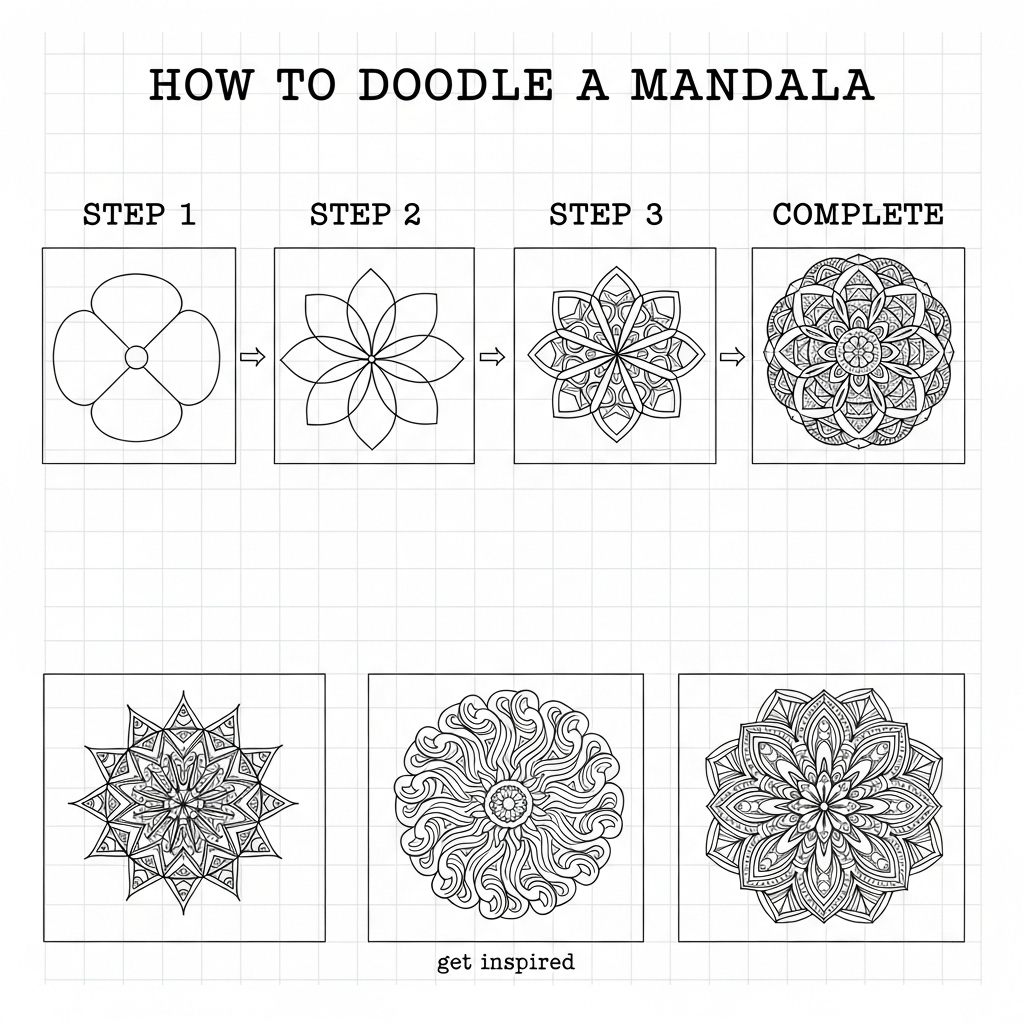
Here’s what you need to know about Tibetan sand mandalas: Monks spend weeks creating intricate patterns grain by grain, then destroy them in seconds to represent impermanence. But before they sweep them away, those patterns contain the entire universe – every truth, every lie, every secret. The monk who taught me this in 1952 also mentioned they sometimes hid escape routes in the patterns when Chinese soldiers came. “Impermanence,” he winked, “is very permanent when you need it to be.”
Day One (Monday): Arrival at what I’m calling Narcissist Nirvana. Marin County, California, 1977. The place where trust funds go to find themselves. Everyone’s wearing white linen that costs more than my car, talking about their “journey” while texting their divorce lawyers. A smoothie here costs $30 and tastes like grass clippings mixed with disappointment.
Our guru: Ananda Bliss (born Jennifer Goldberg from Poughkeepsie). Forty-three, flowing gray hair, the kind of serene smile that makes you want to check your wallet. She’s built an empire on teaching rich people to breathe – something they’d been doing for free their whole lives.
Day Three (Wednesday): I finally understand what “intermittent fasting” means – intermittently, you fast from sanity. Ananda leads us in “death meditation.” We’re supposed to imagine our bodies decomposing. Margaret from Pasadena actually brings props. I’m imagining a cheeseburger.
Day Five (Friday, 6 AM): The scream that woke us wasn’t part of the “primal release therapy.”
Ananda Bliss, permanently frozen in child’s pose in the meditation hall. Not the planned kind of permanent. Actually dead. The eternal in “Eternal Light” suddenly feels like a threat.
But here’s the weird part: she’s surrounded by a perfect mandala made of quinoa, chia seeds, and what I’m pretty sure is extremely expensive Himalayan salt. The pattern is intricate, beautiful, and according to Timothy who claims he studied in Tibet (he studied in Tijuana), it’s the Buddhist symbol for “liberation through deception.”
Three people had access to the meditation hall after midnight lockdown:
Rainbow Schwartz (yes, that’s her legal name now), Ananda’s business partner who just discovered Ananda had been embezzling to fund a secret meditation center in Costa Rica – without Rainbow. She’s been doing rage yoga all week, which is just regular yoga but with more swearing.
Dr. Marcus Webb, the retreat’s wellness director who’s not actually a doctor of anything except bullshit. Ananda had found out his certificates were from a print shop in Reno and planned to expose him during the closing ceremony. He’s been adding extra CBD to everyone’s smoothies to “keep the vibe chill” while secretly panicking.
Sage Patel, Ananda’s most devoted student who literally hasn’t left the property in three years. She discovered Ananda’s real plan: fake her own death, escape to Costa Rica, leave her followers thinking she’d “ascended.” Sage had already tried to kill herself twice to “follow Ananda to the next plane.” Finding out the next plane was just United Airlines to San José broke something in her.
Look at your case file grid. That lotus pattern? It’s exactly like the mandala around Ananda’s body, but with one crucial difference.
First empty square (top-center): Draw a simple infinity symbol. This was carved into Ananda’s meditation cushion – her secret sign for “exit strategy.”
Second empty square (middle-left): Write “3:33” – the time Ananda always woke up for “divine downloads” (bathroom breaks).
Third empty square (middle-right): Draw a small airplane. Found sketched in Ananda’s journal margins hundreds of times.
Fourth empty square (bottom-center): Write “JS” – her real initials, hidden in every mandala she ever created, like a signature.
The center mandala on your grid? That’s the destruction pattern – what monks create right before they sweep everything away.
Here’s what actually happened, and it’s beautifully, cosmically stupid:
Ananda DID fake her death. The body in child’s pose was a mannequin from her “Mindful Anatomy” class, dressed in her clothes, sprayed with her essential oil blend. She’d spent months planning this elaborate exit, even recording farewell videos about “transcending physical form.”
But Sage, her devoted student, discovered the plan and decided to make it real. If Ananda wanted to pretend to die, Sage would help her actually do it. She knocked out Ananda with chloroform hidden in frankincense, then positioned her exactly where the mannequin was supposed to be.
The mandala of quinoa and chia seeds? Sage spent four hours creating it, each grain placed with murderous meditation. The pattern actually spelled out “FAKE” in Tibetan script, over and over. She wanted everyone to know Ananda was a fraud, but only after achieving the “permanent meditation” she’d always preached.
The beautiful irony? Ananda survived. Turns out Sage’s chloroform was actually lavender oil – she’d ordered the wrong thing online. Ananda woke up six hours later with a headache and the worst case of irony poisoning I’ve ever seen. She’s very much alive, very much arrested for fraud, and very much banned from teaching anything except license plate making in federal prison.
Sage is in therapy now – real therapy, not the kind where you hug trees and call them Harold. She’s actually doing better. Turns out believing your guru is a fraud is very liberating.
Rainbow renamed the center “The Temporary Light Wellness Center” and now teaches a course called “Lowered Expectations Meditation.” It’s surprisingly popular.
Dr. Marcus Webb? Still not a doctor, but he makes excellent smoothies. He’s added a disclaimer to every cup: “Not medical advice.”
You know what’s actually permanent about meditation? The realization that most people teaching enlightenment are just really good at marketing darkness. But that’s why we draw these patterns – to see through the quinoa and chia seeds to the truth underneath.
The monks who destroy their mandalas understand something Ananda never did: impermanence isn’t about escaping life. It’s about being present for whatever weird, stupid, beautiful thing happens next.
Even if it’s murder by wellness.

Ship’s Log – SS Meridian
North Atlantic Shipping Route
Final Entries Before the Incident
Day 7 – October 15, 1962
Navigator Johnson still missing. Seven days now. Ship continues on course somehow. Stars still know where we are, even if we don’t know where Johnson is.
I’m Margaret Pike, civilian investigator. Boarded in Halifax to look into cargo discrepancies. Found something worse. Much worse.
Day 6 – October 14, 1962
Found Johnson’s charts in the galley freezer. Why would navigation charts be frozen with tomorrow’s fish? Cook claims no knowledge. Cook sweats when he lies. Everyone sweats in the galley, but this is different.
Here’s what landlubbers don’t understand about Viking navigation: they didn’t use stars or compasses. They memorized how waves bend around islands, how swells change near land. A good Viking navigator could find Iceland in fog just by feeling the ship move. They drew these wave patterns in stick charts – twigs and shells that looked like nonsense but could guide you across an ocean. The British Museum has one that’s actually a murder confession. The pattern shows waves that don’t exist, leading to rocks that definitely do.
Day 5 – October 13, 1962
Captain says Johnson jumped. No one jumps in the North Atlantic in October. You don’t suicide by freezer.
Three people saw Johnson last:
First Mate Brennan – Found with Johnson’s sextant. Claims Johnson gave it to him. Johnson would rather give away his eyes.
Radio Operator Chen – Has been sending coded messages every night at 2 AM. Says it’s weather reports. Weather doesn’t need code.
Cook Svensson – New this voyage. Surprisingly good at navigation for someone who claims he “just makes soup.” Makes terrible soup. Makes excellent course corrections.
Day 4 – October 12, 1962
Realized something horrifying. We’re not on course to Boston. Haven’t been for days. We’re heading somewhere else entirely. But the stars are right. The charts are right. The only thing wrong is where we’re going.
Look at your case file. Those wave patterns aren’t random. They’re Viking navigation marks, each one representing a different swell pattern.
First empty square (top-center): Draw three parallel wavy lines. This is the North Atlantic drift pattern for October.
Second empty square (middle-left): Write “52°N 20°W” – coordinates where we should have turned.
Third empty square (middle-right): Draw a simple fish. The symbol Johnson always used to mark dangerous waters.
Fourth empty square (bottom-center): Write “ES” – initials found in the new course calculations.
Day 3 – October 11, 1962
The cook knows celestial navigation. Caught him using a sextant made from a soup ladle and string. It worked.
Day 2 – October 10, 1962
Found Johnson’s diary. Last entry: “He’s not who he says he is. The Norwegian can navigate. Has been adjusting our course at night. Tomorrow I confront him.”
Day 1 – October 9, 1962
The truth is so much stranger than murder.
Cook Svensson IS Navigator Johnson.
Here’s what happened: Eric Svensson, Norwegian resistance fighter, has been hiding since the war. Helped sink three Nazi supply ships using Viking navigation – no charts, no instruments the Germans could find. Just wave patterns memorized from his grandfather.
Johnson discovered Svensson’s identity three weeks ago. But instead of turning him in, Johnson offered him a deal: teach him Viking navigation, help him disappear, take his identity. Johnson was dying – cancer, three months to live. Wanted to die at sea, not in a hospital. Wanted his knowledge to survive.
They switched places gradually. Johnson taught Svensson everything about modern navigation. Svensson taught Johnson about reading waves. When Johnson was ready, he simply… stopped being Johnson. Became a passenger no one remembered boarding. Walked off in Halifax. Died two weeks later in a hospice, under another name, looking at the ocean.
Svensson became Johnson, then became the cook when a new “Johnson” was needed. He’s been navigating by wave patterns, adjusting course at night, maintaining Johnson’s log. The frozen charts? Johnson’s final gift – preserved perfectly for when Svensson needs to prove who he really is.
The course change? We’re heading to Johnson’s burial coordinates. He wanted to be buried at sea at the exact spot where his grandfather’s ship went down in 1912. Svensson is honoring that wish with the ashes Johnson left in what everyone thinks is a coffee tin.
Day 0 – October 8, 1962
First Mate Brennan knew all along. The sextant was his promise to keep the secret.
Radio Operator Chen has been sending Johnson’s final messages to his estranged daughter.
Cook Svensson will disappear at the next port, but Navigator Johnson will live forever in the ship’s logs.
The wave patterns in your grid? They lead to safe harbor. Always have. Vikings understood something we’ve forgotten: the sea doesn’t lie. It’s the people on land who need maps to find their way.
Some murders are about death. The best ones are about resurrection. Johnson isn’t lost at sea – he IS the sea now, in every wave pattern Svensson reads, in every course correction that saves lives.
Tomorrow we reach Boston. The cook will be gone. But somehow, mysteriously, Navigator Johnson will sign the arrival log. His handwriting perfect. His death undone by waves that remember everything.
DISCLAIMER: Pure fiction for entertainment only. All characters, events, and information are made up – any resemblance to real people or facts is coincidence. We’re not responsible for accuracy or any consequences from using this product. Don’t use our mysteries for real investigations, financial advice, or botanical guidance. By listening, you agree we have no liability for anything, ever. Enjoy responsibly, create peacefully, and remember – it’s just for fun. ☕