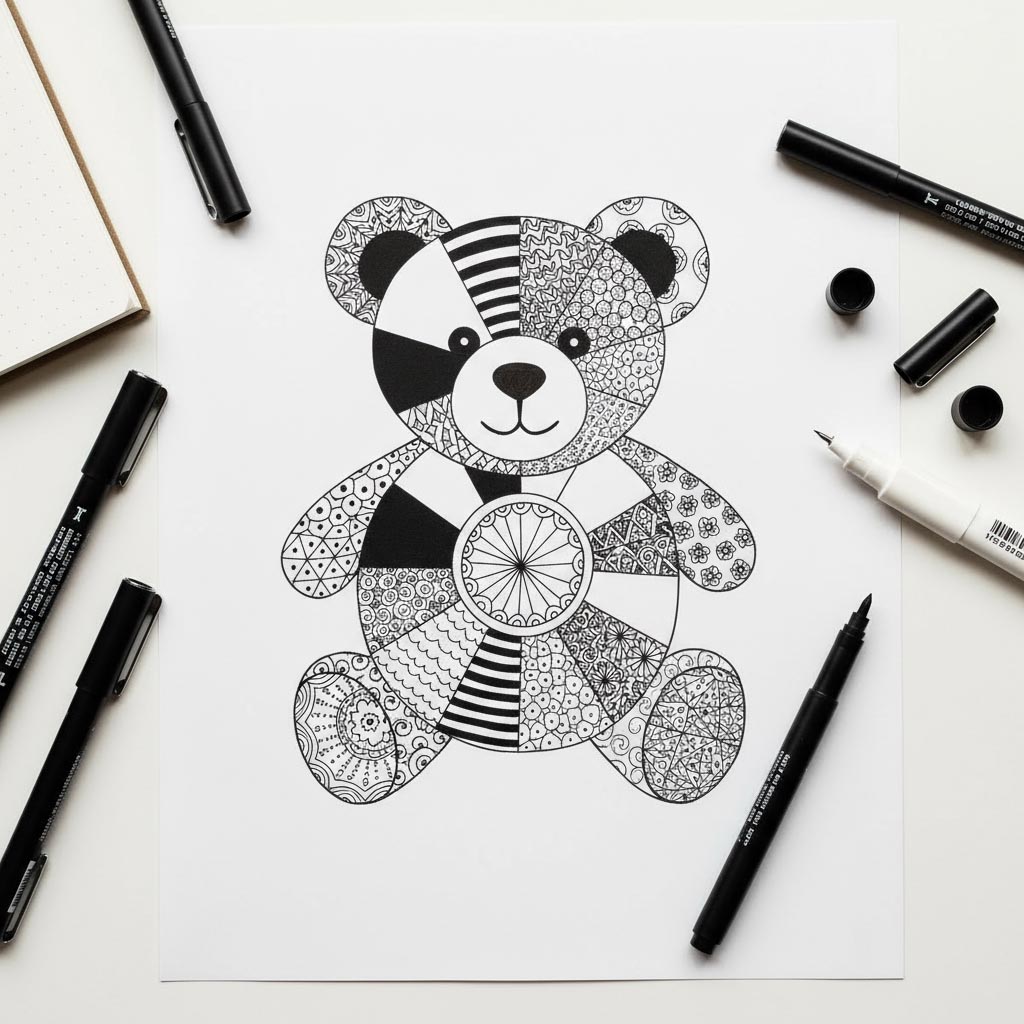
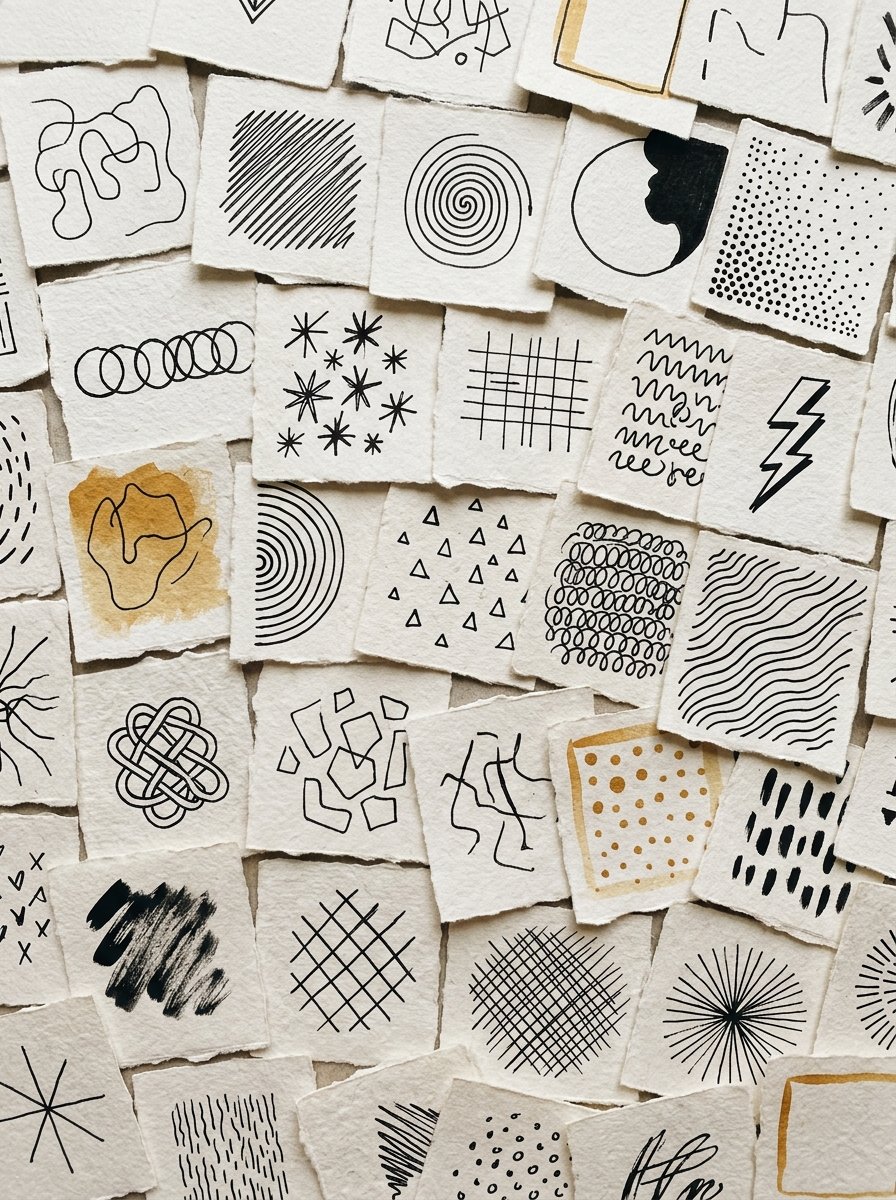
A page will decide itself if you hand it one sentence first. That is what the best abstract drawing ideas actually are. They are rules.
A rule is one sentence long, and it decides for you. Only straight lines. Nothing touches the edge. Every shape overlaps another one.
There is no plan for the picture. There is always a rule.
In 1960 a painter in Paris stopped deciding and started folding. He bundled the canvas up, painted only the parts still showing, then opened it out flat.
The folds had done the composing.
Below: 77 ideas sorted by the state you are in, 4 people who worked this way, and a free sheet. The sheet comes first.
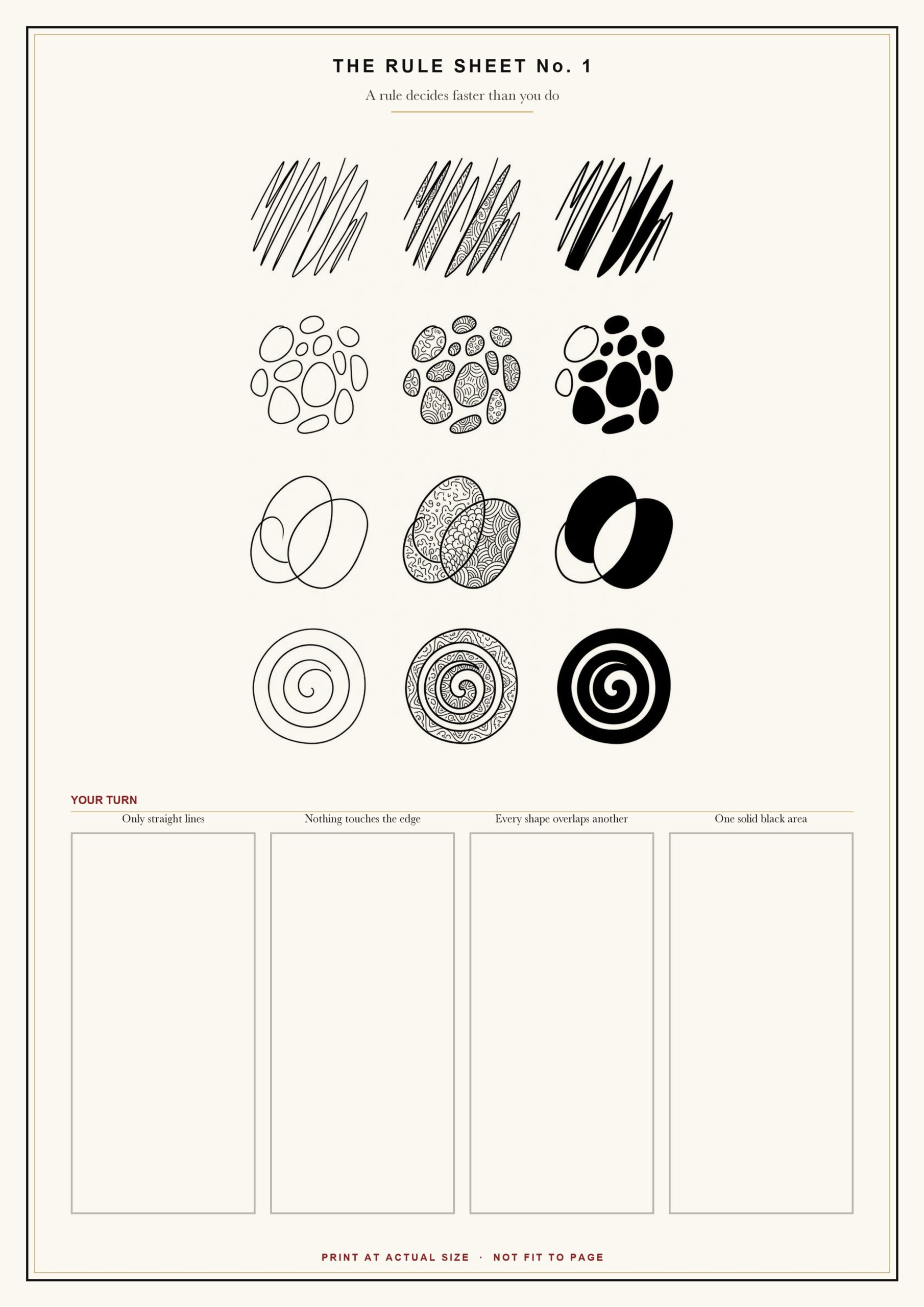
Print it at actual size, never fit to page. (The shrink-to-fit box is usually ticked already. Untick it.)
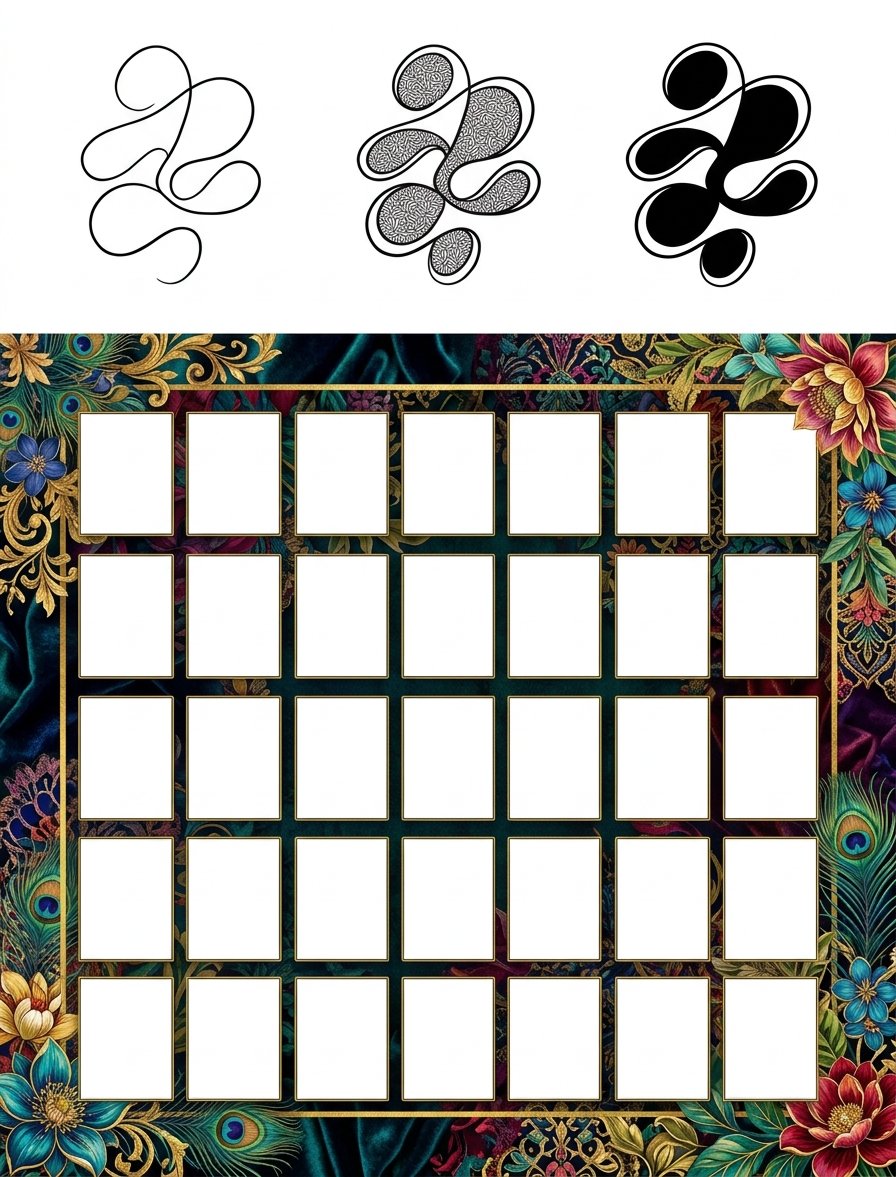
The page holds 4 rules and 4 empty boxes. One rule per box.
The rules are: "Only straight lines". "Nothing touches the edge". "Every shape overlaps another". "One solid black area".
Pick a box. Read its rule. Start moving.
You will finish all 4 in under half an hour, and no two will look alike. That is the rule working, not you improving.
Work them in the order they are printed. The first box teaches direction. The second teaches where to stop. The third decides what sits in front of what. The fourth is the one that makes a page look finished.
None of that is taste. It is 4 sentences, applied in order.
I keep a used one on the desk as evidence. (It is the only page in this house that has never been tidied away.)
The boxes are small on purpose. A small box cannot hold a masterpiece, so it stops asking for one.
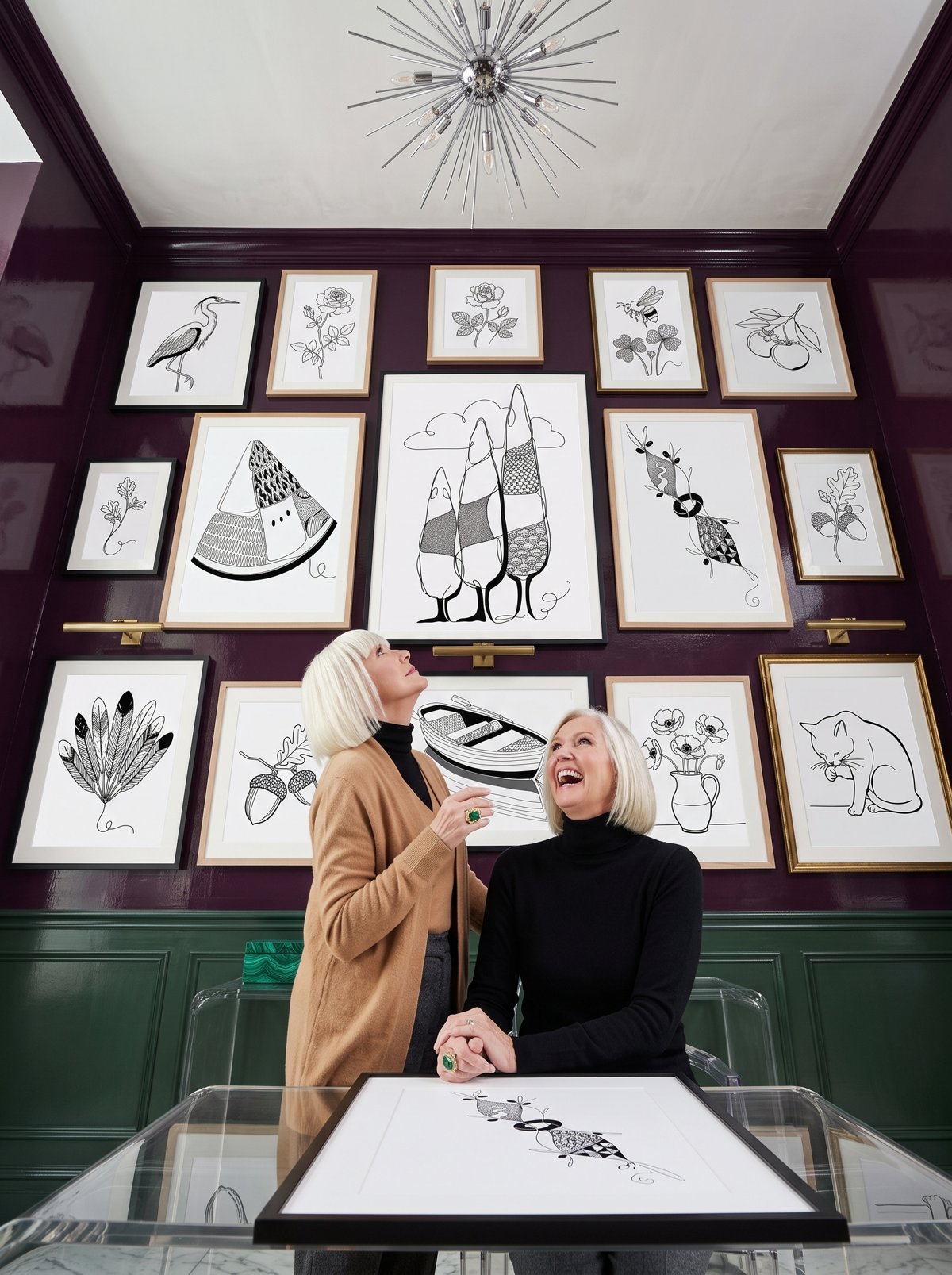
4 boxes is one evening. What a single sheet cannot give you is the next 100 evenings. The collection is 100 of them, already chosen, each with a faint trace underneath. There is never a blank page to be brave about.
The Collection
THE 100 COLLECTION — 100 pieces, 100 decisions already made, and a faint trace under every one.
For the evening you want to draw and do not want to choose. Every piece carries a faint trace underneath, so the page is never blank. What you get: 100 subjects already picked, and a run of finished pieces that reads as a year.
Everything below is 77 of those rules, sorted by how much of an evening you actually have.
Abstract drawing ideas for the 10 minutes before the kettle boils
These finish. That is their whole job.
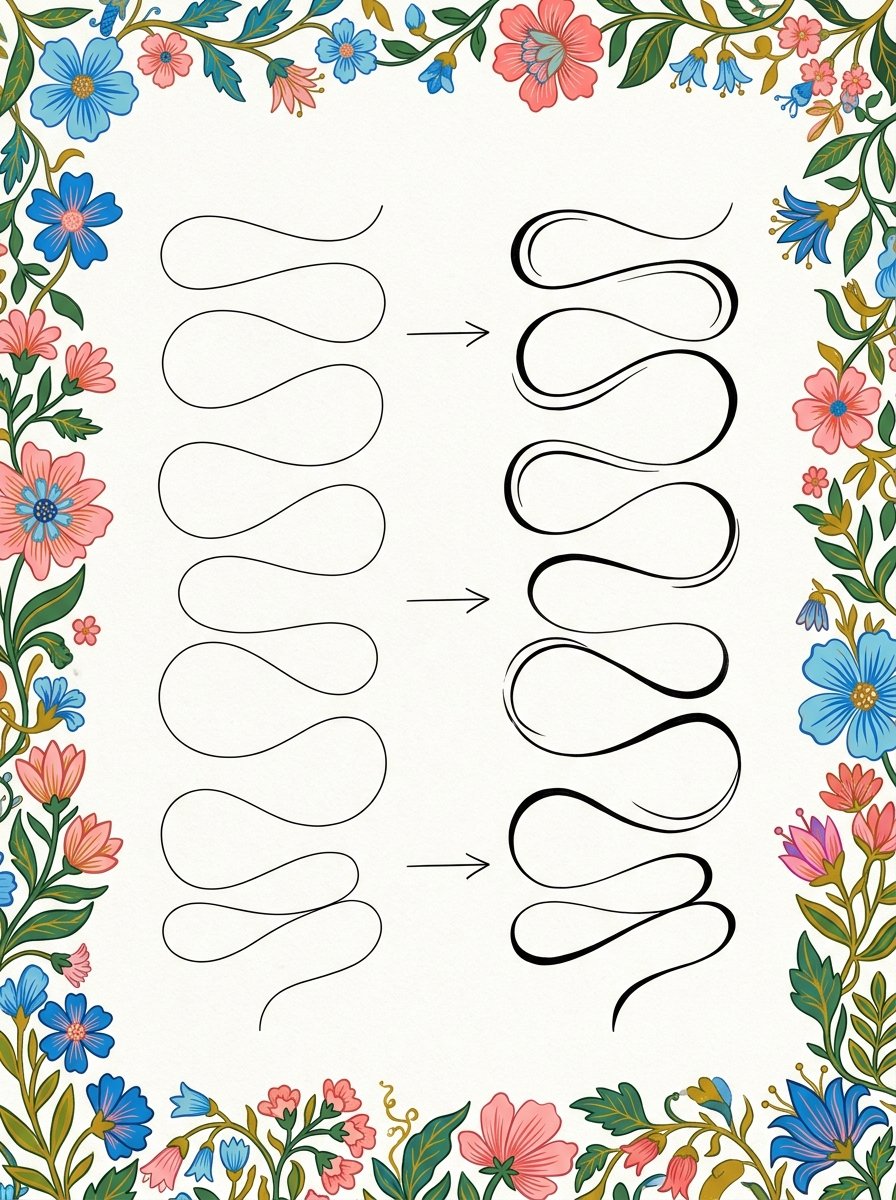
Start with a line that never crosses itself. It has to keep finding room, so it lays out the page for you. Now draw one that crosses itself exactly 3 times. Each crossing makes a closed shape, and closed shapes are what the eye lands on first.
Draw the same circle 12 times on top of itself. The wobble becomes the drawing. Then draw a row of circles, each one faster and worse than the last. The last one is usually the best and I have stopped being annoyed about it.
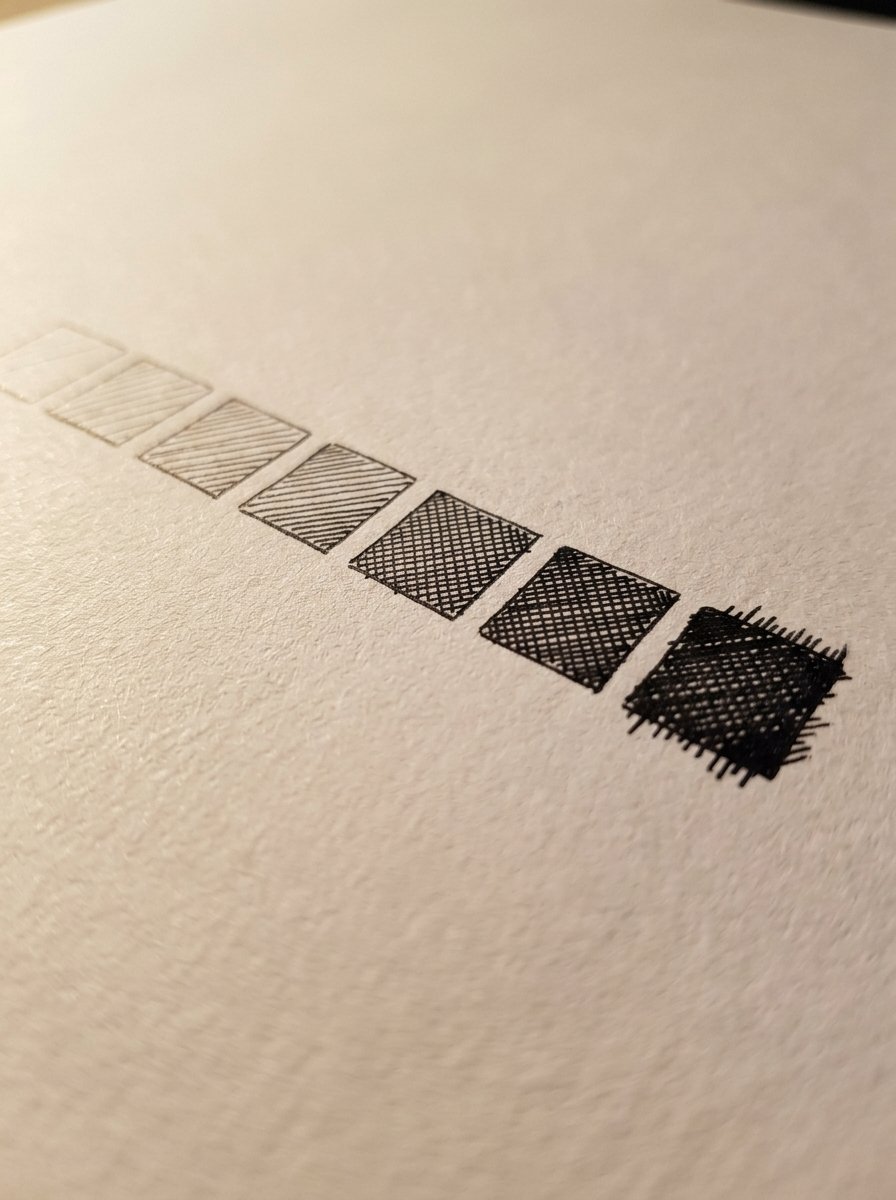
Fill a square with lines that all lean the same way. Fill a second square with lines that change direction halfway down. Hold them side by side. One is fabric, one is water, and you only turned your wrist.
Overlap two shapes and ink the overlap solid. Draw a shape with a bite taken out of it. Both work because the eye wants to know which thing is in front.
Draw a line thick at the start and thin at the end. Then a line that thins only where it turns. That is the whole secret of a confident line.
Make 3 marks and stop. Make one mark, then its echo two fingers away. Draw a border first and fill inward. Draw a border last, around whatever happened.
Repeat one shape until it runs off the page. Turn a dotted line into a solid one. Break a solid line into dots. Draw a spiral that stops before the middle, and another from the middle out, badly.
Then there is the one nobody tries twice: draw a shape without letting your eyes leave it. (Mine came out like a map of somewhere with poor governance. I keep it.)
The painter who folded his canvas was Simon Hantai. He began it in 1960 and called it pliage.
The canvas went into folds and knots. He painted what was still exposed, then opened the whole thing out. Where the folds had been, bare canvas stayed bare.
He got the idea from the creases in his mother's apron.
That is why these belong in 10 minutes. The fold composed the picture before he picked up a brush.
Your version is a rule instead of a fold. Same job, less laundry.
Abstract drawing ideas for a night when nothing will decide itself
Some evenings the hand is willing and the head will not choose. Hand the choosing to the page.
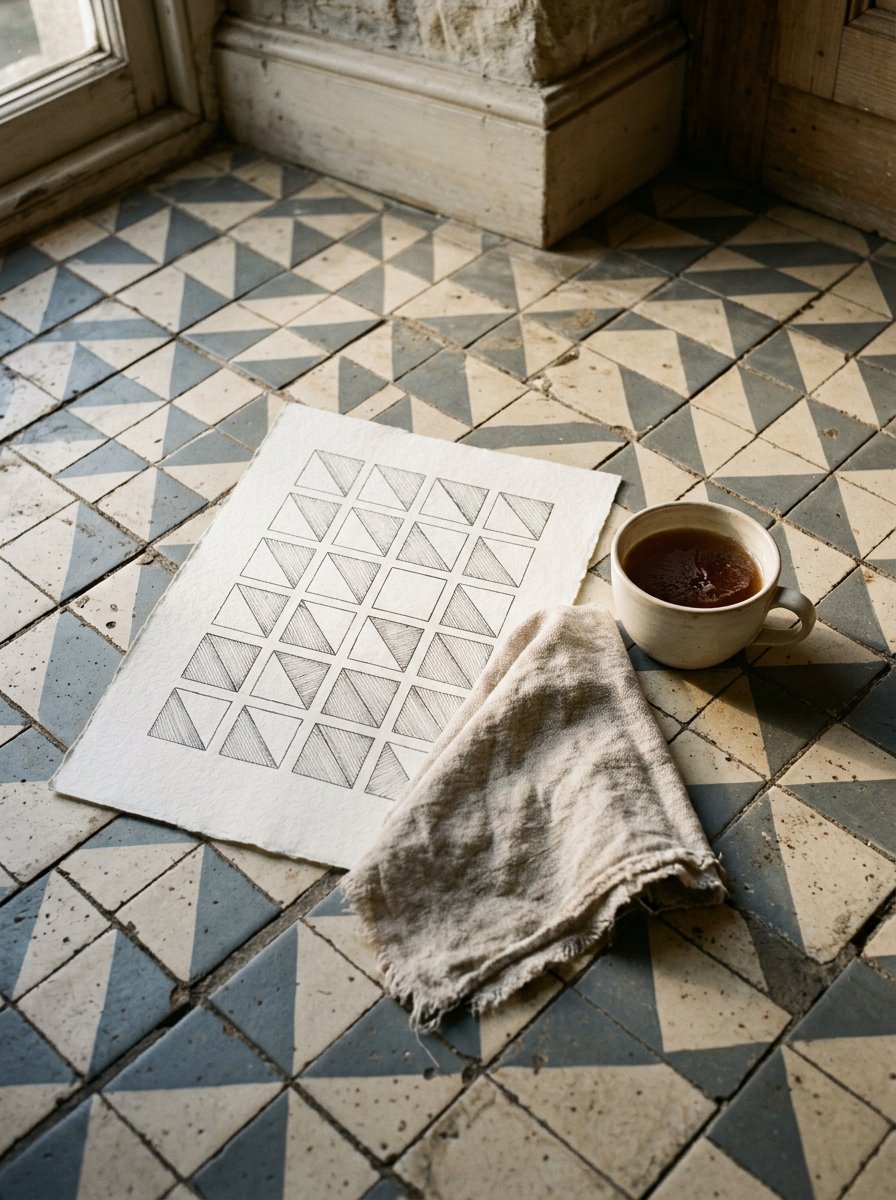
Fold the sheet into 4 and give each panel one rule. Draw only what fits between two fingers. Turn the page a quarter turn after every mark. Work with the page upside down and never turn it back.
Now the narrow rules, which are the good ones. Only vertical and horizontal, nothing diagonal. Only diagonals, nothing upright. Only curves, and no curve may close. Only closed shapes, no open lines.
Copy the shape of a gap instead of the thing making it. Rule a grid and break exactly 1 square. Rule a grid and then ignore it completely. (I have done that last one by accident more often than on purpose.)
Draw the same mark with your other hand. Draw a mark, then draw its shadow. Set a timer for 2 minutes and stop mid-mark.
Make every shape touch at least 1 other. Then a page where no shape touches anything. The second page always looks more expensive, which is unfair and reliable.
Use one mark family for the whole page. Change mark family every time you cross a fold. Draw the page in 4 quarters, each at a different speed. Let the last mark of one shape start the next.
In 1935 a filmmaker called Len Lye made a film without a camera. He painted straight onto the celluloid.
Over the years he worked with dyes, stencils, air-brushes, felt tip pens, stamps, combs and surgical instruments. In 1958 he took black film stock and scratched the design into the emulsion.
Lye had removed the subject, the camera and the model. All that was left was the mark and how fast it moved.
That is exactly the state these rules put you in. Nothing to look at, nothing to get wrong, one decision per mark.
I think about him whenever I catch myself looking for a reference. There is nothing to reference. That is the point.
The 19 ideas that make a page look deliberate, not busy
Busy is a page where everything is the same size. Deliberate is a page where one thing is not.
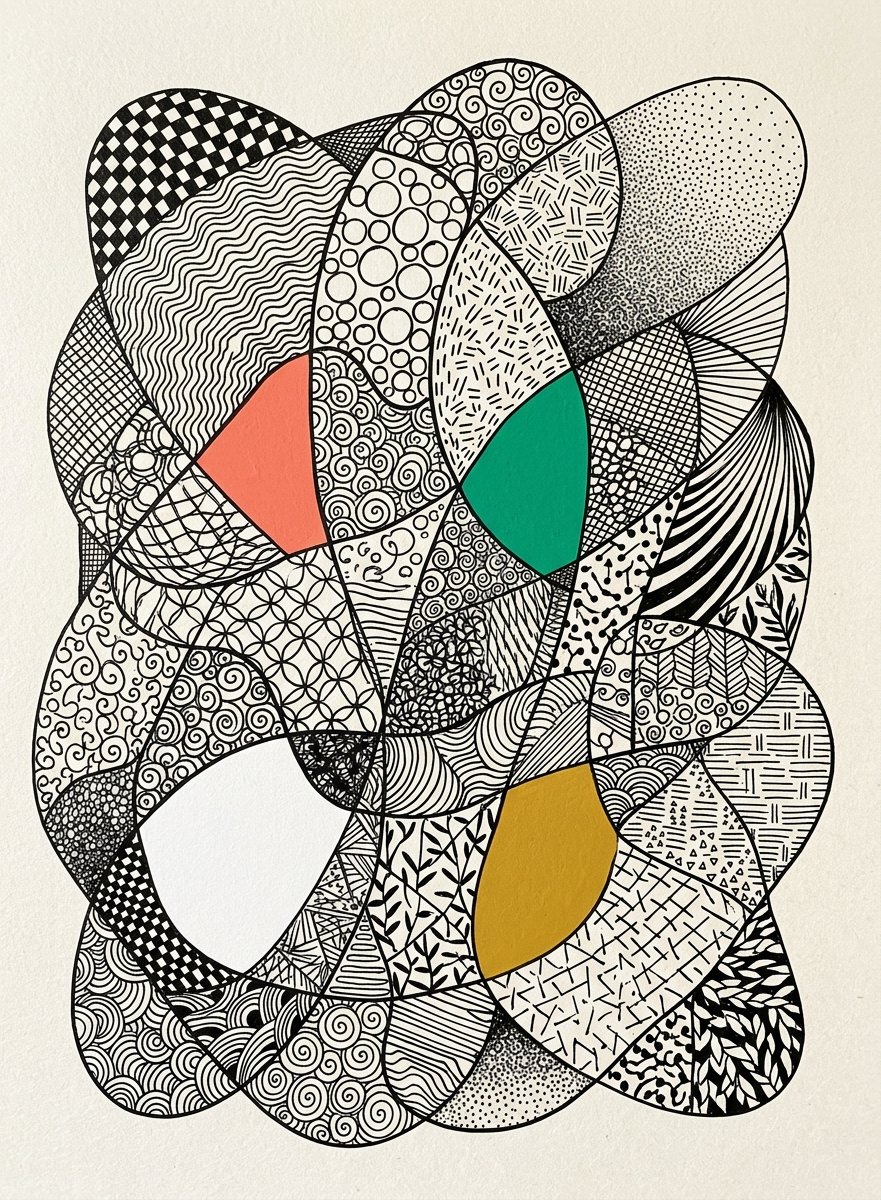
Put in one solid black area, and only one. Place it off-centre. Leave 1 wide empty band running through the whole page. The band is doing more work than any mark on it.
Keep every gap the same width. Or make the gaps deliberately uneven. Both read as a decision. Gaps that are almost even read as an accident.
Outline a shape, then outline it again 2mm outside the first. Draw the outline after the fill, never before. The line then covers a multitude of wobbly edges.
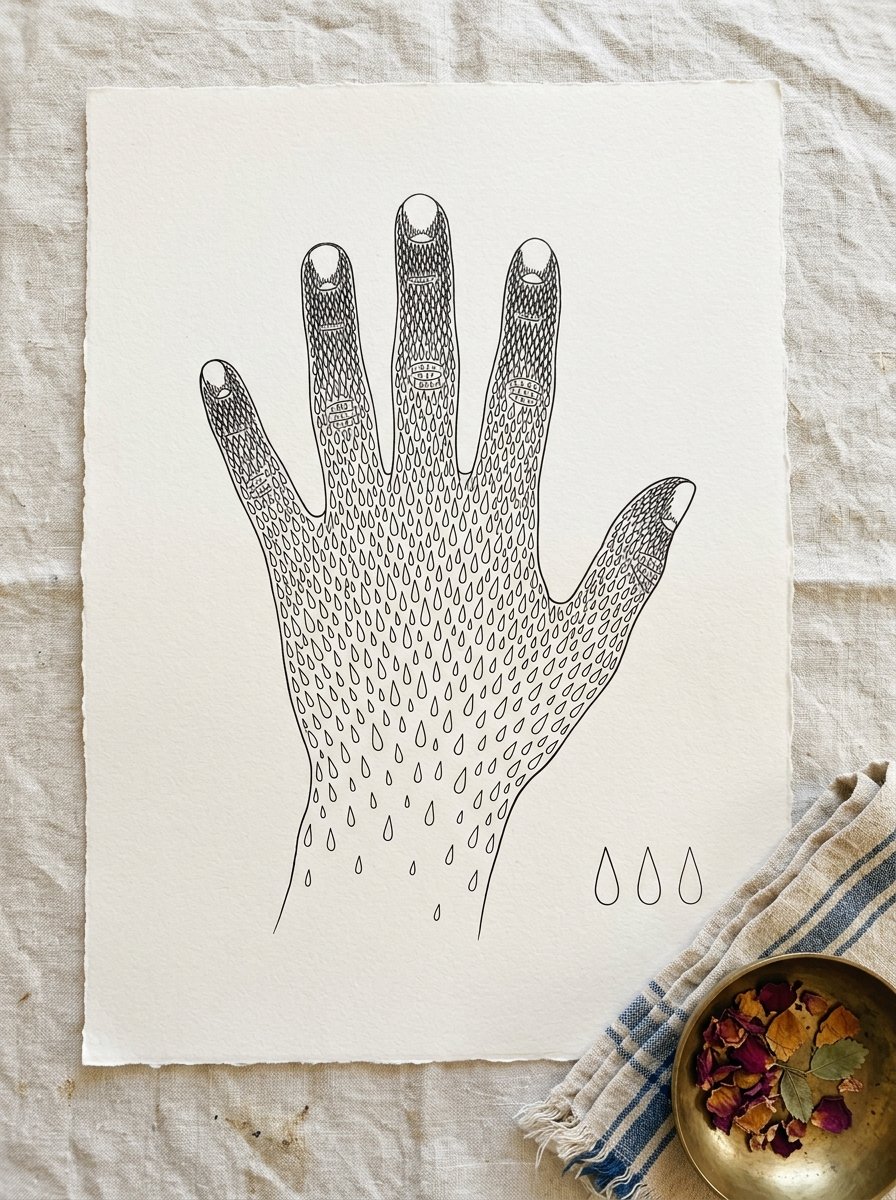
Run one texture at 3 densities across the page. Let a texture thin as it nears an edge. Point every mark at 1 spot that sits off the page.
Grow a repeated mark as it descends. Shrink the same mark into a corner. Leave the pencil grid visible under the ink.
Draw 3 shapes the same size and 1 much larger. Or keep everything small except the thing you drew first. Leave one edge raw instead of ruled. Fill a shape half way and leave the rest bare.
Stop your hatching exactly at a pencil line. Then, on the next one, overshoot on purpose.
Alma Thomas retired in 1960 after 38 years of teaching art, and only then began to paint seriously. In 1972 she had a retrospective at the Whitney, the first Black woman to be given a solo show there.
She ruled faint pencil lines across the canvas before she painted, and she never rubbed them out.
Then she laid down broken rows of short colour pats at uneven intervals, leaving raw canvas showing between them. The bare canvas is not a gap she forgot. It is the thing holding the whole painting apart.
(I spent a long time filling every corner of a page before I understood this. The page was full and it was saying nothing.)
Deliberate is almost never about adding. It is about what you agreed not to touch.
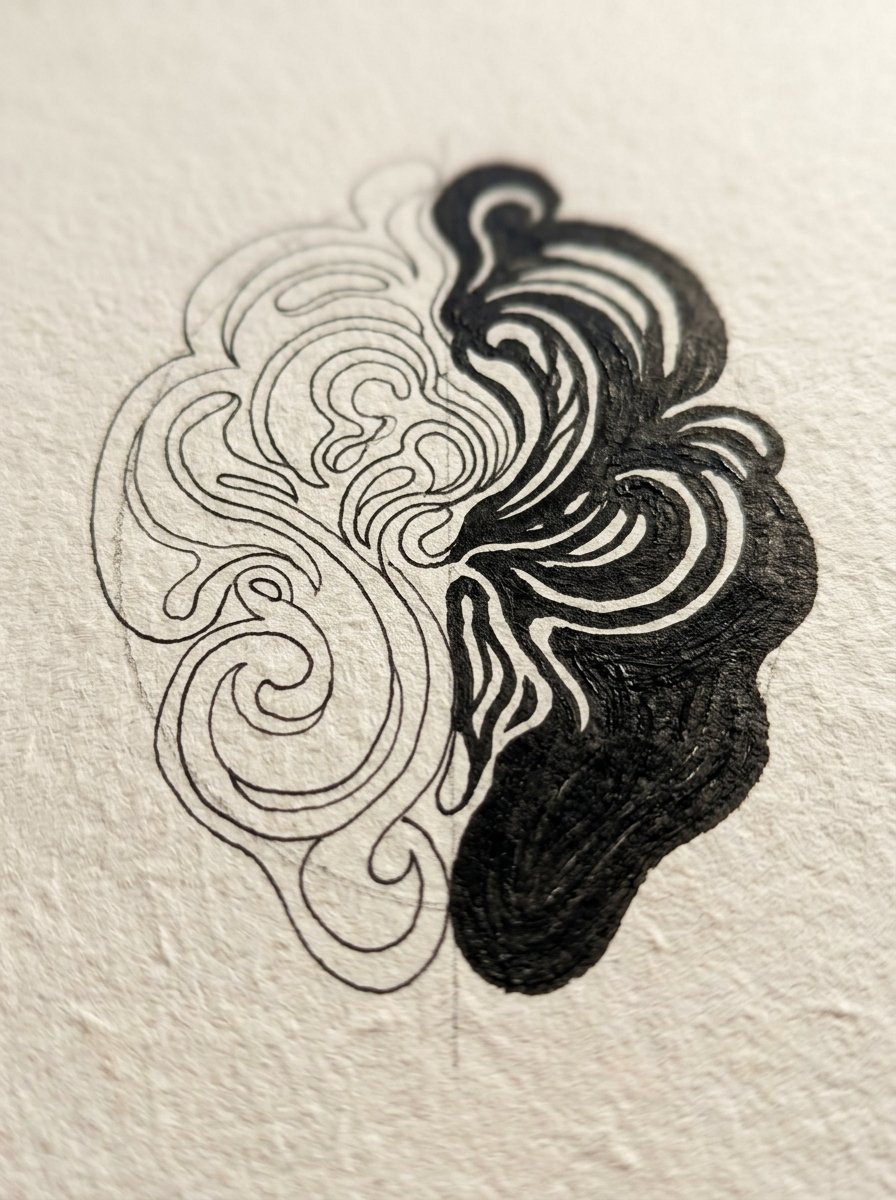
Abstract drawing ideas for an evening that is genuinely free
Bigger builds, and every one of them is still 1 pen.
Rule a page into 16 small squares and give each square a different rule. Draw the same rule on 4 pages at 4 sizes. Fold a long strip into panels and let the marks continue across the folds.
Build a page from 1 shape at 3 scales. Repeat a pattern with 1 unit turned. Repeat it again with 1 unit left blank. That blank unit is the only thing anyone will look at.
Make a grid of squares, each holding a different density. Let the marks get slower toward the bottom of the page. You can see tiredness in ink and it is oddly flattering.
(I drew the same page twice in one evening once. The slow second one is the one I kept, which I have decided not to examine.)
Tear 4 pieces and make one drawing across them. Use a torn edge as a drawn edge. Make 2 pages that only work side by side.
Continue a drawing onto the back of the page. Build a big shape entirely out of small ones. Build a small shape from a single long line.
Draw a page in 1 sitting without lifting the sheet off the table. Then draw the same page again from memory. Make the second version faster than the first. Keep the pair together and never separate them.
Sophie Taeuber-Arp studied textile design at the Gewerbeschule in St Gallen from 1906 to 1910. She learned to compose by counting, because a loom leaves you no other option.
Between 1916 and 1918 she built her Vertical-Horizontal works on the grid structures of textiles. The cloth had already ruled the page. She only had to decide what went in which square.
That is what a long evening wants. Not more inspiration, but a structure that lets you keep working without stopping to choose.
Rule the grid first. The grid is the plan, and it means the picture never has to be one.
What is on the free abstract drawing ideas sheet
The sheet is the first 4 rules, printed, with a box each.
"Only straight lines" teaches you that direction alone makes texture. "Nothing touches the edge" gives every shape somewhere to sit. "Every shape overlaps another" decides what is in front. "One solid black area" is the one that makes the page look finished.
Work them in order. The 4th box will not look like the 1st, and you changed nothing except the sentence at the top.
After that, come back and take any of the 77 above. They all fit those boxes.
(I have a drawer of these. My cat has a strong preference for the warm ones straight out of the printer.)
Free Starter Pack
10 pattern templates. What goes inside the shapes.
Sent tonight. Checks, dashes and stippling, for the segments you left empty.
Unsubscribe in 1 click, no hard feelings
One rule fills an evening. A shelf of finished pieces is what happens when the choosing stops being the hard part. The collection is 100 of them, chosen and traced already. The deciding is done before you sit down.
100 rules already decided, one page at a time
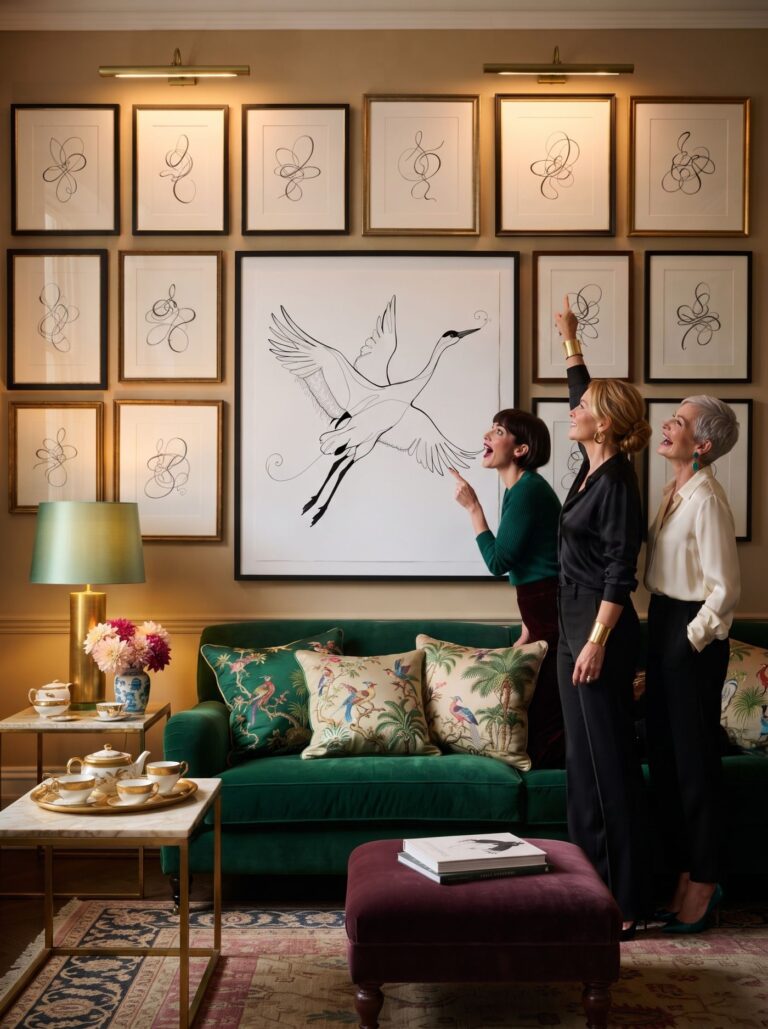
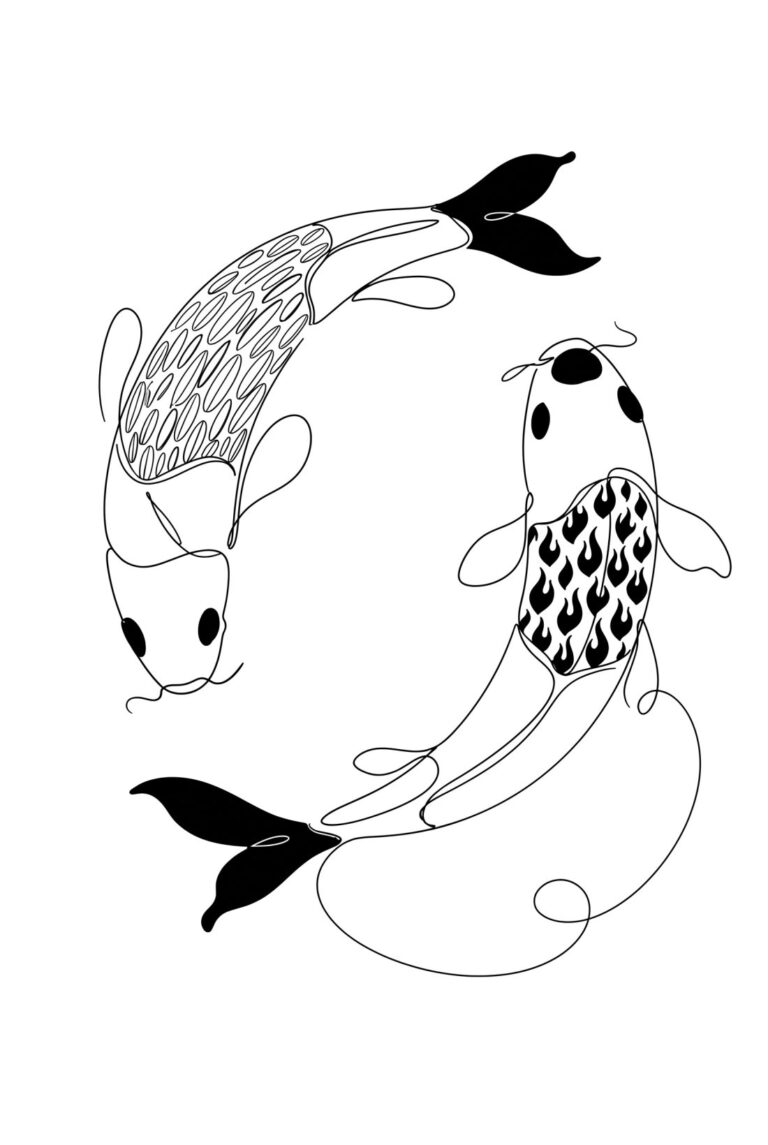
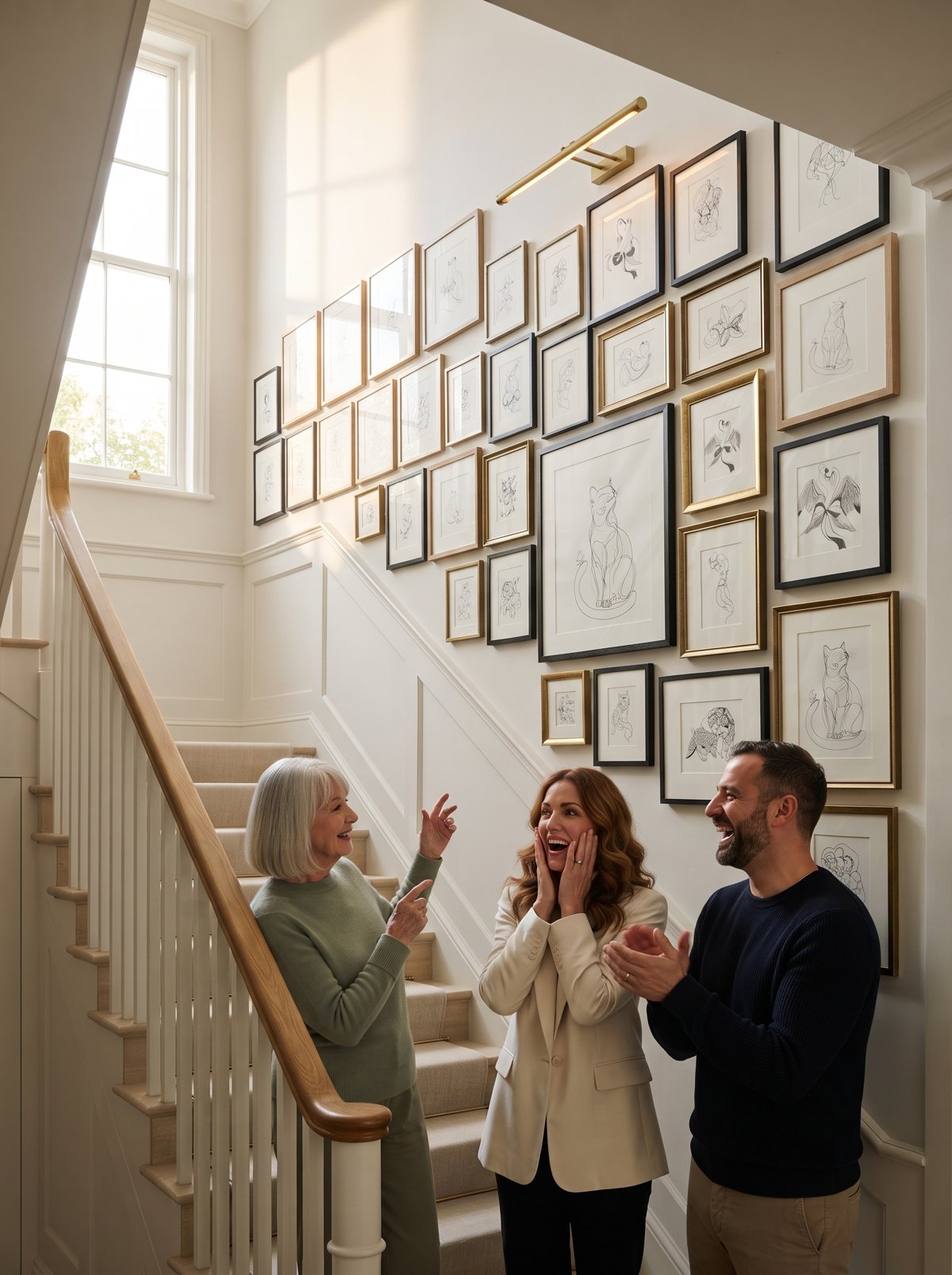
Tonight it is 4 boxes and a rule you picked off a printed sheet. The collection is 100 of them, chosen and traced. The only thing left is to move the pen.
Instant download · print as often as you like
A rule takes a second to write down and it will keep you drawing for an hour. Follow one tonight and the page stops being a question you have to answer.
“I wanted something beautiful that you could sit down and look at. And then, the paintings change you.”
Alma Thomas, ca. 1977-78
Mirabelle wrote this. No training, strong opinions, many pens. Peer reviewed by a cat who chose a rule, abandoned it, and lay down on the results.